Codex Standards for
Nutrition and Labeling
Submitted to:- Mam Nida Kanwal
Submitted by:- Group # 3
Names Roll #
Bushra Shahid 18-12
Iqra Sadaqat 18-23
Sanya 18-49
Nutrition Labeling
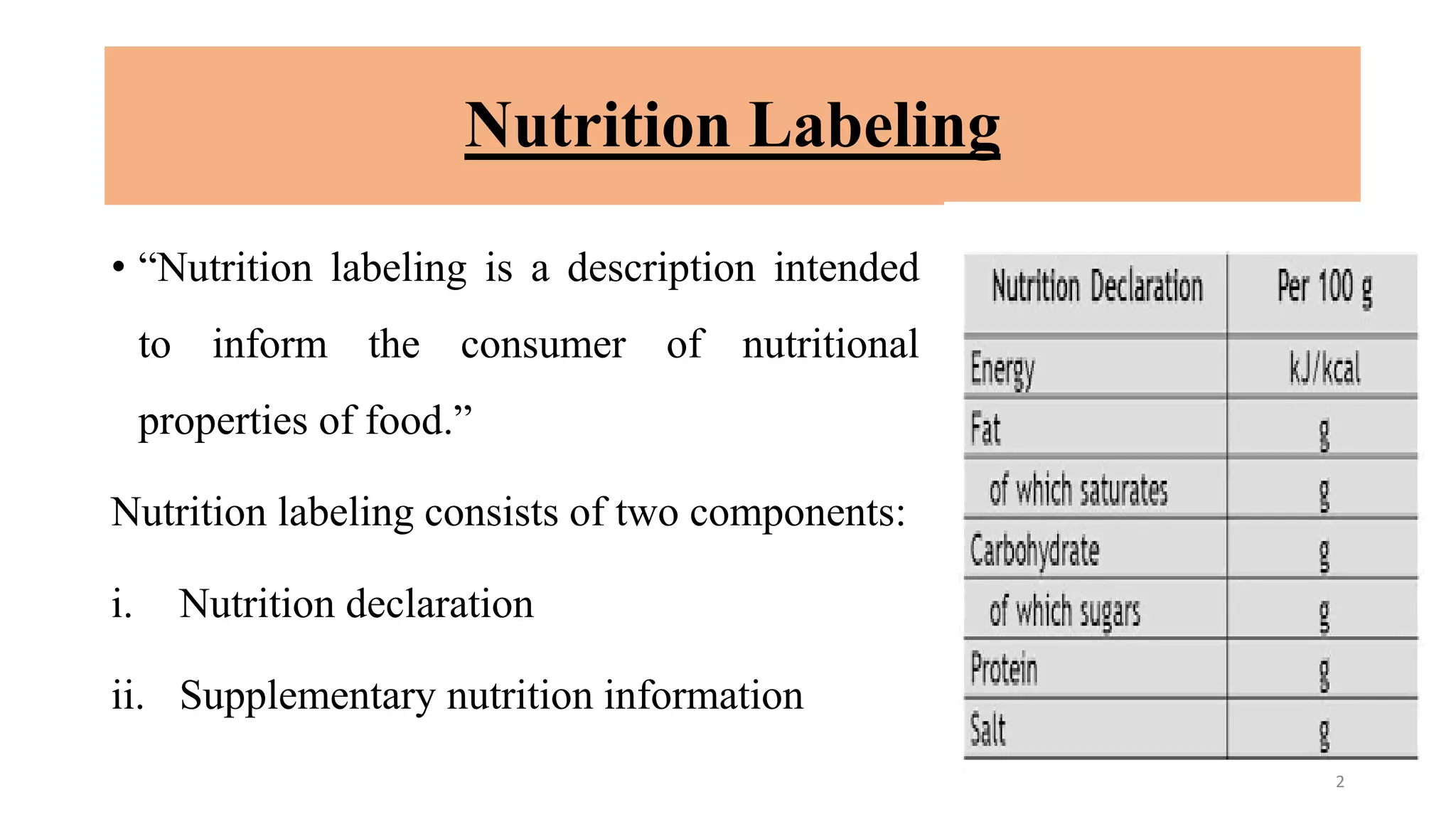
• “Nutrition labeling is a description intended
to inform the consumer of nutritional
properties of food.”
Nutrition labeling consists of two components:
i. Nutrition declaration
ii. Supplementary nutrition information
2
Important Definitions
1. Nutrient Declaration:-
“Nutrient declaration means a standardized statement or listing of nutrient
content of food.”
2. Nutrition Claim:-
“Nutrition Claim means any representation which states specific property of
food.”
3. Nutrient:-
“Any substance used as a constituent of food.”
3
Important Definitions
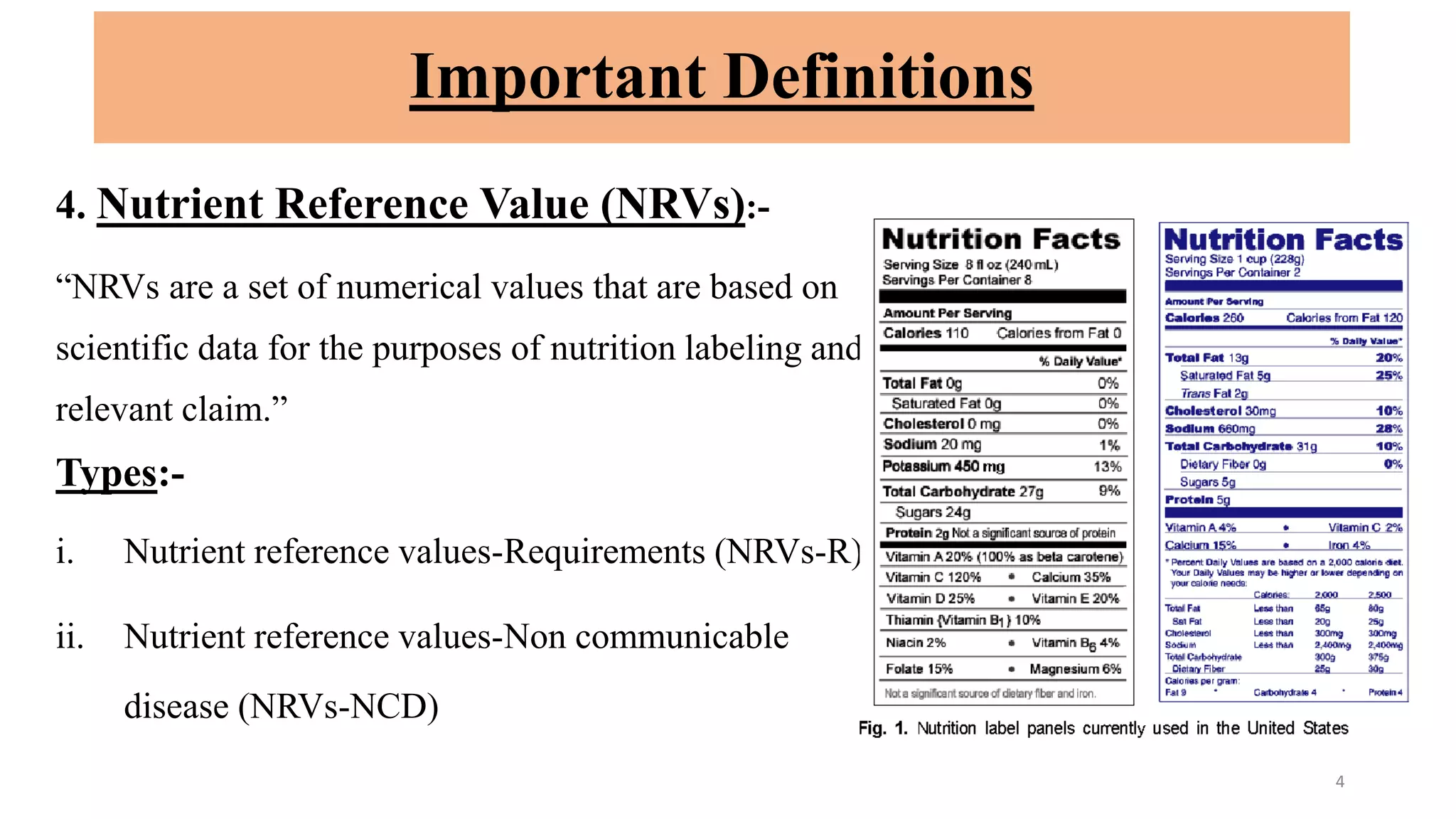
4. Nutrient Reference Value (NRVs):-
“NRVs are a set of numerical values that are based on
scientific data for the purposes of nutrition labeling and
relevant claim.”
Types:-
i. Nutrient reference values-Requirements (NRVs-R)
ii. Nutrient reference values-Non communicable
disease (NRVs-NCD)
4
Difference between NRVs and NRV-NCD
NRVs-R
NRVs-R stands for Nutrient
reference values- Requirements.
It refers to NRVs that are based on
levels of the nutrients associated
with nutrient requirements.
NRVs-NCD
NRVs-NCD stands for Nutrient
reference values-Non communicable
diseases.
It refers to NRVs that are based on
level of nutrients associated with the
reduction in the risk of diet related
Non-Communicable diseases.
5
Codex guidelines based on Nutritional
labeling
Purposes of guidelines:-
The insurance that nutrition labeling is
effective, is determined by:
i. Providing the consumer with the
wide choices of food.
ii. Providing a means for conveying
information of the nutrient content.
6
Continued…
iii. Encouraging the use of sound
nutrition principles in the formulation of
foods.
iv. Providing the opportunity to include
supplementary nutrition information on
the label.
v. To ensure that no nutritional claim is
made without nutrient labeling.
7
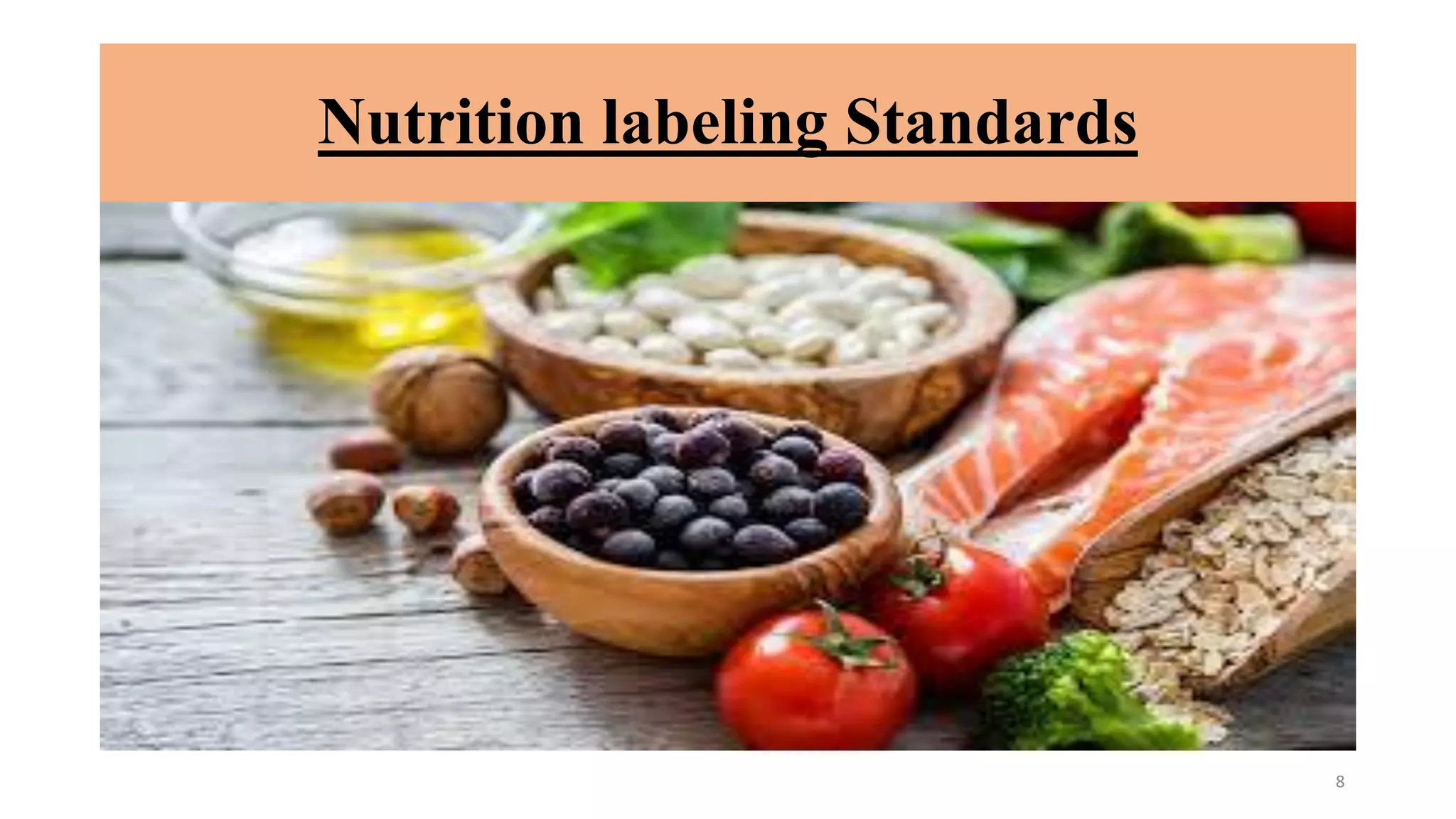
Nutrition labeling Standards
8
1. Nutrient Declaration
Listing of Nutrients:-
Where nutrient declaration is applied, the
declaration of following should be mandatory:
i. Energy value
ii. Amounts of proteins
iii. Available carbohydrates
iv. Fat
v. Saturated fats
vi. Sodium
vii. Sugars
9
Nutrient Declaration (Health claim)
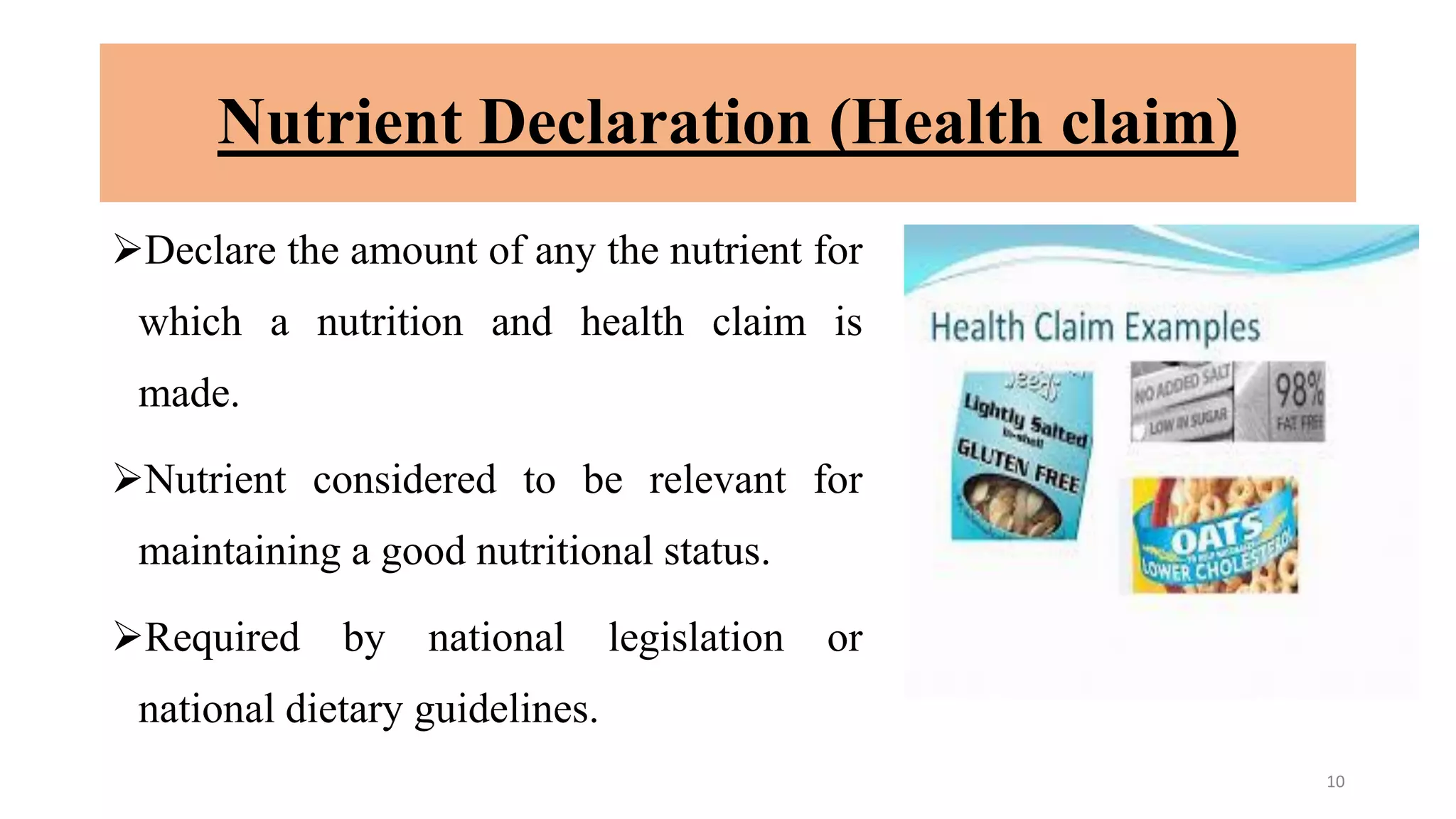
Declare the amount of any the nutrient for
which a nutrition and health claim is
made.
Nutrient considered to be relevant for
maintaining a good nutritional status.
Required by national legislation or
national dietary guidelines.
10
Calculation of nutrients:-
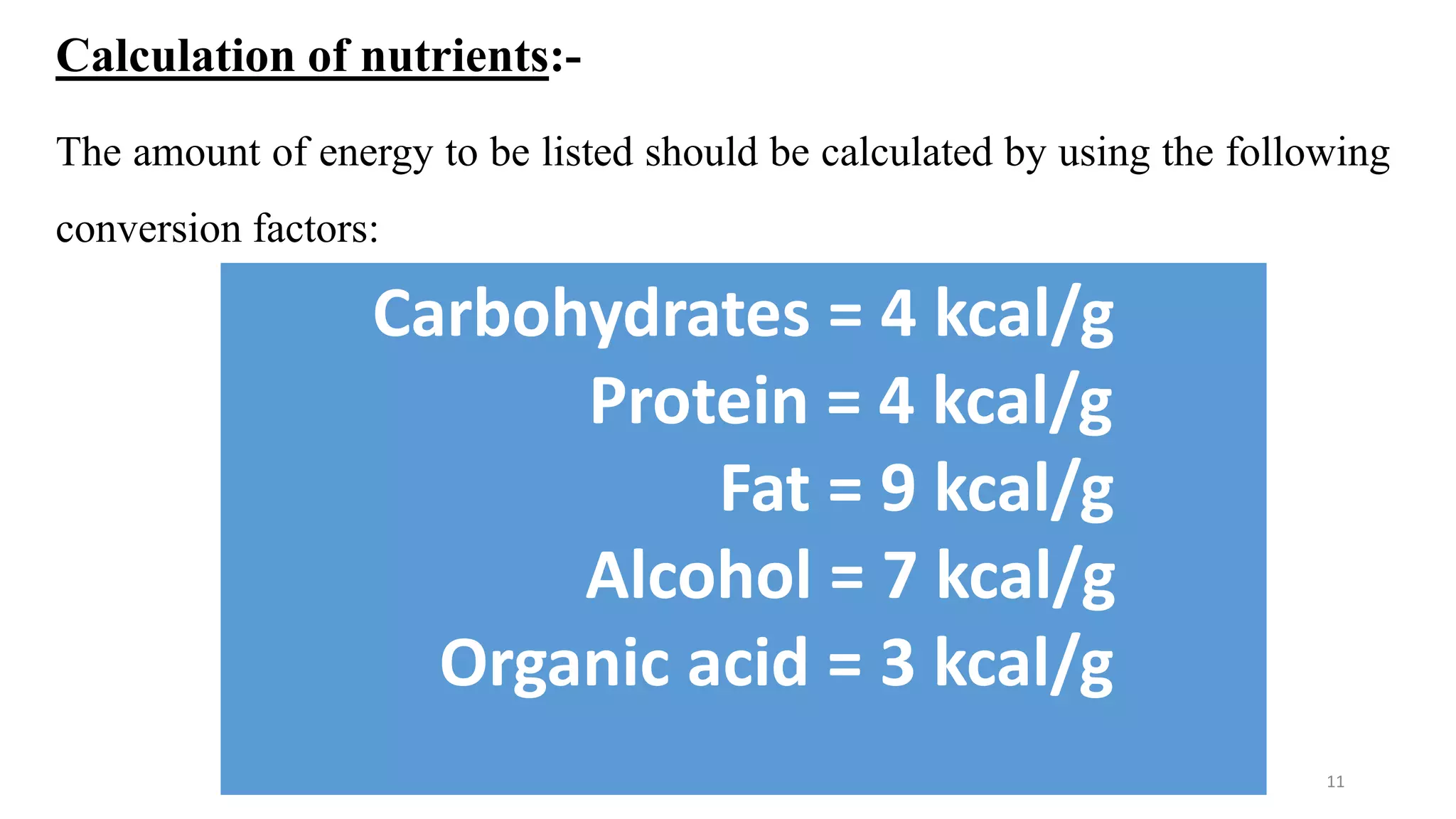
The amount of energy to be listed should be calculated by using the following
conversion factors:
Carbohydrates = 4 kcal/g
Protein = 4 kcal/g
Fat = 9 kcal/g
Alcohol = 7 kcal/g
Organic acid = 3 kcal/g
11
2. Principles and Criteria for Legibility of
Nutrition Labelling
Recommendations related to specific features of presentation are
intended to enhance the legibility of nutrition labeling.
Format:-
Nutrient should be declared in numerical and tabulated format.
Font:-
The font type should be according to the legibility of nutrition
labeling.
Contrast:-
A significant contrast should be maintained between the text and
background.
12
3. Supplementary Nutrition Information
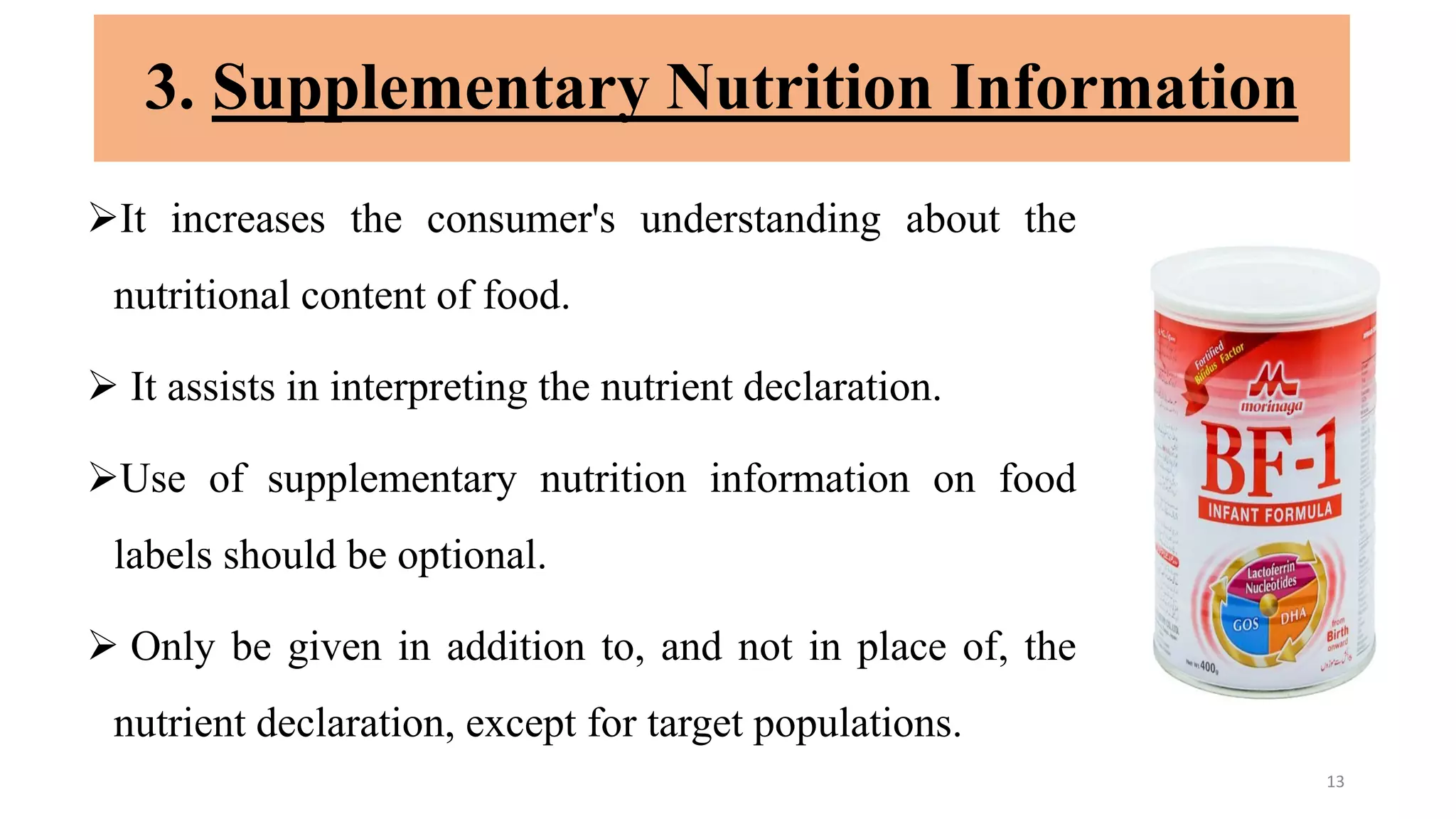
It increases the consumer's understanding about the
nutritional content of food.
 It assists in interpreting the nutrient declaration.
Use of supplementary nutrition information on food
labels should be optional.
 Only be given in addition to, and not in place of, the
nutrient declaration, except for target populations.
13
Continued…
• Target population:-
“Who have a high illiteracy rate and/or comparatively
little knowledge of nutrition.”
• For these, food group symbols or other pictorial or
color presentations may be used without the nutrient
declaration.
• Supplementary nutrition information on labels
should be accompanied by consumer education
program.
14
15
16

codex standard for nutrition and labelling

  • 1.
    Codex Standards for Nutritionand Labeling Submitted to:- Mam Nida Kanwal Submitted by:- Group # 3 Names Roll # Bushra Shahid 18-12 Iqra Sadaqat 18-23 Sanya 18-49
  • 2.
    Nutrition Labeling • “Nutritionlabeling is a description intended to inform the consumer of nutritional properties of food.” Nutrition labeling consists of two components: i. Nutrition declaration ii. Supplementary nutrition information 2
  • 3.
    Important Definitions 1. NutrientDeclaration:- “Nutrient declaration means a standardized statement or listing of nutrient content of food.” 2. Nutrition Claim:- “Nutrition Claim means any representation which states specific property of food.” 3. Nutrient:- “Any substance used as a constituent of food.” 3
  • 4.
    Important Definitions 4. NutrientReference Value (NRVs):- “NRVs are a set of numerical values that are based on scientific data for the purposes of nutrition labeling and relevant claim.” Types:- i. Nutrient reference values-Requirements (NRVs-R) ii. Nutrient reference values-Non communicable disease (NRVs-NCD) 4
  • 5.
    Difference between NRVsand NRV-NCD NRVs-R NRVs-R stands for Nutrient reference values- Requirements. It refers to NRVs that are based on levels of the nutrients associated with nutrient requirements. NRVs-NCD NRVs-NCD stands for Nutrient reference values-Non communicable diseases. It refers to NRVs that are based on level of nutrients associated with the reduction in the risk of diet related Non-Communicable diseases. 5
  • 6.
    Codex guidelines basedon Nutritional labeling Purposes of guidelines:- The insurance that nutrition labeling is effective, is determined by: i. Providing the consumer with the wide choices of food. ii. Providing a means for conveying information of the nutrient content. 6
  • 7.
    Continued… iii. Encouraging theuse of sound nutrition principles in the formulation of foods. iv. Providing the opportunity to include supplementary nutrition information on the label. v. To ensure that no nutritional claim is made without nutrient labeling. 7
  • 8.
  • 9.
    1. Nutrient Declaration Listingof Nutrients:- Where nutrient declaration is applied, the declaration of following should be mandatory: i. Energy value ii. Amounts of proteins iii. Available carbohydrates iv. Fat v. Saturated fats vi. Sodium vii. Sugars 9
  • 10.
    Nutrient Declaration (Healthclaim) Declare the amount of any the nutrient for which a nutrition and health claim is made. Nutrient considered to be relevant for maintaining a good nutritional status. Required by national legislation or national dietary guidelines. 10
  • 11.
    Calculation of nutrients:- Theamount of energy to be listed should be calculated by using the following conversion factors: Carbohydrates = 4 kcal/g Protein = 4 kcal/g Fat = 9 kcal/g Alcohol = 7 kcal/g Organic acid = 3 kcal/g 11
  • 12.
    2. Principles andCriteria for Legibility of Nutrition Labelling Recommendations related to specific features of presentation are intended to enhance the legibility of nutrition labeling. Format:- Nutrient should be declared in numerical and tabulated format. Font:- The font type should be according to the legibility of nutrition labeling. Contrast:- A significant contrast should be maintained between the text and background. 12
  • 13.
    3. Supplementary NutritionInformation It increases the consumer's understanding about the nutritional content of food.  It assists in interpreting the nutrient declaration. Use of supplementary nutrition information on food labels should be optional.  Only be given in addition to, and not in place of, the nutrient declaration, except for target populations. 13
  • 14.
    Continued… • Target population:- “Whohave a high illiteracy rate and/or comparatively little knowledge of nutrition.” • For these, food group symbols or other pictorial or color presentations may be used without the nutrient declaration. • Supplementary nutrition information on labels should be accompanied by consumer education program. 14
  • 15.
  • 16.