Nutrition through out lifecycle
 Assignment 2 :
Topic:
Pregnancy complications and
nutritional solutions
 Submitted to:
Ma’am Madiha Javed
 Submitted by:
Muqaddas Ashraf
 Roll no: 18 37
 Program : HND (2018-2022)
 Section : 4th semester
Pregnancy complications and
nutritional solutions
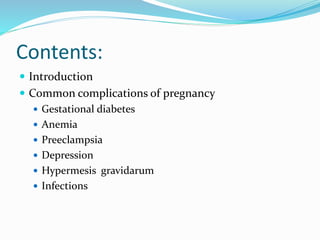
Contents:
 Introduction
 Common complications of pregnancy
 Gestational diabetes
 Anemia
 Preeclampsia
 Depression
 Hypermesis gravidarum
 Infections
Cont;
 Nutritional solutions
 Nutritional solution for different complications
 Gestational diabetes
 Anemia
 Preeclampsia
 Hypertension
 Folic acid during pregnancy
 Fluid intake during pregnancy
 Foods eat during pregnancy
 Importance of nutrition during pregnancy
Pregnancy complications and
nutrition solution:
 Introduction:
 Pregnancy complications:
 Complications of pregnancy are health problems that
occur during pregnancy.
 They can involve the mother health and health of
baby, or both. Some women have problems before
their pregnancy and in some during pregnancy.
 It is very important for women to receive health care to
decrease the risk of complication.
Cont’
Nutritional solutions:
 Good nutrition during pregnancy improves the
chances of having healthy baby.
 From conception to birth-all parts of infant is made
from nutrient that mother eats.

 Fetal development is linked with nutritious diet.
 A balanced diet also reduce the risk of anemia as well
as other complications.
Common complications of
pregnancy:
 There is no clear distinction between complication
pregnancy or symptoms or discomforts of pregnancy.
 For example, mild nausea is discomfort but in severe
condition it cause water –electrolyte imbalance it can
be classified as pregnancy complication.
 Some common complications of pregnancy include
but not limited to the following,
Cont’
 Gestational diabetes
 High blood pressure
 Anemia
 Infections
 Preeclampsia
 And others…
Gestational diabetes:
 Gestational diabetes is the condition in which blood
sugar level increases during pregnancy.
 There are two classes of gestational diabetes
 A1 can manage through diet while second class is
insulin resistance and just like type 2 diabetes.
Cont’
Symptoms:
 Usually there are no symptoms but sometimes feels
 Hunger
 Thirst
 And fatigue
Causes:
 Usually, pancreas send enough insulin to handle it. But
if body stop using insulin then your sugar level rises.
Cont’
 Health risk to baby include;
 Jaundice
 Respiratory distress syndrome
 Treatment:
Gestational diabetes is treated through
a) Diet
b) Monitoring of blood sugar level
c) Oral medication also necessary.
Anemia:
 Anemia is having low number of red blood cells than
normal level.
 Iron-deficiency anemia is somewhat common during
pregnancy is associated with preterm birth.
 Symptoms;
 Feeling tired
 Shortness of breath
 Becoming Pale
Cont’
 Treatment:
 Treatment varies due to the severity of the anemia, and
can be used by
 increasing iron containing foods,
 oral iron tablets or
 by the use of parenteral iron
Cont’
 Treatment:
Treating the underlying cause of anemia will
restore the number of RBCs.
 It can treat by
 Increasing iron containing food
 Iron tablets
 Folic acid supplements.
Preeclampsia:
 It can lead to preterm delivery and death.
 This condition started after 20 weeks of pregnancy that
cause high blood pressure.
 Symptoms:
 High blood pressure
 Dizziness
 Stomach pain
 Headache
 Cause:
The cause of preeclampsia is unknown.
Cont’
Treatment
 In only cure is delivery that is not good for baby.
Treatment may include
Bed rest
Hospitalization
Medicine to lower blood pressure
Close monitoring of fetus and mother.
Depression:
 Extreme sadness during pregnancy or after birth.
 Symptoms;
 Intense sadness
 Appetite change
 Treatment:
Women who are pregnant might be helped with one
or a combination of treatment options, including:
 Therapy
 Support groups
 Medicines
Hypermesis gravidarum:
 Severe persistent nausea and vomiting during
pregnancy.
 Symptoms:
 Nausea that does not go away
 Vomiting several times
 Dehydration
 Treatment:
 Dry blend food and fluid together is the first treatment.
 And medicines are also prescribed.
Infections:
 During pregnancy baby is protected from many illness
but some infections can be harmful to your pregnancy,
baby or both.
 It includes
 influenza,
 Hepatitis
 Urinary tract infection
Cont’
 Influenza:
 Flue is common viral infection and can cause severe
illness in pregnant women.
 Symptoms:
 Fever
 Cough
 Sore throat
 Feeling tired
Cont’
 Urinary tract infection
 It is bacterial infection in urinary tract.
 Symptoms
 Pain or burning when urinating.
 Frequent urination.
 Treatment:
 It can be treated with antibiotic.
Nutrition solutions:
 Body goes various physical and hormonal changes
during pregnancy.
 The food women eat is the baby’s main source of
nourishment.
 Proper nutrition can help promote baby growth and
development.
Cont’
 A balanced diet will also reduce the risks of anemia, as well
as other unpleasant pregnancy symptoms such as fatigue
and morning sickness.
 A well balanced diet includes
 protein
 vitamin C
 Calcium
 fruits and vegetables
 whole grains
 iron-rich foods
Nutritional solution for gestational
diabetes:
 Eat a healthy, low-sugar diet.
 Follow a meal plan made for someone with diabetes.
 Trade sugary snacks like cookies, candy, and ice cream
for natural sugars like fruits, carrots, and raisins.
 Add vegetables and whole grains, and watch your
portion sizes.
For anemia:
 Iron-deficiency anemia during pregnancy can
cause fatigue.
 about 50% more iron when you are pregnant. Iron is
important in the formation of hemoglobin.
 In pregnancy your need for iron and hemoglobin goes
up, especially in the second and third trimesters.
Cont;
 Food high in iron include:
 Meat such as beef
 Beans including soya beans
 Eggs
 Tofu
 Iron fortified cereals
For hypertension;
 Eat a healthy more whole grains and potassium-
rich foods:
o Sweet potatoes, prunes, raisins, kidney beans, tomatoes
are all high on potassium and can help lower your
blood pressure.
o Whole grains, which are rich in dietary fibers, also help
reduce hypertension. So fuel up on legumes, vegetables,
protein and whole grains.
o For example, for breakfast you could have a mixed
veggie omelet paired with whole grain toast and a side of
fruit.
Multiple vitamins have multiple
effects during pregnancy:
Reduced the risk of preeclampsia:
o Preeclampsia which causes elevated blood
pressure and protein in the urine, is a leading cause of
premature delivery.
o Women in early pregnancy who took a multivitamin or
prenatal vitamin regularly reduced their risk
of preeclampsia by 45%.
Focus on folic acid during
pregnancy:
 Getting adequate folic acid is one way of helping child
become the healthiest person possible. During
the first month of pregnancy the folic acid reduces the
risk of neural tube defects, including spina bifida.
 Take a daily multivitamin with 400 micrograms folic
acid.
 Choose grains fortified with folic acid, including
cereals, breads, rice, and pasta, every day
Fluid intake during pregnancy:
 Fluid intake is also important part of pregnancy
nutrition.
 Take in enough fluid by drinking several glasses of
water each day in addition to the fluid in juices and
soups. Restriction the intake of caffeine and artificial
sweetener.
 Avoid all form of alcohol.
Importance of nutrition during
pregnancy
 The importance of good nutrition during pregnancy
 Approximately 300 extra calories are needed daily to
maintain a healthy pregnancy. These calories should come
from a balanced diet of
 protein,
 fruits,
 vegetables
 whole grains,
 with sweets and fats kept to a minimum.
 A healthy, well-balanced diet during pregnancy can also help
to reduce some pregnancy symptoms, like nausea and
constipation.
Cont’
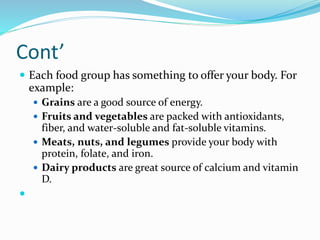
 Each food group has something to offer your body. For
example:
 Grains are a good source of energy.
 Fruits and vegetables are packed with antioxidants,
fiber, and water-soluble and fat-soluble vitamins.
 Meats, nuts, and legumes provide your body with
protein, folate, and iron.
 Dairy products are great source of calcium and vitamin
D.

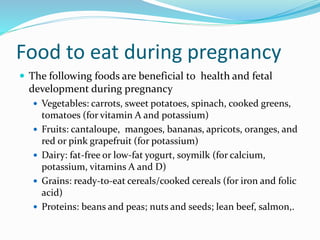
Food to eat during pregnancy
 The following foods are beneficial to health and fetal
development during pregnancy
 Vegetables: carrots, sweet potatoes, spinach, cooked greens,
tomatoes (for vitamin A and potassium)
 Fruits: cantaloupe, mangoes, bananas, apricots, oranges, and
red or pink grapefruit (for potassium)
 Dairy: fat-free or low-fat yogurt, soymilk (for calcium,
potassium, vitamins A and D)
 Grains: ready-to-eat cereals/cooked cereals (for iron and folic
acid)
 Proteins: beans and peas; nuts and seeds; lean beef, salmon,.
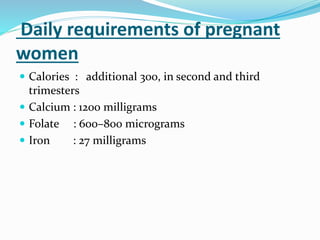
Daily requirements of pregnant
women
 Calories : additional 300, in second and third
trimesters
 Calcium : 1200 milligrams
 Folate : 600–800 micrograms
 Iron : 27 milligrams
Lifecycle, m  2

Lifecycle, m 2

  • 2.
    Nutrition through outlifecycle  Assignment 2 : Topic: Pregnancy complications and nutritional solutions
  • 3.
     Submitted to: Ma’amMadiha Javed  Submitted by: Muqaddas Ashraf  Roll no: 18 37  Program : HND (2018-2022)  Section : 4th semester
  • 4.
  • 5.
    Contents:  Introduction  Commoncomplications of pregnancy  Gestational diabetes  Anemia  Preeclampsia  Depression  Hypermesis gravidarum  Infections
  • 6.
    Cont;  Nutritional solutions Nutritional solution for different complications  Gestational diabetes  Anemia  Preeclampsia  Hypertension  Folic acid during pregnancy  Fluid intake during pregnancy  Foods eat during pregnancy  Importance of nutrition during pregnancy
  • 7.
    Pregnancy complications and nutritionsolution:  Introduction:  Pregnancy complications:  Complications of pregnancy are health problems that occur during pregnancy.  They can involve the mother health and health of baby, or both. Some women have problems before their pregnancy and in some during pregnancy.  It is very important for women to receive health care to decrease the risk of complication.
  • 8.
    Cont’ Nutritional solutions:  Goodnutrition during pregnancy improves the chances of having healthy baby.  From conception to birth-all parts of infant is made from nutrient that mother eats.  Fetal development is linked with nutritious diet.  A balanced diet also reduce the risk of anemia as well as other complications.
  • 9.
    Common complications of pregnancy: There is no clear distinction between complication pregnancy or symptoms or discomforts of pregnancy.  For example, mild nausea is discomfort but in severe condition it cause water –electrolyte imbalance it can be classified as pregnancy complication.  Some common complications of pregnancy include but not limited to the following,
  • 10.
    Cont’  Gestational diabetes High blood pressure  Anemia  Infections  Preeclampsia  And others…
  • 11.
    Gestational diabetes:  Gestationaldiabetes is the condition in which blood sugar level increases during pregnancy.  There are two classes of gestational diabetes  A1 can manage through diet while second class is insulin resistance and just like type 2 diabetes.
  • 12.
    Cont’ Symptoms:  Usually thereare no symptoms but sometimes feels  Hunger  Thirst  And fatigue Causes:  Usually, pancreas send enough insulin to handle it. But if body stop using insulin then your sugar level rises.
  • 13.
    Cont’  Health riskto baby include;  Jaundice  Respiratory distress syndrome  Treatment: Gestational diabetes is treated through a) Diet b) Monitoring of blood sugar level c) Oral medication also necessary.
  • 14.
    Anemia:  Anemia ishaving low number of red blood cells than normal level.  Iron-deficiency anemia is somewhat common during pregnancy is associated with preterm birth.  Symptoms;  Feeling tired  Shortness of breath  Becoming Pale
  • 15.
    Cont’  Treatment:  Treatmentvaries due to the severity of the anemia, and can be used by  increasing iron containing foods,  oral iron tablets or  by the use of parenteral iron
  • 16.
    Cont’  Treatment: Treating theunderlying cause of anemia will restore the number of RBCs.  It can treat by  Increasing iron containing food  Iron tablets  Folic acid supplements.
  • 17.
    Preeclampsia:  It canlead to preterm delivery and death.  This condition started after 20 weeks of pregnancy that cause high blood pressure.  Symptoms:  High blood pressure  Dizziness  Stomach pain  Headache  Cause: The cause of preeclampsia is unknown.
  • 18.
    Cont’ Treatment  In onlycure is delivery that is not good for baby. Treatment may include Bed rest Hospitalization Medicine to lower blood pressure Close monitoring of fetus and mother.
  • 19.
    Depression:  Extreme sadnessduring pregnancy or after birth.  Symptoms;  Intense sadness  Appetite change  Treatment: Women who are pregnant might be helped with one or a combination of treatment options, including:  Therapy  Support groups  Medicines
  • 20.
    Hypermesis gravidarum:  Severepersistent nausea and vomiting during pregnancy.  Symptoms:  Nausea that does not go away  Vomiting several times  Dehydration  Treatment:  Dry blend food and fluid together is the first treatment.  And medicines are also prescribed.
  • 21.
    Infections:  During pregnancybaby is protected from many illness but some infections can be harmful to your pregnancy, baby or both.  It includes  influenza,  Hepatitis  Urinary tract infection
  • 22.
    Cont’  Influenza:  Flueis common viral infection and can cause severe illness in pregnant women.  Symptoms:  Fever  Cough  Sore throat  Feeling tired
  • 23.
    Cont’  Urinary tractinfection  It is bacterial infection in urinary tract.  Symptoms  Pain or burning when urinating.  Frequent urination.  Treatment:  It can be treated with antibiotic.
  • 24.
    Nutrition solutions:  Bodygoes various physical and hormonal changes during pregnancy.  The food women eat is the baby’s main source of nourishment.  Proper nutrition can help promote baby growth and development.
  • 25.
    Cont’  A balanceddiet will also reduce the risks of anemia, as well as other unpleasant pregnancy symptoms such as fatigue and morning sickness.  A well balanced diet includes  protein  vitamin C  Calcium  fruits and vegetables  whole grains  iron-rich foods
  • 26.
    Nutritional solution forgestational diabetes:  Eat a healthy, low-sugar diet.  Follow a meal plan made for someone with diabetes.  Trade sugary snacks like cookies, candy, and ice cream for natural sugars like fruits, carrots, and raisins.  Add vegetables and whole grains, and watch your portion sizes.
  • 27.
    For anemia:  Iron-deficiencyanemia during pregnancy can cause fatigue.  about 50% more iron when you are pregnant. Iron is important in the formation of hemoglobin.  In pregnancy your need for iron and hemoglobin goes up, especially in the second and third trimesters.
  • 28.
    Cont;  Food highin iron include:  Meat such as beef  Beans including soya beans  Eggs  Tofu  Iron fortified cereals
  • 29.
    For hypertension;  Eata healthy more whole grains and potassium- rich foods: o Sweet potatoes, prunes, raisins, kidney beans, tomatoes are all high on potassium and can help lower your blood pressure. o Whole grains, which are rich in dietary fibers, also help reduce hypertension. So fuel up on legumes, vegetables, protein and whole grains. o For example, for breakfast you could have a mixed veggie omelet paired with whole grain toast and a side of fruit.
  • 30.
    Multiple vitamins havemultiple effects during pregnancy: Reduced the risk of preeclampsia: o Preeclampsia which causes elevated blood pressure and protein in the urine, is a leading cause of premature delivery. o Women in early pregnancy who took a multivitamin or prenatal vitamin regularly reduced their risk of preeclampsia by 45%.
  • 31.
    Focus on folicacid during pregnancy:  Getting adequate folic acid is one way of helping child become the healthiest person possible. During the first month of pregnancy the folic acid reduces the risk of neural tube defects, including spina bifida.  Take a daily multivitamin with 400 micrograms folic acid.  Choose grains fortified with folic acid, including cereals, breads, rice, and pasta, every day
  • 32.
    Fluid intake duringpregnancy:  Fluid intake is also important part of pregnancy nutrition.  Take in enough fluid by drinking several glasses of water each day in addition to the fluid in juices and soups. Restriction the intake of caffeine and artificial sweetener.  Avoid all form of alcohol.
  • 33.
    Importance of nutritionduring pregnancy  The importance of good nutrition during pregnancy  Approximately 300 extra calories are needed daily to maintain a healthy pregnancy. These calories should come from a balanced diet of  protein,  fruits,  vegetables  whole grains,  with sweets and fats kept to a minimum.  A healthy, well-balanced diet during pregnancy can also help to reduce some pregnancy symptoms, like nausea and constipation.
  • 34.
    Cont’  Each foodgroup has something to offer your body. For example:  Grains are a good source of energy.  Fruits and vegetables are packed with antioxidants, fiber, and water-soluble and fat-soluble vitamins.  Meats, nuts, and legumes provide your body with protein, folate, and iron.  Dairy products are great source of calcium and vitamin D. 
  • 35.
    Food to eatduring pregnancy  The following foods are beneficial to health and fetal development during pregnancy  Vegetables: carrots, sweet potatoes, spinach, cooked greens, tomatoes (for vitamin A and potassium)  Fruits: cantaloupe, mangoes, bananas, apricots, oranges, and red or pink grapefruit (for potassium)  Dairy: fat-free or low-fat yogurt, soymilk (for calcium, potassium, vitamins A and D)  Grains: ready-to-eat cereals/cooked cereals (for iron and folic acid)  Proteins: beans and peas; nuts and seeds; lean beef, salmon,.
  • 36.
    Daily requirements ofpregnant women  Calories : additional 300, in second and third trimesters  Calcium : 1200 milligrams  Folate : 600–800 micrograms  Iron : 27 milligrams