TRANSPORT OF
CARBONDIOXIDE IN BLOOD
 CO 2 is a by product of aerobic metabolism
in mitochondria.
 CO 2 readily hydrate to form carbonic acid,
so

it

can

be

a

source

of

significant

acidosis if allowed to accumulate.
 Thus it is very important to eliminated it
from the body.
 There

is

continuous

gradient

for

CO 2

tension from mitochondria to cytoplasm,
 In arterial blood the vol of CO 2 is 48 ml%
and PCO 2 is 40 mmHg
 In venous blood, the vol of CO 2 is 52ml%
and PCO 2 is 46 mmHg.
 Each 100 ml of venous blood release 4 ml
CO 2 while passing through lungs.
 CO is 5 L/min  CO 2 eliminated from body
is
4 x 5000

= 200ml/min
EXCHANGE OF CO 2 BETWEEN BLOOD AND
TISSUE
1. Diffusion of CO 2 from tissue into blood :
 PCO 2 is high in cells (46
mmHg

due

activity.

to

PCO 2

metabolic
is

arterial

blood is 40mmHg
 Pressure
mmHg

is

diffusion

gradient

of

responsible
of

CO 2

6
for

from
2. Diffusion of CO 2 from blood to Alveoli :
 PaCO 2 in alveoli is 40 mmHg PCO 2 in blood
is 46 mmHg.
 The

pressure

gradient

of

6

mmHg

is

responsible for diffusion of CO 2 from blood
into alveoli.
3. Diffusion of CO 2 for alveoli to atmosphere :
 In atmosphere PCO 2 0.3 mmHg whereas in
alveoli it is 40 mmHg. So, CO 2 leaves
TRANSPORT OF CARBON DIOXIDE
CO 2 is transported in blood :
i. Dissolved form (7%)
ii. Carbonic acid
iii.As bicarbonate (63%)
iv. As carbamino compound (30%)

i. Dissolved form :
 CO 2 diffuses into blood and dissolves in
plasma forming simple solution
 7% of total CO 2 is transported as dissolved
state in blood.
ii. Carbonic acid :
 Part of dissolved CO 2 in plasma, combines
with water to form carbonic acid.
 This reaction is very slow and is negligible.
iii.As Bicarbonates :

 63% of CO 2 is transported as bicarbonate.
 From plasma, CO 2 enter RBC. Inside RBC, CO 2
combines with water to form carbonic acid.
 Carbonic acid is very unstable. Almost all
carbonic acid formed in RBC dissociate
into bicarbonate and H + ion.


se conc of bicarbonate inside RBC
causes diffusion of bicarbonate ion into
plasma.
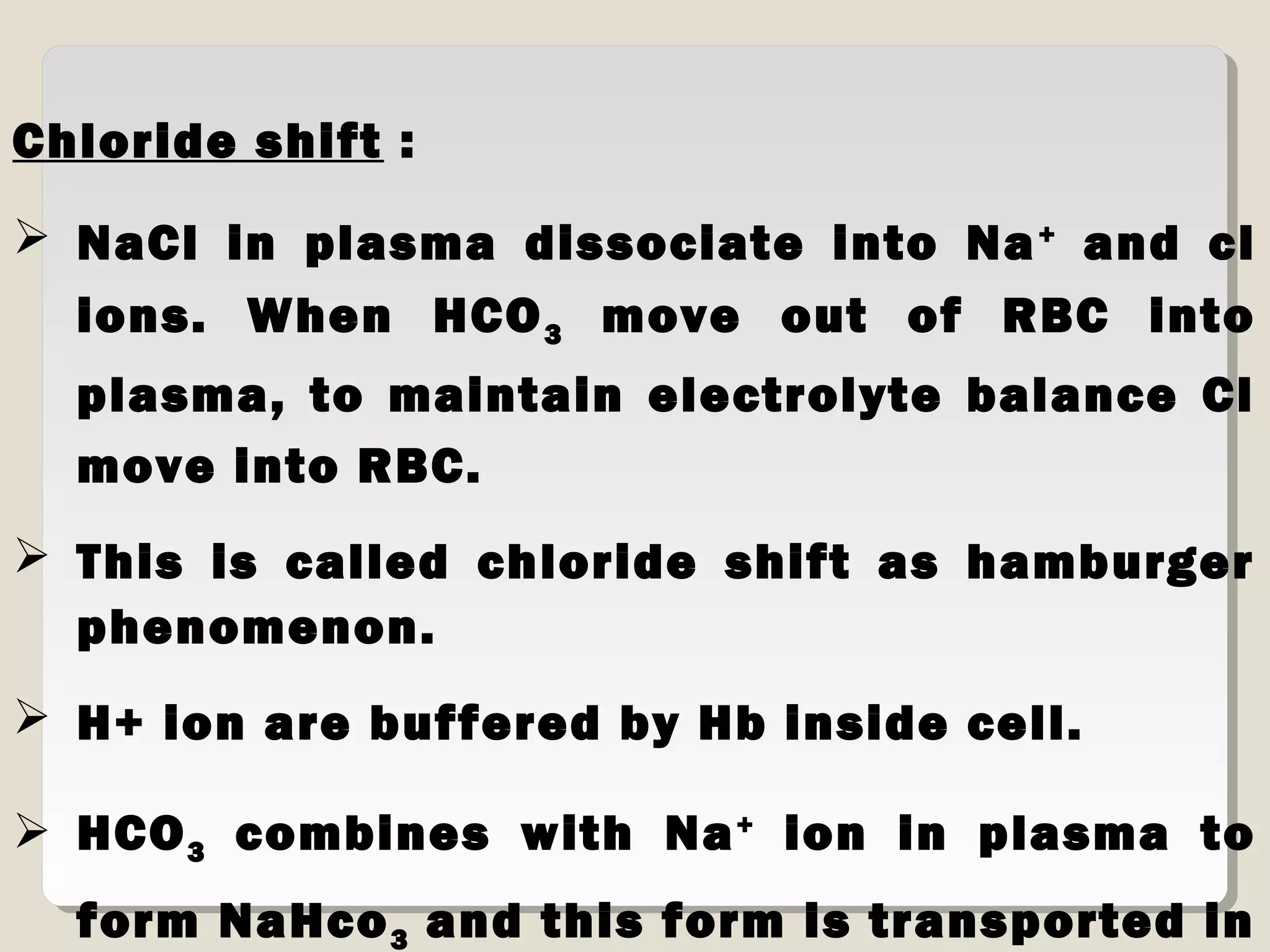
Chloride shift :
 NaCl in plasma dissociate into Na + and cl
ions. When HCO 3 move out of RBC into
plasma, to maintain electrolyte balance Cl
move into RBC.
 This is called chloride shift as hamburger
phenomenon.
 H+ ion are buffered by Hb inside cell.
 HCO 3 combines with Na + ion in plasma to
form NaHco 3 and this form is transported in
Reverse chloride shift :
 Bicarbonate has to be reverted back into
CO 2 , which has to be expelled out.
 When blood reaches alveoli, NaHCO 3 in
plasma dissociate into Na + and HCO 3 . HCO 3
moves into RBC and Cl moves out of RBC
into plasma. This is called reverse chloride
shift.
 At same time, O 2 enters RBC and displace
H + from Hb. H+ then combines with HCO 3 to
iv. As Carbamino Compound :
 30% of CO 2 is transported as carbamino
compound.
 CO 2 combines with Hb to form carbamino
hemoglobin.
 CO 2 combines with plasma protein to form
carbamino protein.
 Carbamino

hemoglobin

protein

together

are

and

carbamino

called

carbamino
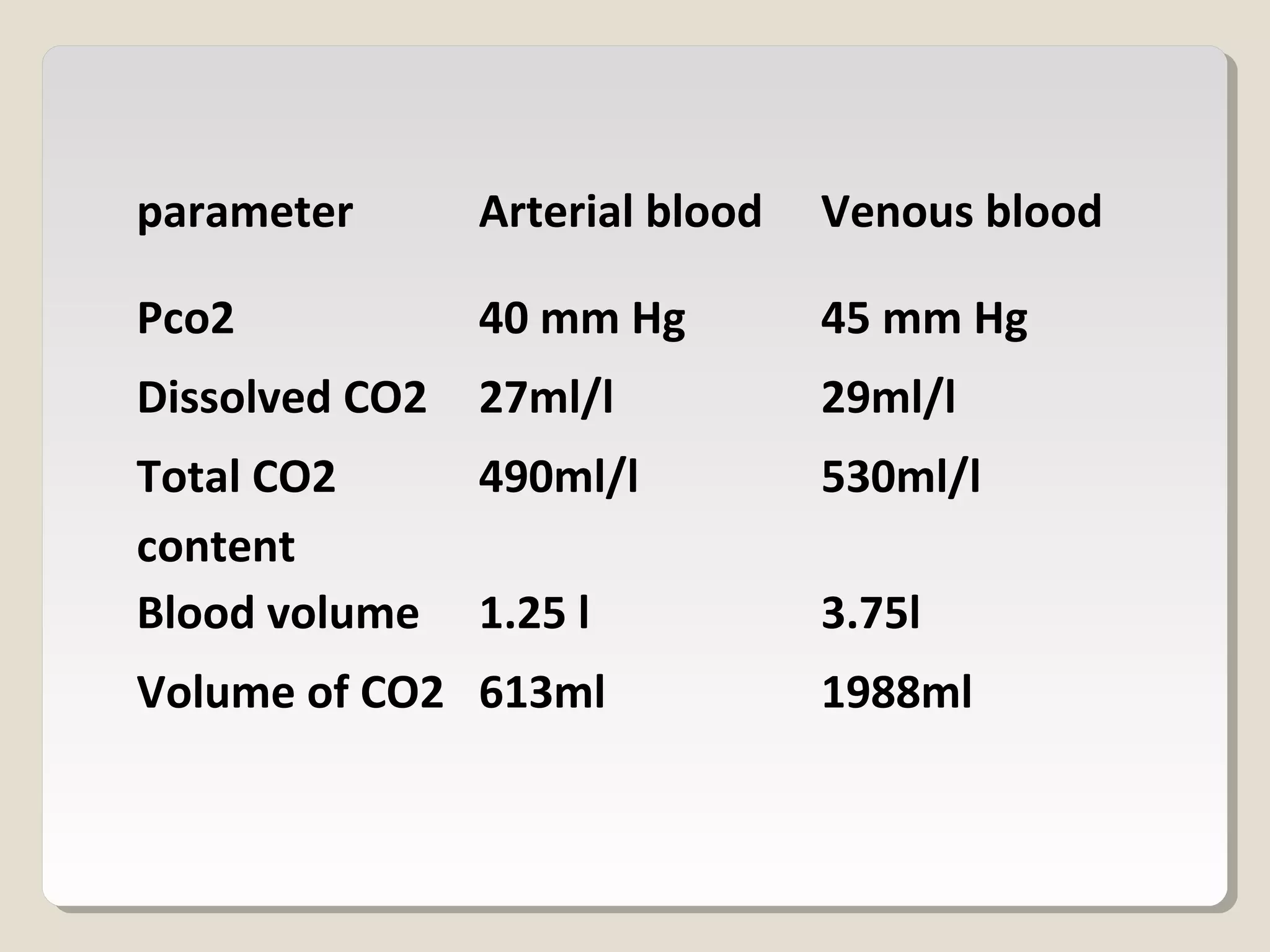
parameter

Arterial blood

Venous blood

Pco2

40 mm Hg

45 mm Hg

Dissolved CO2

27ml/l

29ml/l

Total CO2
content
Blood volume

490ml/l

530ml/l

1.25 l

3.75l

Volume of CO2 613ml

1988ml
CO 2 Dissociation Curve
 Amount
combining

of
with

CO 2
blood

depends upon the PCO 2 .
 The

relationship

between

PCO 2

and

quantity

of

CO 2

combined with blood is
demonstrated
curve

called

by

a
CO 2

:
 CO 2 content is 52 ml% when PCO 2 is 46
mmHg. It becomes 70ml% when PCO 2 is 100
mmHg.
 Combination of more amount of O 2 with Hb
displace CO 2 from Hb. This effect is called
Haldane’s effect.
 So, excess of oxygen content in blood
causes shift of CO 2 dissociation curve to
right.
Cause for Haldane’s effect :
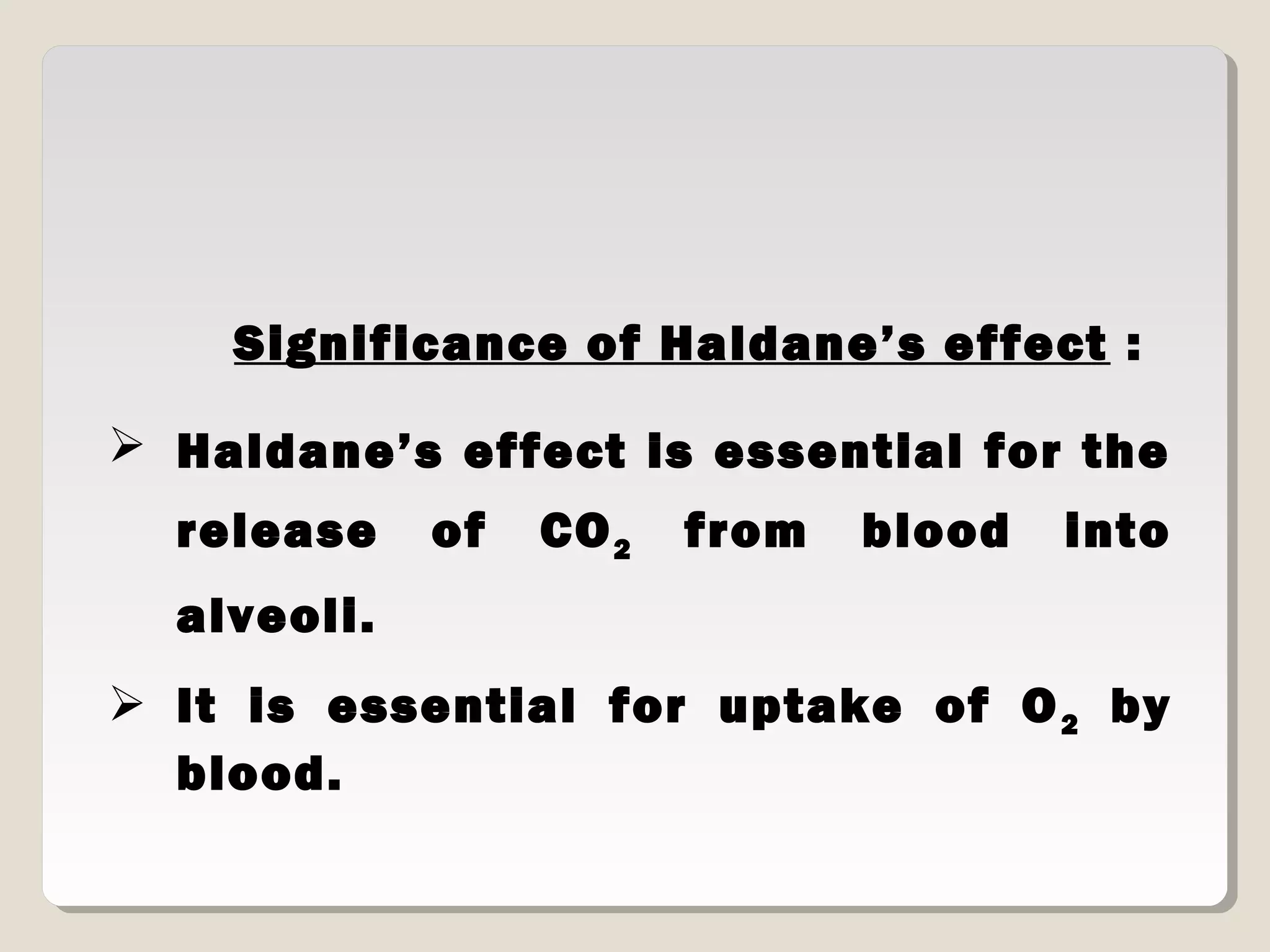
Significance of Haldane’s effect :
 Haldane’s effect is essential for the
release

of

CO 2

from

blood

into

alveoli.
 It is essential for uptake of O 2 by
blood.
CO 2 on

CO2 unloads O2 from Hb (Bohr Effect)
At any PO less O2 bound
O 2 Saturation 2 of Hb
HYPERCAPNIA


Hypercapnia is defined as an arterial
PCO 2 above 46 mmHg that does not
represent

compensation

metabolic alkalosis.

for

a
PHYSIOLOGICAL EFFECTS OF HYPERCARBIA
1) On CVS :
 Causes direct depression of both cardiac muscle
and vascular smooth muscle, but at same time it
cause

reflex

stimulation

of

sympathoadrenal

system.
 Moderate
increase

to

severe

hypercapnia

results

in

HR and myocardial contractility with

consequent

stroke vol and cardiac output, while

systemic vascular resistance is reduced.
2) Respiratory system :
 The

max

stimulatory

respiratory

PaCO 2 of about 100mmHg .
result in two fold

effect

is

by

Of 5 mmHg PaCO 2 can

in minute ventilation.

 With higher PaCO 2 stimulation is reduced and at
extremely high level respiration is depressed and
later ceases.
 Hypercapnia causes broncho dilation in both
healthy persons and patients with lung diseases.
3) CNS :
 Cerebral blood flow α PaCO 2 between 20 –
80
mmHg.
Blood
flow
changes
12ml/100g/min per mmHg change in PaCO 2
THANK YOU

Co2 transport in blood

  • 1.
  • 2.
     CO 2is a by product of aerobic metabolism in mitochondria.  CO 2 readily hydrate to form carbonic acid, so it can be a source of significant acidosis if allowed to accumulate.  Thus it is very important to eliminated it from the body.  There is continuous gradient for CO 2 tension from mitochondria to cytoplasm,
  • 3.
     In arterialblood the vol of CO 2 is 48 ml% and PCO 2 is 40 mmHg  In venous blood, the vol of CO 2 is 52ml% and PCO 2 is 46 mmHg.  Each 100 ml of venous blood release 4 ml CO 2 while passing through lungs.  CO is 5 L/min  CO 2 eliminated from body is 4 x 5000 = 200ml/min
  • 4.
    EXCHANGE OF CO2 BETWEEN BLOOD AND TISSUE 1. Diffusion of CO 2 from tissue into blood :
  • 5.
     PCO 2is high in cells (46 mmHg due activity. to PCO 2 metabolic is arterial blood is 40mmHg  Pressure mmHg is diffusion gradient of responsible of CO 2 6 for from
  • 6.
    2. Diffusion ofCO 2 from blood to Alveoli :
  • 7.
     PaCO 2in alveoli is 40 mmHg PCO 2 in blood is 46 mmHg.  The pressure gradient of 6 mmHg is responsible for diffusion of CO 2 from blood into alveoli. 3. Diffusion of CO 2 for alveoli to atmosphere :  In atmosphere PCO 2 0.3 mmHg whereas in alveoli it is 40 mmHg. So, CO 2 leaves
  • 8.
    TRANSPORT OF CARBONDIOXIDE CO 2 is transported in blood : i. Dissolved form (7%) ii. Carbonic acid iii.As bicarbonate (63%) iv. As carbamino compound (30%) i. Dissolved form :  CO 2 diffuses into blood and dissolves in plasma forming simple solution
  • 9.
     7% oftotal CO 2 is transported as dissolved state in blood. ii. Carbonic acid :  Part of dissolved CO 2 in plasma, combines with water to form carbonic acid.  This reaction is very slow and is negligible.
  • 10.
    iii.As Bicarbonates : 63% of CO 2 is transported as bicarbonate.  From plasma, CO 2 enter RBC. Inside RBC, CO 2 combines with water to form carbonic acid.
  • 11.
     Carbonic acidis very unstable. Almost all carbonic acid formed in RBC dissociate into bicarbonate and H + ion.  se conc of bicarbonate inside RBC causes diffusion of bicarbonate ion into plasma.
  • 12.
    Chloride shift : NaCl in plasma dissociate into Na + and cl ions. When HCO 3 move out of RBC into plasma, to maintain electrolyte balance Cl move into RBC.  This is called chloride shift as hamburger phenomenon.  H+ ion are buffered by Hb inside cell.  HCO 3 combines with Na + ion in plasma to form NaHco 3 and this form is transported in
  • 13.
    Reverse chloride shift:  Bicarbonate has to be reverted back into CO 2 , which has to be expelled out.  When blood reaches alveoli, NaHCO 3 in plasma dissociate into Na + and HCO 3 . HCO 3 moves into RBC and Cl moves out of RBC into plasma. This is called reverse chloride shift.  At same time, O 2 enters RBC and displace H + from Hb. H+ then combines with HCO 3 to
  • 14.
    iv. As CarbaminoCompound :  30% of CO 2 is transported as carbamino compound.  CO 2 combines with Hb to form carbamino hemoglobin.  CO 2 combines with plasma protein to form carbamino protein.  Carbamino hemoglobin protein together are and carbamino called carbamino
  • 15.
    parameter Arterial blood Venous blood Pco2 40mm Hg 45 mm Hg Dissolved CO2 27ml/l 29ml/l Total CO2 content Blood volume 490ml/l 530ml/l 1.25 l 3.75l Volume of CO2 613ml 1988ml
  • 16.
    CO 2 DissociationCurve  Amount combining of with CO 2 blood depends upon the PCO 2 .  The relationship between PCO 2 and quantity of CO 2 combined with blood is demonstrated curve called by a CO 2 :
  • 18.
     CO 2content is 52 ml% when PCO 2 is 46 mmHg. It becomes 70ml% when PCO 2 is 100 mmHg.  Combination of more amount of O 2 with Hb displace CO 2 from Hb. This effect is called Haldane’s effect.  So, excess of oxygen content in blood causes shift of CO 2 dissociation curve to right. Cause for Haldane’s effect :
  • 19.
    Significance of Haldane’seffect :  Haldane’s effect is essential for the release of CO 2 from blood into alveoli.  It is essential for uptake of O 2 by blood.
  • 20.
    CO 2 on CO2unloads O2 from Hb (Bohr Effect) At any PO less O2 bound O 2 Saturation 2 of Hb
  • 21.
    HYPERCAPNIA  Hypercapnia is definedas an arterial PCO 2 above 46 mmHg that does not represent compensation metabolic alkalosis. for a
  • 22.
    PHYSIOLOGICAL EFFECTS OFHYPERCARBIA 1) On CVS :  Causes direct depression of both cardiac muscle and vascular smooth muscle, but at same time it cause reflex stimulation of sympathoadrenal system.  Moderate increase to severe hypercapnia results in HR and myocardial contractility with consequent stroke vol and cardiac output, while systemic vascular resistance is reduced.
  • 23.
    2) Respiratory system:  The max stimulatory respiratory PaCO 2 of about 100mmHg . result in two fold effect is by Of 5 mmHg PaCO 2 can in minute ventilation.  With higher PaCO 2 stimulation is reduced and at extremely high level respiration is depressed and later ceases.  Hypercapnia causes broncho dilation in both healthy persons and patients with lung diseases.
  • 24.
    3) CNS : Cerebral blood flow α PaCO 2 between 20 – 80 mmHg. Blood flow changes 12ml/100g/min per mmHg change in PaCO 2
  • 25.