By:
Dina Barakat Saber
Resident at clinical oncology dep.
AUH
 Chronic myeloid leukemia (CML), also known as chronic
myelogenous leukemia, is a type of cancer that starts in certain
blood-forming cells of the bone marrow.
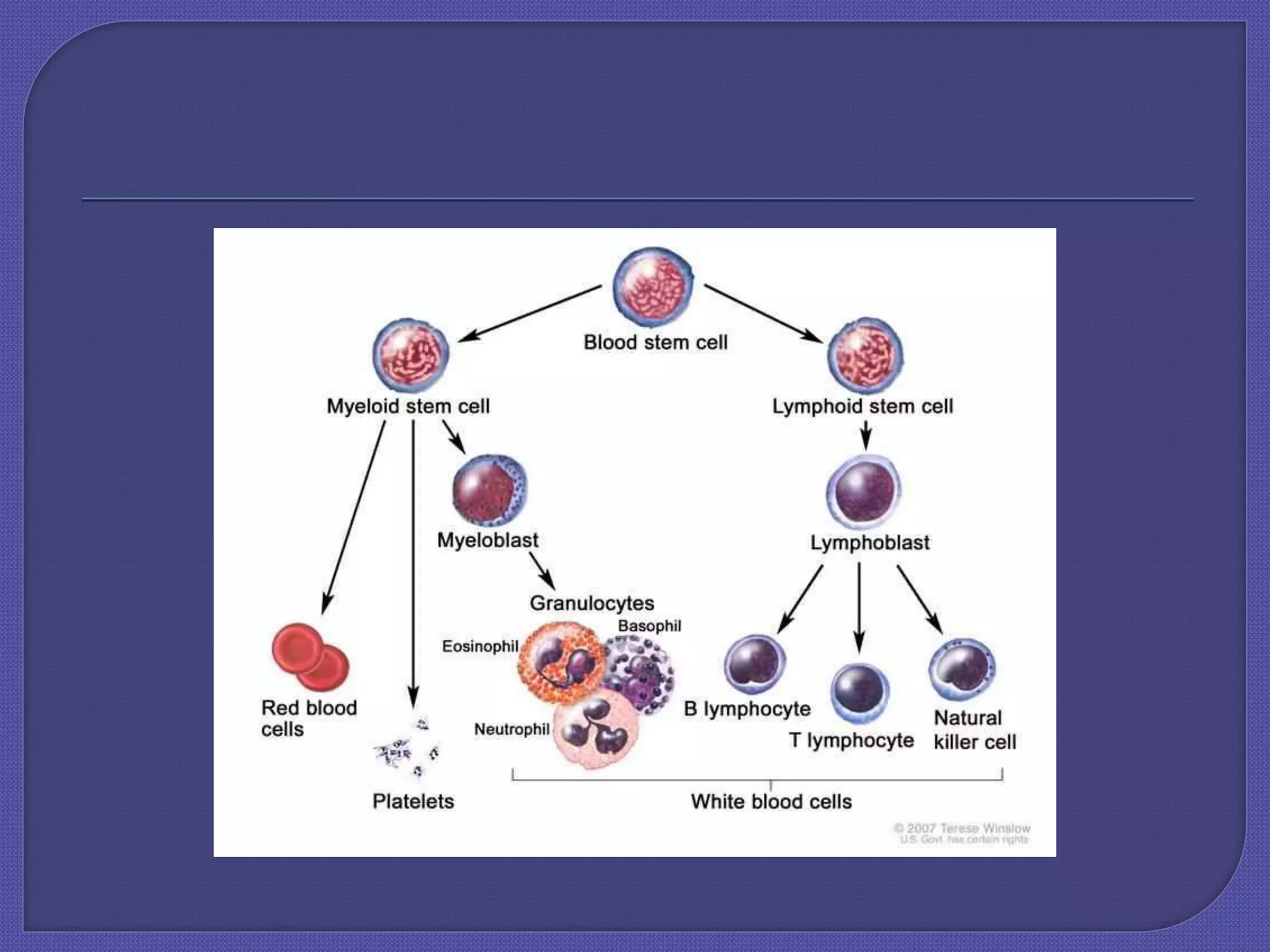
 In CML, a genetic change takes place in an early (immature) version
of myeloid cells - the cells that make red blood cells, platelets, and
most types of white blood cells (except lymphocytes). This change
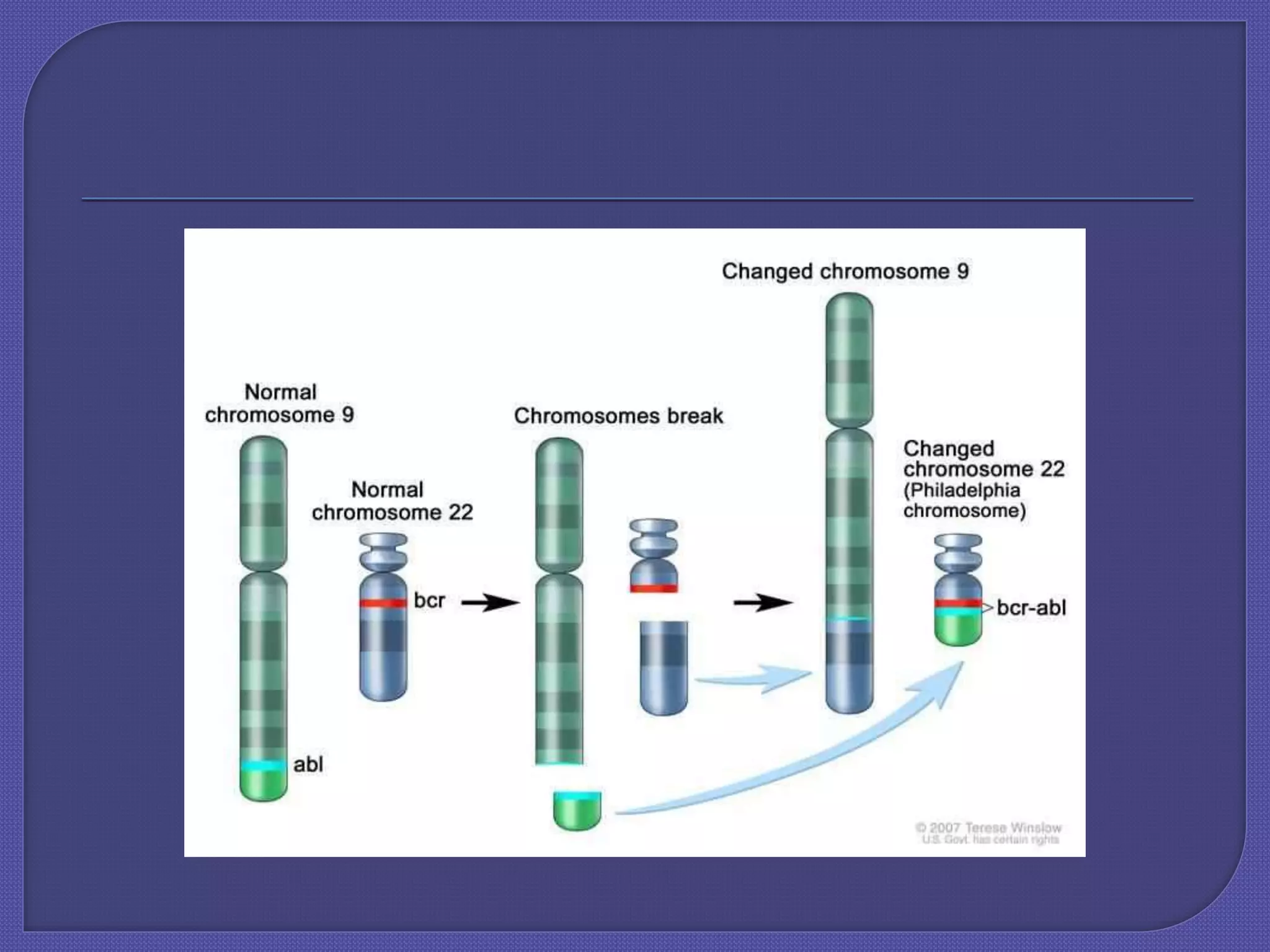
forms an abnormal gene called BCR-ABL, which turns the cell into a
CML cell.
 The leukemia cells grow and divide, building up in the bone marrow
and spilling over into the blood. In time, the cells can also settle in
other parts of the body, including the spleen.
 CML is a fairly slow growing leukemia, but it can also change into a
fast-growing acute leukemia that is hard to treat.
 Most cases of CML occur in adults, but very rarely it occurs in
children, too. In general, their treatment is the same as for adults.
The diagnosis of CML is based on
Histopathologic
findings in the
peripheral blood
Philadelphia (Ph)
chromosome in
bone marrow
cells
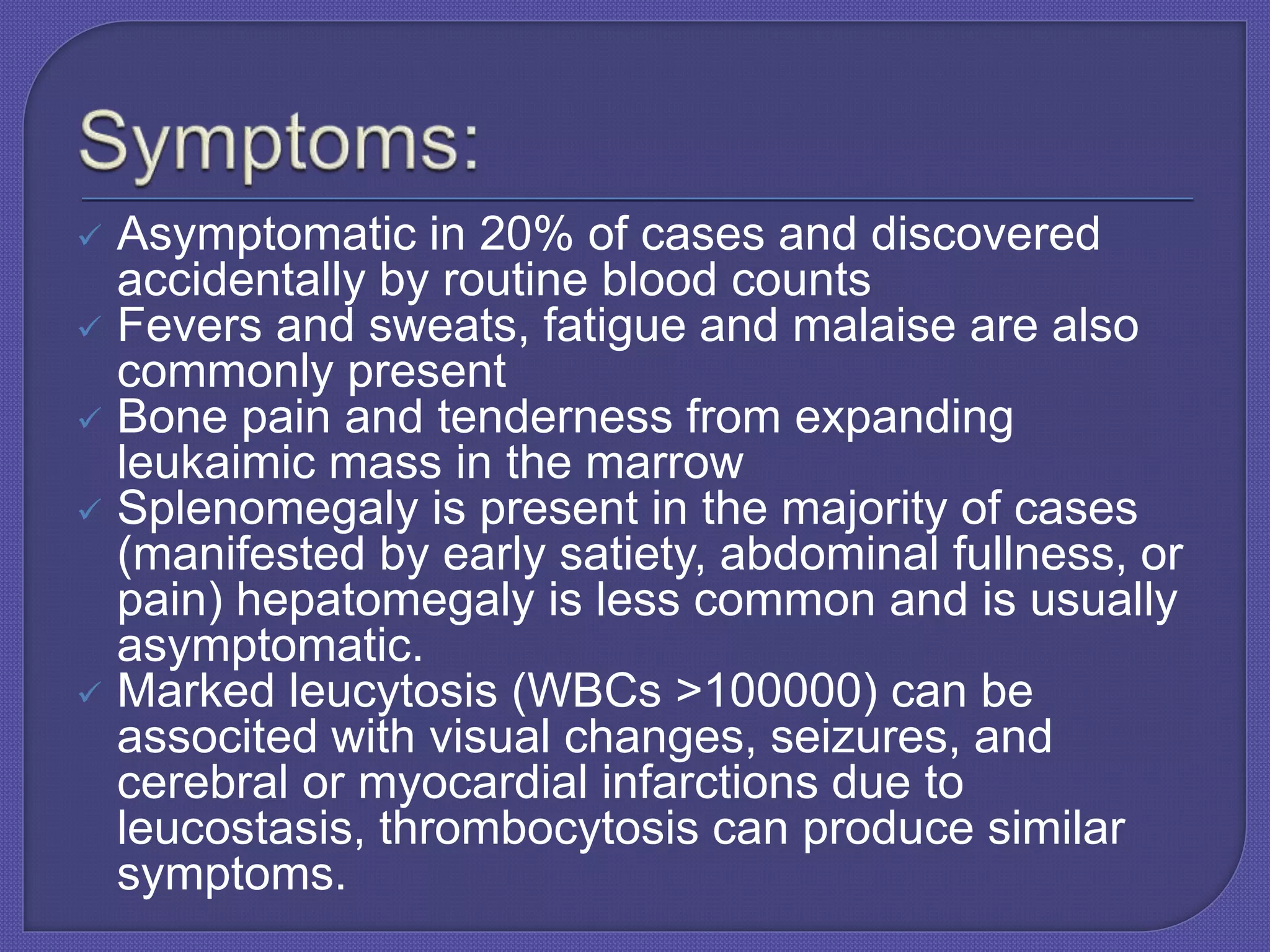
 Asymptomatic in 20% of cases and discovered
accidentally by routine blood counts
 Fevers and sweats, fatigue and malaise are also
commonly present
 Bone pain and tenderness from expanding
leukaimic mass in the marrow
 Splenomegaly is present in the majority of cases
(manifested by early satiety, abdominal fullness, or
pain) hepatomegaly is less common and is usually
asymptomatic.
 Marked leucytosis (WBCs >100000) can be
associted with visual changes, seizures, and
cerebral or myocardial infarctions due to
leucostasis, thrombocytosis can produce similar
symptoms.
The workup
for CML
consists of
Full blood
count
Peripheral
blood smear
Bone marrow
examination
CML Has 3
Phases
Chronic
Phase
Accelerated
phase
Blast phase
(blastic crisis)
 Peripheral blood leucocytosis due to increasred no.
of mature and immature neutrophils (WBSs usually
exceeds 30000 / µl and usually ranges from 100000 to
300000/µl )
 Prominent dysgranulopoieisis
 Promeylocytes, myelocytes, and metamyelocytes
>10% of WBCs
 Basophils < 2% of WBCs
 Monocytes <10% of WBCs
 BM examination: hypercellular with granulocytic
proliferation and dysplasia, with or without
erythroid or megacaryocytic dysplasia
 < 20% blasts in the blood or bone marrow
 It requires one or more of the following:
 Blasts 10% to 19% in the blood or BM.
 Basophils ≥20% of peripheral blood
leucocytes.
 Platelets ≥1000000/µl unresponsive to
therapy.
 Increasing spleen size &/or increasing WBCs
count unresponsive to ttt.
 Cytogenetic evidence of clonal evolution
(cytogenetic abnormalities in addition to Ph’
Chromsome
Blasts ≥20% of bone marrow cells or
peripheral WBCs or
Extramedullary blast formation (eg,
osteolytic bone lesions, lymphadenopathy)
or
Large foci or clusters of blasts in BM
 The chronic phase varies in duration, depending
on the maintenance therapy used: it usually lasts
2-3 years with hydroxyurea (Hydrea) or busulfan
therapy, but it may last for longer than 9.5 years in
patients who respond well to interferon-alfa
therapy.
 Furthermore, the advent of imatinib mesylate has
dramatically improved the duration of hematologic
and, indeed, cytogenetic remissions.
 Some patients with CML progress to a transitional
or accelerated phase, which may last for several
months.The survival of patients diagnosed in this
phase is 1-1.5 years. This phase is characterized
by poor control of the blood counts with
myelosuppressive medication
Hematologic remission (normal CBC and
physical examination [ie, no
organomegaly])
Cytogenetic remission (normal
chromosome returns with 0% Ph-positive
cells)
Molecular remission (negative polymerase
chain reaction [PCR] result for BCR/ABL
mRNA
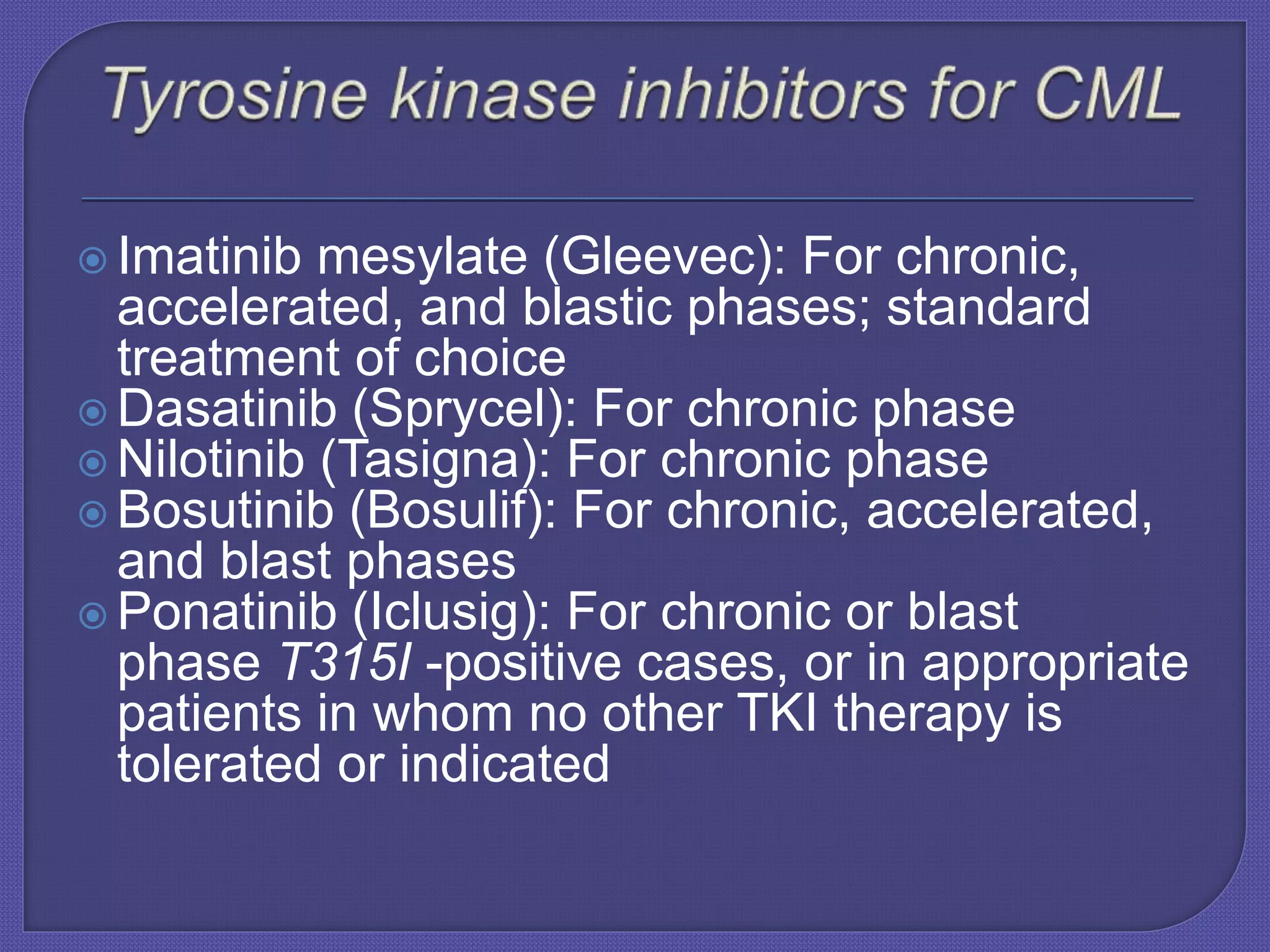
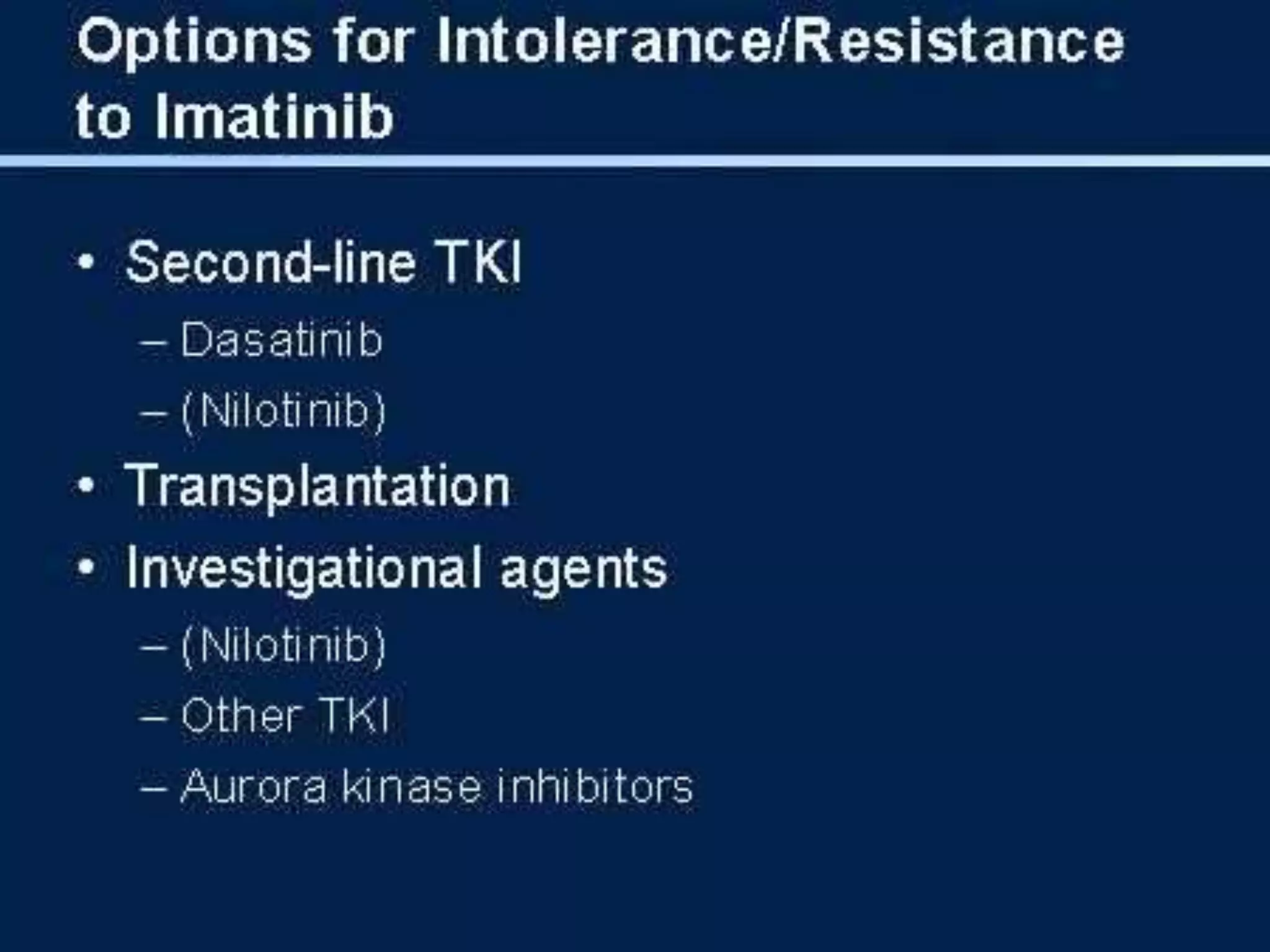
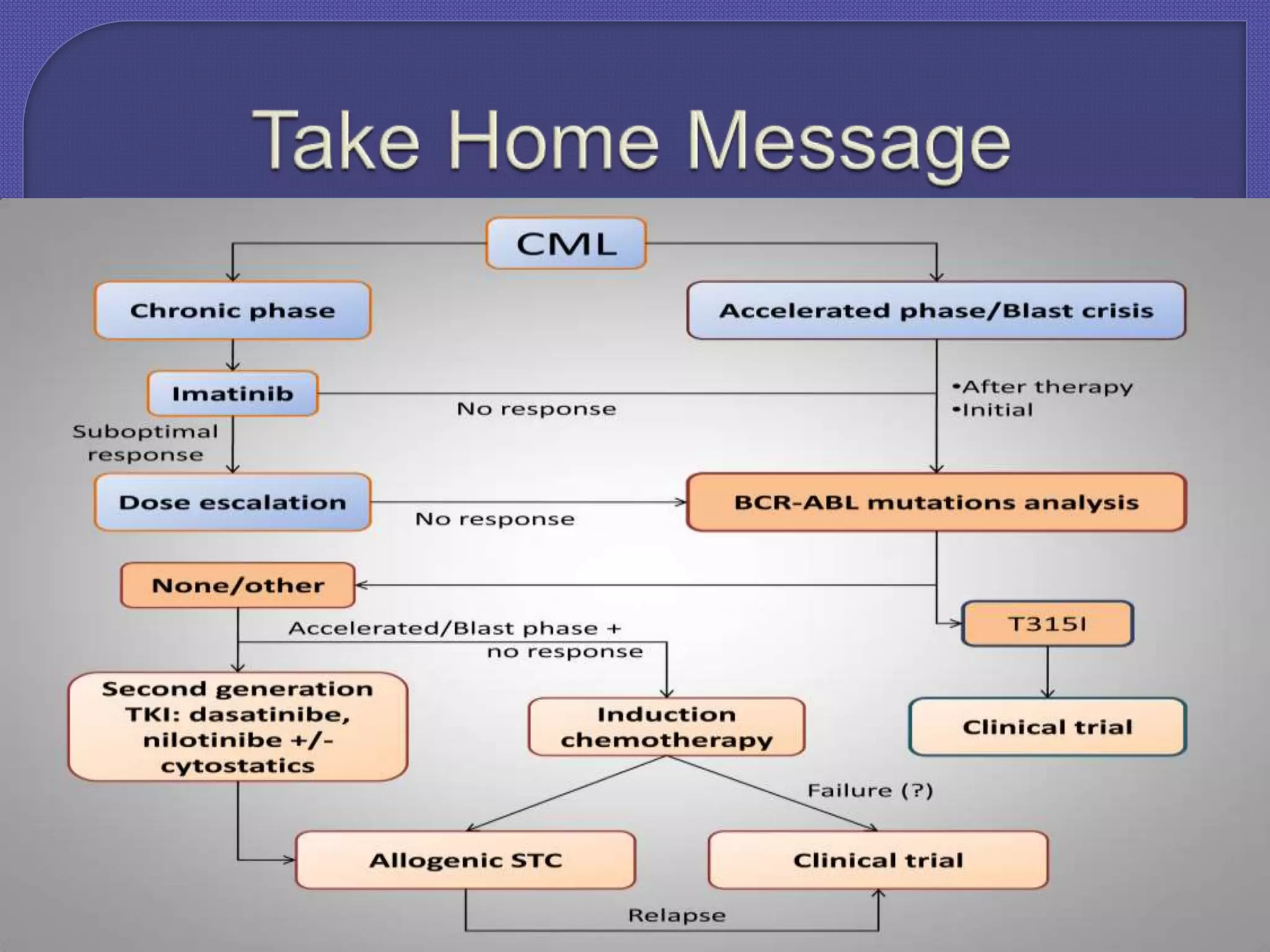
 Imatinib mesylate (Gleevec): For chronic,
accelerated, and blastic phases; standard
treatment of choice
 Dasatinib (Sprycel): For chronic phase
 Nilotinib (Tasigna): For chronic phase
 Bosutinib (Bosulif): For chronic, accelerated,
and blast phases
 Ponatinib (Iclusig): For chronic or blast
phase T315I -positive cases, or in appropriate
patients in whom no other TKI therapy is
tolerated or indicated
 Interferon-alfa: Former first-line agent; now
combined with newer drugs for refractory
cases
 Hydroxyurea (Hydrea): Myelosuppressive
agent for inducing hematologic remission
 Busulfan: Myelosuppressive agent for
inducing hematologic remission
 Omacetaxine (Synribo): Protein translation
inhibitor indicated for chronic- or accelerated-
phase CML with resistance and/or intolerance
to 2 or more tyrosine kinase inhibitors
 Allogeneic bone marrow transplantation (BMT) or stem
cell transplantation
 Only proven cure for CML
 Ideally performed in the chronic phase
 Candidate patients should be offered the procedure if
they have a matched or single–antigen-mismatched
related donor available
 Overall survival for allogeneic BMT with matched
unrelated donors ranges from 31% to 43% for patients
younger than 30 years and from 14% to 27% for older
patients
 Currently relegated to patients who do not achieve
molecular remissions or show resistance to imatinib
and failure of second-generation tyrosine kinase
inhibitors (eg, dasatinib)
 Tyrosine kinase inhibitors are also called TKIs.
They block chemical messengers (enzymes)
called tyrosine kinases.
 Tyrosine kinases help to send growth signals in
cells. So blocking them stops the cell growing
and dividing.
 Cancer growth blockers can block one type of
tyrosine kinase or more than one type.
 TKIs that block more than one type of tyrosine
kinase are called multi-TKIs.
 A tyrosine-kinase inhibitor (TKI) is a pharmaceutical drug that
inhibits tyrosine kinases.
 Tyrosine kinases are enzymesresponsible for the activation of many
proteins by signal transduction cascades. The proteins are activated
by adding a phosphate group to the protein (phosphorylation).
 TKIs are typically used as anti-cancer drugs, TKIs operate by four
different mechanisms: they can compete with adenosine
triphosphate (ATP), the phosphorylating entity, the substrate or both
or can act in an allosteric fashion, namely bind to a site outside the
active site, affecting its activity by a conformational change.[8]
 Recently TKIs have been shown to deprive tyrosine kinases of
access to the Cdc37-Hsp90 molecular chaperone system on which
they depend for their cellular stability, leading to their degradation.
 Five TKIs have been approved in the United States
and the European Union for the treatment of CML.
Imatinib was the forerunner. Nilotinib and dasatinib
are also approved for first- and second-line
treatment. Bosutinib and ponatinib are currently
approved only for second- or subsequent-line
treatment.
 These TKIs share the same therapeutic target,
BCR-ABL1, and act by inhibiting its kinase activity,
but they differ by several other characteristics that
may influence dosing and schedule, efficacy, and
toxicity.
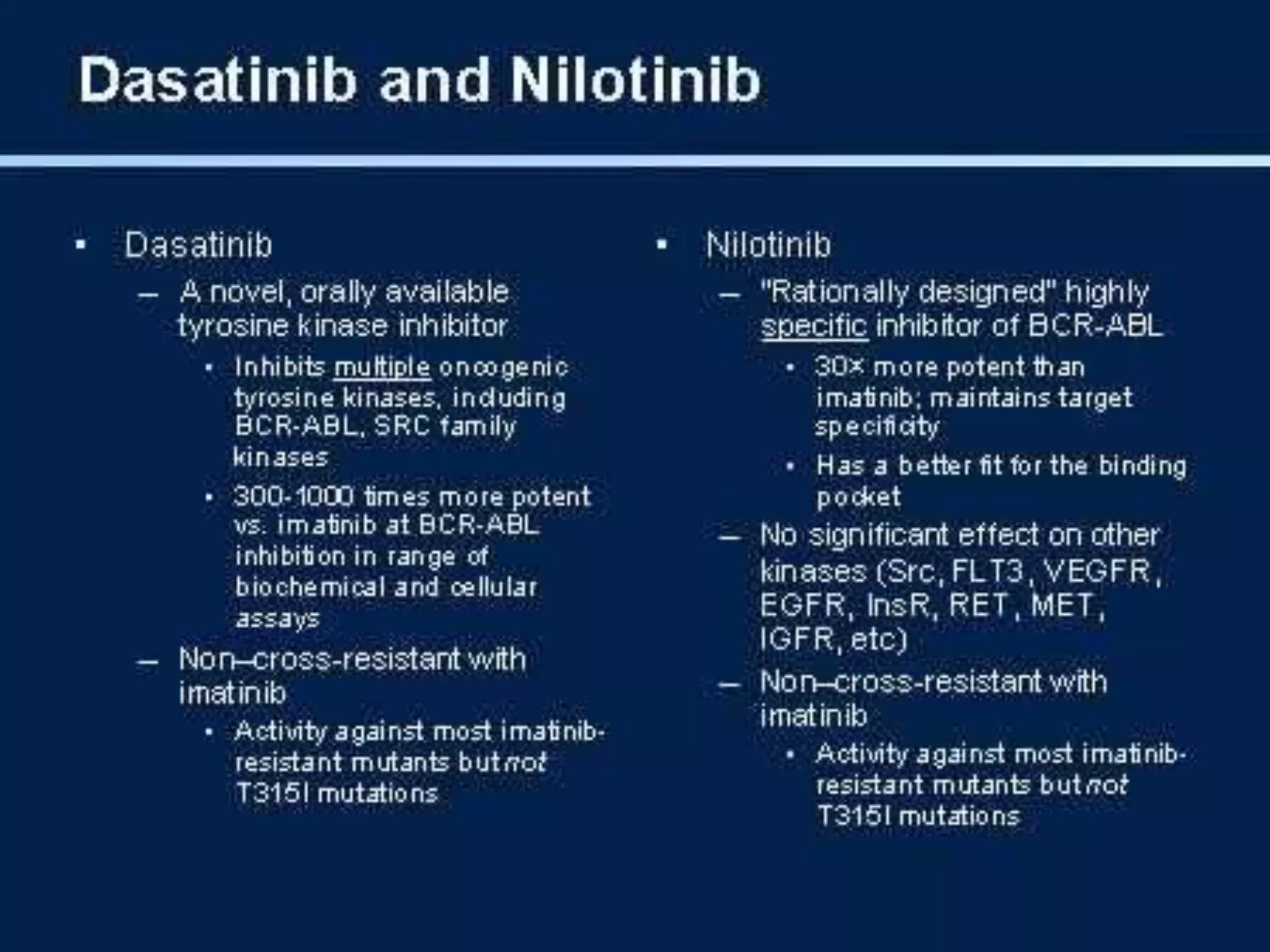
 In vitro, in a cellular or a biochemical assay, the
most potent inhibitor of BCR-ABL1 is ponatinib—
with a 50% inhibitory concentration (IC50) of 0.5
nmol/L— followed by dasatinib (0.8–1.8 nmol/L),
nilotinib (10–25 nmol/L), bosutinib (42 nmol/L), and
imatinib (260–678 nmol/L).
 The IC50 has a value in scoring the potency of
different TKIs, but it must be considered that the
peak and trough plasma concentrations of these
drugs are different, the IC50 values for some off-
target tyrosine kinases that can affect the
therapeutic efficacy but also the toxicity of each
agent.
 It is interesting to notice that imatinib, dasatinib,
bosutinib, and ponatinib inhibit several off-target
tyrosine kinases very efficiently, sometimes with
IC50s that are lower than the respective trough
plasma concentrations.
Cml final
Cml final
Cml final
Cml final
Cml final
Cml final
Cml final
Cml final

Cml final

  • 1.
    By: Dina Barakat Saber Residentat clinical oncology dep. AUH
  • 2.
     Chronic myeloidleukemia (CML), also known as chronic myelogenous leukemia, is a type of cancer that starts in certain blood-forming cells of the bone marrow.  In CML, a genetic change takes place in an early (immature) version of myeloid cells - the cells that make red blood cells, platelets, and most types of white blood cells (except lymphocytes). This change forms an abnormal gene called BCR-ABL, which turns the cell into a CML cell.  The leukemia cells grow and divide, building up in the bone marrow and spilling over into the blood. In time, the cells can also settle in other parts of the body, including the spleen.  CML is a fairly slow growing leukemia, but it can also change into a fast-growing acute leukemia that is hard to treat.  Most cases of CML occur in adults, but very rarely it occurs in children, too. In general, their treatment is the same as for adults.
  • 6.
    The diagnosis ofCML is based on Histopathologic findings in the peripheral blood Philadelphia (Ph) chromosome in bone marrow cells
  • 7.
     Asymptomatic in20% of cases and discovered accidentally by routine blood counts  Fevers and sweats, fatigue and malaise are also commonly present  Bone pain and tenderness from expanding leukaimic mass in the marrow  Splenomegaly is present in the majority of cases (manifested by early satiety, abdominal fullness, or pain) hepatomegaly is less common and is usually asymptomatic.  Marked leucytosis (WBCs >100000) can be associted with visual changes, seizures, and cerebral or myocardial infarctions due to leucostasis, thrombocytosis can produce similar symptoms.
  • 8.
    The workup for CML consistsof Full blood count Peripheral blood smear Bone marrow examination
  • 9.
  • 10.
     Peripheral bloodleucocytosis due to increasred no. of mature and immature neutrophils (WBSs usually exceeds 30000 / µl and usually ranges from 100000 to 300000/µl )  Prominent dysgranulopoieisis  Promeylocytes, myelocytes, and metamyelocytes >10% of WBCs  Basophils < 2% of WBCs  Monocytes <10% of WBCs  BM examination: hypercellular with granulocytic proliferation and dysplasia, with or without erythroid or megacaryocytic dysplasia  < 20% blasts in the blood or bone marrow
  • 12.
     It requiresone or more of the following:  Blasts 10% to 19% in the blood or BM.  Basophils ≥20% of peripheral blood leucocytes.  Platelets ≥1000000/µl unresponsive to therapy.  Increasing spleen size &/or increasing WBCs count unresponsive to ttt.  Cytogenetic evidence of clonal evolution (cytogenetic abnormalities in addition to Ph’ Chromsome
  • 13.
    Blasts ≥20% ofbone marrow cells or peripheral WBCs or Extramedullary blast formation (eg, osteolytic bone lesions, lymphadenopathy) or Large foci or clusters of blasts in BM
  • 14.
     The chronicphase varies in duration, depending on the maintenance therapy used: it usually lasts 2-3 years with hydroxyurea (Hydrea) or busulfan therapy, but it may last for longer than 9.5 years in patients who respond well to interferon-alfa therapy.  Furthermore, the advent of imatinib mesylate has dramatically improved the duration of hematologic and, indeed, cytogenetic remissions.  Some patients with CML progress to a transitional or accelerated phase, which may last for several months.The survival of patients diagnosed in this phase is 1-1.5 years. This phase is characterized by poor control of the blood counts with myelosuppressive medication
  • 16.
    Hematologic remission (normalCBC and physical examination [ie, no organomegaly]) Cytogenetic remission (normal chromosome returns with 0% Ph-positive cells) Molecular remission (negative polymerase chain reaction [PCR] result for BCR/ABL mRNA
  • 17.
     Imatinib mesylate(Gleevec): For chronic, accelerated, and blastic phases; standard treatment of choice  Dasatinib (Sprycel): For chronic phase  Nilotinib (Tasigna): For chronic phase  Bosutinib (Bosulif): For chronic, accelerated, and blast phases  Ponatinib (Iclusig): For chronic or blast phase T315I -positive cases, or in appropriate patients in whom no other TKI therapy is tolerated or indicated
  • 18.
     Interferon-alfa: Formerfirst-line agent; now combined with newer drugs for refractory cases  Hydroxyurea (Hydrea): Myelosuppressive agent for inducing hematologic remission  Busulfan: Myelosuppressive agent for inducing hematologic remission  Omacetaxine (Synribo): Protein translation inhibitor indicated for chronic- or accelerated- phase CML with resistance and/or intolerance to 2 or more tyrosine kinase inhibitors
  • 19.
     Allogeneic bonemarrow transplantation (BMT) or stem cell transplantation  Only proven cure for CML  Ideally performed in the chronic phase  Candidate patients should be offered the procedure if they have a matched or single–antigen-mismatched related donor available  Overall survival for allogeneic BMT with matched unrelated donors ranges from 31% to 43% for patients younger than 30 years and from 14% to 27% for older patients  Currently relegated to patients who do not achieve molecular remissions or show resistance to imatinib and failure of second-generation tyrosine kinase inhibitors (eg, dasatinib)
  • 21.
     Tyrosine kinaseinhibitors are also called TKIs. They block chemical messengers (enzymes) called tyrosine kinases.  Tyrosine kinases help to send growth signals in cells. So blocking them stops the cell growing and dividing.  Cancer growth blockers can block one type of tyrosine kinase or more than one type.  TKIs that block more than one type of tyrosine kinase are called multi-TKIs.
  • 22.
     A tyrosine-kinaseinhibitor (TKI) is a pharmaceutical drug that inhibits tyrosine kinases.  Tyrosine kinases are enzymesresponsible for the activation of many proteins by signal transduction cascades. The proteins are activated by adding a phosphate group to the protein (phosphorylation).  TKIs are typically used as anti-cancer drugs, TKIs operate by four different mechanisms: they can compete with adenosine triphosphate (ATP), the phosphorylating entity, the substrate or both or can act in an allosteric fashion, namely bind to a site outside the active site, affecting its activity by a conformational change.[8]  Recently TKIs have been shown to deprive tyrosine kinases of access to the Cdc37-Hsp90 molecular chaperone system on which they depend for their cellular stability, leading to their degradation.
  • 25.
     Five TKIshave been approved in the United States and the European Union for the treatment of CML. Imatinib was the forerunner. Nilotinib and dasatinib are also approved for first- and second-line treatment. Bosutinib and ponatinib are currently approved only for second- or subsequent-line treatment.  These TKIs share the same therapeutic target, BCR-ABL1, and act by inhibiting its kinase activity, but they differ by several other characteristics that may influence dosing and schedule, efficacy, and toxicity.  In vitro, in a cellular or a biochemical assay, the most potent inhibitor of BCR-ABL1 is ponatinib— with a 50% inhibitory concentration (IC50) of 0.5 nmol/L— followed by dasatinib (0.8–1.8 nmol/L), nilotinib (10–25 nmol/L), bosutinib (42 nmol/L), and imatinib (260–678 nmol/L).
  • 26.
     The IC50has a value in scoring the potency of different TKIs, but it must be considered that the peak and trough plasma concentrations of these drugs are different, the IC50 values for some off- target tyrosine kinases that can affect the therapeutic efficacy but also the toxicity of each agent.  It is interesting to notice that imatinib, dasatinib, bosutinib, and ponatinib inhibit several off-target tyrosine kinases very efficiently, sometimes with IC50s that are lower than the respective trough plasma concentrations.