Downloaded 10 times
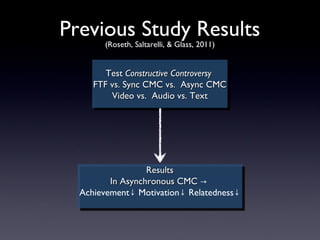
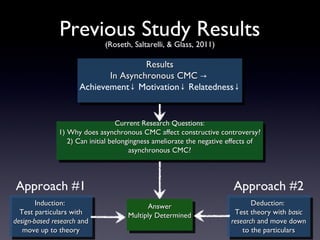
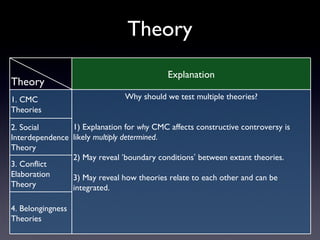
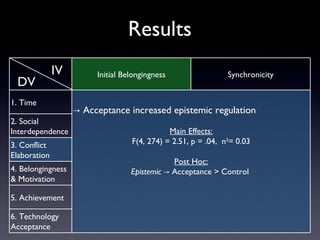
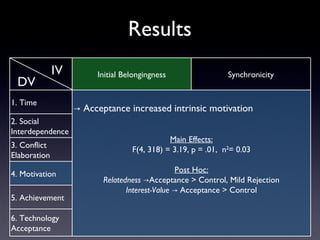
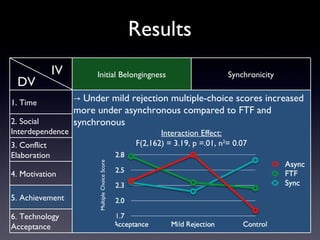
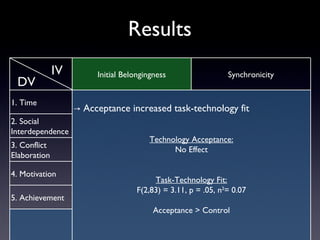
![Results
IV Initial Belongingness Synchronicity
DV
1. Time
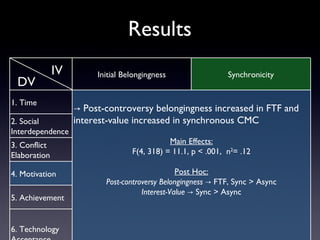
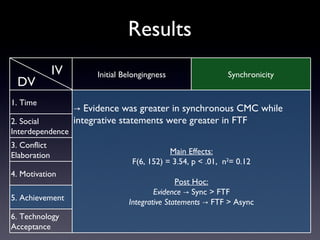
→ Completion rates were greater in FTF and
2. Social synchronous CMC
Interdependence
3. Conflict
Elaboration
Completion Rate:
4. Motivation FTF & Sync (100%) → Async (59.7%) [Fisher’s exact test; p < .01]
5. Achievement
6. Technology
Acceptance](https://image.slidesharecdn.com/site2012presentation-120328114526-phpapp01/85/CMC-Cooperative-Learning-Motivation-Achievement-24-320.jpg)
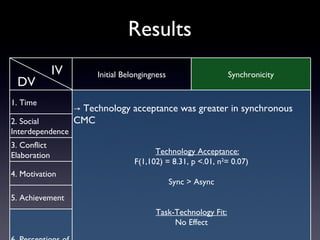
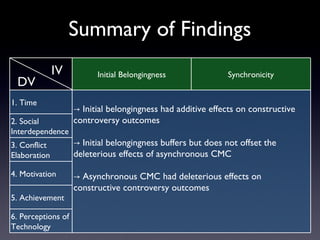
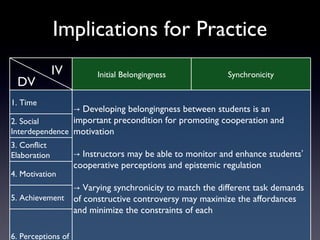
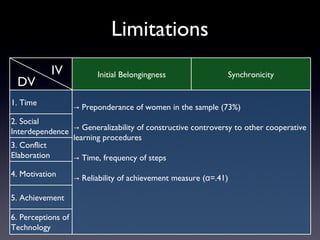

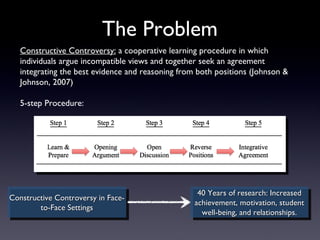
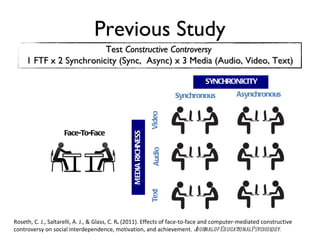
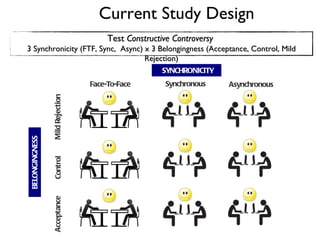
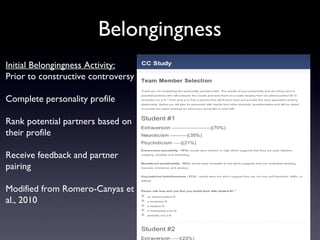
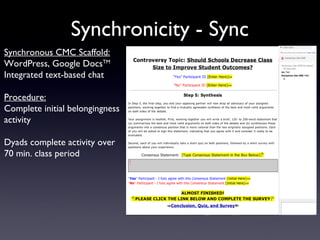
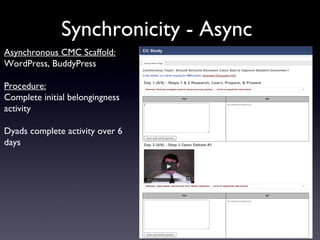
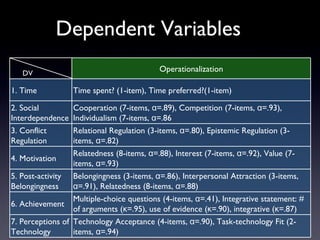
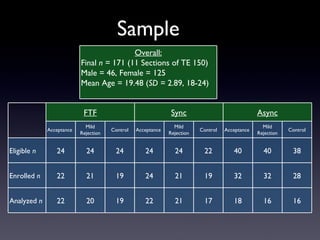
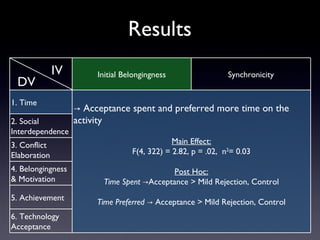
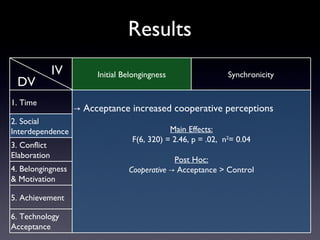
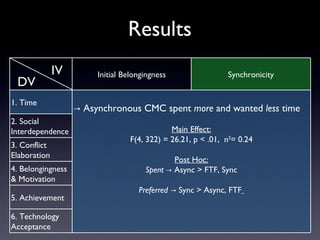
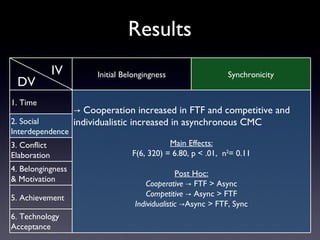
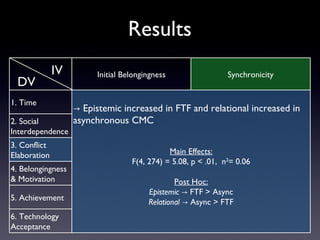
This study examined the effects of initial belongingness and synchronicity on cooperative learning. 171 undergraduate students participated in constructive controversies that varied the level of initial belongingness (acceptance, mild rejection, control) and synchronicity (face-to-face, synchronous online, asynchronous online). Results showed that initial acceptance increased time spent, cooperative perceptions, epistemic regulation, and intrinsic motivation compared to control and mild rejection conditions. Additionally, under mild rejection, asynchronous online discussions led to higher multiple choice scores than face-to-face or synchronous online discussions.


![Scaffold Example [Web]](https://cdn.slidesharecdn.com/ss_thumbnails/3981196-thumbnail.jpg?width=640&height=640&fit=bounds)


