CLOUD COMPUTING 
by 
LB
Cloud Computing 
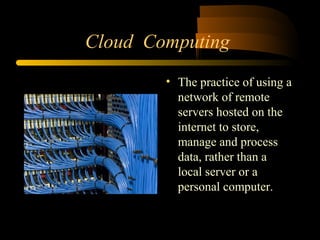
• The practice of using a 
network of remote 
servers hosted on the 
internet to store, 
manage and process 
data, rather than a 
local server or a 
personal computer.
Cloud Computer 
How Cloud Computing Work?
Cloud Computing 
• You have to purchase software or software 
licenses to give employees the tools they 
require. 
• Whenever you have a new hire, you have to 
buy more software or make sure your 
current software license allows another 
user.
Cloud Computing 
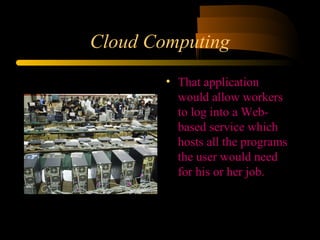
• That application 
would allow workers 
to log into a Web-based 
service which 
hosts all the programs 
the user would need 
for his or her job.
Cloud Computing 
• The only thing the user's computer needs to 
be able to run is the cloud computing 
system's interface software, which can be 
as simple as a Web browser, and the cloud's 
network takes care of the rest.
Cloud Computing 
• You have an e-mail account with a Web-based e-mail 
service like Hotmail, Yahoo! Mail or Gmail,. 
• Instead of running an e-mail program on your 
computer, you log in to a Web e-mail account 
remotely. 
• The software and storage for your account doesn't 
exist on your computer -- it's on the service's 
computer cloud.
Cloud Computing 
Cloud Computing Architecture
Cloud Computing 
• The front end is the side the computer user, or client, sees. 
• Includes the client's computer (or computer network) and 
the application required to access the cloud computing 
system. 
• Not all cloud computing systems have the same user 
interface. 
• Other systems have unique applications that provide 
network access to clients.
Cloud Computing 
• The back end is the "cloud" section of the system. 
• There are the various computers, servers and data storage 
systems that create the "cloud" of computing services. 
• Each application will have its own dedicated server and 
Central server administer.
Cloud Computing 
The six (6) reasons you would rely on 
another computer system to run 
programs and store data?
Cloud Computing 
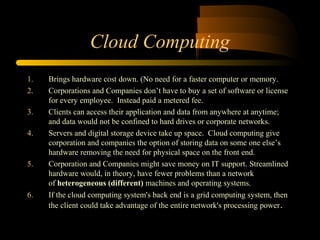
1. Brings hardware cost down. (No need for a faster computer or memory. 
2. Corporations and Companies don’t have to buy a set of software or license 
for every employee. Instead paid a metered fee. 
3. Clients can access their application and data from anywhere at anytime; 
and data would not be confined to hard drives or corporate networks. 
4. Servers and digital storage device take up space. Cloud computing give 
corporation and companies the option of storing data on some one else’s 
hardware removing the need for physical space on the front end. 
5. Corporation and Companies might save money on IT support. Streamlined 
hardware would, in theory, have fewer problems than a network 
of heterogeneous (different) machines and operating systems. 
6. If the cloud computing system's back end is a grid computing system, then 
the client could take advantage of the entire network's processing power.
Cloud Computing 
While the benefits of cloud 
computing seem convincing, there 
any potential problems?
Cloud Computing 
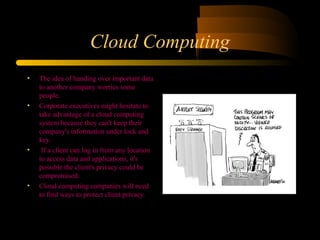
• The idea of handing over important data 
to another company worries some 
people. 
• Corporate executives might hesitate to 
take advantage of a cloud computing 
system because they can't keep their 
company's information under lock and 
key. 
• If a client can log in from any location 
to access data and applications, it's 
possible the client's privacy could be 
compromised. 
• Cloud computing companies will need 
to find ways to protect client privacy.
Cloud Computing 
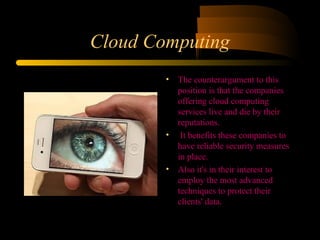
• The counterargument to this 
position is that the companies 
offering cloud computing 
services live and die by their 
reputations. 
• It benefits these companies to 
have reliable security measures 
in place. 
• Also it's in their interest to 
employ the most advanced 
techniques to protect their 
clients' data.
Cloud Computing 
• Does the user or company subscribing to the cloud 
computing service own the data? 
• Does the cloud computing system, which provides the 
actual storage space, own it? 
• Is it possible for a cloud computing company to deny a 
client access to that client's data?
Cloud Computing 
How will cloud computing affect 
other industries?
Cloud Computing 
• If companies switch to using streamlined computer 
systems, they'll have fewer IT needs. 
• Some industry experts believe that the need for IT jobs 
will migrate to the back end of the cloud computing 
system. 
• An autonomic computing system is self-managing, which 
means the system monitors itself and takes measures to 
prevent or repair problems. 
• This auto computing system is mostly theoretical. But, if 
autonomic computing becomes a reality, it could eliminate 
the need for many IT maintenance jobs.
Cloud Computing 
• Conclusion 
Modern technology is both a blessing and a curse. While mobile devices and 
web services can deliver quick access to information and even quicker 
connection to other people, there is a downside: the loss of control over data. 
To regain confidence in the privacy and security of personal data, new 
technology applications need to manage sensitive data rigorously and provide 
users with strong controls over its ownership , distribution and properties. 
By 
LB

Cloud computing

  • 1.
  • 2.
    Cloud Computing •The practice of using a network of remote servers hosted on the internet to store, manage and process data, rather than a local server or a personal computer.
  • 3.
    Cloud Computer HowCloud Computing Work?
  • 4.
    Cloud Computing •You have to purchase software or software licenses to give employees the tools they require. • Whenever you have a new hire, you have to buy more software or make sure your current software license allows another user.
  • 5.
    Cloud Computing •That application would allow workers to log into a Web-based service which hosts all the programs the user would need for his or her job.
  • 6.
    Cloud Computing •The only thing the user's computer needs to be able to run is the cloud computing system's interface software, which can be as simple as a Web browser, and the cloud's network takes care of the rest.
  • 7.
    Cloud Computing •You have an e-mail account with a Web-based e-mail service like Hotmail, Yahoo! Mail or Gmail,. • Instead of running an e-mail program on your computer, you log in to a Web e-mail account remotely. • The software and storage for your account doesn't exist on your computer -- it's on the service's computer cloud.
  • 8.
    Cloud Computing CloudComputing Architecture
  • 9.
    Cloud Computing •The front end is the side the computer user, or client, sees. • Includes the client's computer (or computer network) and the application required to access the cloud computing system. • Not all cloud computing systems have the same user interface. • Other systems have unique applications that provide network access to clients.
  • 10.
    Cloud Computing •The back end is the "cloud" section of the system. • There are the various computers, servers and data storage systems that create the "cloud" of computing services. • Each application will have its own dedicated server and Central server administer.
  • 11.
    Cloud Computing Thesix (6) reasons you would rely on another computer system to run programs and store data?
  • 12.
    Cloud Computing 1.Brings hardware cost down. (No need for a faster computer or memory. 2. Corporations and Companies don’t have to buy a set of software or license for every employee. Instead paid a metered fee. 3. Clients can access their application and data from anywhere at anytime; and data would not be confined to hard drives or corporate networks. 4. Servers and digital storage device take up space. Cloud computing give corporation and companies the option of storing data on some one else’s hardware removing the need for physical space on the front end. 5. Corporation and Companies might save money on IT support. Streamlined hardware would, in theory, have fewer problems than a network of heterogeneous (different) machines and operating systems. 6. If the cloud computing system's back end is a grid computing system, then the client could take advantage of the entire network's processing power.
  • 13.
    Cloud Computing Whilethe benefits of cloud computing seem convincing, there any potential problems?
  • 14.
    Cloud Computing •The idea of handing over important data to another company worries some people. • Corporate executives might hesitate to take advantage of a cloud computing system because they can't keep their company's information under lock and key. • If a client can log in from any location to access data and applications, it's possible the client's privacy could be compromised. • Cloud computing companies will need to find ways to protect client privacy.
  • 15.
    Cloud Computing •The counterargument to this position is that the companies offering cloud computing services live and die by their reputations. • It benefits these companies to have reliable security measures in place. • Also it's in their interest to employ the most advanced techniques to protect their clients' data.
  • 16.
    Cloud Computing •Does the user or company subscribing to the cloud computing service own the data? • Does the cloud computing system, which provides the actual storage space, own it? • Is it possible for a cloud computing company to deny a client access to that client's data?
  • 17.
    Cloud Computing Howwill cloud computing affect other industries?
  • 18.
    Cloud Computing •If companies switch to using streamlined computer systems, they'll have fewer IT needs. • Some industry experts believe that the need for IT jobs will migrate to the back end of the cloud computing system. • An autonomic computing system is self-managing, which means the system monitors itself and takes measures to prevent or repair problems. • This auto computing system is mostly theoretical. But, if autonomic computing becomes a reality, it could eliminate the need for many IT maintenance jobs.
  • 19.
    Cloud Computing •Conclusion Modern technology is both a blessing and a curse. While mobile devices and web services can deliver quick access to information and even quicker connection to other people, there is a downside: the loss of control over data. To regain confidence in the privacy and security of personal data, new technology applications need to manage sensitive data rigorously and provide users with strong controls over its ownership , distribution and properties. By LB

Editor's Notes

  • #3 Introduction: Cloud computing has become a central concern in terms of future computing applications: Researcher are concerned about encountering challenges and issues in cloud computing environments especially in regards to risk of security.
  • #4 Although cloud computing is an emerging field of computer science, the idea has been around for a few years. It called cloud computing because the data and applications exist on a could of web servers.
  • #5 Let's say you're an executive at a large corporation. Your particular responsibilities include making sure that all of your employees have the right hardware and software they need to do their jobs.
  • #6 Instead of installing a suite of software for each computer, you'd only have to load one application. 
  • #7 Remote machines owned by another company would run everything from e-mail to word processing to complex data analysis programs. 
  • #8 There's a good chance you've already used some form of cloud computing.
  • #9 When talking about a cloud computing system, it's helpful to divide it into two sections:
  • #10 The front end and the back end.  They connect to each other through a network, usually the Internet.
  • #11 A cloud computing system could include practically any computer program you can imagine, from data processing to video games.
  • #12 I will describe these 6 reasons.
  • #13 Often, scientists and researchers work with calculations so complex that it would take years for individual computers to complete them. On a grid computing system, the client could send the calculation to the cloud for processing. The cloud system would tap into the processing power of all available computers on the back end, significantly speeding up the 
  • #14  The biggest concerns about cloud computing will vary a lot.
  • #15 Perhaps the biggest concerns about cloud computing are security and privacy. 
  • #16 One way is to use authentication techniques such as user names and passwords. Another is to employ an authorization format -- each user can access only the data and applications relevant to his or her job.
  • #17 Several companies, law firms and universities are debating these and other questions about the nature of cloud computing.
  • #18 There's a growing concern in the IT industry about how cloud computing could impact the business of computer maintenance and repair.
  • #19 Another area of research in the computer science community is autonomic computing.