Botulism
Center for Food Security and Public Health
Iowa State University 2004
Overview
• Organism
• History
• Epidemiology
• Transmission
• Disease in Humans
• Disease in Animals
• Prevention and Control
Center for Food Security and Public Health
Iowa State University 2004
Organism
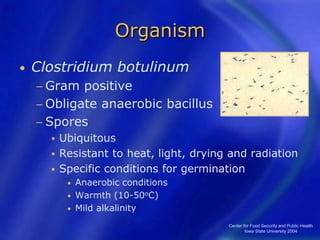
• Clostridium botulinum
− Gram positive
− Obligate anaerobic bacillus
− Spores
 Ubiquitous
 Resistant to heat, light, drying and radiation
 Specific conditions for germination
• Anaerobic conditions
• Warmth (10-50oC)
• Mild alkalinity
Center for Food Security and Public Health
Iowa State University 2004
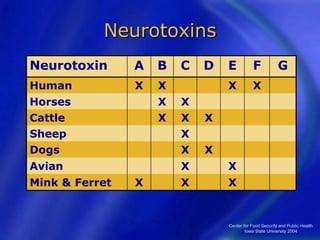
Neurotoxins
• Seven different types: A through G
− Different types affect different species
− All cause flaccid paralysis
− Only a few nanograms can cause illness
− Binds neuromuscular junctions
• Toxin: Destroyed by boiling
• Spores: Higher temperatures to be
inactivated
Center for Food Security and Public Health
Iowa State University 2004
Neurotoxins
Neurotoxin A B C D E F G
Human X X X X
Horses X X
Cattle X X X
Sheep X
Dogs X X
Avian X X
Mink & Ferret X X X
History
Center for Food Security and Public Health
Iowa State University 2004
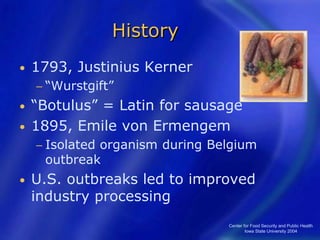
History
• 1793, Justinius Kerner
− “Wurstgift”
• “Botulus” = Latin for sausage
• 1895, Emile von Ermengem
− Isolated organism during Belgium
outbreak
• U.S. outbreaks led to improved
industry processing
Transmission
Center for Food Security and Public Health
Iowa State University 2004
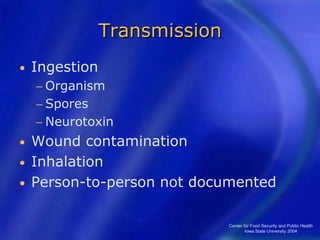
Transmission
• Ingestion
− Organism
− Spores
− Neurotoxin
• Wound contamination
• Inhalation
• Person-to-person not documented
Epidemiology
Center for Food Security and Public Health
Iowa State University 2004
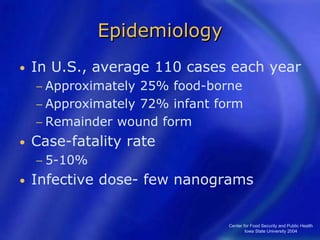
Epidemiology
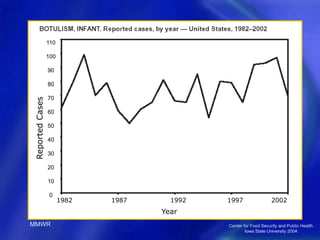
• In U.S., average 110 cases each year
− Approximately 25% food-borne
− Approximately 72% infant form
− Remainder wound form
• Case-fatality rate
− 5-10%
• Infective dose- few nanograms
Center for Food Security and Public Health
Iowa State University 2004
Epidemiology
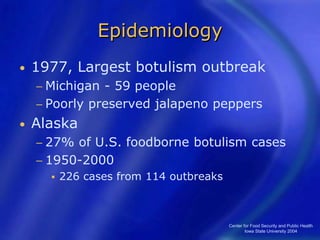
• 1977, Largest botulism outbreak
− Michigan - 59 people
− Poorly preserved jalapeno peppers
• Alaska
− 27% of U.S. foodborne botulism cases
− 1950-2000
 226 cases from 114 outbreaks
Disease in Humans
Center for Food Security and Public Health
Iowa State University 2004
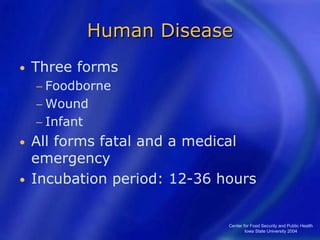
Human Disease
• Three forms
− Foodborne
− Wound
− Infant
• All forms fatal and a medical
emergency
• Incubation period: 12-36 hours
Center for Food Security and Public Health
Iowa State University 2004
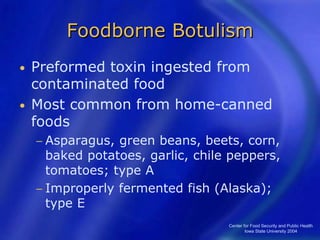
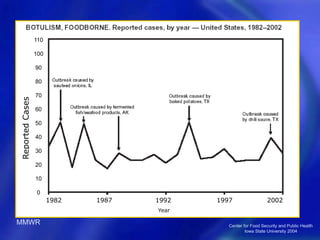
Foodborne Botulism
• Preformed toxin ingested from
contaminated food
• Most common from home-canned
foods
− Asparagus, green beans, beets, corn,
baked potatoes, garlic, chile peppers,
tomatoes; type A
− Improperly fermented fish (Alaska);
type E
Center for Food Security and Public Health
Iowa State University 2004
Year
1982 1987 1992 1997 2002
Reported
Cases
110
100
90
80
70
60
50
40
30
20
10
0
MMWR
Center for Food Security and Public Health
Iowa State University 2004
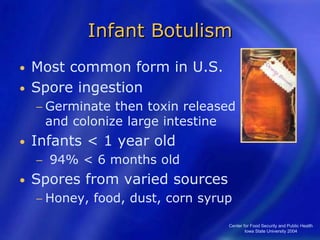
Infant Botulism
• Most common form in U.S.
• Spore ingestion
− Germinate then toxin released
and colonize large intestine
• Infants < 1 year old
− 94% < 6 months old
• Spores from varied sources
− Honey, food, dust, corn syrup
Center for Food Security and Public Health
Iowa State University 2004
1982 1987 1992 1997 2002
Year
110
100
90
80
70
60
50
40
30
20
10
0
Reported
Cases
MMWR
Center for Food Security and Public Health
Iowa State University 2004
Wound Botulism
• Organism enters wound
− Develops under anaerobic conditions
− From ground-in dirt or gravel
− It does not penetrate intact skin
− Associated with addicts of black-tar
heroin
Center for Food Security and Public Health
Iowa State University 2004
Adult Clinical Signs
• Nausea, vomiting, diarrhea
• Double vision
• Difficulty speaking or swallowing
• Descending weakness or paralysis
− Shoulders to arms to thighs to calves
• Symmetrical flaccid paralysis
• Respiratory muscle paralysis
Center for Food Security and Public Health
Iowa State University 2004
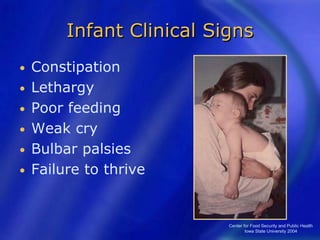
Infant Clinical Signs
• Constipation
• Lethargy
• Poor feeding
• Weak cry
• Bulbar palsies
• Failure to thrive
Center for Food Security and Public Health
Iowa State University 2004
Diagnosis
• Clinical signs
• Toxin in serum, stool, gastric
aspirate, suspected food
• Culture of stool or gastric aspirate
− Takes 5-7 days
• Electromyography also diagnostic
• Mouse neutralization test
− Results in 48 hours
Center for Food Security and Public Health
Iowa State University 2004
Treatment
• Intensive care immediately
− Ventilator for respiratory failure
• Botulinum antitoxin
− Derived from equine source
− CDC distributes
− Used on a case-by-case basis
• Botulism immune globulin
− Infant cases of types A and G
Animals and
Botulism
Center for Food Security and Public Health
Iowa State University 2004
Animals
• Cattle and sheep
• Horses
• Birds and poultry
• Mink and ferrets
• Uncommon in dogs and pigs
− Fairly resistant
• No natural cases documented in cats
Center for Food Security and Public Health
Iowa State University 2004
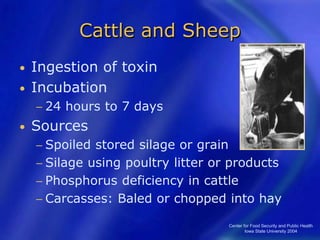
Cattle and Sheep
• Ingestion of toxin
• Incubation
− 24 hours to 7 days
• Sources
− Spoiled stored silage or grain
− Silage using poultry litter or products
− Phosphorus deficiency in cattle
− Carcasses: Baled or chopped into hay
Center for Food Security and Public Health
Iowa State University 2004
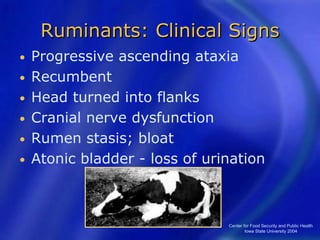
Ruminants: Clinical Signs
• Progressive ascending ataxia
• Recumbent
• Head turned into flanks
• Cranial nerve dysfunction
• Rumen stasis; bloat
• Atonic bladder - loss of urination
Center for Food Security and Public Health
Iowa State University 2004
Cattle and Sheep: Diagnosis
• History
• Bloodwork and CSF tap: Normal
• ELISA test available for type C & D
• Definitive diagnosis
− Demonstration of toxin in serum, gut
contents or organs
• Electromyography (EMG)
Center for Food Security and Public Health
Iowa State University 2004
Cattle and Sheep: Treatment
• Symptomatic and supportive
• Nutritional
• Ventilatory support, if needed
• Metronidazole
• Antitoxin, in early stages
− Ineffective by the time clinical signs are
present
− Can block further uptake of toxin
Center for Food Security and Public Health
Iowa State University 2004
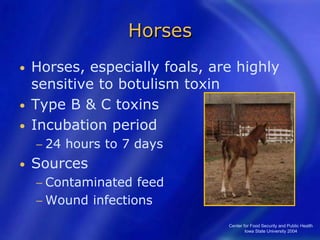
Horses
• Horses, especially foals, are highly
sensitive to botulism toxin
• Type B & C toxins
• Incubation period
− 24 hours to 7 days
• Sources
− Contaminated feed
− Wound infections
Center for Food Security and Public Health
Iowa State University 2004
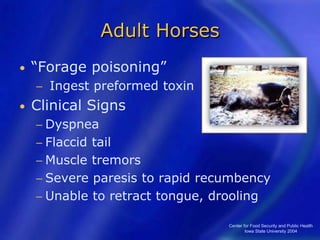
Adult Horses
• “Forage poisoning”
− Ingest preformed toxin
• Clinical Signs
− Dyspnea
− Flaccid tail
− Muscle tremors
− Severe paresis to rapid recumbency
− Unable to retract tongue, drooling
Center for Food Security and Public Health
Iowa State University 2004
Foals
• “Shaker Foal” syndrome
− Most 2 weeks to 8 months old
− On a high nutrition plane
• Spores in contaminated feed
• Usually type B
− Most common in KY and eastern
seaboard
Center for Food Security and Public Health
Iowa State University 2004
Foals: Clinical Signs
• Clinical signs
− Paresis, recumbent
− Muscle tremors
− Dysphagia
− Ptosis, mydriasis, decreased PLR
− Ileus, constipation, urine retention
− Death due to respiratory paralysis
• Mortality greater than 90%
Center for Food Security and Public Health
Iowa State University 2004
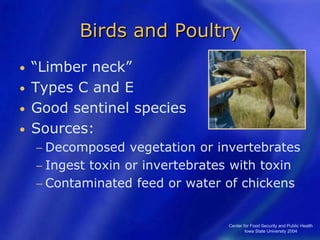
Birds and Poultry
• “Limber neck”
• Types C and E
• Good sentinel species
• Sources:
− Decomposed vegetation or invertebrates
− Ingest toxin or invertebrates with toxin
− Contaminated feed or water of chickens
Center for Food Security and Public Health
Iowa State University 2004
Birds and Poultry:
Clinical Signs
• Occurs 12-48 hours after ingestion
• Droopy head
• Drowsy
• Wing and leg paralysis
− Unable to hold their head up
− Unable to use their wings or legs
• Eyelid paralysis
Center for Food Security and Public Health
Iowa State University 2004
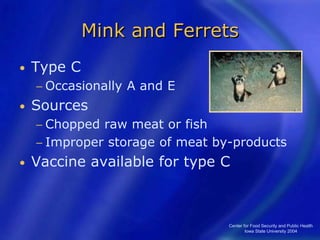
Mink and Ferrets
• Type C
− Occasionally A and E
• Sources
− Chopped raw meat or fish
− Improper storage of meat by-products
• Vaccine available for type C
Center for Food Security and Public Health
Iowa State University 2004
Dogs
• Rare
• Type C; few cases type D
• Source
− Ingestion of carrion
− Wetland areas with avian botulism
epizootics
• Incubation period
− Few hours to 6 days
Center for Food Security and Public Health
Iowa State University 2004
Dogs
• Progressive symmetric ascending
weakness
− Rear limbs to forelimbs
• Cranial nerve deficits
• Respiratory paralysis
• Lose ability to urinate and defecate
Center for Food Security and Public Health
Iowa State University 2004
Dogs
• Diagnosis
− Bloodwork and CSF: Normal
− Electromyography (EMG)
− Toxin in serum, vomitus, feces, or
suspect food/carrion
− Mouse neutralization test preferred
• Treatment
− Supportive
− Antitoxin
Prevention and
Control
Center for Food Security and Public Health
Iowa State University 2004
Human: Prevention
• Do not feed honey to children <1 yr of age
• Proper food preservation methods
 Proper time, temperature and pressure
• 80oC for 30 min or 100oC for 10 min
• Prompt refrigeration of foods
• Boil foods for > 10 minutes
• Decontamination
− Boil suspected food before discarding
− Boil or chlorine disinfect utensils used
Center for Food Security and Public Health
Iowa State University 2004
Ruminants: Prevention
• Good husbandry practices
• Rodent and vermin control
• Prompt disposal of carcasses
• Avoid spoiled feedstuff or poor
quality silage
• Vaccination in endemic areas
Center for Food Security and Public Health
Iowa State University 2004
Equine: Prevention
• Good husbandry
• Rodent and vermin control
• Avoid spoiled feed
• Prophylactic vaccine for pregnant
mares
− Currently only type B botulinum toxoid
available for horses
Center for Food Security and Public Health
Iowa State University 2004
Potential Bioterrorism Threat
• Aum Shinriky cult
• Extremely potent and lethal
• Easily produced and transported
• Signs of deliberate aerosol or
foodborne release of toxin
− No common source
− Large number of acute cases clustered
− Uncommon toxin type (C, D, F, G)
Center for Food Security and Public Health
Iowa State University 2004
Potential Bioterrorism Threat
• Point source aerosol release
− Incapacitate or kill 10% of persons
within 0.5 km downwind
• CDC surveillance system
− Prompt detection of botulism related
events
Center for Food Security and Public Health
Iowa State University 2004
Additional Resources
• CDC – Division of Bacterial and
Mycotic Diseases
− http://www.cdc.gov/ncidod/dbmd/
diseaseinfo/botulism_g.htm
• Center for Civilian Biodefense
Strategies
− http://www.hopkins-
biodefense.org/pages/agents/agentbotox.html
Center for Food Security and Public Health
Iowa State University 2004
Acknowledgments
Development of this
presentation was funded
by a grant from the
Centers for Disease Control
and Prevention to the
Center for Food Security
and Public Health at Iowa
State University.
Center for Food Security and Public Health
Iowa State University 2004
Acknowledgments
Author:
Co-author:
Reviewers:
Glenda Dvorak, DVM, MS, MPH
Radford Davis, DVM, MPH
Danelle Bickett-Weddle, DVM, MPH
Jean Gladon, BS

Botulism.ppt. . .

  • 1.
  • 2.
    Center for FoodSecurity and Public Health Iowa State University 2004 Overview • Organism • History • Epidemiology • Transmission • Disease in Humans • Disease in Animals • Prevention and Control
  • 3.
    Center for FoodSecurity and Public Health Iowa State University 2004 Organism • Clostridium botulinum − Gram positive − Obligate anaerobic bacillus − Spores  Ubiquitous  Resistant to heat, light, drying and radiation  Specific conditions for germination • Anaerobic conditions • Warmth (10-50oC) • Mild alkalinity
  • 4.
    Center for FoodSecurity and Public Health Iowa State University 2004 Neurotoxins • Seven different types: A through G − Different types affect different species − All cause flaccid paralysis − Only a few nanograms can cause illness − Binds neuromuscular junctions • Toxin: Destroyed by boiling • Spores: Higher temperatures to be inactivated
  • 5.
    Center for FoodSecurity and Public Health Iowa State University 2004 Neurotoxins Neurotoxin A B C D E F G Human X X X X Horses X X Cattle X X X Sheep X Dogs X X Avian X X Mink & Ferret X X X
  • 6.
  • 7.
    Center for FoodSecurity and Public Health Iowa State University 2004 History • 1793, Justinius Kerner − “Wurstgift” • “Botulus” = Latin for sausage • 1895, Emile von Ermengem − Isolated organism during Belgium outbreak • U.S. outbreaks led to improved industry processing
  • 8.
  • 9.
    Center for FoodSecurity and Public Health Iowa State University 2004 Transmission • Ingestion − Organism − Spores − Neurotoxin • Wound contamination • Inhalation • Person-to-person not documented
  • 10.
  • 11.
    Center for FoodSecurity and Public Health Iowa State University 2004 Epidemiology • In U.S., average 110 cases each year − Approximately 25% food-borne − Approximately 72% infant form − Remainder wound form • Case-fatality rate − 5-10% • Infective dose- few nanograms
  • 12.
    Center for FoodSecurity and Public Health Iowa State University 2004 Epidemiology • 1977, Largest botulism outbreak − Michigan - 59 people − Poorly preserved jalapeno peppers • Alaska − 27% of U.S. foodborne botulism cases − 1950-2000  226 cases from 114 outbreaks
  • 13.
  • 14.
    Center for FoodSecurity and Public Health Iowa State University 2004 Human Disease • Three forms − Foodborne − Wound − Infant • All forms fatal and a medical emergency • Incubation period: 12-36 hours
  • 15.
    Center for FoodSecurity and Public Health Iowa State University 2004 Foodborne Botulism • Preformed toxin ingested from contaminated food • Most common from home-canned foods − Asparagus, green beans, beets, corn, baked potatoes, garlic, chile peppers, tomatoes; type A − Improperly fermented fish (Alaska); type E
  • 16.
    Center for FoodSecurity and Public Health Iowa State University 2004 Year 1982 1987 1992 1997 2002 Reported Cases 110 100 90 80 70 60 50 40 30 20 10 0 MMWR
  • 17.
    Center for FoodSecurity and Public Health Iowa State University 2004 Infant Botulism • Most common form in U.S. • Spore ingestion − Germinate then toxin released and colonize large intestine • Infants < 1 year old − 94% < 6 months old • Spores from varied sources − Honey, food, dust, corn syrup
  • 18.
    Center for FoodSecurity and Public Health Iowa State University 2004 1982 1987 1992 1997 2002 Year 110 100 90 80 70 60 50 40 30 20 10 0 Reported Cases MMWR
  • 19.
    Center for FoodSecurity and Public Health Iowa State University 2004 Wound Botulism • Organism enters wound − Develops under anaerobic conditions − From ground-in dirt or gravel − It does not penetrate intact skin − Associated with addicts of black-tar heroin
  • 20.
    Center for FoodSecurity and Public Health Iowa State University 2004 Adult Clinical Signs • Nausea, vomiting, diarrhea • Double vision • Difficulty speaking or swallowing • Descending weakness or paralysis − Shoulders to arms to thighs to calves • Symmetrical flaccid paralysis • Respiratory muscle paralysis
  • 21.
    Center for FoodSecurity and Public Health Iowa State University 2004 Infant Clinical Signs • Constipation • Lethargy • Poor feeding • Weak cry • Bulbar palsies • Failure to thrive
  • 22.
    Center for FoodSecurity and Public Health Iowa State University 2004 Diagnosis • Clinical signs • Toxin in serum, stool, gastric aspirate, suspected food • Culture of stool or gastric aspirate − Takes 5-7 days • Electromyography also diagnostic • Mouse neutralization test − Results in 48 hours
  • 23.
    Center for FoodSecurity and Public Health Iowa State University 2004 Treatment • Intensive care immediately − Ventilator for respiratory failure • Botulinum antitoxin − Derived from equine source − CDC distributes − Used on a case-by-case basis • Botulism immune globulin − Infant cases of types A and G
  • 24.
  • 25.
    Center for FoodSecurity and Public Health Iowa State University 2004 Animals • Cattle and sheep • Horses • Birds and poultry • Mink and ferrets • Uncommon in dogs and pigs − Fairly resistant • No natural cases documented in cats
  • 26.
    Center for FoodSecurity and Public Health Iowa State University 2004 Cattle and Sheep • Ingestion of toxin • Incubation − 24 hours to 7 days • Sources − Spoiled stored silage or grain − Silage using poultry litter or products − Phosphorus deficiency in cattle − Carcasses: Baled or chopped into hay
  • 27.
    Center for FoodSecurity and Public Health Iowa State University 2004 Ruminants: Clinical Signs • Progressive ascending ataxia • Recumbent • Head turned into flanks • Cranial nerve dysfunction • Rumen stasis; bloat • Atonic bladder - loss of urination
  • 28.
    Center for FoodSecurity and Public Health Iowa State University 2004 Cattle and Sheep: Diagnosis • History • Bloodwork and CSF tap: Normal • ELISA test available for type C & D • Definitive diagnosis − Demonstration of toxin in serum, gut contents or organs • Electromyography (EMG)
  • 29.
    Center for FoodSecurity and Public Health Iowa State University 2004 Cattle and Sheep: Treatment • Symptomatic and supportive • Nutritional • Ventilatory support, if needed • Metronidazole • Antitoxin, in early stages − Ineffective by the time clinical signs are present − Can block further uptake of toxin
  • 30.
    Center for FoodSecurity and Public Health Iowa State University 2004 Horses • Horses, especially foals, are highly sensitive to botulism toxin • Type B & C toxins • Incubation period − 24 hours to 7 days • Sources − Contaminated feed − Wound infections
  • 31.
    Center for FoodSecurity and Public Health Iowa State University 2004 Adult Horses • “Forage poisoning” − Ingest preformed toxin • Clinical Signs − Dyspnea − Flaccid tail − Muscle tremors − Severe paresis to rapid recumbency − Unable to retract tongue, drooling
  • 32.
    Center for FoodSecurity and Public Health Iowa State University 2004 Foals • “Shaker Foal” syndrome − Most 2 weeks to 8 months old − On a high nutrition plane • Spores in contaminated feed • Usually type B − Most common in KY and eastern seaboard
  • 33.
    Center for FoodSecurity and Public Health Iowa State University 2004 Foals: Clinical Signs • Clinical signs − Paresis, recumbent − Muscle tremors − Dysphagia − Ptosis, mydriasis, decreased PLR − Ileus, constipation, urine retention − Death due to respiratory paralysis • Mortality greater than 90%
  • 34.
    Center for FoodSecurity and Public Health Iowa State University 2004 Birds and Poultry • “Limber neck” • Types C and E • Good sentinel species • Sources: − Decomposed vegetation or invertebrates − Ingest toxin or invertebrates with toxin − Contaminated feed or water of chickens
  • 35.
    Center for FoodSecurity and Public Health Iowa State University 2004 Birds and Poultry: Clinical Signs • Occurs 12-48 hours after ingestion • Droopy head • Drowsy • Wing and leg paralysis − Unable to hold their head up − Unable to use their wings or legs • Eyelid paralysis
  • 36.
    Center for FoodSecurity and Public Health Iowa State University 2004 Mink and Ferrets • Type C − Occasionally A and E • Sources − Chopped raw meat or fish − Improper storage of meat by-products • Vaccine available for type C
  • 37.
    Center for FoodSecurity and Public Health Iowa State University 2004 Dogs • Rare • Type C; few cases type D • Source − Ingestion of carrion − Wetland areas with avian botulism epizootics • Incubation period − Few hours to 6 days
  • 38.
    Center for FoodSecurity and Public Health Iowa State University 2004 Dogs • Progressive symmetric ascending weakness − Rear limbs to forelimbs • Cranial nerve deficits • Respiratory paralysis • Lose ability to urinate and defecate
  • 39.
    Center for FoodSecurity and Public Health Iowa State University 2004 Dogs • Diagnosis − Bloodwork and CSF: Normal − Electromyography (EMG) − Toxin in serum, vomitus, feces, or suspect food/carrion − Mouse neutralization test preferred • Treatment − Supportive − Antitoxin
  • 40.
  • 41.
    Center for FoodSecurity and Public Health Iowa State University 2004 Human: Prevention • Do not feed honey to children <1 yr of age • Proper food preservation methods  Proper time, temperature and pressure • 80oC for 30 min or 100oC for 10 min • Prompt refrigeration of foods • Boil foods for > 10 minutes • Decontamination − Boil suspected food before discarding − Boil or chlorine disinfect utensils used
  • 42.
    Center for FoodSecurity and Public Health Iowa State University 2004 Ruminants: Prevention • Good husbandry practices • Rodent and vermin control • Prompt disposal of carcasses • Avoid spoiled feedstuff or poor quality silage • Vaccination in endemic areas
  • 43.
    Center for FoodSecurity and Public Health Iowa State University 2004 Equine: Prevention • Good husbandry • Rodent and vermin control • Avoid spoiled feed • Prophylactic vaccine for pregnant mares − Currently only type B botulinum toxoid available for horses
  • 44.
    Center for FoodSecurity and Public Health Iowa State University 2004 Potential Bioterrorism Threat • Aum Shinriky cult • Extremely potent and lethal • Easily produced and transported • Signs of deliberate aerosol or foodborne release of toxin − No common source − Large number of acute cases clustered − Uncommon toxin type (C, D, F, G)
  • 45.
    Center for FoodSecurity and Public Health Iowa State University 2004 Potential Bioterrorism Threat • Point source aerosol release − Incapacitate or kill 10% of persons within 0.5 km downwind • CDC surveillance system − Prompt detection of botulism related events
  • 46.
    Center for FoodSecurity and Public Health Iowa State University 2004 Additional Resources • CDC – Division of Bacterial and Mycotic Diseases − http://www.cdc.gov/ncidod/dbmd/ diseaseinfo/botulism_g.htm • Center for Civilian Biodefense Strategies − http://www.hopkins- biodefense.org/pages/agents/agentbotox.html
  • 47.
    Center for FoodSecurity and Public Health Iowa State University 2004 Acknowledgments Development of this presentation was funded by a grant from the Centers for Disease Control and Prevention to the Center for Food Security and Public Health at Iowa State University.
  • 48.
    Center for FoodSecurity and Public Health Iowa State University 2004 Acknowledgments Author: Co-author: Reviewers: Glenda Dvorak, DVM, MS, MPH Radford Davis, DVM, MPH Danelle Bickett-Weddle, DVM, MPH Jean Gladon, BS