Introduction to
biotechnology
cloning vectors
M.Sc Zoology
Semester 3rd
Model Science College Ellah Abad
Cloning vectors
• “A cloning vector is a small piece of DNA into which a foreign DNA can be
inserted for cloning purposes.”
• A vector is a DNA molecule that is used to carry a foreign DNA into the
host cell. It has the ability to self replicate and integrate into the host cell.
These vectors have helped in analysing the molecular structure of DNA.
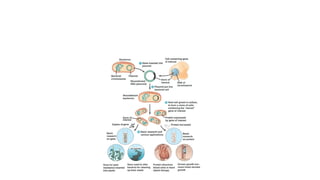
• Vectors can be a plasmid from the bacterium, a cell from the higher
organism or DNA from a virus. The target DNA is inserted into the specific
sites of the vector and ligated by DNA ligase. The vector is then
transformed into the host cell for replication.
• The different types of vectors available for cloning are
• plasmids,
• bacteriophages,
• bacterial artificial chromosomes (BACs),
• yeast artificial chromosomes (YACs)
• mammalian artificial chromosomes (MACs).
• The cloning vectors are limited to the size of insert that they can carry.
• Depending on the size and the application of the insert the suitable vector is
selected for a particular purpose.
• These carrier molecules should have few common features in general
such as:
• It must be self-replicating inside host cell.
• It must possess a unique restriction site for RE enzymes.
• Introduction of donor DNA fragment must not interfere with replication
property of the vector.
• It must possess some marker gene such that it can be used for later
identification of recombinant cell (usually an antibiotic resistance gene
that is absent in the host cell).
• They should be easily isolated from host cell.
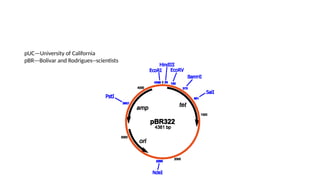
pUC—University of California
pBR---Bolivar and Rodrigues--scientists
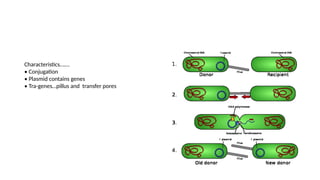
Characteristics…….
• Conjugation
• Plasmid contains genes
• Tra-genes…pillus and transfer pores
Plasmids
• Plasmids are extra chromosomal circular double stranded DNA replicating
elements present in bacterial cells.
• Plasmids show the size ranging from 5.0 kb to 400 kb.
• Plasmids are inserted into bacterial calls by a process called transformation.
• Plasmids can accommodate an insert size of upto 10 kb DNA fragment.
• Host range is determined by Ori site
• Generally, plasmid vectors carry a marker gene which is mostly a gene for
antibiotic resistance; thereby making any cell that contains the plasmid will
grow in presence of the selectable corresponding antibiotic supplied in the
media.
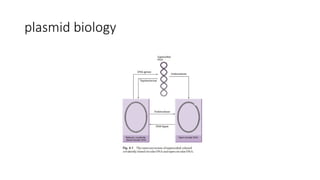
plasmid biology
Bacteriophage
• The viruses that infect bacteria are called bacteriophage.
• These are intracellular obligate parasites that multiply inside bacterial
cell by making use of some or all of the host enzymes.
• Bacteriophages have a very high significant mechanism for delivering
its genome into bacterial cell. Hence it can be used as a cloning vector
to deliver larger DNA segments.
• Most of the bacteriophage genome is non-essential and can be
replaced with foreign DNA.
• Using bacteriophage as a vector, a DNA fragment of size up to 20 kb
can be transformed.
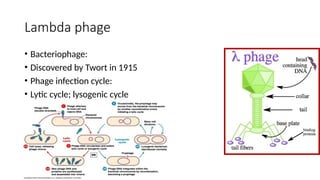
Lambda phage
• Bacteriophage:
• Discovered by Twort in 1915
• Phage infection cycle:
• Lytic cycle; lysogenic cycle
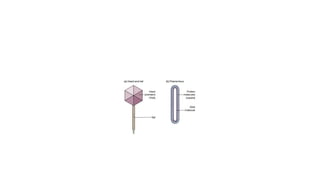
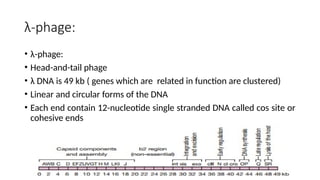
λ-phage:
• λ-phage:
• Head-and-tail phage
• λ DNA is 49 kb ( genes which are related in function are clustered)
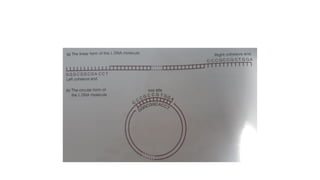
• Linear and circular forms of the DNA
• Each end contain 12-nucleotide single stranded DNA called cos site or
cohesive ends
• Limitations to use λ DNA as cloning vector
• 1. Packaging limitation
• Capacity of λ DNA---can be increased by only 3 kb
• More than 52 kb can not be packed into λ head
• Segments of λ DNA can be deleted
• In plasmid origin site comprises of few nucleotides is sufficient for
replication as enzymes are provided by host cell.
• While in phage the situation is complex. Phage DNA carries the genes
specific for replication of phage DNA as well as for encoding coat proteins.
The removal of these segments will impair the replicating ability
Bacterial artificial chromosomes
• Bacterial artificial chromosomes (BACs) are simple plasmid which is
designed to clone very large DNA fragments ranging in size from 75 to 300
kb.
• BACs basically have marker like sights such as antibiotic resistance genes
and a very stable origin of replication (ori) that promotes the distribution of
plasmid after bacterial cell division and maintaining the plasmid copy
number to one or two per cell.
• BACs are basically used in sequencing the genome of organisms in genome
projects (example: BACs were used in human genome project).
• Several hundred thousand base pair DNA fragments can be cloned using
BACs.
YACs
• YACs are yeast expression vectors.
• A very large DNA fragments whose sizes ranging from 100 kb to 3000
kb can be cloned using YACs.
• Mostly YACs are used for cloning very large DNA fragments and for
the physical mapping of complex genomes.
• YACs have an advantage over BACs in expressing eukaryotic proteins
that require post translational modifications.
(HACs) or (MACs)
• Human artificial chromosomes (HACs) or mammalian artificial
chromosomes (MACs) are still under development.
• HACs are micro-chromosomes that can act as a new chromosome in a
population of human cells.
• HACs range in size from 6 to 10 Mb that carry new genes introduced
by human researchers.
• HACs can be used as vectors in transfer of new genes, studying their
expression and mammalian chromosomal function can also be
elucidated using these micro-chromosomes in mammalian system.
• All vectors may be used for cloning and are therefore cloning vectors, but there are
also vectors designed specially for cloning, while others may be designed specifically
for other purposes, such as transcription and protein expression.
• 1. Expression Vectors
• Vectors designed specifically for the expression of the transgene in the target cell are
called expression vectors, and generally have a promoter sequence that drives
expression of the transgene. Expression vectors produce proteins through the
transcription of the vector’s insert followed by translation of the mRNA produced.
• 2. Transcription Vectors
• Simpler vectors called transcription vectors are only capable of being transcribed but
not translated: they can be replicated in a target cell but not expressed, unlike
expression vectors. Transcription vectors are used to amplify their insert.
• Vectors have been developed and adapted for a wide range of uses.
Two
• primary uses are:
(1) to isolate, identify and archive fragments of a larger genome
(2) to selectively express proteins encoded by specific genes.
• Vectors were the first DNA tools used in genetic engineering, and
continue to be cornerstones of the technology.

cloning vectors, typs and functions, mechanism

  • 1.
    Introduction to biotechnology cloning vectors M.ScZoology Semester 3rd Model Science College Ellah Abad
  • 3.
    Cloning vectors • “Acloning vector is a small piece of DNA into which a foreign DNA can be inserted for cloning purposes.” • A vector is a DNA molecule that is used to carry a foreign DNA into the host cell. It has the ability to self replicate and integrate into the host cell. These vectors have helped in analysing the molecular structure of DNA. • Vectors can be a plasmid from the bacterium, a cell from the higher organism or DNA from a virus. The target DNA is inserted into the specific sites of the vector and ligated by DNA ligase. The vector is then transformed into the host cell for replication.
  • 4.
    • The differenttypes of vectors available for cloning are • plasmids, • bacteriophages, • bacterial artificial chromosomes (BACs), • yeast artificial chromosomes (YACs) • mammalian artificial chromosomes (MACs). • The cloning vectors are limited to the size of insert that they can carry. • Depending on the size and the application of the insert the suitable vector is selected for a particular purpose.
  • 5.
    • These carriermolecules should have few common features in general such as: • It must be self-replicating inside host cell. • It must possess a unique restriction site for RE enzymes. • Introduction of donor DNA fragment must not interfere with replication property of the vector. • It must possess some marker gene such that it can be used for later identification of recombinant cell (usually an antibiotic resistance gene that is absent in the host cell). • They should be easily isolated from host cell.
  • 6.
  • 8.
    Characteristics……. • Conjugation • Plasmidcontains genes • Tra-genes…pillus and transfer pores
  • 9.
    Plasmids • Plasmids areextra chromosomal circular double stranded DNA replicating elements present in bacterial cells. • Plasmids show the size ranging from 5.0 kb to 400 kb. • Plasmids are inserted into bacterial calls by a process called transformation. • Plasmids can accommodate an insert size of upto 10 kb DNA fragment. • Host range is determined by Ori site • Generally, plasmid vectors carry a marker gene which is mostly a gene for antibiotic resistance; thereby making any cell that contains the plasmid will grow in presence of the selectable corresponding antibiotic supplied in the media.
  • 10.
  • 11.
    Bacteriophage • The virusesthat infect bacteria are called bacteriophage. • These are intracellular obligate parasites that multiply inside bacterial cell by making use of some or all of the host enzymes. • Bacteriophages have a very high significant mechanism for delivering its genome into bacterial cell. Hence it can be used as a cloning vector to deliver larger DNA segments. • Most of the bacteriophage genome is non-essential and can be replaced with foreign DNA. • Using bacteriophage as a vector, a DNA fragment of size up to 20 kb can be transformed.
  • 12.
    Lambda phage • Bacteriophage: •Discovered by Twort in 1915 • Phage infection cycle: • Lytic cycle; lysogenic cycle
  • 14.
    λ-phage: • λ-phage: • Head-and-tailphage • λ DNA is 49 kb ( genes which are related in function are clustered) • Linear and circular forms of the DNA • Each end contain 12-nucleotide single stranded DNA called cos site or cohesive ends
  • 16.
    • Limitations touse λ DNA as cloning vector • 1. Packaging limitation • Capacity of λ DNA---can be increased by only 3 kb • More than 52 kb can not be packed into λ head • Segments of λ DNA can be deleted • In plasmid origin site comprises of few nucleotides is sufficient for replication as enzymes are provided by host cell. • While in phage the situation is complex. Phage DNA carries the genes specific for replication of phage DNA as well as for encoding coat proteins. The removal of these segments will impair the replicating ability
  • 17.
    Bacterial artificial chromosomes •Bacterial artificial chromosomes (BACs) are simple plasmid which is designed to clone very large DNA fragments ranging in size from 75 to 300 kb. • BACs basically have marker like sights such as antibiotic resistance genes and a very stable origin of replication (ori) that promotes the distribution of plasmid after bacterial cell division and maintaining the plasmid copy number to one or two per cell. • BACs are basically used in sequencing the genome of organisms in genome projects (example: BACs were used in human genome project). • Several hundred thousand base pair DNA fragments can be cloned using BACs.
  • 18.
    YACs • YACs areyeast expression vectors. • A very large DNA fragments whose sizes ranging from 100 kb to 3000 kb can be cloned using YACs. • Mostly YACs are used for cloning very large DNA fragments and for the physical mapping of complex genomes. • YACs have an advantage over BACs in expressing eukaryotic proteins that require post translational modifications.
  • 19.
    (HACs) or (MACs) •Human artificial chromosomes (HACs) or mammalian artificial chromosomes (MACs) are still under development. • HACs are micro-chromosomes that can act as a new chromosome in a population of human cells. • HACs range in size from 6 to 10 Mb that carry new genes introduced by human researchers. • HACs can be used as vectors in transfer of new genes, studying their expression and mammalian chromosomal function can also be elucidated using these micro-chromosomes in mammalian system.
  • 20.
    • All vectorsmay be used for cloning and are therefore cloning vectors, but there are also vectors designed specially for cloning, while others may be designed specifically for other purposes, such as transcription and protein expression. • 1. Expression Vectors • Vectors designed specifically for the expression of the transgene in the target cell are called expression vectors, and generally have a promoter sequence that drives expression of the transgene. Expression vectors produce proteins through the transcription of the vector’s insert followed by translation of the mRNA produced. • 2. Transcription Vectors • Simpler vectors called transcription vectors are only capable of being transcribed but not translated: they can be replicated in a target cell but not expressed, unlike expression vectors. Transcription vectors are used to amplify their insert.
  • 21.
    • Vectors havebeen developed and adapted for a wide range of uses. Two • primary uses are: (1) to isolate, identify and archive fragments of a larger genome (2) to selectively express proteins encoded by specific genes. • Vectors were the first DNA tools used in genetic engineering, and continue to be cornerstones of the technology.

Editor's Notes

  • #5 secletable marker function (permits recognition of cells carrying parental form and recombinant Vector) cloning site (a region containing unique restriction enzymes cleavage site into which a foreign DNA can be inserted without inference in plasmid’s ability to replicate or to confer suitable phenotype)