A Clinical Scientist in 2011 Claire Bosomworth Research and Development Microbiology Leeds General Infirmary
How it all started BSc (hons) Medical Genetics  Trainee Clinical Scientist position in Molecular Genetics St James’ University Hospital
What you had to do then (2005) 2003 Government White Paper – Our Inheritance, Our Future  Apply through central recruitment agency Two routes: 4 year training program for graduates 6 year training program for post doctorates Certificate of Competence ACS Certificate of Attainment Registration with the Health Professions Council
Molecular Genetics Study of gene structure and function Inherited disorders Three sections Prenatal diagnosis Carrier testing Diagnostic – confirmation of a clinical diagnosis
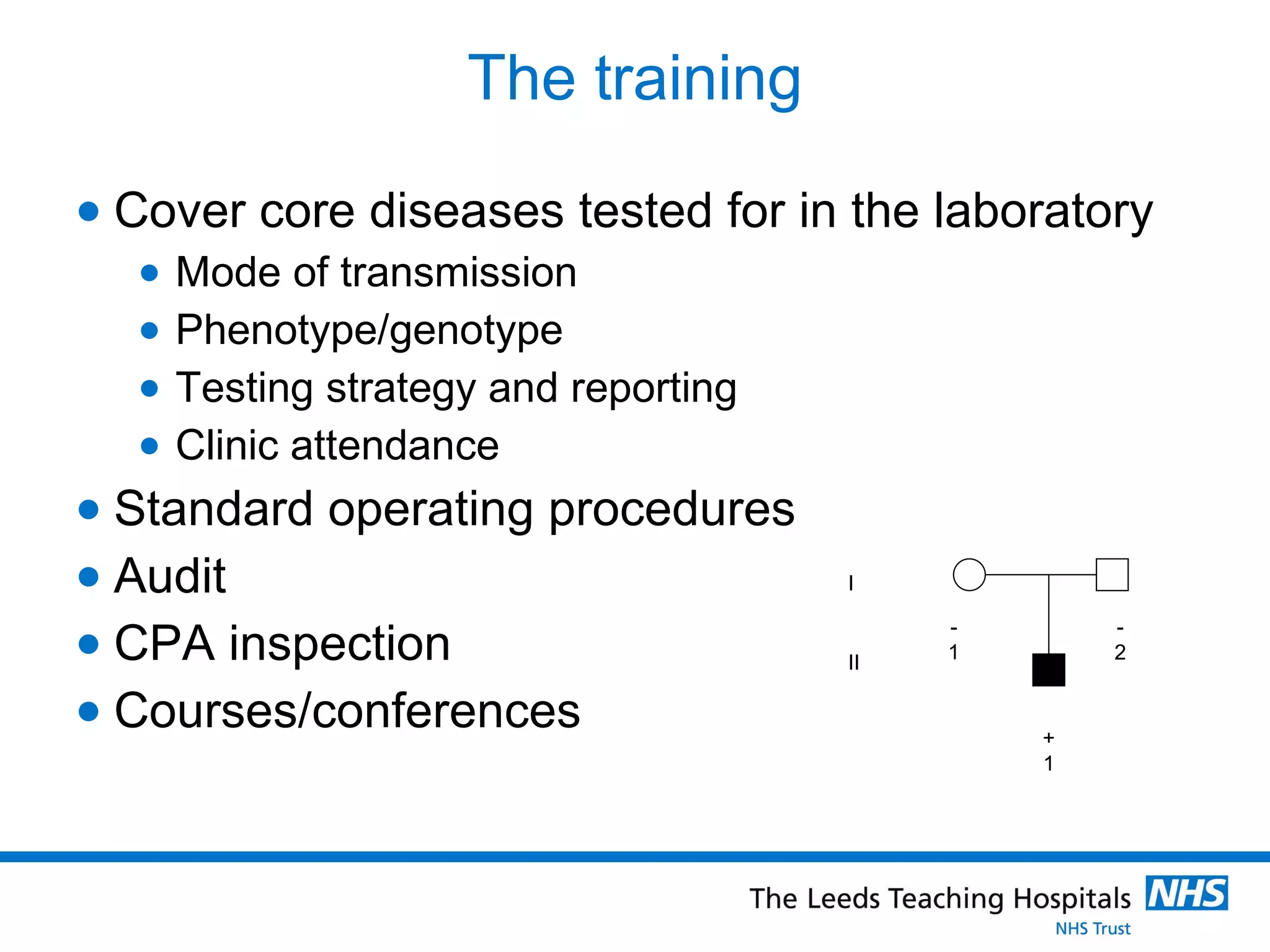
The training Cover core diseases tested for in the laboratory Mode of transmission Phenotype/genotype Testing strategy and reporting Clinic attendance Standard operating procedures Audit CPA inspection Courses/conferences - 1 - 2 + 1 I II
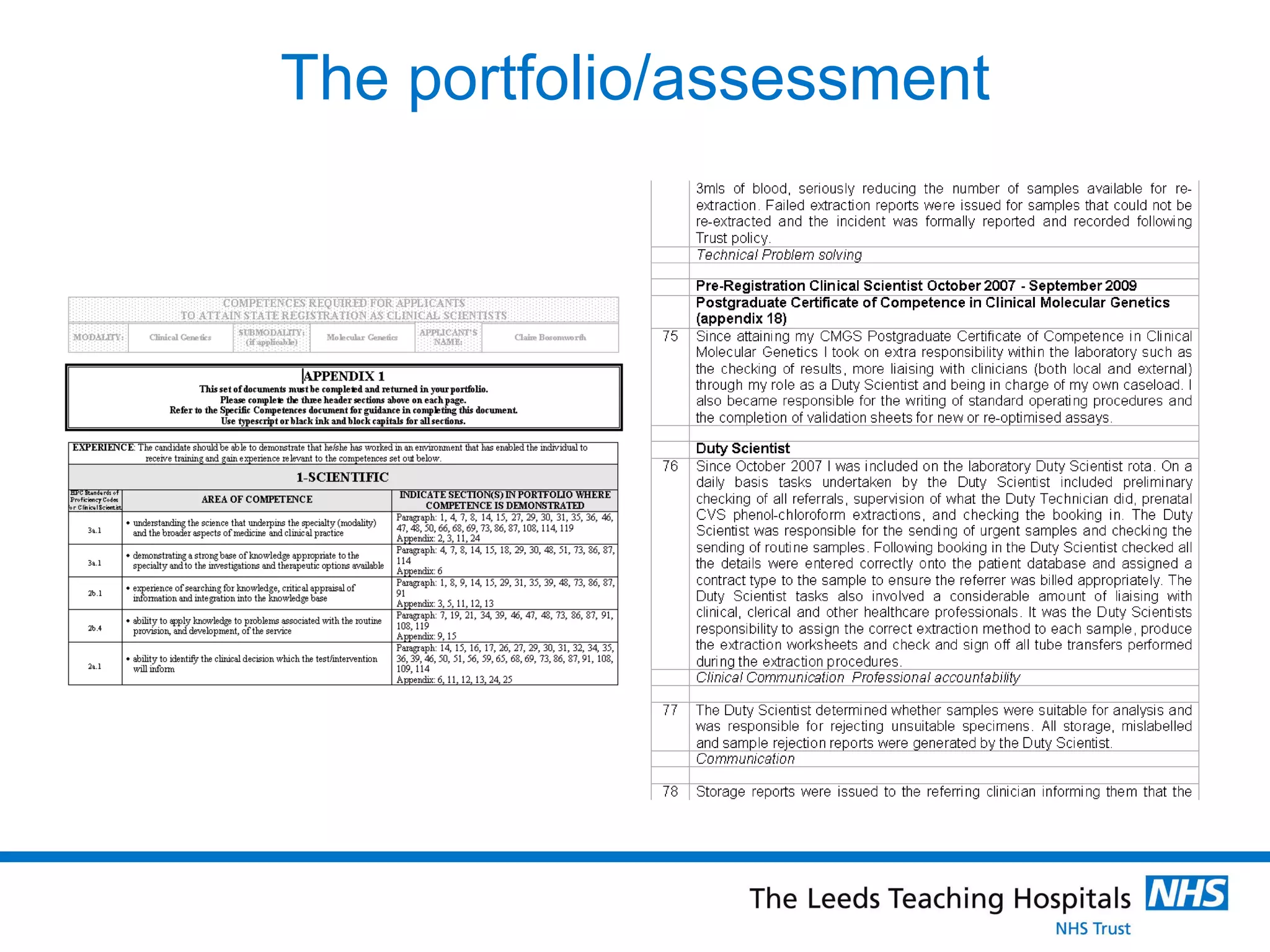
The portfolio/assessment
Post competence – a typical day ~75% - diagnostic testing 2/3 diseases Set up testing Supervision of technicians Analysis of data Report writing Liaising with clinicians/external labs
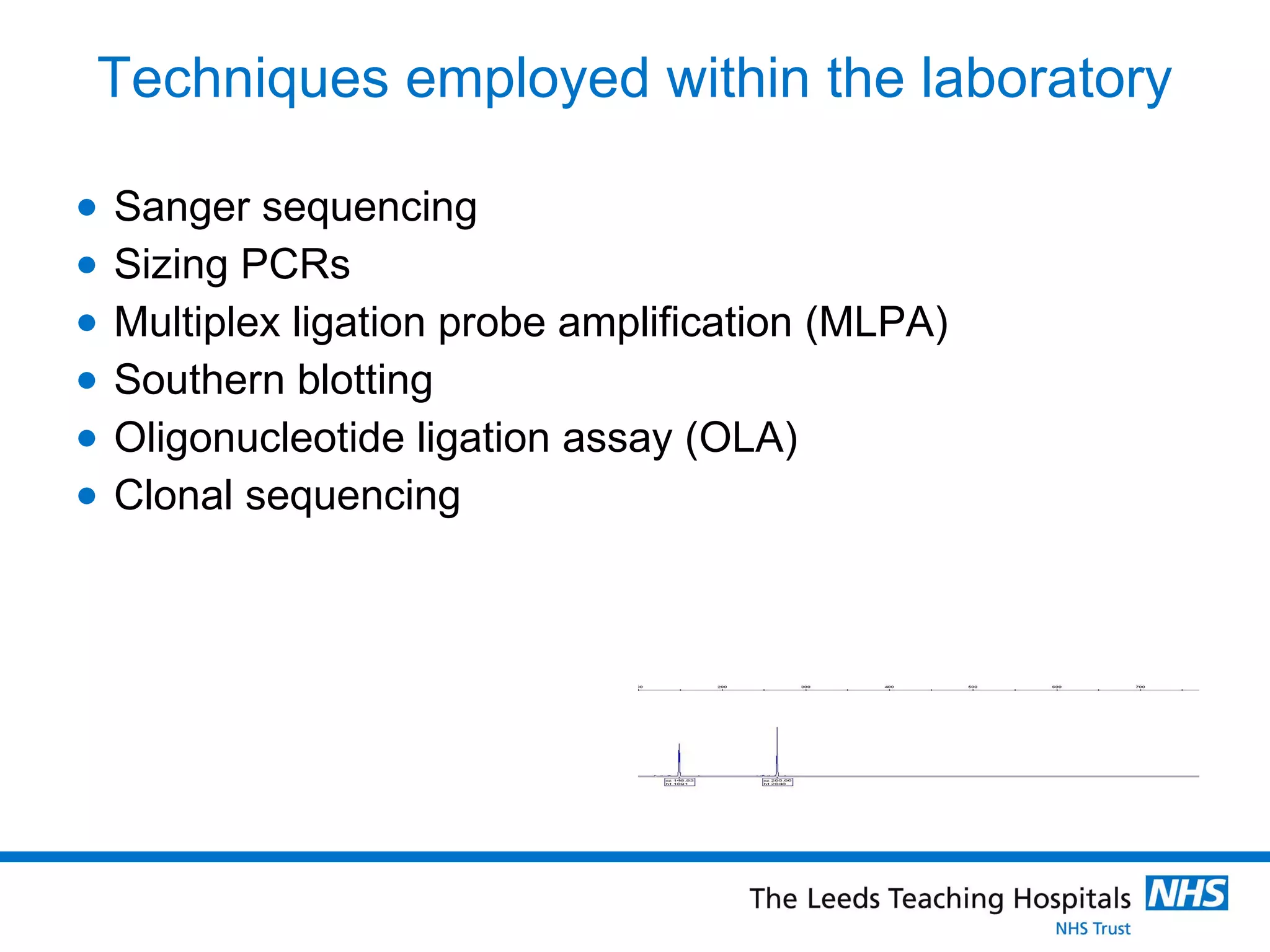
Techniques employed within the laboratory Sanger sequencing Sizing PCRs Multiplex ligation probe amplification (MLPA) Southern blotting Oligonucleotide ligation assay (OLA) Clonal sequencing
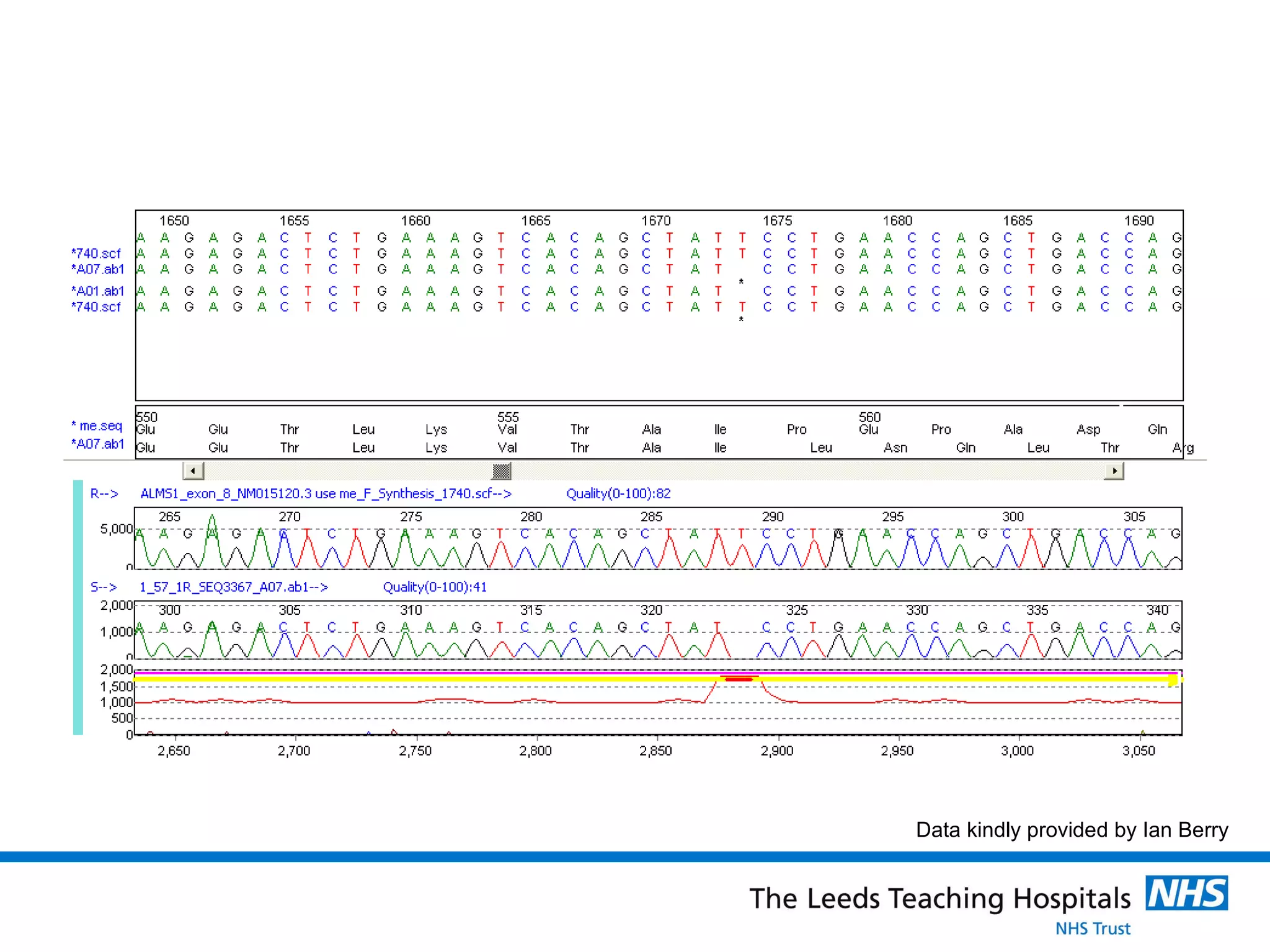
Data kindly provided by Ian Berry
Interpretation Literature search Bioinformatics Disease specific databases Synonymous/non-synonymous  Change at protein level Protein prediction software Sequence alignments Training and scientific knowledge
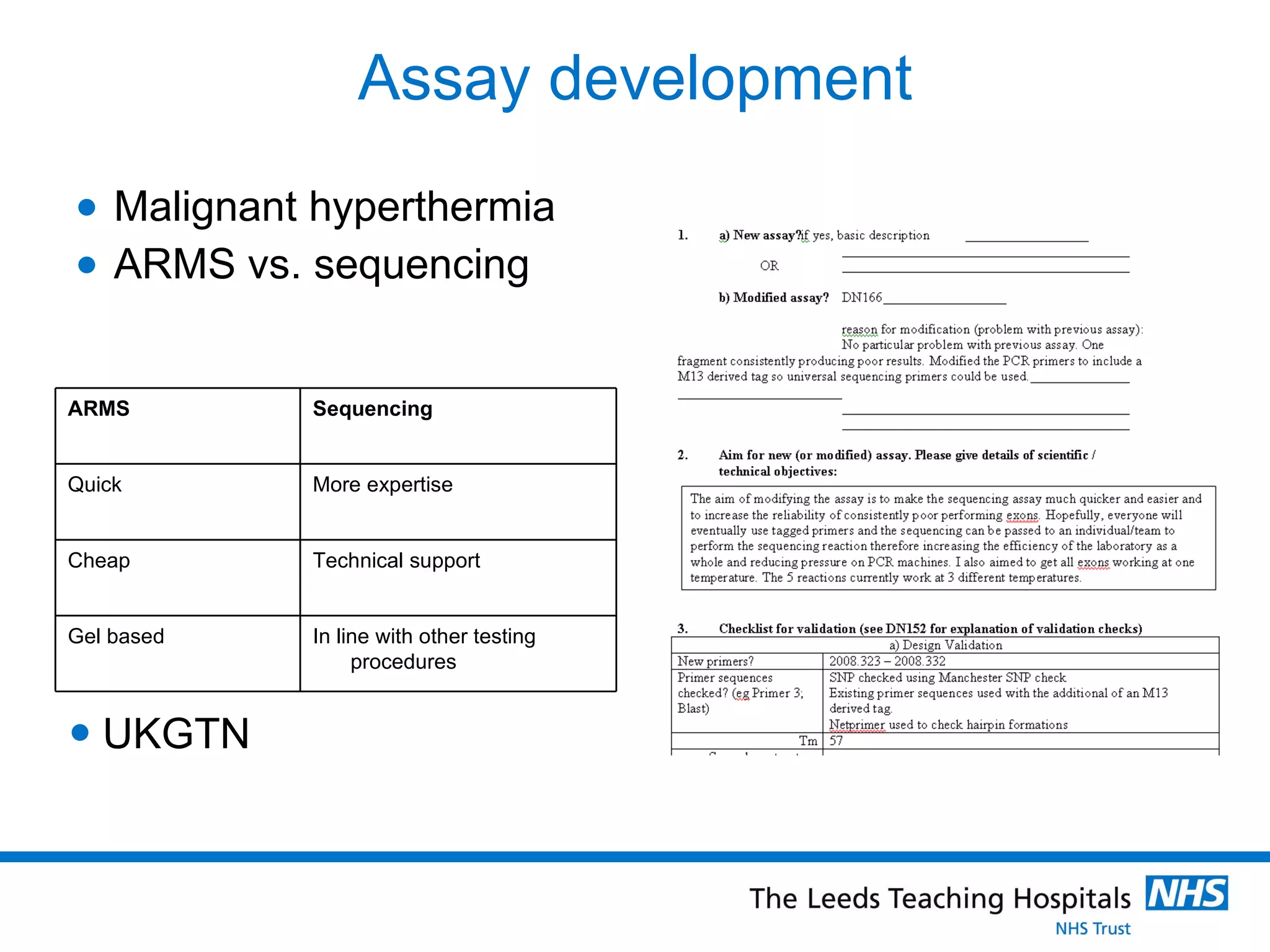
Assay development Malignant hyperthermia ARMS vs. sequencing UKGTN In line with other testing procedures Gel based Technical support Cheap More expertise Quick Sequencing ARMS
Duty Scientist Gatekeeping of all samples received Extraction/storage/rejection  Work closely with extraction technician  Deal with enquiries Sign off all samples – contract/billing Sending
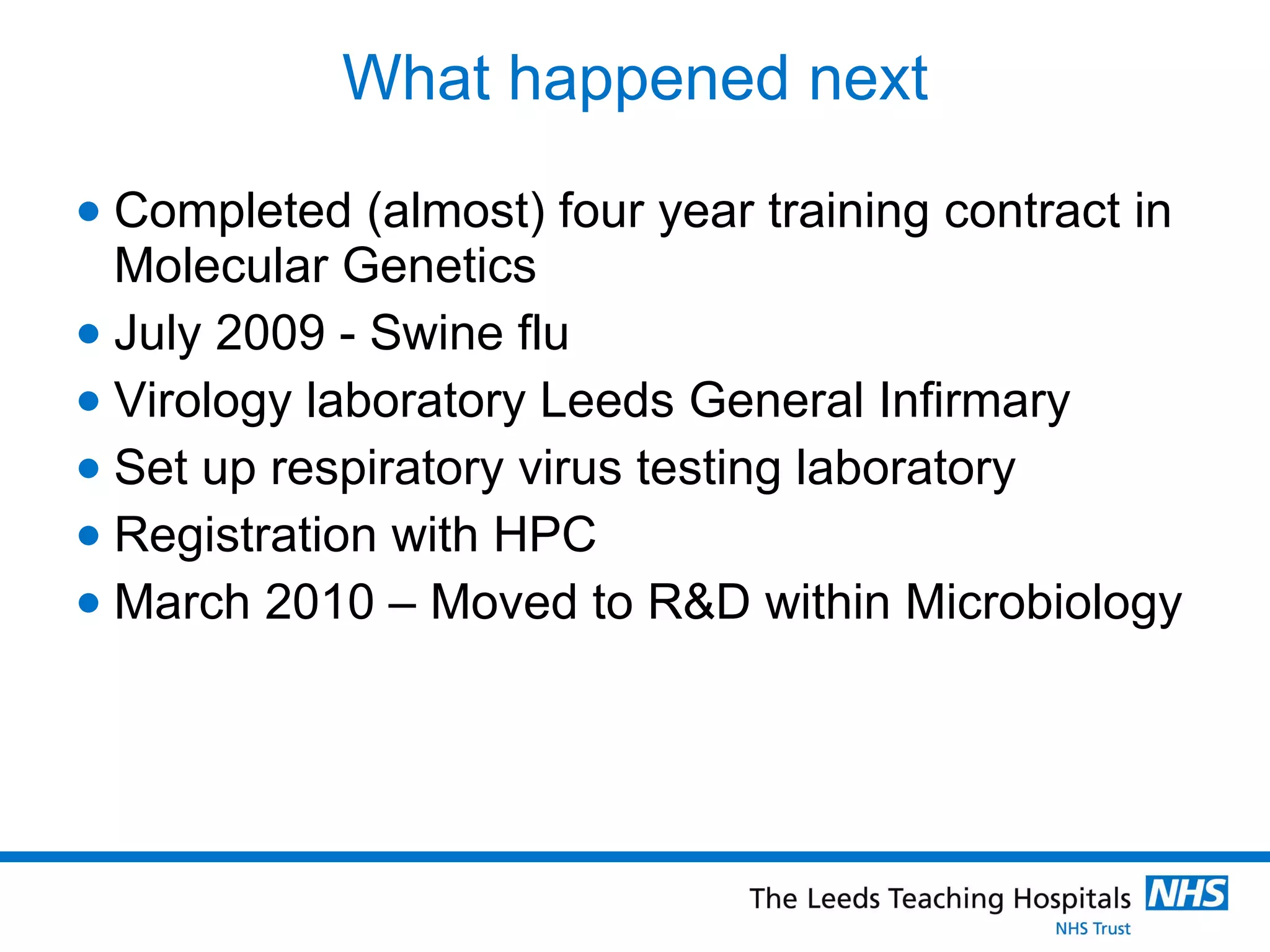
What happened next Completed (almost) four year training contract in Molecular Genetics July 2009 - Swine flu Virology laboratory Leeds General Infirmary Set up respiratory virus testing laboratory Registration with HPC March 2010 – Moved to R&D within Microbiology
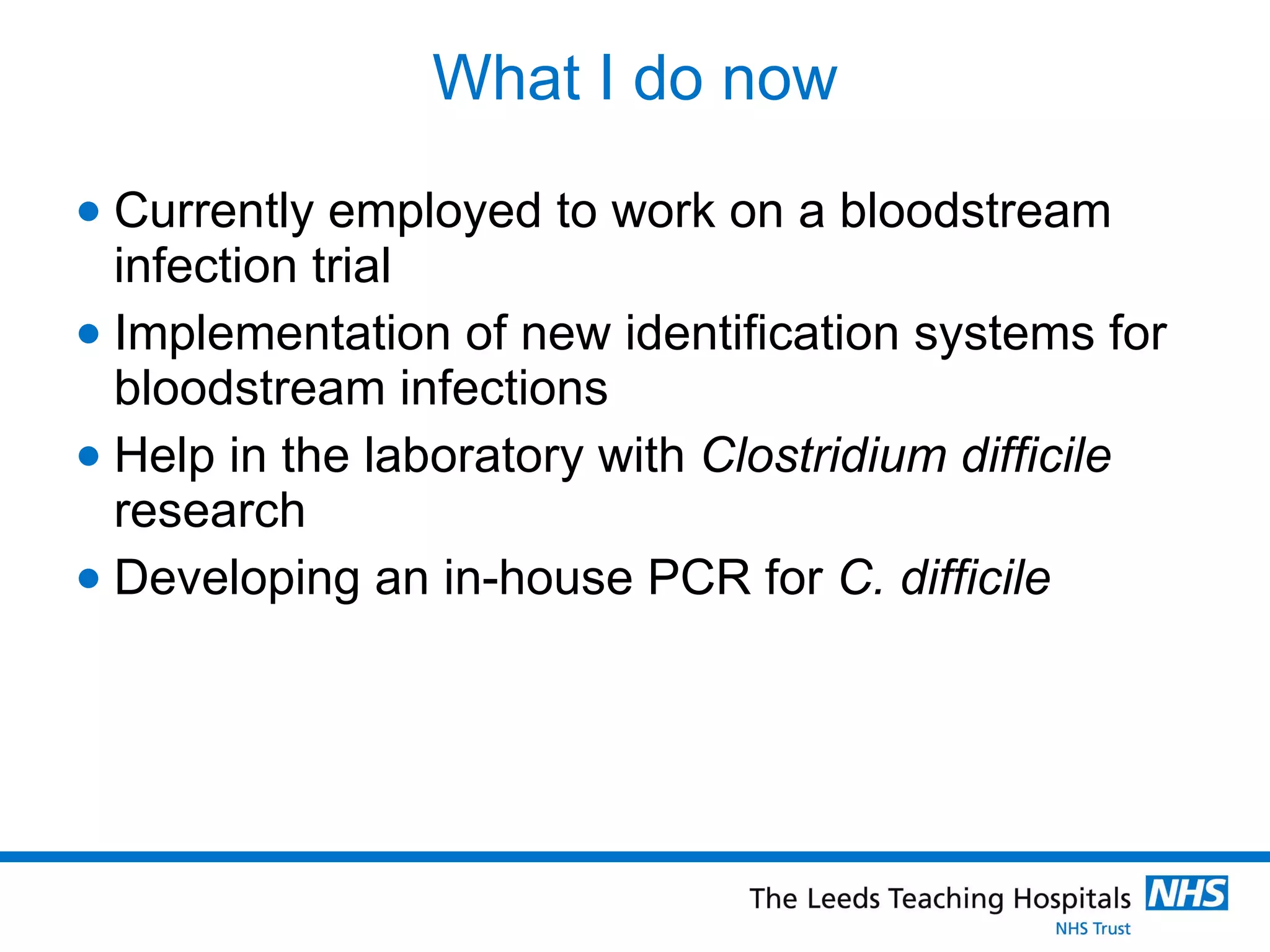
What I do now Currently employed to work on a bloodstream infection trial  Implementation of new identification systems for bloodstream infections Help in the laboratory with  Clostridium difficile  research Developing an in-house PCR for  C. difficile
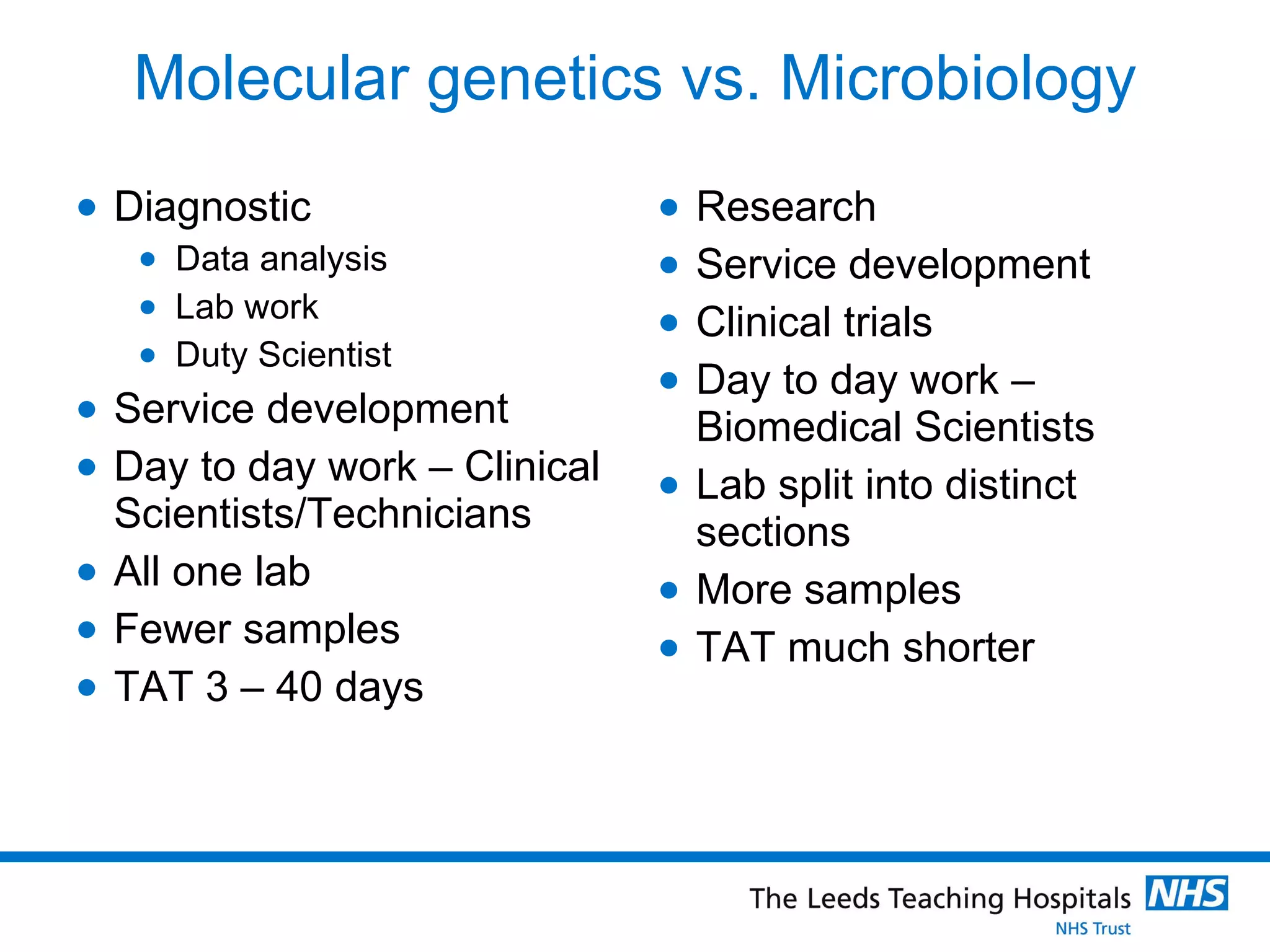
Molecular genetics vs. Microbiology Diagnostic Data analysis Lab work Duty Scientist Service development Day to day work – Clinical Scientists/Technicians All one lab Fewer samples TAT 3 – 40 days Research Service development Clinical trials Day to day work – Biomedical Scientists Lab split into distinct sections More samples TAT much shorter
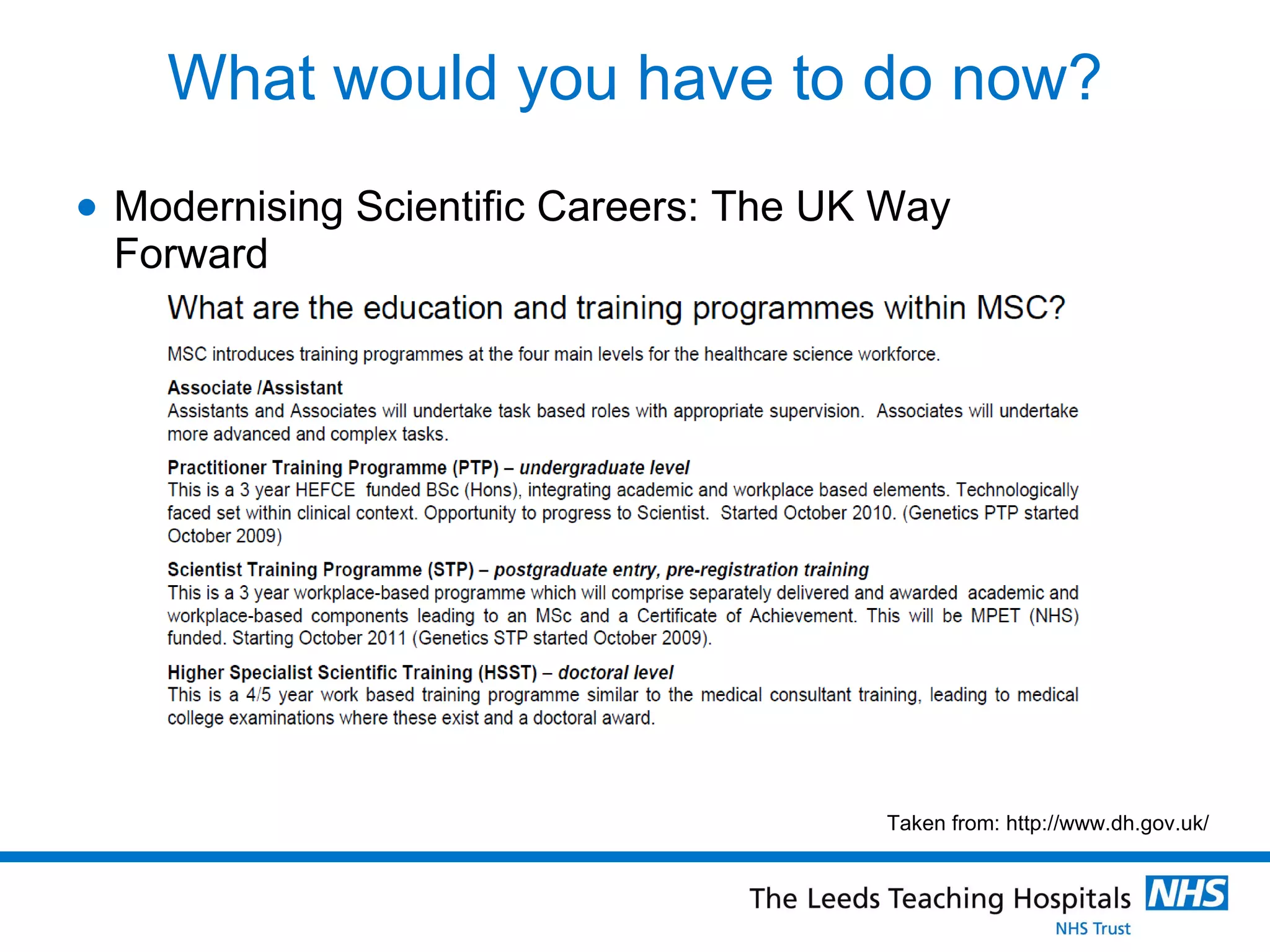
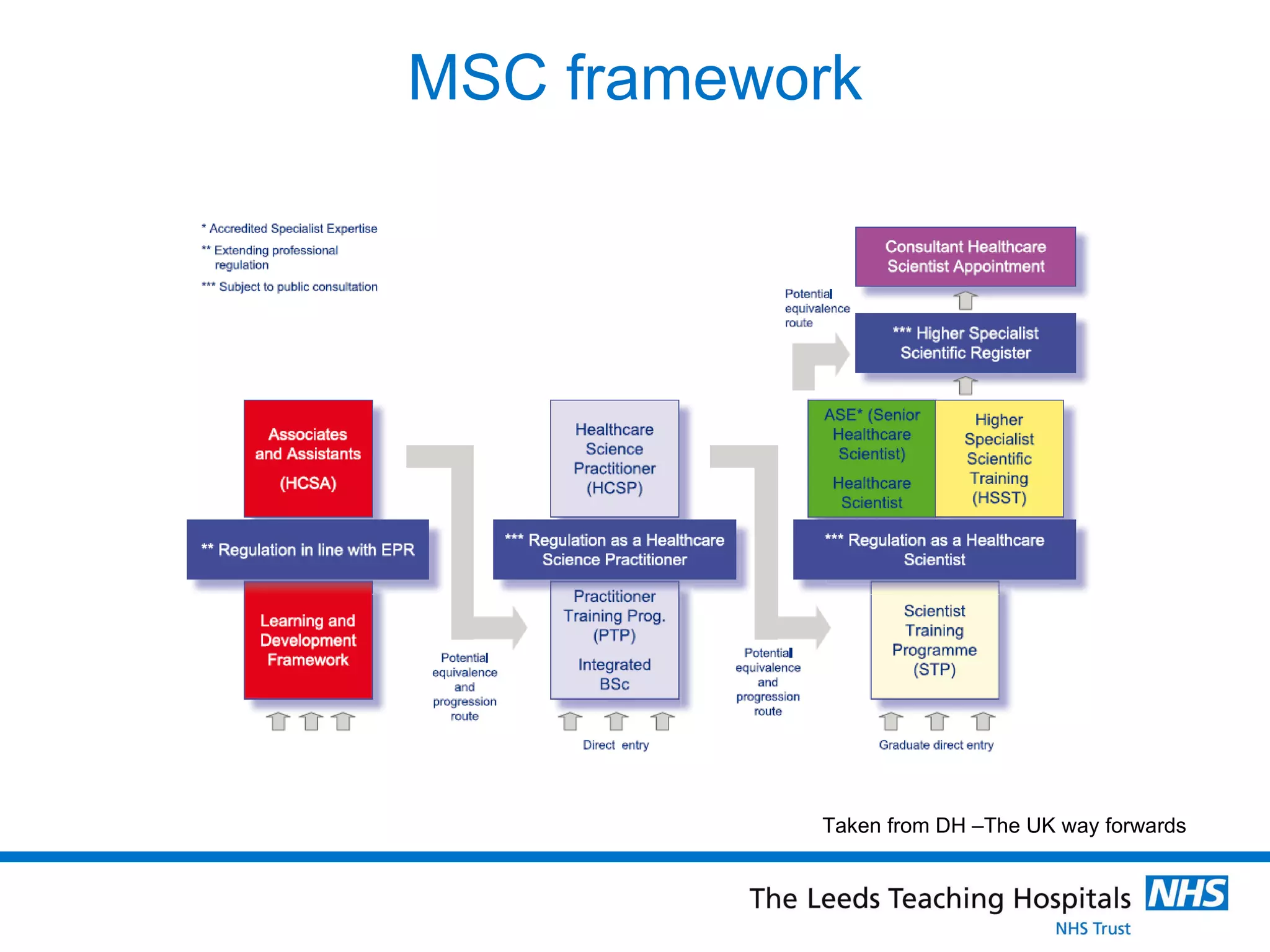
What would you have to do now? Modernising Scientific Careers: The UK Way Forward Taken from: http://www.dh.gov.uk/
MSC framework Taken from DH –The UK way forwards
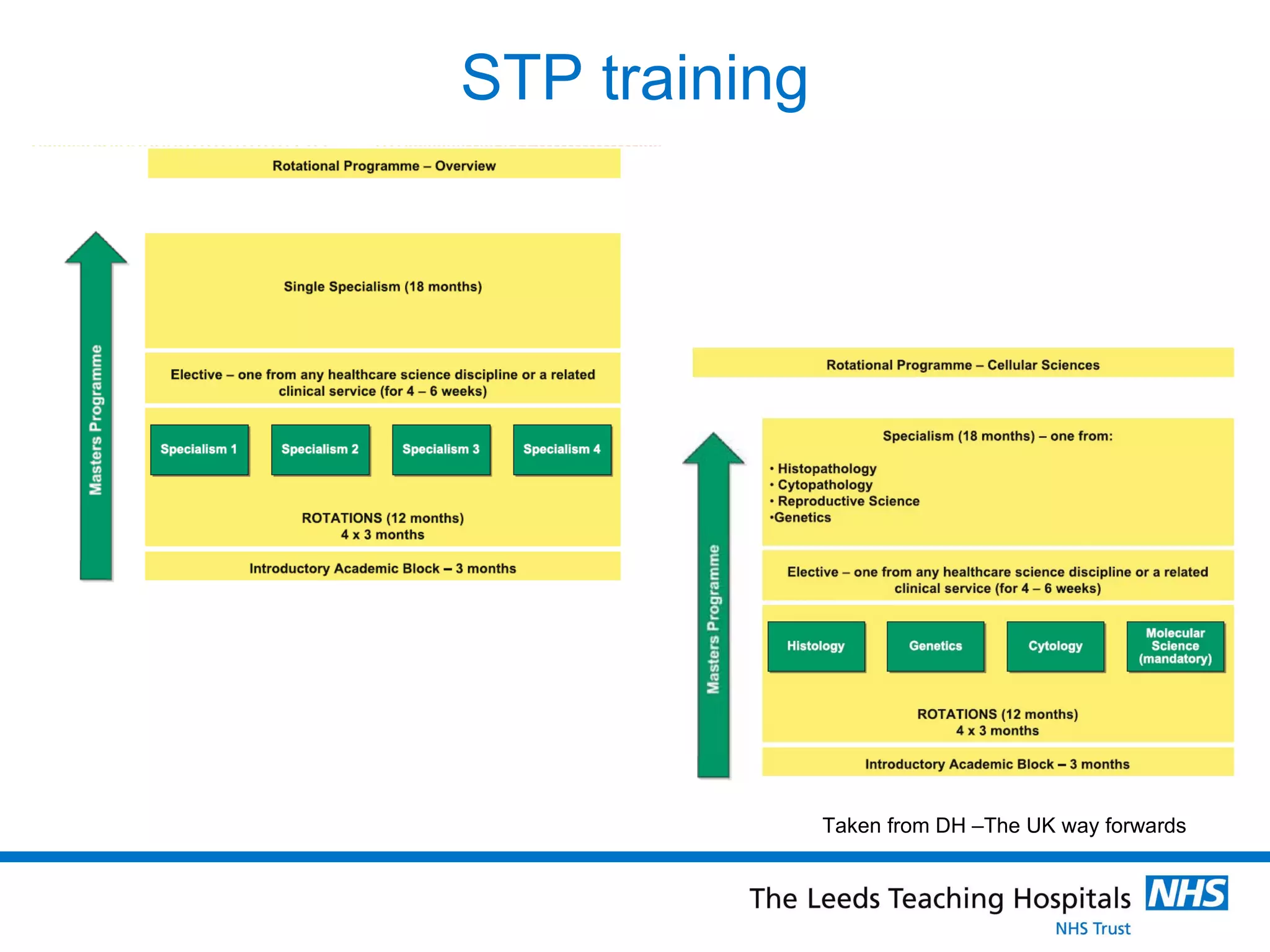
STP training Taken from DH –The UK way forwards
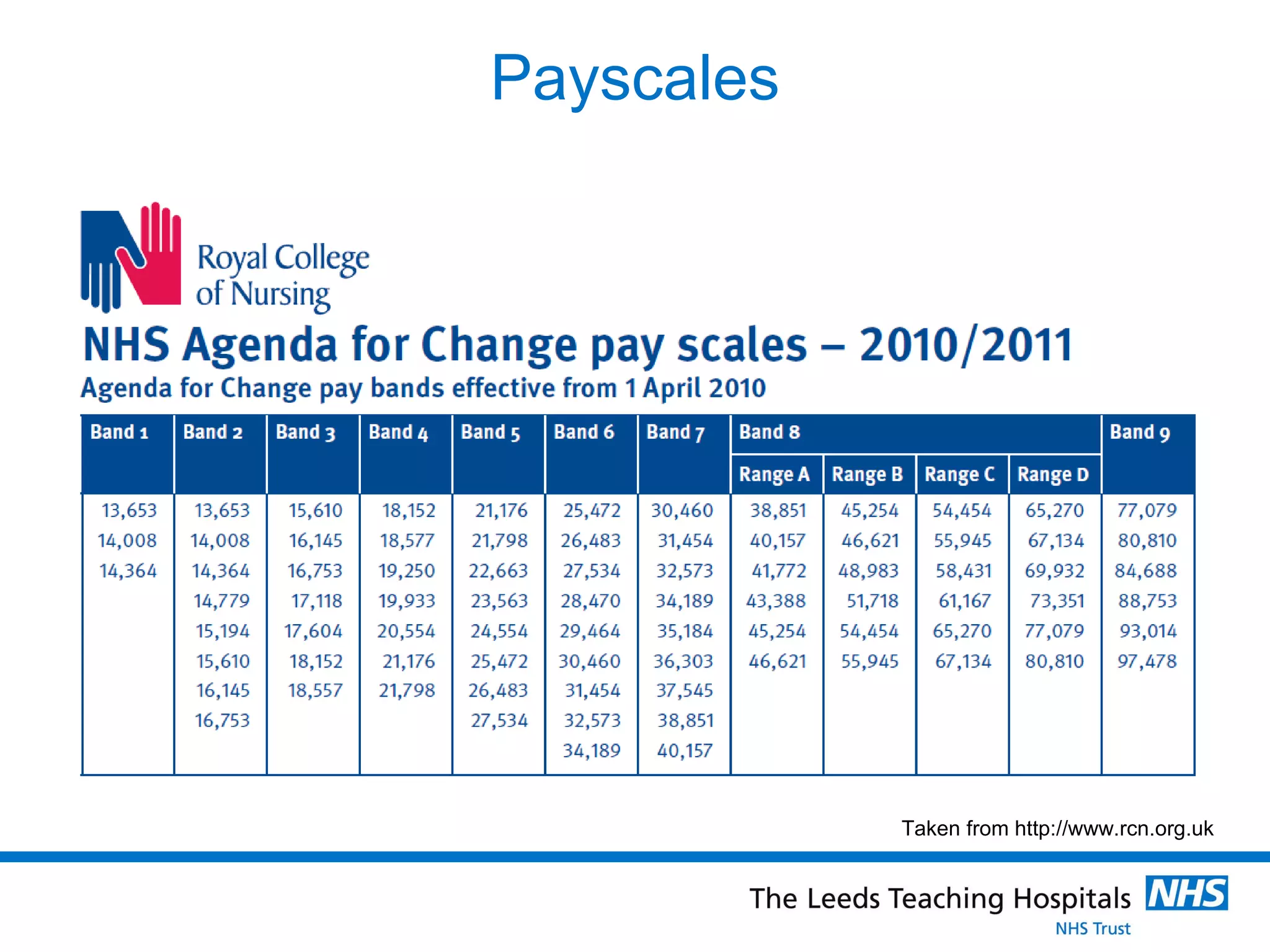
Payscales Taken from http://www.rcn.org.uk
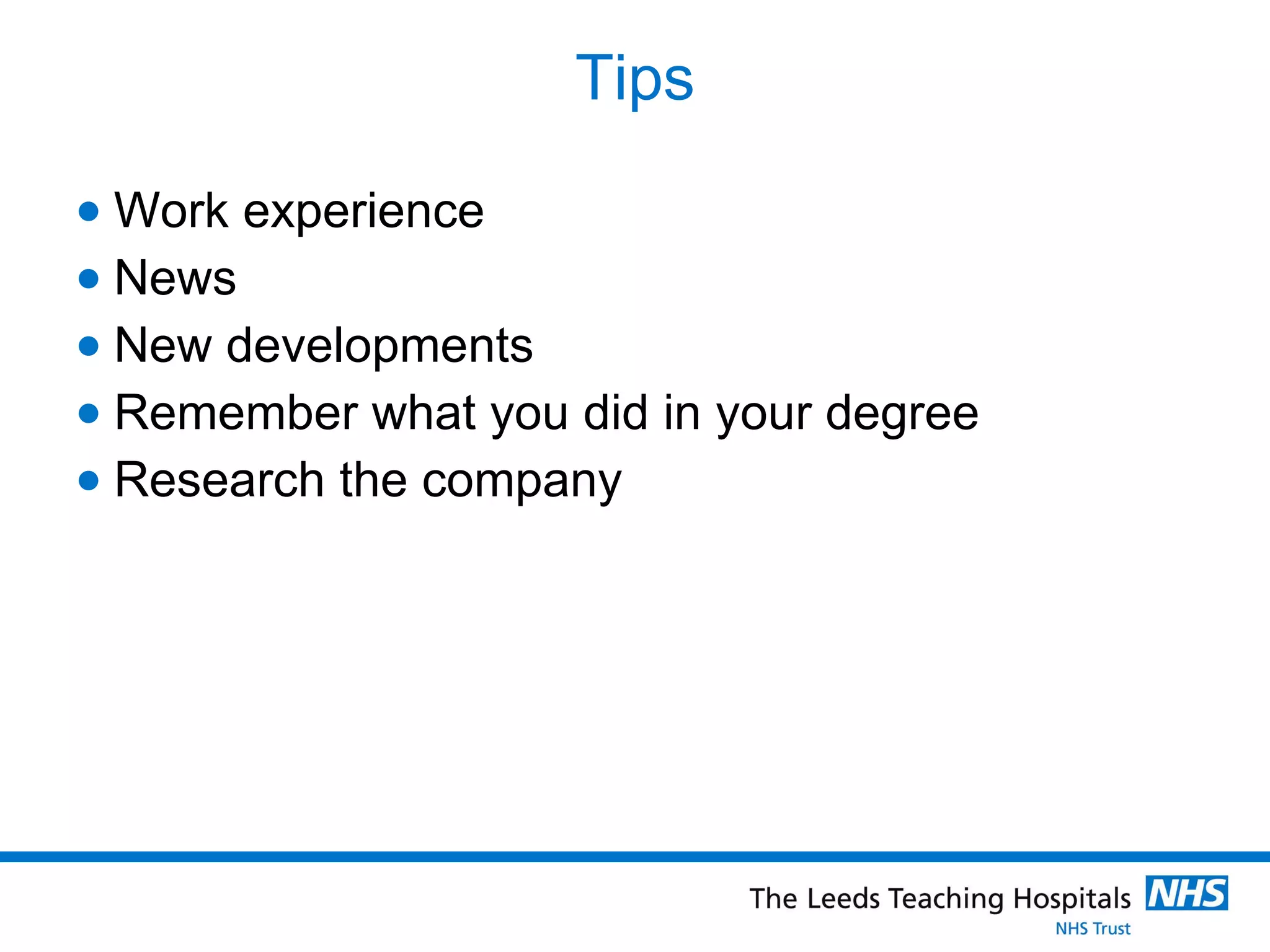
Tips Work experience News New developments Remember what you did in your degree Research the company
Dates to remember Feb 2011 – NHS careers will publish training posts No applications accepted before 24 th  Feb Advertised in New Scientist and NHS jobs  Closing date 13 th  March Employment will start October 2011
Useful websites Association of Clinical Scientists http://www.assclinsci.org/acsHome.aspx NHS careers website http://www.nhscareers.nhs.uk Department of Health http://www.dh.gov.uk Health Professions Council http://www.hpc-uk.org/ British Society for Human Genetics http://www.bshg.org.uk/ Association for Clinical Biochemistry http://www.acb.org.uk/ PHG foundation http://www.phgfoundation.org

Clinical science 2011

  • 1.
    A Clinical Scientistin 2011 Claire Bosomworth Research and Development Microbiology Leeds General Infirmary
  • 2.
    How it allstarted BSc (hons) Medical Genetics Trainee Clinical Scientist position in Molecular Genetics St James’ University Hospital
  • 3.
    What you hadto do then (2005) 2003 Government White Paper – Our Inheritance, Our Future Apply through central recruitment agency Two routes: 4 year training program for graduates 6 year training program for post doctorates Certificate of Competence ACS Certificate of Attainment Registration with the Health Professions Council
  • 4.
    Molecular Genetics Studyof gene structure and function Inherited disorders Three sections Prenatal diagnosis Carrier testing Diagnostic – confirmation of a clinical diagnosis
  • 5.
    The training Covercore diseases tested for in the laboratory Mode of transmission Phenotype/genotype Testing strategy and reporting Clinic attendance Standard operating procedures Audit CPA inspection Courses/conferences - 1 - 2 + 1 I II
  • 6.
  • 7.
    Post competence –a typical day ~75% - diagnostic testing 2/3 diseases Set up testing Supervision of technicians Analysis of data Report writing Liaising with clinicians/external labs
  • 8.
    Techniques employed withinthe laboratory Sanger sequencing Sizing PCRs Multiplex ligation probe amplification (MLPA) Southern blotting Oligonucleotide ligation assay (OLA) Clonal sequencing
  • 9.
  • 10.
    Interpretation Literature searchBioinformatics Disease specific databases Synonymous/non-synonymous Change at protein level Protein prediction software Sequence alignments Training and scientific knowledge
  • 11.
    Assay development Malignanthyperthermia ARMS vs. sequencing UKGTN In line with other testing procedures Gel based Technical support Cheap More expertise Quick Sequencing ARMS
  • 12.
    Duty Scientist Gatekeepingof all samples received Extraction/storage/rejection Work closely with extraction technician Deal with enquiries Sign off all samples – contract/billing Sending
  • 13.
    What happened nextCompleted (almost) four year training contract in Molecular Genetics July 2009 - Swine flu Virology laboratory Leeds General Infirmary Set up respiratory virus testing laboratory Registration with HPC March 2010 – Moved to R&D within Microbiology
  • 14.
    What I donow Currently employed to work on a bloodstream infection trial Implementation of new identification systems for bloodstream infections Help in the laboratory with Clostridium difficile research Developing an in-house PCR for C. difficile
  • 15.
    Molecular genetics vs.Microbiology Diagnostic Data analysis Lab work Duty Scientist Service development Day to day work – Clinical Scientists/Technicians All one lab Fewer samples TAT 3 – 40 days Research Service development Clinical trials Day to day work – Biomedical Scientists Lab split into distinct sections More samples TAT much shorter
  • 16.
    What would youhave to do now? Modernising Scientific Careers: The UK Way Forward Taken from: http://www.dh.gov.uk/
  • 17.
    MSC framework Takenfrom DH –The UK way forwards
  • 18.
    STP training Takenfrom DH –The UK way forwards
  • 19.
    Payscales Taken fromhttp://www.rcn.org.uk
  • 20.
    Tips Work experienceNews New developments Remember what you did in your degree Research the company
  • 21.
    Dates to rememberFeb 2011 – NHS careers will publish training posts No applications accepted before 24 th Feb Advertised in New Scientist and NHS jobs Closing date 13 th March Employment will start October 2011
  • 22.
    Useful websites Associationof Clinical Scientists http://www.assclinsci.org/acsHome.aspx NHS careers website http://www.nhscareers.nhs.uk Department of Health http://www.dh.gov.uk Health Professions Council http://www.hpc-uk.org/ British Society for Human Genetics http://www.bshg.org.uk/ Association for Clinical Biochemistry http://www.acb.org.uk/ PHG foundation http://www.phgfoundation.org

Editor's Notes

  • #6 Why a particular testing strategy is employed for that disease Risk calculations/Conferences of professional bodies/New technologies Clinical Pathology Accreditation
  • #9 Sanger sequencing Sizing PCRs (deletions/insertions) Multiplex ligation probe amplification (dosage) Southern blotting (large expansions/insertions/duplications) Clonal sequencing (everything) Oligonucleotide ligation assay (single nucleotide changes)
  • #15 Focuses on the outcome of bloodstream infections – over five sites C diff study – four sites
  • #17 Published February 2010