Presented By, Present To,
Farhan Akhtar Ahmed & Dr. Blessy K George
Kunal Basak (PB)
§Pulmonary function test are the group of
tests that measure how well your lungs
works,how well the lungs take in and
exhale air , and how efficiently they
transfer oxygen into blood.
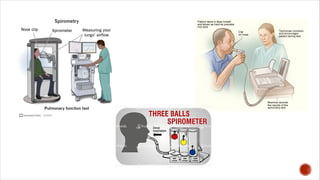
Spirometry: physiological test that measures the ability to inhale and exhale air relative to time.
The main results of spirometry are forced vital capacity (FVC), forced expiratory volume
exhaled in the first second (FEV1), and the FEV1/FVC ratio.
Lung Volume: two methods to measure lung volumes: body plethysmography and gas dilution
methods (nitrogen washout and inert gas dilution)
Diffusion Capacity: Diffusion studies the diffusion of gases across the alveolar-capillary
membranes. Its measurement uses carbon monoxide (CO) to calculate the pulmonary diffusion
capacity.
Bronchoprovocation testing: to assess airway responsiveness.
Six-minute walk test (6MWT): a standard test to assess exercise capacity objectively and
determine prognosis in many respiratory (such as COPD, idiopathic pulmonary fibrosis, and
pulmonary hypertension) and non-respiratory conditions (such as heart failure).
Spirometry is a breathing test that measures how well your lungs
work. It's used to diagnose and monitor lung conditions, including asthma,
chronic obstructive pulmonary disease (COPD), and cystic
fibrosis. Spirometry can also help determine if treatments are working.
Significance:
•Diagnosing lung conditions
Spirometry can help diagnose lung conditions like asthma, COPD, and
cystic fibrosis.
•Monitoring lung function
Spirometry can help monitor how well your lungs are functioning,
especially if you have a chronic lung disease.
•Identifying early changes
Spirometry can help identify early changes in lung function.
•Assessing surgical risk
Spirometry can help assess the risk of surgery for patients
with lung conditions.
•Preventing chronic bronchitis
Spirometry can help show the benefits of quitting smoking on
lung function.
PFT helps as diagnostic tool, which can be categorized into three:
§Obstructive lung disease: COPD, Asthma
§Restrictive lung disease: Pulmonary fibrosis, obesity, muscular
dystrophy
§Pulmonary vascular disease: PAH, Chronic thromboembolic disease
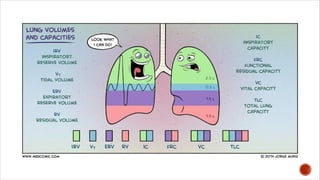
1. Tidal volumes
2. Inspirational reserve volume
3. Expiratory reserve volume
4. Residual volume
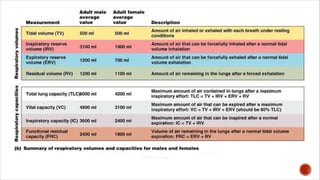
The volume of air exhaled during normal quiet breathing is
the tidal volume.
TV= 500ml
The maximal volume of air inhaled above tidal volume is
the inspiratory reserve volume.
Male:3100ml
Female:1900ml
The maximal air exhaled below tidal volume is the
expiratory reserve volume.
Male:1200ml
Female:700ml
The residual volume (RV) is the amount of air remaining in
the lungs after a maximal exhalation.
Male: 1200ml
Female:1100ml
The combinations or sums of two or more lung volumes
are termed capacities
1. Vital Capacity
2. Forced vital capacity
3. Slow vital capacity
4. Total lung capacity
The volume of air in lungs upon the maximum effort of
inspiration is called TLC.
TLC = TV+ IRV+ ERV+ RV
Male:6000 ml
Female:4200ml
vital capacity (VC) is the maximal amount of air that can be
exhaled after a maximal inspiration. It is equal to the sum
of IRV, VT, and ERV
VC = TV+IRV+ERV
Male: 4800 ml
Female:3100ml
Maximum amount of air that can be inspired after normal
expiration.
IC=TV+IRV
Male: 3600ml
Female:2400ml
Volume of air remaining in the lungs after a normal tidal
volume expiration
FRC= ERV +RV
Male: 2400ml
Female:1800ml
When measured on a forced expiration, it is called
the forced vital capacity (FVC).
When measured over an exhalation of at least 30
seconds, it is called the slow vital capacity (SVC)
§ Peak expiratory flow rate (PEFR) is the maximum amount of air a person can exhale
in one breath. It's a quick test that measures how much air a person can forcefully
breathe out of their lungs.
§ PEFR is a reliable indicator of airflow obstruction and ventilation adequacy.
§ It's often used to monitor the degree of airway obstruction in people with asthma or
chronic lung disease.
Forced expiratory volume in one second (FEV1) is the amount of
air exhaled during the first second of a forced breath
•FEV1 is used to diagnose obstructive lung diseases like asthma and chronic
obstructive pulmonary disease (COPD).
•FEV1 is used to monitor how well breathing medicines are working.
•FEV1 is used to check if lung disease is getting worse.

Clinical pharmacy Pulmonary function                                                       test(1).pdf

Clinical pharmacy Pulmonary function test(1).pdf

  • 1.
    Presented By, PresentTo, Farhan Akhtar Ahmed & Dr. Blessy K George Kunal Basak (PB)
  • 2.
    §Pulmonary function testare the group of tests that measure how well your lungs works,how well the lungs take in and exhale air , and how efficiently they transfer oxygen into blood.
  • 3.
    Spirometry: physiological testthat measures the ability to inhale and exhale air relative to time. The main results of spirometry are forced vital capacity (FVC), forced expiratory volume exhaled in the first second (FEV1), and the FEV1/FVC ratio. Lung Volume: two methods to measure lung volumes: body plethysmography and gas dilution methods (nitrogen washout and inert gas dilution) Diffusion Capacity: Diffusion studies the diffusion of gases across the alveolar-capillary membranes. Its measurement uses carbon monoxide (CO) to calculate the pulmonary diffusion capacity. Bronchoprovocation testing: to assess airway responsiveness. Six-minute walk test (6MWT): a standard test to assess exercise capacity objectively and determine prognosis in many respiratory (such as COPD, idiopathic pulmonary fibrosis, and pulmonary hypertension) and non-respiratory conditions (such as heart failure).
  • 5.
    Spirometry is abreathing test that measures how well your lungs work. It's used to diagnose and monitor lung conditions, including asthma, chronic obstructive pulmonary disease (COPD), and cystic fibrosis. Spirometry can also help determine if treatments are working. Significance: •Diagnosing lung conditions Spirometry can help diagnose lung conditions like asthma, COPD, and cystic fibrosis. •Monitoring lung function Spirometry can help monitor how well your lungs are functioning, especially if you have a chronic lung disease.
  • 6.
    •Identifying early changes Spirometrycan help identify early changes in lung function. •Assessing surgical risk Spirometry can help assess the risk of surgery for patients with lung conditions. •Preventing chronic bronchitis Spirometry can help show the benefits of quitting smoking on lung function.
  • 8.
    PFT helps asdiagnostic tool, which can be categorized into three: §Obstructive lung disease: COPD, Asthma §Restrictive lung disease: Pulmonary fibrosis, obesity, muscular dystrophy §Pulmonary vascular disease: PAH, Chronic thromboembolic disease
  • 9.
    1. Tidal volumes 2.Inspirational reserve volume 3. Expiratory reserve volume 4. Residual volume
  • 10.
    The volume ofair exhaled during normal quiet breathing is the tidal volume. TV= 500ml
  • 11.
    The maximal volumeof air inhaled above tidal volume is the inspiratory reserve volume. Male:3100ml Female:1900ml
  • 12.
    The maximal airexhaled below tidal volume is the expiratory reserve volume. Male:1200ml Female:700ml
  • 13.
    The residual volume(RV) is the amount of air remaining in the lungs after a maximal exhalation. Male: 1200ml Female:1100ml
  • 14.
    The combinations orsums of two or more lung volumes are termed capacities 1. Vital Capacity 2. Forced vital capacity 3. Slow vital capacity 4. Total lung capacity
  • 15.
    The volume ofair in lungs upon the maximum effort of inspiration is called TLC. TLC = TV+ IRV+ ERV+ RV Male:6000 ml Female:4200ml
  • 16.
    vital capacity (VC)is the maximal amount of air that can be exhaled after a maximal inspiration. It is equal to the sum of IRV, VT, and ERV VC = TV+IRV+ERV Male: 4800 ml Female:3100ml
  • 17.
    Maximum amount ofair that can be inspired after normal expiration. IC=TV+IRV Male: 3600ml Female:2400ml
  • 18.
    Volume of airremaining in the lungs after a normal tidal volume expiration FRC= ERV +RV Male: 2400ml Female:1800ml
  • 19.
    When measured ona forced expiration, it is called the forced vital capacity (FVC).
  • 20.
    When measured overan exhalation of at least 30 seconds, it is called the slow vital capacity (SVC)
  • 22.
    § Peak expiratoryflow rate (PEFR) is the maximum amount of air a person can exhale in one breath. It's a quick test that measures how much air a person can forcefully breathe out of their lungs. § PEFR is a reliable indicator of airflow obstruction and ventilation adequacy. § It's often used to monitor the degree of airway obstruction in people with asthma or chronic lung disease.
  • 23.
    Forced expiratory volumein one second (FEV1) is the amount of air exhaled during the first second of a forced breath •FEV1 is used to diagnose obstructive lung diseases like asthma and chronic obstructive pulmonary disease (COPD). •FEV1 is used to monitor how well breathing medicines are working. •FEV1 is used to check if lung disease is getting worse.