Medical laboratory workflow
Dr Ramadan Salem Sati
Medical laboratory workflow
 Workflow in a medical laboratory can be
divided into three phases :
pre- analytical
Analytical
Post- analytical
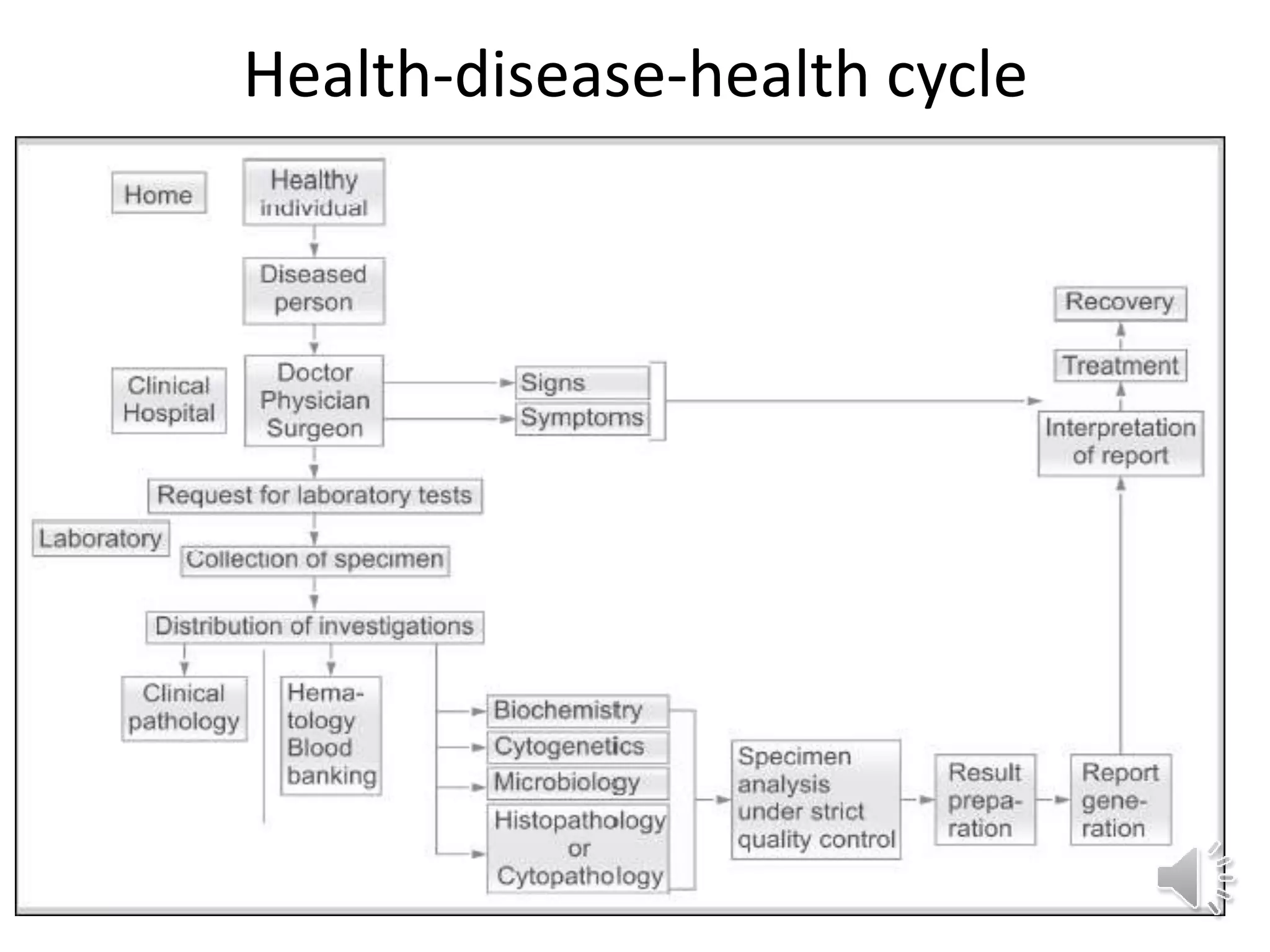
Health-disease-health cycle
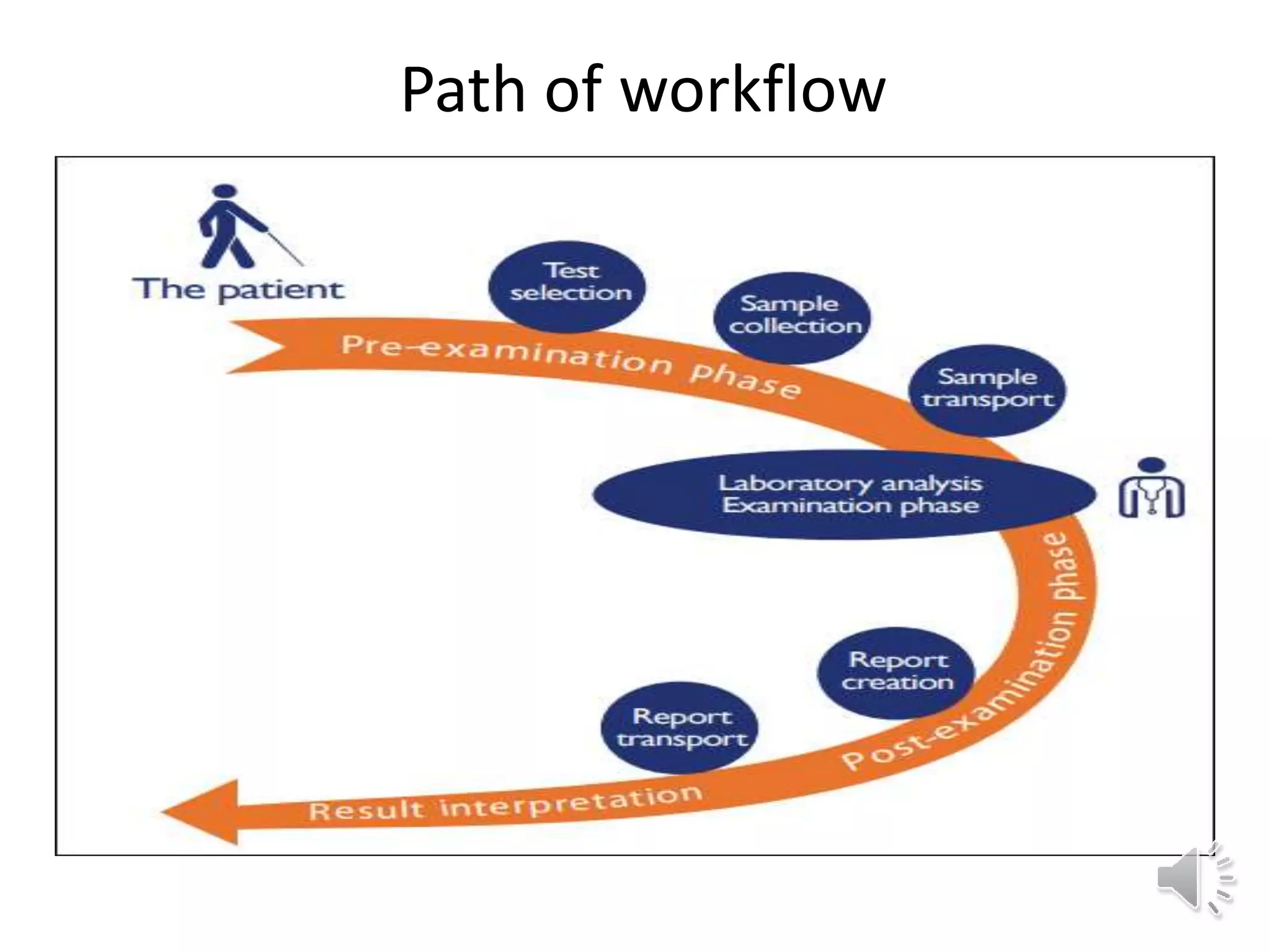
Path of workflow
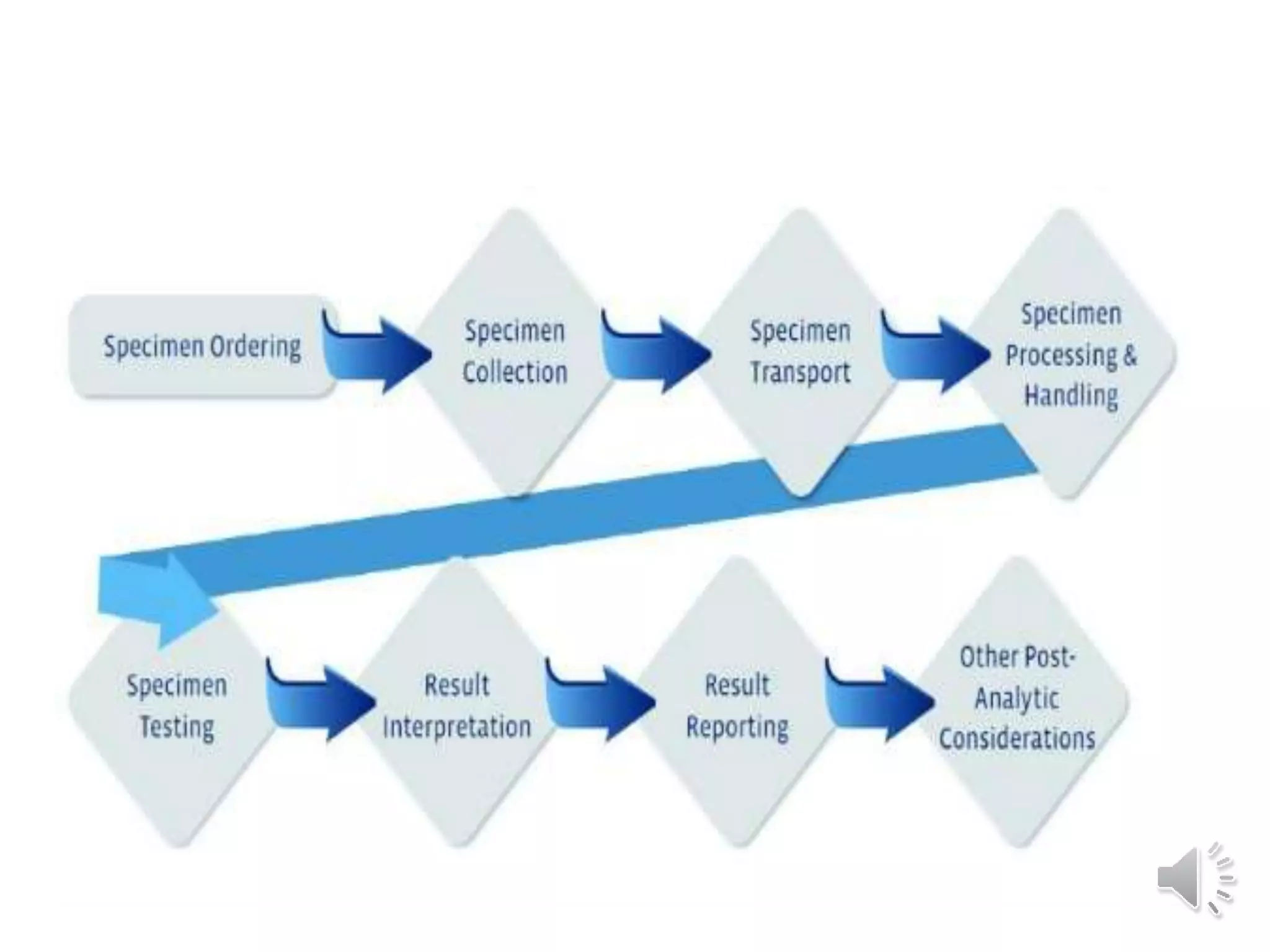
Clinical laboratory workflow
• Laboratory Testing Workflow (LTW) integrates
the ordering, processing, and result reporting
activities associated with in vitro diagnostic
tests performed by clinical laboratories in
healthcare institutions.
• A laboratory workflow is a set of procedural
rules used to manage and coordinate tasks
between people and systems in the lab. Lab
workflows for sample management ensure
that all steps and requirements in a defined
process are correctly Laboratory
• Workflow followed to reduce the time and
cost of sample handling, preparation and data
collection while ensuring the quality of the
sample and any associated data is maintained
• Laboratory workflows are often guided by
standard operating procedures (SOP), and are
most effective when thoughtfully developed
to reflect real-world practices in the lab.
Requesting tests
• The diagnostic process starts with the medical
practitioners ordering required tests based on
clinical symptoms presented by the patient.
Don't forget
Check physician orders
Check patient data
Standard precautions
Label specimen
Timely
Documentation
Sample collection
• The samples are either collected by the
requesting practitioners in clinics/hospitals or
by a phlebotomist located at the collection
centers. Different samples are collected based
on the tests requested.
• Sample collection areas—a laboratory layout
with both the reception and the sample
collection room located at the entrance saves
time .
Specimen quality is important
• The results of test as affect patient diagnosis
and treatment are directly related to the
quality of the specimen collected and
delivered to the laboratory.
Basic conditions for collecting and
transporting the sample
Patient identification
Specimen type
ID number
Date , time and place of collection
Type of container
Temperature , aerobic , anaerobic
Name / initials of collector
Sample transportation
Internal or external sample transportation
Transfer of biomaterials between labs,
buildings, and roadways Proper packaging is
essential to ensure safe transport and to avoid
sample loss and accidental release/exposure.
Sample registration
• The samples are delivered to the specimen
reception where they are sorted into different
categories based on the types of samples and
the tests requested.
• These samples are then checked for errors,
registered into the laboratory tracking system,
barcoded and sent to different departments
for processing.
Sample preparation
• Different samples are prepared in different ways
according to the standard procedures set by the
laboratories.
• Some samples like the SSTs and citrate tubes are
centrifuged, for special tests serum is extracted
from the samples or in case of other samples
they are tested as- is. Along with the sample
preparation, the reagents as well as controls are
prepared to be loaded onto the analyzers.
Running QC
• In a medical laboratory, Quality Controls (QC)
are run often to check if the machines are
giving accurate and precise results.
• How often the QCs are run are based on the
frequency at which the analyzer is used. In a
usual lab setting the QCs are run every four-
eight hrs and before any special tests are run
on the analyzer.
• If the QC is out of range, the control should be
rerun and if it is still erroneous the test should
be repeated and the errors causing it should
be fixed before further testing is performed on
the analyser.
Sample analysis
• After the samples, reagents and quality
control are loaded onto the analyzer, the tests
required to be run on the sample are
communicated to the analyzer via a
middleware that connects it with the
registration software . The analyzer
communicates the results obtained from the
tests with the software which complies the
patients results into a final report.
Result validation
• The patient results compiled by the software can
be accessed by the medical laboratory scientists,
pathologist and clinicians. If the results are
normal and if the tests were performed without
any errors/ alarms the results are send out to the
requested clinician or patient without notifying
the laboratory scientists. If the results are
abnormal or there are any flags raised by the
analyzer the results are cross verified by the
scientists and sent out with a possible diagnosis.
Health laboratory building
requirements
reception room/area;
specimen collection room/area, with nearby
toilets;
specimen/sample/slide storage room/area
including cold storage, where applicable;
water supply suitable for analytical purposes;
adequate power supply;
analytical work area;
dedicated area for cleaning laboratory
glassware and sterilization/disinfection;
designated areas for the collection of medical
wastes, general storage for supplies and
equipment, in addition to a storing area or
cabinet for hazardous materials (these must be
clearly labeled)
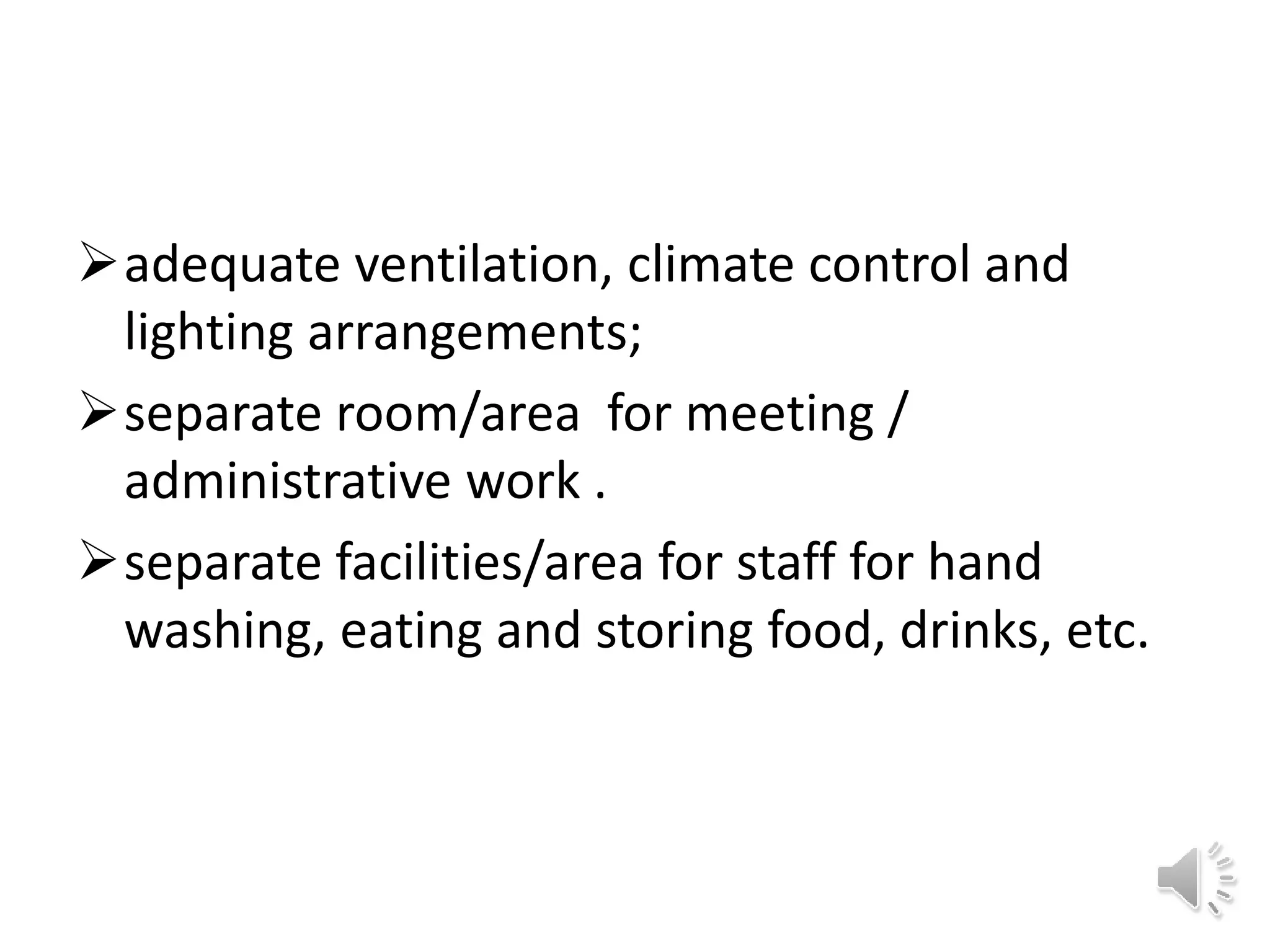
adequate ventilation, climate control and
lighting arrangements;
separate room/area for meeting /
administrative work .
separate facilities/area for staff for hand
washing, eating and storing food, drinks, etc.
Clinical laboratory workflow - 9.pptx

Clinical laboratory workflow - 9.pptx

  • 1.
  • 2.
    Medical laboratory workflow Workflow in a medical laboratory can be divided into three phases : pre- analytical Analytical Post- analytical
  • 3.
  • 5.
  • 6.
    Clinical laboratory workflow •Laboratory Testing Workflow (LTW) integrates the ordering, processing, and result reporting activities associated with in vitro diagnostic tests performed by clinical laboratories in healthcare institutions.
  • 7.
    • A laboratoryworkflow is a set of procedural rules used to manage and coordinate tasks between people and systems in the lab. Lab workflows for sample management ensure that all steps and requirements in a defined process are correctly Laboratory
  • 8.
    • Workflow followedto reduce the time and cost of sample handling, preparation and data collection while ensuring the quality of the sample and any associated data is maintained
  • 9.
    • Laboratory workflowsare often guided by standard operating procedures (SOP), and are most effective when thoughtfully developed to reflect real-world practices in the lab.
  • 10.
    Requesting tests • Thediagnostic process starts with the medical practitioners ordering required tests based on clinical symptoms presented by the patient.
  • 11.
    Don't forget Check physicianorders Check patient data Standard precautions Label specimen Timely Documentation
  • 12.
    Sample collection • Thesamples are either collected by the requesting practitioners in clinics/hospitals or by a phlebotomist located at the collection centers. Different samples are collected based on the tests requested.
  • 13.
    • Sample collectionareas—a laboratory layout with both the reception and the sample collection room located at the entrance saves time .
  • 14.
    Specimen quality isimportant • The results of test as affect patient diagnosis and treatment are directly related to the quality of the specimen collected and delivered to the laboratory.
  • 15.
    Basic conditions forcollecting and transporting the sample Patient identification Specimen type ID number Date , time and place of collection Type of container Temperature , aerobic , anaerobic Name / initials of collector
  • 16.
    Sample transportation Internal orexternal sample transportation Transfer of biomaterials between labs, buildings, and roadways Proper packaging is essential to ensure safe transport and to avoid sample loss and accidental release/exposure.
  • 17.
    Sample registration • Thesamples are delivered to the specimen reception where they are sorted into different categories based on the types of samples and the tests requested.
  • 18.
    • These samplesare then checked for errors, registered into the laboratory tracking system, barcoded and sent to different departments for processing.
  • 19.
    Sample preparation • Differentsamples are prepared in different ways according to the standard procedures set by the laboratories. • Some samples like the SSTs and citrate tubes are centrifuged, for special tests serum is extracted from the samples or in case of other samples they are tested as- is. Along with the sample preparation, the reagents as well as controls are prepared to be loaded onto the analyzers.
  • 20.
    Running QC • Ina medical laboratory, Quality Controls (QC) are run often to check if the machines are giving accurate and precise results. • How often the QCs are run are based on the frequency at which the analyzer is used. In a usual lab setting the QCs are run every four- eight hrs and before any special tests are run on the analyzer.
  • 21.
    • If theQC is out of range, the control should be rerun and if it is still erroneous the test should be repeated and the errors causing it should be fixed before further testing is performed on the analyser.
  • 22.
    Sample analysis • Afterthe samples, reagents and quality control are loaded onto the analyzer, the tests required to be run on the sample are communicated to the analyzer via a middleware that connects it with the registration software . The analyzer communicates the results obtained from the tests with the software which complies the patients results into a final report.
  • 23.
    Result validation • Thepatient results compiled by the software can be accessed by the medical laboratory scientists, pathologist and clinicians. If the results are normal and if the tests were performed without any errors/ alarms the results are send out to the requested clinician or patient without notifying the laboratory scientists. If the results are abnormal or there are any flags raised by the analyzer the results are cross verified by the scientists and sent out with a possible diagnosis.
  • 24.
    Health laboratory building requirements receptionroom/area; specimen collection room/area, with nearby toilets; specimen/sample/slide storage room/area including cold storage, where applicable; water supply suitable for analytical purposes; adequate power supply; analytical work area;
  • 25.
    dedicated area forcleaning laboratory glassware and sterilization/disinfection; designated areas for the collection of medical wastes, general storage for supplies and equipment, in addition to a storing area or cabinet for hazardous materials (these must be clearly labeled)
  • 26.
    adequate ventilation, climatecontrol and lighting arrangements; separate room/area for meeting / administrative work . separate facilities/area for staff for hand washing, eating and storing food, drinks, etc.