
Climate Change from Forest to CoralsGroup:Javier A. Montenegro G.Aaron OuchiOktiyasMuzakyLuthfiMdKamruzzamanUniversity of the Ryukyus2011
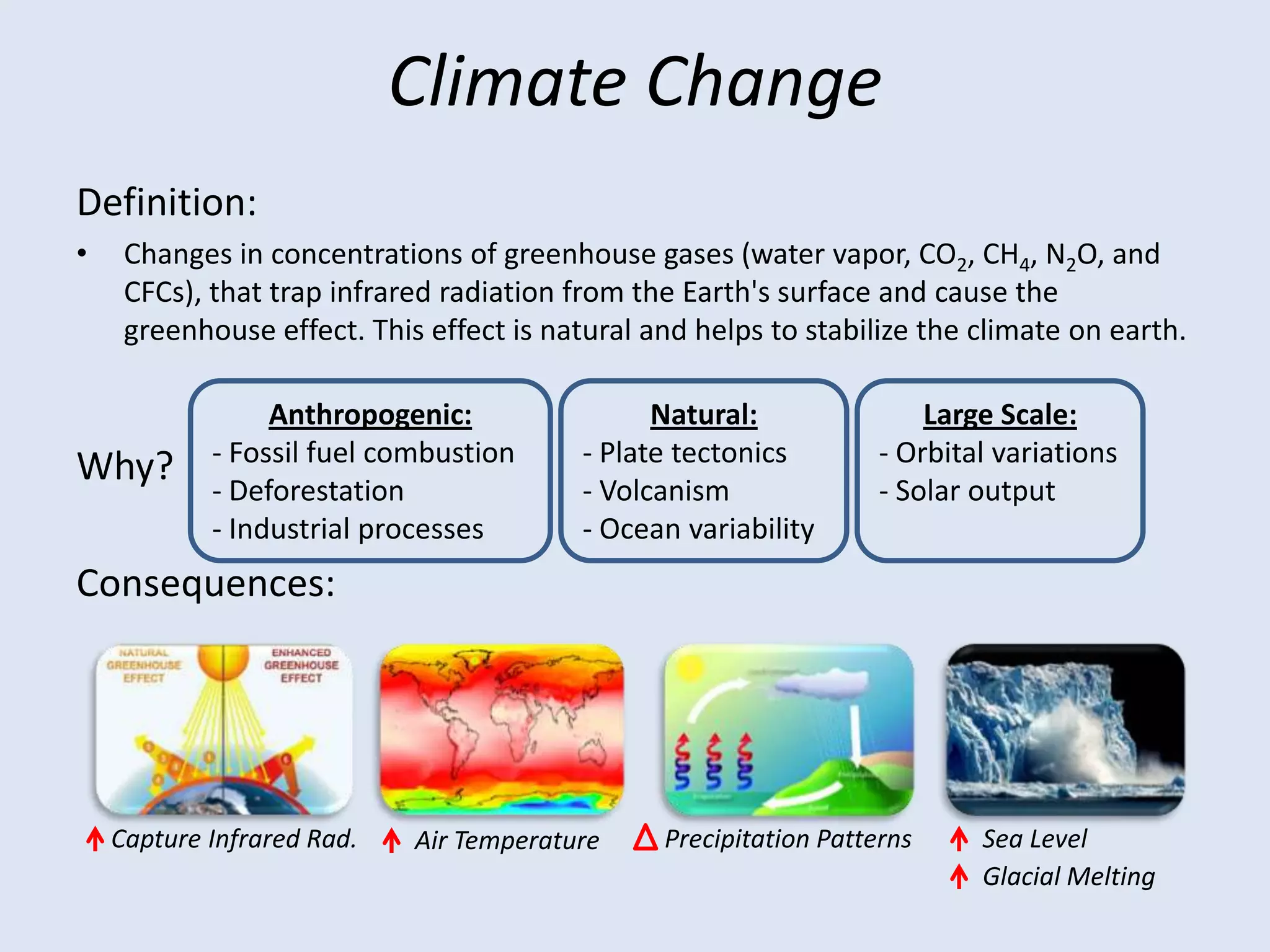
Climate Change Definition: Changes in concentrations of greenhouse gases (water vapor, CO2, CH4, N2O, and CFCs), that trap infrared radiation from the Earth's surface and cause the greenhouse effect. This effect is natural and helps to stabilize the climate on earth. Why?Consequences: Anthropogenic:- Fossil fuel combustion- Deforestation- Industrial processes Natural:- Plate tectonics- Volcanism- Ocean variabilityLarge Scale:- Orbital variations- Solar outputCapture Infrared Rad. Precipitation PatternsAir TemperatureSea LevelGlacial Melting
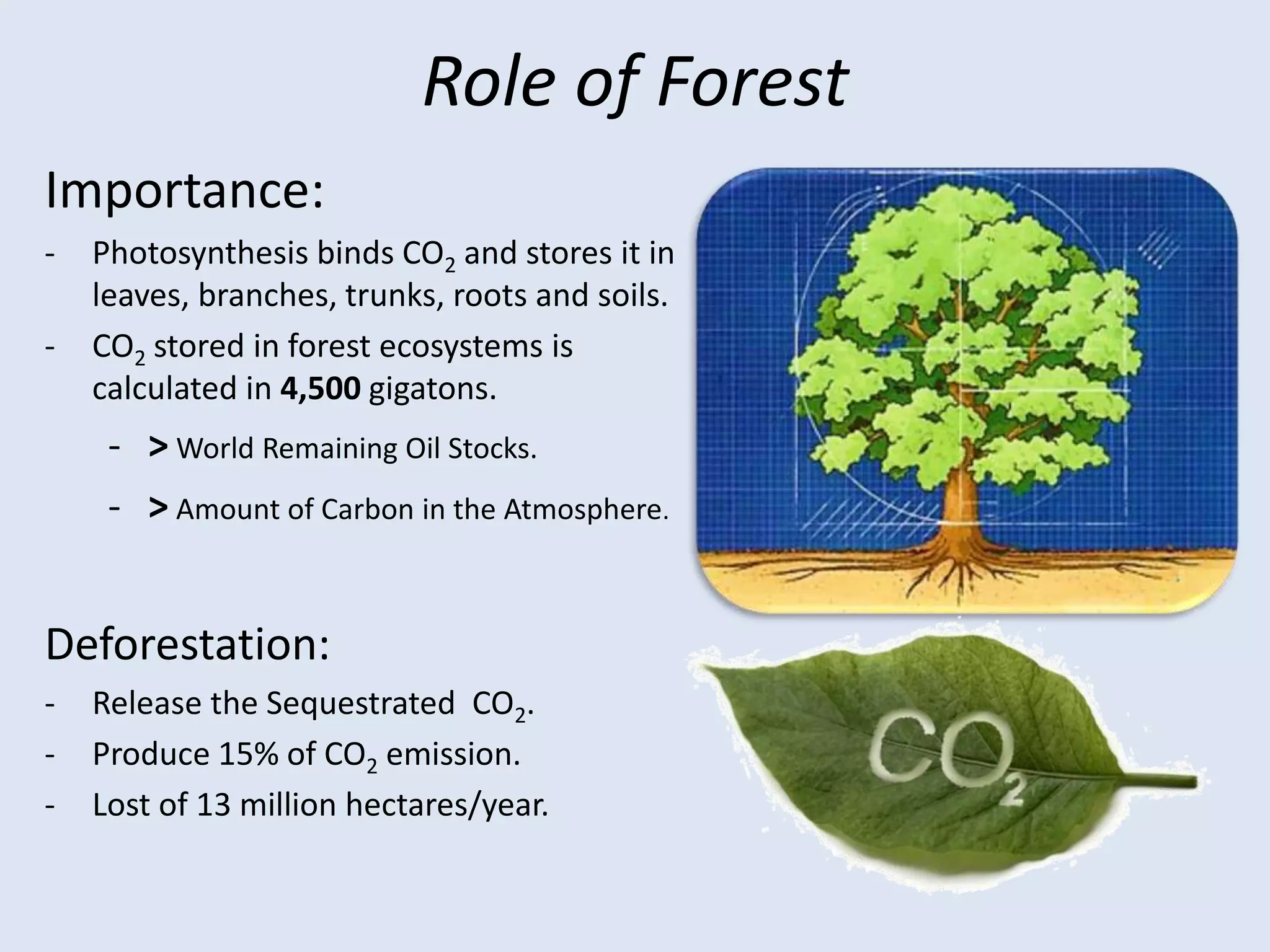
Role of ForestImportance:Photosynthesis binds CO2 and stores it in leaves, branches, trunks, roots and soils.
CO2 stored in forest ecosystems is calculated in 4,500gigatons.
> World Remaining Oil Stocks.
>Amount of Carbon in the Atmosphere.Deforestation:Release the Sequestrated  CO2.
Produce 15% of CO2 emission.
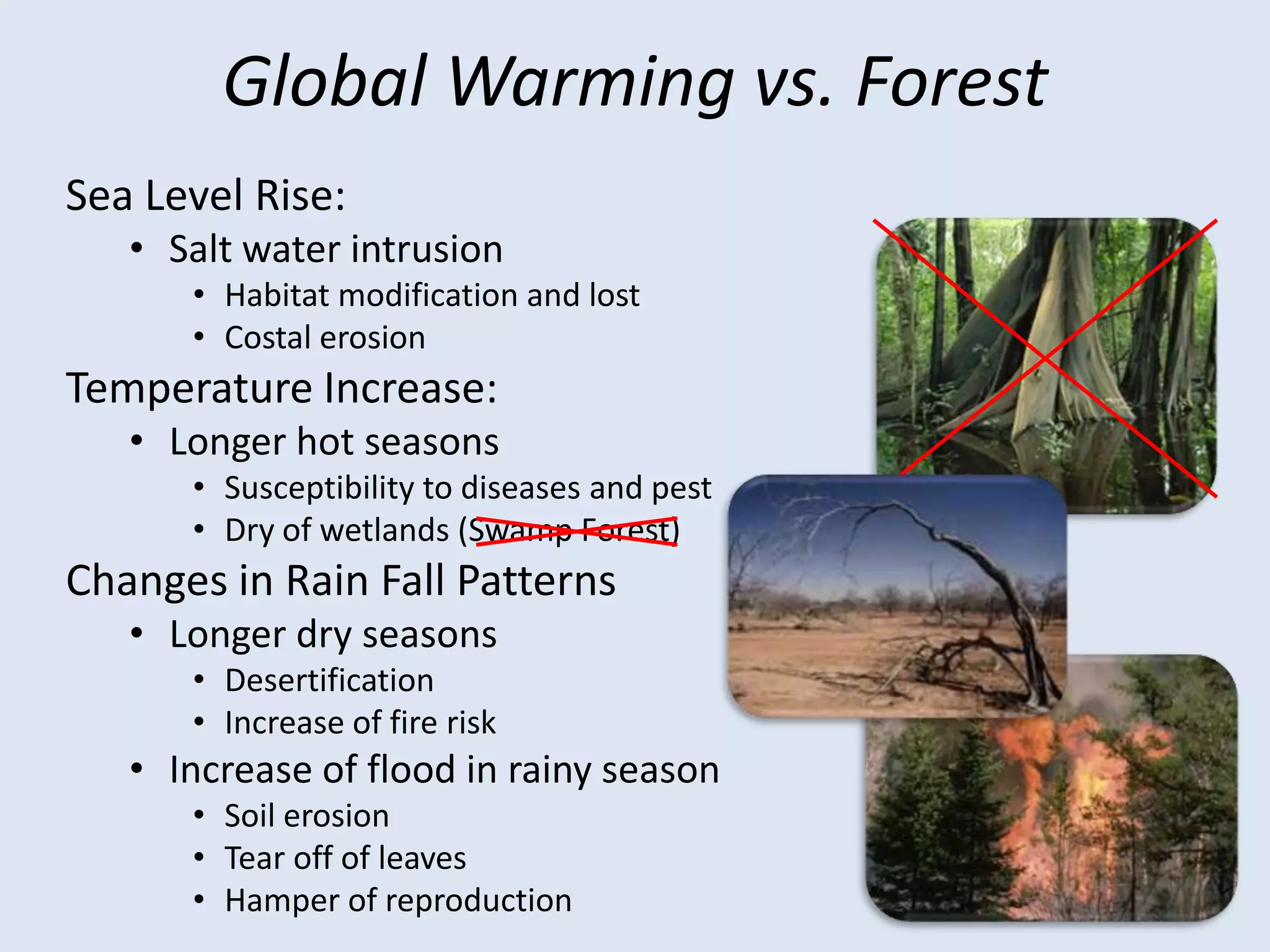
Lost of 13 million hectares/year.Global Warming vs. ForestSea Level Rise: Salt water intrusionHabitat modification and lostCostal erosion Temperature Increase: Longer hot seasonsSusceptibility to diseases and pest Dry of wetlands (Swamp Forest)Changes in Rain Fall Patterns Longer dry seasonsDesertificationIncrease of fire riskIncrease of flood in rainy seasonSoil erosionTear off of leavesHamper of reproduction
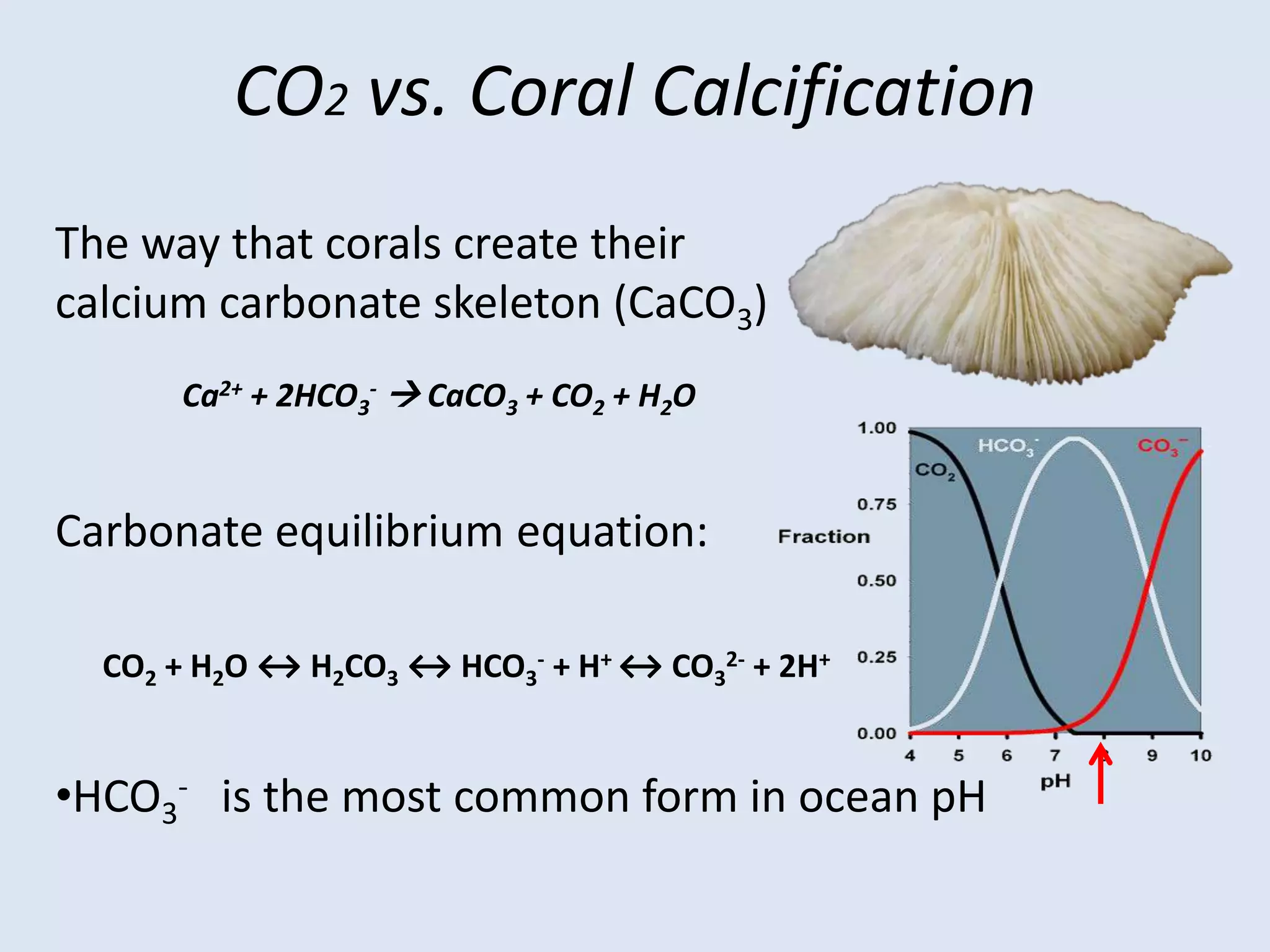
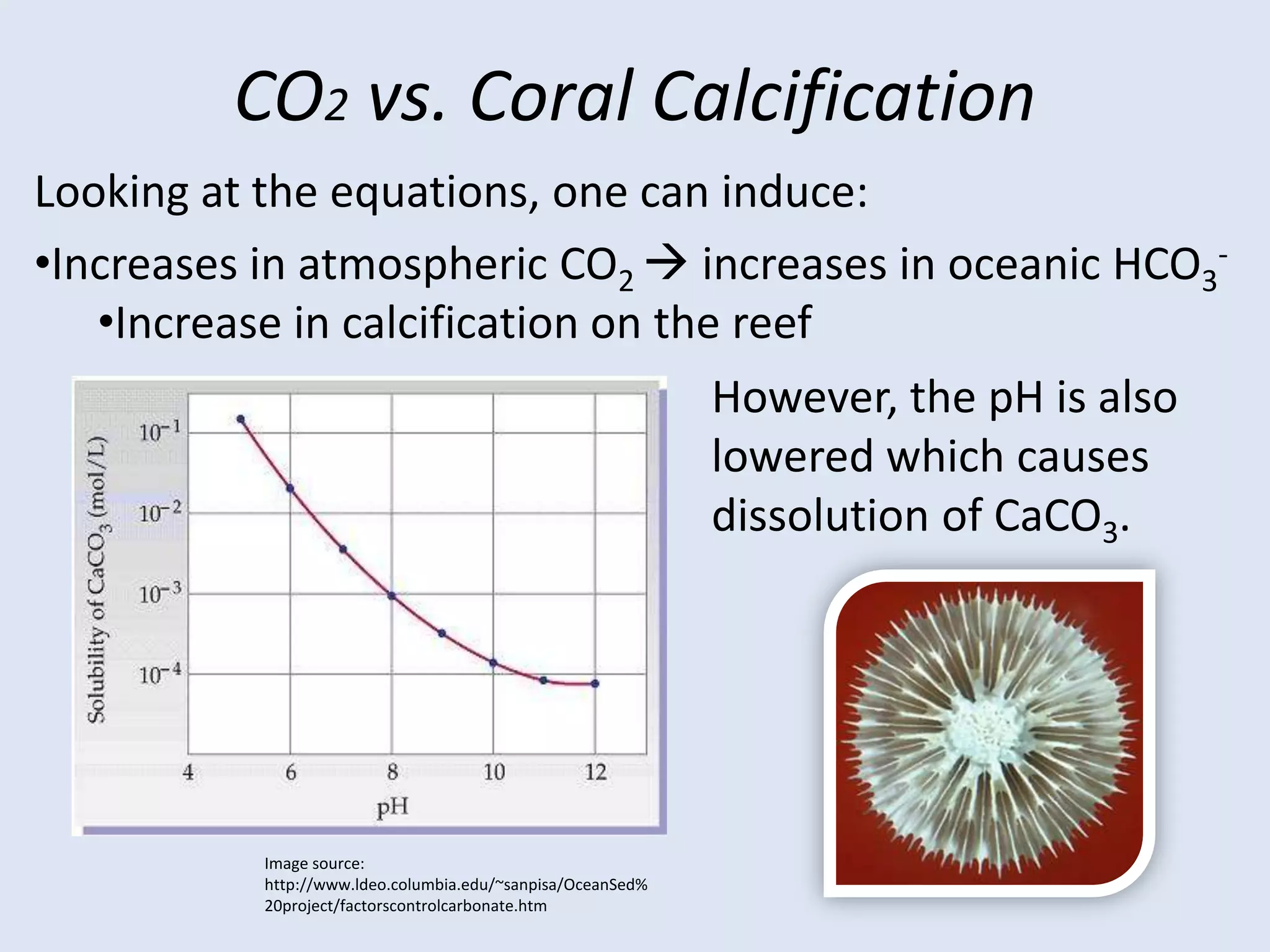
CO2vs. CoralCalcificationThe way that corals create their calcium carbonate skeleton (CaCO3)	Ca2+ + 2HCO3- CaCO3 + CO2 + H2OCarbonate equilibrium equation:CO2+ H2O ↔ H2CO3 ↔ HCO3- + H+ ↔ CO32- + 2H+HCO3- is the most common form in ocean pHCO2vs. CoralCalcificationLooking at the equations, one can induce:Increases in atmospheric CO2 increases in oceanic HCO3-
Increase in calcification on the reefHowever, the pH is also lowered which causes dissolution of CaCO3.Image source: http://www.ldeo.columbia.edu/~sanpisa/OceanSed%20project/factorscontrolcarbonate.htm
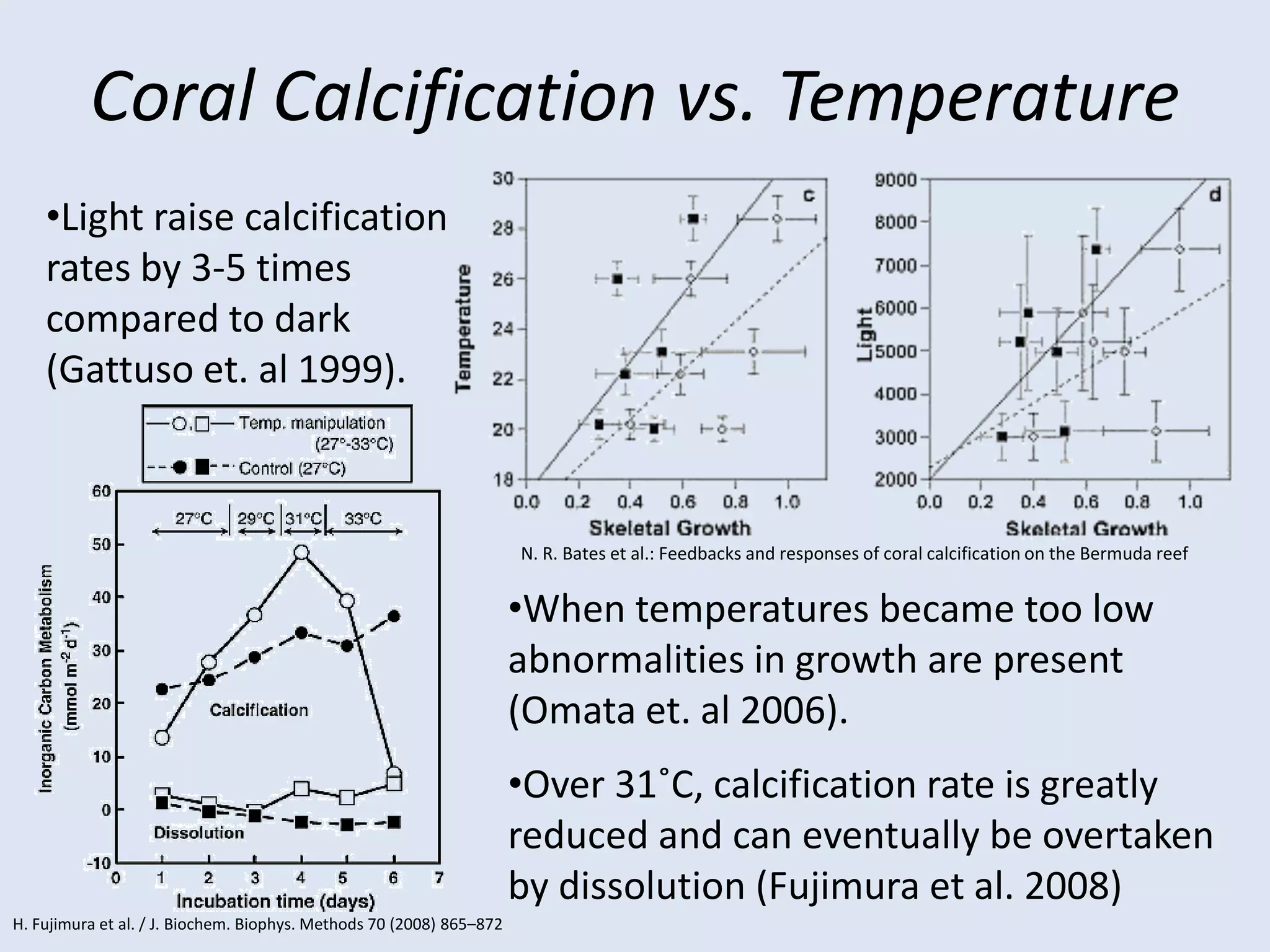
CoralCalcification vs. TemperatureLight raise calcification rates by 3-5 times compared to dark (Gattuso et. al 1999).N. R. Bates et al.: Feedbacks and responses of coral calcification on the Bermuda reefWhen temperatures became too low abnormalities in growth are present  (Omata et. al 2006).
Over 31˚C, calcification rate is greatly reduced and can eventually be overtaken by dissolution (Fujimura et al. 2008)H. Fujimura et al. / J. Biochem. Biophys. Methods 70 (2008) 865–872
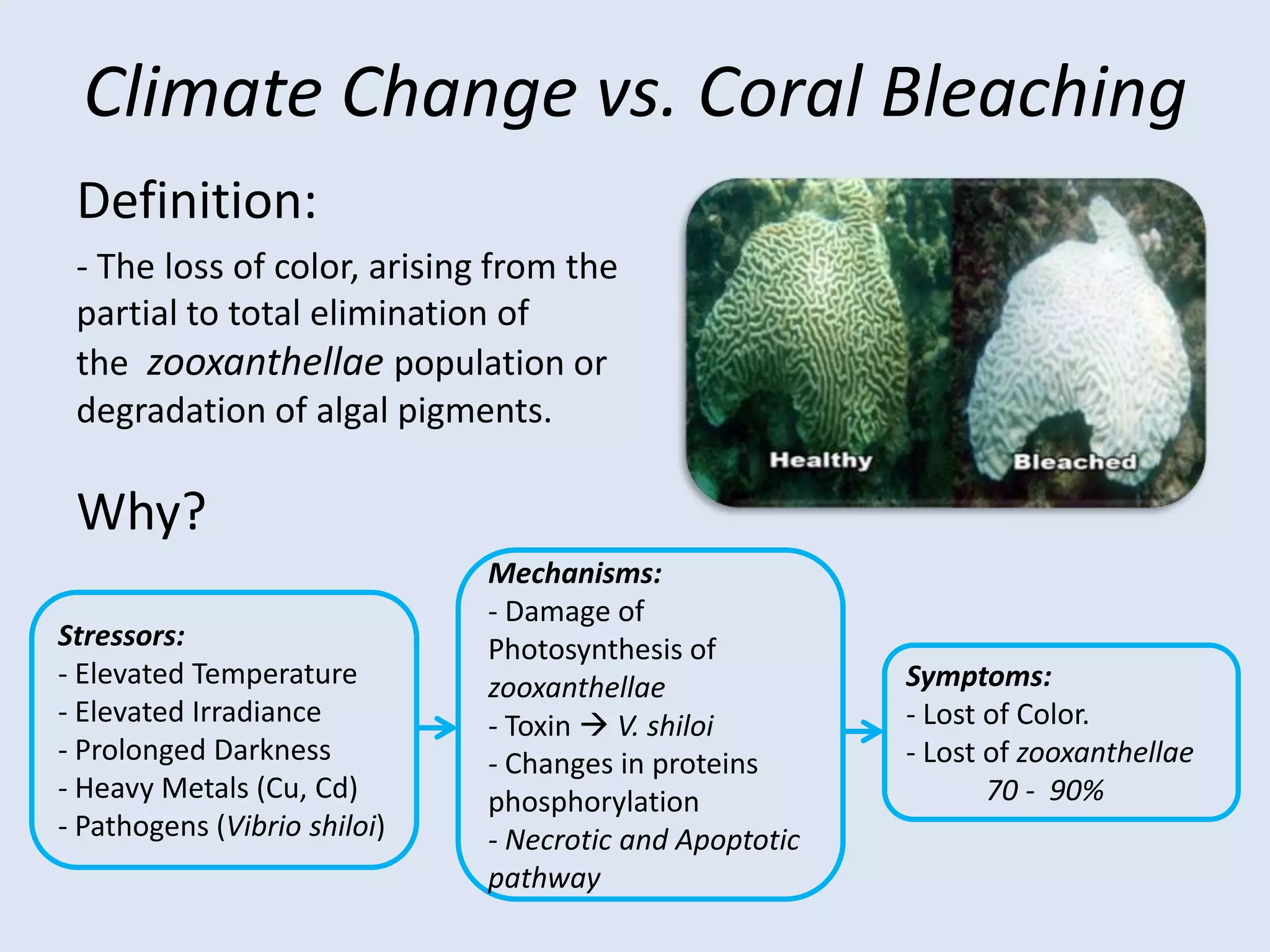
Climate Change vs. Coral BleachingDefinition:- The loss of color, arising from the partial to total elimination of the zooxanthellaepopulation or degradation of algal pigments.Why?Mechanisms:- Damage of Photosynthesisof zooxanthellae- Toxin  V. shiloi- Changes in proteins phosphorylation- Necrotic and Apoptotic pathway Stressors:- Elevated Temperature- Elevated Irradiance- Prolonged Darkness- Heavy Metals (Cu, Cd)- Pathogens (Vibrio shiloi)Symptoms:- Lost of Color.- Lost of zooxanthellae           70 -  90%

Climate change from Forest to Corals

  • 1.
    Climate Change fromForest to CoralsGroup:Javier A. Montenegro G.Aaron OuchiOktiyasMuzakyLuthfiMdKamruzzamanUniversity of the Ryukyus2011
  • 2.
    Climate Change Definition:Changes in concentrations of greenhouse gases (water vapor, CO2, CH4, N2O, and CFCs), that trap infrared radiation from the Earth's surface and cause the greenhouse effect. This effect is natural and helps to stabilize the climate on earth. Why?Consequences: Anthropogenic:- Fossil fuel combustion- Deforestation- Industrial processes Natural:- Plate tectonics- Volcanism- Ocean variabilityLarge Scale:- Orbital variations- Solar outputCapture Infrared Rad. Precipitation PatternsAir TemperatureSea LevelGlacial Melting
  • 3.
    Role of ForestImportance:Photosynthesisbinds CO2 and stores it in leaves, branches, trunks, roots and soils.
  • 4.
    CO2 stored inforest ecosystems is calculated in 4,500gigatons.
  • 5.
  • 6.
    >Amount of Carbonin the Atmosphere.Deforestation:Release the Sequestrated CO2.
  • 7.
    Produce 15% ofCO2 emission.
  • 8.
    Lost of 13million hectares/year.Global Warming vs. ForestSea Level Rise: Salt water intrusionHabitat modification and lostCostal erosion Temperature Increase: Longer hot seasonsSusceptibility to diseases and pest Dry of wetlands (Swamp Forest)Changes in Rain Fall Patterns Longer dry seasonsDesertificationIncrease of fire riskIncrease of flood in rainy seasonSoil erosionTear off of leavesHamper of reproduction
  • 9.
    CO2vs. CoralCalcificationThe waythat corals create their calcium carbonate skeleton (CaCO3) Ca2+ + 2HCO3- CaCO3 + CO2 + H2OCarbonate equilibrium equation:CO2+ H2O ↔ H2CO3 ↔ HCO3- + H+ ↔ CO32- + 2H+HCO3- is the most common form in ocean pHCO2vs. CoralCalcificationLooking at the equations, one can induce:Increases in atmospheric CO2 increases in oceanic HCO3-
  • 10.
    Increase in calcificationon the reefHowever, the pH is also lowered which causes dissolution of CaCO3.Image source: http://www.ldeo.columbia.edu/~sanpisa/OceanSed%20project/factorscontrolcarbonate.htm
  • 11.
    CoralCalcification vs. TemperatureLightraise calcification rates by 3-5 times compared to dark (Gattuso et. al 1999).N. R. Bates et al.: Feedbacks and responses of coral calcification on the Bermuda reefWhen temperatures became too low abnormalities in growth are present (Omata et. al 2006).
  • 12.
    Over 31˚C, calcificationrate is greatly reduced and can eventually be overtaken by dissolution (Fujimura et al. 2008)H. Fujimura et al. / J. Biochem. Biophys. Methods 70 (2008) 865–872
  • 13.
    Climate Change vs.Coral BleachingDefinition:- The loss of color, arising from the partial to total elimination of the zooxanthellaepopulation or degradation of algal pigments.Why?Mechanisms:- Damage of Photosynthesisof zooxanthellae- Toxin  V. shiloi- Changes in proteins phosphorylation- Necrotic and Apoptotic pathway Stressors:- Elevated Temperature- Elevated Irradiance- Prolonged Darkness- Heavy Metals (Cu, Cd)- Pathogens (Vibrio shiloi)Symptoms:- Lost of Color.- Lost of zooxanthellae 70 - 90%
  • 14.
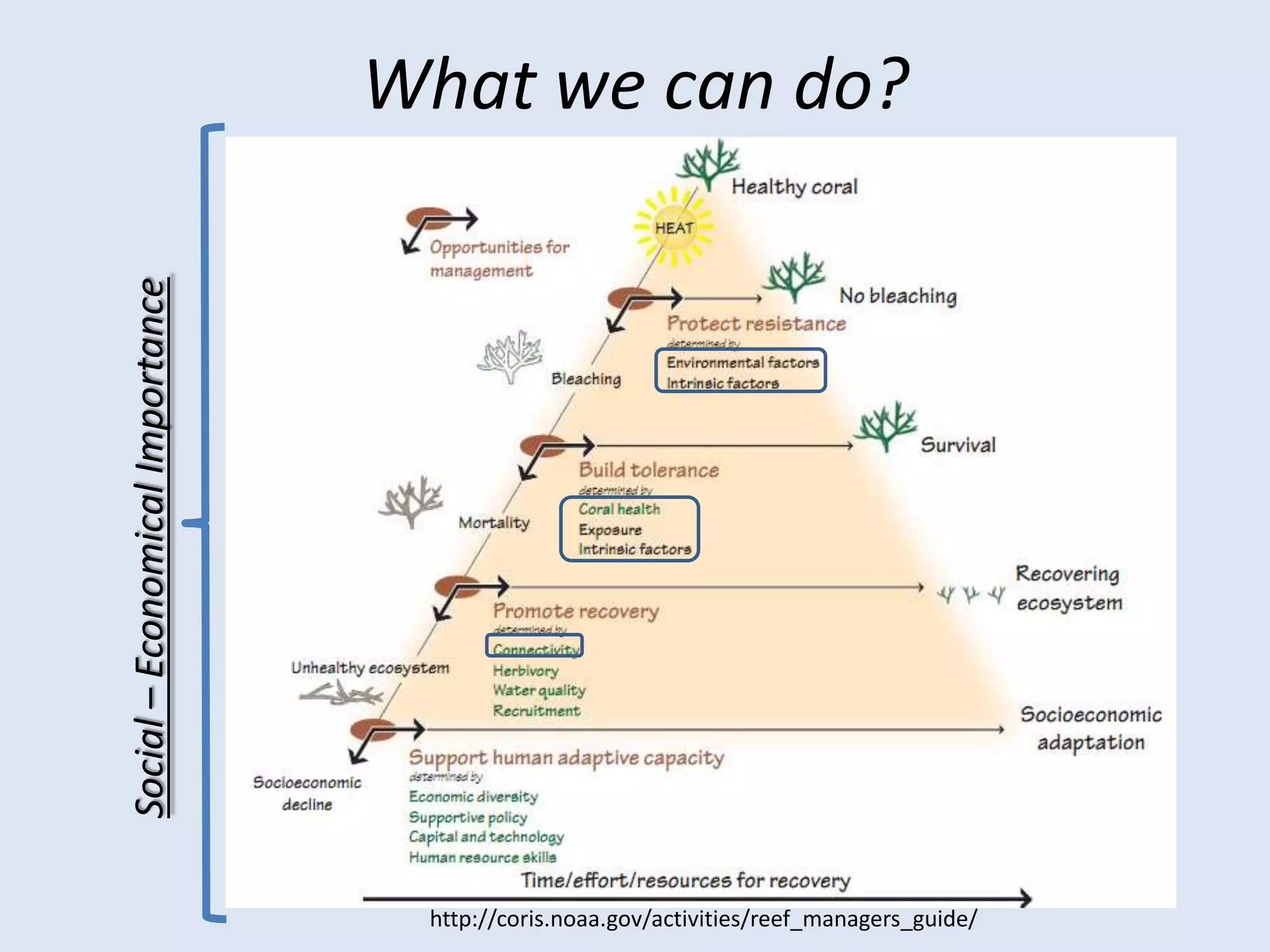
    What we cando?Social – Economical Importance http://coris.noaa.gov/activities/reef_managers_guide/
  • 15.
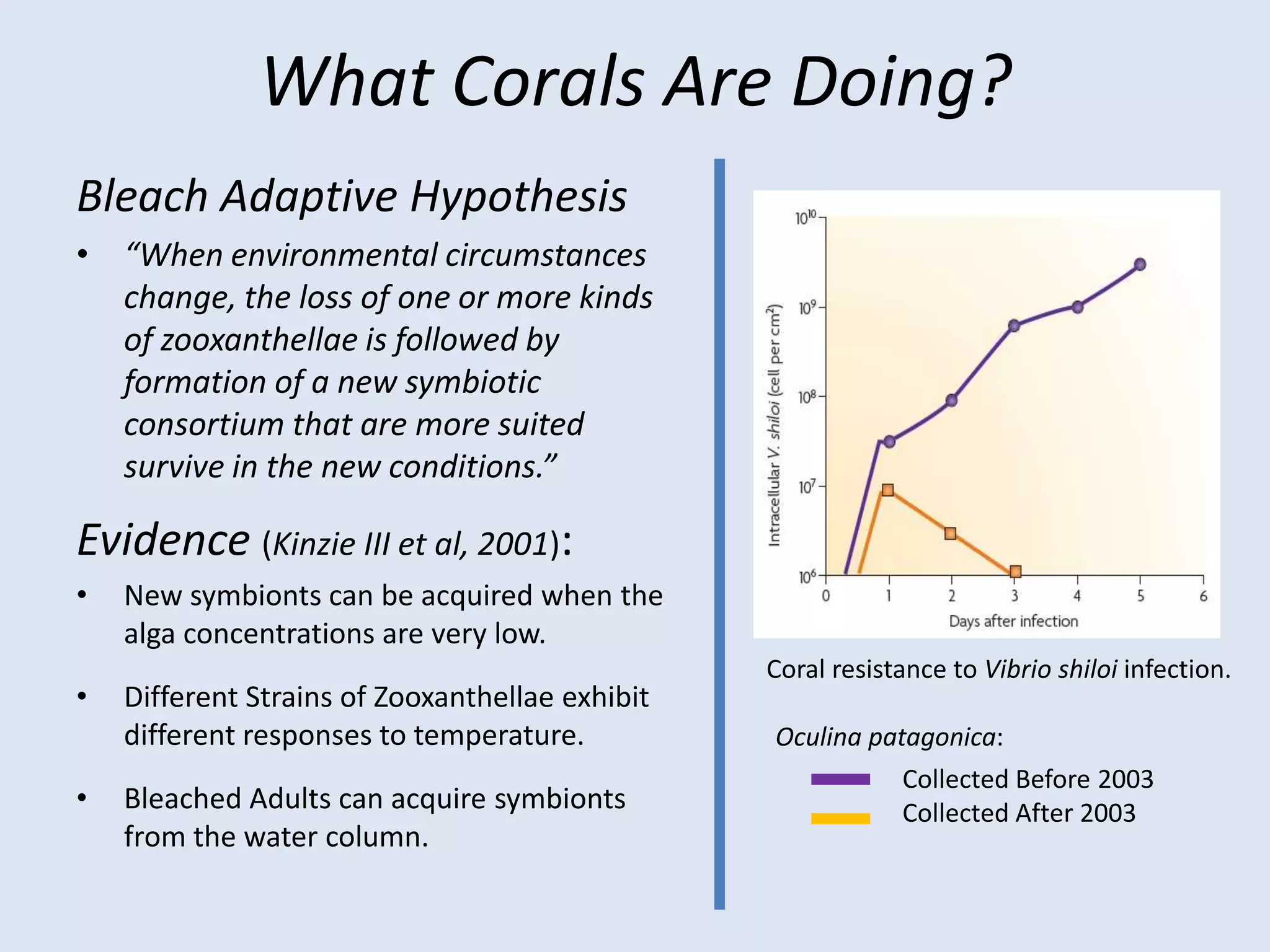
    What Corals AreDoing?Bleach Adaptive Hypothesis“When environmental circumstances change, the loss of one or more kinds of zooxanthellaeis followed by formation of a new symbiotic consortium that are more suited survive in the new conditions.” Evidence (Kinzie III et al, 2001):New symbionts can be acquired when the alga concentrations are very low.Different Strains of Zooxanthellae exhibit different responses to temperature.Bleached Adults can acquire symbionts from the water column. Coral resistance to Vibrio shiloiinfection.Oculinapatagonica:Collected Before 2003 Collected After 2003
  • 16.
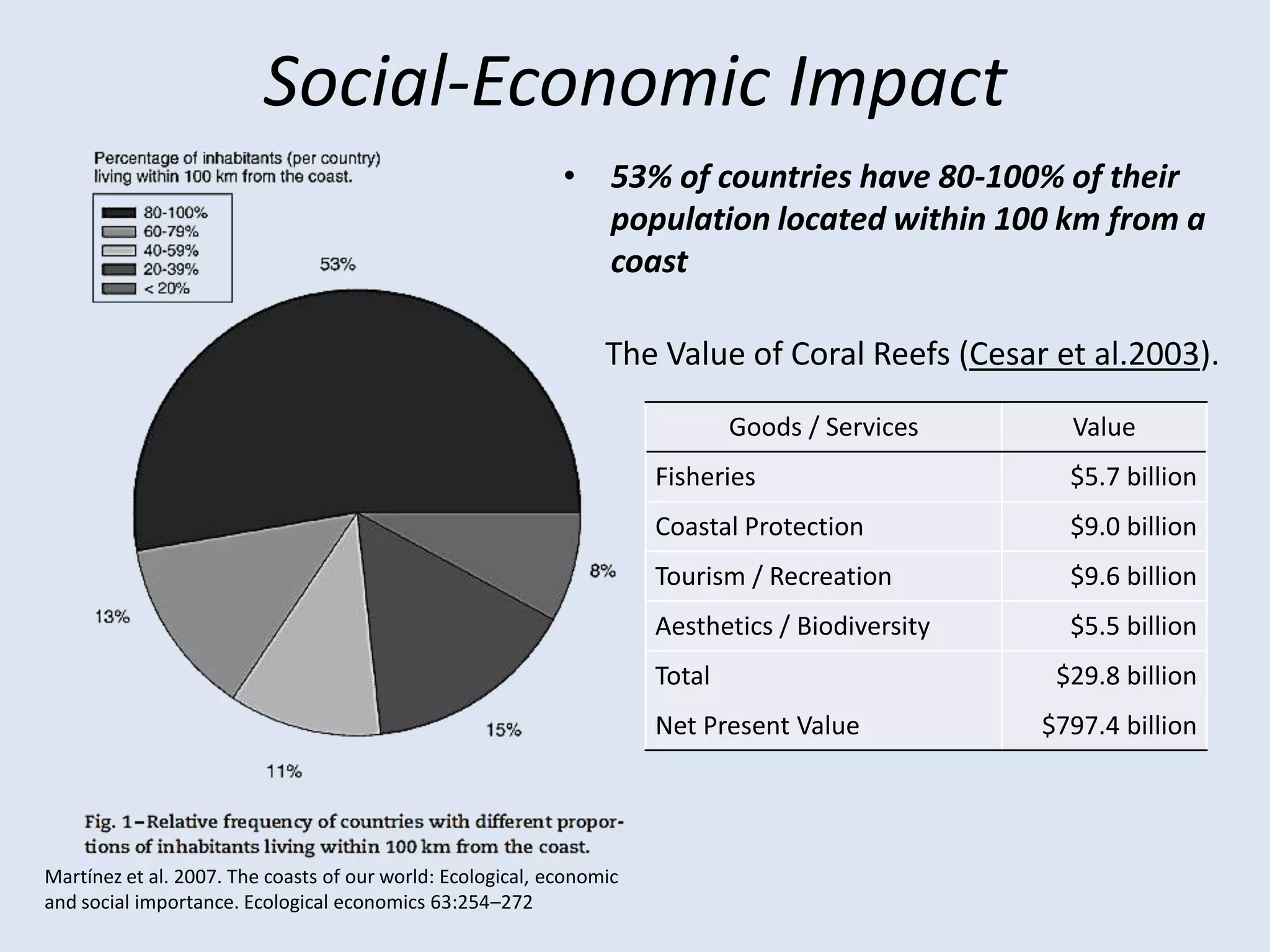
    Social-Economic Impact53% ofcountries have 80-100% of their population located within 100 km from a coastThe Value of Coral Reefs (Cesar et al.2003).Martínez et al. 2007. The coasts of our world: Ecological, economic and social importance. Ecological economics 63:254–272
  • 17.
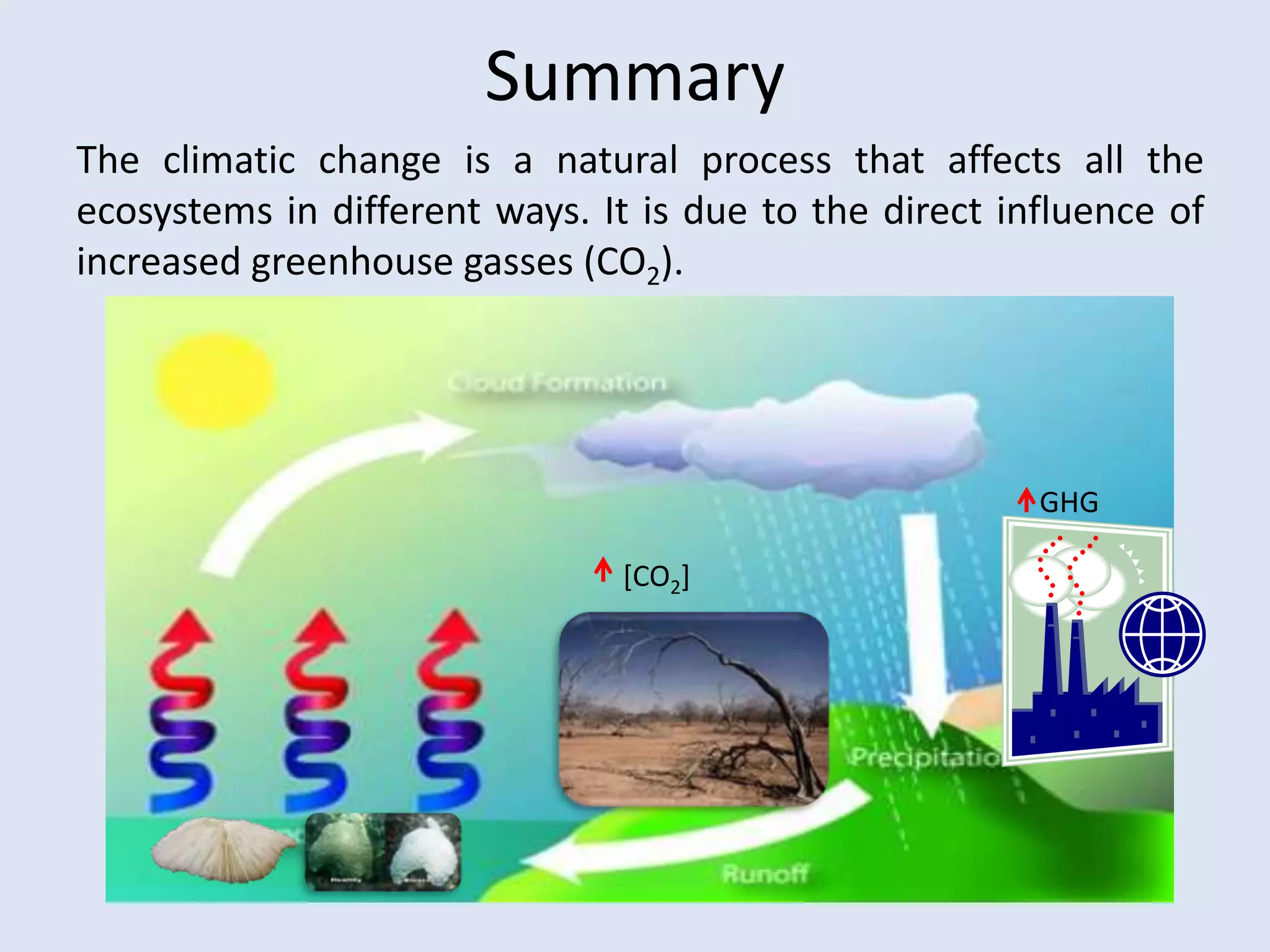
    SummaryThe climatic changeis a natural process that affects all the ecosystems in different ways. It is due to the direct influence of increased greenhouse gasses (CO2).GHG[CO2]
  • 18.