 What is web?
 What is client?
 What is server?
 What is Client Server relationship?
 What is Client Server model?
 The web is a service that allow computers to
share and exchange data. Such as
images,videos, documents etc.
 A web is referred to client server
communication.
Client can be a machine or a program.It is an
appliance and a way to make requests through the
web.
Client as a Machine: Device of the end user. e.g.
Laptop, PC, Smartphone, Tablet
Client as a Program: A Client program is a program
that allows the user to make requests from the
server
e.g.web browsers, word processor or Photo editor
software etc.
A user can make a request of web page through
web browser
 Server is a computer program not a device.
 It provides functionality and serve other
program called client.
 A server can serve multiple clients at the
same time.
 One can run multiple servers on one single
machine.
 Different types of servers have different
purposes.
 A server can contain web resources, host
web applications, store users and program
data.
 It is used to serve hundered or thousands
clients at the same time.
 It responds with a message whenever got
the message from clients
 Web Servers
 Database Servers
 Email Servers
 File Servers
 Game Servers
 Print Servers
 Application Servers
 Web Server store, process and deliver
web pages to client. It manages special
services for HTTP (Hyper Text Transfer
Protocol) request. e.g. Apache
 Database Server manage data. It is used
for store and access data e.g. MYSQL
 Email Servers that accepts, store and
send email.
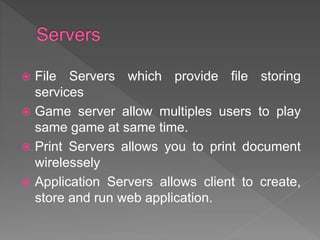
 File Servers which provide file storing
services
 Game server allow multiples users to play
same game at same time.
 Print Servers allows you to print document
wirelessely
 Application Servers allows client to create,
store and run web application.
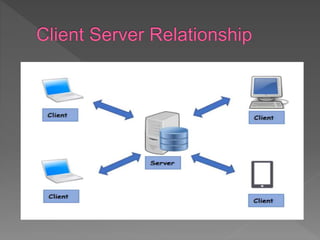
Client-server denotes a relationship between
cooperating programs in an application,
composed of clients initiating requests for
services and servers providing that function or
service.
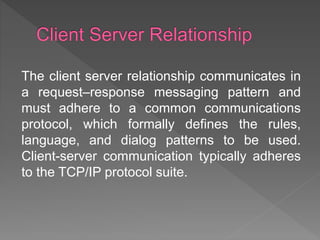
The client server relationship communicates in
a request–response messaging pattern and
must adhere to a common communications
protocol, which formally defines the rules,
language, and dialog patterns to be used.
Client-server communication typically adheres
to the TCP/IP protocol suite.
TCP protocol maintains a connection until the client and
server have completed the message exchange. TCP
protocol determines the best way to distribute application
data into packets that networks can deliver, transfers
packets to and receives packets from the network, and
manages flow control and retransmission of dropped or
garbled packets.
IP(Internet Protocol) is a connectionless protocol in which
each packet traveling through the Internet is an
independent unit of data unrelated to any other data units.
The client-server model is a distributed communication
framework of network processes among service
requestors, clients and service providers. The client-server
connection is established through a network or the
Internet.
The client-server model is a core network computing
concept also building functionality for email exchange and
Web/database access.
Clients include Web browsers, chat applications, and email
software, among others. Servers include Web, database,
application, chat and email, etc.
 Hypertext Transfer Protocol (HTTP)
 Domain Name System (DNS)
 Simple Mail Transfer Protocol (SMTP)
 Telnet
 When a client send a request and type an
address of any website, server converts it into
unique IP address and find the right server where
the information about this website is stored and
sends a request to that website.
 Than servers recieve the information and send
back to you in form code that is encrypted in to
HTTP and read and convert these code in to text,
pictures or videos containing web page.
Client server relation

Client server relation

  • 2.
     What isweb?  What is client?  What is server?  What is Client Server relationship?  What is Client Server model?
  • 3.
     The webis a service that allow computers to share and exchange data. Such as images,videos, documents etc.  A web is referred to client server communication.
  • 4.
    Client can bea machine or a program.It is an appliance and a way to make requests through the web. Client as a Machine: Device of the end user. e.g. Laptop, PC, Smartphone, Tablet Client as a Program: A Client program is a program that allows the user to make requests from the server e.g.web browsers, word processor or Photo editor software etc. A user can make a request of web page through web browser
  • 5.
     Server isa computer program not a device.  It provides functionality and serve other program called client.  A server can serve multiple clients at the same time.  One can run multiple servers on one single machine.  Different types of servers have different purposes.
  • 6.
     A servercan contain web resources, host web applications, store users and program data.  It is used to serve hundered or thousands clients at the same time.  It responds with a message whenever got the message from clients
  • 7.
     Web Servers Database Servers  Email Servers  File Servers  Game Servers  Print Servers  Application Servers
  • 8.
     Web Serverstore, process and deliver web pages to client. It manages special services for HTTP (Hyper Text Transfer Protocol) request. e.g. Apache  Database Server manage data. It is used for store and access data e.g. MYSQL  Email Servers that accepts, store and send email.
  • 9.
     File Serverswhich provide file storing services  Game server allow multiples users to play same game at same time.  Print Servers allows you to print document wirelessely  Application Servers allows client to create, store and run web application.
  • 10.
    Client-server denotes arelationship between cooperating programs in an application, composed of clients initiating requests for services and servers providing that function or service.
  • 11.
    The client serverrelationship communicates in a request–response messaging pattern and must adhere to a common communications protocol, which formally defines the rules, language, and dialog patterns to be used. Client-server communication typically adheres to the TCP/IP protocol suite.
  • 13.
    TCP protocol maintainsa connection until the client and server have completed the message exchange. TCP protocol determines the best way to distribute application data into packets that networks can deliver, transfers packets to and receives packets from the network, and manages flow control and retransmission of dropped or garbled packets. IP(Internet Protocol) is a connectionless protocol in which each packet traveling through the Internet is an independent unit of data unrelated to any other data units.
  • 14.
    The client-server modelis a distributed communication framework of network processes among service requestors, clients and service providers. The client-server connection is established through a network or the Internet. The client-server model is a core network computing concept also building functionality for email exchange and Web/database access. Clients include Web browsers, chat applications, and email software, among others. Servers include Web, database, application, chat and email, etc.
  • 15.
     Hypertext TransferProtocol (HTTP)  Domain Name System (DNS)  Simple Mail Transfer Protocol (SMTP)  Telnet
  • 16.
     When aclient send a request and type an address of any website, server converts it into unique IP address and find the right server where the information about this website is stored and sends a request to that website.  Than servers recieve the information and send back to you in form code that is encrypted in to HTTP and read and convert these code in to text, pictures or videos containing web page.