UNIVERSIDAD NACIONAL
AUTÓNOMA DE HONDURAS
DIDACTIC 1
Classroom Management
Group 1
Eva Gisselle Ortega L. 20142002919
Gabi Mariela Amaya Z. 20132000393
Vannessa Ondyna Vargas W. 20091003512
Lizzy Omara Zelaya G. 20131000626
CLASSROOM MANAGEMENT
• Classroom management is the process by which teachers
and schools create and maintain appropriate behavior of
students in classroom settings. The purpose of
implementing classroom management strategies is to
enhance prosocial behavior and increase student
academic engagement (Emmer & Sabornie, 2015;
Everston & Weinstein, 2006).
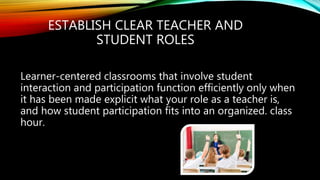
ESTABLISH CLEAR TEACHER AND
STUDENT ROLES
Learner-centered classrooms that involve student
interaction and participation function efficiently only when
it has been made explicit what your role as a teacher is,
and how student participation fits into an organized. class
hour.
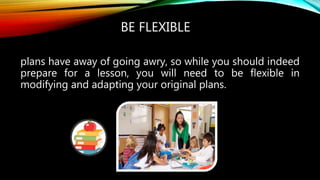
BE FLEXIBLE
plans have away of going awry, so while you should indeed
prepare for a lesson, you will need to be flexible in
modifying and adapting your original plans.
TAKE A PERSONAL INTEREST IN
STUDENTS.
the more you can see each one as a unique individual,
worthy of your attention, the better. Informal
conversations, compliments on good work, and awareness
of personal backgrounds and situations can all contribute
toward a fully functioning community of students.
BE FAIR TO ALL STUDENTS
It's easy to have "favorites" in your classrooms, but it's
important to tfeat every student with equal affection and
attention.
EXIBIT ENTHUSIASUSM AND A
POSITIVE ATTITUDE
The more you exude enthusiasm for classroom activities,
the more this positive outlook with rub off on your
students. There's nothing worse than teachers whose body
language, demeanor, and words communicate apathy.
MAINTAIN
DISCIPLINE AND MANAGEMENT IN YOUR
CLASSROOM.
1. Have rules: It is important to have a basic set of rules for
students to follow.
2. Have expectations: If your students know what you want from
them, they are more likely to exhibit the type of behavior you
want.
3. Make students aware of the rules: Every school has its own
disciplinary rules that students should be expected to flow.
4. Make the rules known to parents as well: Student’s parents should
also be aware of the management techniques that you are
implementing in the classroom.
5. Be firm and consistent: When you make your rules to manage your
classroom, make sure that they are realistic and void of any
inconsistencies.
6. Be professional: An effectively managed classroom is conducted
with professionalism and adequate structure.

Classroom management

  • 1.
    UNIVERSIDAD NACIONAL AUTÓNOMA DEHONDURAS DIDACTIC 1 Classroom Management Group 1 Eva Gisselle Ortega L. 20142002919 Gabi Mariela Amaya Z. 20132000393 Vannessa Ondyna Vargas W. 20091003512 Lizzy Omara Zelaya G. 20131000626
  • 2.
    CLASSROOM MANAGEMENT • Classroommanagement is the process by which teachers and schools create and maintain appropriate behavior of students in classroom settings. The purpose of implementing classroom management strategies is to enhance prosocial behavior and increase student academic engagement (Emmer & Sabornie, 2015; Everston & Weinstein, 2006).
  • 3.
    ESTABLISH CLEAR TEACHERAND STUDENT ROLES Learner-centered classrooms that involve student interaction and participation function efficiently only when it has been made explicit what your role as a teacher is, and how student participation fits into an organized. class hour.
  • 4.
    BE FLEXIBLE plans haveaway of going awry, so while you should indeed prepare for a lesson, you will need to be flexible in modifying and adapting your original plans.
  • 5.
    TAKE A PERSONALINTEREST IN STUDENTS. the more you can see each one as a unique individual, worthy of your attention, the better. Informal conversations, compliments on good work, and awareness of personal backgrounds and situations can all contribute toward a fully functioning community of students.
  • 6.
    BE FAIR TOALL STUDENTS It's easy to have "favorites" in your classrooms, but it's important to tfeat every student with equal affection and attention.
  • 7.
    EXIBIT ENTHUSIASUSM ANDA POSITIVE ATTITUDE The more you exude enthusiasm for classroom activities, the more this positive outlook with rub off on your students. There's nothing worse than teachers whose body language, demeanor, and words communicate apathy.
  • 8.
    MAINTAIN DISCIPLINE AND MANAGEMENTIN YOUR CLASSROOM. 1. Have rules: It is important to have a basic set of rules for students to follow. 2. Have expectations: If your students know what you want from them, they are more likely to exhibit the type of behavior you want. 3. Make students aware of the rules: Every school has its own disciplinary rules that students should be expected to flow.
  • 9.
    4. Make therules known to parents as well: Student’s parents should also be aware of the management techniques that you are implementing in the classroom. 5. Be firm and consistent: When you make your rules to manage your classroom, make sure that they are realistic and void of any inconsistencies. 6. Be professional: An effectively managed classroom is conducted with professionalism and adequate structure.