BIOSYSTEMATICS AND
CLASSIFICATION
CUST ISLAMABAD
RIMSHA FAROOQ
(BBS153009)
FAIZA NAZIR AHMAD
(BBS153010)
TOPIC OF
PRESENTATION
CUST Islamabad
DEFINITION
CUST ISLAMABAD
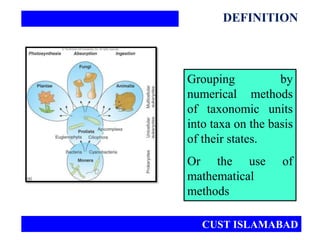
Grouping by
numerical methods
of taxonomic units
into taxa on the basis
of their states.
Or the use of
mathematical
methods
Principles of
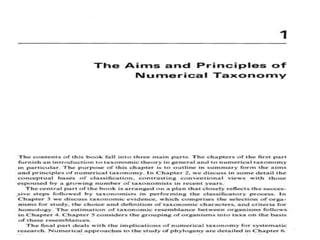
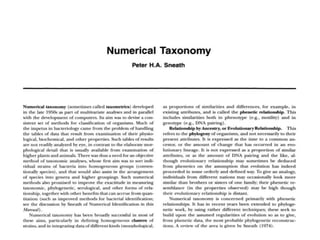
Numerical Taxonomy
CUST ISLAMABAD
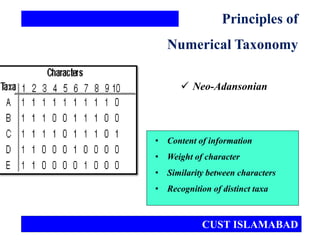
 Neo-Adansonian
• Content of information
• Weight of character
• Similarity between characters
• Recognition of distinct taxa
Principles of
Numerical Taxonomy
CUST ISLAMABAD
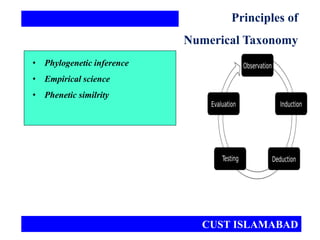
• Phylogenetic inference
• Empirical science
• Phenetic similrity
The Estimation
of Resemblance
CUST ISLAMABAD
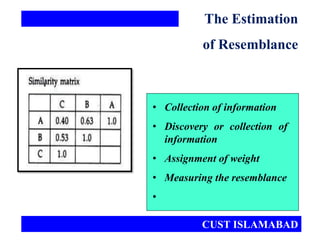
• Collection of information
• Discovery or collection of
information
• Assignment of weight
• Measuring the resemblance
•
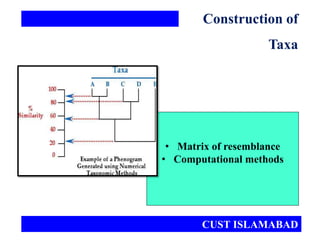
• Matrix of resemblance
• Computational methods
Construction of
Taxa
CUST ISLAMABAD
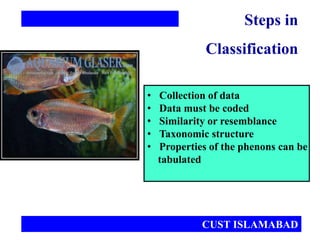
• Collection of data
• Data must be coded
• Similarity or resemblance
• Taxonomic structure
• Properties of the phenons can be
tabulated
Steps in
Classification
CUST ISLAMABAD
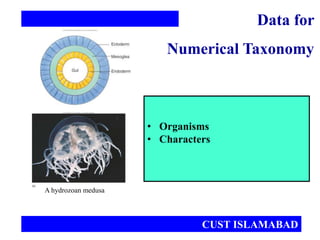
• Organisms
• Characters
Data for
Numerical Taxonomy
CUST ISLAMABAD
A hydrozoan medusa
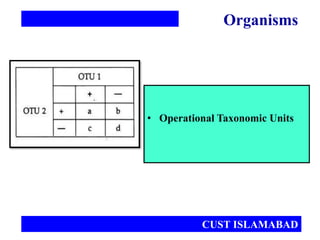
• Operational Taxonomic Units
Organisms
CUST ISLAMABAD
• Character states
• Determination of ho
-mology
• Unit character
• Character complexes
Characters
CUST ISLAMABAD
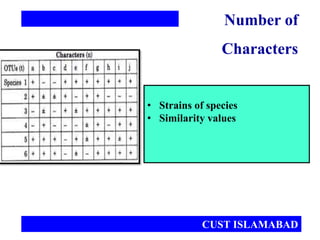
• Strains of species
• Similarity values
Number of
Characters
CUST ISLAMABAD
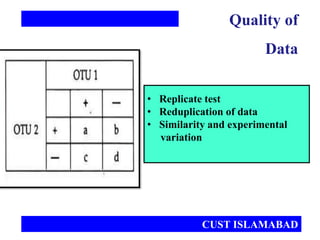
• Replicate test
• Reduplication of data
• Similarity and experimental
variation
Quality of
Data
CUST ISLAMABAD
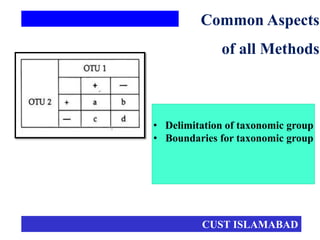
• Delimitation of taxonomic group
• Boundaries for taxonomic group
Common Aspects
of all Methods
CUST ISLAMABAD
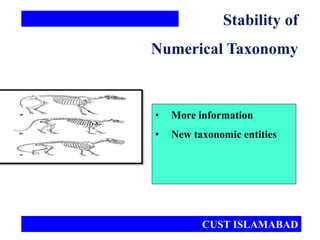
Stability of
Numerical Taxonomy
CUST ISLAMABAD
• More information
• New taxonomic entities
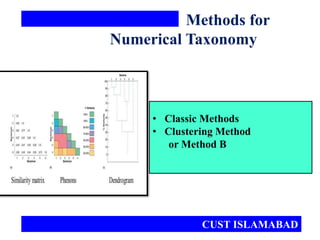
• Classic Methods
• Clustering Method
or Method B
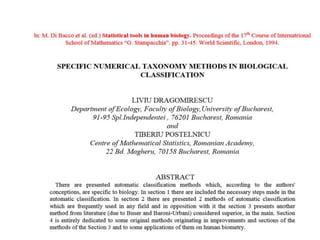
Methods for
Numerical Taxonomy
CUST ISLAMABAD
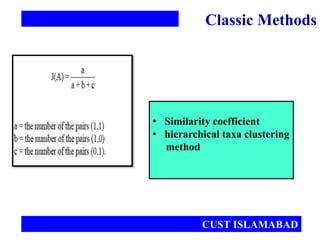
• Similarity coefficient
• hierarchical taxa clustering
method
Classic Methods
CUST ISLAMABAD
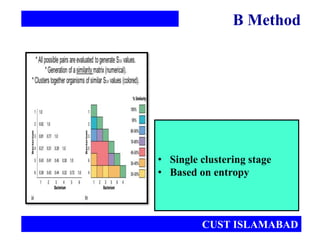
• Single clustering stage
• Based on entropy
B Method
CUST ISLAMABAD
• Use of overall information
• uses intra-cluster information
• does not distorts this inform-
ation in any way
Improvements
of B Method
CUST ISLAMABAD
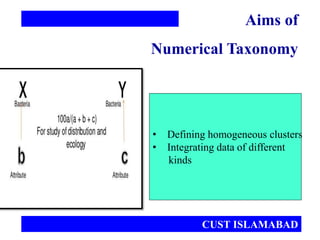
• Defining homogeneous clusters
• Integrating data of different
kinds
Aims of
Numerical Taxonomy
CUST ISLAMABAD
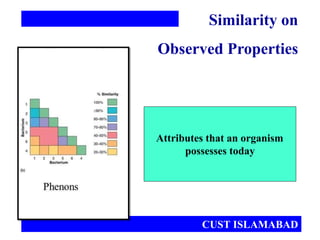
Attributes that an organism
possesses today
Similarity on
Observed Properties
CUST ISLAMABAD
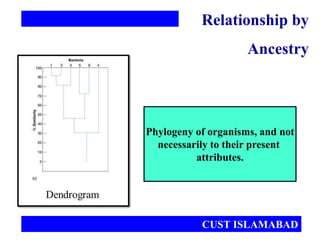
Phylogeny of organisms, and not
necessarily to their present
attributes.
Relationship by
Ancestry
CUST ISLAMABAD
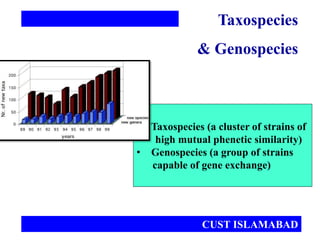
• Taxospecies (a cluster of strains of
high mutual phenetic similarity)
• Genospecies (a group of strains
capable of gene exchange)
Taxospecies
& Genospecies
CUST ISLAMABAD
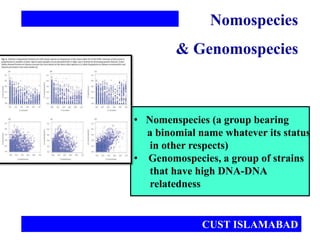
• Nomenspecies (a group bearing
a binomial name whatever its status
in other respects)
• Genomospecies, a group of strains
that have high DNA-DNA
relatedness
Nomospecies
& Genomospecies
CUST ISLAMABAD
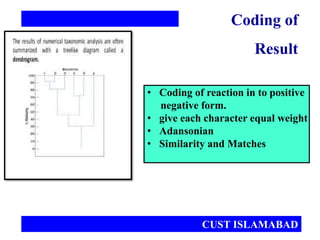
• Coding of reaction in to positive
negative form.
• give each character equal weight
• Adansonian
• Similarity and Matches
Coding of
Result
CUST ISLAMABAD
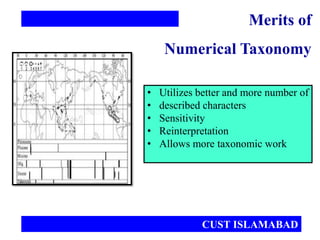
• Utilizes better and more number of
• described characters
• Sensitivity
• Reinterpretation
• Allows more taxonomic work
Merits of
Numerical Taxonomy
CUST ISLAMABAD
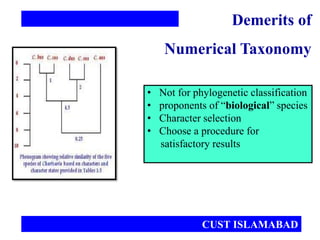
• Not for phylogenetic classification
• proponents of “biological” species
• Character selection
• Choose a procedure for
satisfactory results
Demerits of
Numerical Taxonomy
CUST ISLAMABAD
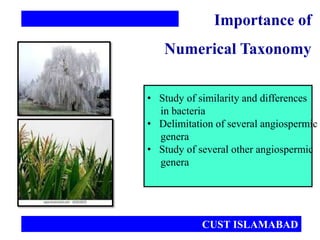
• Study of similarity and differences
in bacteria
• Delimitation of several angiospermic
genera
• Study of several other angiospermic
genera
Importance of
Numerical Taxonomy
CUST ISLAMABAD
Classification
Classification
Classification
Classification

Classification

  • 1.
    BIOSYSTEMATICS AND CLASSIFICATION CUST ISLAMABAD RIMSHAFAROOQ (BBS153009) FAIZA NAZIR AHMAD (BBS153010)
  • 2.
  • 3.
    DEFINITION CUST ISLAMABAD Grouping by numericalmethods of taxonomic units into taxa on the basis of their states. Or the use of mathematical methods
  • 4.
    Principles of Numerical Taxonomy CUSTISLAMABAD  Neo-Adansonian • Content of information • Weight of character • Similarity between characters • Recognition of distinct taxa
  • 5.
    Principles of Numerical Taxonomy CUSTISLAMABAD • Phylogenetic inference • Empirical science • Phenetic similrity
  • 6.
    The Estimation of Resemblance CUSTISLAMABAD • Collection of information • Discovery or collection of information • Assignment of weight • Measuring the resemblance •
  • 7.
    • Matrix ofresemblance • Computational methods Construction of Taxa CUST ISLAMABAD
  • 8.
    • Collection ofdata • Data must be coded • Similarity or resemblance • Taxonomic structure • Properties of the phenons can be tabulated Steps in Classification CUST ISLAMABAD
  • 9.
    • Organisms • Characters Datafor Numerical Taxonomy CUST ISLAMABAD A hydrozoan medusa
  • 10.
    • Operational TaxonomicUnits Organisms CUST ISLAMABAD
  • 11.
    • Character states •Determination of ho -mology • Unit character • Character complexes Characters CUST ISLAMABAD
  • 12.
    • Strains ofspecies • Similarity values Number of Characters CUST ISLAMABAD
  • 13.
    • Replicate test •Reduplication of data • Similarity and experimental variation Quality of Data CUST ISLAMABAD
  • 14.
    • Delimitation oftaxonomic group • Boundaries for taxonomic group Common Aspects of all Methods CUST ISLAMABAD
  • 15.
    Stability of Numerical Taxonomy CUSTISLAMABAD • More information • New taxonomic entities
  • 16.
    • Classic Methods •Clustering Method or Method B Methods for Numerical Taxonomy CUST ISLAMABAD
  • 17.
    • Similarity coefficient •hierarchical taxa clustering method Classic Methods CUST ISLAMABAD
  • 18.
    • Single clusteringstage • Based on entropy B Method CUST ISLAMABAD
  • 19.
    • Use ofoverall information • uses intra-cluster information • does not distorts this inform- ation in any way Improvements of B Method CUST ISLAMABAD
  • 20.
    • Defining homogeneousclusters • Integrating data of different kinds Aims of Numerical Taxonomy CUST ISLAMABAD
  • 21.
    Attributes that anorganism possesses today Similarity on Observed Properties CUST ISLAMABAD
  • 22.
    Phylogeny of organisms,and not necessarily to their present attributes. Relationship by Ancestry CUST ISLAMABAD
  • 23.
    • Taxospecies (acluster of strains of high mutual phenetic similarity) • Genospecies (a group of strains capable of gene exchange) Taxospecies & Genospecies CUST ISLAMABAD
  • 24.
    • Nomenspecies (agroup bearing a binomial name whatever its status in other respects) • Genomospecies, a group of strains that have high DNA-DNA relatedness Nomospecies & Genomospecies CUST ISLAMABAD
  • 25.
    • Coding ofreaction in to positive negative form. • give each character equal weight • Adansonian • Similarity and Matches Coding of Result CUST ISLAMABAD
  • 26.
    • Utilizes betterand more number of • described characters • Sensitivity • Reinterpretation • Allows more taxonomic work Merits of Numerical Taxonomy CUST ISLAMABAD
  • 27.
    • Not forphylogenetic classification • proponents of “biological” species • Character selection • Choose a procedure for satisfactory results Demerits of Numerical Taxonomy CUST ISLAMABAD
  • 28.
    • Study ofsimilarity and differences in bacteria • Delimitation of several angiospermic genera • Study of several other angiospermic genera Importance of Numerical Taxonomy CUST ISLAMABAD