Race/ethnicity and territory African-Americans and Africans Apartheid and South Africa Race and the Census Class 10a: Race and ethnicity
Definitions Race: A genetically distinct population Traits are passed on biologically Racism: based on biological inferiority Ethnicity: A historically and culturally distinct population Similar to nations Usually describes minority groups
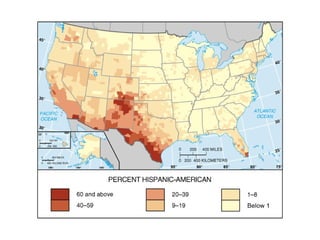
Ethnicity in the U.S. African-American (13%) Hispanic (11%) Asian-American (4%) American Indian (1%)
 
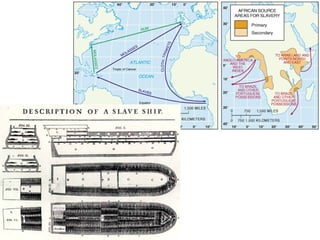
African-Americans Three migrations at three scales Forced migration from Africa 1619-1863: over 10 million Africans Source of labor for plantations Triangle trade
 
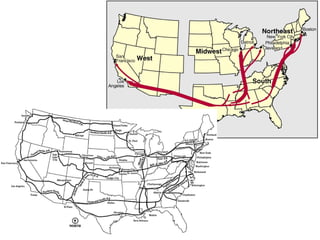
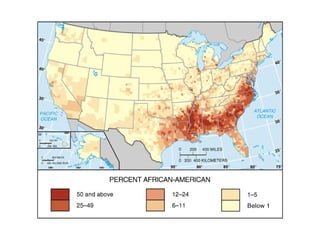
African-Americans: Great Migration Push of poverty, cotton mechanization Pull of jobs, tolerance 1910s-1920s; 1940s-1950s Followed main transportation routes Maintained strong connections to home
African-Americans: Great Migration Push of poverty, cotton mechanization, segregation Pull of jobs, tolerance 1910s-1920s; 1940s-1950s Followed main transportation routes Maintained strong connections to home
 
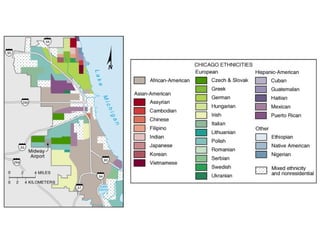
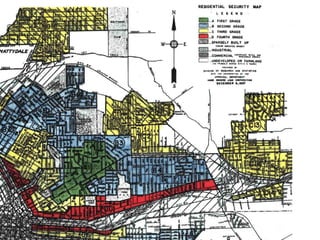
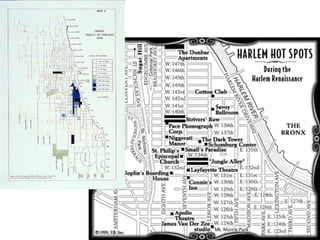
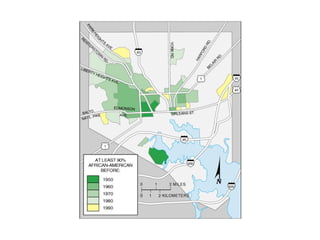
African-Americans: Urban ghettos Extreme overcrowding (100,000 per square mile, not 10) Restrictive covenants Redlining of black neighborhoods City-within-a-city White flight and blockbusting (after  Brown vs. Board of Ed )


New Africans in America Black ≠ African-American Recent migrants from Africa, Caribbean Tension between two groups But seen as same by whites
 
South Africa and apartheid Dutch, British colonists Refusal of Afrikaners to allow black rule Strict segregation by race (1948) White (13%), black (76%), colored Homes, school, jobs, stores, land, ambulances
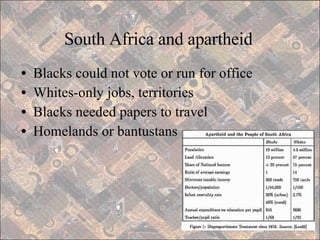
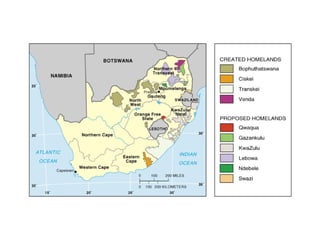
South Africa and apartheid Blacks could not vote or run for office Whites-only jobs, territories Blacks needed papers to travel Homelands or bantustans
 
South Africa and apartheid Economic sanctions from 1978 Prohibitions on international competitions 1984: some restrictions lifted 1991: apartheid declared over 1994: Nelson Mandela first black president
 
Race in the Census Included since 1790 Census (3/5 Compromise) 1850-1900: mulatto, quadroon, octoroon 1930: Mexican 1960-1980: Hispanic listed as white 2000: multiple boxes allowed (7 million) Long form includes “ancestry”
Race in the Census Asian = race Multiple ethnicities within one race African-American, black = race Only one category Hispanic = ethnicity Multiple ethnicities, one race
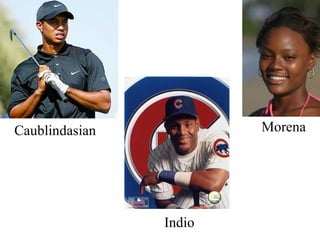
Caublindasian Morena Indio
 

Class10a

  • 1.
    Race/ethnicity and territoryAfrican-Americans and Africans Apartheid and South Africa Race and the Census Class 10a: Race and ethnicity
  • 2.
    Definitions Race: Agenetically distinct population Traits are passed on biologically Racism: based on biological inferiority Ethnicity: A historically and culturally distinct population Similar to nations Usually describes minority groups
  • 3.
    Ethnicity in theU.S. African-American (13%) Hispanic (11%) Asian-American (4%) American Indian (1%)
  • 4.
  • 5.
    African-Americans Three migrationsat three scales Forced migration from Africa 1619-1863: over 10 million Africans Source of labor for plantations Triangle trade
  • 6.
  • 7.
    African-Americans: Great MigrationPush of poverty, cotton mechanization Pull of jobs, tolerance 1910s-1920s; 1940s-1950s Followed main transportation routes Maintained strong connections to home
  • 8.
    African-Americans: Great MigrationPush of poverty, cotton mechanization, segregation Pull of jobs, tolerance 1910s-1920s; 1940s-1950s Followed main transportation routes Maintained strong connections to home
  • 9.
  • 10.
    African-Americans: Urban ghettosExtreme overcrowding (100,000 per square mile, not 10) Restrictive covenants Redlining of black neighborhoods City-within-a-city White flight and blockbusting (after Brown vs. Board of Ed )
  • 11.
  • 12.
  • 13.
  • 14.
    New Africans inAmerica Black ≠ African-American Recent migrants from Africa, Caribbean Tension between two groups But seen as same by whites
  • 15.
  • 16.
    South Africa andapartheid Dutch, British colonists Refusal of Afrikaners to allow black rule Strict segregation by race (1948) White (13%), black (76%), colored Homes, school, jobs, stores, land, ambulances
  • 17.
    South Africa andapartheid Blacks could not vote or run for office Whites-only jobs, territories Blacks needed papers to travel Homelands or bantustans
  • 18.
  • 19.
    South Africa andapartheid Economic sanctions from 1978 Prohibitions on international competitions 1984: some restrictions lifted 1991: apartheid declared over 1994: Nelson Mandela first black president
  • 20.
  • 21.
    Race in theCensus Included since 1790 Census (3/5 Compromise) 1850-1900: mulatto, quadroon, octoroon 1930: Mexican 1960-1980: Hispanic listed as white 2000: multiple boxes allowed (7 million) Long form includes “ancestry”
  • 22.
    Race in theCensus Asian = race Multiple ethnicities within one race African-American, black = race Only one category Hispanic = ethnicity Multiple ethnicities, one race
  • 23.
  • 24.