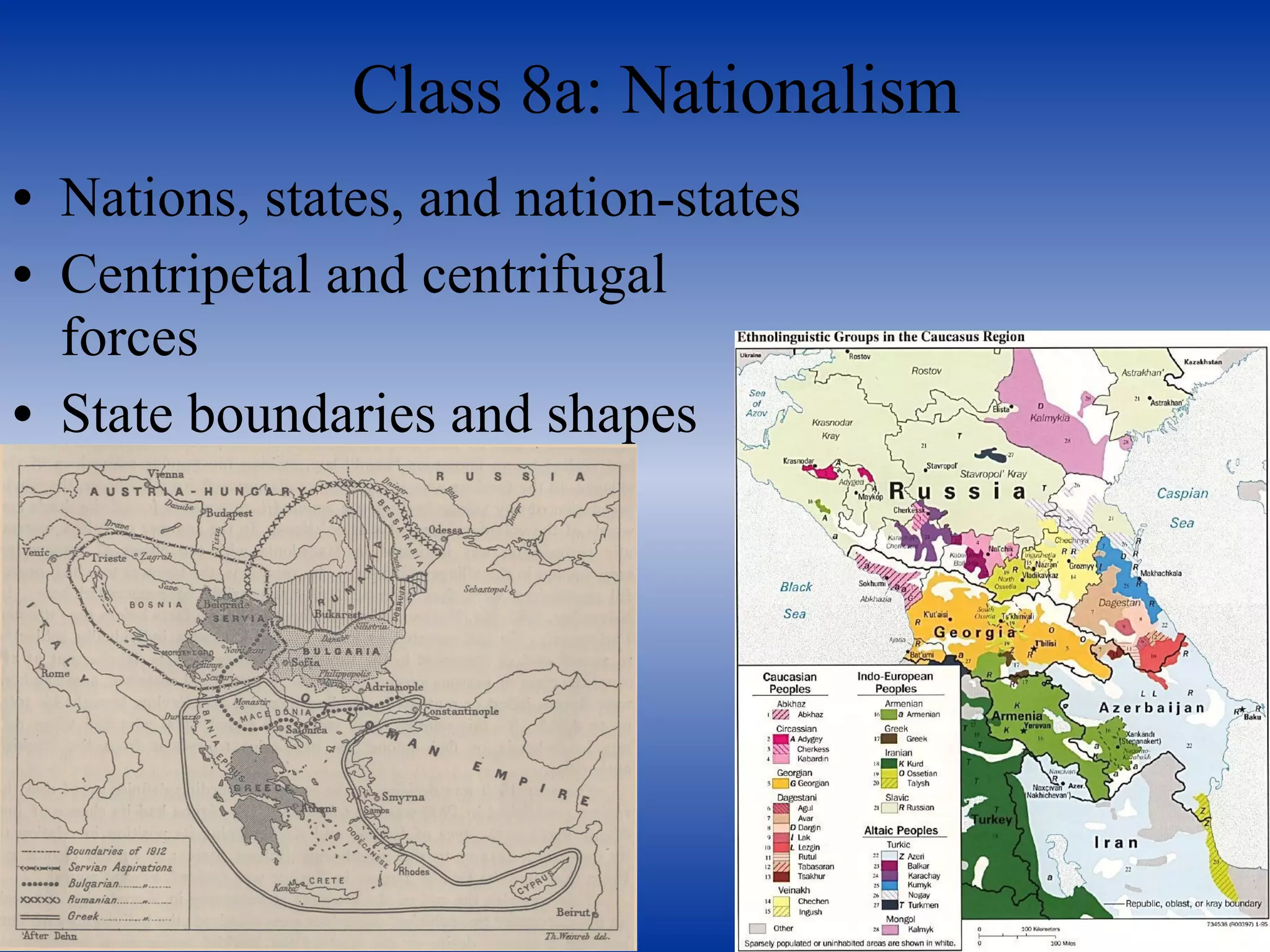

Nations, states, and nation-states Centripetal and centrifugal forces  State boundaries and shapes Class 8a: Nationalism
From culture… Languages and dialects Cause or symbol of cultural difference Diffusion by migration or conquest Religious beliefs and practices Spatial distribution, diffusion, landscape
… to territory Languages and territory Official languages, multilingualism Religion and territory Religion as differentiator Control of sacred sites Freedom to practice religion
Political geography How is space divided into territories? Distribution of political phenomena Spatial patterns of control Conflicts over territories and borders
States and sovereignty Independent political unit Permanent population, defined territory Control over internal and foreign affairs (sovereignty) Recognized by other states
States and sovereignty 193 states worldwide Ex.: South Africa, Australia, Vanuatu Not states: Colonies, protectorates (Puerto Rico)  Special cases: Taiwan, Antarctica
State shapes Your responsibility! Describe compact, prorupt, elongated, fragmented, and perforated states Exclaves and enclaves An example of each
What is a nation? Group with a common culture Occupying a particular territory Strong sense of unity “ An imagined political community”
Nation-states When a nation and a state are the same A sovereign territory with a distinct nation, or people Stronger in theory than reality Examples:
States without a nation Multinational states (Switzerland, U.S.) May still exhibit nationalism Newly independent states (Africa, Central Asia) Common identity may be less contentious
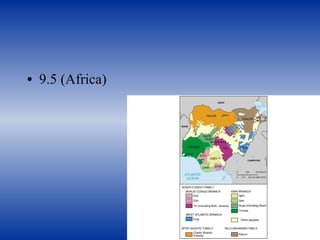
9.5 (Africa)
Nations without states Distinct group of people without sovereign territory Kurds, Basques, First Nations, Palestinians Often seek autonomy or independence
9.16 (Basques)
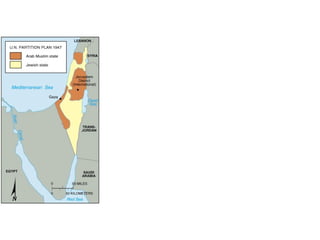
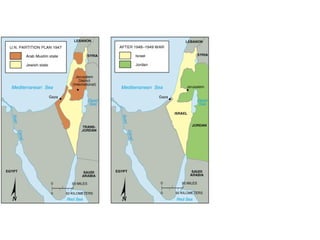
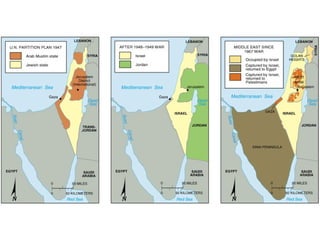
Israel and Palestine Under Muslim control since Crusades WWI: Great Britain mandate Jewish migration allowed; increase during and after WWII UN partition in 1947
 
Israel and Palestine Independence in 1948 War the next day 1949 armistice line current international standard
 
Israel and Palestine 1967 Six-Day War Israel’s preemptive war Sinai Peninsula, Gaza, West Bank 1973 Yom Kippur War (Ramadan War) Israel defends itself U.S. support leads to oil crisis
Israel and Palestine 1979 Camp David Accords Peace with Egypt First recognition of Israel by Arab state 1981 Golan Heights annexed 1994 start of a Palestinian state
 
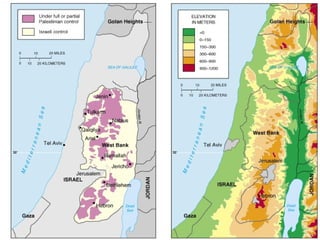
Obstacles to peace Jewish settlements in West Bank Jerusalem Physical geography Topography and security Water
 
Separatist movements Territory (homeland) Nationality Peripheral location Social and/or economic inequality
Centripetal forces Holding a state together Nationalism Self-identification with the state Acceptance of national goals Iconography:
Centripetal forces Central institutions Schools, churches, military  Infrastructure Transportation and communication networks
Centrifugal forces Destabilize a state Nationalism Persecution by majority  Desire for autonomy Geographic fragmentation
 
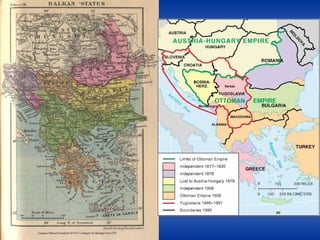
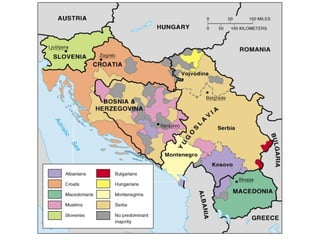
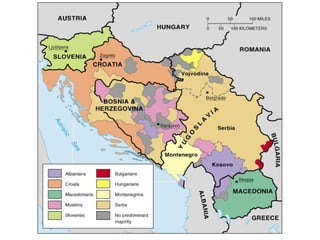
Balkan Peninsula History of ethnic, religious, linguistic diversity Ruled by Austria-Hungary, Ottomans Assassination sparked WWI Yugoslavia created by Allies


Balkan Peninsula WWII: Croatians welcome Germans Soviets and Tito liberate the country Communist dictatorship 1953-1980 Six autonomous republics Five nationalities, four languages, three religions (two alphabets)
 
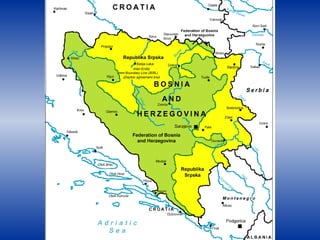
Balkan Peninsula New countries: Slovenia, Croatia, Macedonia, Yugoslavia (Serbia) Bosnia and Herzegovina 40% Bosnian Muslim, 32% Serbian, 18% Croatian (4.2 million total) Ethnic cleansing of Bosnian Muslims
 
Balkan Peninsula 250,000 dead; 2.7 million refugees of 4.2 million (half returned) Dayton Accords (1995) Two republics Rotating presidency
 
Balkan Peninsula Multinational state: Yugoslavia Nations: Serbia, Bosnia States: Bosnia and Herzegovina, Croatia Nation-state: Slovenia

Class8a

  • 1.
    Nations, states, andnation-states Centripetal and centrifugal forces State boundaries and shapes Class 8a: Nationalism
  • 2.
    From culture… Languagesand dialects Cause or symbol of cultural difference Diffusion by migration or conquest Religious beliefs and practices Spatial distribution, diffusion, landscape
  • 3.
    … to territoryLanguages and territory Official languages, multilingualism Religion and territory Religion as differentiator Control of sacred sites Freedom to practice religion
  • 4.
    Political geography Howis space divided into territories? Distribution of political phenomena Spatial patterns of control Conflicts over territories and borders
  • 5.
    States and sovereigntyIndependent political unit Permanent population, defined territory Control over internal and foreign affairs (sovereignty) Recognized by other states
  • 6.
    States and sovereignty193 states worldwide Ex.: South Africa, Australia, Vanuatu Not states: Colonies, protectorates (Puerto Rico) Special cases: Taiwan, Antarctica
  • 7.
    State shapes Yourresponsibility! Describe compact, prorupt, elongated, fragmented, and perforated states Exclaves and enclaves An example of each
  • 8.
    What is anation? Group with a common culture Occupying a particular territory Strong sense of unity “ An imagined political community”
  • 9.
    Nation-states When anation and a state are the same A sovereign territory with a distinct nation, or people Stronger in theory than reality Examples:
  • 10.
    States without anation Multinational states (Switzerland, U.S.) May still exhibit nationalism Newly independent states (Africa, Central Asia) Common identity may be less contentious
  • 11.
  • 12.
    Nations without statesDistinct group of people without sovereign territory Kurds, Basques, First Nations, Palestinians Often seek autonomy or independence
  • 13.
  • 14.
    Israel and PalestineUnder Muslim control since Crusades WWI: Great Britain mandate Jewish migration allowed; increase during and after WWII UN partition in 1947
  • 15.
  • 16.
    Israel and PalestineIndependence in 1948 War the next day 1949 armistice line current international standard
  • 17.
  • 18.
    Israel and Palestine1967 Six-Day War Israel’s preemptive war Sinai Peninsula, Gaza, West Bank 1973 Yom Kippur War (Ramadan War) Israel defends itself U.S. support leads to oil crisis
  • 19.
    Israel and Palestine1979 Camp David Accords Peace with Egypt First recognition of Israel by Arab state 1981 Golan Heights annexed 1994 start of a Palestinian state
  • 20.
  • 21.
    Obstacles to peaceJewish settlements in West Bank Jerusalem Physical geography Topography and security Water
  • 22.
  • 23.
    Separatist movements Territory(homeland) Nationality Peripheral location Social and/or economic inequality
  • 24.
    Centripetal forces Holdinga state together Nationalism Self-identification with the state Acceptance of national goals Iconography:
  • 25.
    Centripetal forces Centralinstitutions Schools, churches, military Infrastructure Transportation and communication networks
  • 26.
    Centrifugal forces Destabilizea state Nationalism Persecution by majority Desire for autonomy Geographic fragmentation
  • 27.
  • 28.
    Balkan Peninsula Historyof ethnic, religious, linguistic diversity Ruled by Austria-Hungary, Ottomans Assassination sparked WWI Yugoslavia created by Allies
  • 29.
  • 30.
  • 31.
  • 32.
    Balkan Peninsula WWII:Croatians welcome Germans Soviets and Tito liberate the country Communist dictatorship 1953-1980 Six autonomous republics Five nationalities, four languages, three religions (two alphabets)
  • 33.
  • 34.
    Balkan Peninsula Newcountries: Slovenia, Croatia, Macedonia, Yugoslavia (Serbia) Bosnia and Herzegovina 40% Bosnian Muslim, 32% Serbian, 18% Croatian (4.2 million total) Ethnic cleansing of Bosnian Muslims
  • 35.
  • 36.
    Balkan Peninsula 250,000dead; 2.7 million refugees of 4.2 million (half returned) Dayton Accords (1995) Two republics Rotating presidency
  • 37.
  • 38.
    Balkan Peninsula Multinationalstate: Yugoslavia Nations: Serbia, Bosnia States: Bosnia and Herzegovina, Croatia Nation-state: Slovenia