B.J.P.S Samiti’s
M.V.HERWADKAR ENGLISH MEDIUM HIGH
SCHOOL
CLASS 6th : SORTING MATERIALS INTO GROUPS
STAFF NAME: NEETA PATIL
INTRODUCTION
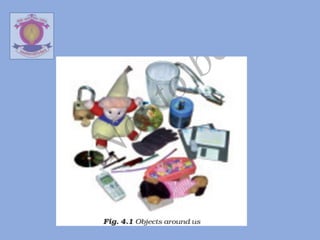
•We have seen that our food and clothes
have so much variety in them. Not just
food and clothes, there is such a vast
variety of objects everywhere. We see
around us, a chair, a bullock cart, a
cycle, cooking utensils, books, clothes,
toys, water, stones and many other
objects. All these objects have different
shapes, colours and uses
PROPERTIES OF
MATERIALS
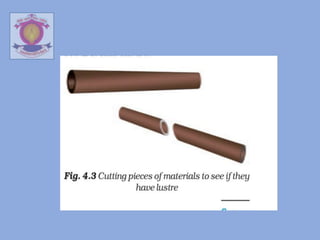
Appearance
•Materials that have such lustre are
usually metals. Iron, copper,
aluminium and gold are examples of
metals.
•Some metals often lose their shine and
appear dull, because of the action of
air and moisture on them. We therefore,
notice the lustre, only on their freshly
cut surface.
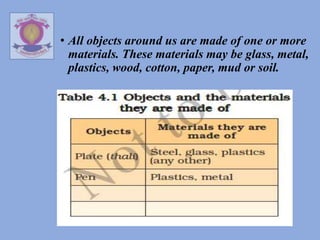
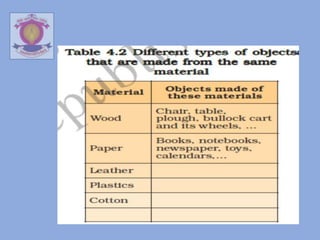
• All objects around us are made of one or more
materials. These materials may be glass, metal,
plastics, wood, cotton, paper, mud or soil.
HARDNESS
•When you press different materials
with your hands, some of them may
be hard to compress while others can
be easily compressed.
•Materials which can be compressed
or scratched easily are called soft.
Eg: cotton, sponge etc
•Materials which are difficult to
compress are called hard. Eg: Iron
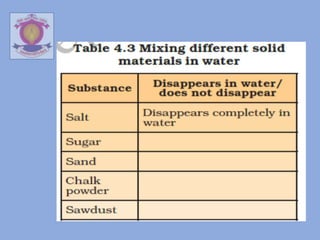
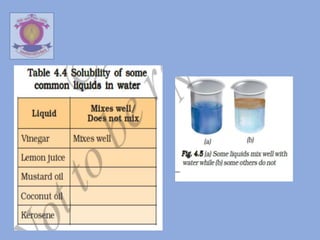
SOLUBLE OR INSOLUBLE
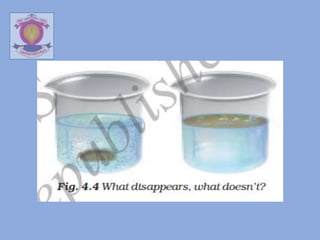
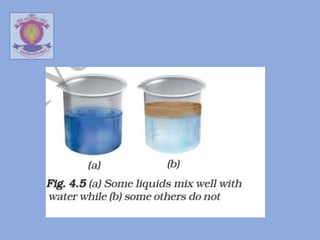
•The substances which have completely
disappeared or dissolved in water these
substances are soluble in water.
•The substances which do not mix with
water and do not disappear or dissolved
in water these substances are insoluble
in water.
•Water plays an important role in the
functioning of our body because it can
dissolve a large number of substances.
TRANSPARENCY
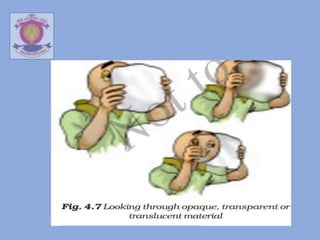
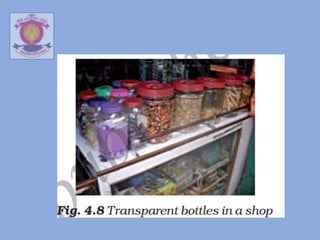
• The substances or materials, through
which things can be seen, are called
transparent. Glass, water, air and some
plastics are examples of transparent
materials.
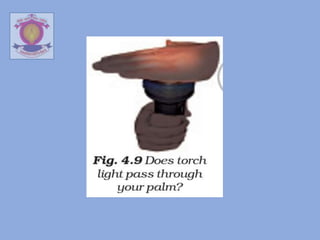
• The materials through which you are
not able to see. These materials are
called opaque. Wood, cardboard and
metals, are examples of opaque
materials.
•The materials through which
objects can be seen, but not clearly,
are known as translucent. Eg oily
patch on paper
•Materials can be grouped on the
basis of similarities or differences
in their properties
• Things are grouped
together for
convenience and to
study their properties.
EXTRA QUESTIONS
1. What are hard substances? Give examples
2. What are soft substances? Give examples
3. What are soluble substances? Give
examples
4. What are insoluble substances? Give
examples
5. Define transparent, opaque, translucent
objects with examples
6. Why do we need to group materials?

Class 6th Chapter 4 Sorting Materials in groups.pptx

  • 1.
    B.J.P.S Samiti’s M.V.HERWADKAR ENGLISHMEDIUM HIGH SCHOOL CLASS 6th : SORTING MATERIALS INTO GROUPS STAFF NAME: NEETA PATIL
  • 2.
    INTRODUCTION •We have seenthat our food and clothes have so much variety in them. Not just food and clothes, there is such a vast variety of objects everywhere. We see around us, a chair, a bullock cart, a cycle, cooking utensils, books, clothes, toys, water, stones and many other objects. All these objects have different shapes, colours and uses
  • 4.
    PROPERTIES OF MATERIALS Appearance •Materials thathave such lustre are usually metals. Iron, copper, aluminium and gold are examples of metals. •Some metals often lose their shine and appear dull, because of the action of air and moisture on them. We therefore, notice the lustre, only on their freshly cut surface.
  • 5.
    • All objectsaround us are made of one or more materials. These materials may be glass, metal, plastics, wood, cotton, paper, mud or soil.
  • 11.
    HARDNESS •When you pressdifferent materials with your hands, some of them may be hard to compress while others can be easily compressed. •Materials which can be compressed or scratched easily are called soft. Eg: cotton, sponge etc •Materials which are difficult to compress are called hard. Eg: Iron
  • 12.
    SOLUBLE OR INSOLUBLE •Thesubstances which have completely disappeared or dissolved in water these substances are soluble in water. •The substances which do not mix with water and do not disappear or dissolved in water these substances are insoluble in water. •Water plays an important role in the functioning of our body because it can dissolve a large number of substances.
  • 15.
    TRANSPARENCY • The substancesor materials, through which things can be seen, are called transparent. Glass, water, air and some plastics are examples of transparent materials. • The materials through which you are not able to see. These materials are called opaque. Wood, cardboard and metals, are examples of opaque materials.
  • 16.
    •The materials throughwhich objects can be seen, but not clearly, are known as translucent. Eg oily patch on paper •Materials can be grouped on the basis of similarities or differences in their properties
  • 20.
    • Things aregrouped together for convenience and to study their properties.
  • 21.
    EXTRA QUESTIONS 1. Whatare hard substances? Give examples 2. What are soft substances? Give examples 3. What are soluble substances? Give examples 4. What are insoluble substances? Give examples 5. Define transparent, opaque, translucent objects with examples 6. Why do we need to group materials?