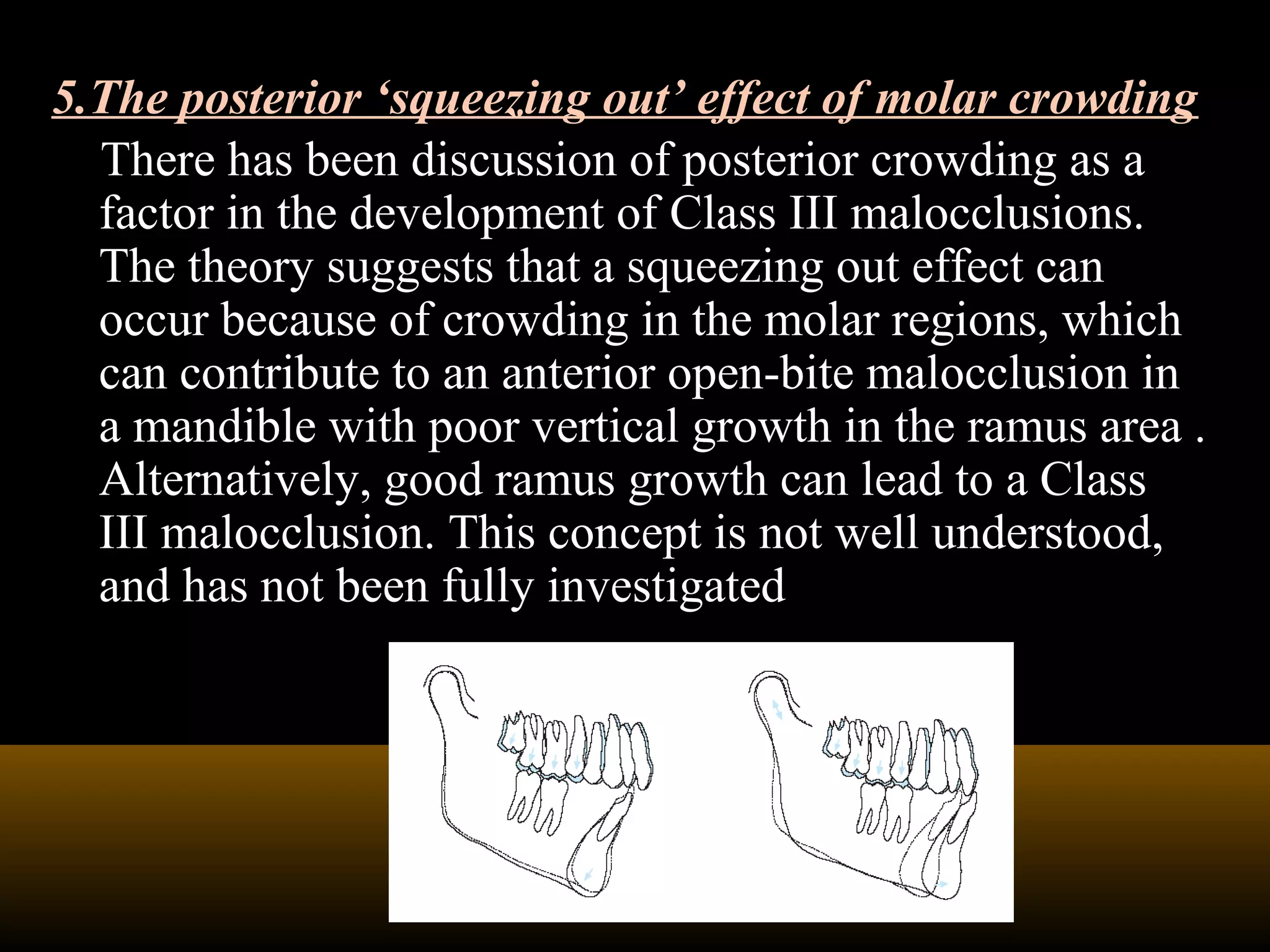

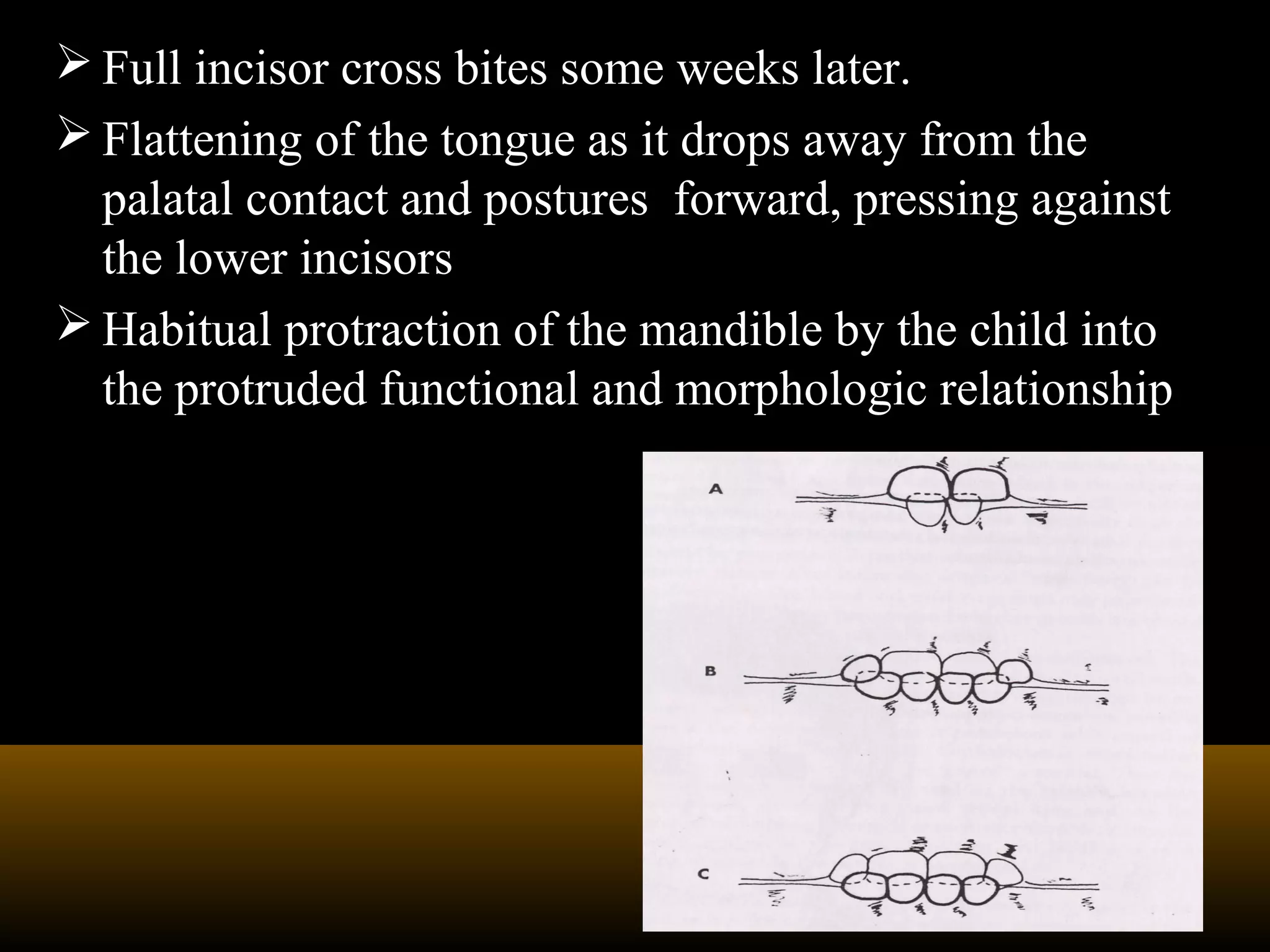










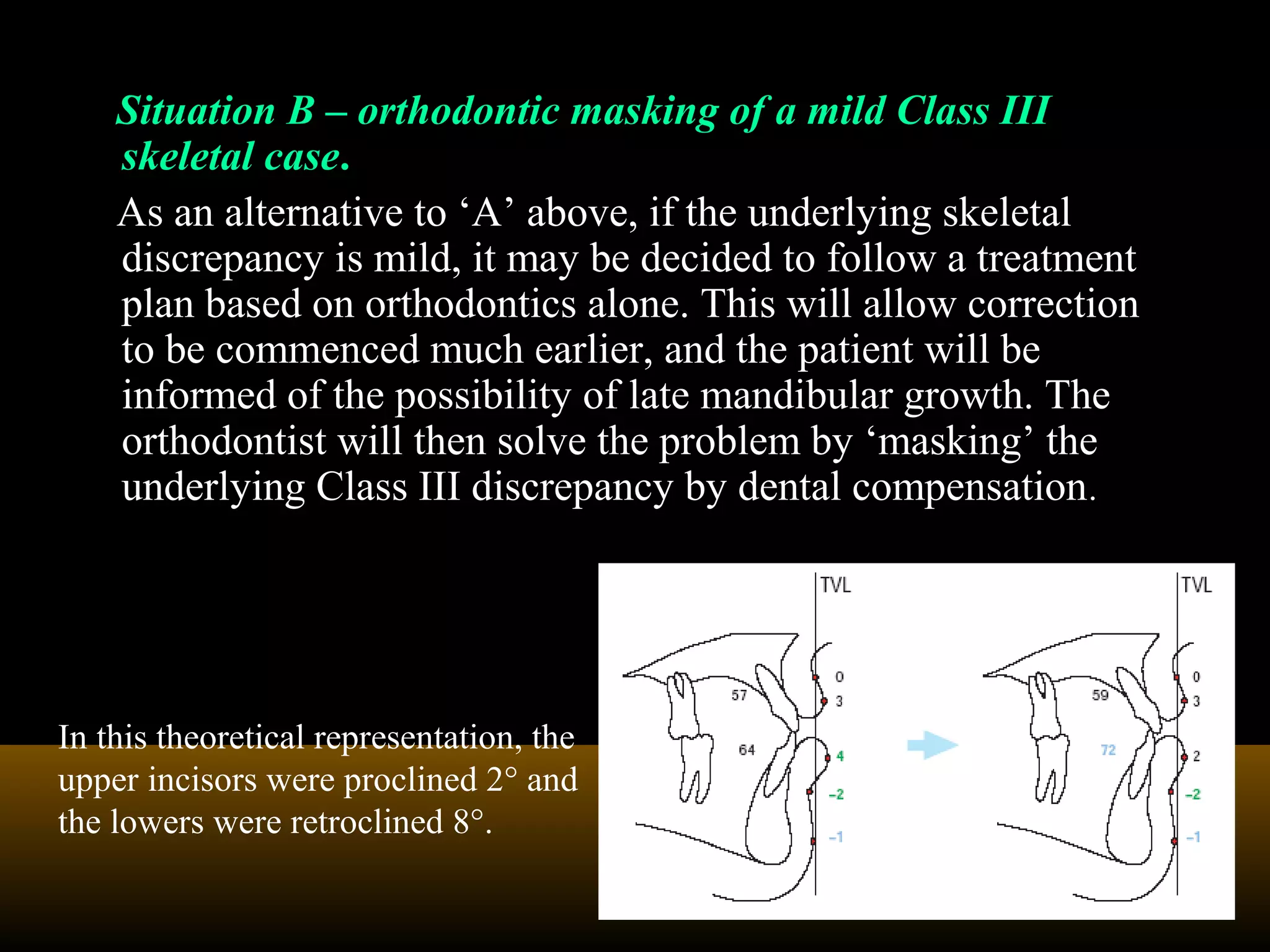

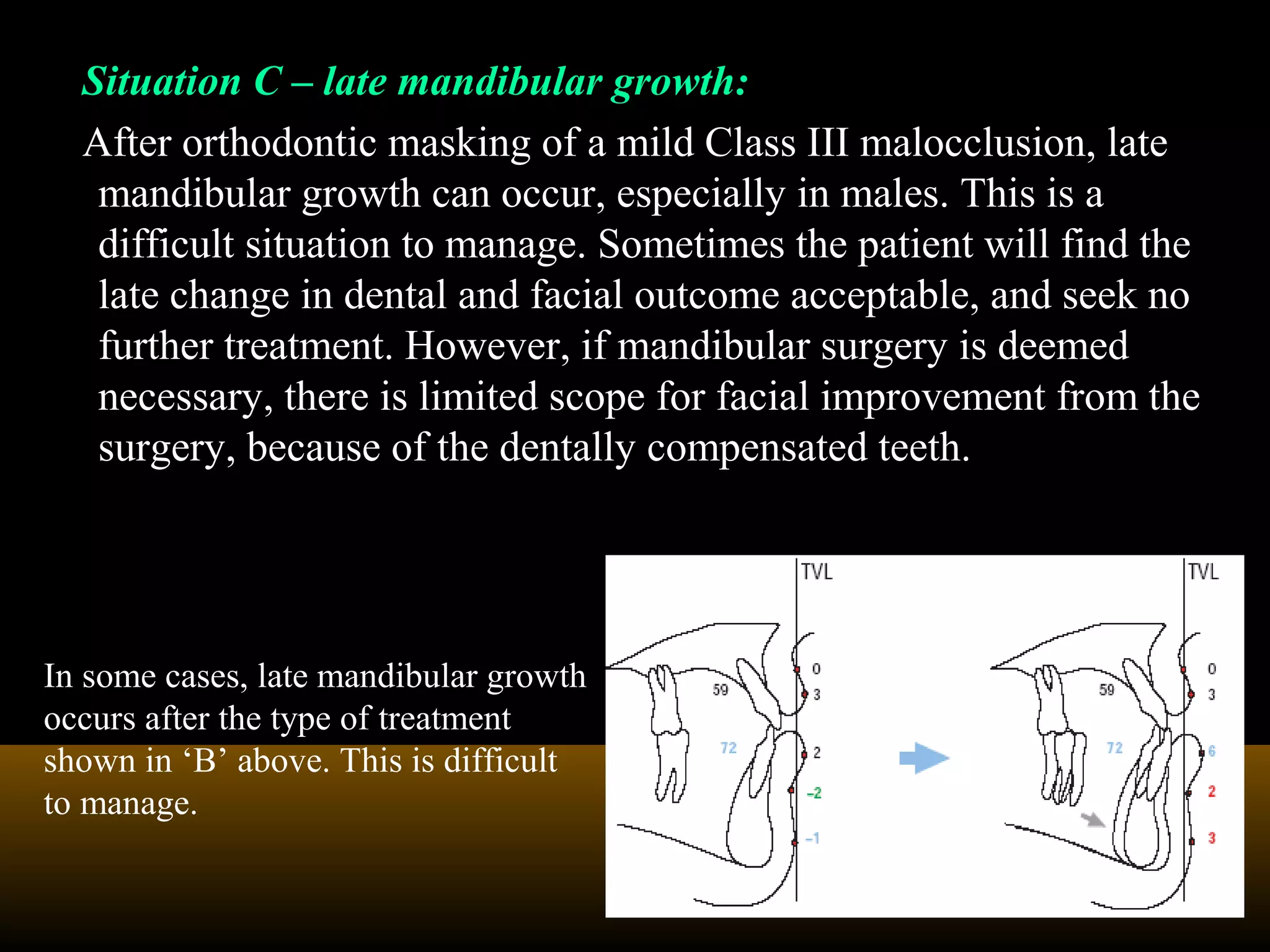









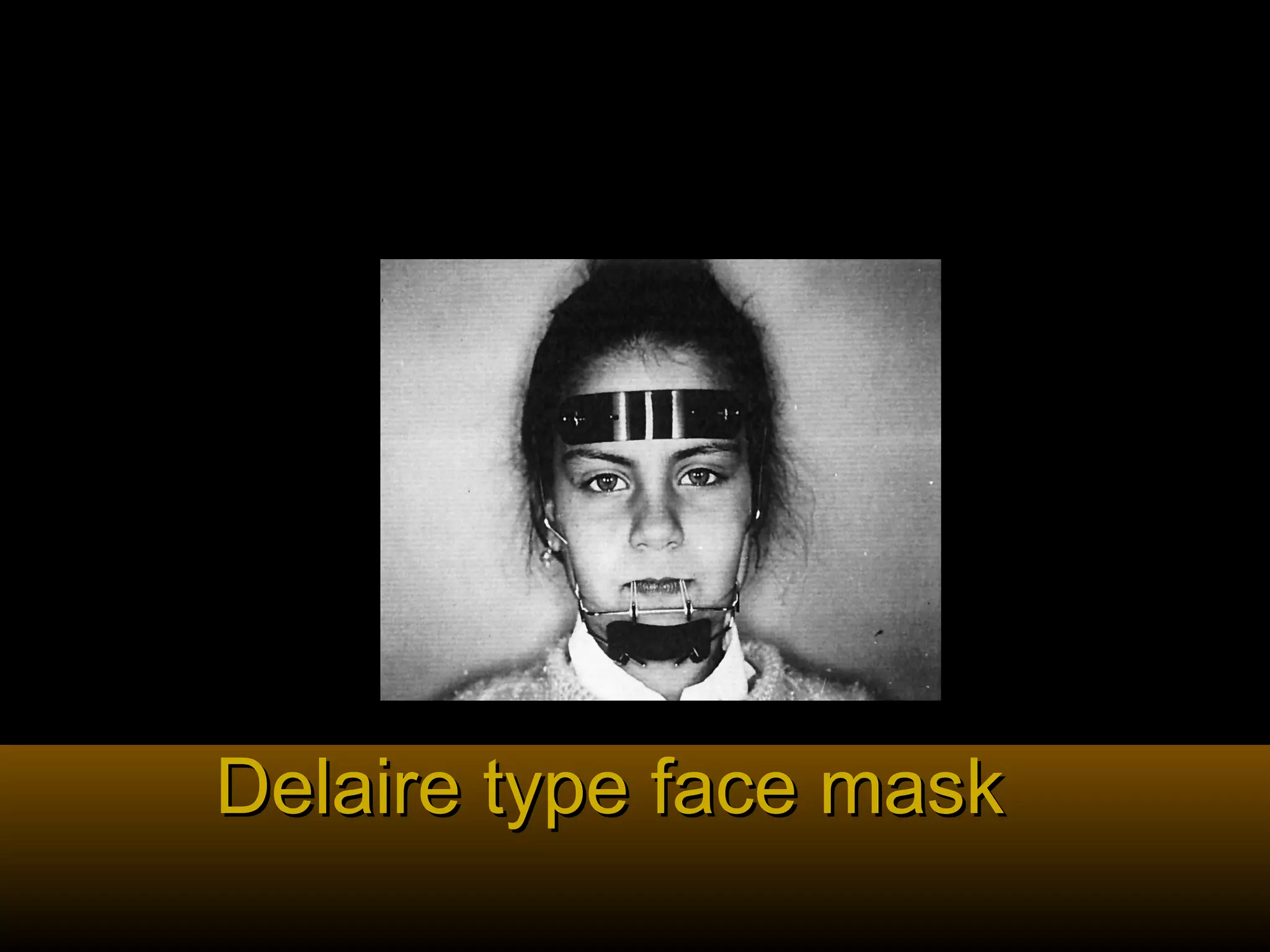










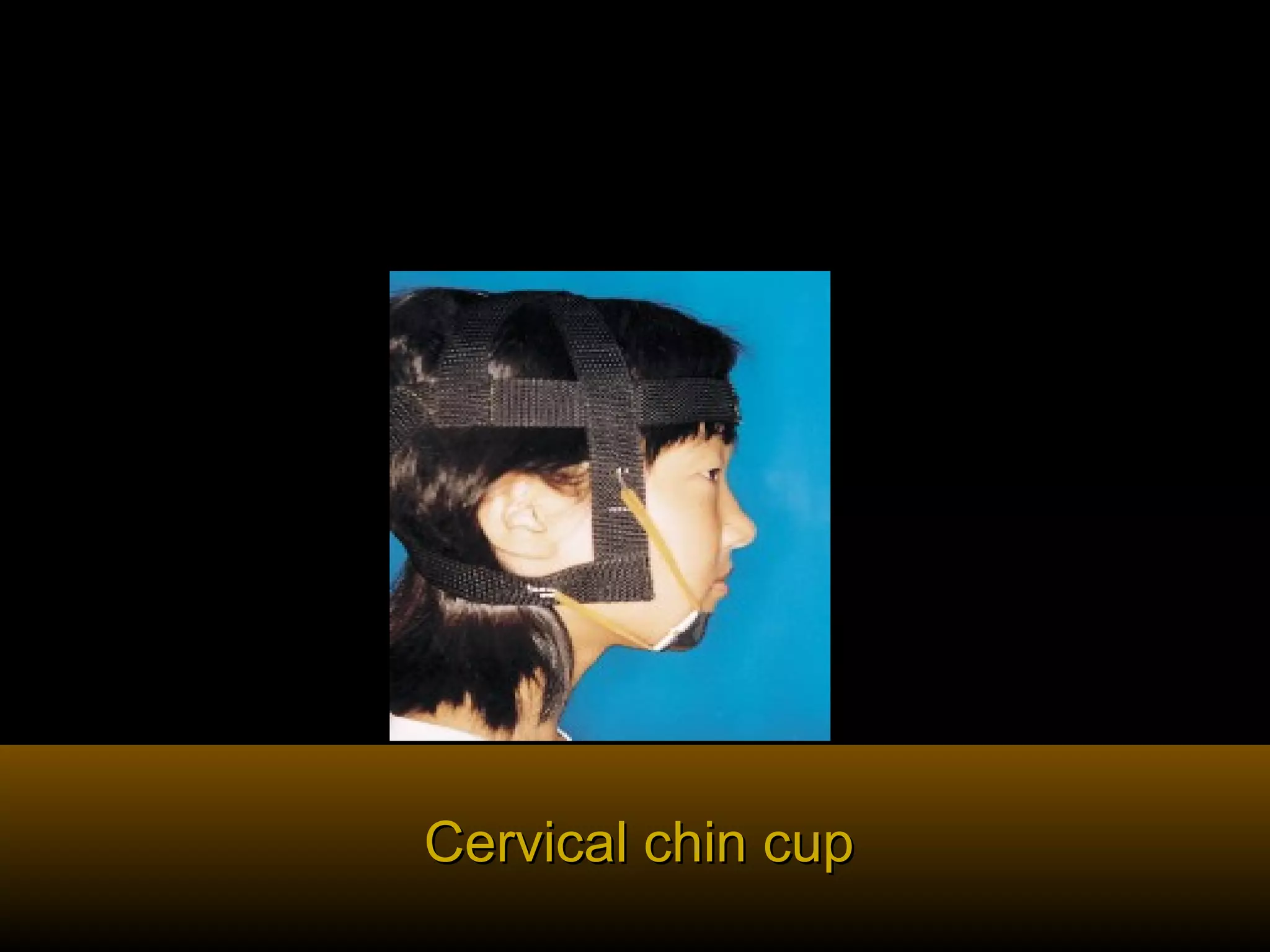
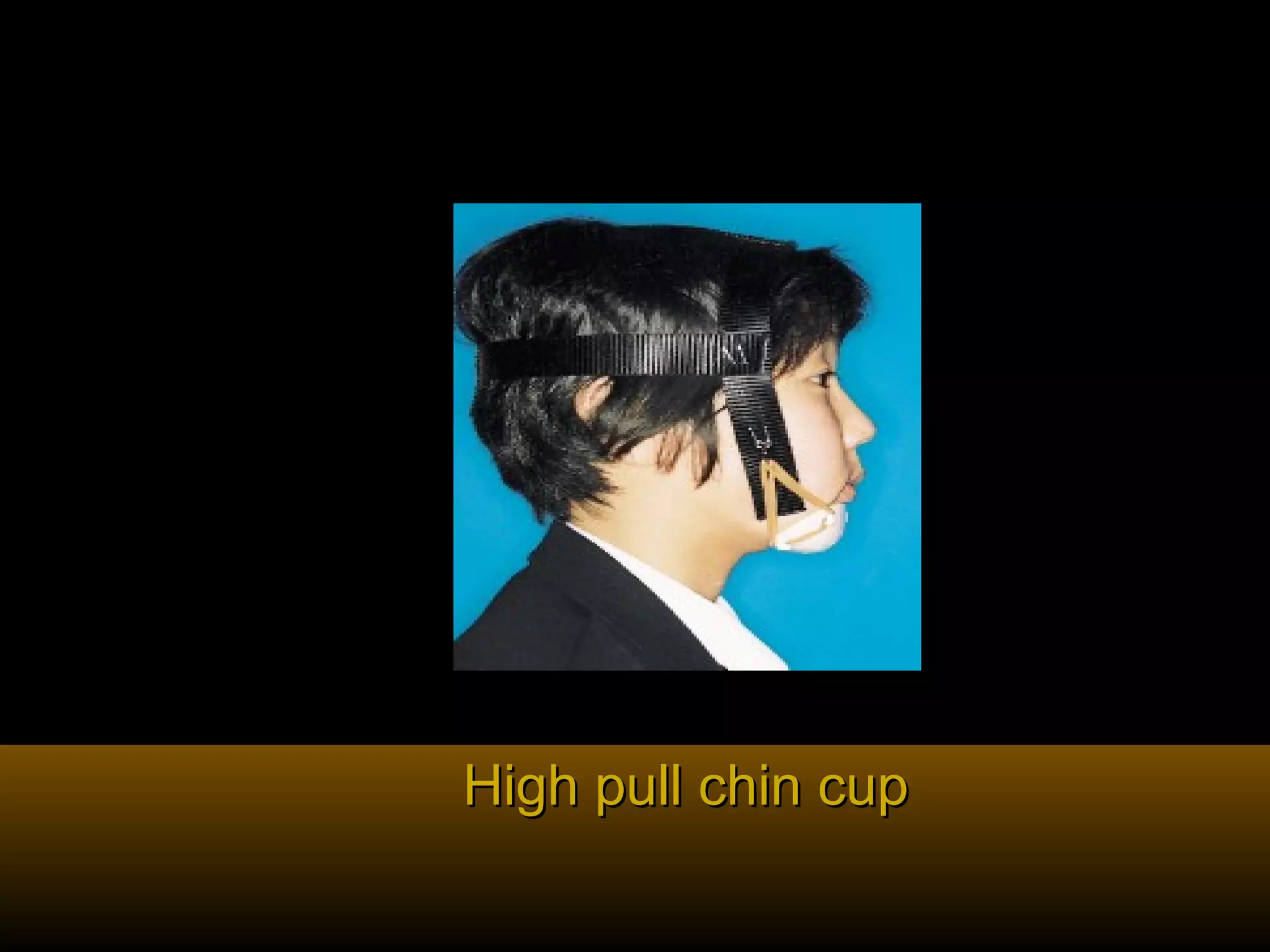









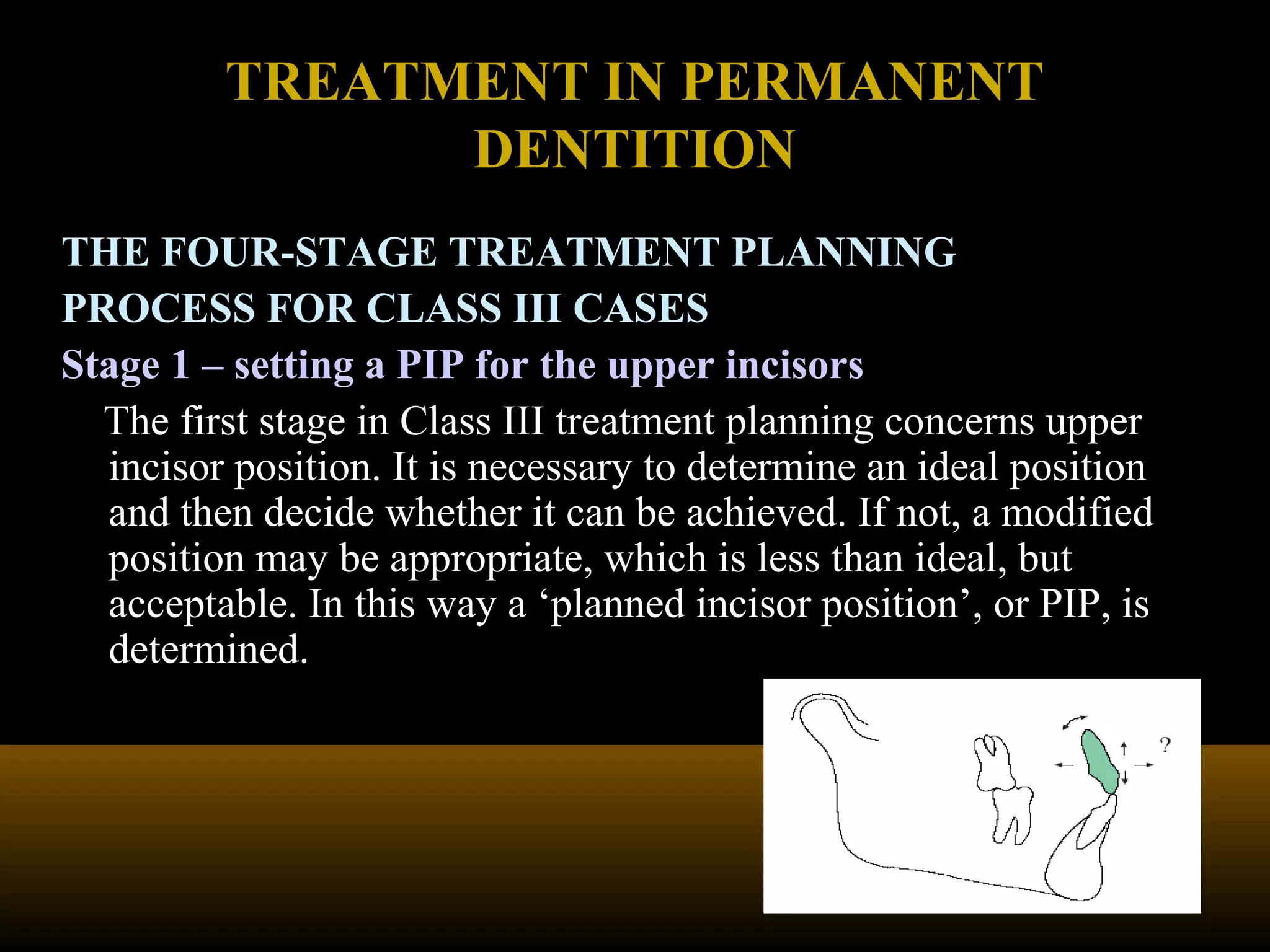
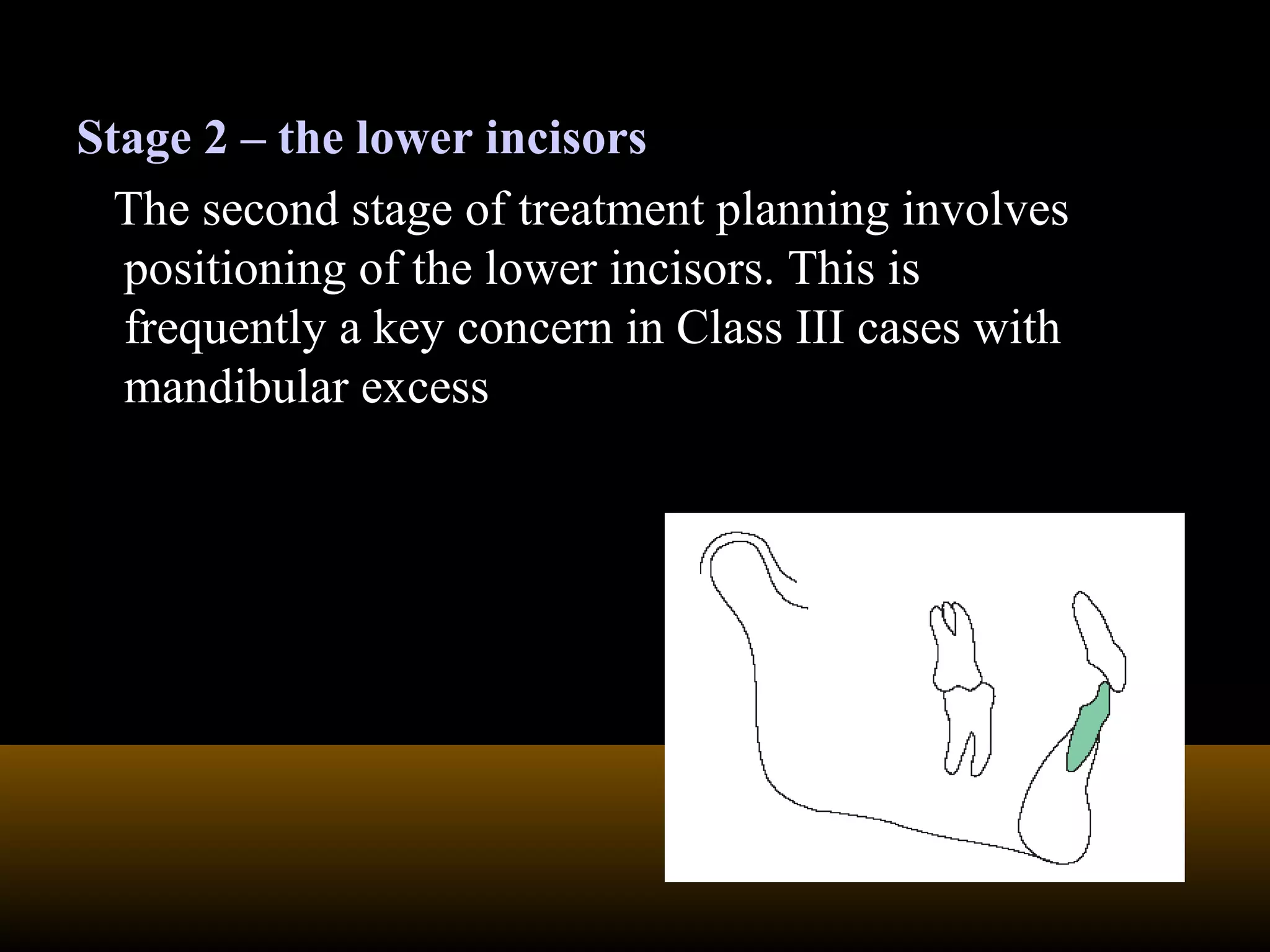
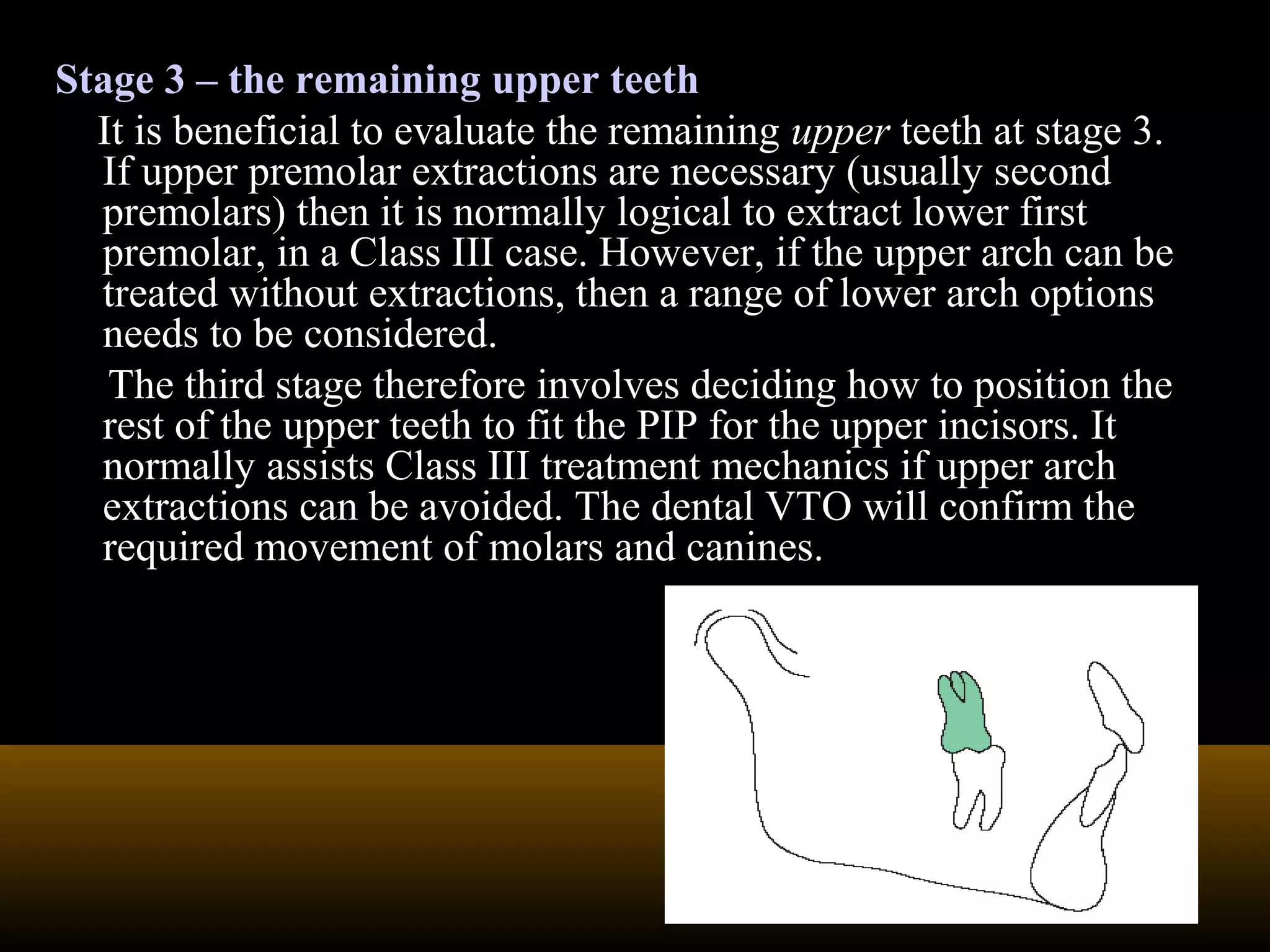

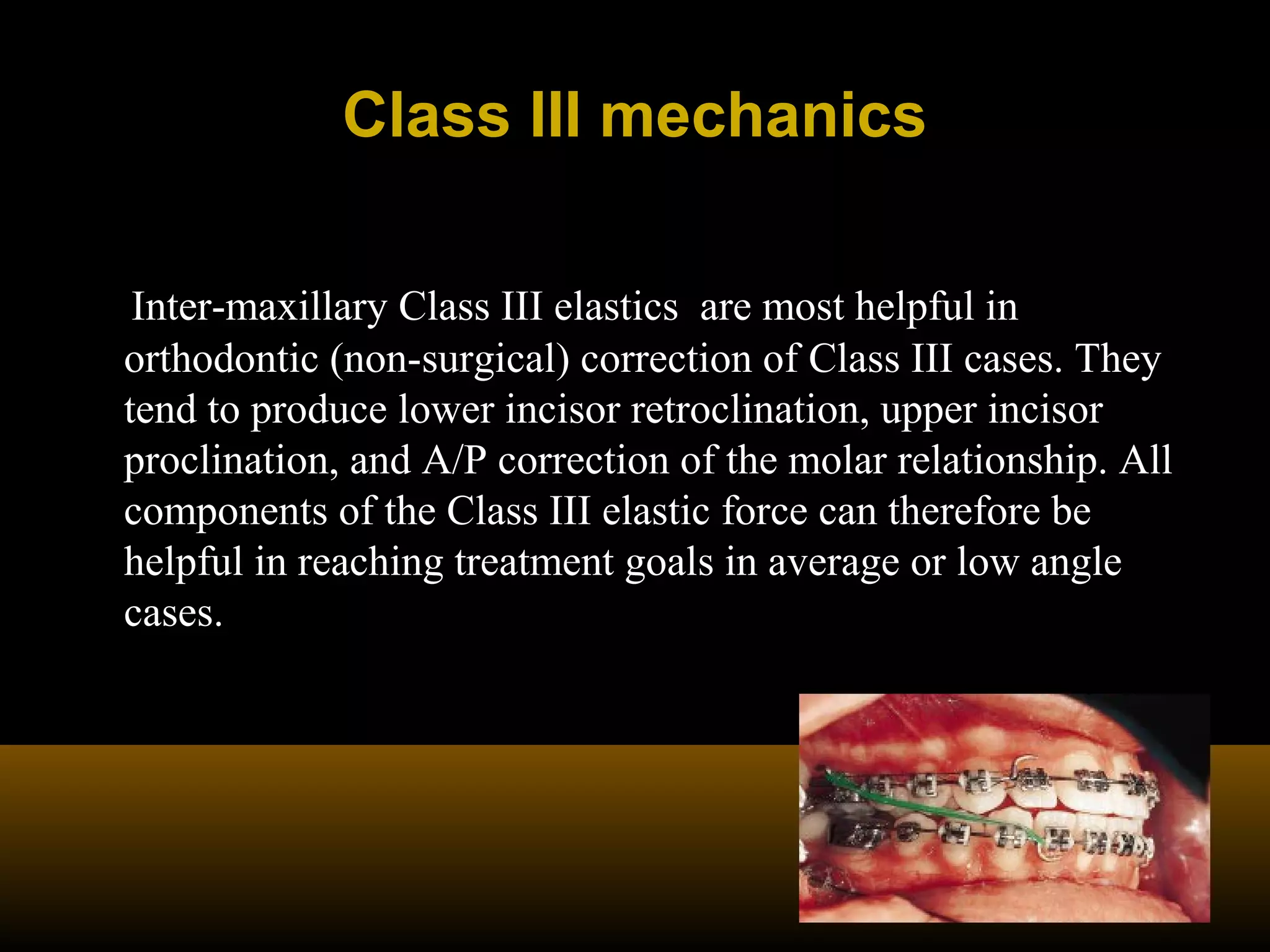





This document discusses the non-surgical management of skeletal class III malocclusions. It begins by defining class III malocclusions and describing their etiology, symptoms, and classification. It then discusses the functional and cephalometric analysis, timing of treatment, and different non-surgical treatment approaches for different types of class III malocclusions. Key points include that class III malocclusions can be caused by maxillary deficiency, mandibular excess, or both; involve an anterior crossbite relationship between the teeth; and are best treated early before abnormal muscle function worsens the skeletal discrepancy. Treatment approaches may involve dental decompensation and orthodontic appliances to correct the dental relationship.


