S N E H A A ( 8 8 )
B A T C H 2 0 1 5
G U I D E - D R . S H A I L A J A
DISASTER
MANAGEMENT
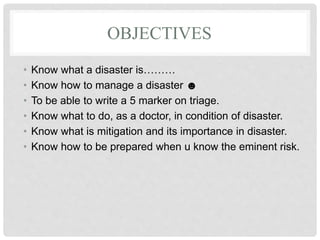
OBJECTIVES
โ€ข Know what a disaster isโ€ฆโ€ฆโ€ฆ
โ€ข Know how to manage a disaster โ˜ป
โ€ข To be able to write a 5 marker on triage.
โ€ข Know what to do, as a doctor, in condition of disaster.
โ€ข Know what is mitigation and its importance in disaster.
โ€ข Know how to be prepared when u know the eminent risk.
INTRODUCTION
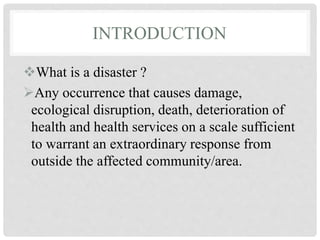
๏ถWhat is a disaster ?
๏ƒ˜Any occurrence that causes damage,
ecological disruption, death, deterioration of
health and health services on a scale sufficient
to warrant an extraordinary response from
outside the affected community/area.
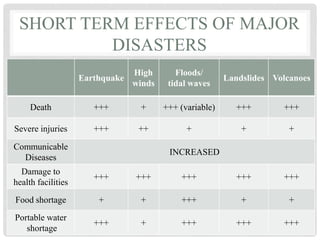
SHORT TERM EFFECTS OF MAJOR
DISASTERS
Earthquake
High
winds
Floods/
tidal waves
Landslides Volcanoes
Death +++ + +++ (variable) +++ +++
Severe injuries +++ ++ + + +
Communicable
Diseases
INCREASED
Damage to
health facilities
+++ +++ +++ +++ +++
Food shortage + + +++ + +
Portable water
shortage
+++ + +++ +++ +++
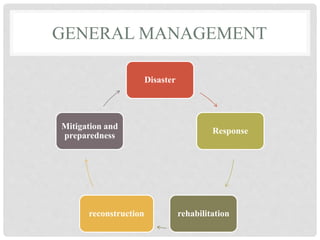
GENERAL MANAGEMENT
Disaster
Response
rehabilitationreconstruction
Mitigation and
preparedness
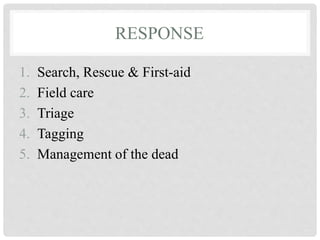
RESPONSE
1. Search, Rescue & First-aid
2. Field care
3. Triage
4. Tagging
5. Management of the dead
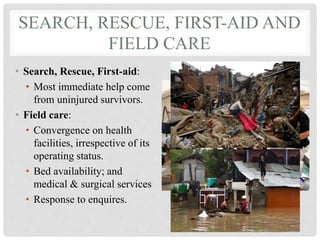
SEARCH, RESCUE, FIRST-AID AND
FIELD CARE
โ€ข Search, Rescue, First-aid:
โ€ข Most immediate help come
from uninjured survivors.
โ€ข Field care:
โ€ข Convergence on health
facilities, irrespective of its
operating status.
โ€ข Bed availability; and
medical & surgical services
โ€ข Response to enquires.
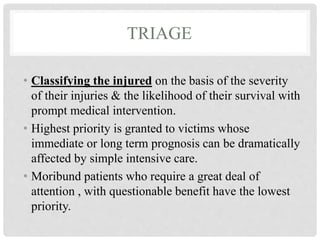
โ€ข Classifying the injured on the basis of the severity
of their injuries & the likelihood of their survival with
prompt medical intervention.
โ€ข Highest priority is granted to victims whose
immediate or long term prognosis can be dramatically
affected by simple intensive care.
โ€ข Moribund patients who require a great deal of
attention , with questionable benefit have the lowest
priority.
TRIAGE
TRIAGE (CONTโ€ฆ..)
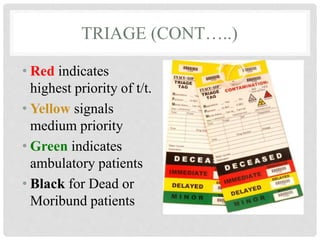
โ€ข Red indicates
highest priority of t/t.
โ€ข Yellow signals
medium priority
โ€ข Green indicates
ambulatory patients
โ€ข Black for Dead or
Moribund patients
TAGGING AND MANAGEMENT OF
THE DEAD
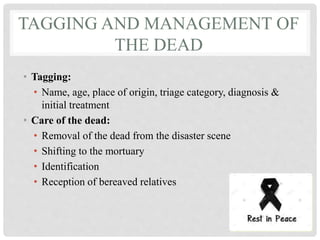
โ€ข Tagging:
โ€ข Name, age, place of origin, triage category, diagnosis &
initial treatment
โ€ข Care of the dead:
โ€ข Removal of the dead from the disaster scene
โ€ข Shifting to the mortuary
โ€ข Identification
โ€ข Reception of bereaved relatives
RELIEF
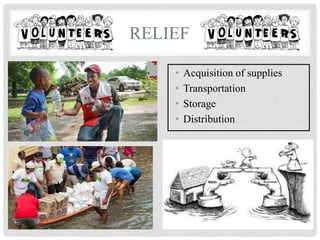
โ€ข Acquisition of supplies
โ€ข Transportation
โ€ข Storage
โ€ข Distribution
EPIDEMIOLOGICAL SURVEILLANCE
AND DISEASE CONTROL
โ€ข Reasons:
โ€ข Overcrowding & poor sanitation
โ€ข Population displacement
โ€ข Contaminated water supply and food
โ€ข Disruption of routine control programmes
โ€ข Breeding of vectors
โ€ข Displacement of domestic & wild animals who carry
zoonoses e.g. Leptospirosis in Orissa cyclone
โ€ข Control:
โ€ข Measures to reduce risk of transmission of diseases
โ€ข Establish a reporting system
โ€ข Investigate all reports of outbreak
VACCINATION
โ€ข Mass vaccination- Measles
โ€ข Vaccination for typhoid, cholera
and tetanus not recommended
by WHO in endemic areas;
recommended for healthcare
workers.
โ€ข Immunization before disaster
strikes.
โ€ข Supplying safe drinking water
and proper disposal of excreta-
practical and effective
NUTRITION
โ€ข Nutrition- infants, children, pregnant and nursing women, old
and sick people
โ€ข Steps
1. Assessing supplies
2. Gauging nutritional status
3. Calculating need
4. Monitoring the status
REHABILITATION AND
RECONSTRUCTION
REHABILITATION
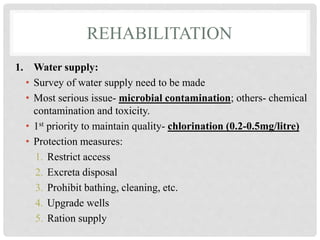
1. Water supply:
โ€ข Survey of water supply need to be made
โ€ข Most serious issue- microbial contamination; others- chemical
contamination and toxicity.
โ€ข 1st priority to maintain quality- chlorination (0.2-0.5mg/litre)
โ€ข Protection measures:
1. Restrict access
2. Excreta disposal
3. Prohibit bathing, cleaning, etc.
4. Upgrade wells
5. Ration supply
REHABILITATION (CONTโ€ฆ.)
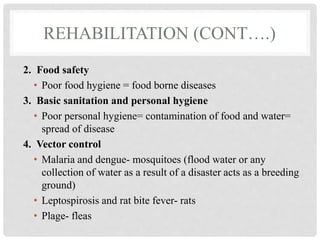
2. Food safety
โ€ข Poor food hygiene = food borne diseases
3. Basic sanitation and personal hygiene
โ€ข Poor personal hygiene= contamination of food and water=
spread of disease
4. Vector control
โ€ข Malaria and dengue- mosquitoes (flood water or any
collection of water as a result of a disaster acts as a breeding
ground)
โ€ข Leptospirosis and rat bite fever- rats
โ€ข Plage- fleas
MITIGATION
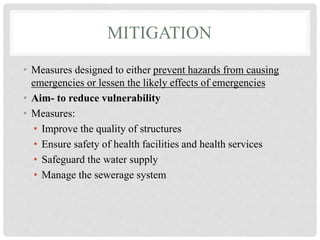
โ€ข Measures designed to either prevent hazards from causing
emergencies or lessen the likely effects of emergencies
โ€ข Aim- to reduce vulnerability
โ€ข Measures:
โ€ข Improve the quality of structures
โ€ข Ensure safety of health facilities and health services
โ€ข Safeguard the water supply
โ€ข Manage the sewerage system
DISASTER PREPAREDNESS
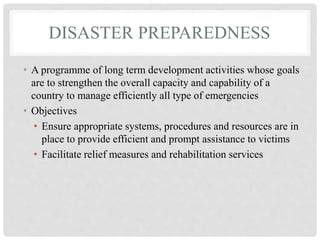
โ€ข A programme of long term development activities whose goals
are to strengthen the overall capacity and capability of a
country to manage efficiently all type of emergencies
โ€ข Objectives
โ€ข Ensure appropriate systems, procedures and resources are in
place to provide efficient and prompt assistance to victims
โ€ข Facilitate relief measures and rehabilitation services
DISASTER PREPAREDNESS
(CONTโ€ฆ)
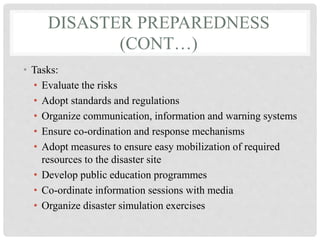
โ€ข Tasks:
โ€ข Evaluate the risks
โ€ข Adopt standards and regulations
โ€ข Organize communication, information and warning systems
โ€ข Ensure co-ordination and response mechanisms
โ€ข Adopt measures to ensure easy mobilization of required
resources to the disaster site
โ€ข Develop public education programmes
โ€ข Co-ordinate information sessions with media
โ€ข Organize disaster simulation exercises
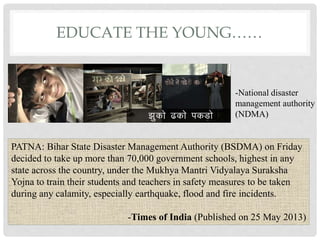
EDUCATE THE YOUNGโ€ฆโ€ฆ
-National disaster
management authority
(NDMA)
PATNA: Bihar State Disaster Management Authority (BSDMA) on Friday
decided to take up more than 70,000 government schools, highest in any
state across the country, under the Mukhya Mantri Vidyalaya Suraksha
Yojna to train their students and teachers in safety measures to be taken
during any calamity, especially earthquake, flood and fire incidents.
-Times of India (Published on 25 May 2013)
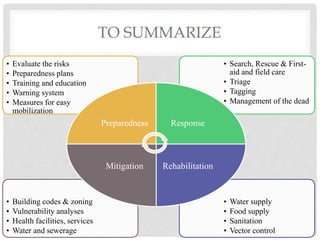
TO SUMMARIZE
โ€ข Water supply
โ€ข Food supply
โ€ข Sanitation
โ€ข Vector control
โ€ข Building codes & zoning
โ€ข Vulnerability analyses
โ€ข Health facilities, services
โ€ข Water and sewerage
โ€ข Search, Rescue & First-
aid and field care
โ€ข Triage
โ€ข Tagging
โ€ข Management of the dead
โ€ข Evaluate the risks
โ€ข Preparedness plans
โ€ข Training and education
โ€ข Warning system
โ€ข Measures for easy
mobilization
Preparedness Response
RehabilitationMitigation
Disaster management
Disaster management

Disaster management

  • 1.
    S N EH A A ( 8 8 ) B A T C H 2 0 1 5 G U I D E - D R . S H A I L A J A DISASTER MANAGEMENT
  • 2.
    OBJECTIVES โ€ข Know whata disaster isโ€ฆโ€ฆโ€ฆ โ€ข Know how to manage a disaster โ˜ป โ€ข To be able to write a 5 marker on triage. โ€ข Know what to do, as a doctor, in condition of disaster. โ€ข Know what is mitigation and its importance in disaster. โ€ข Know how to be prepared when u know the eminent risk.
  • 3.
    INTRODUCTION ๏ถWhat is adisaster ? ๏ƒ˜Any occurrence that causes damage, ecological disruption, death, deterioration of health and health services on a scale sufficient to warrant an extraordinary response from outside the affected community/area.
  • 4.
    SHORT TERM EFFECTSOF MAJOR DISASTERS Earthquake High winds Floods/ tidal waves Landslides Volcanoes Death +++ + +++ (variable) +++ +++ Severe injuries +++ ++ + + + Communicable Diseases INCREASED Damage to health facilities +++ +++ +++ +++ +++ Food shortage + + +++ + + Portable water shortage +++ + +++ +++ +++
  • 5.
  • 6.
    RESPONSE 1. Search, Rescue& First-aid 2. Field care 3. Triage 4. Tagging 5. Management of the dead
  • 7.
    SEARCH, RESCUE, FIRST-AIDAND FIELD CARE โ€ข Search, Rescue, First-aid: โ€ข Most immediate help come from uninjured survivors. โ€ข Field care: โ€ข Convergence on health facilities, irrespective of its operating status. โ€ข Bed availability; and medical & surgical services โ€ข Response to enquires.
  • 8.
    โ€ข Classifying theinjured on the basis of the severity of their injuries & the likelihood of their survival with prompt medical intervention. โ€ข Highest priority is granted to victims whose immediate or long term prognosis can be dramatically affected by simple intensive care. โ€ข Moribund patients who require a great deal of attention , with questionable benefit have the lowest priority. TRIAGE
  • 9.
    TRIAGE (CONTโ€ฆ..) โ€ข Redindicates highest priority of t/t. โ€ข Yellow signals medium priority โ€ข Green indicates ambulatory patients โ€ข Black for Dead or Moribund patients
  • 10.
    TAGGING AND MANAGEMENTOF THE DEAD โ€ข Tagging: โ€ข Name, age, place of origin, triage category, diagnosis & initial treatment โ€ข Care of the dead: โ€ข Removal of the dead from the disaster scene โ€ข Shifting to the mortuary โ€ข Identification โ€ข Reception of bereaved relatives
  • 11.
    RELIEF โ€ข Acquisition ofsupplies โ€ข Transportation โ€ข Storage โ€ข Distribution
  • 12.
    EPIDEMIOLOGICAL SURVEILLANCE AND DISEASECONTROL โ€ข Reasons: โ€ข Overcrowding & poor sanitation โ€ข Population displacement โ€ข Contaminated water supply and food โ€ข Disruption of routine control programmes โ€ข Breeding of vectors โ€ข Displacement of domestic & wild animals who carry zoonoses e.g. Leptospirosis in Orissa cyclone โ€ข Control: โ€ข Measures to reduce risk of transmission of diseases โ€ข Establish a reporting system โ€ข Investigate all reports of outbreak
  • 13.
    VACCINATION โ€ข Mass vaccination-Measles โ€ข Vaccination for typhoid, cholera and tetanus not recommended by WHO in endemic areas; recommended for healthcare workers. โ€ข Immunization before disaster strikes. โ€ข Supplying safe drinking water and proper disposal of excreta- practical and effective
  • 14.
    NUTRITION โ€ข Nutrition- infants,children, pregnant and nursing women, old and sick people โ€ข Steps 1. Assessing supplies 2. Gauging nutritional status 3. Calculating need 4. Monitoring the status
  • 15.
  • 16.
    REHABILITATION 1. Water supply: โ€ขSurvey of water supply need to be made โ€ข Most serious issue- microbial contamination; others- chemical contamination and toxicity. โ€ข 1st priority to maintain quality- chlorination (0.2-0.5mg/litre) โ€ข Protection measures: 1. Restrict access 2. Excreta disposal 3. Prohibit bathing, cleaning, etc. 4. Upgrade wells 5. Ration supply
  • 17.
    REHABILITATION (CONTโ€ฆ.) 2. Foodsafety โ€ข Poor food hygiene = food borne diseases 3. Basic sanitation and personal hygiene โ€ข Poor personal hygiene= contamination of food and water= spread of disease 4. Vector control โ€ข Malaria and dengue- mosquitoes (flood water or any collection of water as a result of a disaster acts as a breeding ground) โ€ข Leptospirosis and rat bite fever- rats โ€ข Plage- fleas
  • 19.
    MITIGATION โ€ข Measures designedto either prevent hazards from causing emergencies or lessen the likely effects of emergencies โ€ข Aim- to reduce vulnerability โ€ข Measures: โ€ข Improve the quality of structures โ€ข Ensure safety of health facilities and health services โ€ข Safeguard the water supply โ€ข Manage the sewerage system
  • 21.
    DISASTER PREPAREDNESS โ€ข Aprogramme of long term development activities whose goals are to strengthen the overall capacity and capability of a country to manage efficiently all type of emergencies โ€ข Objectives โ€ข Ensure appropriate systems, procedures and resources are in place to provide efficient and prompt assistance to victims โ€ข Facilitate relief measures and rehabilitation services
  • 22.
    DISASTER PREPAREDNESS (CONTโ€ฆ) โ€ข Tasks: โ€ขEvaluate the risks โ€ข Adopt standards and regulations โ€ข Organize communication, information and warning systems โ€ข Ensure co-ordination and response mechanisms โ€ข Adopt measures to ensure easy mobilization of required resources to the disaster site โ€ข Develop public education programmes โ€ข Co-ordinate information sessions with media โ€ข Organize disaster simulation exercises
  • 23.
    EDUCATE THE YOUNGโ€ฆโ€ฆ -Nationaldisaster management authority (NDMA) PATNA: Bihar State Disaster Management Authority (BSDMA) on Friday decided to take up more than 70,000 government schools, highest in any state across the country, under the Mukhya Mantri Vidyalaya Suraksha Yojna to train their students and teachers in safety measures to be taken during any calamity, especially earthquake, flood and fire incidents. -Times of India (Published on 25 May 2013)
  • 24.
    TO SUMMARIZE โ€ข Watersupply โ€ข Food supply โ€ข Sanitation โ€ข Vector control โ€ข Building codes & zoning โ€ข Vulnerability analyses โ€ข Health facilities, services โ€ข Water and sewerage โ€ข Search, Rescue & First- aid and field care โ€ข Triage โ€ข Tagging โ€ข Management of the dead โ€ข Evaluate the risks โ€ข Preparedness plans โ€ข Training and education โ€ข Warning system โ€ข Measures for easy mobilization Preparedness Response RehabilitationMitigation