Civic Mirror: Create a Nation
Itinerary
Step 1: Select a Meeting Moderator
 This person will:
1. Lead everyone through the activities
2. Allow people to speak
3. Tell others to wait their turn
4. Ask for clarification if she feels the group needs it
 Students will nominate potential leaders and those
chosen must accept
 A vote will take place to see who will lead
Step 2: Select Two Recorders
 Select two recorders
 These people will:
1. Record the brainstorming ideas on the board
2. Manage the process of accepting and rejecting
ideas on the board
Step 3: Select a Time Keeper
 Select a time keeper
 This person must help the moderator keep track of
time by making loud announcements like “two
minutes” and “TIME!”
National Identity Tasks Script
 The stories and ideas we create as a class will help us
develop a sense of national identity.
 We must understand that the details will not make
our nation stronger or weaker
 Ex. Saying we have excellent farmers does not mean our hexes
will produce more food
 The point of this exercise is to help us begin to feel
like a member of our soon-to-be country
 Go to the next slide
Task 1: Creating Your Nation’s Geography
 5-10 minutes
 Culture is related to geography in almost every way.
 Before our national identity can be created we need
to agree on some geographic basics.
 This can be connected to our name.
 Go to the next slide for the questions you need to
answer.
Geographic Questions
 What country are we a part of anyway?
 Is it big or small?
 What’s the climate like?
 Warm or Cold?
 What’s the terrain like?
 Hilly or flat?
 Are there any unique or notable geographic features
within our country?
 What type of food is traditionally grown?
Task 2: Creating Your Country Name
 5-10 Minutes
 Now we need to agree on a name for our country.
 The name must reflect what was just agreed on
above, plus our collective beliefs, backgrounds, and
ambitions.
 Let’s think about our values, the principles outlined
in our real country’s constitution (Canada), and our
newly agreed-upon geography.
 Go to the next slide for your name choosing
instructions.
Creating Your Country Name
 Step 1: In groups of two to four, take a few minutes
to brainstorm and generate as many names as you
can
 Make sure the names “mirror” what was just listed above
 Step 2: One person from each group reports their
best name ideas, explaining what they mean and how
they relate to our collective values, beliefs and
geography.
 Step 3: Secret ballot vote: heads down, hands up.
Personality
 What will your country’s people be known for?
 Based on the previous information, create three
attributes that will summarize what your country’s
people are like
 Ex. Caring, humours, peaceful
 Get back into your groups of two to four and come up
with one attribute
 Gather one attribute from each group and vote on
the most popular (heads down, hands up).
Step 4: National Identity Homework
 The rest of class
 Students will choose from the following tasks to
complete for Thursday.
 The class will vote on which options they support.
 The winners will get $ in the game.
 Through your effort, results and reflection and mark
will be given.
National Identity Tasks
 National Flag: with an explanation of its national
symbolism.
 National Slogan: with an explanation why this saying
has inspired the people of your nation through the
ages.
 Names & History: a two paragraph explanation of
these things in light of what was agreed upon in class
today. Have fun with it!
 National Flower/Animal or some other symbol.
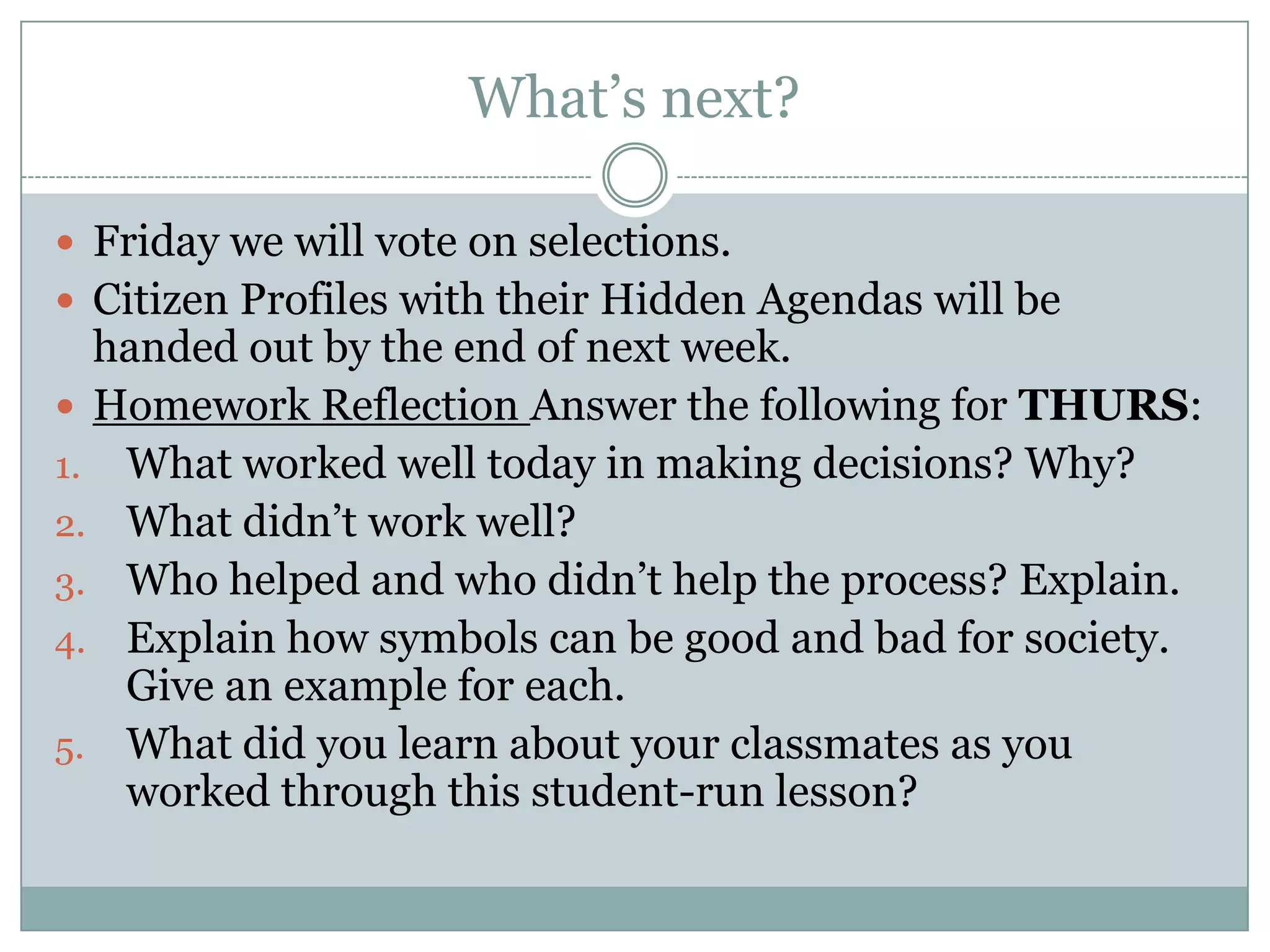
What’s next?
 Friday we will vote on selections.
 Citizen Profiles with their Hidden Agendas will be
handed out by the end of next week.
 Homework Reflection Answer the following for THURS:
1. What worked well today in making decisions? Why?
2. What didn’t work well?
3. Who helped and who didn’t help the process? Explain.
4. Explain how symbols can be good and bad for society.
Give an example for each.
5. What did you learn about your classmates as you
worked through this student-run lesson?

Civic Mirror National Identity

  • 1.
    Civic Mirror: Createa Nation Itinerary
  • 2.
    Step 1: Selecta Meeting Moderator  This person will: 1. Lead everyone through the activities 2. Allow people to speak 3. Tell others to wait their turn 4. Ask for clarification if she feels the group needs it  Students will nominate potential leaders and those chosen must accept  A vote will take place to see who will lead
  • 3.
    Step 2: SelectTwo Recorders  Select two recorders  These people will: 1. Record the brainstorming ideas on the board 2. Manage the process of accepting and rejecting ideas on the board
  • 4.
    Step 3: Selecta Time Keeper  Select a time keeper  This person must help the moderator keep track of time by making loud announcements like “two minutes” and “TIME!”
  • 5.
    National Identity TasksScript  The stories and ideas we create as a class will help us develop a sense of national identity.  We must understand that the details will not make our nation stronger or weaker  Ex. Saying we have excellent farmers does not mean our hexes will produce more food  The point of this exercise is to help us begin to feel like a member of our soon-to-be country  Go to the next slide
  • 6.
    Task 1: CreatingYour Nation’s Geography  5-10 minutes  Culture is related to geography in almost every way.  Before our national identity can be created we need to agree on some geographic basics.  This can be connected to our name.  Go to the next slide for the questions you need to answer.
  • 7.
    Geographic Questions  Whatcountry are we a part of anyway?  Is it big or small?  What’s the climate like?  Warm or Cold?  What’s the terrain like?  Hilly or flat?  Are there any unique or notable geographic features within our country?  What type of food is traditionally grown?
  • 8.
    Task 2: CreatingYour Country Name  5-10 Minutes  Now we need to agree on a name for our country.  The name must reflect what was just agreed on above, plus our collective beliefs, backgrounds, and ambitions.  Let’s think about our values, the principles outlined in our real country’s constitution (Canada), and our newly agreed-upon geography.  Go to the next slide for your name choosing instructions.
  • 9.
    Creating Your CountryName  Step 1: In groups of two to four, take a few minutes to brainstorm and generate as many names as you can  Make sure the names “mirror” what was just listed above  Step 2: One person from each group reports their best name ideas, explaining what they mean and how they relate to our collective values, beliefs and geography.  Step 3: Secret ballot vote: heads down, hands up.
  • 10.
    Personality  What willyour country’s people be known for?  Based on the previous information, create three attributes that will summarize what your country’s people are like  Ex. Caring, humours, peaceful  Get back into your groups of two to four and come up with one attribute  Gather one attribute from each group and vote on the most popular (heads down, hands up).
  • 11.
    Step 4: NationalIdentity Homework  The rest of class  Students will choose from the following tasks to complete for Thursday.  The class will vote on which options they support.  The winners will get $ in the game.  Through your effort, results and reflection and mark will be given.
  • 12.
    National Identity Tasks National Flag: with an explanation of its national symbolism.  National Slogan: with an explanation why this saying has inspired the people of your nation through the ages.  Names & History: a two paragraph explanation of these things in light of what was agreed upon in class today. Have fun with it!  National Flower/Animal or some other symbol.
  • 13.
    What’s next?  Fridaywe will vote on selections.  Citizen Profiles with their Hidden Agendas will be handed out by the end of next week.  Homework Reflection Answer the following for THURS: 1. What worked well today in making decisions? Why? 2. What didn’t work well? 3. Who helped and who didn’t help the process? Explain. 4. Explain how symbols can be good and bad for society. Give an example for each. 5. What did you learn about your classmates as you worked through this student-run lesson?