
© 2015 Cisco and/or its affiliates. All rights reserved. This document is Cisco Public Information. Page 1 of 10
White Paper
Cisco cBR-8 Evolved CCAP: Deliver Scalable
Network and Service Growth at a Lower Total
Cost of Ownership
Executive Summary
An explosion of new over-the-top (OTT) video services and consumer devices is placing huge demand on cable
access networks. To compete for new customers and retain the loyalty of existing ones, multiple system operators
(MSOs) will need to expand capacity substantially, rolling out new services and gigabit tiers.
As they strive to meet insatiable market demand and stay competitive, MSOs are looking at significant access
network capital expenditures (CapEx) increases over the next 5 years - and steadily rising operating expenses
(OpEx) due to higher power costs and a larger network footprint. But current integrated Cisco
®
Converged Cable
Access Platform (CCAP) solutions are limited to supporting only 24 to 32 channels per service group, and they are
not designed to support DOCSIS
®
3.1 at scale. Using these platforms, MSOs would need to significantly increase
CapEx spend in order to compete with gigabit billboard rates and keep pace with growth.
Alternatively, MSOs can use the Cisco cBR-8 Converged Broadband Router, a full-spectrum CCAP-compliant
platform that is designed to support DOCSIS 3.1. The Cisco cBR-8 enables cable operators to offer multigigabit
broadband and Internet of Everything (IoE) services, and provide a path to virtualization. It empowers MSOs to
scale economically to deliver more capacity and best-in-class services with much lower total cost of ownership
(TCO).
This white paper examines the consumer trends affecting cable access networks and the projections for how the
network and services will evolve in the coming years. It provides a long-term economic analysis of an evolved
access network using the Cisco cBR-8, compared with competitive Advanced Telecommunications Computing
Architecture (ATCA) platforms. And it demonstrates how MSOs will be able to meet capacity and service demands
over the next several years at a 40-percent savings in hardware, space, and power costs.
Market Dynamics: Insatiable Demand for Bandwidth and Services
Consumer demand for capacity, bandwidth, and services is historically high, and it is growing exponentially. ABI
projects that new viewing formats, OTT services, and consumer devices will create a ninefold bandwidth increase
per movie and an 81-percent increase in video views by 2019.
At the same time, competition has never been fiercer. Both traditional telcos and new market entrants like Google
are battling for customer mindshare with fiber-to-the-home (FTTH) access networks and gigabit service tiers,
pushing billboard data rates ever higher.
These trends are placing significant pressure on cable providers. To keep pace with demand for Gigabit-tier
services and exploding OTT video consumption, MSOs will need to massively increase capacity and sustain
exponential growth in multiservice offerings over the next 5 years.
© 2015 Cisco and/or its affiliates. All rights reserved. This document is Cisco Public Information. Page 2 of 10
Service Group Size Will Triple over the Next 5 Years
So how will this situation affect the access network? In order to meet this unprecedented demand for bandwidth
and services, cable providers will be expanding their network capacity and footprint. A typical large operator can
expect its number of service groups per hub to triple over the next 5 years. And, as cable providers expand video
services and move to offer gigabit (and eventually multigigabit) service tiers, large MSOs can expect bandwidth per
service group to increase sixfold over the same period.
To  meet  that  demand  by  scaling  capacity  linearly  using  today’s  integrated  Cable  Modem Termination Systems
(CMTS) and CCAP platforms, MSOs would need to double their CapEx spend. Space would also be at a premium
as MSOs added more and more platforms, and they would quickly run out of room in existing hubs.
But  it’s  the  OpEx  growth  that  would prove most challenging under this scenario. According to SCTE, as much as
83 percent of the overall energy consumption of a cable network is from hub and headend equipment. Under the
growth projected previously, MSOs would see the power consumed by the access network - and the overall OpEx
for power - grow by a factor of 6.
So the big question for MSOs: how can they keep pace with this expected long-term growth, and stay competitive
by offering more services and capacity, without exceeding CapEx and OpEx limits?
The Solution: Evolve the Access Network
Evolving the access network for a more economical future involves three key elements:
● Video convergence: Even as MSOs begin migrating more MPEG video to IP video, they will continue to
support significant amount of MPEG video traffic, which consumes significant spectra. By converging all
services (QAM video, IP VoD services, and more channels devoted to broadband data) within a single
infrastructure, they can reduce power and floor space.
● Higher QAM density: Cable providers need solutions that can support more services per service group,
ultimately lowering the cost per channel and cost per gigabit per second (Gbps) as services and capacity
expand.
● DOCSIS 3.1: As most cable providers undertake massive rollouts of DOCSIS 3.1 in 2017, they will be able
to achieve much higher data rates, allowing them to support more online video and higher broadband
speeds and tiers. DOCSIS 3.1 solutions should also lead to much lower cost per bit (and per subscriber),
and allow MSOs to deliver much more bandwidth per household.
Today’s  ATCA-Based CCAP Solutions: Limiting Growth
To accommodate this huge growth in services and demand, cable operators will be under pressure to evolve their
access network technologies to support converged video services and higher QAM density. As they continue to
converge services and roll out DOCSIS 3.1, they can expect to be delivering up to 128 channels per service group
by 2019.
Over the long term, the Advanced Telecommunications Computing Architecture (ATCA)-based CCAP solutions will
not be able to deliver this degree of scale economically, for several reasons. First, even the more recently
introduced platforms represent an earlier-generation ATCA-based CCAP product. They were designed around the
requirements of DOCSIS 3.0, so most will require a complete equipment or forklift upgrade in order to support
DOCSIS 3.1.
© 2015 Cisco and/or its affiliates. All rights reserved. This document is Cisco Public Information. Page 3 of 10
These platforms are also constrained by fundamental limitations of the ATCA chassis architecture, such as a
maximum 10 Gbps per slot. They offer limited video convergence. They rely on separate platforms for broadcast
video and optical distribution. And they afford no provisions for distributed architectures, so they are inherently
more expensive to scale.
To meet the demands of the next several years with a CapEx and OpEx spend that makes sense, cable providers
need a more innovative solution.
Next-Generation Evolved CCAP Solution: Cisco cBR-8, the Platform That Will Last for the
Next Decade
The centerpiece of the Cisco Evolved CCAP solution is the Cisco cBR-8, a next-generation access platform built to
handle the needs of today, tomorrow, and the coming decade to optimize cable operator economics. The Cisco
cBR-8 platform provides:
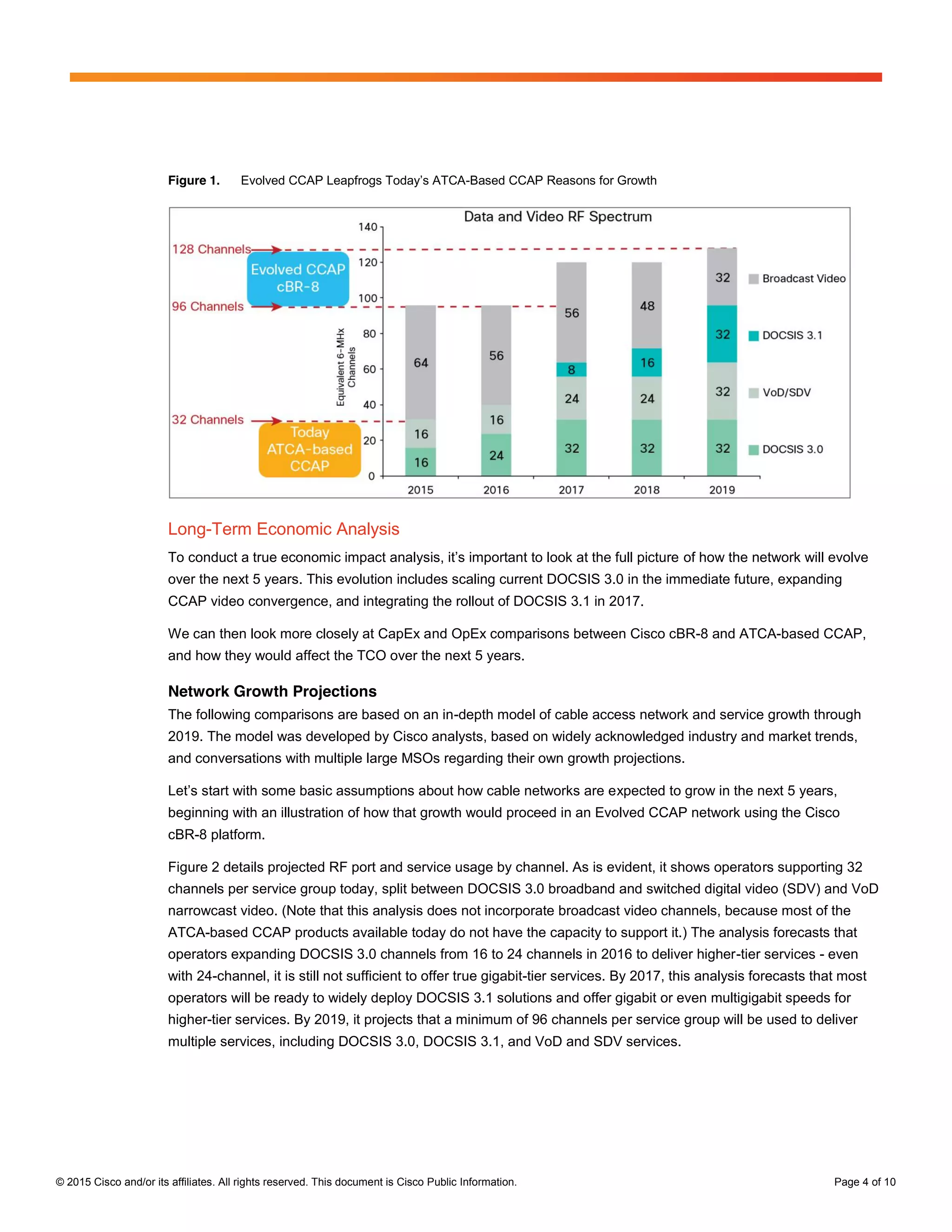
● Twenty times the capacity of current ATCA access platforms: The Cisco cBR-8 can deliver more than 96
channels per service group, including more than 6000 downstream channels of DOCSIS 3.0, with the ability
to scale to full DOCSIS 3.1 and video, and 200-Gbps forwarding capacity with a backplane scalable to 1.6
Tbps (Figure 1).
● High-speed DOCSIS data services: The platform delivers exceptional performance to support traditional
DOCSIS 3.0 systems and DOCSIS 3.1 platforms for different tiers of broadband services.
● Full-scale DOCSIS 3.1: The Cisco cBR-8 is designed from the ground up for DOCSIS 3.1, with the ability to
deliver full-scale DOCSIS 3.1 capacity for every service group and household to support gigabit and
ultimately multi-gigabit service tiers.
● Higher density per chassis and line card: The router supports 4.9 service groups per rack unit - 40-percent
higher than competitive ATCA platforms - to substantially reduce power consumption.
● True CCAP convergence: The Cisco cBR-8 delivers on the promise of full CCAP convergence, with the
ability to deliver all video and data services with a single platform and radically lower cost per bit.
● Support  for  distributed  architectures:  Using  Cisco’s  groundbreaking  Remote  PHY  technology,  MSOs  can  
expand fiber much deeper into the network, and expand capacity more economically.
● Path of virtualization and Software-Defined Networking (SDN) support: Cisco cBR-8 CCAP software allows
operators to centralize control-plane functions and move RF circuitry out to a separate chassis. By adopting
this distributed access architecture with a Remote PHY strategy, operators can then virtualize all of the
remaining circuitry in the CCAP core and create a truly next-generation access network. Using this
approach with cBR-8 as part of the Cisco Evolved Programmable Network in an SDN architecture, cable
operators can continue to lower operating costs, improve resource usage, and accelerate time to market of
new services.
These attributes are all important for a true next-generation cable access platform. But what do they all mean for a
cable provider’s  long-term economics? The following section examines the details.
© 2015 Cisco and/or its affiliates. All rights reserved. This document is Cisco Public Information. Page 4 of 10
Figure 1. Evolved  CCAP  Leapfrogs  Today’s  ATCA-Based CCAP Reasons for Growth
Long-Term Economic Analysis
To  conduct  a  true  economic  impact  analysis,  it’s  important  to  look  at  the  full  picture of how the network will evolve
over the next 5 years. This evolution includes scaling current DOCSIS 3.0 in the immediate future, expanding
CCAP video convergence, and integrating the rollout of DOCSIS 3.1 in 2017.
We can then look more closely at CapEx and OpEx comparisons between Cisco cBR-8 and ATCA-based CCAP,
and how they would affect the TCO over the next 5 years.
Network Growth Projections
The following comparisons are based on an in-depth model of cable access network and service growth through
2019. The model was developed by Cisco analysts, based on widely acknowledged industry and market trends,
and conversations with multiple large MSOs regarding their own growth projections.
Let’s  start  with  some  basic  assumptions  about  how  cable  networks  are  expected to grow in the next 5 years,
beginning with an illustration of how that growth would proceed in an Evolved CCAP network using the Cisco
cBR-8 platform.
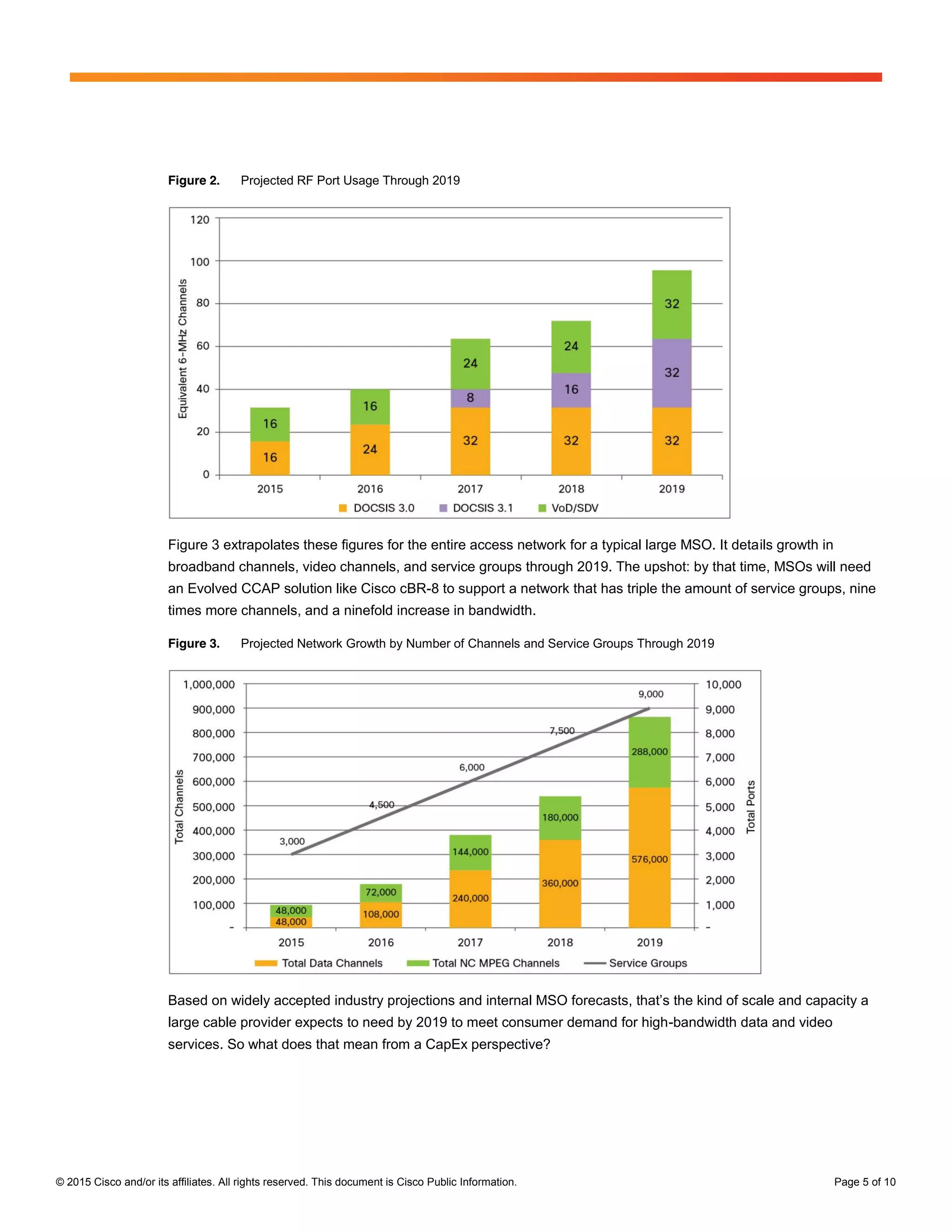
Figure 2 details projected RF port and service usage by channel. As is evident, it shows operators supporting 32
channels per service group today, split between DOCSIS 3.0 broadband and switched digital video (SDV) and VoD
narrowcast video. (Note that this analysis does not incorporate broadcast video channels, because most of the
ATCA-based CCAP products available today do not have the capacity to support it.) The analysis forecasts that
operators expanding DOCSIS 3.0 channels from 16 to 24 channels in 2016 to deliver higher-tier services - even
with 24-channel, it is still not sufficient to offer true gigabit-tier services. By 2017, this analysis forecasts that most
operators will be ready to widely deploy DOCSIS 3.1 solutions and offer gigabit or even multigigabit speeds for
higher-tier services. By 2019, it projects that a minimum of 96 channels per service group will be used to deliver
multiple services, including DOCSIS 3.0, DOCSIS 3.1, and VoD and SDV services.
© 2015 Cisco and/or its affiliates. All rights reserved. This document is Cisco Public Information. Page 5 of 10
Figure 2. Projected RF Port Usage Through 2019
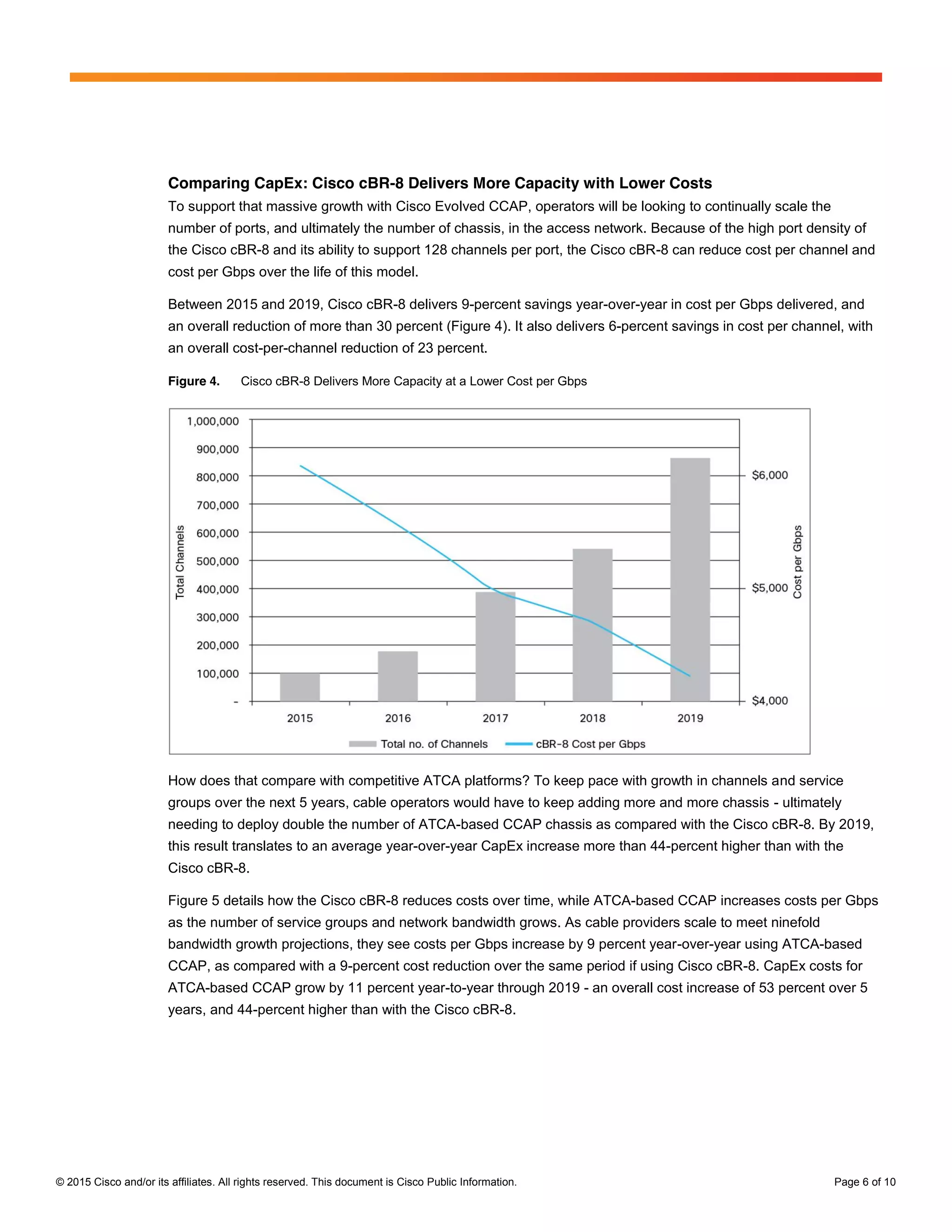
Figure 3 extrapolates these figures for the entire access network for a typical large MSO. It details growth in
broadband channels, video channels, and service groups through 2019. The upshot: by that time, MSOs will need
an Evolved CCAP solution like Cisco cBR-8 to support a network that has triple the amount of service groups, nine
times more channels, and a ninefold increase in bandwidth.
Figure 3. Projected Network Growth by Number of Channels and Service Groups Through 2019
Based  on  widely  accepted  industry  projections  and  internal  MSO  forecasts,  that’s  the  kind  of  scale  and  capacity  a  
large cable provider expects to need by 2019 to meet consumer demand for high-bandwidth data and video
services. So what does that mean from a CapEx perspective?
© 2015 Cisco and/or its affiliates. All rights reserved. This document is Cisco Public Information. Page 6 of 10
Comparing CapEx: Cisco cBR-8 Delivers More Capacity with Lower Costs
To support that massive growth with Cisco Evolved CCAP, operators will be looking to continually scale the
number of ports, and ultimately the number of chassis, in the access network. Because of the high port density of
the Cisco cBR-8 and its ability to support 128 channels per port, the Cisco cBR-8 can reduce cost per channel and
cost per Gbps over the life of this model.
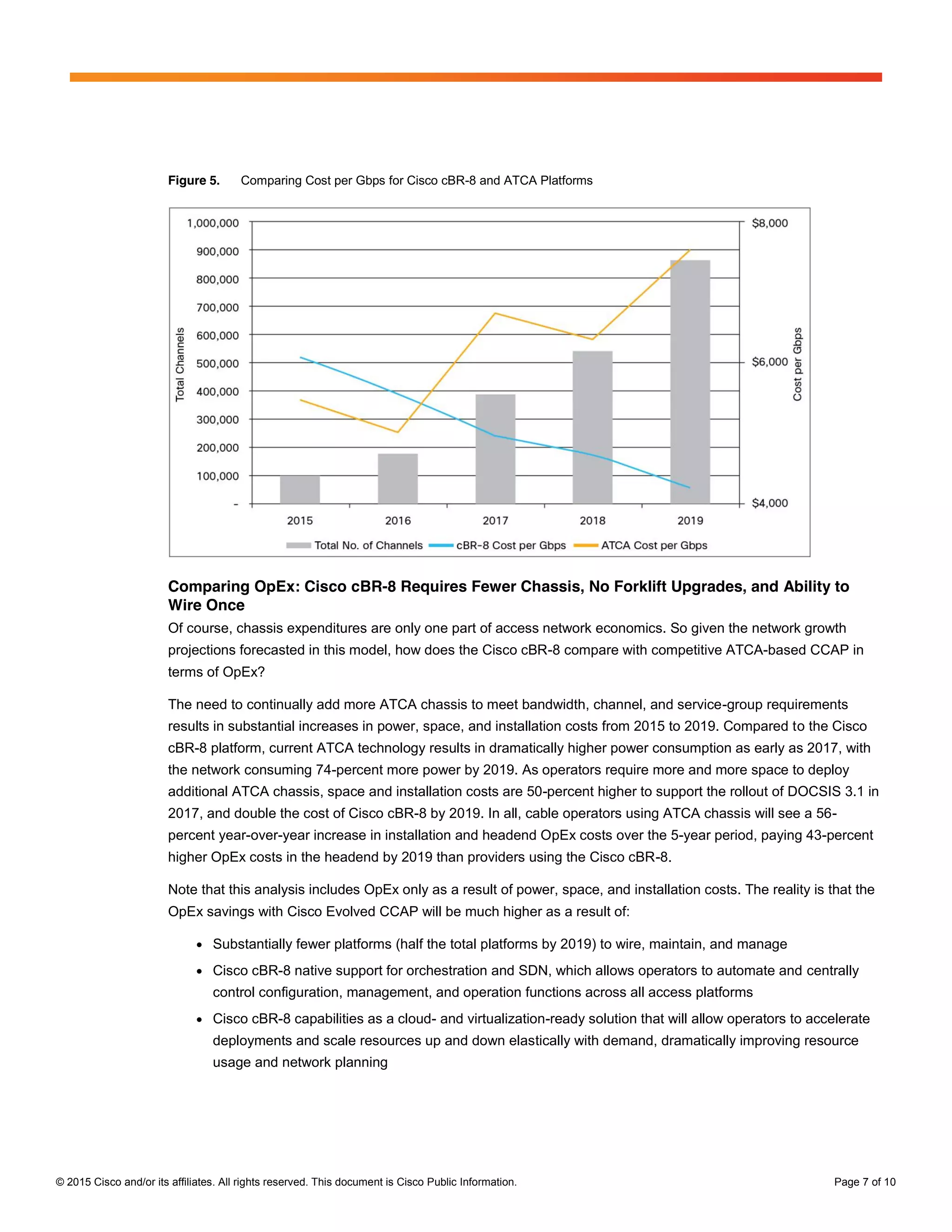
Between 2015 and 2019, Cisco cBR-8 delivers 9-percent savings year-over-year in cost per Gbps delivered, and
an overall reduction of more than 30 percent (Figure 4). It also delivers 6-percent savings in cost per channel, with
an overall cost-per-channel reduction of 23 percent.
Figure 4. Cisco cBR-8 Delivers More Capacity at a Lower Cost per Gbps
How does that compare with competitive ATCA platforms? To keep pace with growth in channels and service
groups over the next 5 years, cable operators would have to keep adding more and more chassis - ultimately
needing to deploy double the number of ATCA-based CCAP chassis as compared with the Cisco cBR-8. By 2019,
this result translates to an average year-over-year CapEx increase more than 44-percent higher than with the
Cisco cBR-8.
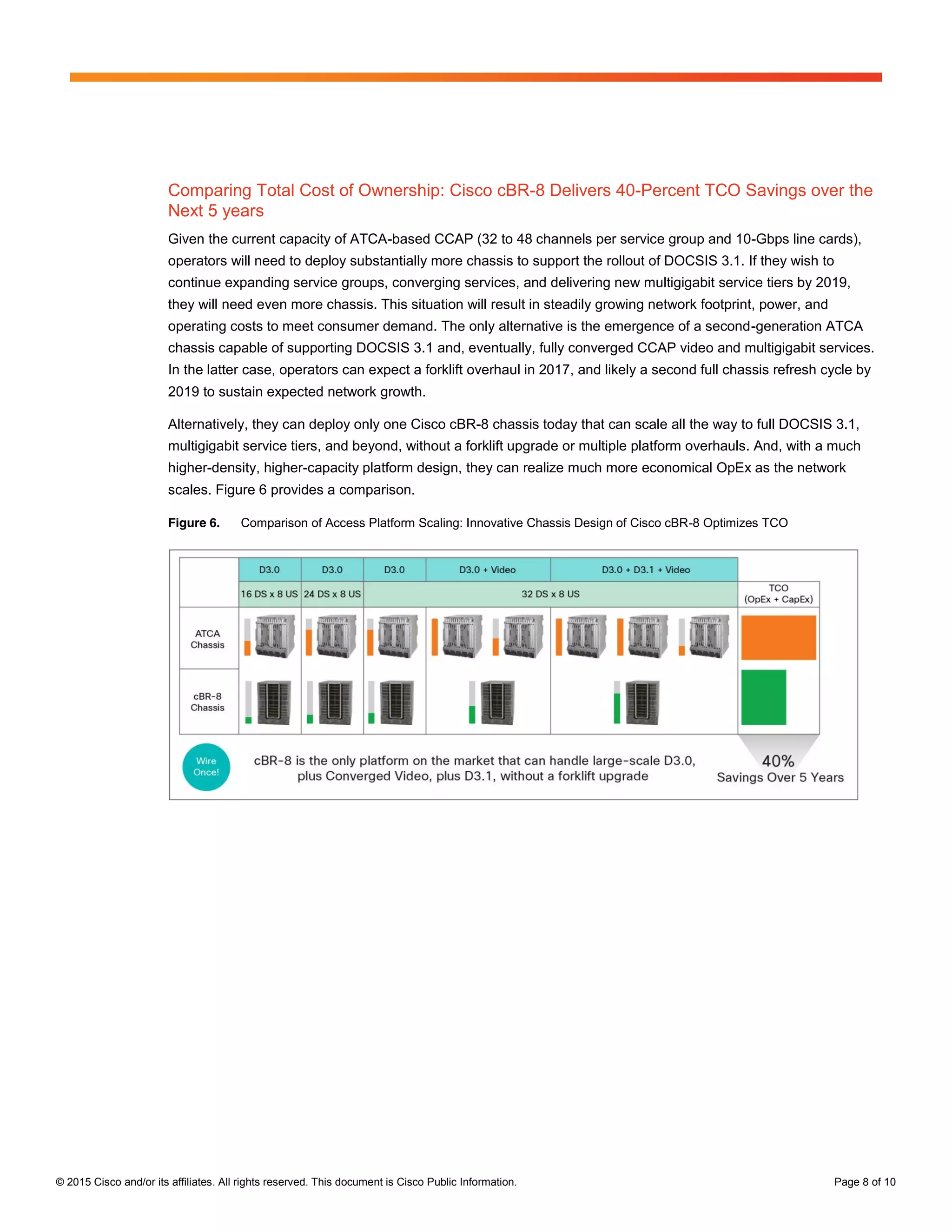
Figure 5 details how the Cisco cBR-8 reduces costs over time, while ATCA-based CCAP increases costs per Gbps
as the number of service groups and network bandwidth grows. As cable providers scale to meet ninefold
bandwidth growth projections, they see costs per Gbps increase by 9 percent year-over-year using ATCA-based
CCAP, as compared with a 9-percent cost reduction over the same period if using Cisco cBR-8. CapEx costs for
ATCA-based CCAP grow by 11 percent year-to-year through 2019 - an overall cost increase of 53 percent over 5
years, and 44-percent higher than with the Cisco cBR-8.
cBR-8
© 2015 Cisco and/or its affiliates. All rights reserved. This document is Cisco Public Information. Page 7 of 10
Figure 5. Comparing Cost per Gbps for Cisco cBR-8 and ATCA Platforms
Comparing OpEx: Cisco cBR-8 Requires Fewer Chassis, No Forklift Upgrades, and Ability to
Wire Once
Of course, chassis expenditures are only one part of access network economics. So given the network growth
projections forecasted in this model, how does the Cisco cBR-8 compare with competitive ATCA-based CCAP in
terms of OpEx?
The need to continually add more ATCA chassis to meet bandwidth, channel, and service-group requirements
results in substantial increases in power, space, and installation costs from 2015 to 2019. Compared to the Cisco
cBR-8 platform, current ATCA technology results in dramatically higher power consumption as early as 2017, with
the network consuming 74-percent more power by 2019. As operators require more and more space to deploy
additional ATCA chassis, space and installation costs are 50-percent higher to support the rollout of DOCSIS 3.1 in
2017, and double the cost of Cisco cBR-8 by 2019. In all, cable operators using ATCA chassis will see a 56-
percent year-over-year increase in installation and headend OpEx costs over the 5-year period, paying 43-percent
higher OpEx costs in the headend by 2019 than providers using the Cisco cBR-8.
Note that this analysis includes OpEx only as a result of power, space, and installation costs. The reality is that the
OpEx savings with Cisco Evolved CCAP will be much higher as a result of:
● Substantially fewer platforms (half the total platforms by 2019) to wire, maintain, and manage
● Cisco cBR-8 native support for orchestration and SDN, which allows operators to automate and centrally
control configuration, management, and operation functions across all access platforms
● Cisco cBR-8 capabilities as a cloud- and virtualization-ready solution that will allow operators to accelerate
deployments and scale resources up and down elastically with demand, dramatically improving resource
usage and network planning
cBR-8
`ATCA-based
CCAP
© 2015 Cisco and/or its affiliates. All rights reserved. This document is Cisco Public Information. Page 8 of 10
Comparing Total Cost of Ownership: Cisco cBR-8 Delivers 40-Percent TCO Savings over the
Next 5 years
Given the current capacity of ATCA-based CCAP (32 to 48 channels per service group and 10-Gbps line cards),
operators will need to deploy substantially more chassis to support the rollout of DOCSIS 3.1. If they wish to
continue expanding service groups, converging services, and delivering new multigigabit service tiers by 2019,
they will need even more chassis. This situation will result in steadily growing network footprint, power, and
operating costs to meet consumer demand. The only alternative is the emergence of a second-generation ATCA
chassis capable of supporting DOCSIS 3.1 and, eventually, fully converged CCAP video and multigigabit services.
In the latter case, operators can expect a forklift overhaul in 2017, and likely a second full chassis refresh cycle by
2019 to sustain expected network growth.
Alternatively, they can deploy only one Cisco cBR-8 chassis today that can scale all the way to full DOCSIS 3.1,
multigigabit service tiers, and beyond, without a forklift upgrade or multiple platform overhauls. And, with a much
higher-density, higher-capacity platform design, they can realize much more economical OpEx as the network
scales. Figure 6 provides a comparison.
Figure 6. Comparison of Access Platform Scaling: Innovative Chassis Design of Cisco cBR-8 Optimizes TCO
© 2015 Cisco and/or its affiliates. All rights reserved. This document is Cisco Public Information. Page 9 of 10
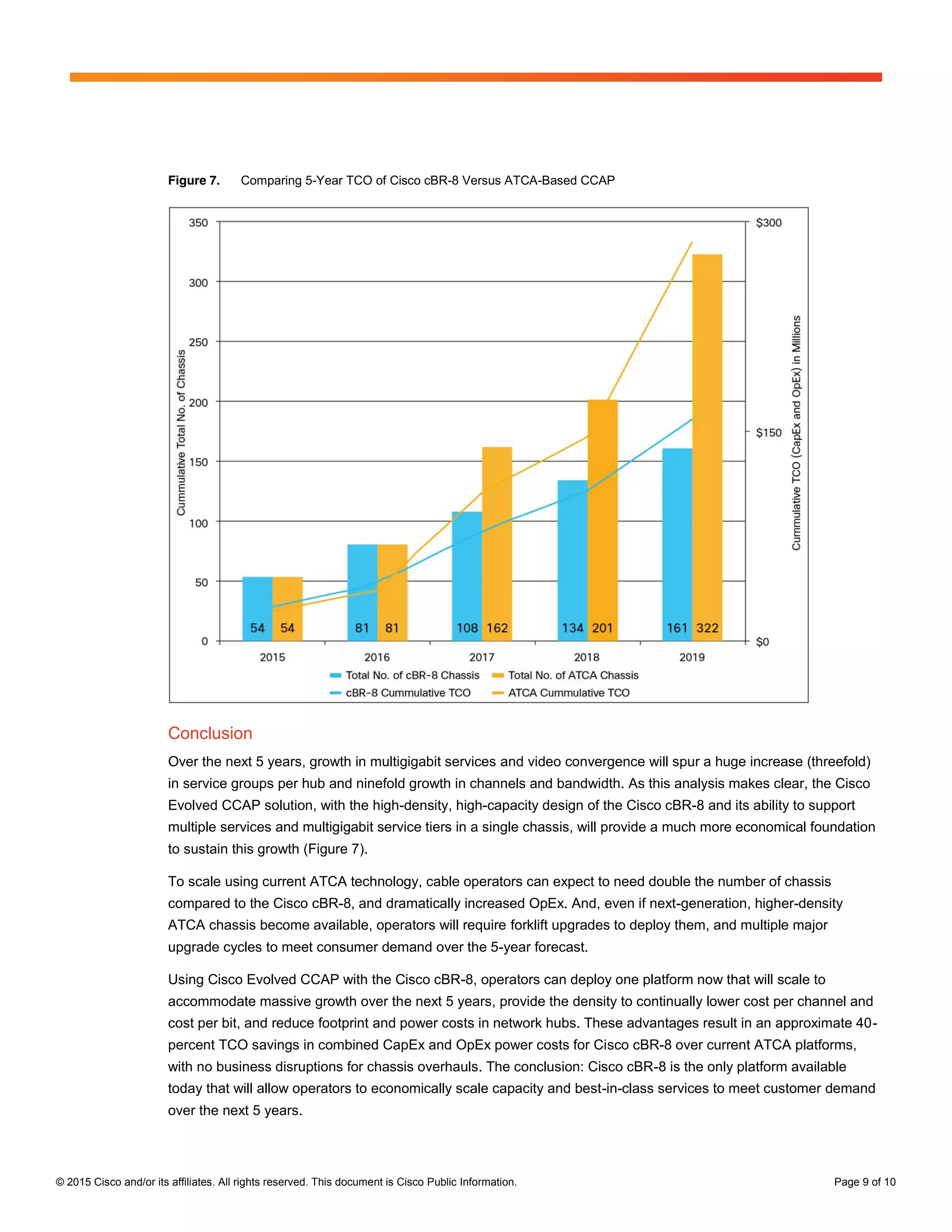
Figure 7. Comparing 5-Year TCO of Cisco cBR-8 Versus ATCA-Based CCAP
Conclusion
Over the next 5 years, growth in multigigabit services and video convergence will spur a huge increase (threefold)
in service groups per hub and ninefold growth in channels and bandwidth. As this analysis makes clear, the Cisco
Evolved CCAP solution, with the high-density, high-capacity design of the Cisco cBR-8 and its ability to support
multiple services and multigigabit service tiers in a single chassis, will provide a much more economical foundation
to sustain this growth (Figure 7).
To scale using current ATCA technology, cable operators can expect to need double the number of chassis
compared to the Cisco cBR-8, and dramatically increased OpEx. And, even if next-generation, higher-density
ATCA chassis become available, operators will require forklift upgrades to deploy them, and multiple major
upgrade cycles to meet consumer demand over the 5-year forecast.
Using Cisco Evolved CCAP with the Cisco cBR-8, operators can deploy one platform now that will scale to
accommodate massive growth over the next 5 years, provide the density to continually lower cost per channel and
cost per bit, and reduce footprint and power costs in network hubs. These advantages result in an approximate 40-
percent TCO savings in combined CapEx and OpEx power costs for Cisco cBR-8 over current ATCA platforms,
with no business disruptions for chassis overhauls. The conclusion: Cisco cBR-8 is the only platform available
today that will allow operators to economically scale capacity and best-in-class services to meet customer demand
over the next 5 years.
cBR-8
ATCA-based
CCAP
© 2015 Cisco and/or its affiliates. All rights reserved. This document is Cisco Public Information. Page 10 of 10
Printed in USA C11-734417-00 04/15

Cisco cBR-8 Evolved CCAP: Deliver Scalable Network and Service Growth at a Lower Total Cost of Ownership

  • 1.
    © 2015 Ciscoand/or its affiliates. All rights reserved. This document is Cisco Public Information. Page 1 of 10 White Paper Cisco cBR-8 Evolved CCAP: Deliver Scalable Network and Service Growth at a Lower Total Cost of Ownership Executive Summary An explosion of new over-the-top (OTT) video services and consumer devices is placing huge demand on cable access networks. To compete for new customers and retain the loyalty of existing ones, multiple system operators (MSOs) will need to expand capacity substantially, rolling out new services and gigabit tiers. As they strive to meet insatiable market demand and stay competitive, MSOs are looking at significant access network capital expenditures (CapEx) increases over the next 5 years - and steadily rising operating expenses (OpEx) due to higher power costs and a larger network footprint. But current integrated Cisco ® Converged Cable Access Platform (CCAP) solutions are limited to supporting only 24 to 32 channels per service group, and they are not designed to support DOCSIS ® 3.1 at scale. Using these platforms, MSOs would need to significantly increase CapEx spend in order to compete with gigabit billboard rates and keep pace with growth. Alternatively, MSOs can use the Cisco cBR-8 Converged Broadband Router, a full-spectrum CCAP-compliant platform that is designed to support DOCSIS 3.1. The Cisco cBR-8 enables cable operators to offer multigigabit broadband and Internet of Everything (IoE) services, and provide a path to virtualization. It empowers MSOs to scale economically to deliver more capacity and best-in-class services with much lower total cost of ownership (TCO). This white paper examines the consumer trends affecting cable access networks and the projections for how the network and services will evolve in the coming years. It provides a long-term economic analysis of an evolved access network using the Cisco cBR-8, compared with competitive Advanced Telecommunications Computing Architecture (ATCA) platforms. And it demonstrates how MSOs will be able to meet capacity and service demands over the next several years at a 40-percent savings in hardware, space, and power costs. Market Dynamics: Insatiable Demand for Bandwidth and Services Consumer demand for capacity, bandwidth, and services is historically high, and it is growing exponentially. ABI projects that new viewing formats, OTT services, and consumer devices will create a ninefold bandwidth increase per movie and an 81-percent increase in video views by 2019. At the same time, competition has never been fiercer. Both traditional telcos and new market entrants like Google are battling for customer mindshare with fiber-to-the-home (FTTH) access networks and gigabit service tiers, pushing billboard data rates ever higher. These trends are placing significant pressure on cable providers. To keep pace with demand for Gigabit-tier services and exploding OTT video consumption, MSOs will need to massively increase capacity and sustain exponential growth in multiservice offerings over the next 5 years.
  • 2.
    © 2015 Ciscoand/or its affiliates. All rights reserved. This document is Cisco Public Information. Page 2 of 10 Service Group Size Will Triple over the Next 5 Years So how will this situation affect the access network? In order to meet this unprecedented demand for bandwidth and services, cable providers will be expanding their network capacity and footprint. A typical large operator can expect its number of service groups per hub to triple over the next 5 years. And, as cable providers expand video services and move to offer gigabit (and eventually multigigabit) service tiers, large MSOs can expect bandwidth per service group to increase sixfold over the same period. To  meet  that  demand  by  scaling  capacity  linearly  using  today’s  integrated  Cable  Modem Termination Systems (CMTS) and CCAP platforms, MSOs would need to double their CapEx spend. Space would also be at a premium as MSOs added more and more platforms, and they would quickly run out of room in existing hubs. But  it’s  the  OpEx  growth  that  would prove most challenging under this scenario. According to SCTE, as much as 83 percent of the overall energy consumption of a cable network is from hub and headend equipment. Under the growth projected previously, MSOs would see the power consumed by the access network - and the overall OpEx for power - grow by a factor of 6. So the big question for MSOs: how can they keep pace with this expected long-term growth, and stay competitive by offering more services and capacity, without exceeding CapEx and OpEx limits? The Solution: Evolve the Access Network Evolving the access network for a more economical future involves three key elements: ● Video convergence: Even as MSOs begin migrating more MPEG video to IP video, they will continue to support significant amount of MPEG video traffic, which consumes significant spectra. By converging all services (QAM video, IP VoD services, and more channels devoted to broadband data) within a single infrastructure, they can reduce power and floor space. ● Higher QAM density: Cable providers need solutions that can support more services per service group, ultimately lowering the cost per channel and cost per gigabit per second (Gbps) as services and capacity expand. ● DOCSIS 3.1: As most cable providers undertake massive rollouts of DOCSIS 3.1 in 2017, they will be able to achieve much higher data rates, allowing them to support more online video and higher broadband speeds and tiers. DOCSIS 3.1 solutions should also lead to much lower cost per bit (and per subscriber), and allow MSOs to deliver much more bandwidth per household. Today’s  ATCA-Based CCAP Solutions: Limiting Growth To accommodate this huge growth in services and demand, cable operators will be under pressure to evolve their access network technologies to support converged video services and higher QAM density. As they continue to converge services and roll out DOCSIS 3.1, they can expect to be delivering up to 128 channels per service group by 2019. Over the long term, the Advanced Telecommunications Computing Architecture (ATCA)-based CCAP solutions will not be able to deliver this degree of scale economically, for several reasons. First, even the more recently introduced platforms represent an earlier-generation ATCA-based CCAP product. They were designed around the requirements of DOCSIS 3.0, so most will require a complete equipment or forklift upgrade in order to support DOCSIS 3.1.
  • 3.
    © 2015 Ciscoand/or its affiliates. All rights reserved. This document is Cisco Public Information. Page 3 of 10 These platforms are also constrained by fundamental limitations of the ATCA chassis architecture, such as a maximum 10 Gbps per slot. They offer limited video convergence. They rely on separate platforms for broadcast video and optical distribution. And they afford no provisions for distributed architectures, so they are inherently more expensive to scale. To meet the demands of the next several years with a CapEx and OpEx spend that makes sense, cable providers need a more innovative solution. Next-Generation Evolved CCAP Solution: Cisco cBR-8, the Platform That Will Last for the Next Decade The centerpiece of the Cisco Evolved CCAP solution is the Cisco cBR-8, a next-generation access platform built to handle the needs of today, tomorrow, and the coming decade to optimize cable operator economics. The Cisco cBR-8 platform provides: ● Twenty times the capacity of current ATCA access platforms: The Cisco cBR-8 can deliver more than 96 channels per service group, including more than 6000 downstream channels of DOCSIS 3.0, with the ability to scale to full DOCSIS 3.1 and video, and 200-Gbps forwarding capacity with a backplane scalable to 1.6 Tbps (Figure 1). ● High-speed DOCSIS data services: The platform delivers exceptional performance to support traditional DOCSIS 3.0 systems and DOCSIS 3.1 platforms for different tiers of broadband services. ● Full-scale DOCSIS 3.1: The Cisco cBR-8 is designed from the ground up for DOCSIS 3.1, with the ability to deliver full-scale DOCSIS 3.1 capacity for every service group and household to support gigabit and ultimately multi-gigabit service tiers. ● Higher density per chassis and line card: The router supports 4.9 service groups per rack unit - 40-percent higher than competitive ATCA platforms - to substantially reduce power consumption. ● True CCAP convergence: The Cisco cBR-8 delivers on the promise of full CCAP convergence, with the ability to deliver all video and data services with a single platform and radically lower cost per bit. ● Support  for  distributed  architectures:  Using  Cisco’s  groundbreaking  Remote  PHY  technology,  MSOs  can   expand fiber much deeper into the network, and expand capacity more economically. ● Path of virtualization and Software-Defined Networking (SDN) support: Cisco cBR-8 CCAP software allows operators to centralize control-plane functions and move RF circuitry out to a separate chassis. By adopting this distributed access architecture with a Remote PHY strategy, operators can then virtualize all of the remaining circuitry in the CCAP core and create a truly next-generation access network. Using this approach with cBR-8 as part of the Cisco Evolved Programmable Network in an SDN architecture, cable operators can continue to lower operating costs, improve resource usage, and accelerate time to market of new services. These attributes are all important for a true next-generation cable access platform. But what do they all mean for a cable provider’s  long-term economics? The following section examines the details.
  • 4.
    © 2015 Ciscoand/or its affiliates. All rights reserved. This document is Cisco Public Information. Page 4 of 10 Figure 1. Evolved  CCAP  Leapfrogs  Today’s  ATCA-Based CCAP Reasons for Growth Long-Term Economic Analysis To  conduct  a  true  economic  impact  analysis,  it’s  important  to  look  at  the  full  picture of how the network will evolve over the next 5 years. This evolution includes scaling current DOCSIS 3.0 in the immediate future, expanding CCAP video convergence, and integrating the rollout of DOCSIS 3.1 in 2017. We can then look more closely at CapEx and OpEx comparisons between Cisco cBR-8 and ATCA-based CCAP, and how they would affect the TCO over the next 5 years. Network Growth Projections The following comparisons are based on an in-depth model of cable access network and service growth through 2019. The model was developed by Cisco analysts, based on widely acknowledged industry and market trends, and conversations with multiple large MSOs regarding their own growth projections. Let’s  start  with  some  basic  assumptions  about  how  cable  networks  are  expected to grow in the next 5 years, beginning with an illustration of how that growth would proceed in an Evolved CCAP network using the Cisco cBR-8 platform. Figure 2 details projected RF port and service usage by channel. As is evident, it shows operators supporting 32 channels per service group today, split between DOCSIS 3.0 broadband and switched digital video (SDV) and VoD narrowcast video. (Note that this analysis does not incorporate broadcast video channels, because most of the ATCA-based CCAP products available today do not have the capacity to support it.) The analysis forecasts that operators expanding DOCSIS 3.0 channels from 16 to 24 channels in 2016 to deliver higher-tier services - even with 24-channel, it is still not sufficient to offer true gigabit-tier services. By 2017, this analysis forecasts that most operators will be ready to widely deploy DOCSIS 3.1 solutions and offer gigabit or even multigigabit speeds for higher-tier services. By 2019, it projects that a minimum of 96 channels per service group will be used to deliver multiple services, including DOCSIS 3.0, DOCSIS 3.1, and VoD and SDV services.
  • 5.
    © 2015 Ciscoand/or its affiliates. All rights reserved. This document is Cisco Public Information. Page 5 of 10 Figure 2. Projected RF Port Usage Through 2019 Figure 3 extrapolates these figures for the entire access network for a typical large MSO. It details growth in broadband channels, video channels, and service groups through 2019. The upshot: by that time, MSOs will need an Evolved CCAP solution like Cisco cBR-8 to support a network that has triple the amount of service groups, nine times more channels, and a ninefold increase in bandwidth. Figure 3. Projected Network Growth by Number of Channels and Service Groups Through 2019 Based  on  widely  accepted  industry  projections  and  internal  MSO  forecasts,  that’s  the  kind  of  scale  and  capacity  a   large cable provider expects to need by 2019 to meet consumer demand for high-bandwidth data and video services. So what does that mean from a CapEx perspective?
  • 6.
    © 2015 Ciscoand/or its affiliates. All rights reserved. This document is Cisco Public Information. Page 6 of 10 Comparing CapEx: Cisco cBR-8 Delivers More Capacity with Lower Costs To support that massive growth with Cisco Evolved CCAP, operators will be looking to continually scale the number of ports, and ultimately the number of chassis, in the access network. Because of the high port density of the Cisco cBR-8 and its ability to support 128 channels per port, the Cisco cBR-8 can reduce cost per channel and cost per Gbps over the life of this model. Between 2015 and 2019, Cisco cBR-8 delivers 9-percent savings year-over-year in cost per Gbps delivered, and an overall reduction of more than 30 percent (Figure 4). It also delivers 6-percent savings in cost per channel, with an overall cost-per-channel reduction of 23 percent. Figure 4. Cisco cBR-8 Delivers More Capacity at a Lower Cost per Gbps How does that compare with competitive ATCA platforms? To keep pace with growth in channels and service groups over the next 5 years, cable operators would have to keep adding more and more chassis - ultimately needing to deploy double the number of ATCA-based CCAP chassis as compared with the Cisco cBR-8. By 2019, this result translates to an average year-over-year CapEx increase more than 44-percent higher than with the Cisco cBR-8. Figure 5 details how the Cisco cBR-8 reduces costs over time, while ATCA-based CCAP increases costs per Gbps as the number of service groups and network bandwidth grows. As cable providers scale to meet ninefold bandwidth growth projections, they see costs per Gbps increase by 9 percent year-over-year using ATCA-based CCAP, as compared with a 9-percent cost reduction over the same period if using Cisco cBR-8. CapEx costs for ATCA-based CCAP grow by 11 percent year-to-year through 2019 - an overall cost increase of 53 percent over 5 years, and 44-percent higher than with the Cisco cBR-8. cBR-8
  • 7.
    © 2015 Ciscoand/or its affiliates. All rights reserved. This document is Cisco Public Information. Page 7 of 10 Figure 5. Comparing Cost per Gbps for Cisco cBR-8 and ATCA Platforms Comparing OpEx: Cisco cBR-8 Requires Fewer Chassis, No Forklift Upgrades, and Ability to Wire Once Of course, chassis expenditures are only one part of access network economics. So given the network growth projections forecasted in this model, how does the Cisco cBR-8 compare with competitive ATCA-based CCAP in terms of OpEx? The need to continually add more ATCA chassis to meet bandwidth, channel, and service-group requirements results in substantial increases in power, space, and installation costs from 2015 to 2019. Compared to the Cisco cBR-8 platform, current ATCA technology results in dramatically higher power consumption as early as 2017, with the network consuming 74-percent more power by 2019. As operators require more and more space to deploy additional ATCA chassis, space and installation costs are 50-percent higher to support the rollout of DOCSIS 3.1 in 2017, and double the cost of Cisco cBR-8 by 2019. In all, cable operators using ATCA chassis will see a 56- percent year-over-year increase in installation and headend OpEx costs over the 5-year period, paying 43-percent higher OpEx costs in the headend by 2019 than providers using the Cisco cBR-8. Note that this analysis includes OpEx only as a result of power, space, and installation costs. The reality is that the OpEx savings with Cisco Evolved CCAP will be much higher as a result of: ● Substantially fewer platforms (half the total platforms by 2019) to wire, maintain, and manage ● Cisco cBR-8 native support for orchestration and SDN, which allows operators to automate and centrally control configuration, management, and operation functions across all access platforms ● Cisco cBR-8 capabilities as a cloud- and virtualization-ready solution that will allow operators to accelerate deployments and scale resources up and down elastically with demand, dramatically improving resource usage and network planning cBR-8 `ATCA-based CCAP
  • 8.
    © 2015 Ciscoand/or its affiliates. All rights reserved. This document is Cisco Public Information. Page 8 of 10 Comparing Total Cost of Ownership: Cisco cBR-8 Delivers 40-Percent TCO Savings over the Next 5 years Given the current capacity of ATCA-based CCAP (32 to 48 channels per service group and 10-Gbps line cards), operators will need to deploy substantially more chassis to support the rollout of DOCSIS 3.1. If they wish to continue expanding service groups, converging services, and delivering new multigigabit service tiers by 2019, they will need even more chassis. This situation will result in steadily growing network footprint, power, and operating costs to meet consumer demand. The only alternative is the emergence of a second-generation ATCA chassis capable of supporting DOCSIS 3.1 and, eventually, fully converged CCAP video and multigigabit services. In the latter case, operators can expect a forklift overhaul in 2017, and likely a second full chassis refresh cycle by 2019 to sustain expected network growth. Alternatively, they can deploy only one Cisco cBR-8 chassis today that can scale all the way to full DOCSIS 3.1, multigigabit service tiers, and beyond, without a forklift upgrade or multiple platform overhauls. And, with a much higher-density, higher-capacity platform design, they can realize much more economical OpEx as the network scales. Figure 6 provides a comparison. Figure 6. Comparison of Access Platform Scaling: Innovative Chassis Design of Cisco cBR-8 Optimizes TCO
  • 9.
    © 2015 Ciscoand/or its affiliates. All rights reserved. This document is Cisco Public Information. Page 9 of 10 Figure 7. Comparing 5-Year TCO of Cisco cBR-8 Versus ATCA-Based CCAP Conclusion Over the next 5 years, growth in multigigabit services and video convergence will spur a huge increase (threefold) in service groups per hub and ninefold growth in channels and bandwidth. As this analysis makes clear, the Cisco Evolved CCAP solution, with the high-density, high-capacity design of the Cisco cBR-8 and its ability to support multiple services and multigigabit service tiers in a single chassis, will provide a much more economical foundation to sustain this growth (Figure 7). To scale using current ATCA technology, cable operators can expect to need double the number of chassis compared to the Cisco cBR-8, and dramatically increased OpEx. And, even if next-generation, higher-density ATCA chassis become available, operators will require forklift upgrades to deploy them, and multiple major upgrade cycles to meet consumer demand over the 5-year forecast. Using Cisco Evolved CCAP with the Cisco cBR-8, operators can deploy one platform now that will scale to accommodate massive growth over the next 5 years, provide the density to continually lower cost per channel and cost per bit, and reduce footprint and power costs in network hubs. These advantages result in an approximate 40- percent TCO savings in combined CapEx and OpEx power costs for Cisco cBR-8 over current ATCA platforms, with no business disruptions for chassis overhauls. The conclusion: Cisco cBR-8 is the only platform available today that will allow operators to economically scale capacity and best-in-class services to meet customer demand over the next 5 years. cBR-8 ATCA-based CCAP
  • 10.
    © 2015 Ciscoand/or its affiliates. All rights reserved. This document is Cisco Public Information. Page 10 of 10 Printed in USA C11-734417-00 04/15