1.        Functions of a                     c. Reptiles
          transport/circulatory              d. Birds
          system
                                             e. Mammals
2.        Invertebrate circulation
                                                  1)   Pathway of blood
     a.     Diffusion
                                                  2)   Cardiac cycle
     b.     Aided by gastrovascular cavity
     c.     Water vascular system                 3)   Maintenance of heartbeat
     d.     Open circulatory system               4)   Principles governing blood
                                                       circulation
     e.     Closed circulatory system
                                                  5)   Lymphatic system
3.        Vertebrate circulation                  6)   Blood composition and
     a.     Fishes                                     function
     b.     Amphibians                            7)   Cardiovascular disease
 Transports materials
     Nutrients from digested food
     Respiratory gases: CO2 and O2
     Waste materials: toxins and nitrogenous wastes
     Antibodies
     Hormones
     Enzymes
 Immune functions
 Maintains homeostasis
   Blood pH
   Heat transport
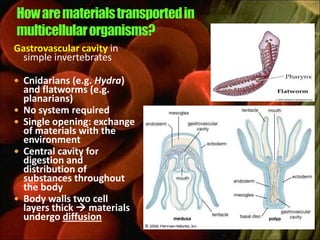
Gastrovascular cavity in
  simple invertebrates

 Cnidarians (e.g. Hydra)
    and flatworms (e.g.
    planarians)
   No system required
   Single opening: exchange
    of materials with the
    environment
   Central cavity for
    digestion and
    distribution of
    substances throughout
    the body
   Body walls two cell
    layers thick  materials
    undergo diffusion
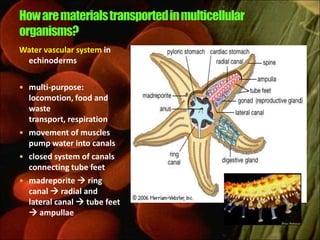
Water vascular system in
 echinoderms

 multi-purpose:
  locomotion, food and
  waste
  transport, respiration
 movement of muscles
  pump water into canals
 closed system of canals
  connecting tube feet
 madreporite  ring
  canal  radial and
  lateral canal  tube feet
   ampullae
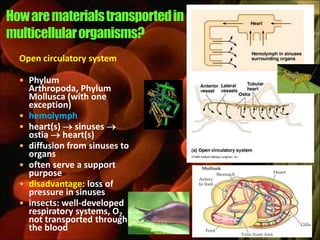
Open circulatory system

 Phylum
    Arthropoda, Phylum
    Mollusca (with one
    exception)
   hemolymph
   heart(s)  sinuses 
    ostia  heart(s)
   diffusion from sinuses to
    organs
   often serve a support
    purpose
   disadvantage: loss of
    pressure in sinuses
   insects: well-developed
    respiratory systems, O2
    not transported through
    the blood
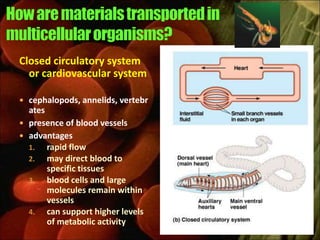
Closed circulatory system
  or cardiovascular system

 cephalopods, annelids, vertebr
  ates
 presence of blood vessels
 advantages
  1. rapid flow
  2. may direct blood to
       specific tissues
  3. blood cells and large
       molecules remain within
       vessels
  4. can support higher levels
       of metabolic activity
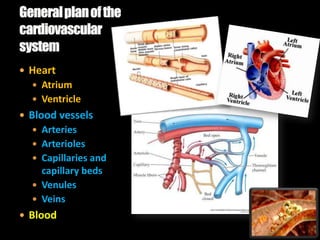
 Heart
   Atrium
   Ventricle
 Blood vessels
   Arteries
   Arterioles
   Capillaries and
    capillary beds
   Venules
   Veins
 Blood
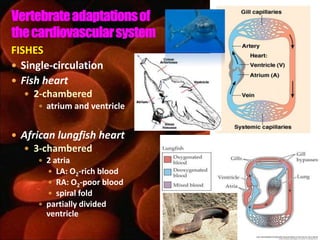
FISHES
 Single-circulation
 Fish heart
   2-chambered
      atrium and ventricle


 African lungfish heart
   3-chambered
      2 atria
        LA: O2-rich blood
        RA: O2-poor blood
        spiral fold
      partially divided
       ventricle
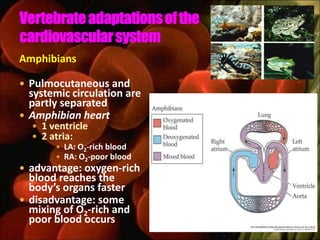
Amphibians

 Pulmocutaneous and
  systemic circulation are
  partly separated
 Amphibian heart
   1 ventricle
   2 atria:
        LA: O2-rich blood
        RA: O2-poor blood
 advantage: oxygen-rich
  blood reaches the
  body’s organs faster
 disadvantage: some
  mixing of O2-rich and
  poor blood occurs
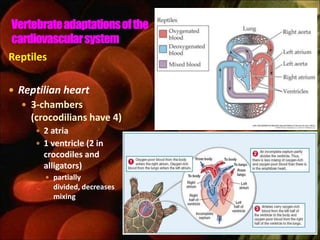
Reptiles

 Reptilian heart
   3-chambers
    (crocodilians have 4)
      2 atria
      1 ventricle (2 in
       crocodiles and
       alligators)
        partially
           divided, decreases
           mixing
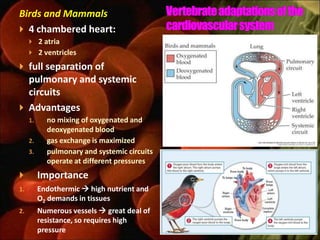
Birds and Mammals
 4 chambered heart:
      2 atria
      2 ventricles

 full separation of
  pulmonary and systemic
  circuits
 Advantages
     1.     no mixing of oxygenated and
            deoxygenated blood
     2.     gas exchange is maximized
     3.     pulmonary and systemic circuits
            operate at different pressures
         Importance
1.        Endothermic  high nutrient and
          O2 demands in tissues
2.        Numerous vessels  great deal of
          resistance, so requires high
          pressure
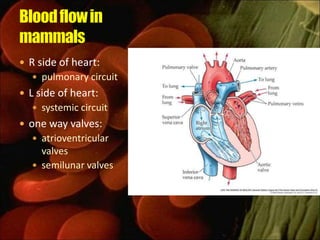
 R side of heart:
   pulmonary circuit
 L side of heart:
   systemic circuit
 one way valves:
   atrioventricular
    valves
   semilunar valves
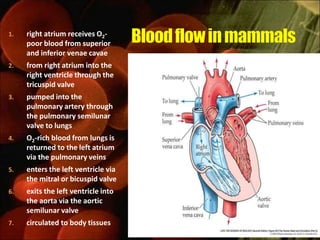
1.   right atrium receives O2-
     poor blood from superior
     and inferior venae cavae
2.   from right atrium into the
     right ventricle through the
     tricuspid valve
3.   pumped into the
     pulmonary artery through
     the pulmonary semilunar
     valve to lungs
4.   O2-rich blood from lungs is
     returned to the left atrium
     via the pulmonary veins
5.   enters the left ventricle via
     the mitral or bicuspid valve
6.   exits the left ventricle into
     the aorta via the aortic
     semilunar valve
7.   circulated to body tissues

circulation-system of fish

  • 2.
    1. Functions of a c. Reptiles transport/circulatory d. Birds system e. Mammals 2. Invertebrate circulation 1) Pathway of blood a. Diffusion 2) Cardiac cycle b. Aided by gastrovascular cavity c. Water vascular system 3) Maintenance of heartbeat d. Open circulatory system 4) Principles governing blood circulation e. Closed circulatory system 5) Lymphatic system 3. Vertebrate circulation 6) Blood composition and a. Fishes function b. Amphibians 7) Cardiovascular disease
  • 3.
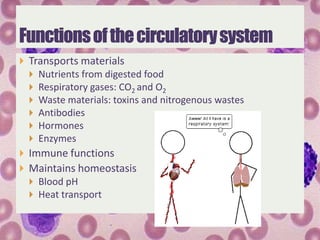
     Transports materials  Nutrients from digested food  Respiratory gases: CO2 and O2  Waste materials: toxins and nitrogenous wastes  Antibodies  Hormones  Enzymes  Immune functions  Maintains homeostasis  Blood pH  Heat transport
  • 5.
    Gastrovascular cavity in simple invertebrates  Cnidarians (e.g. Hydra) and flatworms (e.g. planarians)  No system required  Single opening: exchange of materials with the environment  Central cavity for digestion and distribution of substances throughout the body  Body walls two cell layers thick  materials undergo diffusion
  • 6.
    Water vascular systemin echinoderms  multi-purpose: locomotion, food and waste transport, respiration  movement of muscles pump water into canals  closed system of canals connecting tube feet  madreporite  ring canal  radial and lateral canal  tube feet  ampullae
  • 7.
    Open circulatory system Phylum Arthropoda, Phylum Mollusca (with one exception)  hemolymph  heart(s)  sinuses  ostia  heart(s)  diffusion from sinuses to organs  often serve a support purpose  disadvantage: loss of pressure in sinuses  insects: well-developed respiratory systems, O2 not transported through the blood
  • 8.
    Closed circulatory system or cardiovascular system  cephalopods, annelids, vertebr ates  presence of blood vessels  advantages 1. rapid flow 2. may direct blood to specific tissues 3. blood cells and large molecules remain within vessels 4. can support higher levels of metabolic activity
  • 9.
     Heart  Atrium  Ventricle  Blood vessels  Arteries  Arterioles  Capillaries and capillary beds  Venules  Veins  Blood
  • 10.
    FISHES  Single-circulation  Fishheart  2-chambered  atrium and ventricle  African lungfish heart  3-chambered  2 atria  LA: O2-rich blood  RA: O2-poor blood  spiral fold  partially divided ventricle
  • 11.
    Amphibians  Pulmocutaneous and systemic circulation are partly separated  Amphibian heart  1 ventricle  2 atria:  LA: O2-rich blood  RA: O2-poor blood  advantage: oxygen-rich blood reaches the body’s organs faster  disadvantage: some mixing of O2-rich and poor blood occurs
  • 12.
    Reptiles  Reptilian heart  3-chambers (crocodilians have 4)  2 atria  1 ventricle (2 in crocodiles and alligators)  partially divided, decreases mixing
  • 13.
    Birds and Mammals 4 chambered heart:  2 atria  2 ventricles  full separation of pulmonary and systemic circuits  Advantages 1. no mixing of oxygenated and deoxygenated blood 2. gas exchange is maximized 3. pulmonary and systemic circuits operate at different pressures  Importance 1. Endothermic  high nutrient and O2 demands in tissues 2. Numerous vessels  great deal of resistance, so requires high pressure
  • 14.
     R sideof heart:  pulmonary circuit  L side of heart:  systemic circuit  one way valves:  atrioventricular valves  semilunar valves
  • 15.
    1. right atrium receives O2- poor blood from superior and inferior venae cavae 2. from right atrium into the right ventricle through the tricuspid valve 3. pumped into the pulmonary artery through the pulmonary semilunar valve to lungs 4. O2-rich blood from lungs is returned to the left atrium via the pulmonary veins 5. enters the left ventricle via the mitral or bicuspid valve 6. exits the left ventricle into the aorta via the aortic semilunar valve 7. circulated to body tissues