Embracing
Hypothesis-Driven
Design
@cindyalvarez
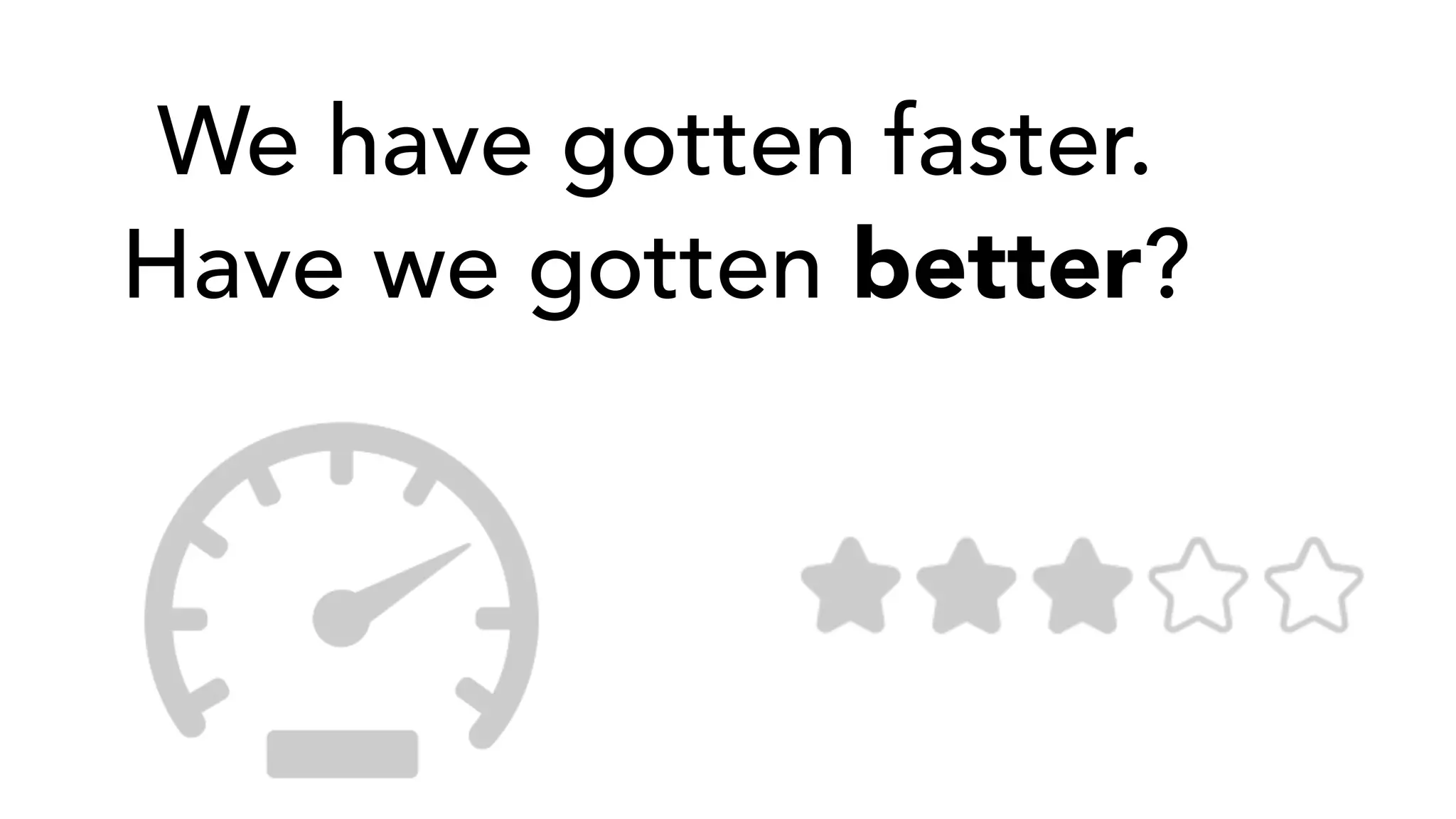
We have gotten faster.
Have we gotten better?
Being right is
a temporary condition.
So how does
hypothesis-driven design
work?
Form a hypothesis
(a guess)
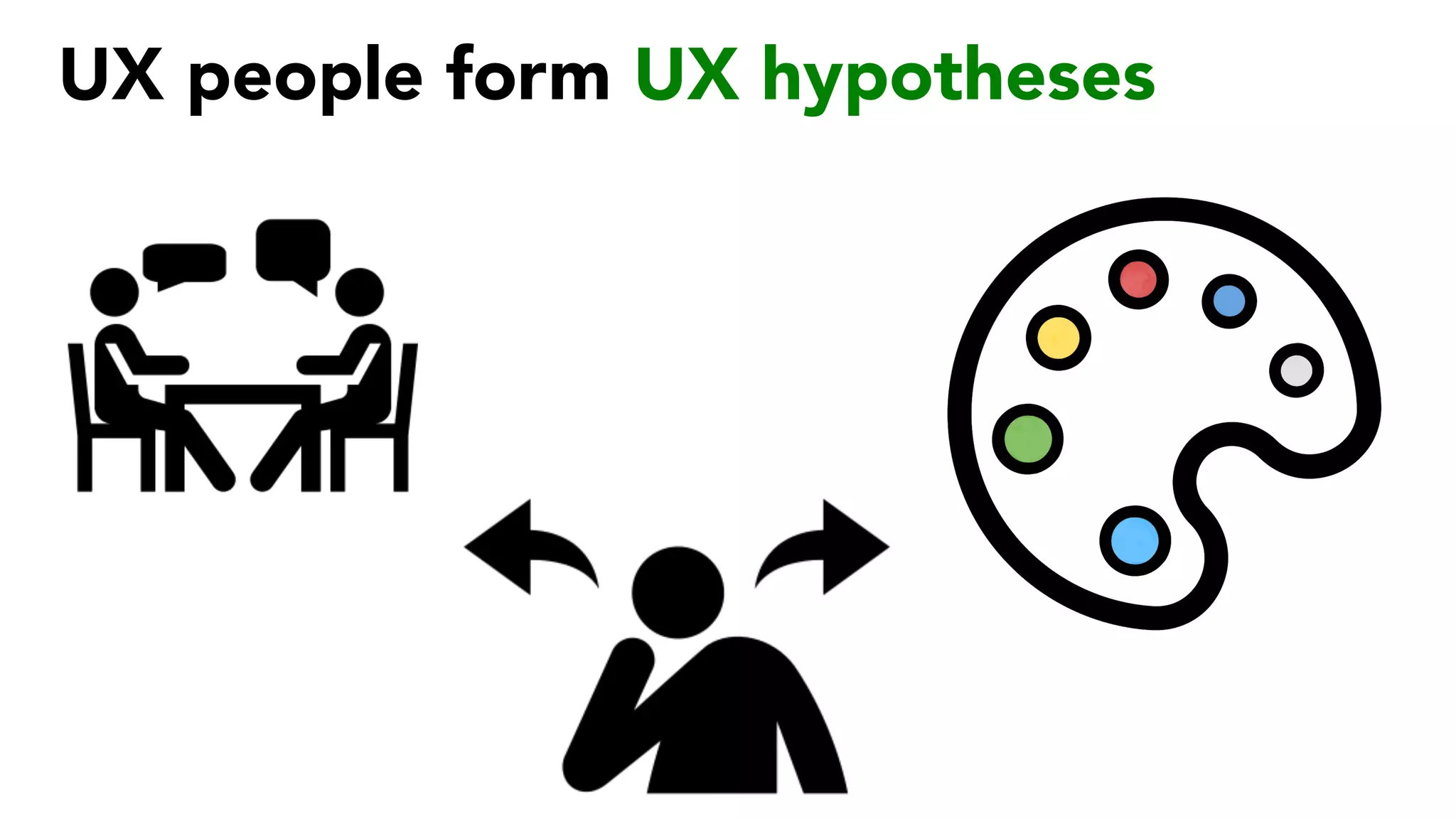
UX people form UX hypotheses
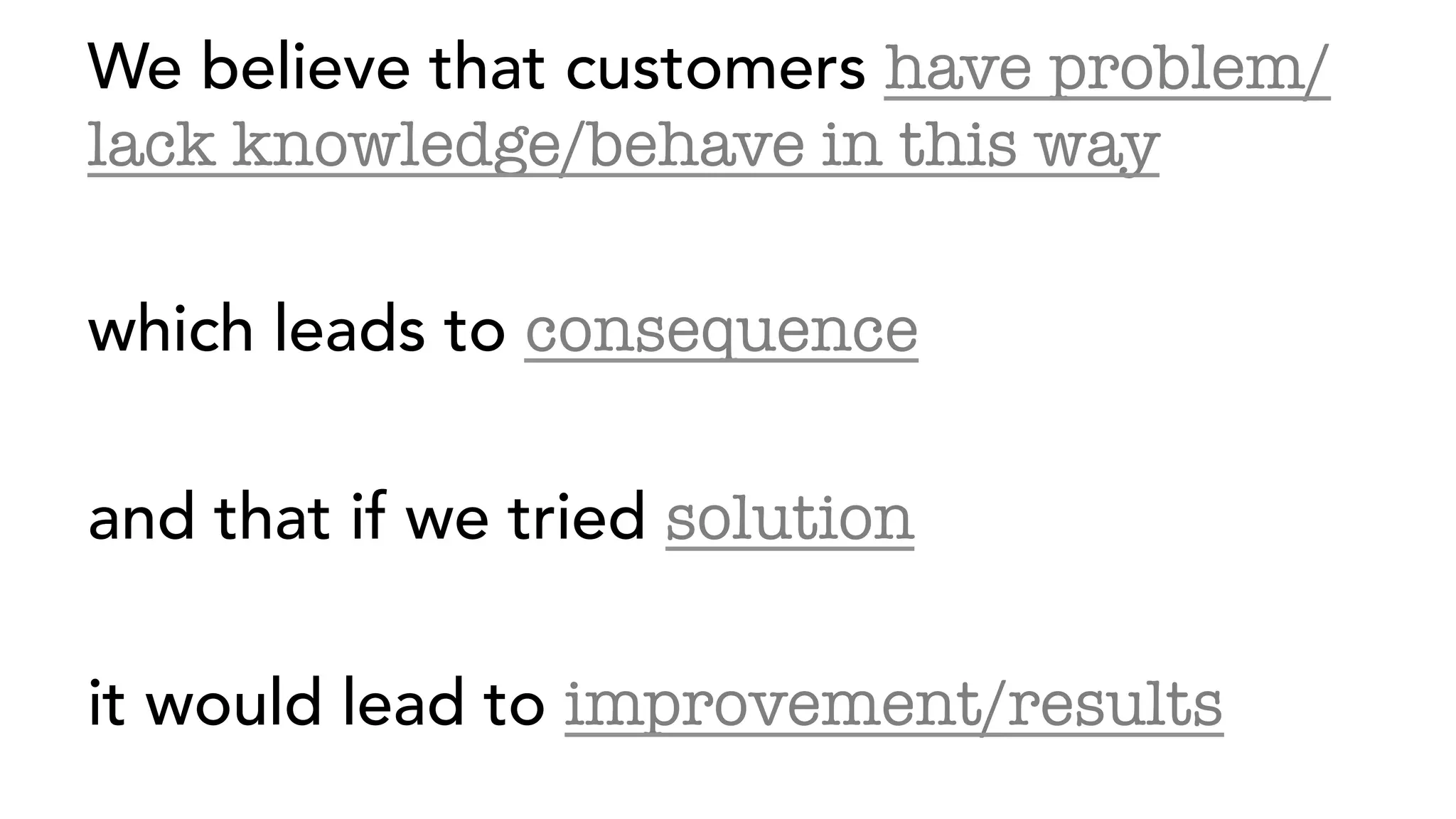
We believe that customers have problem/
lack knowledge/behave in this way
which leads to consequence
and that if we tried solution
it would lead to improvement/results
Take actions
(try to invalidate)
Hypotheses require action
•  Write it down
•  Share it
•  Test it (Identify how to measure)
•  Revisit and update (write it down again)
•  Build off it
Share the knowledge
(tell stories)
I’ll give you an example
(it’s working)
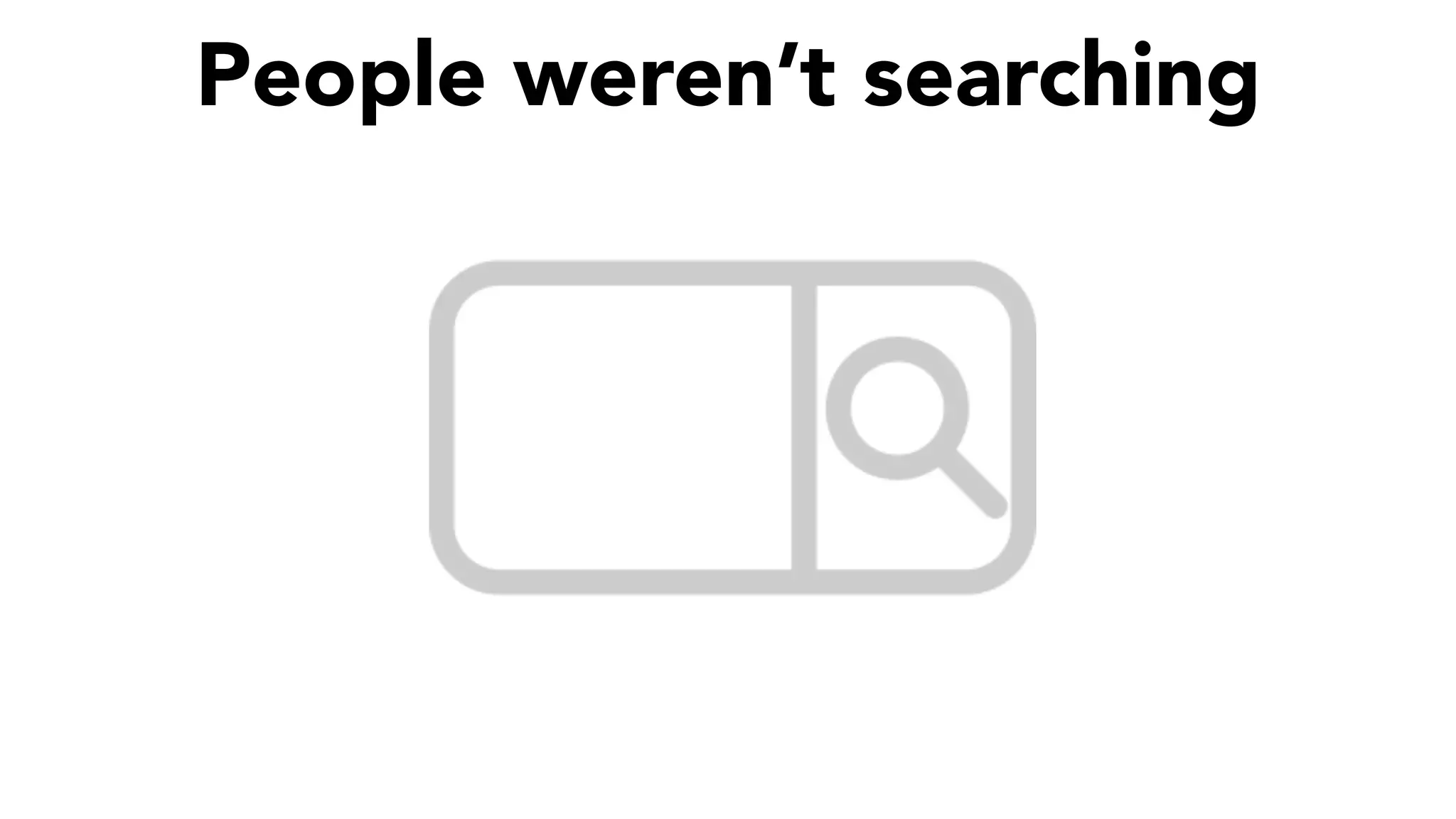
People weren’t searching
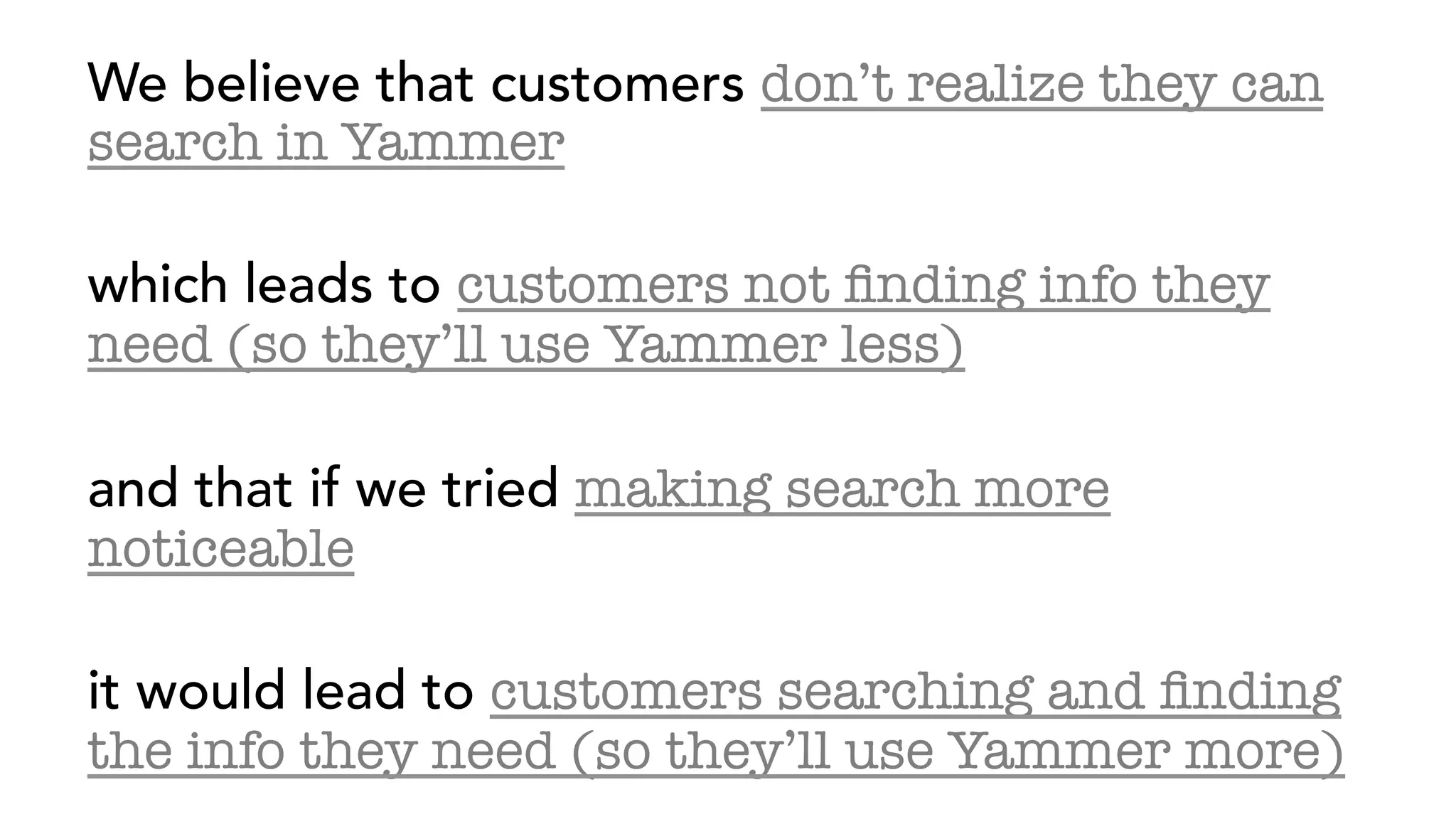
We believe that customers don’t realize they can
search in Yammer
which leads to customers not finding info they
need (so they’ll use Yammer less)
and that if we tried making search more
noticeable
it would lead to customers searching and finding
the info they need (so they’ll use Yammer more)
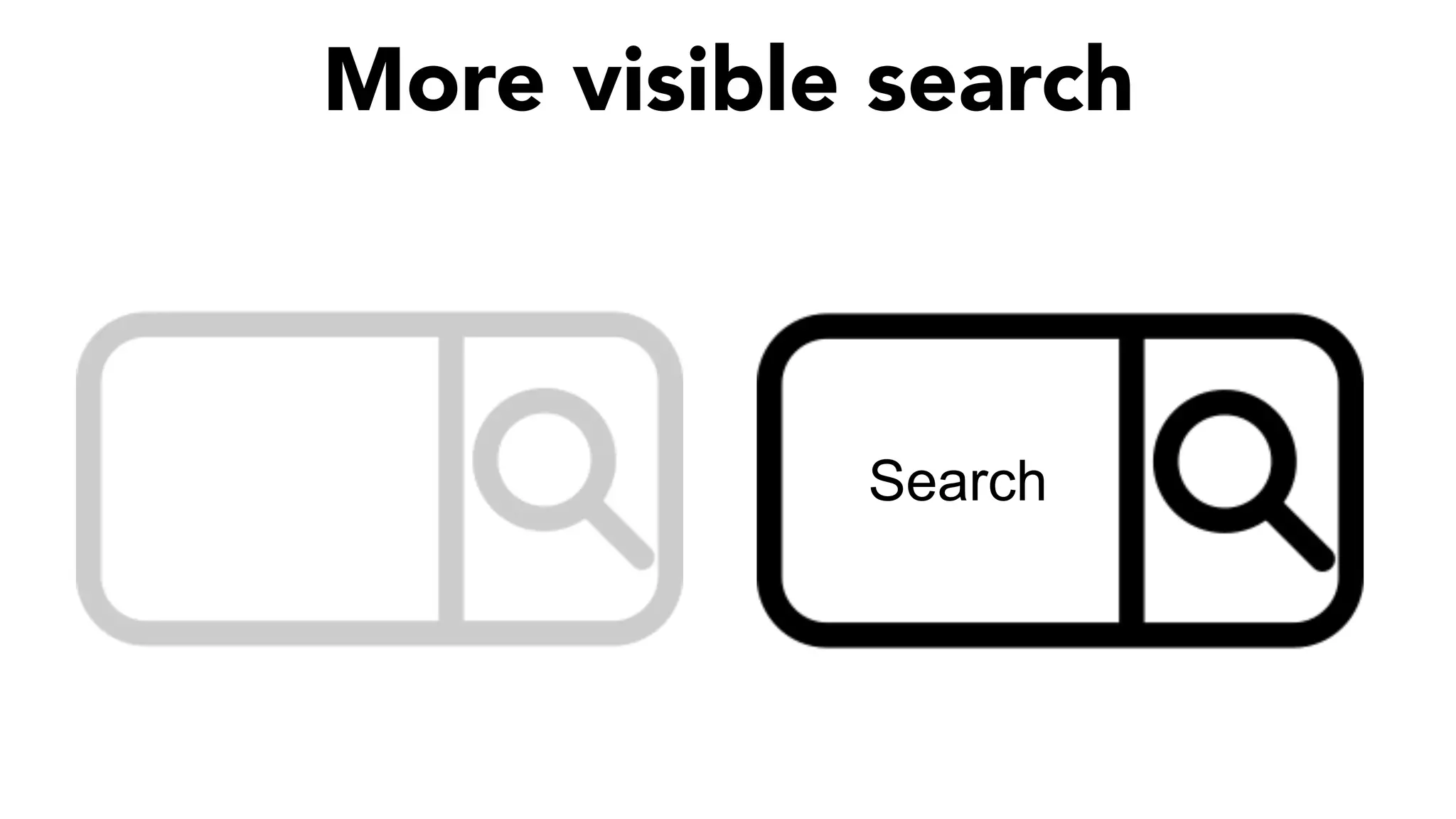
More visible search
Search
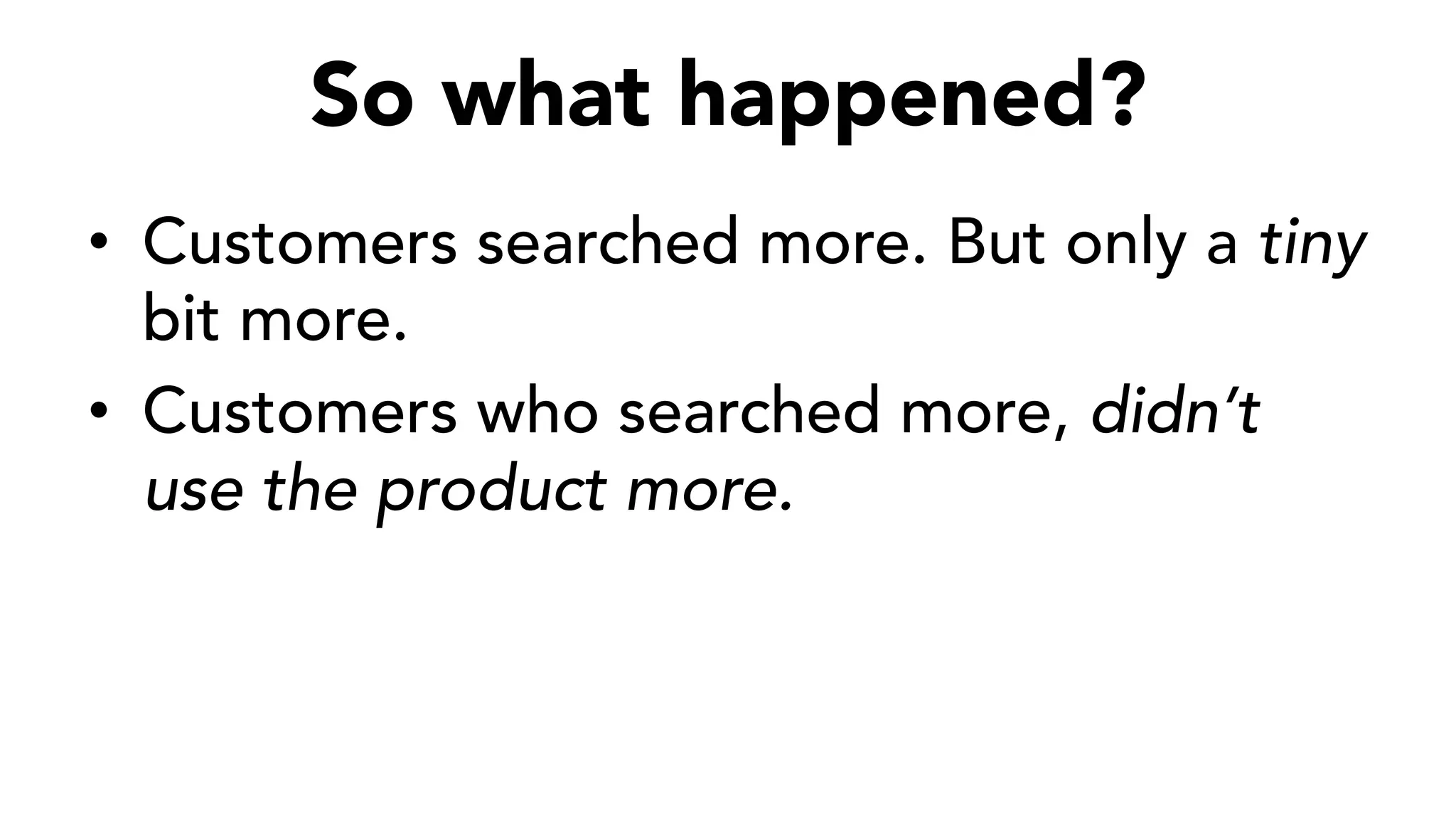
So what happened?
•  Customers searched more. But only a tiny
bit more.
•  Customers who searched more, didn’t
use the product more.
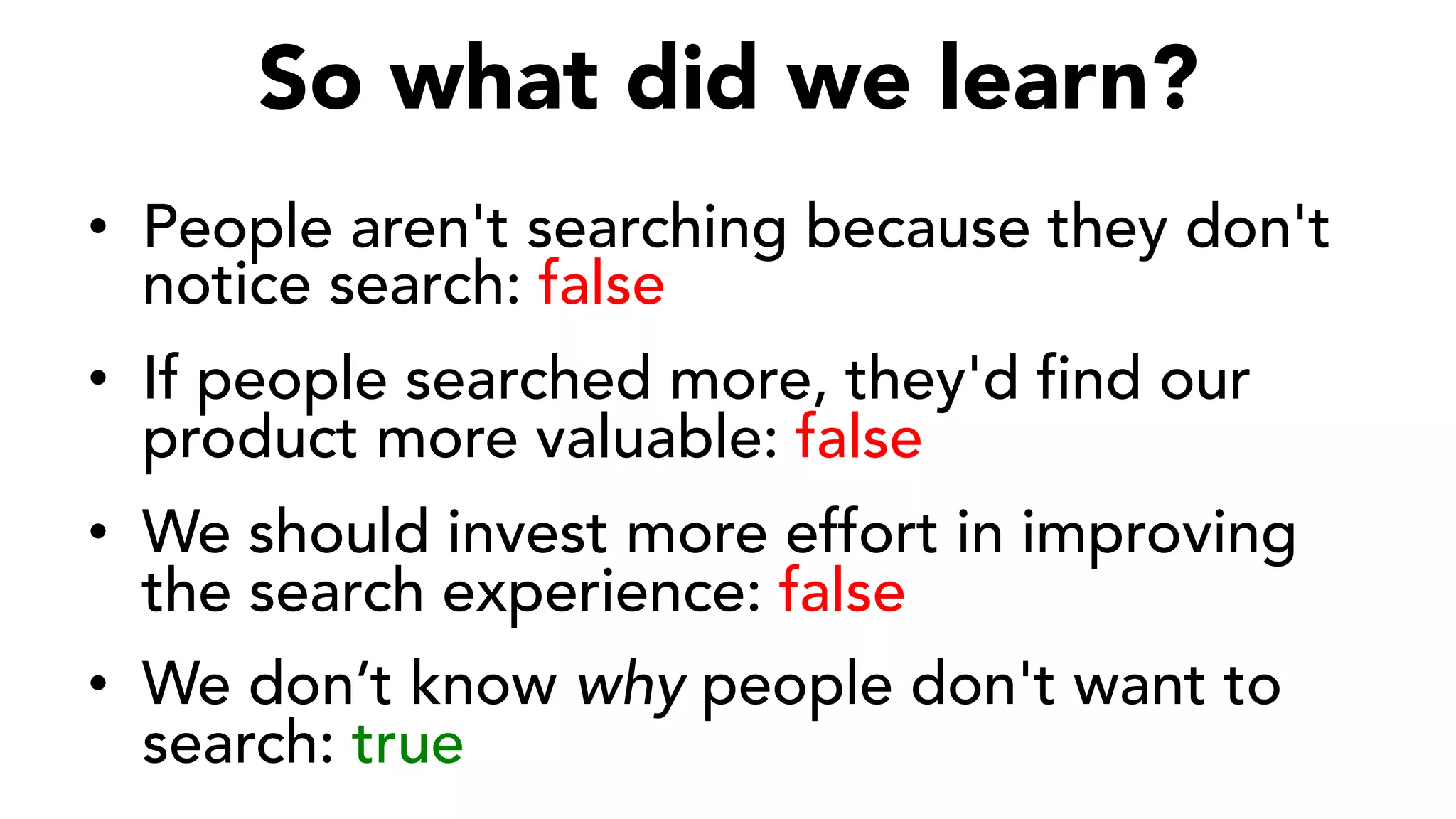
So what did we learn?
•  People aren't searching because they don't
notice search: false
•  If people searched more, they'd find our
product more valuable: false
•  We should invest more effort in improving
the search experience: false
•  We don’t know why people don't want to
search: true
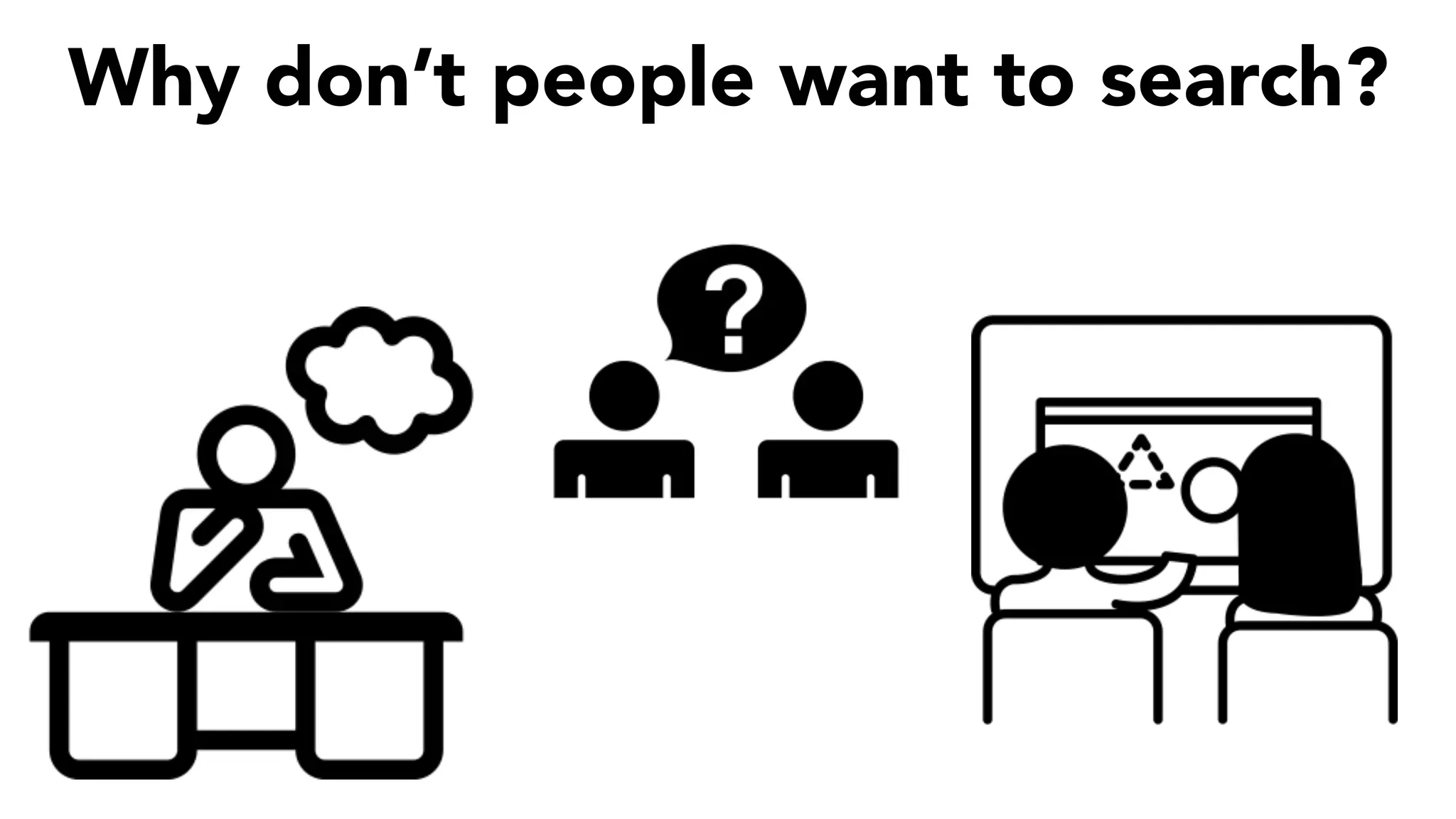
Why don’t people want to search?
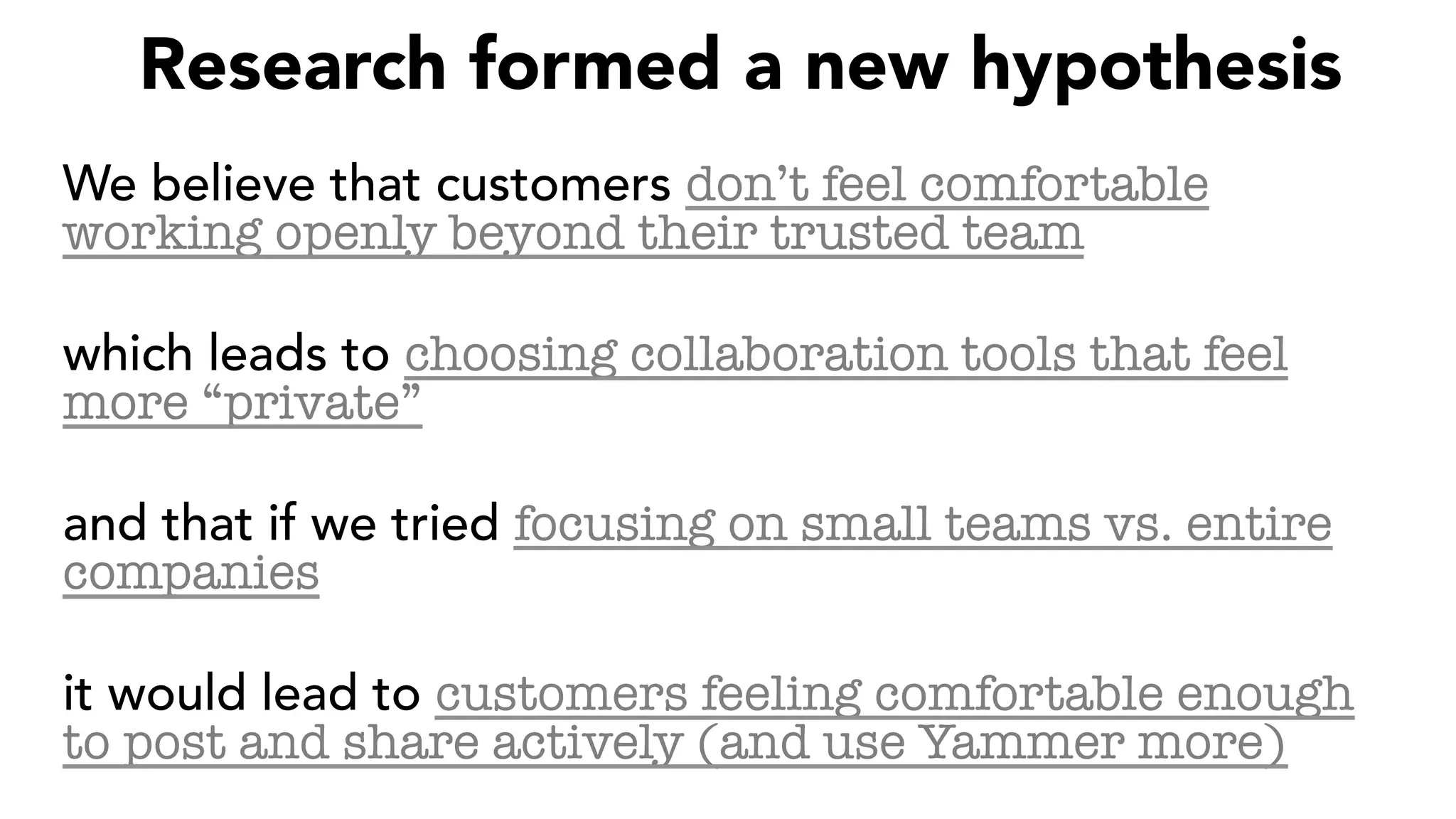
Research formed a new hypothesis
We believe that customers don’t feel comfortable
working openly beyond their trusted team
which leads to choosing collaboration tools that feel
more “private”
and that if we tried focusing on small teams vs. entire
companies
it would lead to customers feeling comfortable enough
to post and share actively (and use Yammer more)
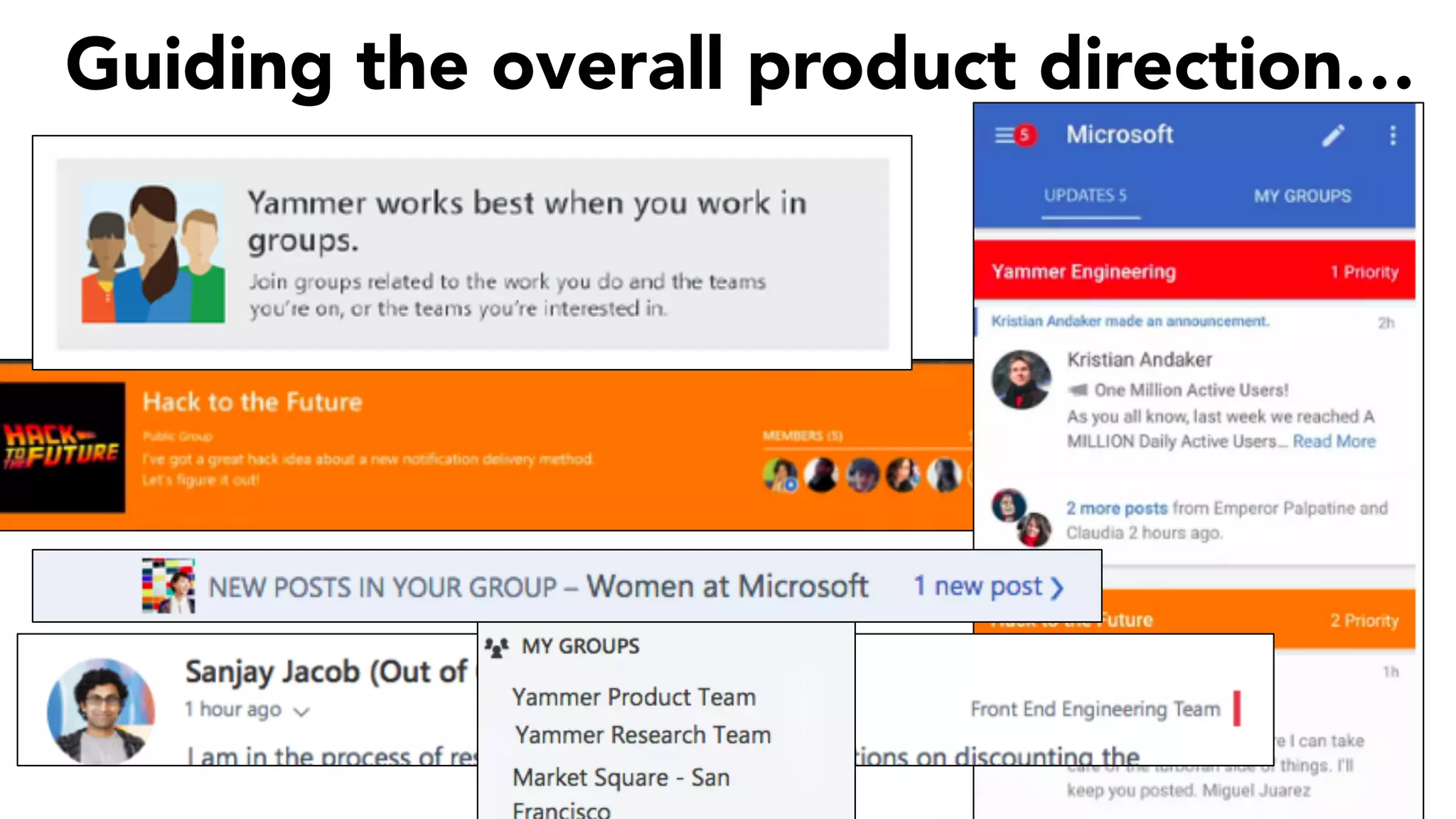
Guiding the overall product direction…
I hope that you’ll find a
hypothesis to form today.
I’m always happy to answer questions! @cindyalvarez or cindy@cindyalvarez.com

Cindy Alvarez - Embracing hypothesis driven design (From Business to Buttons 2015)

  • 1.
  • 2.
    We have gottenfaster. Have we gotten better?
  • 3.
    Being right is atemporary condition.
  • 4.
  • 5.
  • 6.
    UX people formUX hypotheses
  • 7.
    We believe thatcustomers have problem/ lack knowledge/behave in this way which leads to consequence and that if we tried solution it would lead to improvement/results
  • 8.
  • 9.
    Hypotheses require action • Write it down •  Share it •  Test it (Identify how to measure) •  Revisit and update (write it down again) •  Build off it
  • 10.
  • 11.
    I’ll give youan example (it’s working)
  • 12.
  • 13.
    We believe thatcustomers don’t realize they can search in Yammer which leads to customers not finding info they need (so they’ll use Yammer less) and that if we tried making search more noticeable it would lead to customers searching and finding the info they need (so they’ll use Yammer more)
  • 14.
  • 15.
    So what happened? • Customers searched more. But only a tiny bit more. •  Customers who searched more, didn’t use the product more.
  • 16.
    So what didwe learn? •  People aren't searching because they don't notice search: false •  If people searched more, they'd find our product more valuable: false •  We should invest more effort in improving the search experience: false •  We don’t know why people don't want to search: true
  • 17.
    Why don’t peoplewant to search?
  • 18.
    Research formed anew hypothesis We believe that customers don’t feel comfortable working openly beyond their trusted team which leads to choosing collaboration tools that feel more “private” and that if we tried focusing on small teams vs. entire companies it would lead to customers feeling comfortable enough to post and share actively (and use Yammer more)
  • 19.
    Guiding the overallproduct direction…
  • 20.
    I hope thatyou’ll find a hypothesis to form today. I’m always happy to answer questions! @cindyalvarez or cindy@cindyalvarez.com