
LEAN UX DRIVEN PRODUCT DEVELOPMENT
VALIDATING IDEAS WITH USERS
Sheen Yap

Dreamstake Workshop
3:00pm 27 Jan 2015
London UK
..HOW TO CREATE PRODUCTS THAT PEOPLE WILL USE
INTRODUCTION
• Sheen Yap 
• UX expert, design leader and lean evangelist
• 17-years’ UX experience across web, mobile, iTV
• Consulting to startups and corporates to help
building better products through Lean and UX
• Co-creator circula.co
WORKSHOP OBJECTIVES
• Early stage startups - new idea, pivoting or existing
• Go through process of validating ideas
• Walk through and apply at each step
• Understand and willing to perform user testing
• Have fun, make mistakes, learn!
HOW DOES THIS FIT IN?
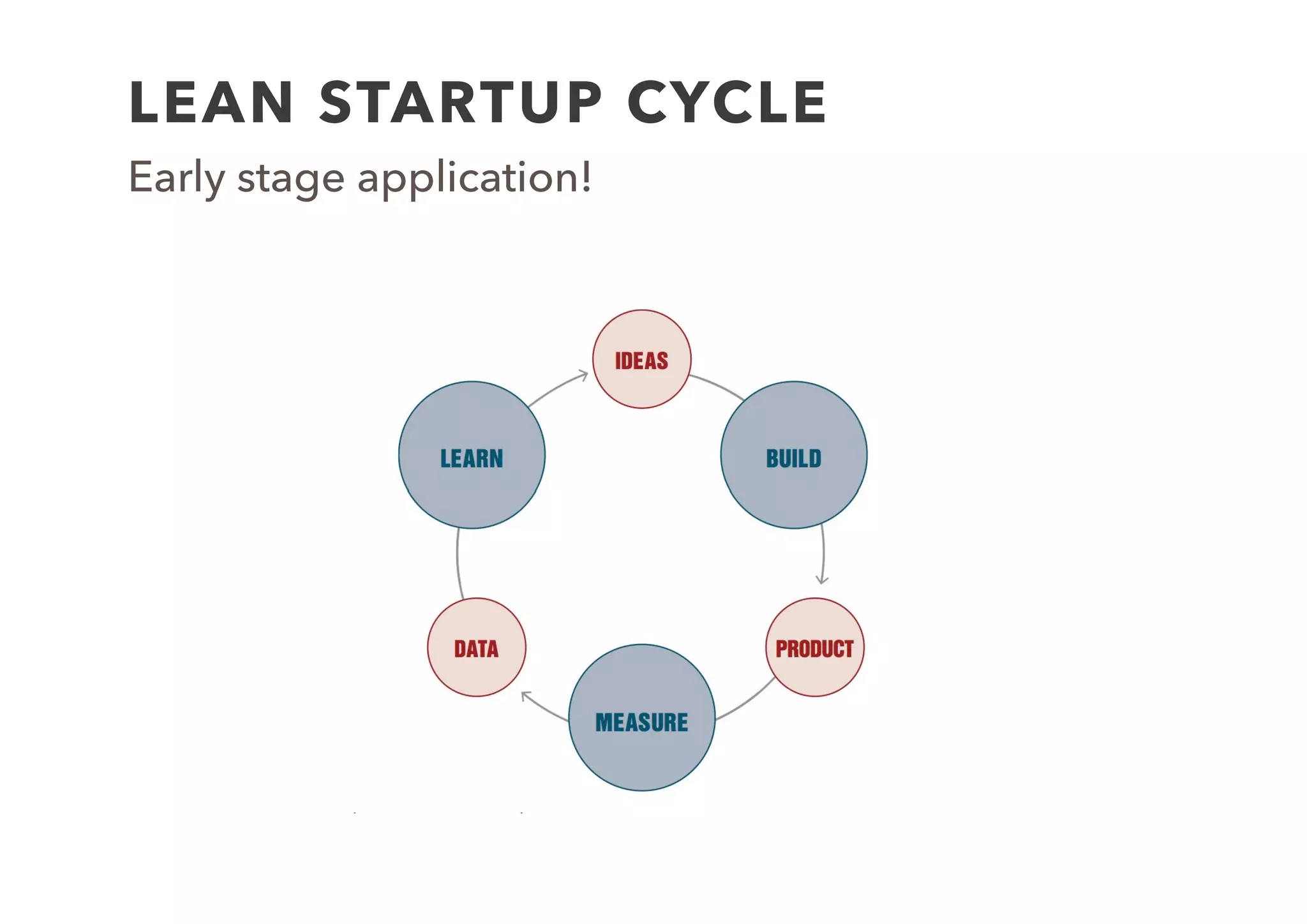
LEAN STARTUP CYCLE
Early stage application!
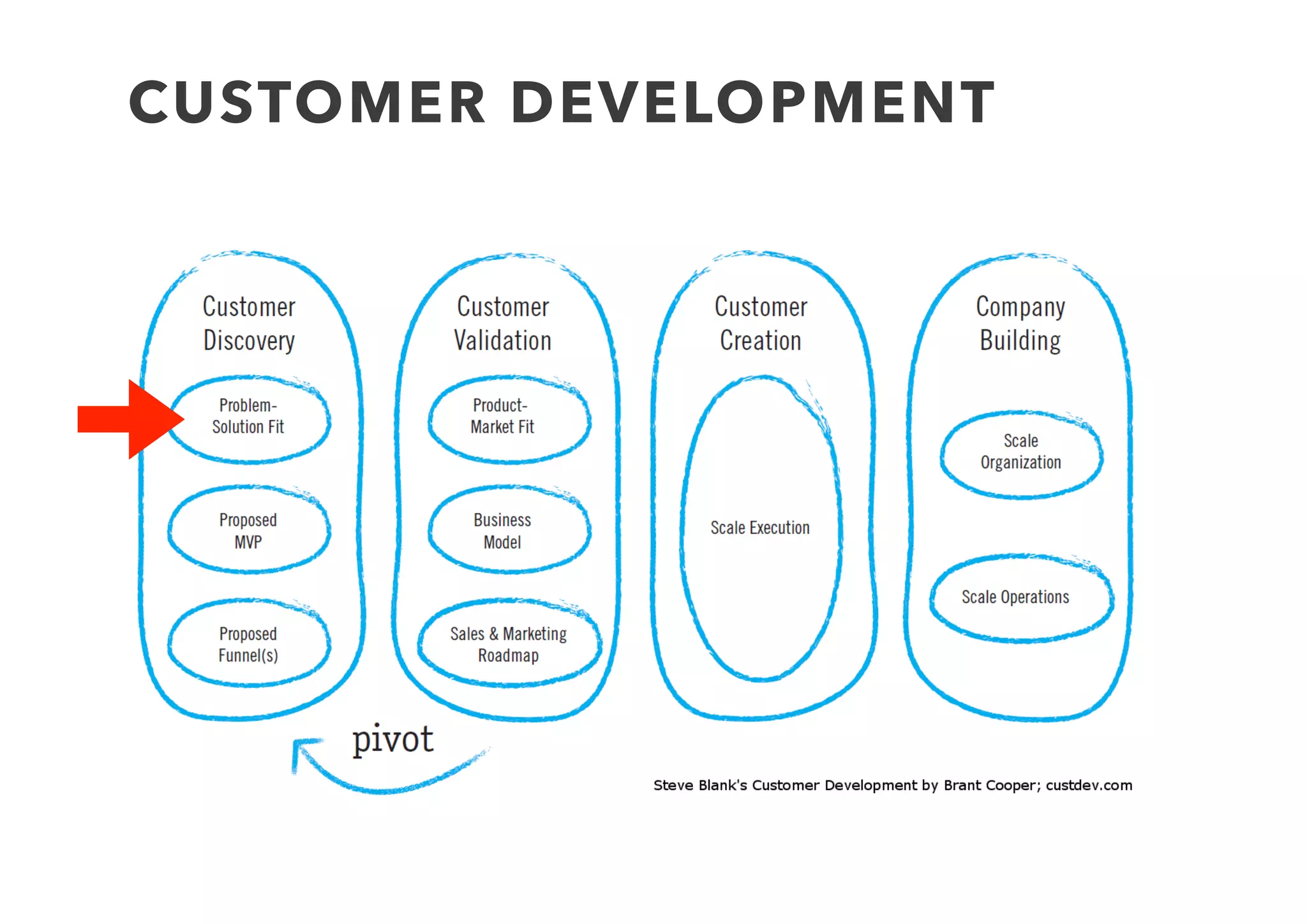
CUSTOMER DEVELOPMENT
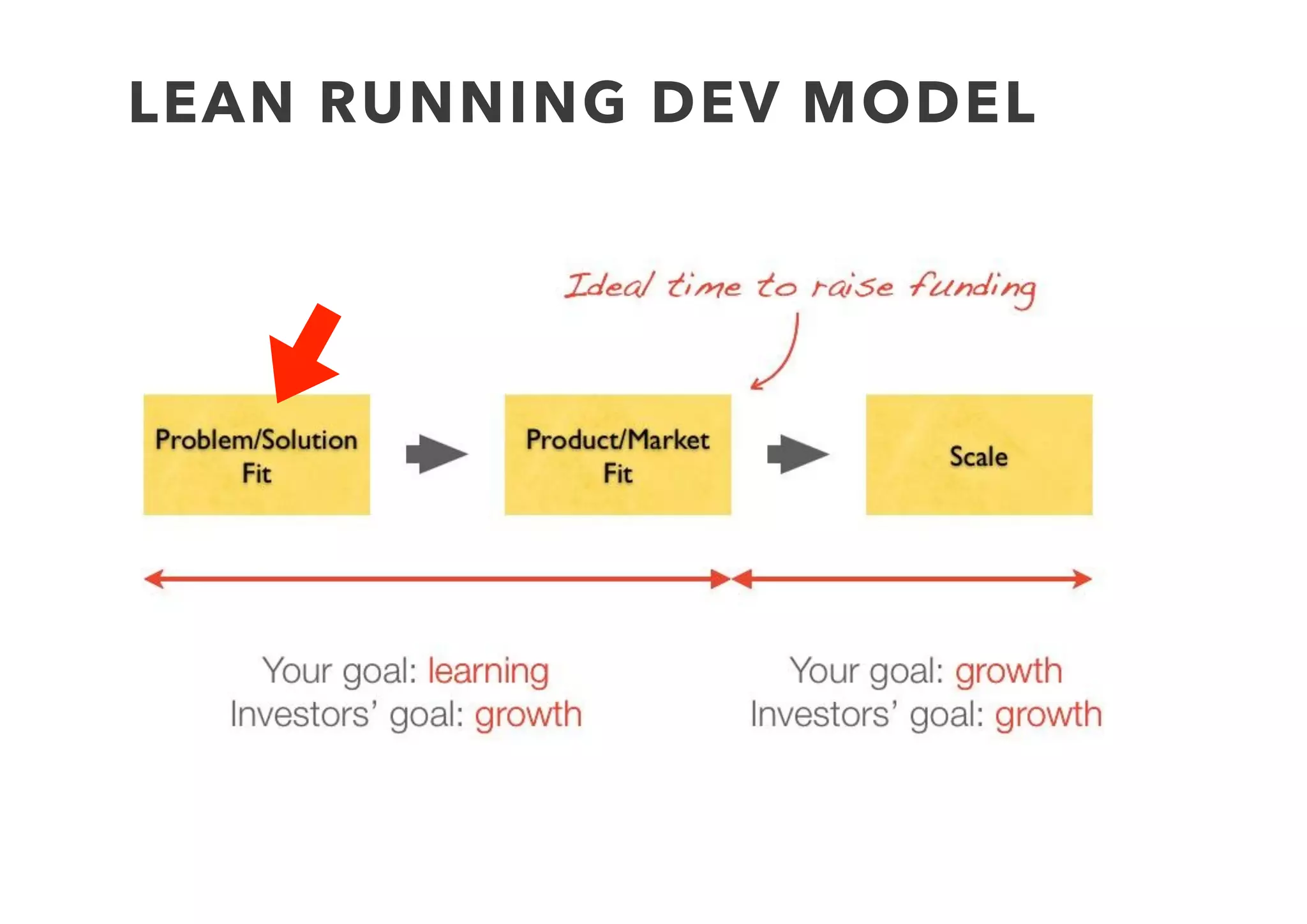
RUNNING LEAN STAGES
HORROR STORYTIME
PROBLEM-SOLUTION FIT - NOW
• Product idea is about problem-solution fit
• Need to solve Real Problems for Real People
• Avoid eventual failure
• Avoid waste in time, effort and money 
• Avoid pain in dismantling
• Missed opportunity to pivot to a better idea
..HOW TO CREATE PRODUCTS THAT PEOPLE WILL USE
HOW TO AVOID CREATING PRODUCTS NO ONE WILL USE
TEST WITH USERS, & TEST EARLY!
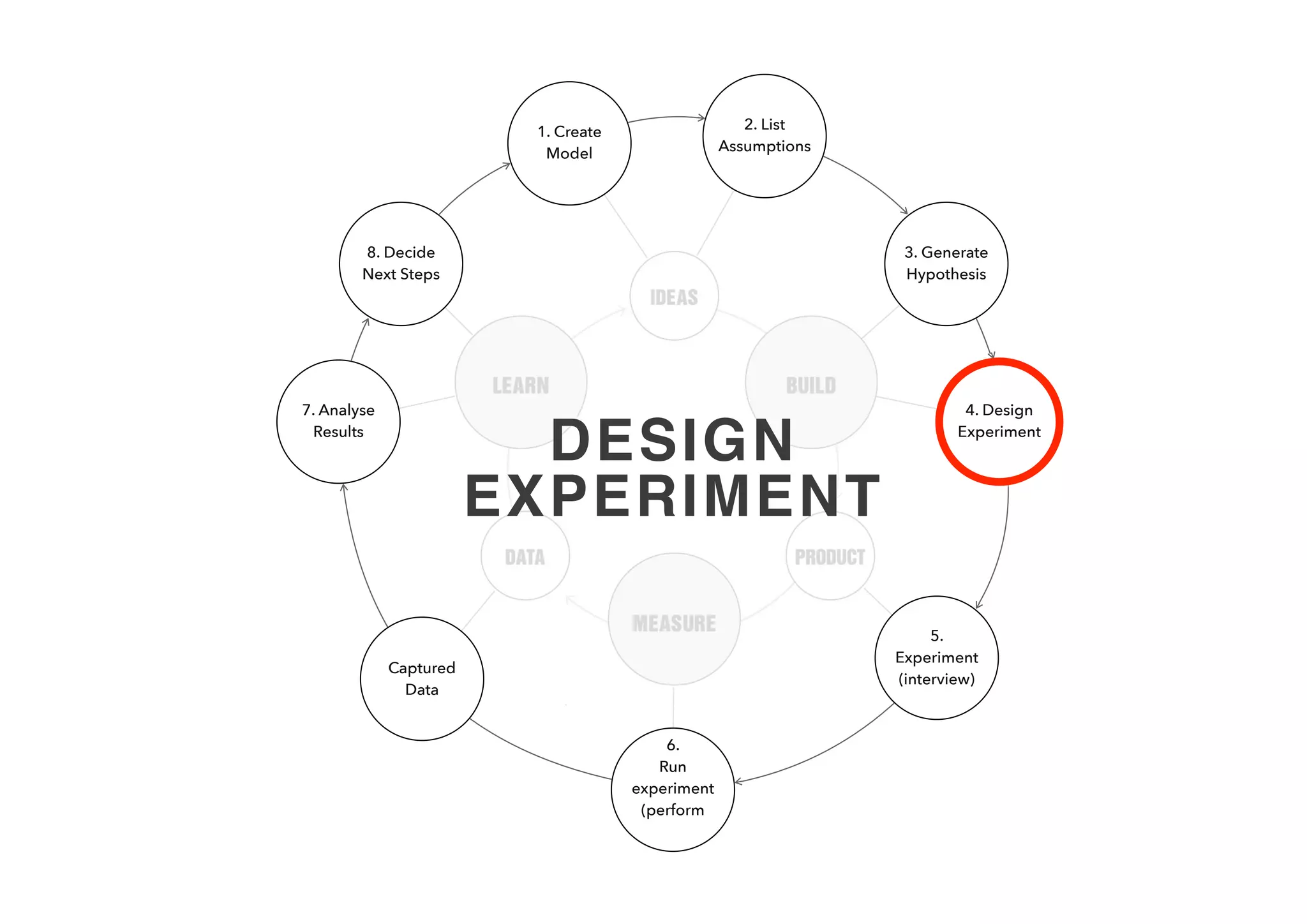
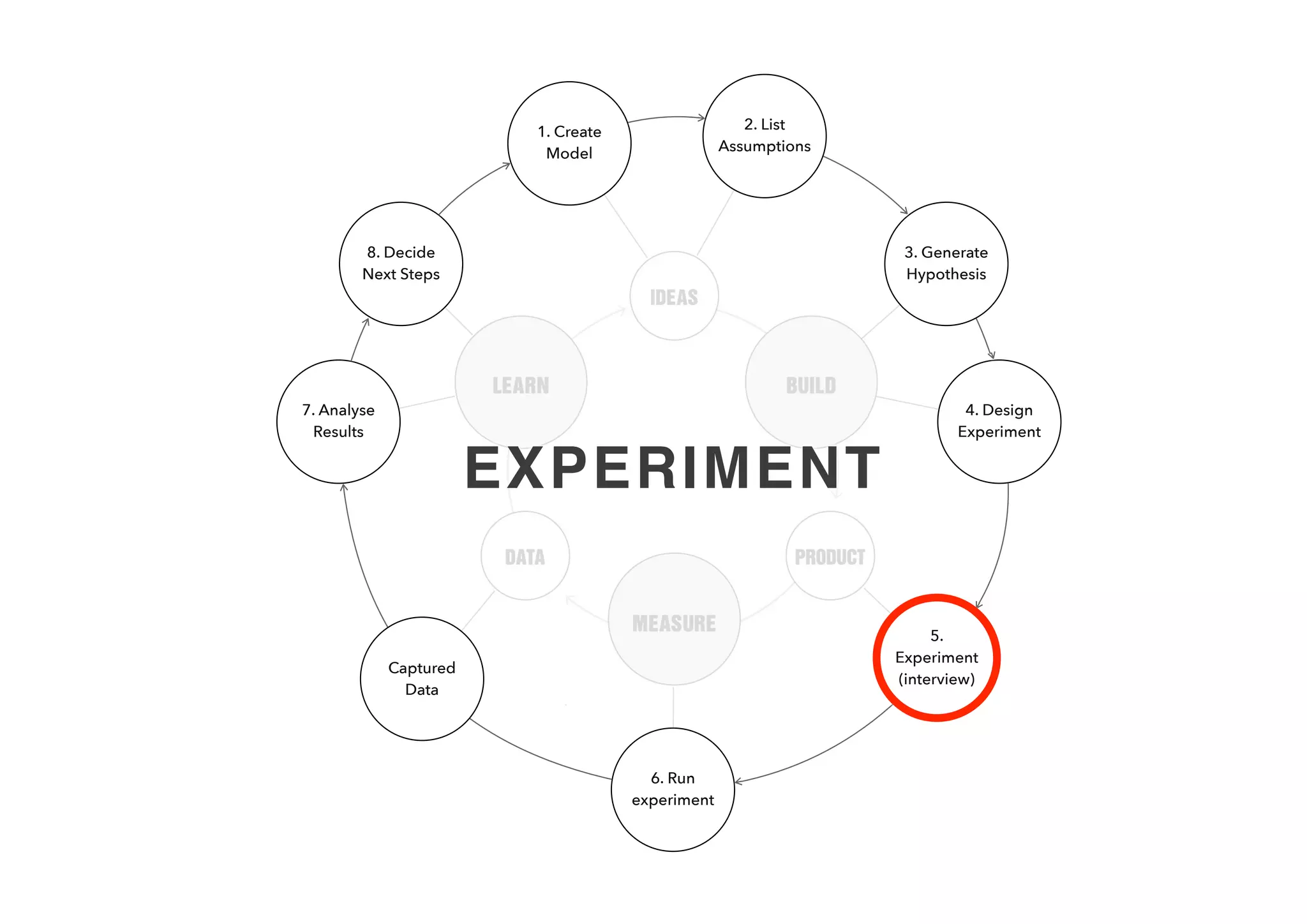
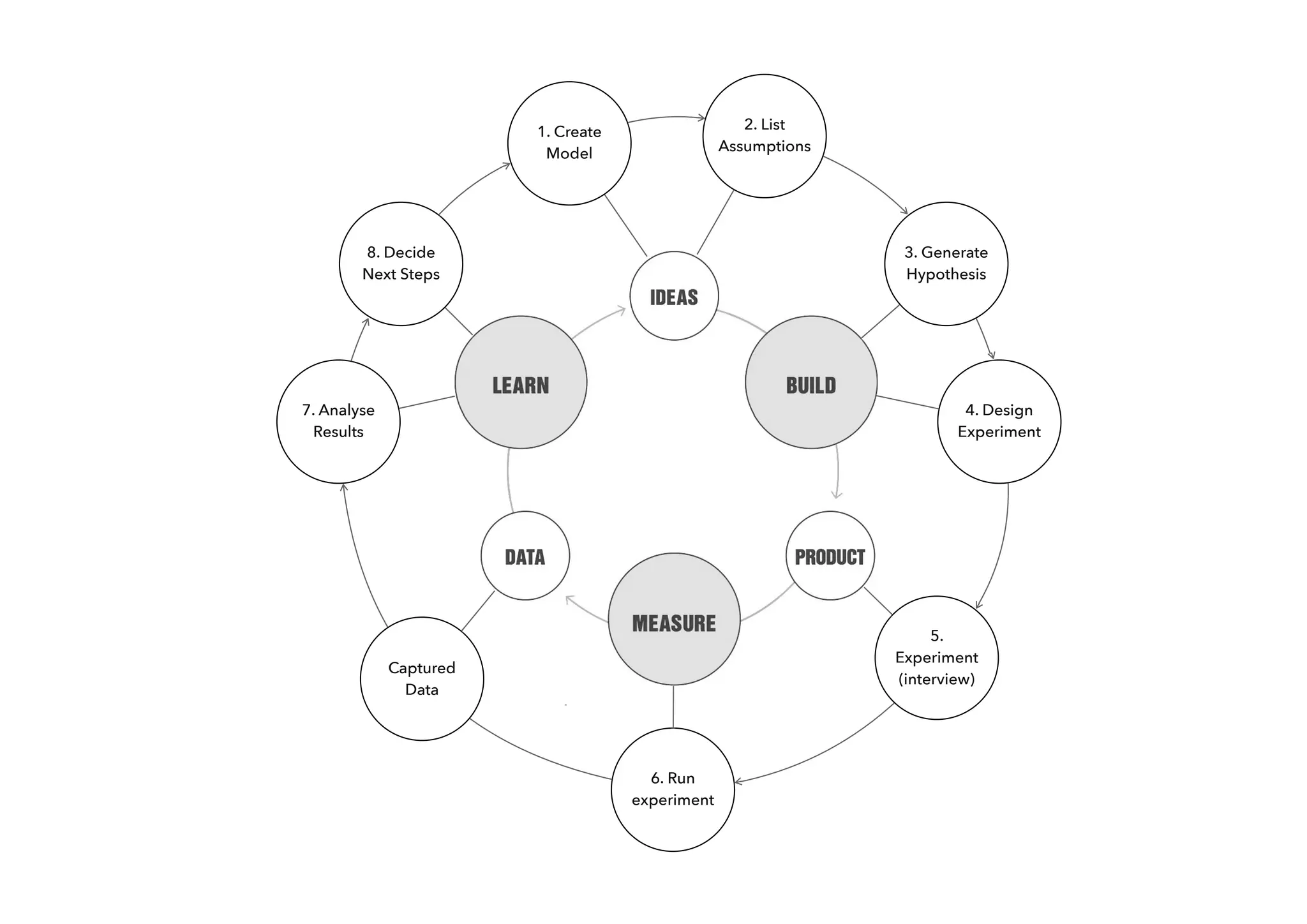
HOW DO WE DO IT?
1. Create
Model
2. List
Assumptions
3. Generate
Hypothesis
4. Design
Experiment
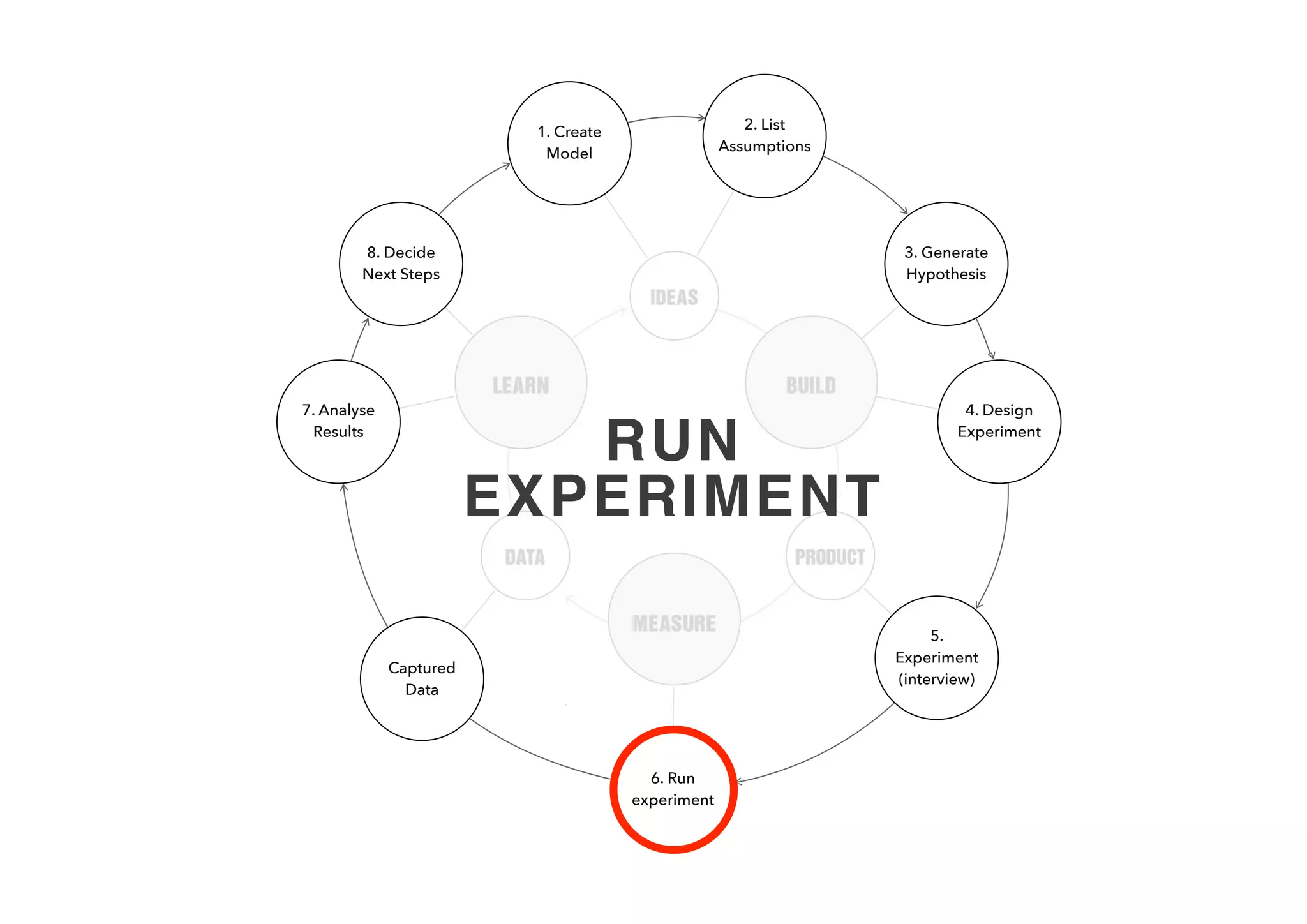
6. Run
experiment
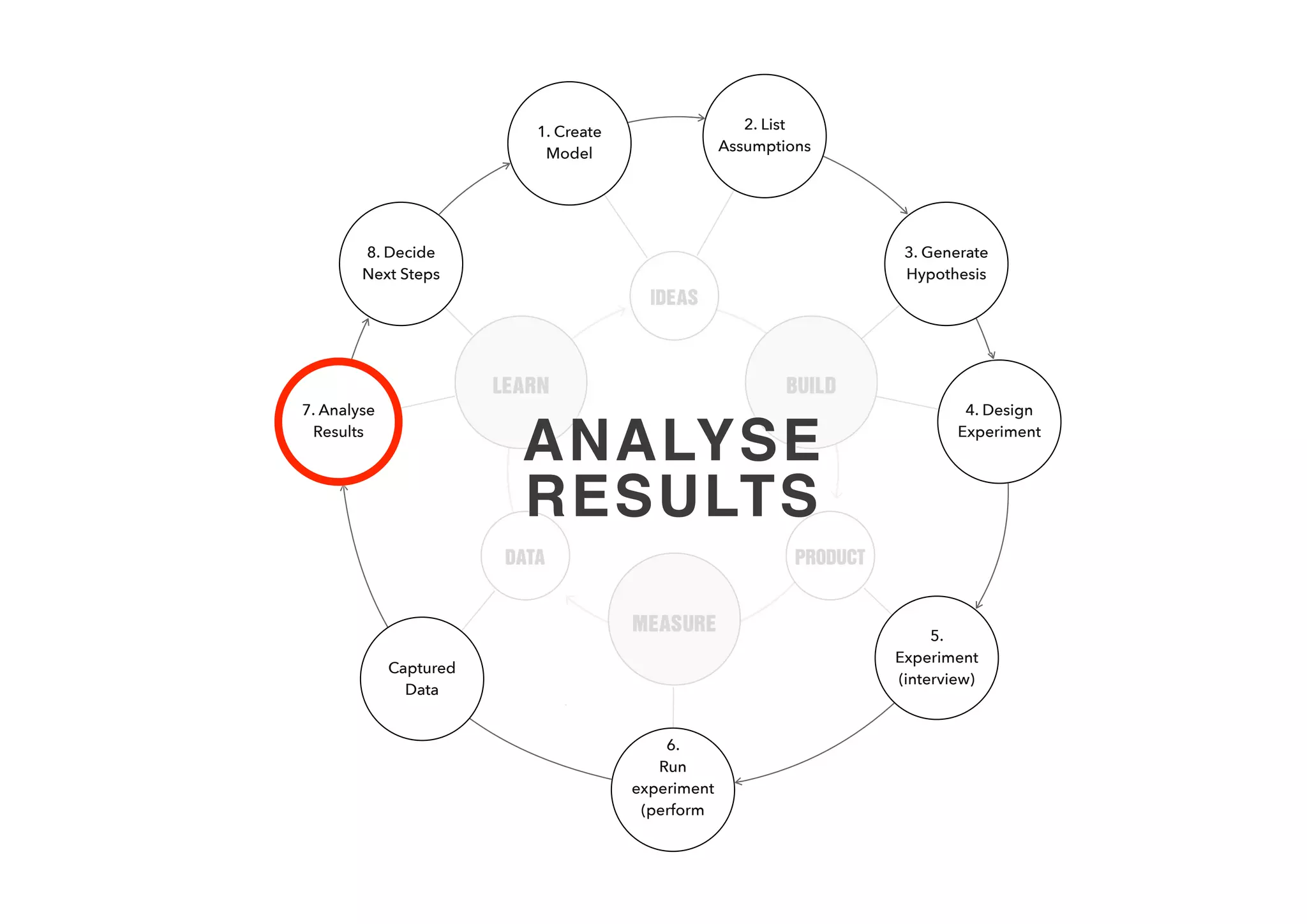
7. Analyse
Results
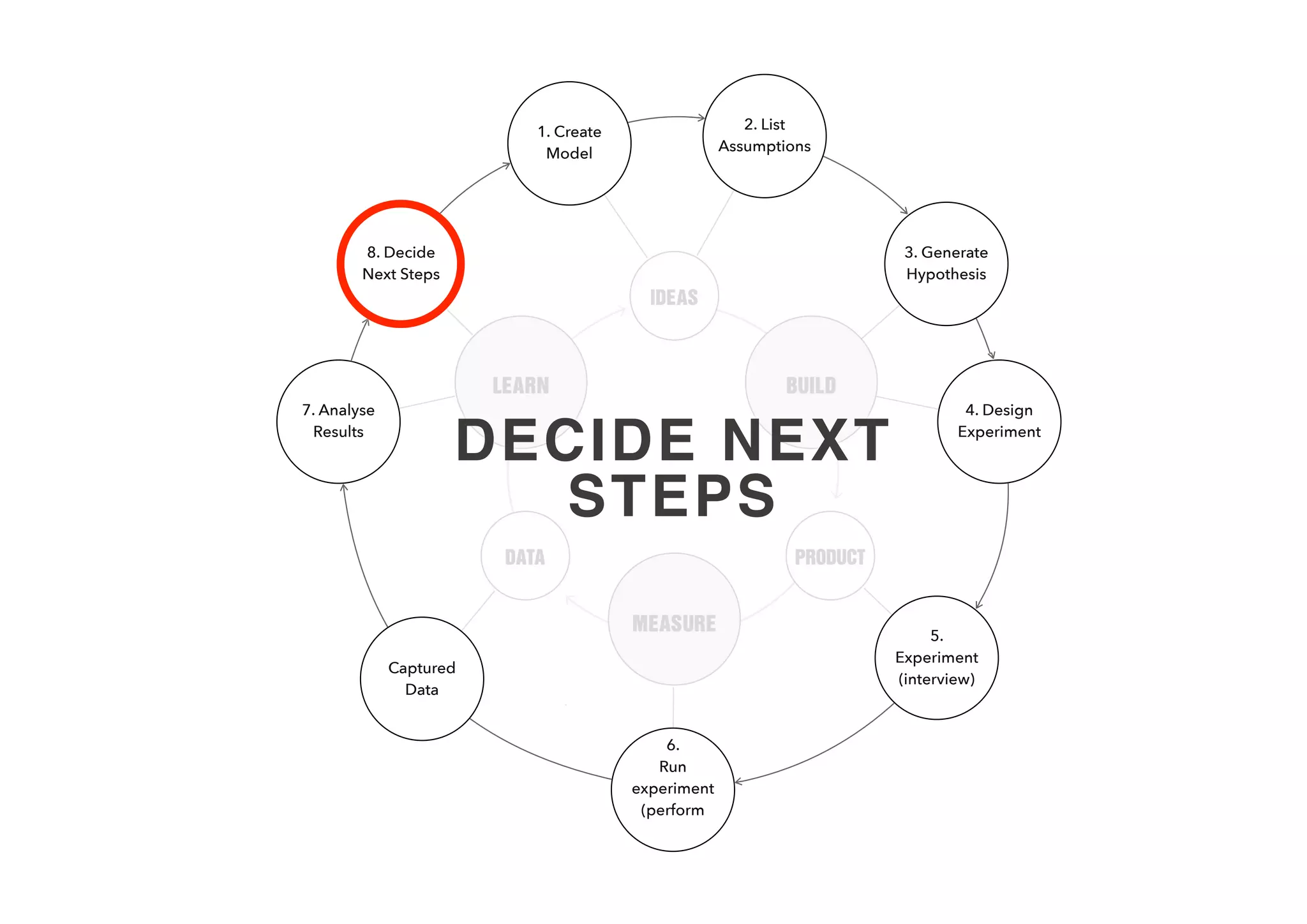
8. Decide
Next Steps
5.
Experiment
(interview)
Captured
Data
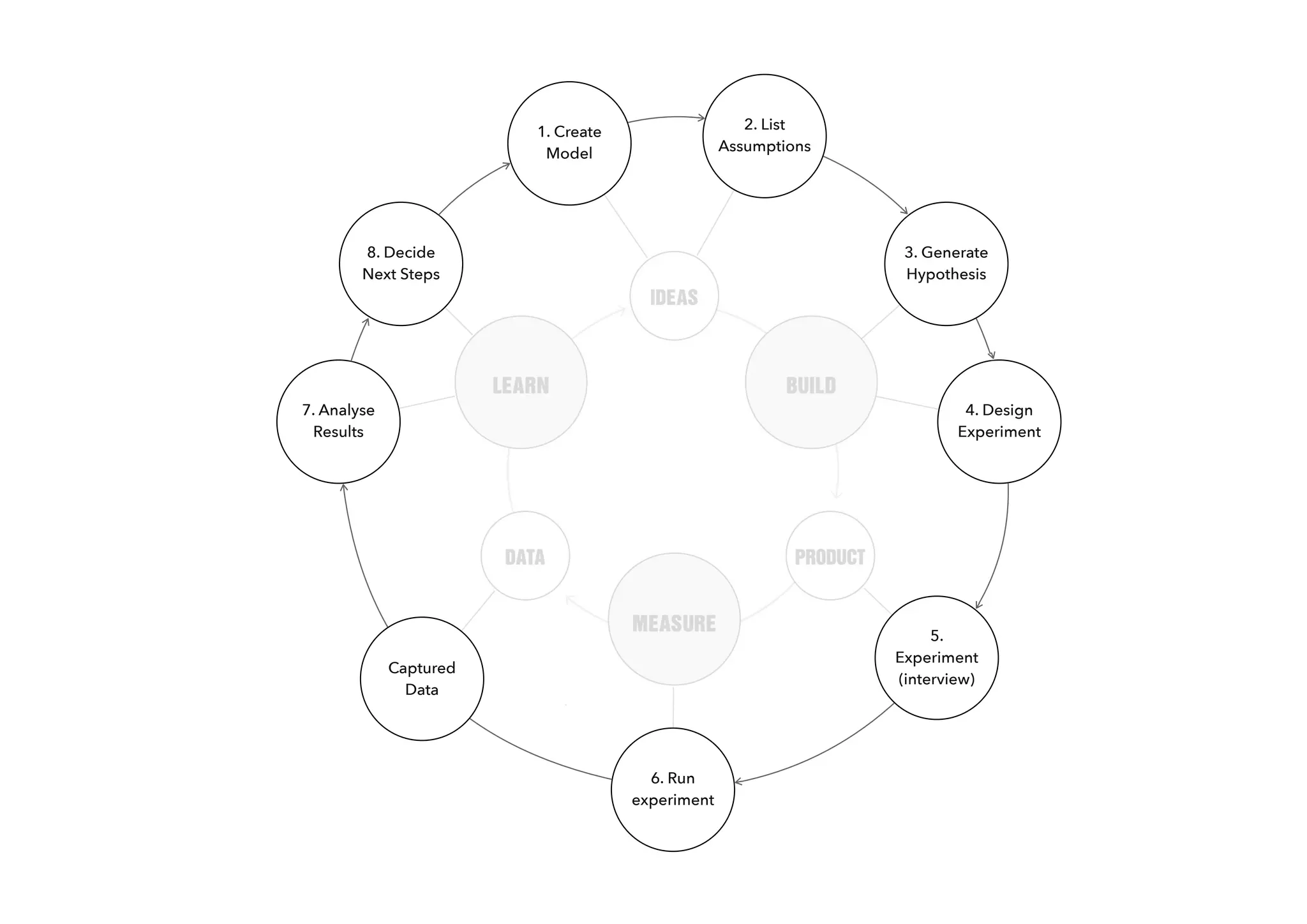
1. Create
Model
2. List
Assumptions
3. Generate
Hypothesis
4. Design
Experiment
6. Run
experiment
7. Analyse
Results
8. Decide
Next Steps
5.
Experiment
(interview)
Captured
Data
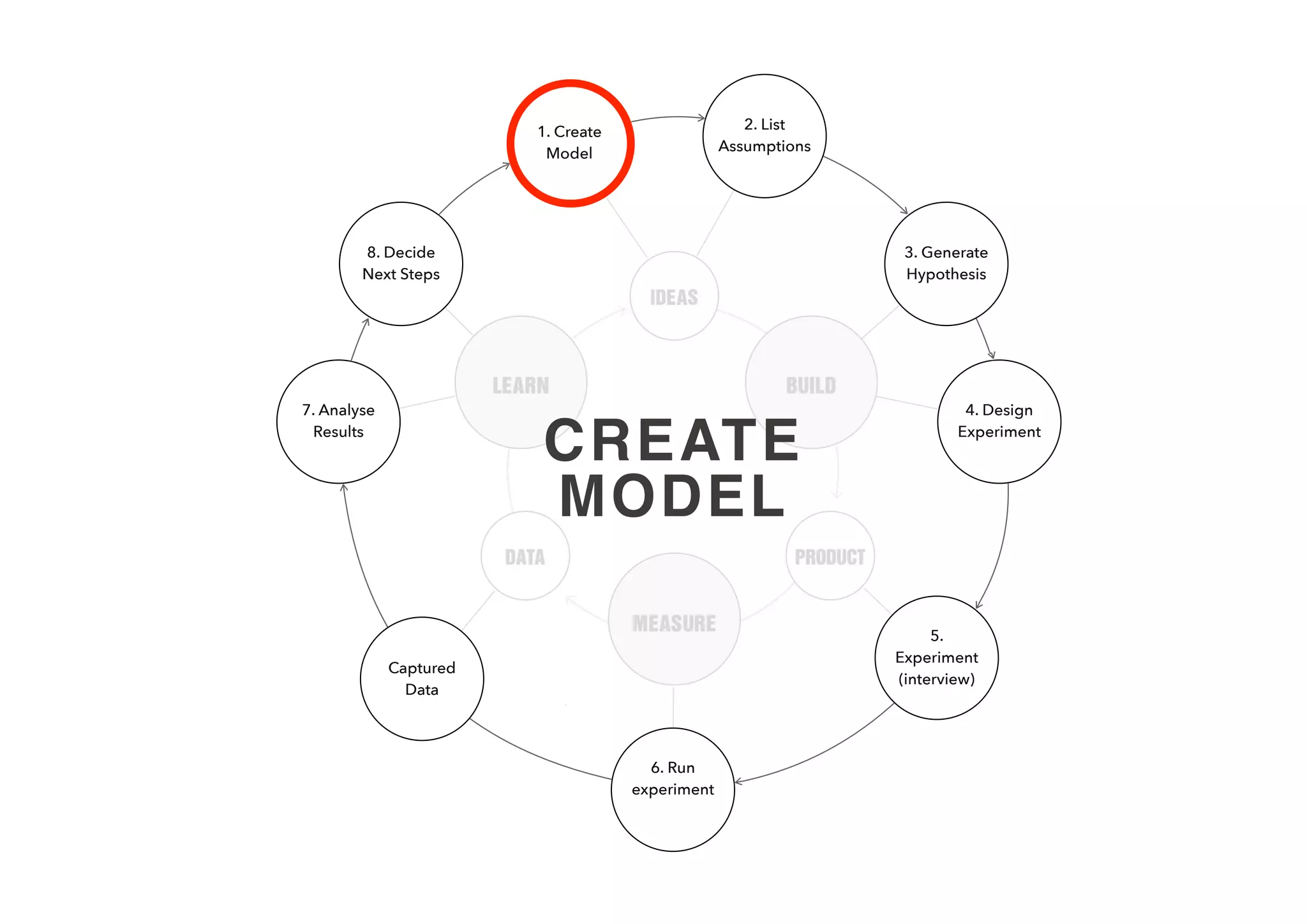
1. Create
Model
2. List
Assumptions
3. Generate
Hypothesis
4. Design
Experiment
6. Run
experiment
7. Analyse
Results
8. Decide
Next Steps
5.
Experiment
(interview)
Captured
Data
CREATE
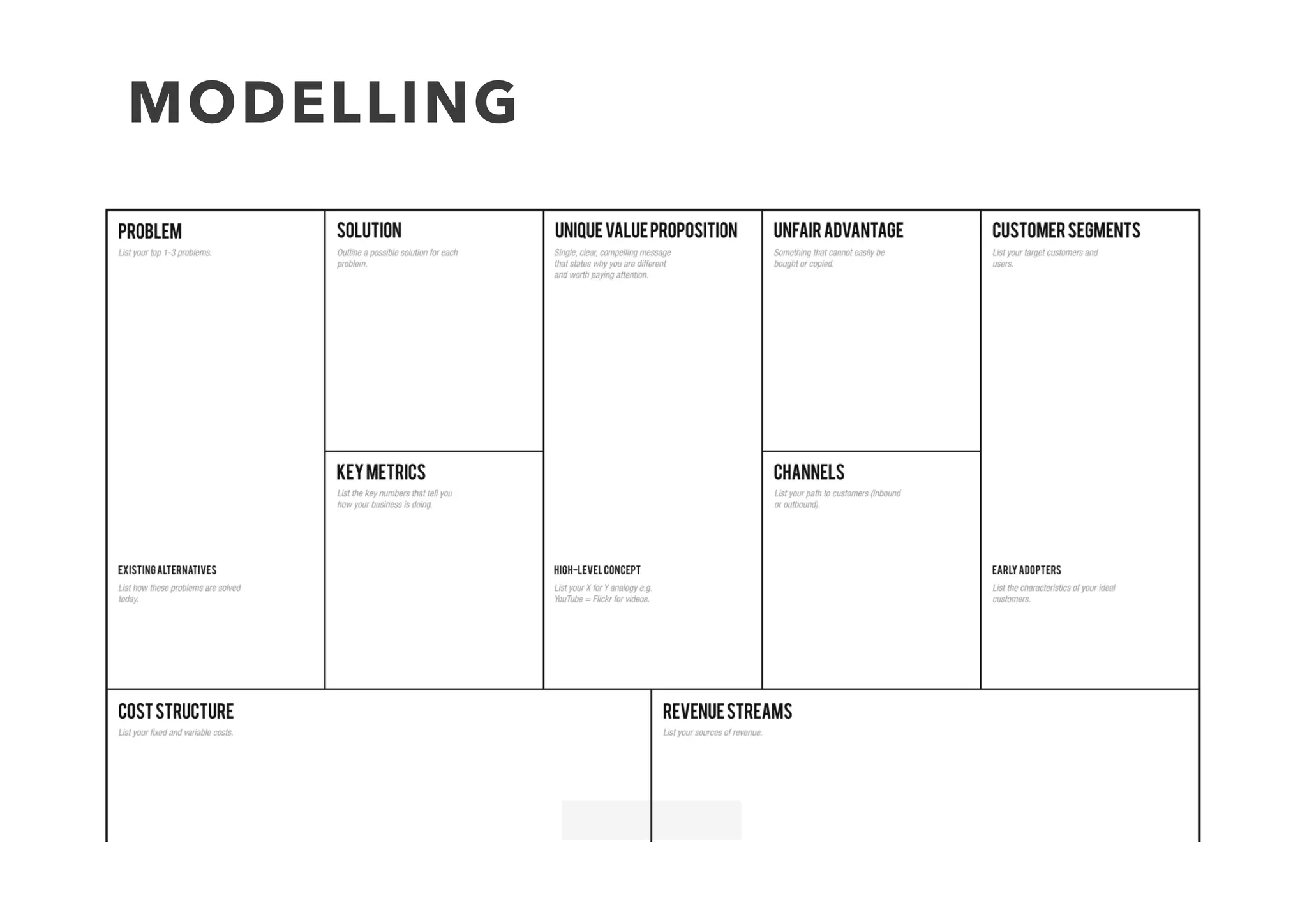
MODEL
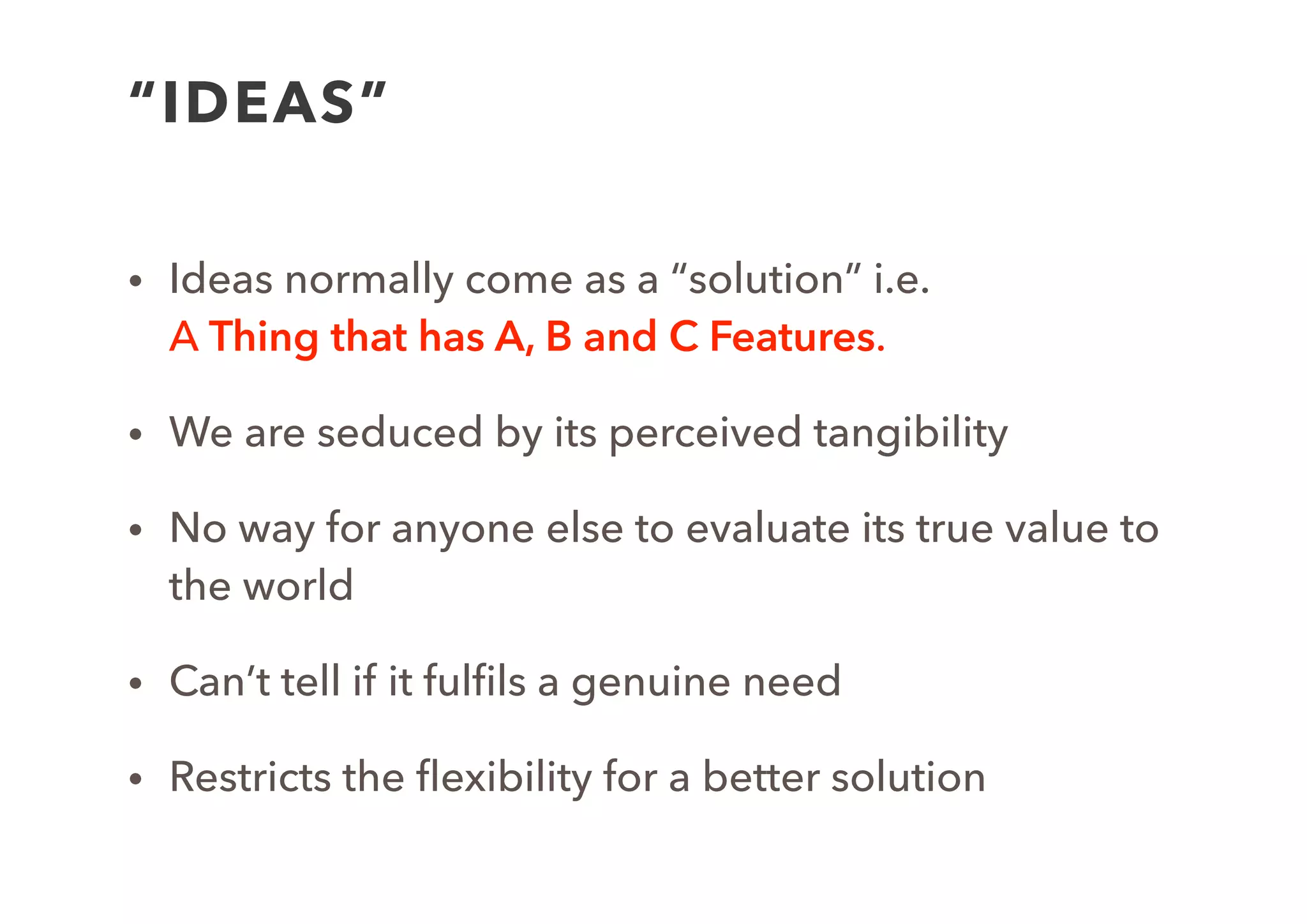
“IDEAS”
• Ideas normally come as a “solution” i.e. 

A Thing that has A, B and C Features.
• We are seduced by its perceived tangibility
• No way for anyone else to evaluate its true value to
the world
• Can’t tell if it fulfils a genuine need
• Restricts the flexibility for a better solution
MODELLING
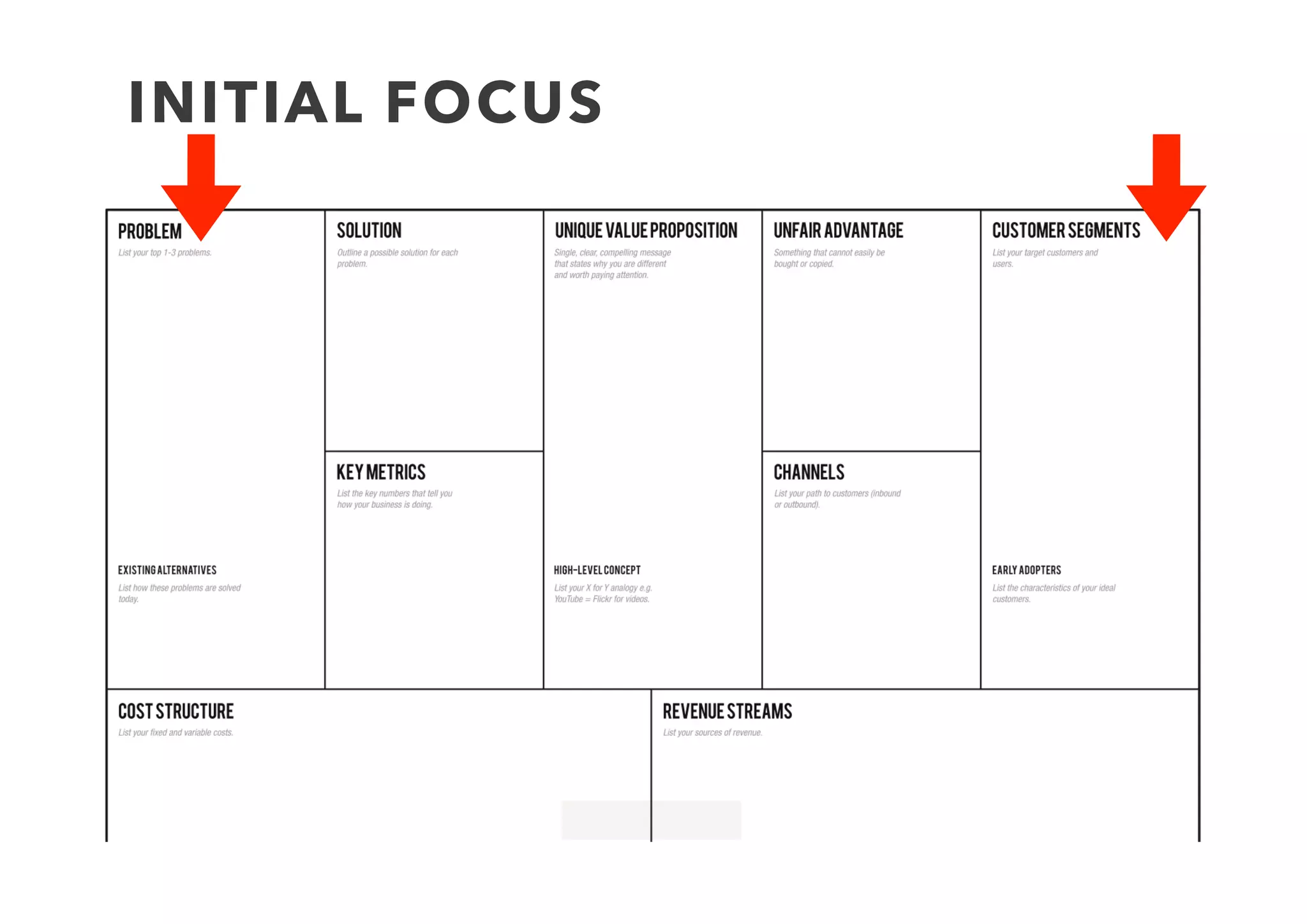
INITIAL FOCUS
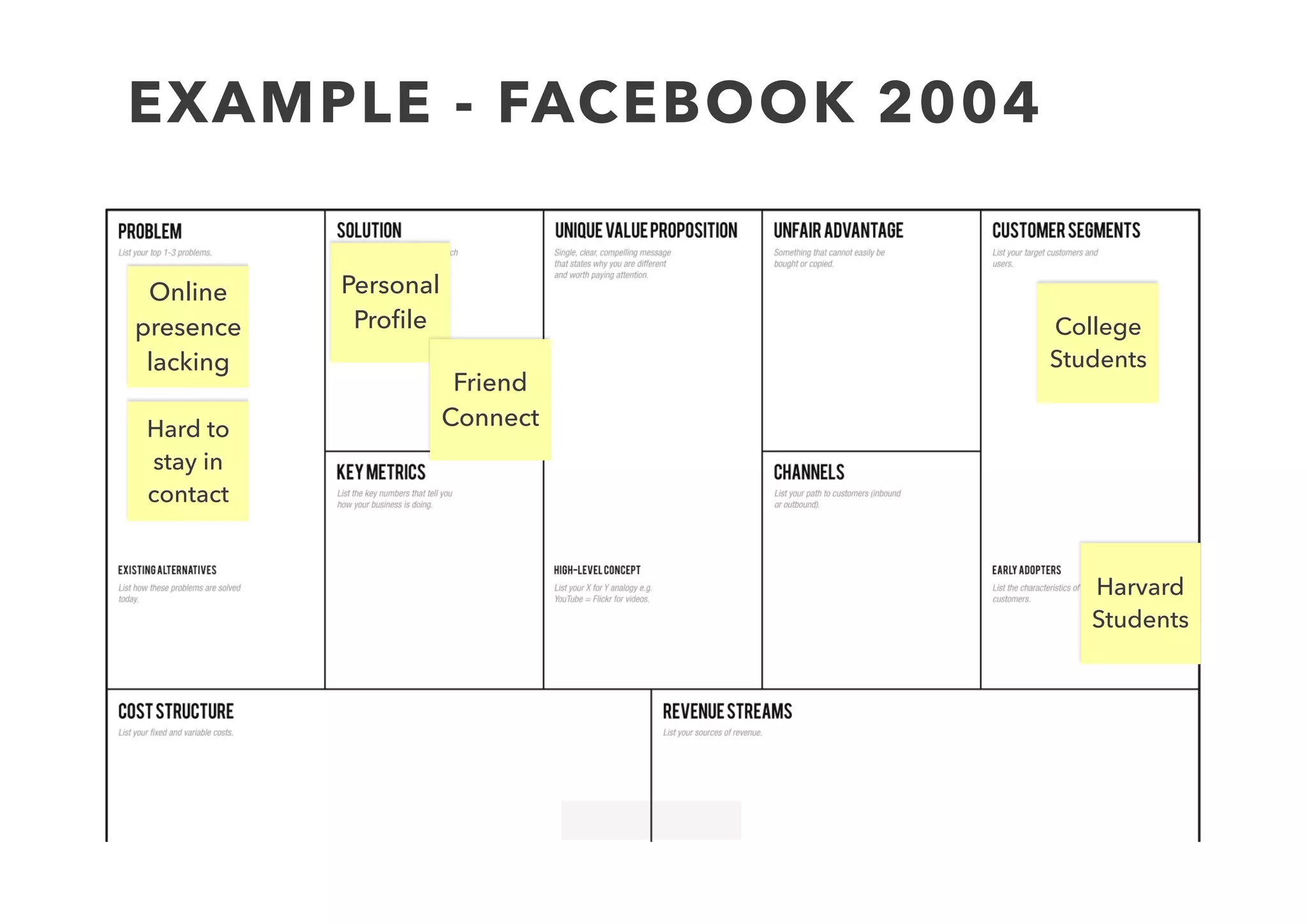
EXAMPLE - FACEBOOK 2004
Online
presence
lacking
Hard to
stay in
contact
College
Students
Harvard
Students
Personal
Profile
Friend
Connect
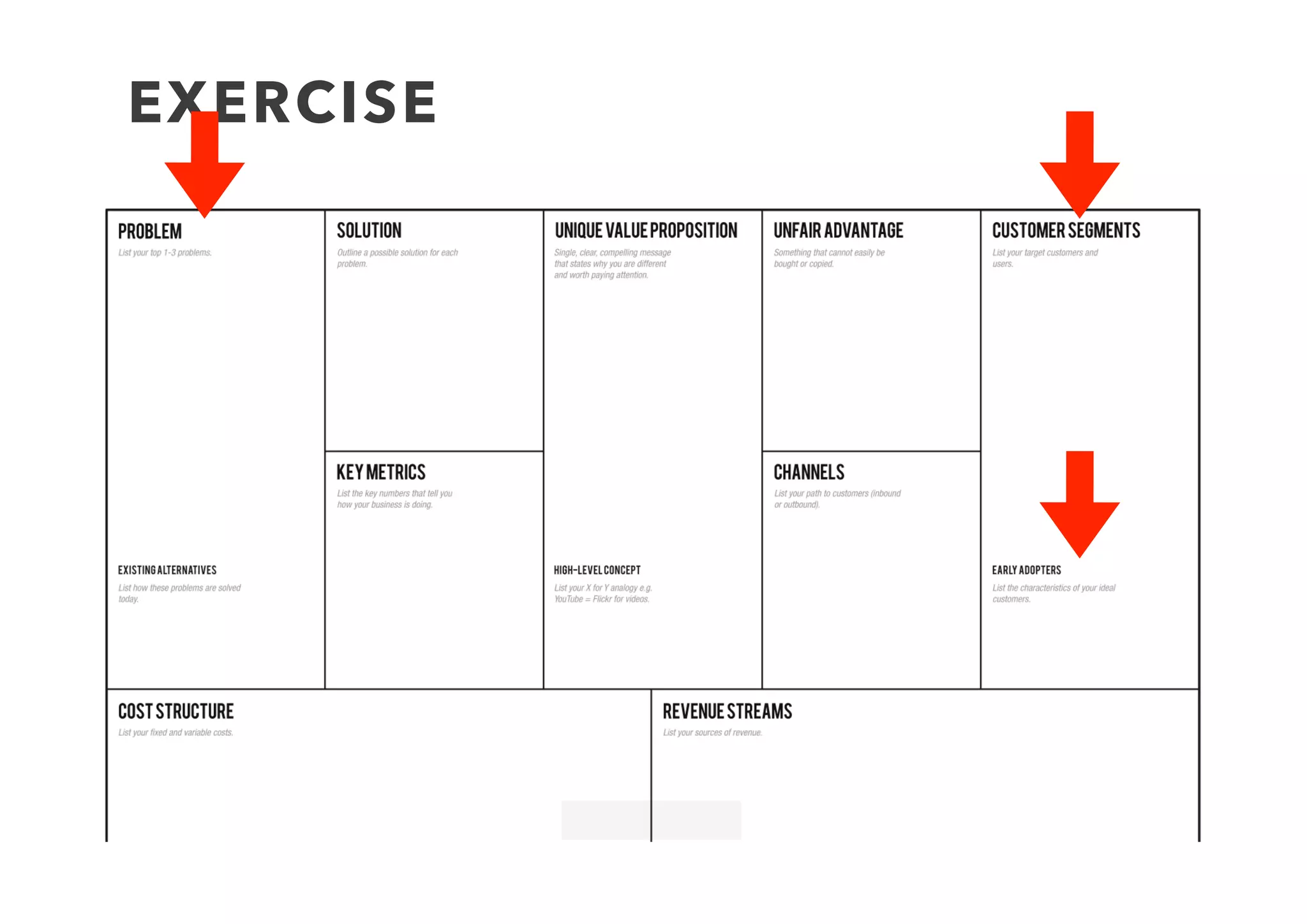
EXERCISE
EXERCISE
• Who are your customer segments?
• What are their problems/pain points/issues?
• Who are your customers?
• What are their problems/pain points/issues?
• Who could be your early adopter?
1. Create
Model
2. List
Assumptions
3. Generate
Hypothesis
4. Design
Experiment
6. Run
experiment
7. Analyse
Results
8. Decide
Next Steps
5.
Experiment
(interview)
Captured
Data
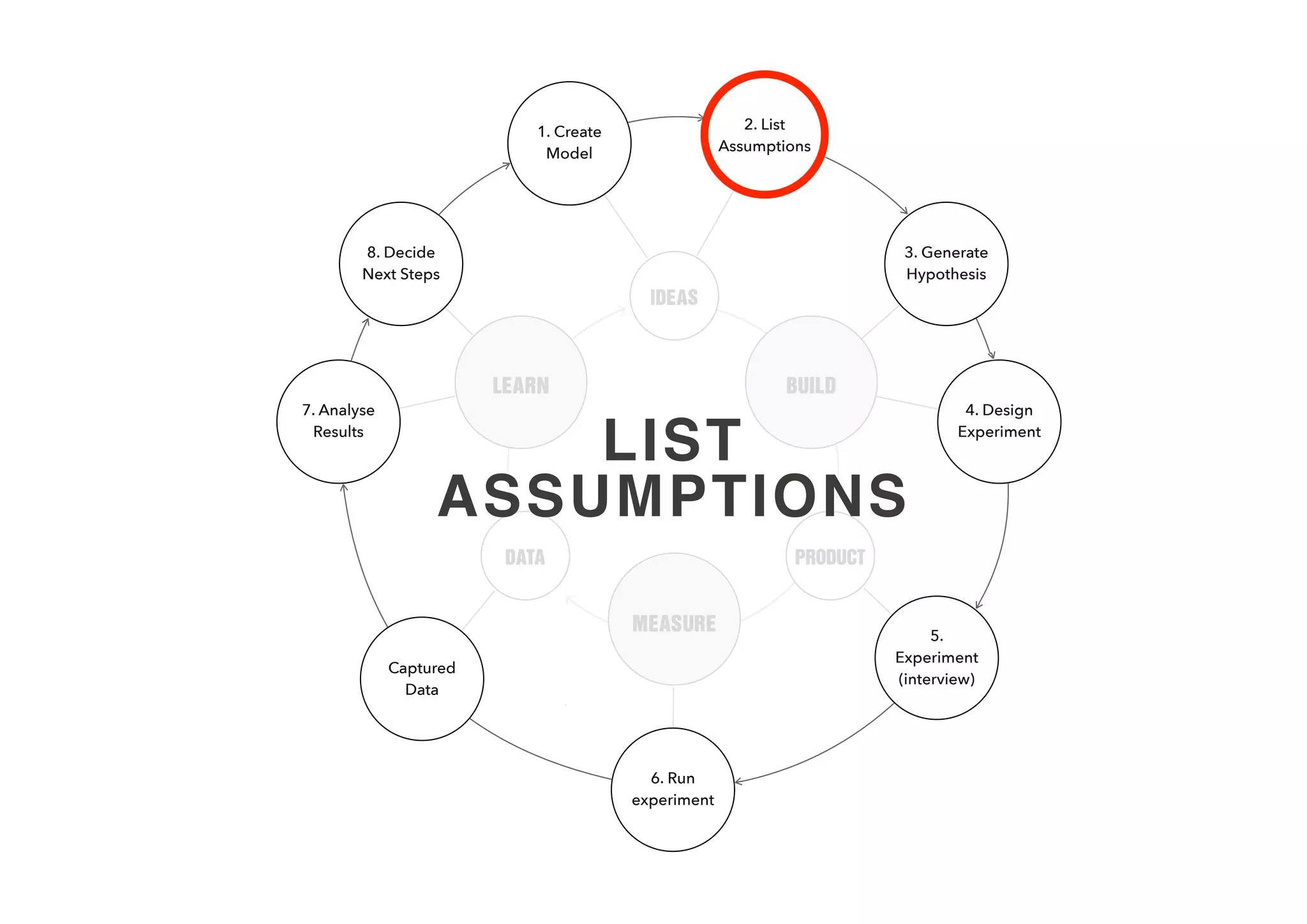
LIST
ASSUMPTIONS
ASSUMPTIONS
• “Theory behind the statements”
• Unvalidated, each statement is a figment of our
imagination: just because we believe it, does not
mean it’s true
• Everything on the canvas are assumptions - we
need to methodically test each of them
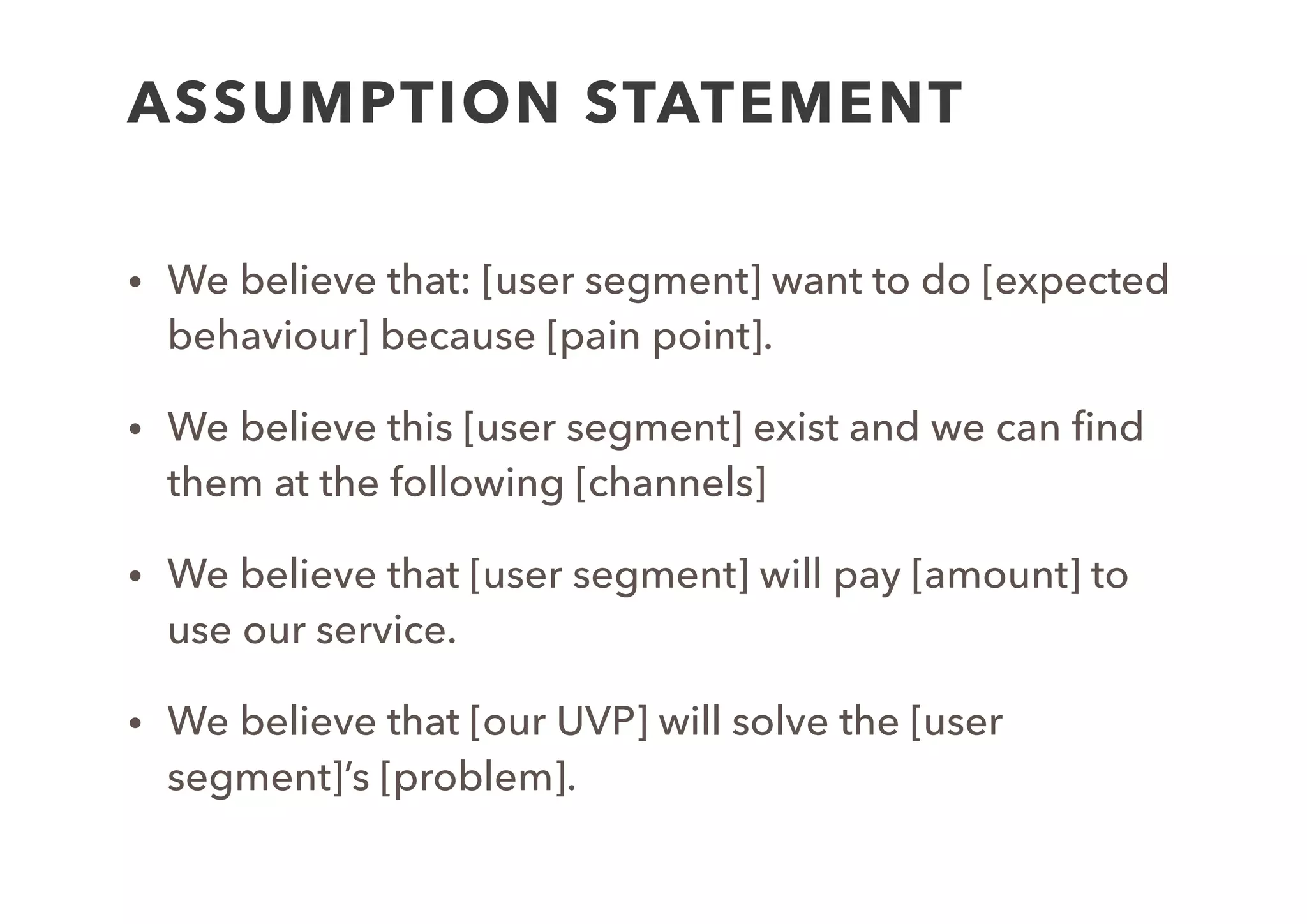
ASSUMPTION STATEMENT
• We believe that: [user segment] want to do [expected
behaviour] because [pain point].
• We believe this [user segment] exist and we can find
them at the following [channels]
• We believe that [user segment] will pay [amount] to
use our service.
• We believe that [our UVP] will solve the [user
segment]’s [problem].
EXAMPLE - FB’04
• Online presence lacking:

We believe that lots of students find their current
online presence unsatisfactory
• Hard to stay in contact:

We believe that many students worry about losing
contact with others
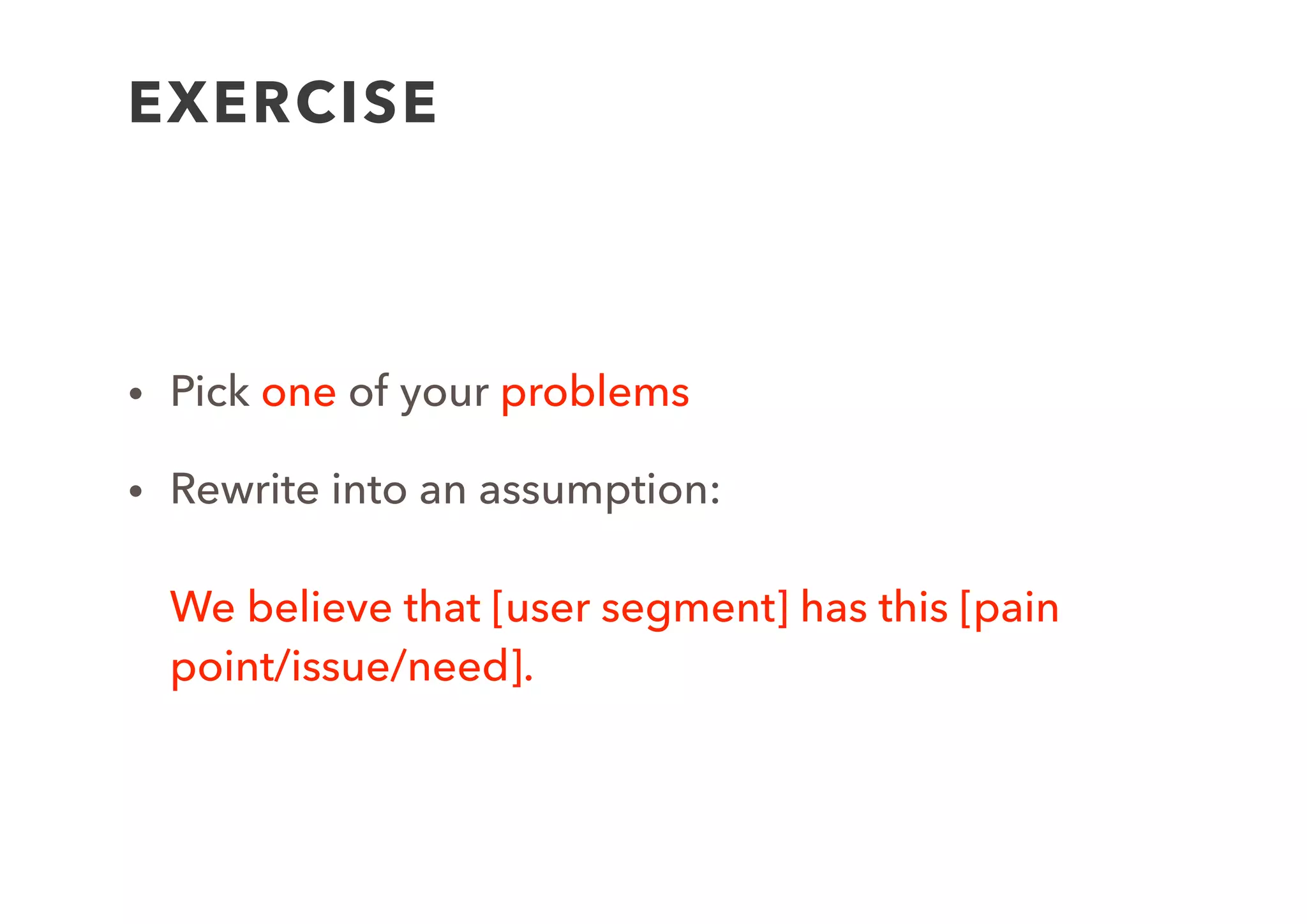
EXERCISE
• Pick one of your problems
• Rewrite into an assumption: 


We believe that [user segment] has this [pain
point/issue/need].
1. Create
Model
2. List
Assumptions
3. Generate
Hypothesis
4. Design
Experiment
6. Run
experiment
7. Analyse
Results
8. Decide
Next Steps
5.
Experiment
(interview)
Captured
Data
GENERATE
HYPOTHESIS
FALSIFIABLE HYPOTHESIS
• Assumptions need to be testable for validation
• Creating a Falsifiable Hypothesis: i.e. can be
proved true or false by empirically testing
• Format: 

If I were to [perform activity] on [sample subject],
then I would be able to [observe an outcome]
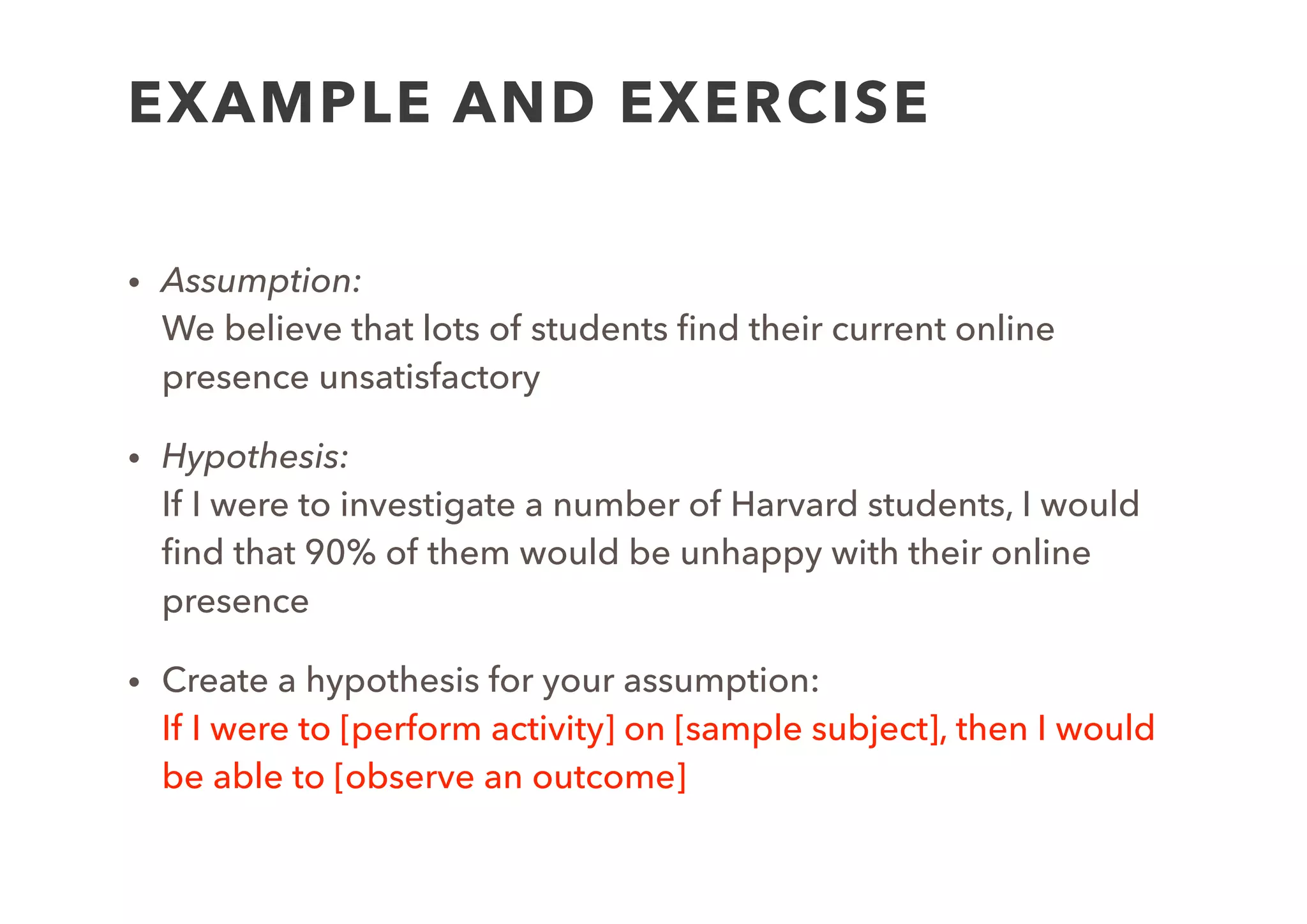
EXAMPLE AND EXERCISE
• Assumption: 

We believe that lots of students find their current online
presence unsatisfactory
• Hypothesis:

If I were to investigate a number of Harvard students, I would
find that 90% of them would be unhappy with their online
presence
• Create a hypothesis for your assumption:

If I were to [perform activity] on [sample subject], then I would
be able to [observe an outcome]
1. Create
Model
2. List
Assumptions
3. Generate
Hypothesis
4. Design
Experiment
6.
Run
experiment
(perform
7. Analyse
Results
8. Decide
Next Steps
5.
Experiment
(interview)
Captured
Data
DESIGN
EXPERIMENT
WHY EXPERIMENTS
• Typical statement: 

“Built something, put it out there, learnt a lot.”
• Question: What did you REALLY learn?
• Stuff that could be semi-relevant, might be useful
later. Hopefully.
• Wasted cycle: still no progress on your most critical
problems; worse, could be distracted onto a different
direction
AN EXPERIMENT
• Has a learning goal
• Explicit stated hypothesis
• Anticipates observable outcome
• Repeatable
• Avoid biases (try our best to!)
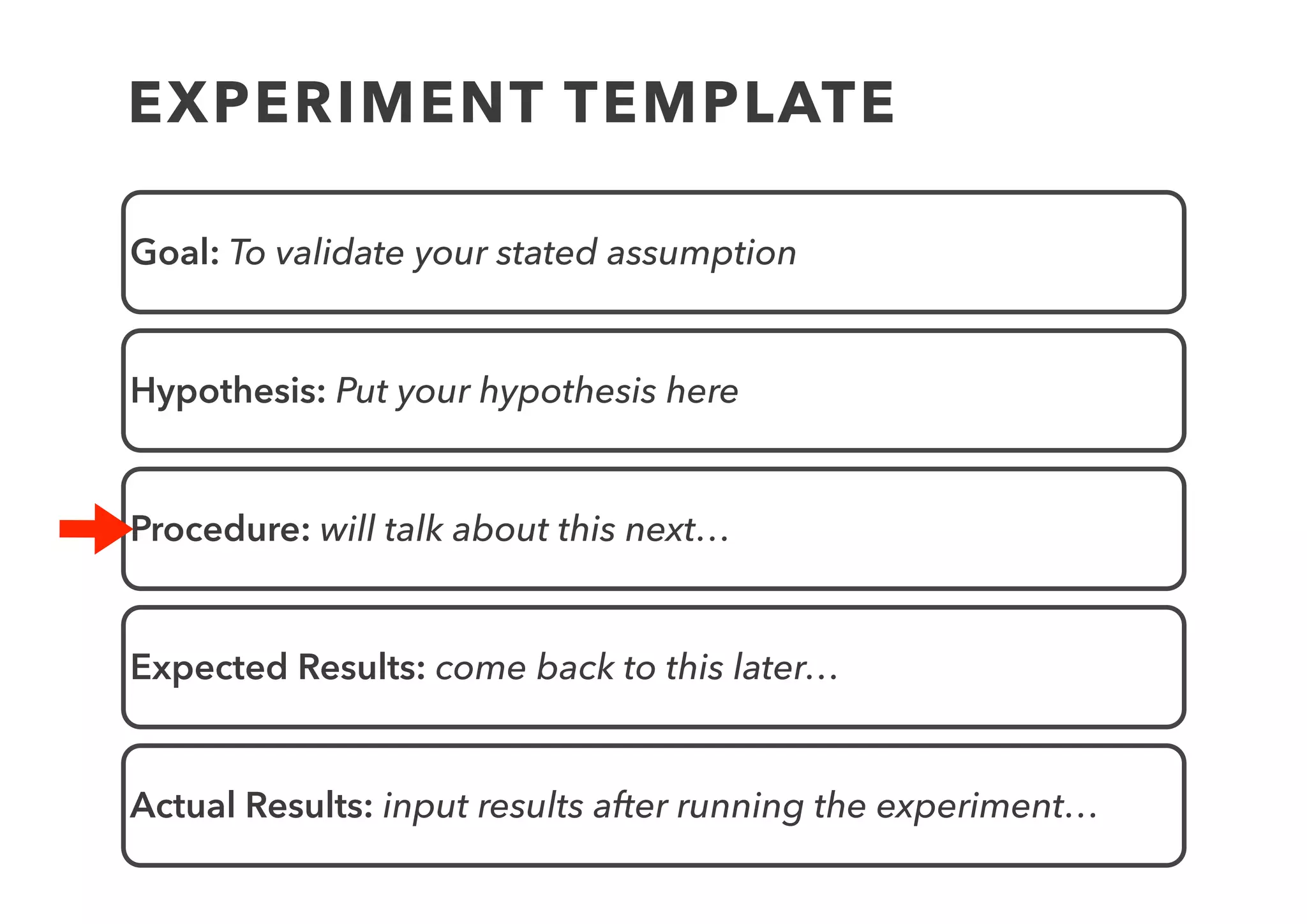
EXPERIMENT TEMPLATE
Goal: To validate your stated assumption
Hypothesis: Put your hypothesis here
Procedure: will talk about this next…
Expected Results: come back to this later…
Actual Results: input results after running the experiment…
1. Create
Model
2. List
Assumptions
3. Generate
Hypothesis
4. Design
Experiment
6. Run
experiment
7. Analyse
Results
8. Decide
Next Steps
5.
Experiment
(interview)
Captured
Data
EXPERIMENT
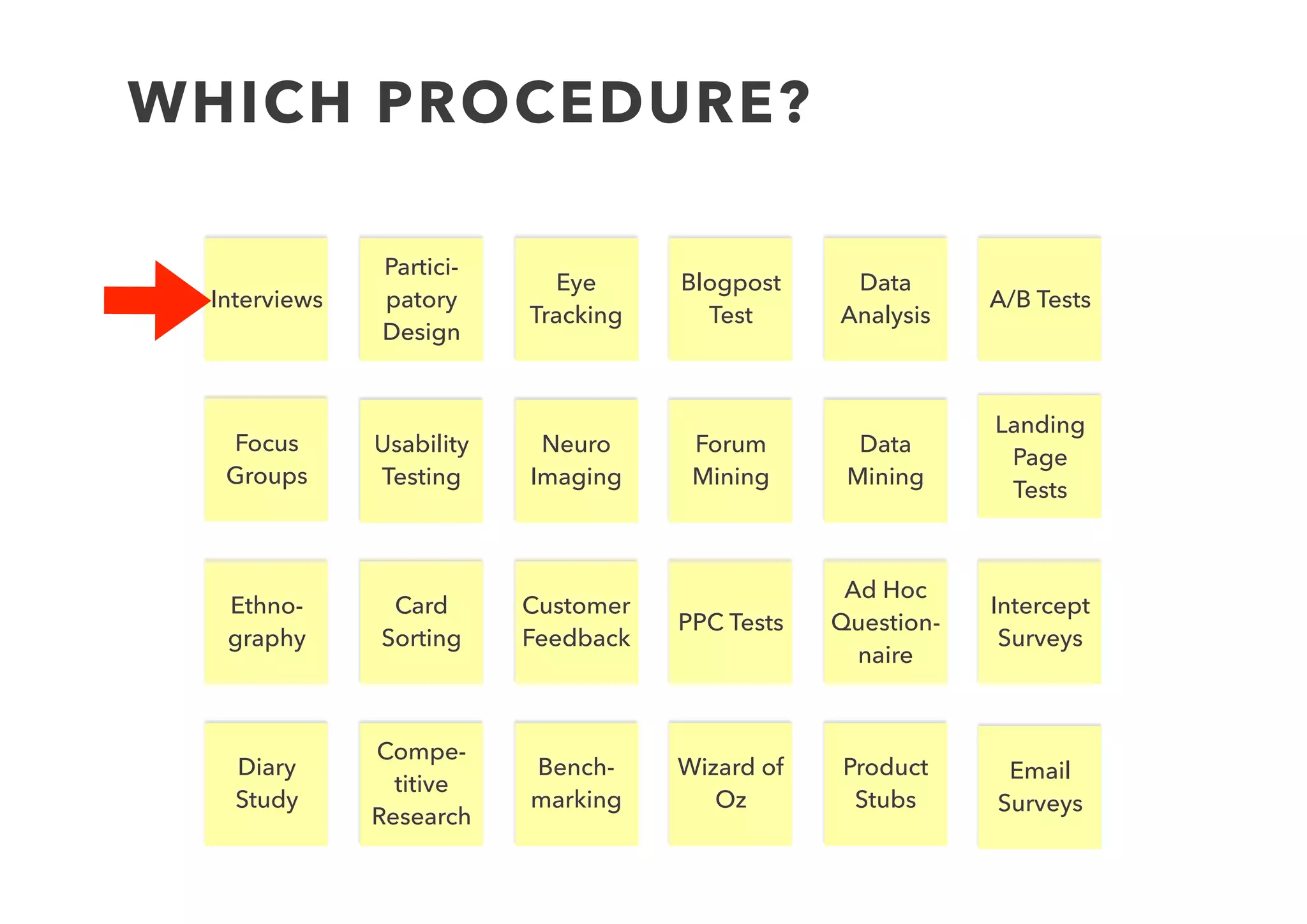
WHICH PROCEDURE?
Usability
Testing
Ethno-
graphy
Interviews
Partici-
patory
Design
Focus
Groups
Eye
Tracking
Compe-
titive
Research
Diary
Study
Bench-
marking
Forum
Mining
Blogpost
Test
Landing
Page
Tests
PPC Tests
A/B Tests
Customer
Feedback
Card
Sorting
Wizard of
Oz
Neuro
Imaging
Data
Mining
Data
Analysis
Ad Hoc
Question-
naire
Intercept
Surveys
Email
Surveys
Product
Stubs
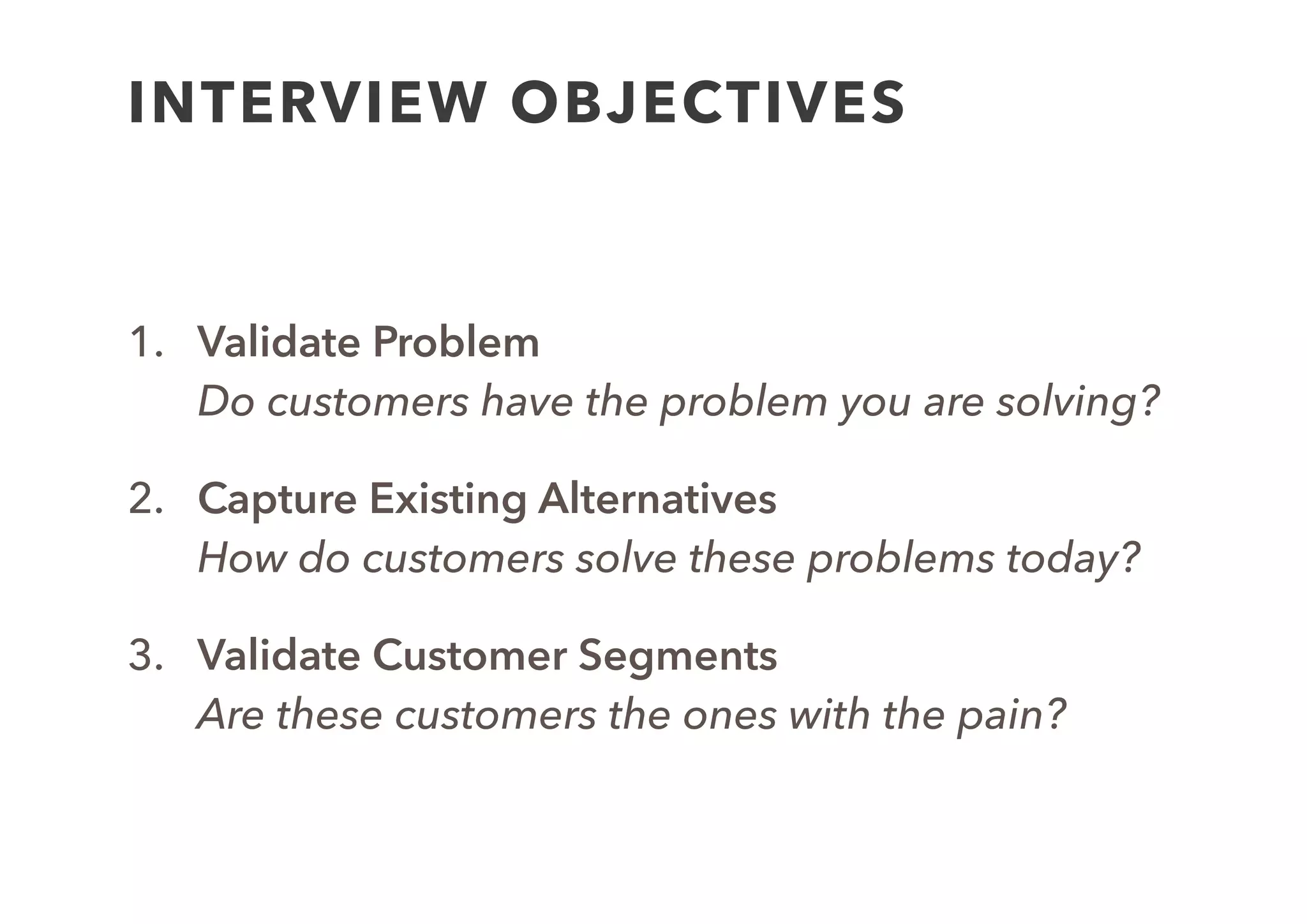
INTERVIEW OBJECTIVES
1. Validate Problem

Do customers have the problem you are solving?
2. Capture Existing Alternatives 

How do customers solve these problems today?
3. Validate Customer Segments 

Are these customers the ones with the pain?
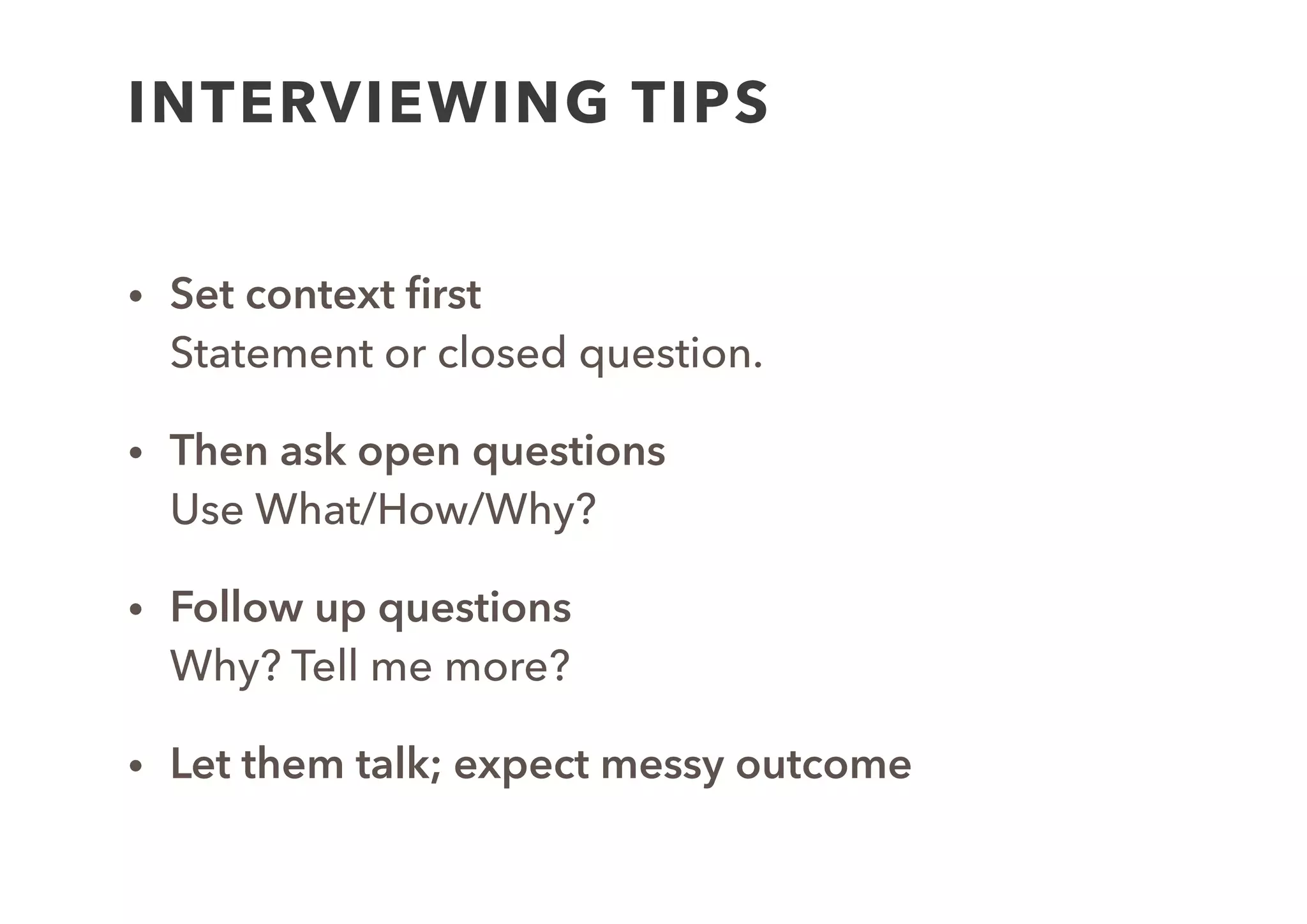
INTERVIEWING TIPS
• Set context first

Statement or closed question.
• Then ask open questions 

Use What/How/Why?
• Follow up questions 

Why? Tell me more?
• Let them talk; expect messy outcome
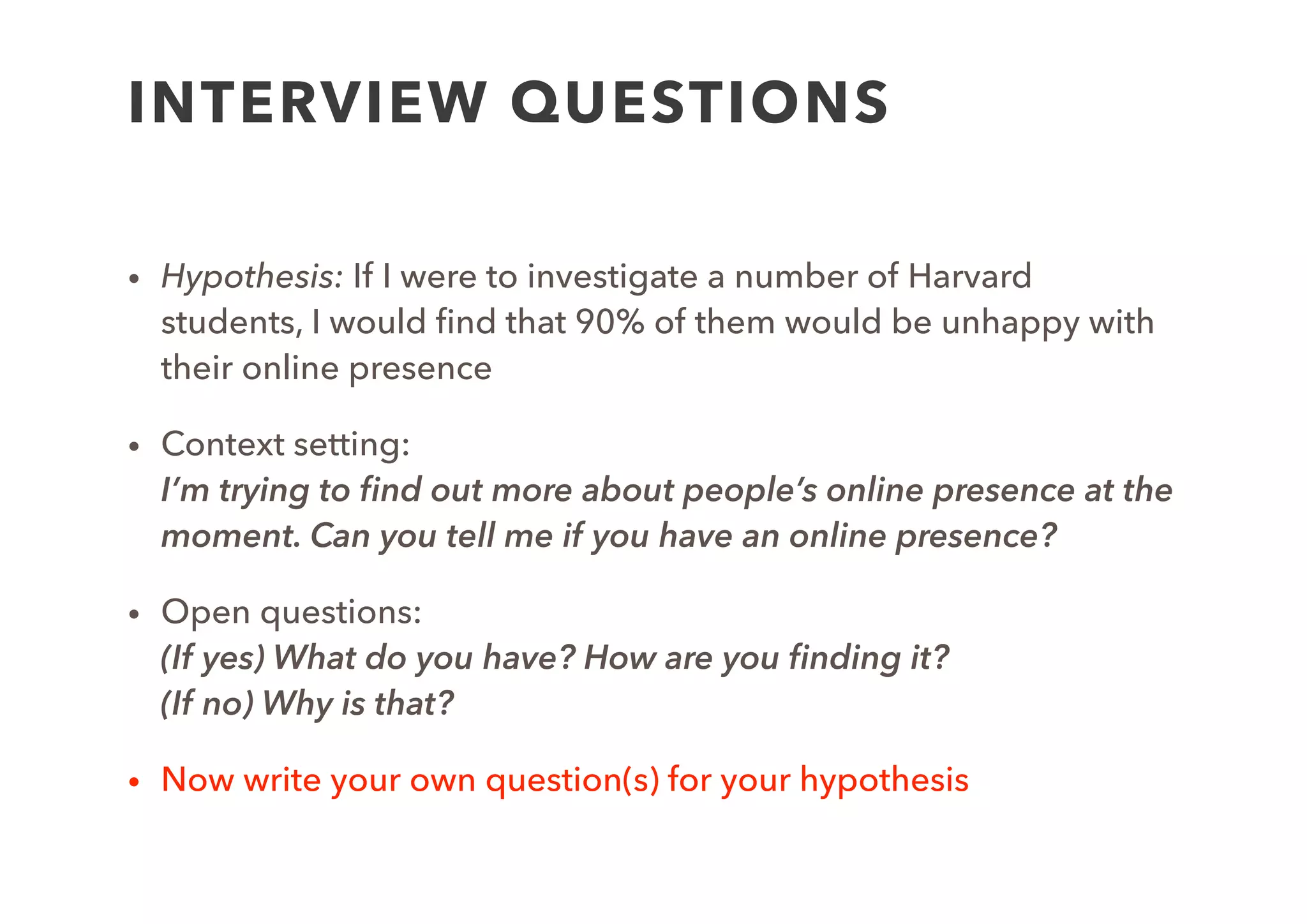
INTERVIEW QUESTIONS
• Hypothesis: If I were to investigate a number of Harvard
students, I would find that 90% of them would be unhappy with
their online presence
• Context setting: 

I’m trying to find out more about people’s online presence at the
moment. Can you tell me if you have an online presence?
• Open questions: 

(If yes) What do you have? How are you finding it? 

(If no) Why is that?
• Now write your own question(s) for your hypothesis
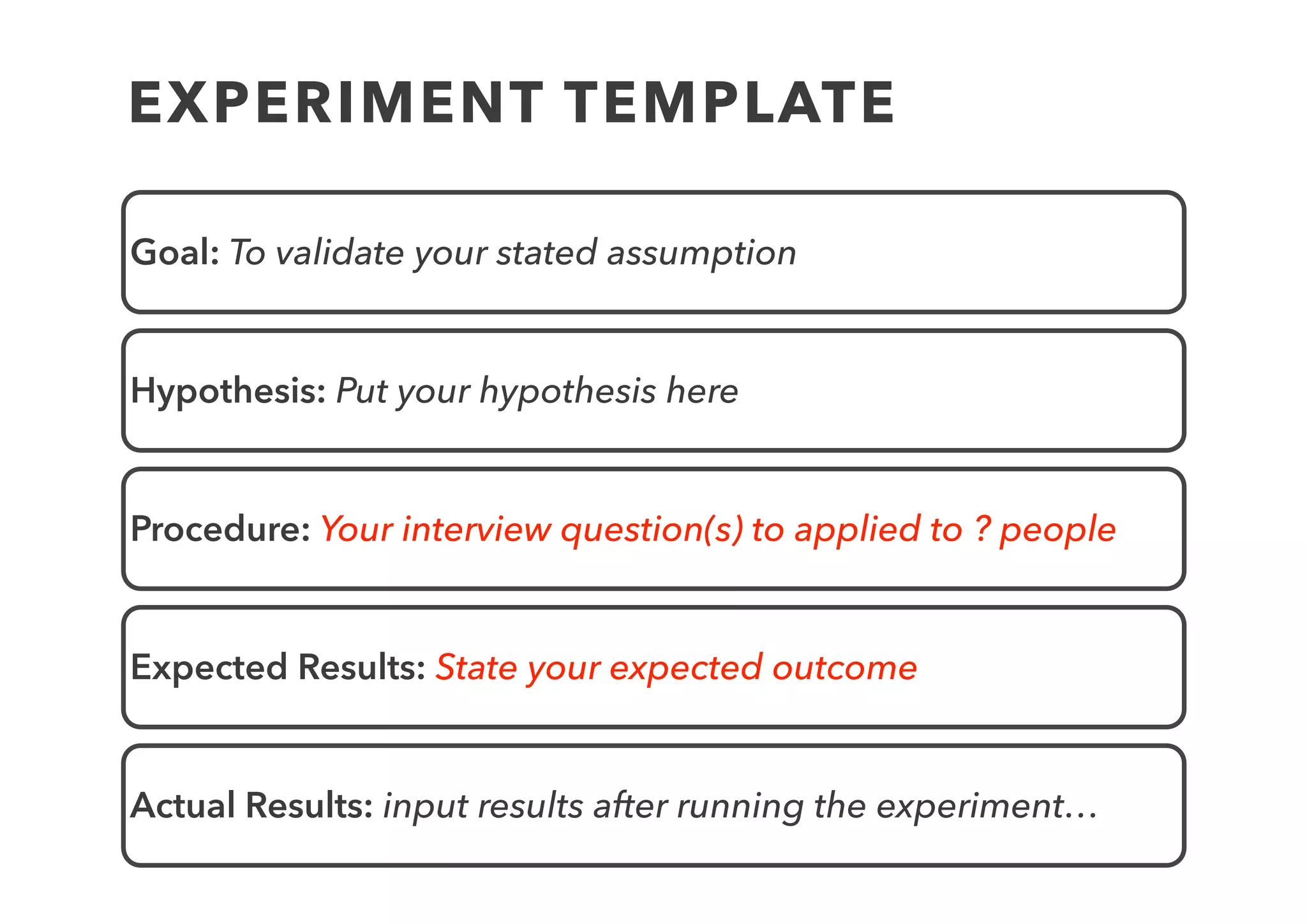
EXPERIMENT TEMPLATE
Goal: To validate your stated assumption
Hypothesis: Put your hypothesis here
Procedure: Your interview question(s) to applied to ? people
Expected Results: State your expected outcome
Actual Results: input results after running the experiment…
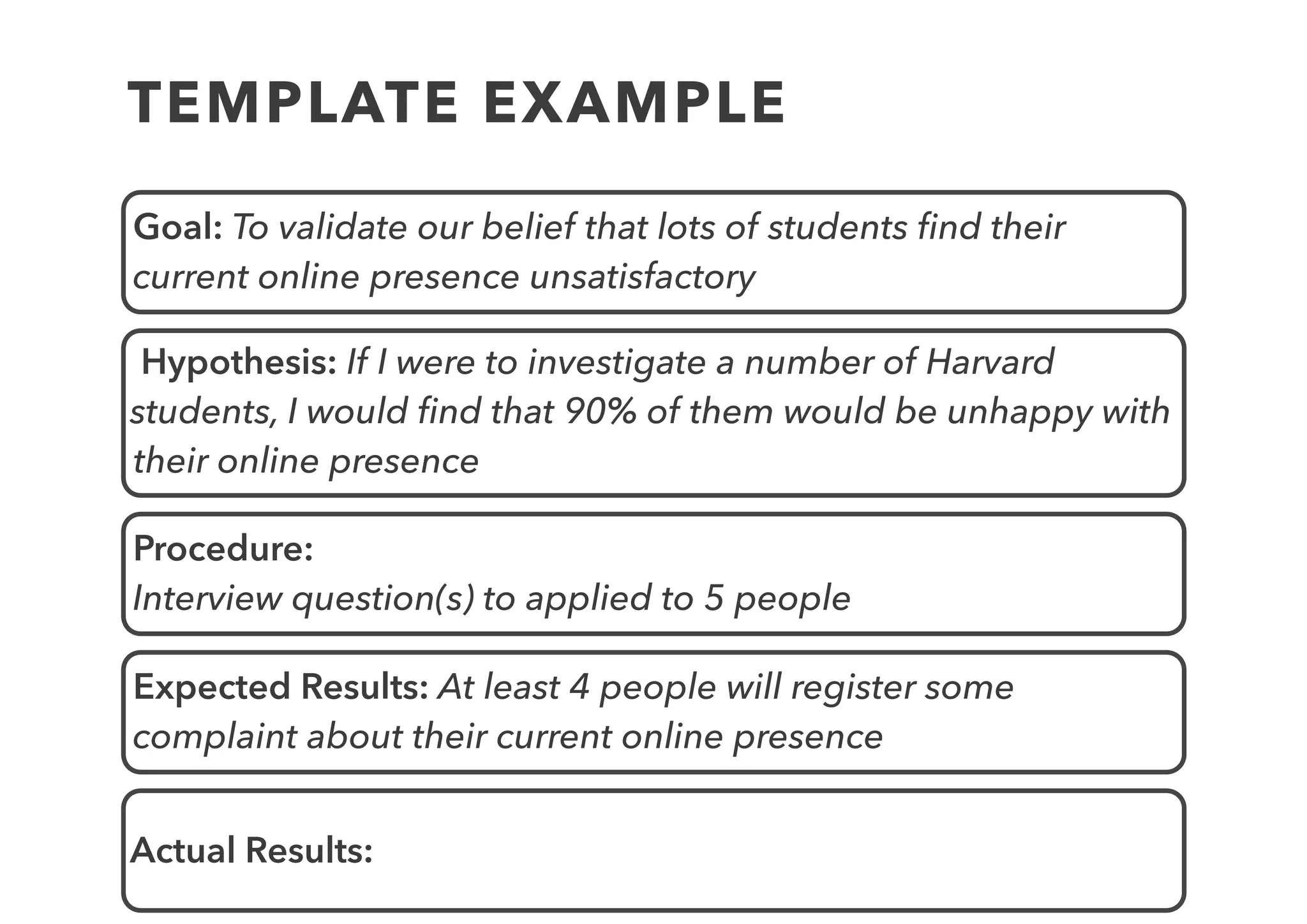
TEMPLATE EXAMPLE
Goal: To validate our belief that lots of students find their
current online presence unsatisfactory
Hypothesis: If I were to investigate a number of Harvard
students, I would find that 90% of them would be unhappy with
their online presence
Procedure:
Interview question(s) to applied to 5 people
Expected Results: At least 4 people will register some
complaint about their current online presence
Actual Results:
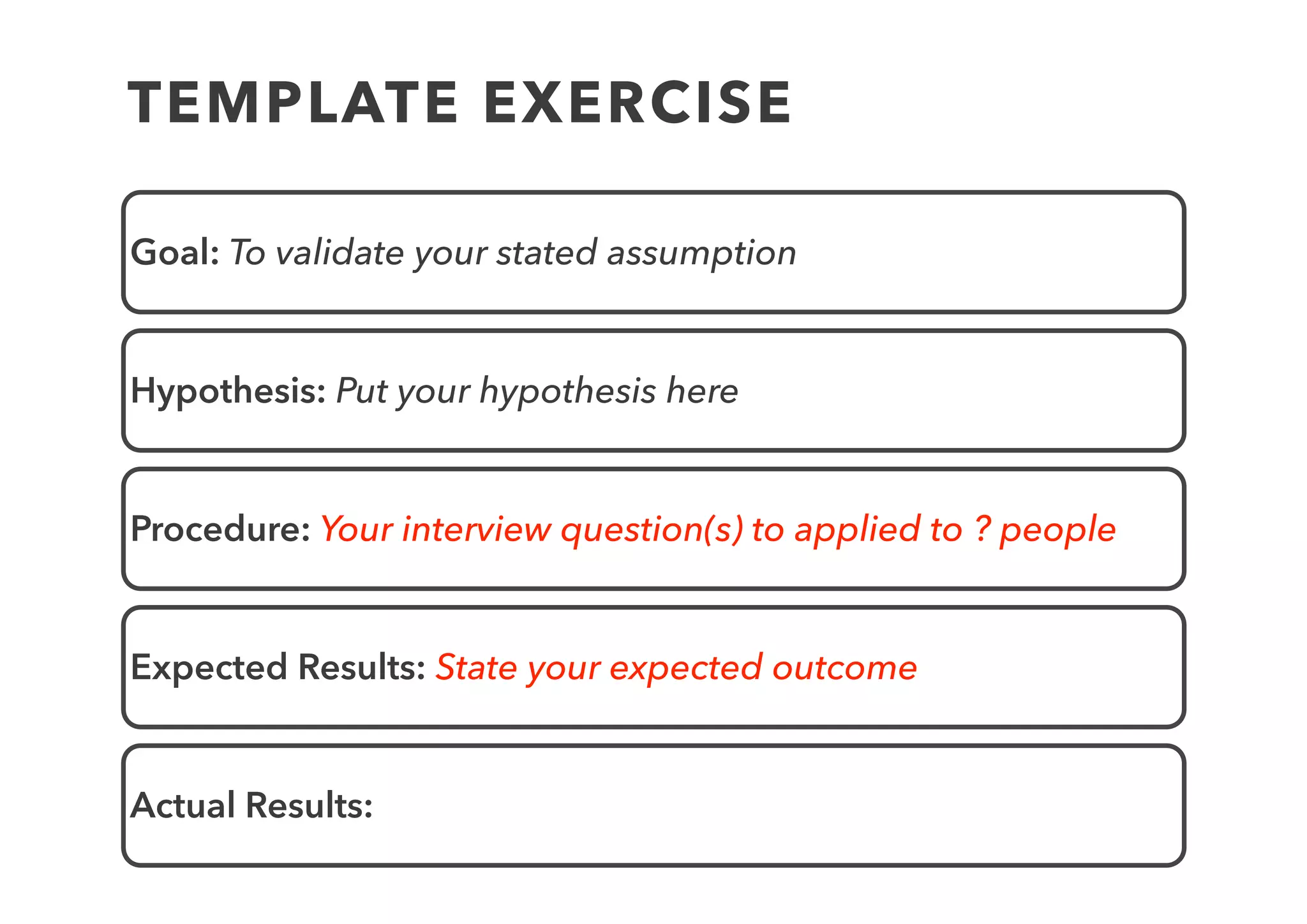
TEMPLATE EXERCISE
Goal: To validate your stated assumption
Hypothesis: Put your hypothesis here
Procedure: Your interview question(s) to applied to ? people
Expected Results: State your expected outcome
Actual Results:
1. Create
Model
2. List
Assumptions
3. Generate
Hypothesis
4. Design
Experiment
6. Run
experiment
7. Analyse
Results
8. Decide
Next Steps
5.
Experiment
(interview)
Captured
Data
RUN
EXPERIMENT
INTERVIEW PROCESS
• Perform interview with the person next to you
• Interviewee pretend to be target audience
• Try noting/recording in verbatim
• Take turns, 5 minutes each
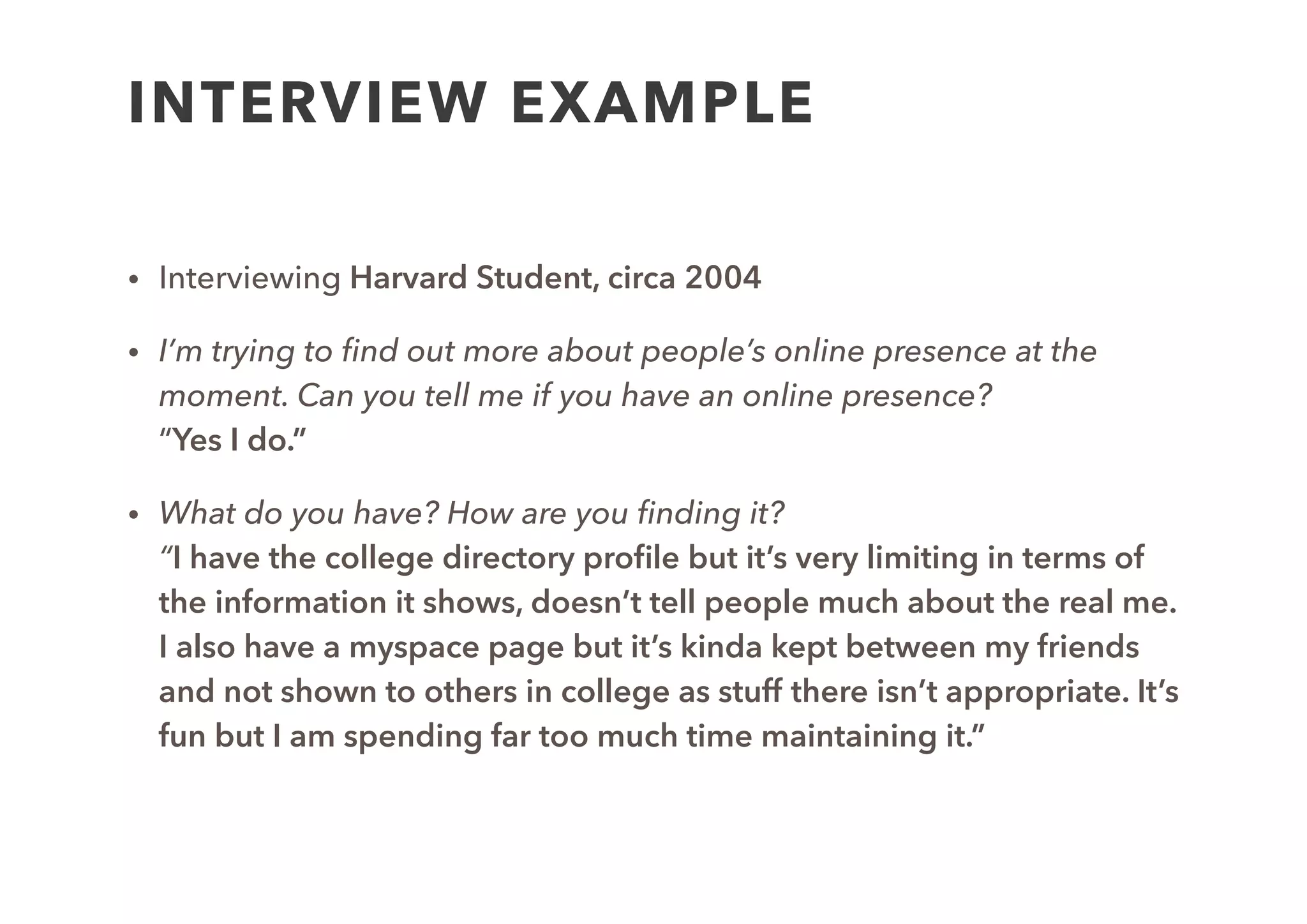
INTERVIEW EXAMPLE
• Interviewing Harvard Student, circa 2004
• I’m trying to find out more about people’s online presence at the
moment. Can you tell me if you have an online presence? 

“Yes I do.”
• What do you have? How are you finding it?

“I have the college directory profile but it’s very limiting in terms of
the information it shows, doesn’t tell people much about the real me.
I also have a myspace page but it’s kinda kept between my friends
and not shown to others in college as stuff there isn’t appropriate. It’s
fun but I am spending far too much time maintaining it.”

INTERVIEW EXERCISE
• Perform interview with the person next to you
• Interviewee to pretend to be target audience
• Try noting/recording in verbatim
• Take turns, 5 minutes each
1. Create
Model
2. List
Assumptions
3. Generate
Hypothesis
4. Design
Experiment
6.
Run
experiment
(perform
7. Analyse
Results
8. Decide
Next Steps
5.
Experiment
(interview)
Captured
Data
ANALYSE
RESULTS
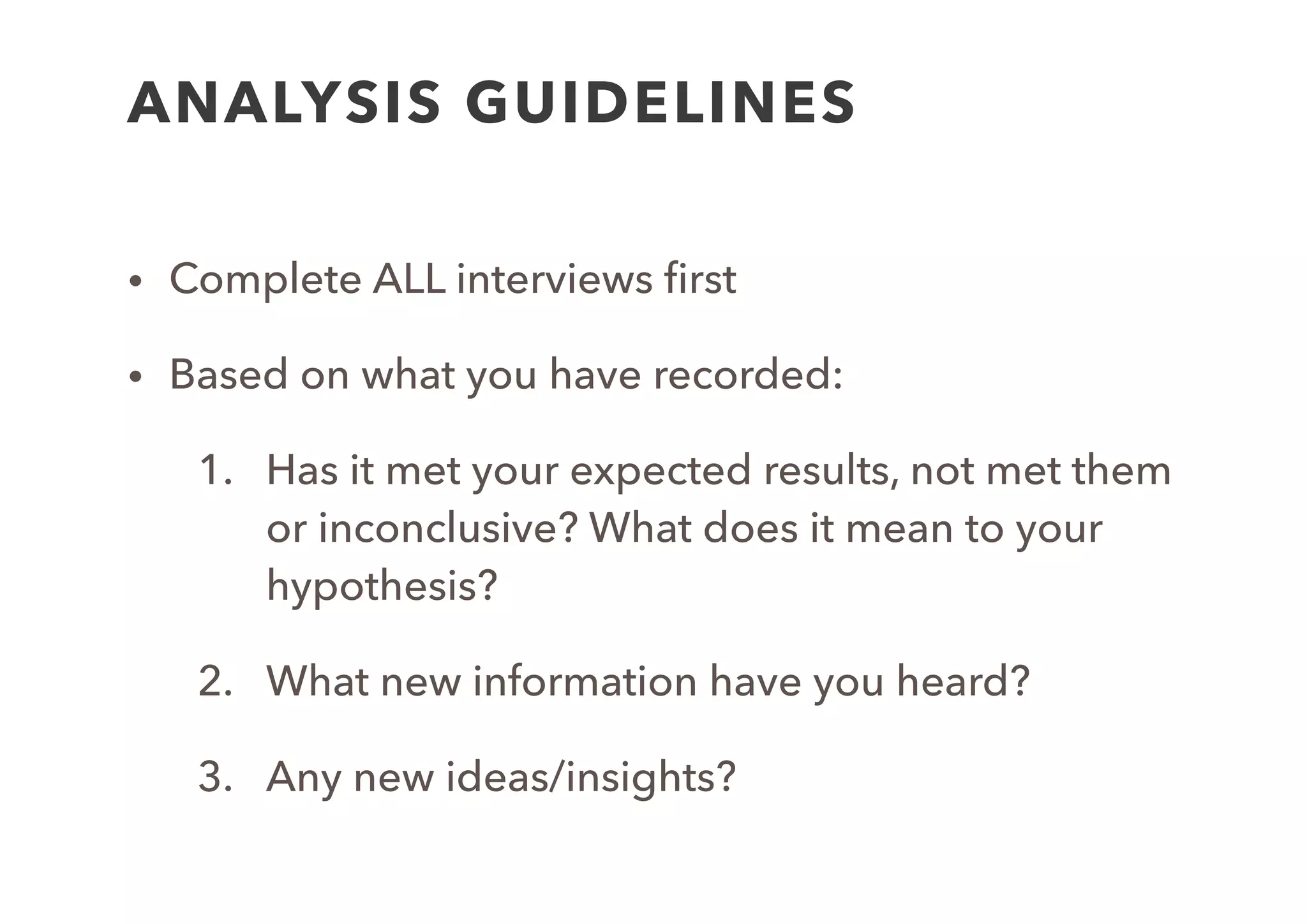
ANALYSIS GUIDELINES
• Complete ALL interviews first
• Based on what you have recorded:
1. Has it met your expected results, not met them
or inconclusive? What does it mean to your
hypothesis?
2. What new information have you heard?
3. Any new ideas/insights?
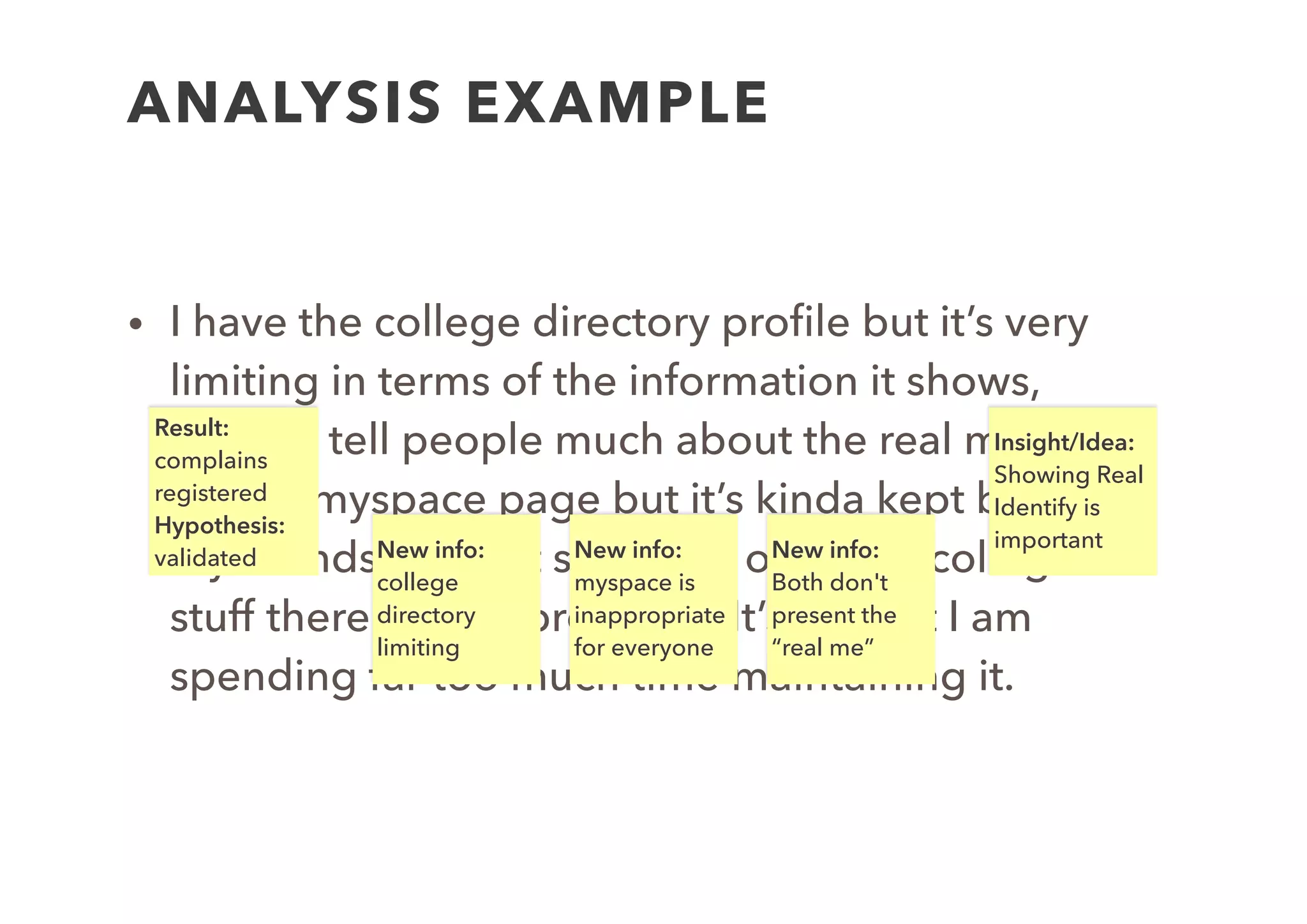
ANALYSIS EXAMPLE
• I have the college directory profile but it’s very
limiting in terms of the information it shows,
doesn’t tell people much about the real me. I also
have a myspace page but it’s kinda kept between
my friends and not shown to others in college as
stuff there isn’t appropriate. It’s fun but I am
spending far too much time maintaining it.

Result:
complains
registered
Hypothesis:
validated New info:
college
directory
limiting
New info:
myspace is
inappropriate
for everyone
New info:
Both don't
present the
“real me”
Insight/Idea:
Showing Real
Identify is
important
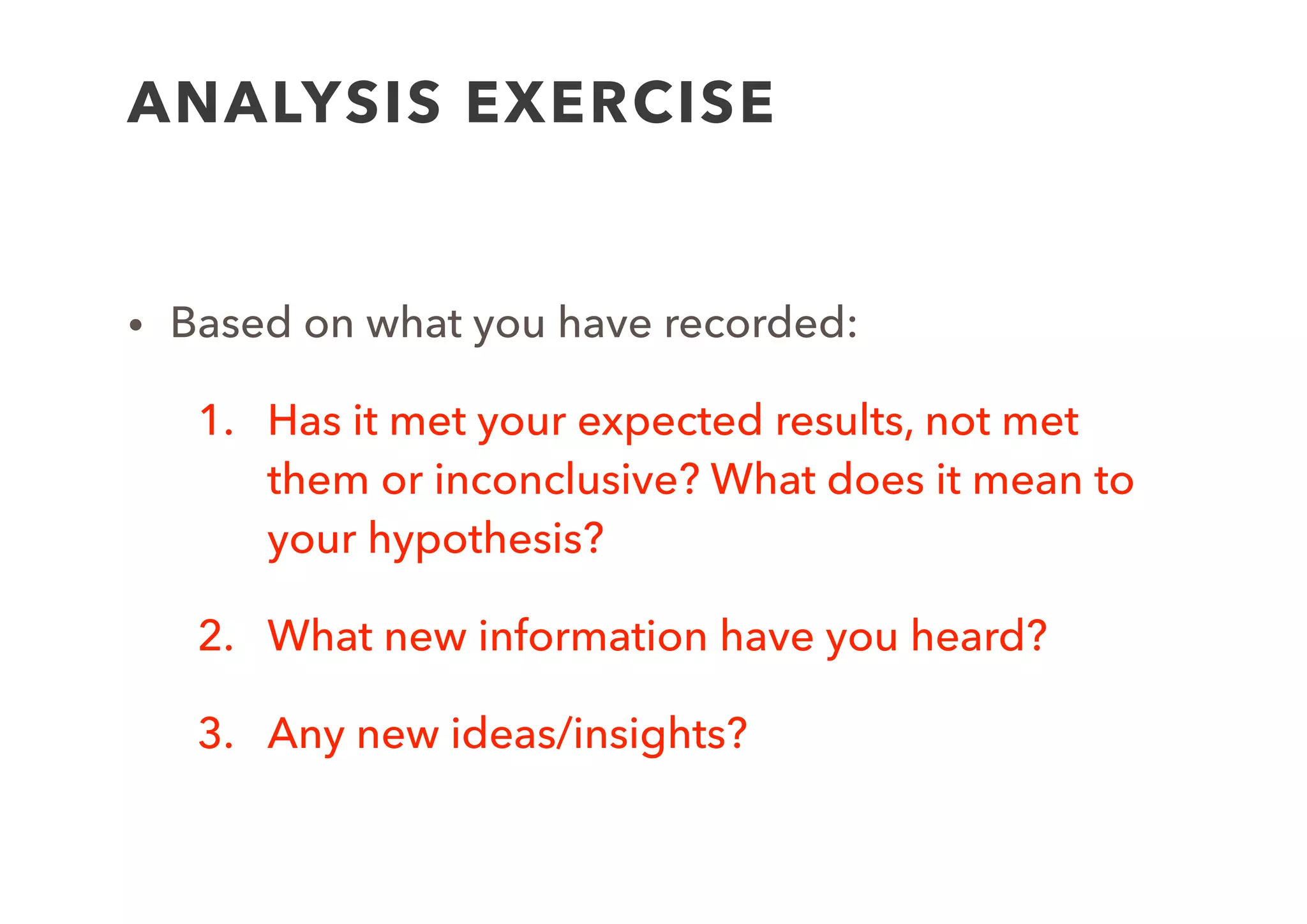
ANALYSIS EXERCISE
• Based on what you have recorded:
1. Has it met your expected results, not met
them or inconclusive? What does it mean to
your hypothesis?
2. What new information have you heard?
3. Any new ideas/insights?
1. Create
Model
2. List
Assumptions
3. Generate
Hypothesis
4. Design
Experiment
6.
Run
experiment
(perform
7. Analyse
Results
8. Decide
Next Steps
5.
Experiment
(interview)
Captured
Data
DECIDE NEXT
STEPS
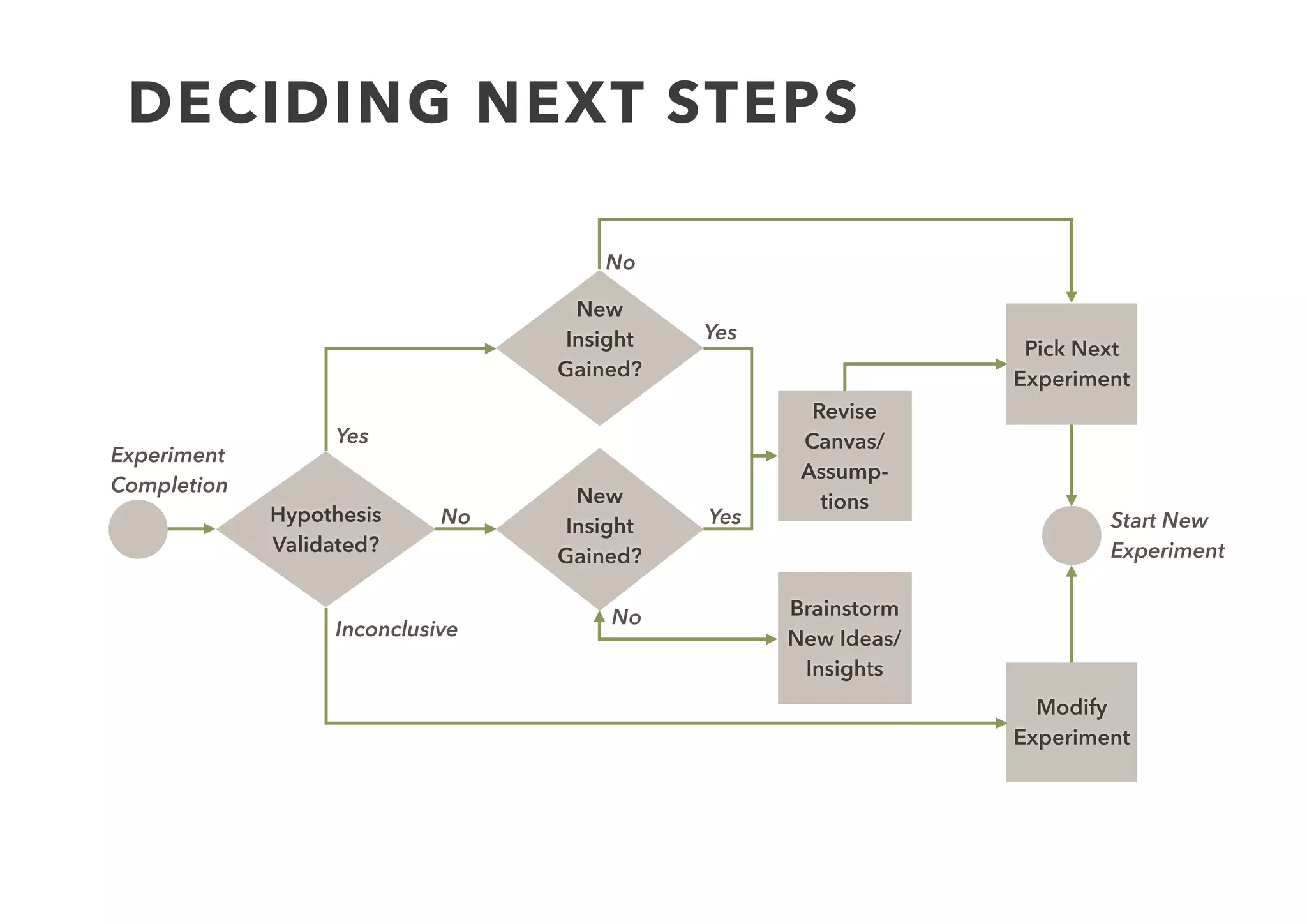
DECIDING NEXT STEPS
Revise
Canvas/
Assump-
tions
Hypothesis
Validated?
New
Insight
Gained?
New
Insight
Gained?
Pick Next
Experiment
Modify
Experiment
Experiment
Completion
Start New
Experiment
Yes
No
Inconclusive
Brainstorm
New Ideas/
Insights
No
Yes
Yes
No
PROCESS RECAP
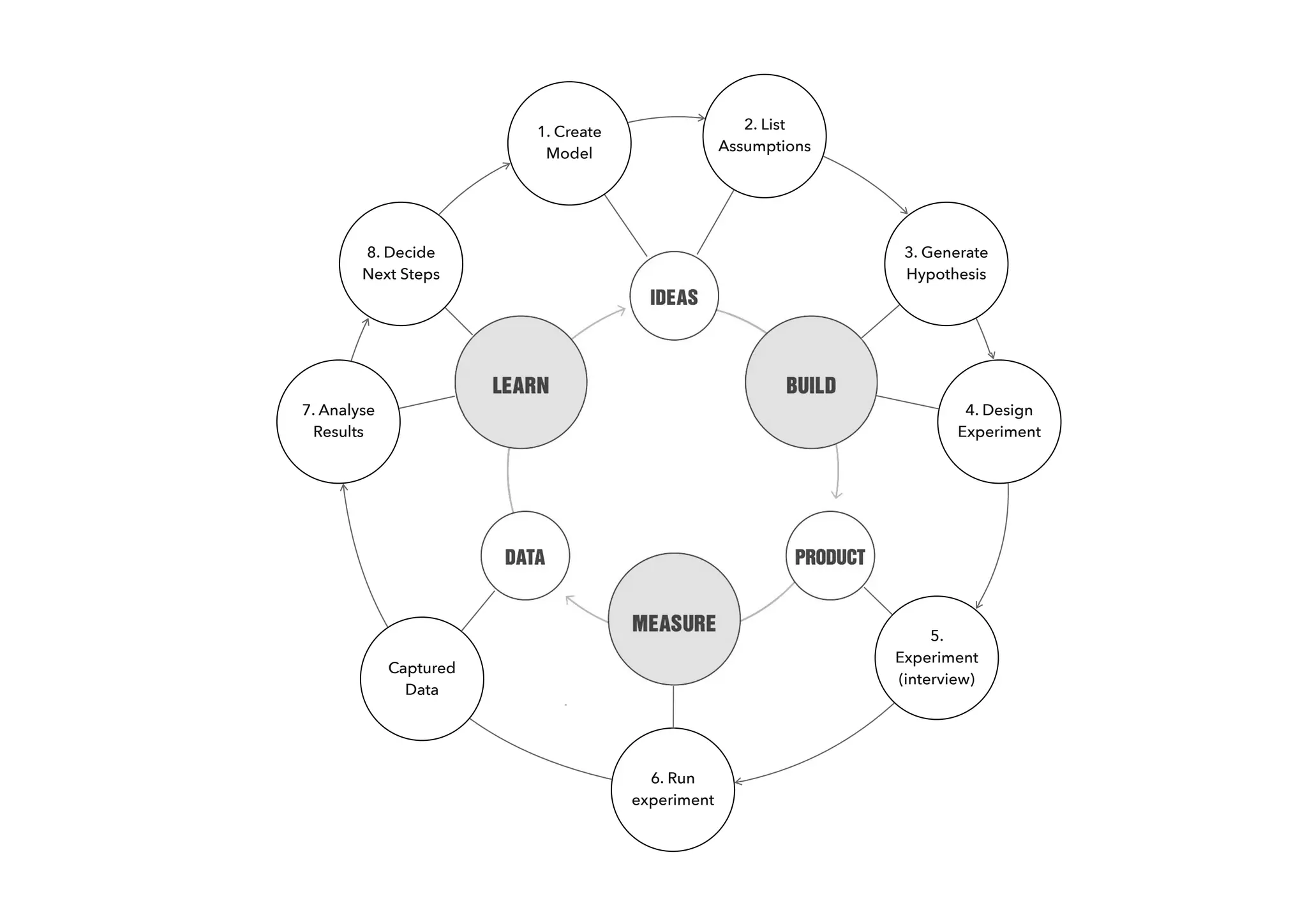
1. Create
Model
2. List
Assumptions
3. Generate
Hypothesis
4. Design
Experiment
6. Run
experiment
7. Analyse
Results
8. Decide
Next Steps
5.
Experiment
(interview)
Captured
Data
THIS IS LEAN UX
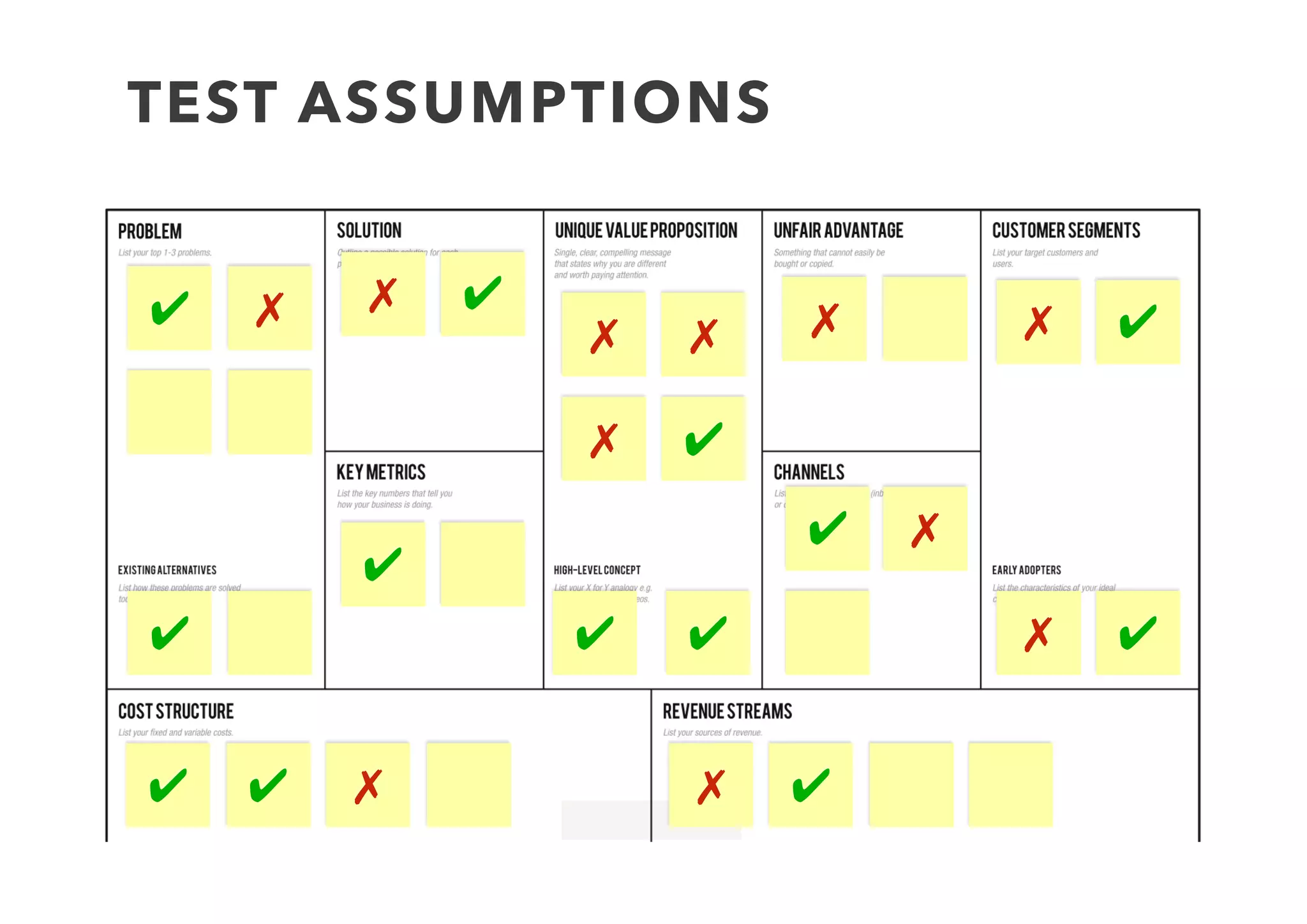
TEST ASSUMPTIONS
✔ ✗
✔
✗
✔
✗ ✗
✗ ✔
✗
✔ ✔
✗ ✔
✔ ✗
✗✔ ✔ ✗ ✔
✔✗
✔
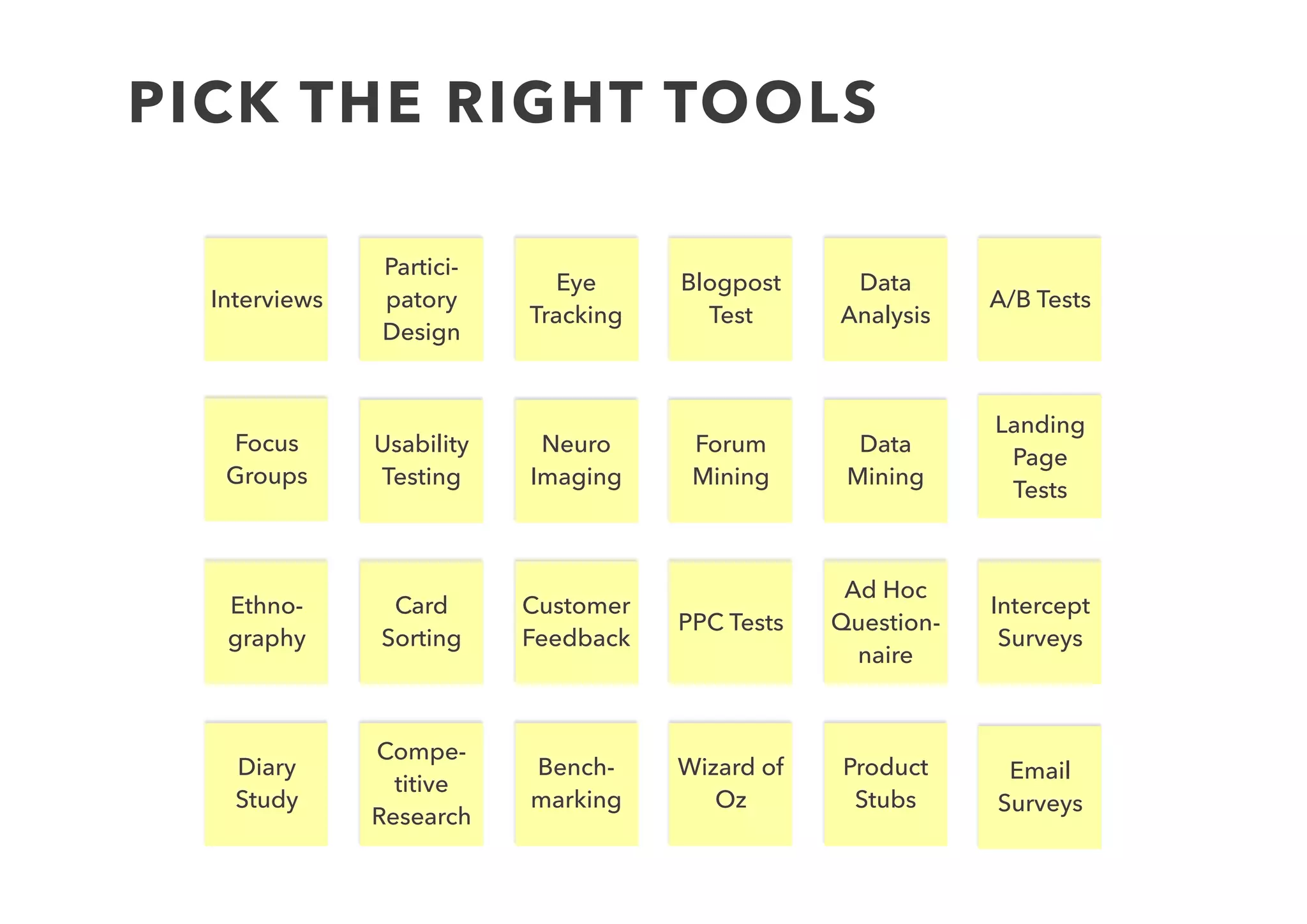
PICK THE RIGHT TOOLS
Usability
Testing
Ethno-
graphy
Interviews
Partici-
patory
Design
Focus
Groups
Eye
Tracking
Compe-
titive
Research
Diary
Study
Bench-
marking
Forum
Mining
Blogpost
Test
Landing
Page
Tests
PPC Tests
A/B Tests
Customer
Feedback
Card
Sorting
Wizard of
Oz
Neuro
Imaging
Data
Mining
Data
Analysis
Ad Hoc
Question-
naire
Intercept
Surveys
Email
Surveys
Product
Stubs
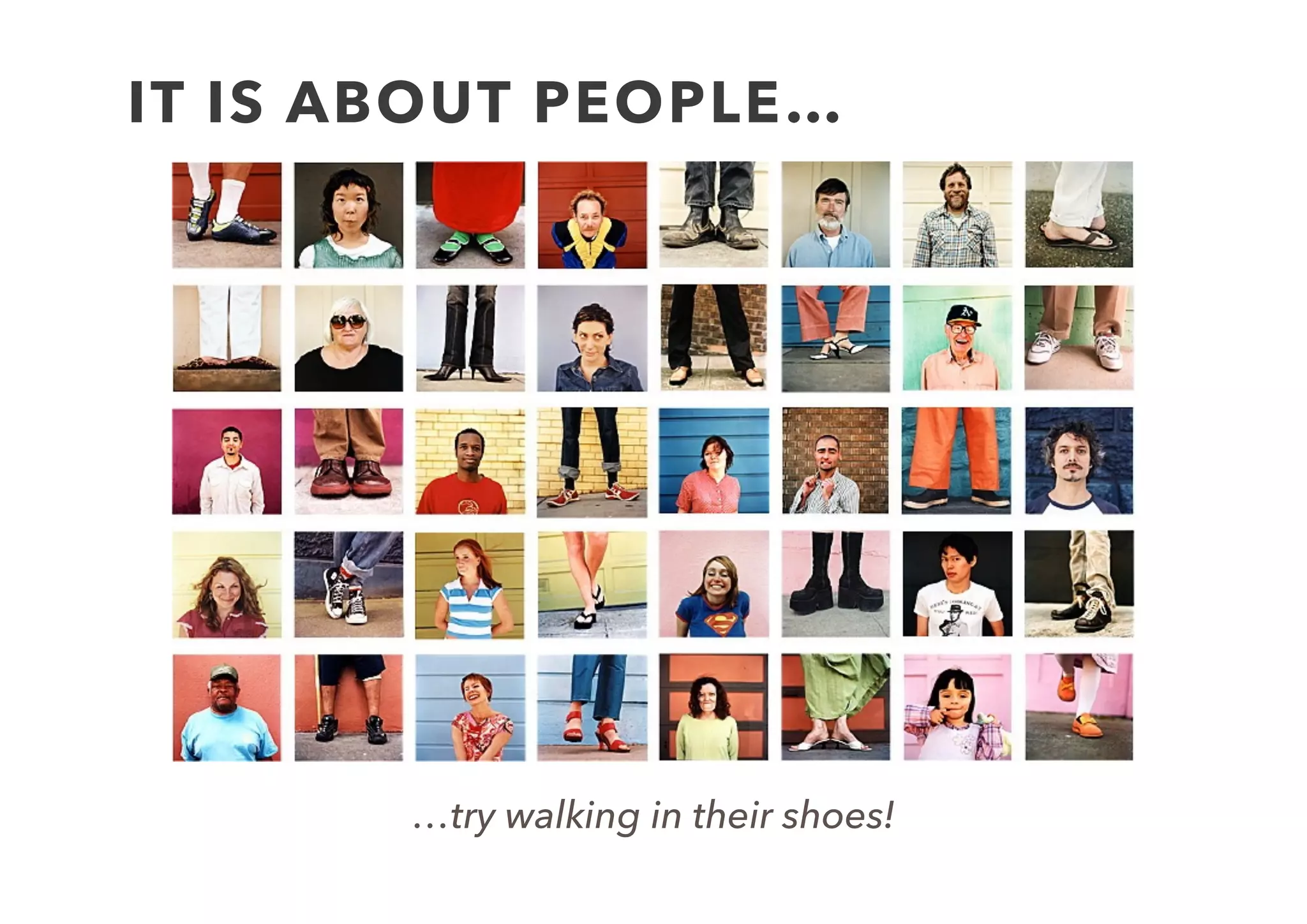
IT IS ABOUT PEOPLE…
…try walking in their shoes!
CHANGE WILL GET HARDER
MAKING THE NECESSARY CALLS
REFERENCES
QUESTIONS?
Sheen Yap
Follow on Twitter: @sheen
Connect: uk.linkedin.com/in/sheenyap
Register for beta: circula.co

Validating Ideas with Users

  • 1.
    LEAN UX DRIVENPRODUCT DEVELOPMENT VALIDATING IDEAS WITH USERS Sheen Yap
 Dreamstake Workshop 3:00pm 27 Jan 2015 London UK
  • 2.
    ..HOW TO CREATEPRODUCTS THAT PEOPLE WILL USE
  • 3.
    INTRODUCTION • Sheen Yap  •UX expert, design leader and lean evangelist • 17-years’ UX experience across web, mobile, iTV • Consulting to startups and corporates to help building better products through Lean and UX • Co-creator circula.co
  • 4.
    WORKSHOP OBJECTIVES • Earlystage startups - new idea, pivoting or existing • Go through process of validating ideas • Walk through and apply at each step • Understand and willing to perform user testing • Have fun, make mistakes, learn!
  • 5.
  • 6.
    LEAN STARTUP CYCLE Earlystage application!
  • 7.
  • 8.
  • 9.
  • 10.
    PROBLEM-SOLUTION FIT -NOW • Product idea is about problem-solution fit • Need to solve Real Problems for Real People • Avoid eventual failure • Avoid waste in time, effort and money  • Avoid pain in dismantling • Missed opportunity to pivot to a better idea
  • 11.
    ..HOW TO CREATEPRODUCTS THAT PEOPLE WILL USE HOW TO AVOID CREATING PRODUCTS NO ONE WILL USE TEST WITH USERS, & TEST EARLY!
  • 12.
    HOW DO WEDO IT?
  • 13.
    1. Create Model 2. List Assumptions 3.Generate Hypothesis 4. Design Experiment 6. Run experiment 7. Analyse Results 8. Decide Next Steps 5. Experiment (interview) Captured Data
  • 14.
    1. Create Model 2. List Assumptions 3.Generate Hypothesis 4. Design Experiment 6. Run experiment 7. Analyse Results 8. Decide Next Steps 5. Experiment (interview) Captured Data
  • 15.
    1. Create Model 2. List Assumptions 3.Generate Hypothesis 4. Design Experiment 6. Run experiment 7. Analyse Results 8. Decide Next Steps 5. Experiment (interview) Captured Data CREATE MODEL
  • 16.
    “IDEAS” • Ideas normallycome as a “solution” i.e. 
 A Thing that has A, B and C Features. • We are seduced by its perceived tangibility • No way for anyone else to evaluate its true value to the world • Can’t tell if it fulfils a genuine need • Restricts the flexibility for a better solution
  • 17.
  • 18.
  • 19.
    EXAMPLE - FACEBOOK2004 Online presence lacking Hard to stay in contact College Students Harvard Students Personal Profile Friend Connect
  • 20.
  • 21.
    EXERCISE • Who areyour customer segments? • What are their problems/pain points/issues? • Who are your customers? • What are their problems/pain points/issues? • Who could be your early adopter?
  • 22.
    1. Create Model 2. List Assumptions 3.Generate Hypothesis 4. Design Experiment 6. Run experiment 7. Analyse Results 8. Decide Next Steps 5. Experiment (interview) Captured Data LIST ASSUMPTIONS
  • 23.
    ASSUMPTIONS • “Theory behindthe statements” • Unvalidated, each statement is a figment of our imagination: just because we believe it, does not mean it’s true • Everything on the canvas are assumptions - we need to methodically test each of them
  • 24.
    ASSUMPTION STATEMENT • Webelieve that: [user segment] want to do [expected behaviour] because [pain point]. • We believe this [user segment] exist and we can find them at the following [channels] • We believe that [user segment] will pay [amount] to use our service. • We believe that [our UVP] will solve the [user segment]’s [problem].
  • 25.
    EXAMPLE - FB’04 •Online presence lacking:
 We believe that lots of students find their current online presence unsatisfactory • Hard to stay in contact:
 We believe that many students worry about losing contact with others
  • 26.
    EXERCISE • Pick oneof your problems • Rewrite into an assumption: 
 
 We believe that [user segment] has this [pain point/issue/need].
  • 27.
    1. Create Model 2. List Assumptions 3.Generate Hypothesis 4. Design Experiment 6. Run experiment 7. Analyse Results 8. Decide Next Steps 5. Experiment (interview) Captured Data GENERATE HYPOTHESIS
  • 28.
    FALSIFIABLE HYPOTHESIS • Assumptionsneed to be testable for validation • Creating a Falsifiable Hypothesis: i.e. can be proved true or false by empirically testing • Format: 
 If I were to [perform activity] on [sample subject], then I would be able to [observe an outcome]
  • 29.
    EXAMPLE AND EXERCISE •Assumption: 
 We believe that lots of students find their current online presence unsatisfactory • Hypothesis:
 If I were to investigate a number of Harvard students, I would find that 90% of them would be unhappy with their online presence • Create a hypothesis for your assumption:
 If I were to [perform activity] on [sample subject], then I would be able to [observe an outcome]
  • 30.
    1. Create Model 2. List Assumptions 3.Generate Hypothesis 4. Design Experiment 6. Run experiment (perform 7. Analyse Results 8. Decide Next Steps 5. Experiment (interview) Captured Data DESIGN EXPERIMENT
  • 31.
    WHY EXPERIMENTS • Typicalstatement: 
 “Built something, put it out there, learnt a lot.” • Question: What did you REALLY learn? • Stuff that could be semi-relevant, might be useful later. Hopefully. • Wasted cycle: still no progress on your most critical problems; worse, could be distracted onto a different direction
  • 32.
    AN EXPERIMENT • Hasa learning goal • Explicit stated hypothesis • Anticipates observable outcome • Repeatable • Avoid biases (try our best to!)
  • 33.
    EXPERIMENT TEMPLATE Goal: Tovalidate your stated assumption Hypothesis: Put your hypothesis here Procedure: will talk about this next… Expected Results: come back to this later… Actual Results: input results after running the experiment…
  • 34.
    1. Create Model 2. List Assumptions 3.Generate Hypothesis 4. Design Experiment 6. Run experiment 7. Analyse Results 8. Decide Next Steps 5. Experiment (interview) Captured Data EXPERIMENT
  • 35.
    WHICH PROCEDURE? Usability Testing Ethno- graphy Interviews Partici- patory Design Focus Groups Eye Tracking Compe- titive Research Diary Study Bench- marking Forum Mining Blogpost Test Landing Page Tests PPC Tests A/BTests Customer Feedback Card Sorting Wizard of Oz Neuro Imaging Data Mining Data Analysis Ad Hoc Question- naire Intercept Surveys Email Surveys Product Stubs
  • 36.
    INTERVIEW OBJECTIVES 1. ValidateProblem
 Do customers have the problem you are solving? 2. Capture Existing Alternatives 
 How do customers solve these problems today? 3. Validate Customer Segments 
 Are these customers the ones with the pain?
  • 37.
    INTERVIEWING TIPS • Setcontext first
 Statement or closed question. • Then ask open questions 
 Use What/How/Why? • Follow up questions 
 Why? Tell me more? • Let them talk; expect messy outcome
  • 38.
    INTERVIEW QUESTIONS • Hypothesis:If I were to investigate a number of Harvard students, I would find that 90% of them would be unhappy with their online presence • Context setting: 
 I’m trying to find out more about people’s online presence at the moment. Can you tell me if you have an online presence? • Open questions: 
 (If yes) What do you have? How are you finding it? 
 (If no) Why is that? • Now write your own question(s) for your hypothesis
  • 39.
    EXPERIMENT TEMPLATE Goal: Tovalidate your stated assumption Hypothesis: Put your hypothesis here Procedure: Your interview question(s) to applied to ? people Expected Results: State your expected outcome Actual Results: input results after running the experiment…
  • 40.
    TEMPLATE EXAMPLE Goal: Tovalidate our belief that lots of students find their current online presence unsatisfactory Hypothesis: If I were to investigate a number of Harvard students, I would find that 90% of them would be unhappy with their online presence Procedure: Interview question(s) to applied to 5 people Expected Results: At least 4 people will register some complaint about their current online presence Actual Results:
  • 41.
    TEMPLATE EXERCISE Goal: Tovalidate your stated assumption Hypothesis: Put your hypothesis here Procedure: Your interview question(s) to applied to ? people Expected Results: State your expected outcome Actual Results:
  • 42.
    1. Create Model 2. List Assumptions 3.Generate Hypothesis 4. Design Experiment 6. Run experiment 7. Analyse Results 8. Decide Next Steps 5. Experiment (interview) Captured Data RUN EXPERIMENT
  • 43.
    INTERVIEW PROCESS • Performinterview with the person next to you • Interviewee pretend to be target audience • Try noting/recording in verbatim • Take turns, 5 minutes each
  • 44.
    INTERVIEW EXAMPLE • InterviewingHarvard Student, circa 2004 • I’m trying to find out more about people’s online presence at the moment. Can you tell me if you have an online presence? 
 “Yes I do.” • What do you have? How are you finding it?
 “I have the college directory profile but it’s very limiting in terms of the information it shows, doesn’t tell people much about the real me. I also have a myspace page but it’s kinda kept between my friends and not shown to others in college as stuff there isn’t appropriate. It’s fun but I am spending far too much time maintaining it.”

  • 45.
    INTERVIEW EXERCISE • Performinterview with the person next to you • Interviewee to pretend to be target audience • Try noting/recording in verbatim • Take turns, 5 minutes each
  • 46.
    1. Create Model 2. List Assumptions 3.Generate Hypothesis 4. Design Experiment 6. Run experiment (perform 7. Analyse Results 8. Decide Next Steps 5. Experiment (interview) Captured Data ANALYSE RESULTS
  • 47.
    ANALYSIS GUIDELINES • CompleteALL interviews first • Based on what you have recorded: 1. Has it met your expected results, not met them or inconclusive? What does it mean to your hypothesis? 2. What new information have you heard? 3. Any new ideas/insights?
  • 48.
    ANALYSIS EXAMPLE • Ihave the college directory profile but it’s very limiting in terms of the information it shows, doesn’t tell people much about the real me. I also have a myspace page but it’s kinda kept between my friends and not shown to others in college as stuff there isn’t appropriate. It’s fun but I am spending far too much time maintaining it.
 Result: complains registered Hypothesis: validated New info: college directory limiting New info: myspace is inappropriate for everyone New info: Both don't present the “real me” Insight/Idea: Showing Real Identify is important
  • 49.
    ANALYSIS EXERCISE • Basedon what you have recorded: 1. Has it met your expected results, not met them or inconclusive? What does it mean to your hypothesis? 2. What new information have you heard? 3. Any new ideas/insights?
  • 50.
    1. Create Model 2. List Assumptions 3.Generate Hypothesis 4. Design Experiment 6. Run experiment (perform 7. Analyse Results 8. Decide Next Steps 5. Experiment (interview) Captured Data DECIDE NEXT STEPS
  • 51.
    DECIDING NEXT STEPS Revise Canvas/ Assump- tions Hypothesis Validated? New Insight Gained? New Insight Gained? PickNext Experiment Modify Experiment Experiment Completion Start New Experiment Yes No Inconclusive Brainstorm New Ideas/ Insights No Yes Yes No
  • 52.
  • 53.
    1. Create Model 2. List Assumptions 3.Generate Hypothesis 4. Design Experiment 6. Run experiment 7. Analyse Results 8. Decide Next Steps 5. Experiment (interview) Captured Data
  • 54.
  • 55.
    TEST ASSUMPTIONS ✔ ✗ ✔ ✗ ✔ ✗✗ ✗ ✔ ✗ ✔ ✔ ✗ ✔ ✔ ✗ ✗✔ ✔ ✗ ✔ ✔✗ ✔
  • 56.
    PICK THE RIGHTTOOLS Usability Testing Ethno- graphy Interviews Partici- patory Design Focus Groups Eye Tracking Compe- titive Research Diary Study Bench- marking Forum Mining Blogpost Test Landing Page Tests PPC Tests A/B Tests Customer Feedback Card Sorting Wizard of Oz Neuro Imaging Data Mining Data Analysis Ad Hoc Question- naire Intercept Surveys Email Surveys Product Stubs
  • 57.
    IT IS ABOUTPEOPLE… …try walking in their shoes!
  • 58.
  • 59.
  • 60.
  • 61.
    QUESTIONS? Sheen Yap Follow onTwitter: @sheen Connect: uk.linkedin.com/in/sheenyap Register for beta: circula.co