CHRONIC OSTEOMYELITIS
primary infection of the bone marrow (myelitis) with
subsequent affection of the bone (cortex) and
periosteum.
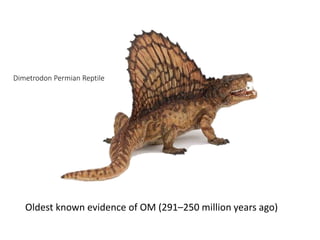
Dimetrodon Permian Reptile
Oldest known evidence of OM (291–250 million years ago)
History
• “Abcessus In Medulla” - Bromfield 1773
• “Necrosis” – Smith
• “Osteomyelitis” – Nelaton 1844
• “A Boil Of Bone” - Pasteur
Epidemiology
• About 50,000 cases annually 1
• 21.8 cases per 100,000 person-years2
• Incidence higher in Men, Old age and with
Comorbids2
1. Rubin RJ, Harrington CA, Poon A, Dietrich K, Greene JA, Moiduddin A. The economic impact of
Staphylococcus aureus infection in New York City hospitals. Emerging Infect. Dis. 1999 Jan-Feb;5(1):9-17.
2. Kremers HM, Nwojo ME, Ransom JE, Wood-Wentz CM, Melton LJ, Huddleston PM. Trends in the
epidemiology of osteomyelitis: a population-based study, 1969 to 2009. J Bone Joint Surg Am. 2015 May
20;97(10):837-45.
Pathophysiology
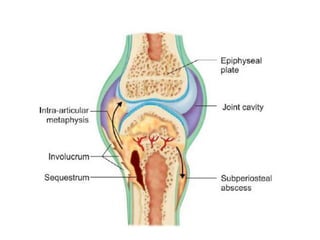
• Hematogenous
• Contiguous
• Direct Inoculation
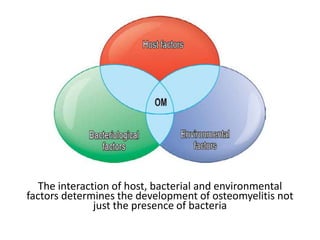
The interaction of host, bacterial and environmental
factors determines the development of osteomyelitis not
just the presence of bacteria
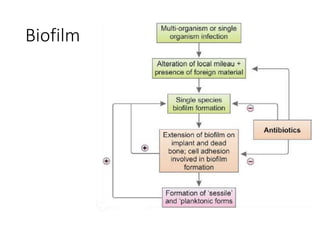
Biofilm
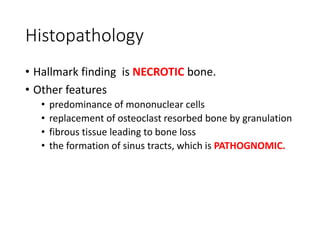
Histopathology
• Hallmark finding is NECROTIC bone.
• Other features
• predominance of mononuclear cells
• replacement of osteoclast resorbed bone by granulation
• fibrous tissue leading to bone loss
• the formation of sinus tracts, which is PATHOGNOMIC.
Classification
• Lew and Waldvogel
• Duration (Acute vs Chronic)
• Mechanism (Hematogenous vs Contiguous)
• Cierney - Mader
• Anatomic stage
• Host health status.
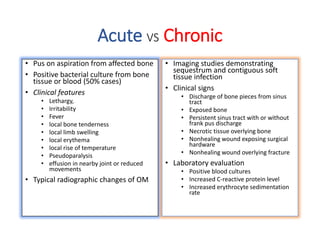
Acute VS Chronic
• Pus on aspiration from affected bone
• Positive bacterial culture from bone
tissue or blood (50% cases)
• Clinical features
• Lethargy,
• Irritability
• Fever
• local bone tenderness
• local limb swelling
• local erythema
• local rise of temperature
• Pseudoparalysis
• effusion in nearby joint or reduced
movements
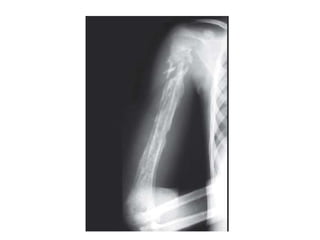
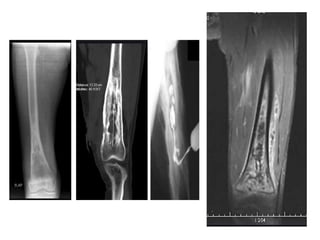
• Typical radiographic changes of OM
• Imaging studies demonstrating
sequestrum and contiguous soft
tissue infection
• Clinical signs
• Discharge of bone pieces from sinus
tract
• Exposed bone
• Persistent sinus tract with or without
frank pus discharge
• Necrotic tissue overlying bone
• Nonhealing wound exposing surgical
hardware
• Nonhealing wound overlying fracture
• Laboratory evaluation
• Positive blood cultures
• Increased C-reactive protein level
• Increased erythrocyte sedimentation
rate
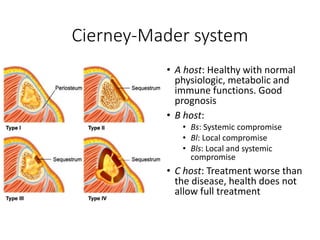
Cierney-Mader system
• A host: Healthy with normal
physiologic, metabolic and
immune functions. Good
prognosis
• B host:
• Bs: Systemic compromise
• Bl: Local compromise
• Bls: Local and systemic
compromise
• C host: Treatment worse than
the disease, health does not
allow full treatment
Clinical Evaluation
• High index of suspicion
• Detailed history and thorough examination
• Laboratory Investigations
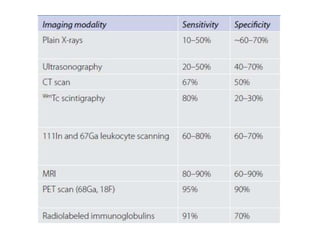
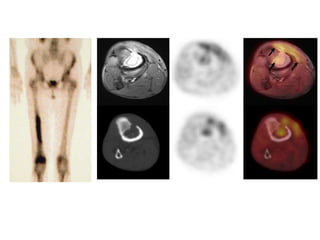
• Radiological investigations
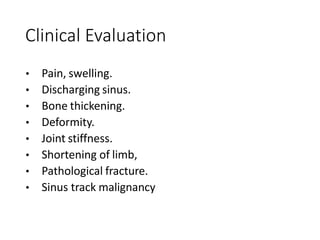
Clinical Evaluation
• Pain, swelling.
• Discharging sinus.
• Bone thickening.
• Deformity.
• Joint stiffness.
• Shortening of limb,
• Pathological fracture.
• Sinus track malignancy
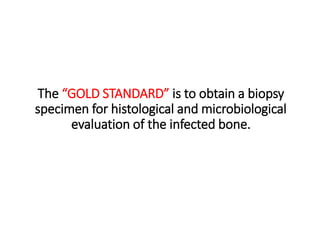
The “GOLD STANDARD” is to obtain a biopsy
specimen for histological and microbiological
evaluation of the infected bone.
Differentials
• Charcot arthropathy especially in people with diabetes
• Arthritis including rheumatoid arthritis
• Metastatic bone disease
• Fracture, including pathological and stress fractures.
• Gout
• Avascular necrosis of the bone
• Bursitis
• Sickle cell vaso-occlusive pain crises
Treatment
• Antibiotics (C/S specific)
• Surgery
Timing of intervention
• Acute phase should subside and there should be no
fever
• The dead bone (sequestrum) should have
separated from parent bone.
• The involucrum should be strong enough to
support remaining bone after excision.
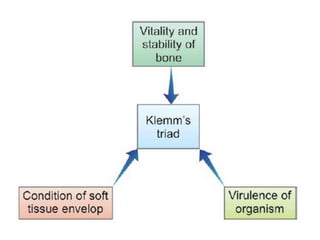
• Salvageable limb. Klemm’s triad
• Patient willing for multiple operations
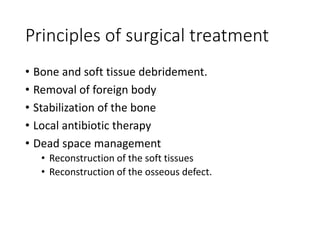
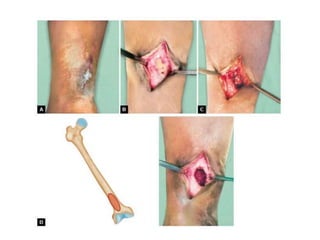
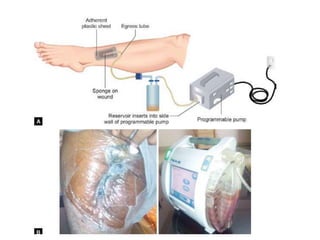
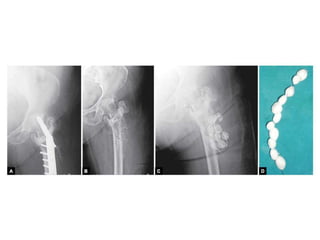
Principles of surgical treatment
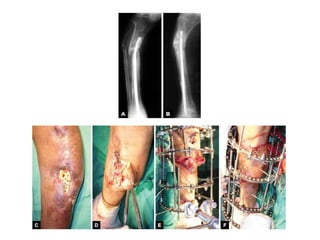
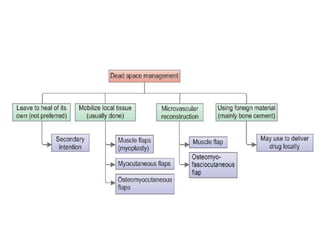
• Bone and soft tissue debridement.
• Removal of foreign body
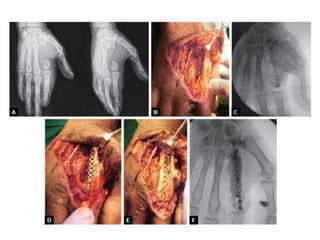
• Stabilization of the bone
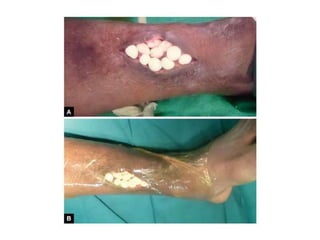
• Local antibiotic therapy
• Dead space management
• Reconstruction of the soft tissues
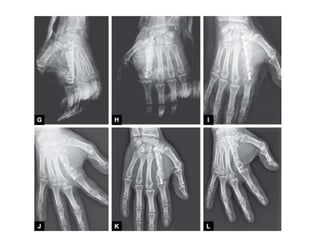
• Reconstruction of the osseous defect.
At best, most of the times even with the best
of aggressive management, it is considered a
satisfactory outcome if the disease can be
reduced to a non-symptomatic state (under
remission), always bearing in mind that acute
episodes may recur anytime later.
Prognosis
• In adults, the recurrence rate of chronic
osteomyelitis is about 30% at 12 months.3
• Cases involving P. aeruginosa, the recurrence rate
may be as high as 50%.3
• Cases involving prosthetic devices are more difficult
to treat, causing increased morbidity due to the
need for more surgical procedures and extended
antibiotic courses required for treatment.
3. Hatzenbuehler J, Pulling TJ. Diagnosis and management of osteomyelitis. Am
Fam Physician. 2011 Nov 01;84(9):1027-33.
Complications of Chronic Osteomyelitis
• Recurrences and relapses
• Limb length discrepancy
• Pathological fractures
• Infected nonunion
• Implant failure
• Septic arthritis
• Septicemia
• Joint stiffness
• Soft tissue abscess formation and cellulitis
• Soft tissue contractures
• Amyloidosis
• Squamous cell carcinoma of the sinus tract
Complications of Chronic Osteomyelitis
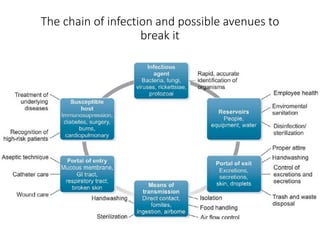
The chain of infection and possible avenues to
break it
Summary
• Infection present usually for more than 6 weeks.
• Demonstrable sequestrum formation.
• Symptoms are nonspecific but few characteristic
ones should be looked for.
• Patients with associated morbidity like diabetes
mellitus (DM), immunosuppression, rheumatoid
arthritis, etc. are at higher risk for chronic OM.
• Treatment is surgical debridement of the infected
bone along with antibiotics and reconstruction of
structural bone damage.
TAKE HOME ORMESSAGE
Chronic Osteomyelitis

Chronic Osteomyelitis

  • 1.
  • 2.
    CHRONIC OSTEOMYELITIS primary infectionof the bone marrow (myelitis) with subsequent affection of the bone (cortex) and periosteum.
  • 3.
    Dimetrodon Permian Reptile Oldestknown evidence of OM (291–250 million years ago)
  • 4.
    History • “Abcessus InMedulla” - Bromfield 1773 • “Necrosis” – Smith • “Osteomyelitis” – Nelaton 1844 • “A Boil Of Bone” - Pasteur
  • 5.
    Epidemiology • About 50,000cases annually 1 • 21.8 cases per 100,000 person-years2 • Incidence higher in Men, Old age and with Comorbids2 1. Rubin RJ, Harrington CA, Poon A, Dietrich K, Greene JA, Moiduddin A. The economic impact of Staphylococcus aureus infection in New York City hospitals. Emerging Infect. Dis. 1999 Jan-Feb;5(1):9-17. 2. Kremers HM, Nwojo ME, Ransom JE, Wood-Wentz CM, Melton LJ, Huddleston PM. Trends in the epidemiology of osteomyelitis: a population-based study, 1969 to 2009. J Bone Joint Surg Am. 2015 May 20;97(10):837-45.
  • 6.
  • 9.
    The interaction ofhost, bacterial and environmental factors determines the development of osteomyelitis not just the presence of bacteria
  • 10.
  • 11.
    Histopathology • Hallmark findingis NECROTIC bone. • Other features • predominance of mononuclear cells • replacement of osteoclast resorbed bone by granulation • fibrous tissue leading to bone loss • the formation of sinus tracts, which is PATHOGNOMIC.
  • 12.
    Classification • Lew andWaldvogel • Duration (Acute vs Chronic) • Mechanism (Hematogenous vs Contiguous) • Cierney - Mader • Anatomic stage • Host health status.
  • 13.
    Acute VS Chronic •Pus on aspiration from affected bone • Positive bacterial culture from bone tissue or blood (50% cases) • Clinical features • Lethargy, • Irritability • Fever • local bone tenderness • local limb swelling • local erythema • local rise of temperature • Pseudoparalysis • effusion in nearby joint or reduced movements • Typical radiographic changes of OM • Imaging studies demonstrating sequestrum and contiguous soft tissue infection • Clinical signs • Discharge of bone pieces from sinus tract • Exposed bone • Persistent sinus tract with or without frank pus discharge • Necrotic tissue overlying bone • Nonhealing wound exposing surgical hardware • Nonhealing wound overlying fracture • Laboratory evaluation • Positive blood cultures • Increased C-reactive protein level • Increased erythrocyte sedimentation rate
  • 14.
    Cierney-Mader system • Ahost: Healthy with normal physiologic, metabolic and immune functions. Good prognosis • B host: • Bs: Systemic compromise • Bl: Local compromise • Bls: Local and systemic compromise • C host: Treatment worse than the disease, health does not allow full treatment
  • 15.
    Clinical Evaluation • Highindex of suspicion • Detailed history and thorough examination • Laboratory Investigations • Radiological investigations
  • 16.
    Clinical Evaluation • Pain,swelling. • Discharging sinus. • Bone thickening. • Deformity. • Joint stiffness. • Shortening of limb, • Pathological fracture. • Sinus track malignancy
  • 20.
    The “GOLD STANDARD”is to obtain a biopsy specimen for histological and microbiological evaluation of the infected bone.
  • 21.
    Differentials • Charcot arthropathyespecially in people with diabetes • Arthritis including rheumatoid arthritis • Metastatic bone disease • Fracture, including pathological and stress fractures. • Gout • Avascular necrosis of the bone • Bursitis • Sickle cell vaso-occlusive pain crises
  • 22.
    Treatment • Antibiotics (C/Sspecific) • Surgery
  • 23.
    Timing of intervention •Acute phase should subside and there should be no fever • The dead bone (sequestrum) should have separated from parent bone. • The involucrum should be strong enough to support remaining bone after excision. • Salvageable limb. Klemm’s triad • Patient willing for multiple operations
  • 25.
    Principles of surgicaltreatment • Bone and soft tissue debridement. • Removal of foreign body • Stabilization of the bone • Local antibiotic therapy • Dead space management • Reconstruction of the soft tissues • Reconstruction of the osseous defect.
  • 34.
    At best, mostof the times even with the best of aggressive management, it is considered a satisfactory outcome if the disease can be reduced to a non-symptomatic state (under remission), always bearing in mind that acute episodes may recur anytime later.
  • 35.
    Prognosis • In adults,the recurrence rate of chronic osteomyelitis is about 30% at 12 months.3 • Cases involving P. aeruginosa, the recurrence rate may be as high as 50%.3 • Cases involving prosthetic devices are more difficult to treat, causing increased morbidity due to the need for more surgical procedures and extended antibiotic courses required for treatment. 3. Hatzenbuehler J, Pulling TJ. Diagnosis and management of osteomyelitis. Am Fam Physician. 2011 Nov 01;84(9):1027-33.
  • 36.
    Complications of ChronicOsteomyelitis • Recurrences and relapses • Limb length discrepancy • Pathological fractures • Infected nonunion • Implant failure • Septic arthritis • Septicemia
  • 37.
    • Joint stiffness •Soft tissue abscess formation and cellulitis • Soft tissue contractures • Amyloidosis • Squamous cell carcinoma of the sinus tract Complications of Chronic Osteomyelitis
  • 38.
    The chain ofinfection and possible avenues to break it
  • 39.
    Summary • Infection presentusually for more than 6 weeks. • Demonstrable sequestrum formation. • Symptoms are nonspecific but few characteristic ones should be looked for. • Patients with associated morbidity like diabetes mellitus (DM), immunosuppression, rheumatoid arthritis, etc. are at higher risk for chronic OM. • Treatment is surgical debridement of the infected bone along with antibiotics and reconstruction of structural bone damage.
  • 40.

Editor's Notes

  • #7 Hematogenous osteomyelitis occurs more frequently in children compared to adults, and long bones are usually affected. Contiguous osteomyelitis frequently develops in debilitated patients who are wheelchair or bedbound and are predisposed to pressure-related skin ulcerations, especially in the sacrum, buttock, hips, and heel. Direct inoculation of bacteria may occur in the setting of open fractures, bone reconstructive surgery, or with placing orthopedic hardware.
  • #10 HOST: Age, Gender, Obesity, Nicotine and alcohol abuse, Diabetes, Vascular diseases, immune status BACTERIOLOGICAL: resistance to antimicrobial agents, adherence to biomaterials, Evasion of local host defence (biofilm), Development of “pangenome” ENVIRONMENTAL: Skin preparation, (OR) environment, Prophylactic antibiotic therapy, Tissue handling
  • #11 “Biofilm formation is a process whereby microorganisms of the same species attach to and grow on a surface and produce extracellular polymers that facilitate attachment and matrix formation, resulting in an alteration in the phenotype of the organisms with respect to growth rate and gene transcription”
  • #15 •• Systemic factors (Bs): Anemia and hypoxemia, malnutrition, renal or hepatic failure, DM, chronic hypoxia, immune disease, extremes of age, immunosuppression or immune deficiency and steroid abuse •• Local factors (Bl): Chronic lymphedema, venous stasis, peripheral vascular disease, major vessel compromise, arteritis, extensive scarring, radiation fibrosis, small-vessel disease, neuropathy, tobacco abuse
  • #25 Klemm’s triad may help in roughly identifying a salvageable limb. Surgeon needs to evaluate the vitality and stability of bone, virulence of organism and sensitivity to antibiotics, condition of soft tissue envelop. If two or more components are compromised the chances of providing a functional limb are low.