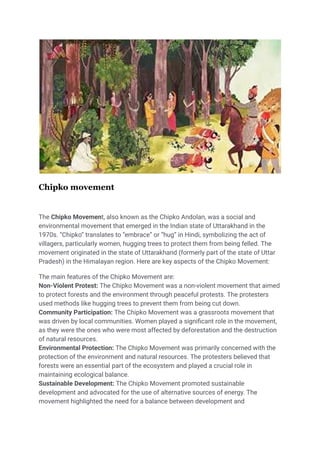
Chipko movement
The Chipko Movement, also known as the Chipko Andolan, was a social and
environmental movement that emerged in the Indian state of Uttarakhand in the
1970s. “Chipko” translates to “embrace” or “hug” in Hindi, symbolizing the act of
villagers, particularly women, hugging trees to protect them from being felled. The
movement originated in the state of Uttarakhand (formerly part of the state of Uttar
Pradesh) in the Himalayan region. Here are key aspects of the Chipko Movement:
The main features of the Chipko Movement are:
Non-Violent Protest: The Chipko Movement was a non-violent movement that aimed
to protect forests and the environment through peaceful protests. The protesters
used methods like hugging trees to prevent them from being cut down.
Community Participation: The Chipko Movement was a grassroots movement that
was driven by local communities. Women played a significant role in the movement,
as they were the ones who were most affected by deforestation and the destruction
of natural resources.
Environmental Protection: The Chipko Movement was primarily concerned with the
protection of the environment and natural resources. The protesters believed that
forests were an essential part of the ecosystem and played a crucial role in
maintaining ecological balance.
Sustainable Development: The Chipko Movement promoted sustainable
development and advocated for the use of alternative sources of energy. The
movement highlighted the need for a balance between development and
environmental protection.
Spread of Awareness: The Chipko Movement helped to raise awareness about the
importance of environmental conservation and sustainable development not only in
India but also across the world.
It inspired many other similar movements, such as the Appiko Movement in
Karnataka and the Narmada Bachao Andolan in Madhya Pradesh.
In conclusion, the Chipko Movement was a significant social and environmental
movement that had a lasting impact on India and the world. Its features of
non-violent protest, community participation, environmental protection, sustainable
development, and spread of awareness continue to inspire similar movements
today.It played a crucial role in shaping environmental policies in India and globally,
highlighting the importance of community-led conservation efforts.
Checkout more at -
https://uplevelway.com/

chipko movement.pdf

  • 1.
    Chipko movement The ChipkoMovement, also known as the Chipko Andolan, was a social and environmental movement that emerged in the Indian state of Uttarakhand in the 1970s. “Chipko” translates to “embrace” or “hug” in Hindi, symbolizing the act of villagers, particularly women, hugging trees to protect them from being felled. The movement originated in the state of Uttarakhand (formerly part of the state of Uttar Pradesh) in the Himalayan region. Here are key aspects of the Chipko Movement: The main features of the Chipko Movement are: Non-Violent Protest: The Chipko Movement was a non-violent movement that aimed to protect forests and the environment through peaceful protests. The protesters used methods like hugging trees to prevent them from being cut down. Community Participation: The Chipko Movement was a grassroots movement that was driven by local communities. Women played a significant role in the movement, as they were the ones who were most affected by deforestation and the destruction of natural resources. Environmental Protection: The Chipko Movement was primarily concerned with the protection of the environment and natural resources. The protesters believed that forests were an essential part of the ecosystem and played a crucial role in maintaining ecological balance. Sustainable Development: The Chipko Movement promoted sustainable development and advocated for the use of alternative sources of energy. The movement highlighted the need for a balance between development and
  • 2.
    environmental protection. Spread ofAwareness: The Chipko Movement helped to raise awareness about the importance of environmental conservation and sustainable development not only in India but also across the world. It inspired many other similar movements, such as the Appiko Movement in Karnataka and the Narmada Bachao Andolan in Madhya Pradesh. In conclusion, the Chipko Movement was a significant social and environmental movement that had a lasting impact on India and the world. Its features of non-violent protest, community participation, environmental protection, sustainable development, and spread of awareness continue to inspire similar movements today.It played a crucial role in shaping environmental policies in India and globally, highlighting the importance of community-led conservation efforts. Checkout more at - https://uplevelway.com/