BRUNDTLAND
REPORT
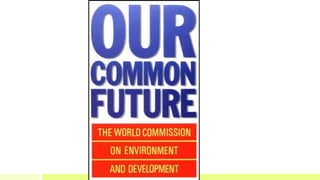
OUR COMMON FUTURE
BY:
KuriakoseT D
P R Karthik
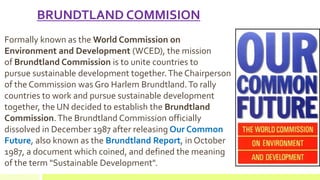
BRUNDTLAND COMMISION
Formally known as the World Commission on
Environment and Development (WCED), the mission
of Brundtland Commission is to unite countries to
pursue sustainable development together.The Chairperson
of the Commission was Gro Harlem Brundtland.To rally
countries to work and pursue sustainable development
together, the UN decided to establish the Brundtland
Commission.The Brundtland Commission officially
dissolved in December 1987 after releasing Our Common
Future, also known as the Brundtland Report, in October
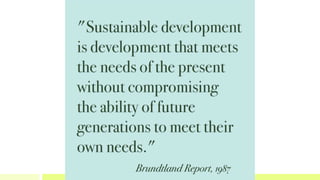
1987, a document which coined, and defined the meaning
of the term "Sustainable Development".
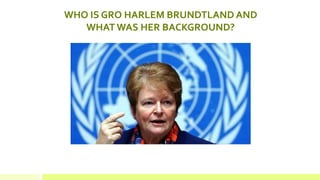
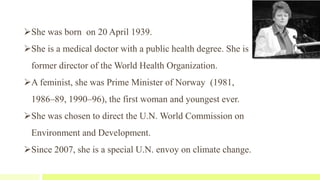
WHO IS GRO HARLEM BRUNDTLAND AND
WHAT WAS HER BACKGROUND?
She was born on 20 April 1939.
She is a medical doctor with a public health degree. She is
former director of the World Health Organization.
A feminist, she was Prime Minister of Norway (1981,
1986–89, 1990–96), the first woman and youngest ever.
She was chosen to direct the U.N. World Commission on
Environment and Development.
Since 2007, she is a special U.N. envoy on climate change.
OUR COMMON FUTURE
The Brundtland Report (former Norwegian Prime Minister Gro
Harlem Brundtland), published 27 years ago.
It has been successful in forming international ties between
governments and multinational corporations.
Described sustainability as a three-legged stool with people, planet
and profit taking equal importance in the equation.
Cont….
The report led the production of Agenda 21, an action plan of the
UN with regard to SUSTAINABLE DEVELOPMENT
Agenda 21entailed actions to be taken globally, nationally, and
locally in order to make life on Earth more sustainable
SCOPE OF SUSTAINABLE DEVELOPMENT
Environment
We should conserve and enhance our resource base, by gradually changing the ways
in which we develop and use technologies. We should have the primary motive of
protection of environment.
Social Equity
Developing nations must be allowed to meet their basic needs of employment, food,
energy, water and sanitation. If this is to be done in a sustainable manner, then there is
a definite need for a sustainable level of population.
Economic Growth
Economic growth should be revived and developing nations should be allowed a
growth of equal quality to the developed nations.
ELEMENTS / DIMENSIONS OF
SUSTAINABLE DEVELOPMENT
 Political
 Economic
 Institutional
 Technological
 Socio-cultural
 Ecological
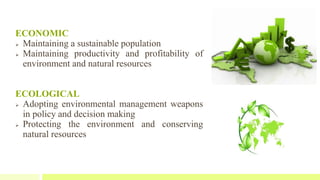
ECONOMIC
 Maintaining a sustainable population
 Maintaining productivity and profitability of
environment and natural resources
ECOLOGICAL
 Adopting environmental management weapons
in policy and decision making
 Protecting the environment and conserving
natural resources
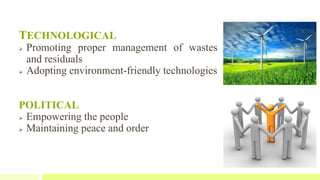
TECHNOLOGICAL
 Promoting proper management of wastes
and residuals
 Adopting environment-friendly technologies
POLITICAL
 Empowering the people
 Maintaining peace and order
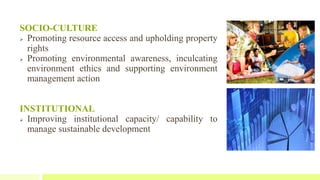
SOCIO-CULTURE
 Promoting resource access and upholding property
rights
 Promoting environmental awareness, inculcating
environment ethics and supporting environment
management action
INSTITUTIONAL
 Improving institutional capacity/ capability to
manage sustainable development
sustainable development is about
environmentalprotection being at the centre of
everything we do
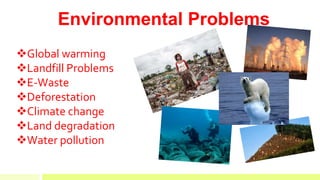
Environmental Problems
Global warming
Landfill Problems
E-Waste
Deforestation
Climate change
Land degradation
Water pollution
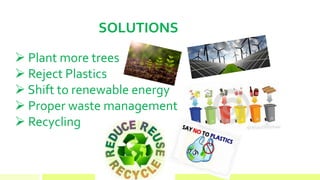
SOLUTIONS
 Plant more trees
 Reject Plastics
 Shift to renewable energy
 Proper waste management
 Recycling
Brundtland report

Brundtland report

  • 1.
  • 2.
    BRUNDTLAND COMMISION Formally knownas the World Commission on Environment and Development (WCED), the mission of Brundtland Commission is to unite countries to pursue sustainable development together.The Chairperson of the Commission was Gro Harlem Brundtland.To rally countries to work and pursue sustainable development together, the UN decided to establish the Brundtland Commission.The Brundtland Commission officially dissolved in December 1987 after releasing Our Common Future, also known as the Brundtland Report, in October 1987, a document which coined, and defined the meaning of the term "Sustainable Development".
  • 3.
    WHO IS GROHARLEM BRUNDTLAND AND WHAT WAS HER BACKGROUND?
  • 4.
    She was bornon 20 April 1939. She is a medical doctor with a public health degree. She is former director of the World Health Organization. A feminist, she was Prime Minister of Norway (1981, 1986–89, 1990–96), the first woman and youngest ever. She was chosen to direct the U.N. World Commission on Environment and Development. Since 2007, she is a special U.N. envoy on climate change.
  • 6.
    OUR COMMON FUTURE TheBrundtland Report (former Norwegian Prime Minister Gro Harlem Brundtland), published 27 years ago. It has been successful in forming international ties between governments and multinational corporations. Described sustainability as a three-legged stool with people, planet and profit taking equal importance in the equation.
  • 7.
    Cont…. The report ledthe production of Agenda 21, an action plan of the UN with regard to SUSTAINABLE DEVELOPMENT Agenda 21entailed actions to be taken globally, nationally, and locally in order to make life on Earth more sustainable
  • 9.
    SCOPE OF SUSTAINABLEDEVELOPMENT Environment We should conserve and enhance our resource base, by gradually changing the ways in which we develop and use technologies. We should have the primary motive of protection of environment. Social Equity Developing nations must be allowed to meet their basic needs of employment, food, energy, water and sanitation. If this is to be done in a sustainable manner, then there is a definite need for a sustainable level of population. Economic Growth Economic growth should be revived and developing nations should be allowed a growth of equal quality to the developed nations.
  • 10.
    ELEMENTS / DIMENSIONSOF SUSTAINABLE DEVELOPMENT  Political  Economic  Institutional  Technological  Socio-cultural  Ecological
  • 11.
    ECONOMIC  Maintaining asustainable population  Maintaining productivity and profitability of environment and natural resources ECOLOGICAL  Adopting environmental management weapons in policy and decision making  Protecting the environment and conserving natural resources
  • 12.
    TECHNOLOGICAL  Promoting propermanagement of wastes and residuals  Adopting environment-friendly technologies POLITICAL  Empowering the people  Maintaining peace and order
  • 13.
    SOCIO-CULTURE  Promoting resourceaccess and upholding property rights  Promoting environmental awareness, inculcating environment ethics and supporting environment management action INSTITUTIONAL  Improving institutional capacity/ capability to manage sustainable development
  • 14.
    sustainable development isabout environmentalprotection being at the centre of everything we do
  • 15.
    Environmental Problems Global warming LandfillProblems E-Waste Deforestation Climate change Land degradation Water pollution
  • 16.
    SOLUTIONS  Plant moretrees  Reject Plastics  Shift to renewable energy  Proper waste management  Recycling