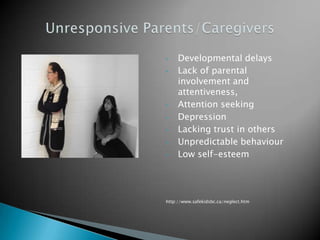
•    Developmental delays
•    Lack of parental
     involvement and
     attentiveness,
•    Attention seeking
•    Depression
•    Lacking trust in others
•    Unpredictable behaviour
•    Low self-esteem


http://www.safekidsbc.ca/neglect.htm
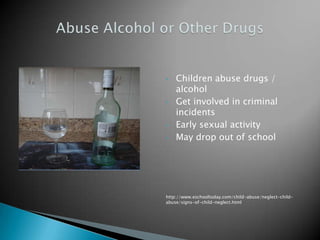
•   Children abuse drugs /
    alcohol
•   Get involved in criminal
    incidents
•   Early sexual activity
•   May drop out of school


http://www.eschooltoday.com/child-abuse/neglect-child-
abuse/signs-of-child-neglect.html
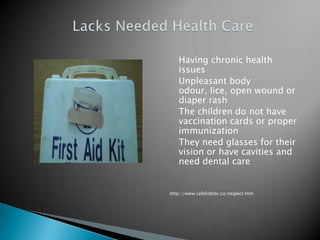
•   Having chronic health
    issues
•   Unpleasant body
    odour, lice, open wound or
    diaper rash
•   The children do not have
    vaccination cards or proper
    immunization
•   They need glasses for their
    vision or have cavities and
    need dental care


http://www.safekidsbc.ca/neglect.htm
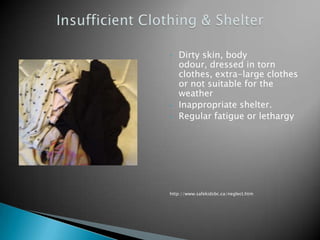
•   Dirty skin, body
    odour, dressed in torn
    clothes, extra-large clothes
    or not suitable for the
    weather
•   Inappropriate shelter.
•   Regular fatigue or lethargy


http://www.safekidsbc.ca/neglect.htm
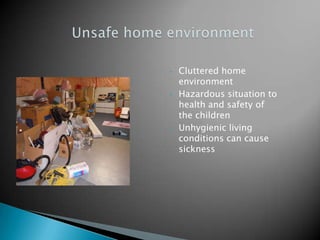
•   Cluttered home
    environment
•   Hazardous situation to
    health and safety of
    the children
•   Unhygienic living
    conditions can cause
    sickness
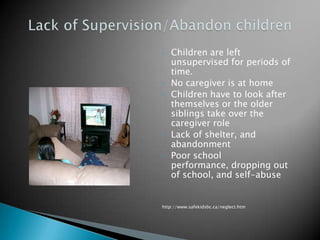
•   Children are left
    unsupervised for periods of
    time.
•   No caregiver is at home
•   Children have to look after
    themselves or the older
    siblings take over the
    caregiver role
•   Lack of shelter, and
    abandonment
•   Poor school
    performance, dropping out
    of school, and self-abuse


http://www.safekidsbc.ca/neglect.htm
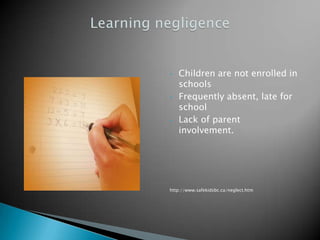
•   Children are not enrolled in
    schools
•   Frequently absent, late for
    school
•   Lack of parent
    involvement.


http://www.safekidsbc.ca/neglect.htm
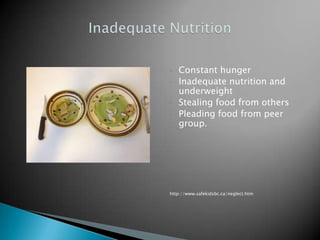
•   Constant hunger
•   Inadequate nutrition and
    underweight
•   Stealing food from others
•   Pleading food from peer
    group.


http://www.safekidsbc.ca/neglect.htm
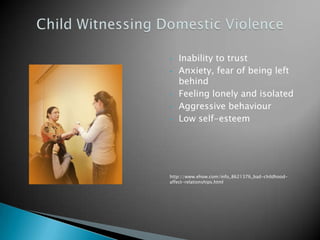
•   Inability to trust
•   Anxiety, fear of being left
    behind
•   Feeling lonely and isolated
•   Aggressive behaviour
•   Low self-esteem


http://www.ehow.com/info_8621376_bad-childhood-
affect-relationships.html
•   Decreased brain
    functioning, leading to
    drop in academic
    performance
•   Unable to concentrate
•   ore likely to suffer
    from ADD or ADHD
•   Higher levels stress
•   Less likely to gain
    academic achievement


http://en.wikipedia.org/wiki/Developmental_impa
ct_of_child_neglect_in_early_childhood
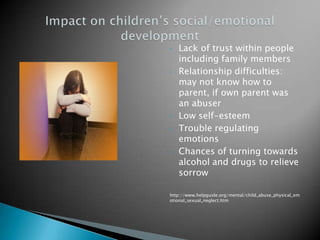
•   Lack of trust within people
    including family members
•   Relationship difficulties:
    may not know how to
    parent, if own parent was
    an abuser
•   Low self-esteem
•   Trouble regulating
    emotions
•   Chances of turning towards
    alcohol and drugs to relieve
    sorrow

http://www.helpguide.org/mental/child_abuse_physical_em
otional_sexual_neglect.htm
•   Child can be seen unhappy
    or show a low amount of
    facial expression
•   Child may look weak and
    unhealthy if suffering from
    diarrhea and dehydration
•   Low muscle tone
•   Might often remain quiet
    and shy
•   Can be left with scars from
    untreated illness or injuries


https://www.childwelfare.gov/pubs/usermanuals/neglect/c
hapterthree
   http://www.eschooltoday.com/child-abuse/neglect-child-
    abuse/what-is-child-neglect.html
   http://www.utmb.edu/pedi_ed/CORE/Abuse/page_19.ht
   http://dreamcatchersforabusedchildren.com/abuse/child-
    neglect/
   http://www.safekidsbc.ca/neglect.htm
   http://en.wikipedia.org/wiki/Developmental_impact_of_ch
    ild_neglect_in_early_childhood
   https://www.childwelfare.gov/pubs/usermanuals/neglect/
    chapterthree
   http://www.helpguide.org/mental/child_abuse_physical_e
    motional_sexual_neglect.htm
   http://www.ehow.com/info_8621376_bad-childhood-
    affect-relationships.html

Child neglect power point

  • 2.
    Developmental delays • Lack of parental involvement and attentiveness, • Attention seeking • Depression • Lacking trust in others • Unpredictable behaviour • Low self-esteem http://www.safekidsbc.ca/neglect.htm
  • 3.
    Children abuse drugs / alcohol • Get involved in criminal incidents • Early sexual activity • May drop out of school http://www.eschooltoday.com/child-abuse/neglect-child- abuse/signs-of-child-neglect.html
  • 4.
    Having chronic health issues • Unpleasant body odour, lice, open wound or diaper rash • The children do not have vaccination cards or proper immunization • They need glasses for their vision or have cavities and need dental care http://www.safekidsbc.ca/neglect.htm
  • 5.
    Dirty skin, body odour, dressed in torn clothes, extra-large clothes or not suitable for the weather • Inappropriate shelter. • Regular fatigue or lethargy http://www.safekidsbc.ca/neglect.htm
  • 6.
    Cluttered home environment • Hazardous situation to health and safety of the children • Unhygienic living conditions can cause sickness
  • 7.
    Children are left unsupervised for periods of time. • No caregiver is at home • Children have to look after themselves or the older siblings take over the caregiver role • Lack of shelter, and abandonment • Poor school performance, dropping out of school, and self-abuse http://www.safekidsbc.ca/neglect.htm
  • 8.
    Children are not enrolled in schools • Frequently absent, late for school • Lack of parent involvement. http://www.safekidsbc.ca/neglect.htm
  • 9.
    Constant hunger • Inadequate nutrition and underweight • Stealing food from others • Pleading food from peer group. http://www.safekidsbc.ca/neglect.htm
  • 10.
    Inability to trust • Anxiety, fear of being left behind • Feeling lonely and isolated • Aggressive behaviour • Low self-esteem http://www.ehow.com/info_8621376_bad-childhood- affect-relationships.html
  • 11.
    Decreased brain functioning, leading to drop in academic performance • Unable to concentrate • ore likely to suffer from ADD or ADHD • Higher levels stress • Less likely to gain academic achievement http://en.wikipedia.org/wiki/Developmental_impa ct_of_child_neglect_in_early_childhood
  • 12.
    Lack of trust within people including family members • Relationship difficulties: may not know how to parent, if own parent was an abuser • Low self-esteem • Trouble regulating emotions • Chances of turning towards alcohol and drugs to relieve sorrow http://www.helpguide.org/mental/child_abuse_physical_em otional_sexual_neglect.htm
  • 13.
    Child can be seen unhappy or show a low amount of facial expression • Child may look weak and unhealthy if suffering from diarrhea and dehydration • Low muscle tone • Might often remain quiet and shy • Can be left with scars from untreated illness or injuries https://www.childwelfare.gov/pubs/usermanuals/neglect/c hapterthree
  • 14.
    http://www.eschooltoday.com/child-abuse/neglect-child- abuse/what-is-child-neglect.html  http://www.utmb.edu/pedi_ed/CORE/Abuse/page_19.ht  http://dreamcatchersforabusedchildren.com/abuse/child- neglect/  http://www.safekidsbc.ca/neglect.htm  http://en.wikipedia.org/wiki/Developmental_impact_of_ch ild_neglect_in_early_childhood  https://www.childwelfare.gov/pubs/usermanuals/neglect/ chapterthree  http://www.helpguide.org/mental/child_abuse_physical_e motional_sexual_neglect.htm  http://www.ehow.com/info_8621376_bad-childhood- affect-relationships.html