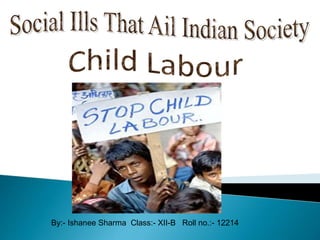
By:- Ishanee Sharma Class:- XII-B Roll no.:- 12214
1. Introduction
2. Causes of child labour
3. Effects of child labour
4. Child labour statistics
5. Indian laws against child labour
6. Child labour around the world
7. Conclusion
8. Bibliography
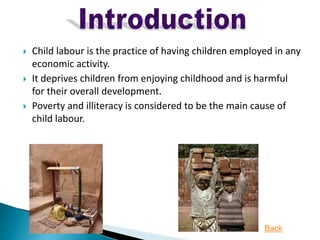
 Child labour is the practice of having children employed in any
economic activity.
 It deprives children from enjoying childhood and is harmful
for their overall development.
 Poverty and illiteracy is considered to be the main cause of
child labour.
Back
 High poverty and illiteracy
levels.
 Violation of existing laws and
codes of conduct.
 Inadequate enforcement of
labour laws.
 Repression of workers’ rights.
 Demand of cheap labour.
Back
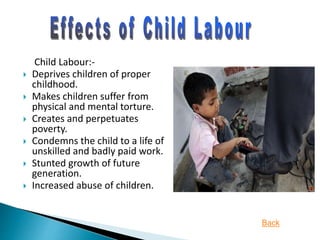
Child Labour:-
 Deprives children of proper
childhood.
 Makes children suffer from
physical and mental torture.
 Creates and perpetuates
poverty.
 Condemns the child to a life of
unskilled and badly paid work.
 Stunted growth of future
generation.
 Increased abuse of children.
Back
 There are over 60 million child
workers in India.
 An estimated 14% of children
between the ages 5 to 14 are
engaged in child labour.
 Children under 14 years year of
age form 4% of total labour force
in India.
 Child labour is mostly practised in
matches, fireworks and
explosives industry, glass and
bangles factory, beedi making,
domestic help etc.
 Two out of every working children are physically abused while
every second working child faces emotional abuse.
 50.2% working children work seven days a week.
Back
1. Factories act of 1948:-
This act prohibits employment of children in factories under 14
years of age.
2. Mines act of 1952:-
This act prohibits the employment of children below 18 years of
age in mines.
3. Child labour (Prohibition and Regulation) act, 1986:-
This act prohibits the employment of children below 14 years of
age in hazardous occupations.
4. The Juvenile Justice (Care and Protection) of Children Act,
2000:-
This law made it a crime, punishable with a prison term for
anyone who employs children in any hazardous occupations or
in bondage.
Back
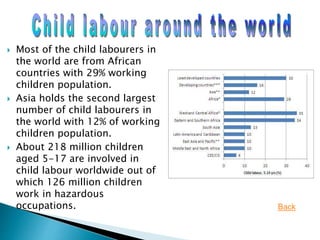
 Most of the child labourers in
the world are from African
countries with 29% working
children population.
 Asia holds the second largest
number of child labourers in
the world with 12% of working
children population.
 About 218 million children
aged 5-17 are involved in
child labour worldwide out of
which 126 million children
work in hazardous
occupations. Back
Child labour is a practice which not only denies the child of
happy childhood but also harms the overall development of
the child. Abolishing child labour will not be successful unless
the citizens step forward to stop child labour. The government
of India must check whether the existing laws are properly
put into force or not.
Back
1. http://www.ilo.org/legacy/english/regions/asro/newdelhi/
ipec/responses/india/national.htm
2. http://www.tnchildlabour.tn.gov.in/consequences.htm
3. http://members.tripod.com/~Siddharth_Sundar/effects.ht
ml
4. http://en.wikipedia.org/wiki/Child_labour_in_India
5. http://www.compassion.com/child-advocacy/find-your-
voice/quick-facts/child-labor-quick-facts.htm
Back

Social Ills that ail Indian Society: Child Labour

  • 1.
    By:- Ishanee SharmaClass:- XII-B Roll no.:- 12214
  • 2.
    1. Introduction 2. Causesof child labour 3. Effects of child labour 4. Child labour statistics 5. Indian laws against child labour 6. Child labour around the world 7. Conclusion 8. Bibliography
  • 3.
     Child labouris the practice of having children employed in any economic activity.  It deprives children from enjoying childhood and is harmful for their overall development.  Poverty and illiteracy is considered to be the main cause of child labour. Back
  • 4.
     High povertyand illiteracy levels.  Violation of existing laws and codes of conduct.  Inadequate enforcement of labour laws.  Repression of workers’ rights.  Demand of cheap labour. Back
  • 5.
    Child Labour:-  Depriveschildren of proper childhood.  Makes children suffer from physical and mental torture.  Creates and perpetuates poverty.  Condemns the child to a life of unskilled and badly paid work.  Stunted growth of future generation.  Increased abuse of children. Back
  • 6.
     There areover 60 million child workers in India.  An estimated 14% of children between the ages 5 to 14 are engaged in child labour.  Children under 14 years year of age form 4% of total labour force in India.  Child labour is mostly practised in matches, fireworks and explosives industry, glass and bangles factory, beedi making, domestic help etc.
  • 7.
     Two outof every working children are physically abused while every second working child faces emotional abuse.  50.2% working children work seven days a week. Back
  • 8.
    1. Factories actof 1948:- This act prohibits employment of children in factories under 14 years of age. 2. Mines act of 1952:- This act prohibits the employment of children below 18 years of age in mines. 3. Child labour (Prohibition and Regulation) act, 1986:- This act prohibits the employment of children below 14 years of age in hazardous occupations. 4. The Juvenile Justice (Care and Protection) of Children Act, 2000:- This law made it a crime, punishable with a prison term for anyone who employs children in any hazardous occupations or in bondage. Back
  • 9.
     Most ofthe child labourers in the world are from African countries with 29% working children population.  Asia holds the second largest number of child labourers in the world with 12% of working children population.  About 218 million children aged 5-17 are involved in child labour worldwide out of which 126 million children work in hazardous occupations. Back
  • 10.
    Child labour isa practice which not only denies the child of happy childhood but also harms the overall development of the child. Abolishing child labour will not be successful unless the citizens step forward to stop child labour. The government of India must check whether the existing laws are properly put into force or not. Back
  • 11.
    1. http://www.ilo.org/legacy/english/regions/asro/newdelhi/ ipec/responses/india/national.htm 2. http://www.tnchildlabour.tn.gov.in/consequences.htm 3.http://members.tripod.com/~Siddharth_Sundar/effects.ht ml 4. http://en.wikipedia.org/wiki/Child_labour_in_India 5. http://www.compassion.com/child-advocacy/find-your- voice/quick-facts/child-labor-quick-facts.htm Back