PRESENTATION
Usman Imran
REG :16237
Child
 A child is a human between the stages of birth
and puberty
Abuse
Abuse is defined as anything that is harmful,
injurious, or offensive. It also includes excessive
and wrongful misuse of anything .
Abuse
Abuse is defined as anything that is harmful, injurious, or
offensive. It also includes excessive and wrongful misuse of
anything .
Child
A child is a human between the stages of birth and puberty
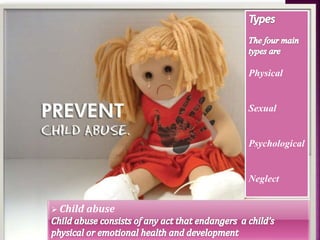
 Child abuse
Physical
Sexual
Psychological
Neglect
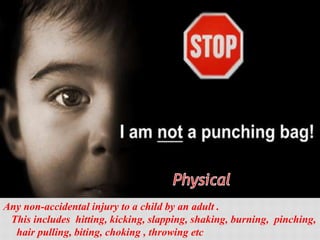
Any non-accidental injury to a child by an adult .
This includes hitting, kicking, slapping, shaking, burning, pinching,
hair pulling, biting, choking , throwing etc
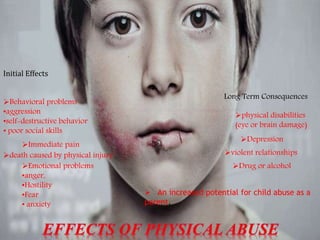
Initial Effects
death caused by physical injury
Immediate pain
Emotional problems
•anger,
•Hostility
•Fear
• anxiety
Behavioral problems
•aggression
•self-destructive behavior
• poor social skills
Long Term Consequences
physical disabilities
(eye or brain damage)
Depression
violent relationships
Drug or alcohol
 An increased potential for child abuse as a
parent.
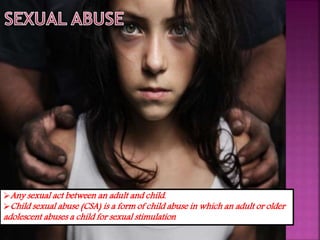
Any sexual act between an adult and child.
Child sexual abuse (CSA) is a form of child abuse in which an adult or older
adolescent abuses a child for sexual stimulation
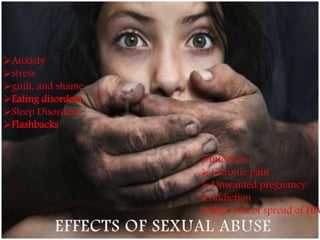
Anxiety
stress
guilt, and shame
Eating disorders
Sleep Disorders
Flashbacks
Infection
 Chronic pain
 Unwanted pregnancy.
Addiction
High risk of spread of HIV
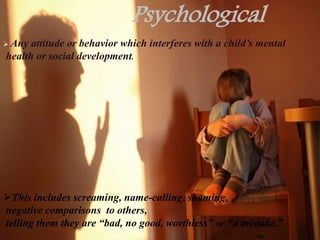
Psychological
 Any attitude or behavior which interferes with a child’s mental
health or social development.
This includes screaming, name-calling, shaming,
negative comparisons to others,
telling them they are “bad, no good, worthless” or “a mistake.”
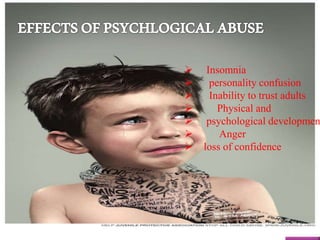
 Insomnia
 personality confusion
 Inability to trust adults
 Physical and
 psychological developmen
 Anger
 loss of confidence
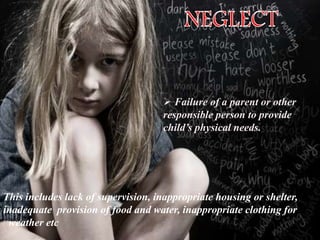
 Failure of a parent or other
responsible person to provide
child’s physical needs.
This includes lack of supervision, inappropriate housing or shelter,
inadequate provision of food and water, inappropriate clothing for
weather etc
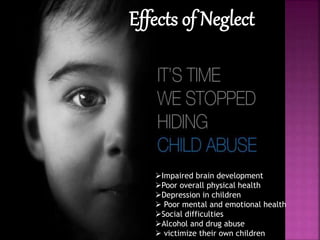
Impaired brain development
Poor overall physical health
Depression in children
 Poor mental and emotional health
Social difficulties
Alcohol and drug abuse
 victimize their own children
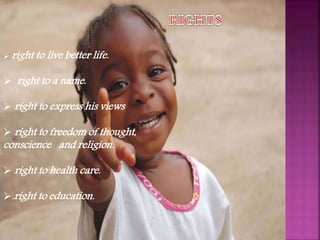
 right to live better life.
 right to a name.
 right to express his views
 right to freedom of thought,
conscience and religion.
 right to health care.
.right to education.
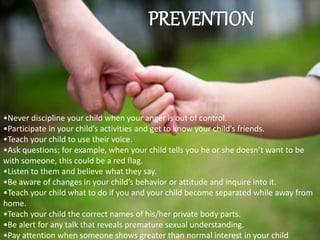
•Never discipline your child when your anger is out of control.
•Participate in your child’s activities and get to know your child’s friends.
•Teach your child to use their voice.
•Ask questions; for example, when your child tells you he or she doesn’t want to be
with someone, this could be a red flag.
•Listen to them and believe what they say.
•Be aware of changes in your child’s behavior or attitude and inquire into it.
•Teach your child what to do if you and your child become separated while away from
home.
•Teach your child the correct names of his/her private body parts.
•Be alert for any talk that reveals premature sexual understanding.
•Pay attention when someone shows greater than normal interest in your child
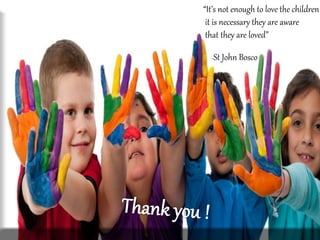
Thank you !
“It’s not enough to love the children
it is necessary they are aware
that they are loved”
-St John Bosco

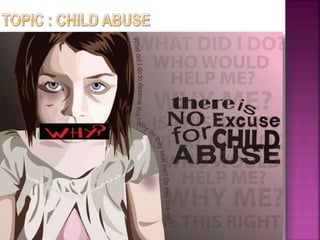
Child abuse

  • 1.
  • 3.
    Child  A childis a human between the stages of birth and puberty Abuse Abuse is defined as anything that is harmful, injurious, or offensive. It also includes excessive and wrongful misuse of anything . Abuse Abuse is defined as anything that is harmful, injurious, or offensive. It also includes excessive and wrongful misuse of anything . Child A child is a human between the stages of birth and puberty
  • 4.
  • 5.
    Any non-accidental injuryto a child by an adult . This includes hitting, kicking, slapping, shaking, burning, pinching, hair pulling, biting, choking , throwing etc
  • 6.
    Initial Effects death causedby physical injury Immediate pain Emotional problems •anger, •Hostility •Fear • anxiety Behavioral problems •aggression •self-destructive behavior • poor social skills Long Term Consequences physical disabilities (eye or brain damage) Depression violent relationships Drug or alcohol  An increased potential for child abuse as a parent.
  • 7.
    Any sexual actbetween an adult and child. Child sexual abuse (CSA) is a form of child abuse in which an adult or older adolescent abuses a child for sexual stimulation
  • 8.
    Anxiety stress guilt, and shame Eatingdisorders Sleep Disorders Flashbacks Infection  Chronic pain  Unwanted pregnancy. Addiction High risk of spread of HIV
  • 9.
    Psychological  Any attitudeor behavior which interferes with a child’s mental health or social development. This includes screaming, name-calling, shaming, negative comparisons to others, telling them they are “bad, no good, worthless” or “a mistake.”
  • 10.
     Insomnia  personalityconfusion  Inability to trust adults  Physical and  psychological developmen  Anger  loss of confidence
  • 11.
     Failure ofa parent or other responsible person to provide child’s physical needs. This includes lack of supervision, inappropriate housing or shelter, inadequate provision of food and water, inappropriate clothing for weather etc
  • 12.
    Impaired brain development Pooroverall physical health Depression in children  Poor mental and emotional health Social difficulties Alcohol and drug abuse  victimize their own children
  • 14.
     right tolive better life.  right to a name.  right to express his views  right to freedom of thought, conscience and religion.  right to health care. .right to education.
  • 15.
    •Never discipline yourchild when your anger is out of control. •Participate in your child’s activities and get to know your child’s friends. •Teach your child to use their voice. •Ask questions; for example, when your child tells you he or she doesn’t want to be with someone, this could be a red flag. •Listen to them and believe what they say. •Be aware of changes in your child’s behavior or attitude and inquire into it. •Teach your child what to do if you and your child become separated while away from home. •Teach your child the correct names of his/her private body parts. •Be alert for any talk that reveals premature sexual understanding. •Pay attention when someone shows greater than normal interest in your child
  • 16.
    Thank you ! “It’snot enough to love the children it is necessary they are aware that they are loved” -St John Bosco