Child abuse
and
Neglect
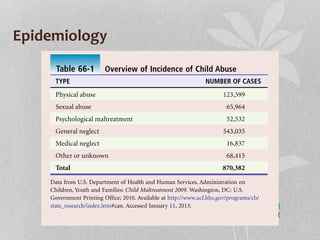
Epidemiology
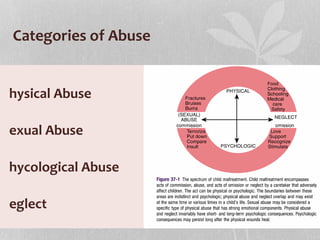
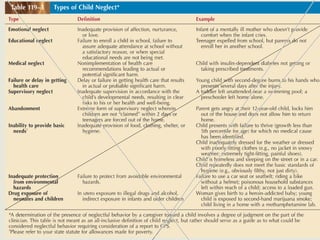
Categories of Abuse
hysical Abuse
exual Abuse
hycological Abuse
eglect
Physical abuse
Physical features
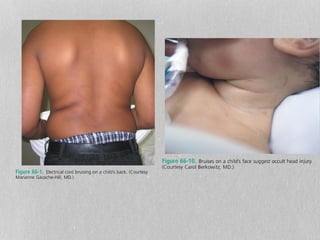
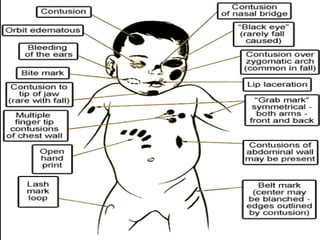
ruises
• bruising in the shape of a hand, ligature, stick, teeth mark, grip or
implement.
• bruising in a child who is
• not independently mobile
• multiple bruises or bruises in clusters
• bruises of a similar shape and size
• bruises on any non-bony part of the body or face including the eyes, ears and
buttocks
• bruises on the neck that look like attempted strangulation bruises on the ankles
and wrists that look like ligature marks.
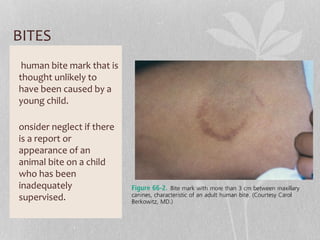
BITES
human bite mark that is
thought unlikely to
have been caused by a
young child.
onsider neglect if there
is a report or
appearance of an
animal bite on a child
who has been
inadequately
supervised.
Lacerations (cuts), abrasions and scars
n a child who is not independently mobile
hat are multiple
ith a symmetrical distribution
n areas usually protected by clothing (for example,
back, chest, abdomen, axilla, genital area)
n the eyes, ears and sides of face
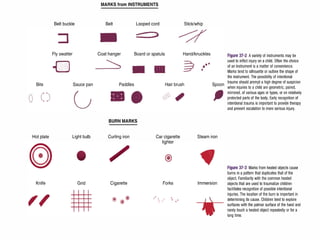
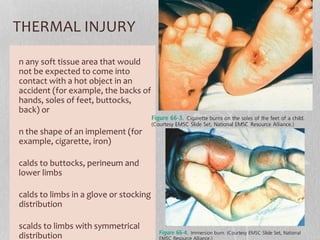
THERMAL INJURY
n any soft tissue area that would
not be expected to come into
contact with a hot object in an
accident (for example, the backs of
hands, soles of feet, buttocks,
back) or
n the shape of an implement (for
example, cigarette, iron)
calds to buttocks, perineum and
lower limbs
calds to limbs in a glove or stocking
distribution
scalds to limbs with symmetrical
distribution
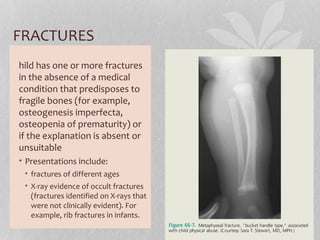
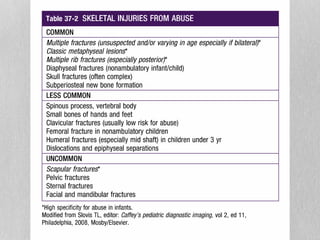
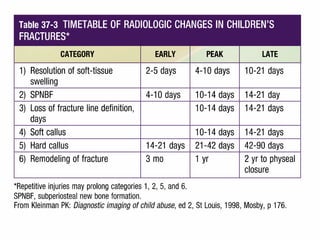
FRACTURES
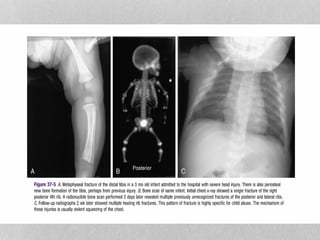
hild has one or more fractures
in the absence of a medical
condition that predisposes to
fragile bones (for example,
osteogenesis imperfecta,
osteopenia of prematurity) or
if the explanation is absent or
unsuitable
• Presentations include:
• fractures of different ages
• X-ray evidence of occult fractures
(fractures identified on X-rays that
were not clinically evident). For
example, rib fractures in infants.
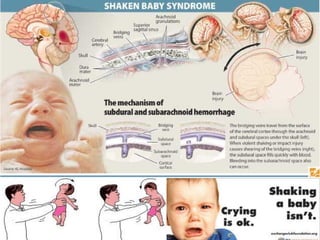
INTRACRANIAL INJURY
bsence of major confirmed
accidental trauma or known medical
cause, in one or more of the
following circumstances:
he explanation is absent or
unsuitable[4] the child is aged under
3 years ,there are also:
• retinal haemorrhages or
• rib or long bone fractures or other
associated inflicted injuries
here are multiple subdural
haemorrhages with or without
subarachnoid haemorrhage with or
without hypoxic ischaemic damage
(damage due to lack of blood and
oxygen supply) to the brain.
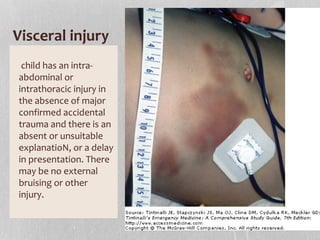
Visceral injury
child has an intra-
abdominal or
intrathoracic injury in
the absence of major
confirmed accidental
trauma and there is an
absent or unsuitable
explanatioN, or a delay
in presentation. There
may be no external
bruising or other
injury.
Clinical presentation
pparent life-threatening event
• repeated apparent life-threatening events, the onset is witnessed only by one parent or
carer and a medical explanation has not been identified.
• bleeding from the nose or mouth
oisoning
on-fatal submersion injury
abricated or induced illness
eported symptoms and signs only appear or reappear when the parent or carer is
present.
eported symptoms are only observed by the parent or carer.
n inexplicably poor response to prescribed medication or other treatment.
ew symptoms are reported as soon as previous ones have resolved.
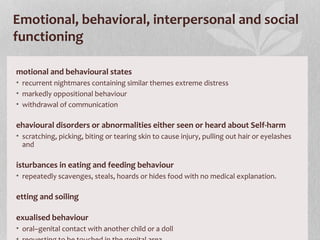
Emotional, behavioral, interpersonal and social
functioning
motional and behavioural states
• recurrent nightmares containing similar themes extreme distress
• markedly oppositional behaviour
• withdrawal of communication
ehavioural disorders or abnormalities either seen or heard about Self-harm
• scratching, picking, biting or tearing skin to cause injury, pulling out hair or eyelashes
and
isturbances in eating and feeding behaviour
• repeatedly scavenges, steals, hoards or hides food with no medical explanation.
etting and soiling
exualised behaviour
• oral–genital contact with another child or a doll
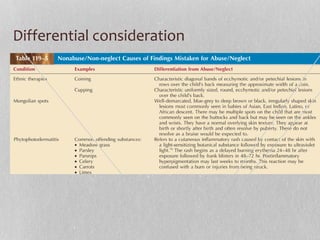
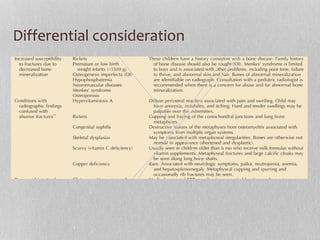
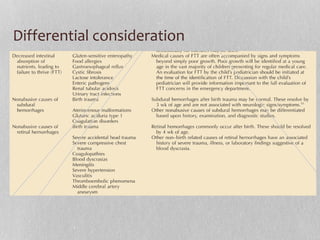
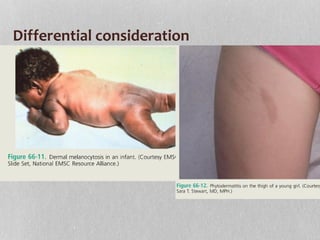
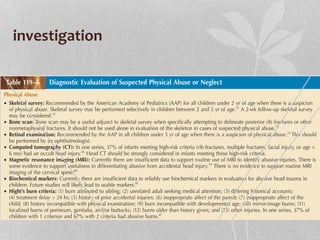
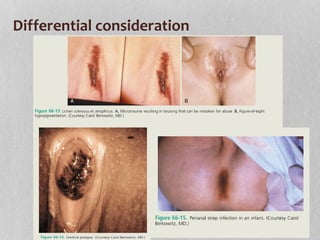
Differential consideration
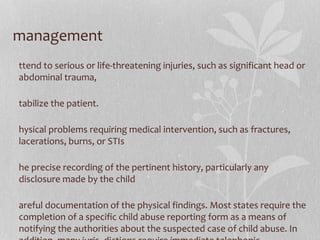
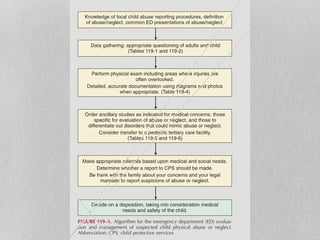
investigation
management
ttend to serious or life-threatening injuries, such as significant head or
abdominal trauma,
tabilize the patient.
hysical problems requiring medical intervention, such as fractures,
lacerations, burns, or STIs
he precise recording of the pertinent history, particularly any
disclosure made by the child
areful documentation of the physical findings. Most states require the
completion of a specific child abuse reporting form as a means of
notifying the authorities about the suspected case of child abuse. In
MUNCHAUSEN SYNDROME BY PROXY
arent induces or fabricates an illness in a child to secure for himself or herself
prolonged contact with health care providers.
hildren may arrive at the ED with reported symptoms such as bleeding,
seizures, altered mental status, apnea, diarrhea, vomiting, fever, rash, or
multiple organ system involvement.
hese symptoms may result from administration of agents such as warfarin
or ipecac.
families frequently move from hospital to hospital, seemingly in search of
diagnosis.
ultiple unnecessary tests
he parent (the biologic mother in 98% of cases) encourages the staff to do
more diagnostic procedures and often seems uncharacteristically happy if a
test is positive.
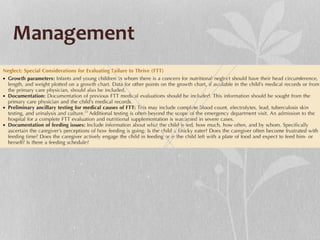
Neglect
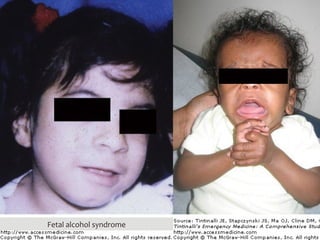
Fetal alcohol syndrome
Management
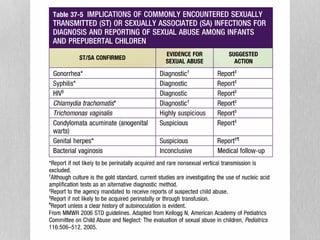
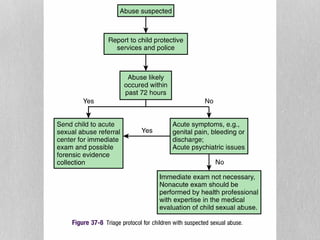
Sexual abuse
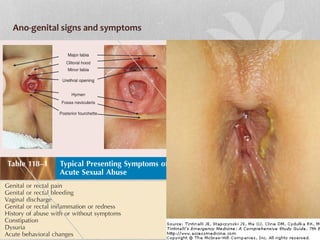
Ano-genital signs and symptoms
Clinical presentation
regnancy
• Be aware that sexual
intercourse with a child
younger than 13 years is
unlawful and therefore
pregnancy in such a child means
the child has been maltreated
• Consider sexual abuse if a
young woman aged 13 to 15
years is pregnant
Differential consideration
investigation
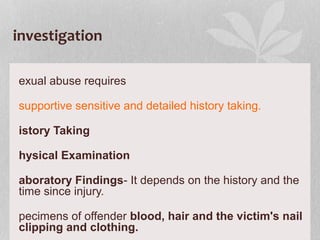
exual abuse requires
supportive sensitive and detailed history taking.
istory Taking
hysical Examination
aboratory Findings- It depends on the history and the
time since injury.
pecimens of offender blood, hair and the victim's nail
clipping and clothing.
When to suspect child maltreatment
Issued: July 2009 last modified: March 2013
NICE clinical guideline 89
guidance.nice.org.uk/cg89

Child abuse

  • 1.
  • 2.
  • 4.
    Categories of Abuse hysicalAbuse exual Abuse hycological Abuse eglect
  • 6.
  • 8.
    Physical features ruises • bruisingin the shape of a hand, ligature, stick, teeth mark, grip or implement. • bruising in a child who is • not independently mobile • multiple bruises or bruises in clusters • bruises of a similar shape and size • bruises on any non-bony part of the body or face including the eyes, ears and buttocks • bruises on the neck that look like attempted strangulation bruises on the ankles and wrists that look like ligature marks.
  • 10.
    BITES human bite markthat is thought unlikely to have been caused by a young child. onsider neglect if there is a report or appearance of an animal bite on a child who has been inadequately supervised.
  • 11.
    Lacerations (cuts), abrasionsand scars n a child who is not independently mobile hat are multiple ith a symmetrical distribution n areas usually protected by clothing (for example, back, chest, abdomen, axilla, genital area) n the eyes, ears and sides of face
  • 13.
    THERMAL INJURY n anysoft tissue area that would not be expected to come into contact with a hot object in an accident (for example, the backs of hands, soles of feet, buttocks, back) or n the shape of an implement (for example, cigarette, iron) calds to buttocks, perineum and lower limbs calds to limbs in a glove or stocking distribution scalds to limbs with symmetrical distribution
  • 14.
    FRACTURES hild has oneor more fractures in the absence of a medical condition that predisposes to fragile bones (for example, osteogenesis imperfecta, osteopenia of prematurity) or if the explanation is absent or unsuitable • Presentations include: • fractures of different ages • X-ray evidence of occult fractures (fractures identified on X-rays that were not clinically evident). For example, rib fractures in infants.
  • 18.
    INTRACRANIAL INJURY bsence ofmajor confirmed accidental trauma or known medical cause, in one or more of the following circumstances: he explanation is absent or unsuitable[4] the child is aged under 3 years ,there are also: • retinal haemorrhages or • rib or long bone fractures or other associated inflicted injuries here are multiple subdural haemorrhages with or without subarachnoid haemorrhage with or without hypoxic ischaemic damage (damage due to lack of blood and oxygen supply) to the brain.
  • 20.
    Visceral injury child hasan intra- abdominal or intrathoracic injury in the absence of major confirmed accidental trauma and there is an absent or unsuitable explanatioN, or a delay in presentation. There may be no external bruising or other injury.
  • 21.
    Clinical presentation pparent life-threateningevent • repeated apparent life-threatening events, the onset is witnessed only by one parent or carer and a medical explanation has not been identified. • bleeding from the nose or mouth oisoning on-fatal submersion injury abricated or induced illness eported symptoms and signs only appear or reappear when the parent or carer is present. eported symptoms are only observed by the parent or carer. n inexplicably poor response to prescribed medication or other treatment. ew symptoms are reported as soon as previous ones have resolved.
  • 22.
    Emotional, behavioral, interpersonaland social functioning motional and behavioural states • recurrent nightmares containing similar themes extreme distress • markedly oppositional behaviour • withdrawal of communication ehavioural disorders or abnormalities either seen or heard about Self-harm • scratching, picking, biting or tearing skin to cause injury, pulling out hair or eyelashes and isturbances in eating and feeding behaviour • repeatedly scavenges, steals, hoards or hides food with no medical explanation. etting and soiling exualised behaviour • oral–genital contact with another child or a doll
  • 23.
  • 24.
  • 25.
  • 26.
  • 27.
  • 28.
    management ttend to seriousor life-threatening injuries, such as significant head or abdominal trauma, tabilize the patient. hysical problems requiring medical intervention, such as fractures, lacerations, burns, or STIs he precise recording of the pertinent history, particularly any disclosure made by the child areful documentation of the physical findings. Most states require the completion of a specific child abuse reporting form as a means of notifying the authorities about the suspected case of child abuse. In
  • 29.
    MUNCHAUSEN SYNDROME BYPROXY arent induces or fabricates an illness in a child to secure for himself or herself prolonged contact with health care providers. hildren may arrive at the ED with reported symptoms such as bleeding, seizures, altered mental status, apnea, diarrhea, vomiting, fever, rash, or multiple organ system involvement. hese symptoms may result from administration of agents such as warfarin or ipecac. families frequently move from hospital to hospital, seemingly in search of diagnosis. ultiple unnecessary tests he parent (the biologic mother in 98% of cases) encourages the staff to do more diagnostic procedures and often seems uncharacteristically happy if a test is positive.
  • 30.
  • 32.
  • 33.
  • 35.
  • 36.
  • 38.
    Clinical presentation regnancy • Beaware that sexual intercourse with a child younger than 13 years is unlawful and therefore pregnancy in such a child means the child has been maltreated • Consider sexual abuse if a young woman aged 13 to 15 years is pregnant
  • 40.
  • 41.
    investigation exual abuse requires supportivesensitive and detailed history taking. istory Taking hysical Examination aboratory Findings- It depends on the history and the time since injury. pecimens of offender blood, hair and the victim's nail clipping and clothing.
  • 45.
    When to suspectchild maltreatment When to suspect child maltreatment Issued: July 2009 last modified: March 2013 NICE clinical guideline 89 guidance.nice.org.uk/cg89