Chicago City of
Illinois
1
City of Chicago
City of Chicago, is the most-
populous city in the U.S.
state of Illinois and the third-
most-populous city in
the United States. With an
estimated population of
2,705,994 (2018.
2
Location
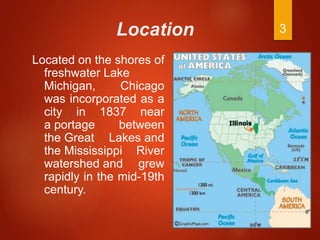
Located on the shores of
freshwater Lake
Michigan, Chicago
was incorporated as a
city in 1837 near
a portage between
the Great Lakes and
the Mississippi River
watershed and grew
rapidly in the mid-19th
century.
3
Area
This is spread over area of
149770.57acres
The metropolitan area is
the third-most-populous in
the nation.
4
Population
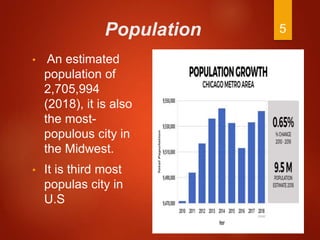
• An estimated
population of
2,705,994
(2018), it is also
the most-
populous city in
the Midwest.
• It is third most
populas city in
U.S
5
Chicago after disaster
 After the Great Chicago Fire of
1871, which destroyed several
square miles and left more than
100,000 homeless, the city made a
concerted effort to rebuild. The
construction boom accelerated
population growth throughout the
following decades, and by 1900,
Chicago was the fifth-largest city in
the world
6
Contribution to Planning
Chicago made noted contributions to
urban planning and zoning
standards, including new
construction styles (including
the Chicago School of
architecture). Daniel Burnham was
architect and designer of the new
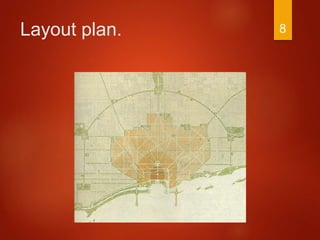
design of city in 1912.
7
Layout plan. 8
Panning
 the aim was to beautify the city against
massive urbanization and industrlialization.
They work for aesthetic and the most of city
buildings was white.
 The design was similar to cities like paris,
mostly focused on the city centre. There was
nodal design with a city centre , streets,
boulevards ,fountains, and construction in
accordance with early designs.
 They made efforts to utilize the lake front and
other water bodies to enhance fishing and
entertainment and aesthetics
9
 Major attentions is given to highways
so to connect city centre directly with
the outer areas and similar with
railways to boost economics.
 Parks contributed to aesthetic feature
of city.
 Plan was helping automobiles with
systematic and wider streets
10
Problems
 The systematic and wider street
patterns brought traffic congestion to a
great extent.
 The rise in population cause to built
infrastructure on parks and other
natural resources the most recent
issue they faced.
 Neighbourhood concept was neglected
11
Thank you.
12

CHICAGO

  • 1.
  • 2.
    City of Chicago Cityof Chicago, is the most- populous city in the U.S. state of Illinois and the third- most-populous city in the United States. With an estimated population of 2,705,994 (2018. 2
  • 3.
    Location Located on theshores of freshwater Lake Michigan, Chicago was incorporated as a city in 1837 near a portage between the Great Lakes and the Mississippi River watershed and grew rapidly in the mid-19th century. 3
  • 4.
    Area This is spreadover area of 149770.57acres The metropolitan area is the third-most-populous in the nation. 4
  • 5.
    Population • An estimated populationof 2,705,994 (2018), it is also the most- populous city in the Midwest. • It is third most populas city in U.S 5
  • 6.
    Chicago after disaster After the Great Chicago Fire of 1871, which destroyed several square miles and left more than 100,000 homeless, the city made a concerted effort to rebuild. The construction boom accelerated population growth throughout the following decades, and by 1900, Chicago was the fifth-largest city in the world 6
  • 7.
    Contribution to Planning Chicagomade noted contributions to urban planning and zoning standards, including new construction styles (including the Chicago School of architecture). Daniel Burnham was architect and designer of the new design of city in 1912. 7
  • 8.
  • 9.
    Panning  the aimwas to beautify the city against massive urbanization and industrlialization. They work for aesthetic and the most of city buildings was white.  The design was similar to cities like paris, mostly focused on the city centre. There was nodal design with a city centre , streets, boulevards ,fountains, and construction in accordance with early designs.  They made efforts to utilize the lake front and other water bodies to enhance fishing and entertainment and aesthetics 9
  • 10.
     Major attentionsis given to highways so to connect city centre directly with the outer areas and similar with railways to boost economics.  Parks contributed to aesthetic feature of city.  Plan was helping automobiles with systematic and wider streets 10
  • 11.
    Problems  The systematicand wider street patterns brought traffic congestion to a great extent.  The rise in population cause to built infrastructure on parks and other natural resources the most recent issue they faced.  Neighbourhood concept was neglected 11
  • 12.