DR. PRASANTA KUMAR DASH
Moderator Dr. S K GUPTA
 1.5-2% of all malignant neoplasms in males in
India
 Second commonest urologic malignancy
after prostate cancer in india.
 More common in urban than rural areas
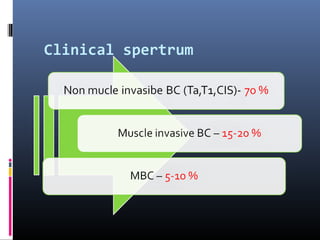
Clinical spertrum
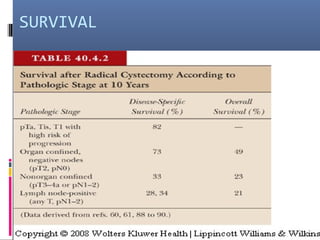
SURVIVAL
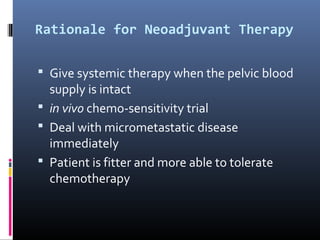
Rationale for Neoadjuvant Therapy
 Give systemic therapy when the pelvic blood
supply is intact
 in vivo chemo-sensitivity trial
 Deal with micrometastatic disease
immediately
 Patient is fitter and more able to tolerate
chemotherapy
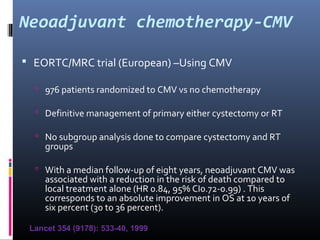
Neoadjuvant chemotherapy-CMV
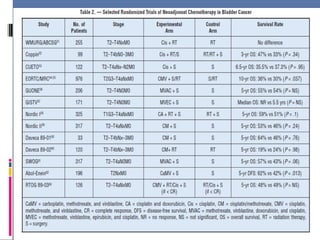
 EORTC/MRC trial (European) –Using CMV
 976 patients randomized to CMV vs no chemotherapy
 Definitive management of primary either cystectomy or RT
 No subgroup analysis done to compare cystectomy and RT
groups
 With a median follow-up of eight years, neoadjuvant CMV was
associated with a reduction in the risk of death compared to
local treatment alone (HR 0.84, 95% CI0.72-0.99) . This
corresponds to an absolute improvement in OS at 10 years of
six percent (30 to 36 percent).
Lancet 354 (9178): 533-40, 1999
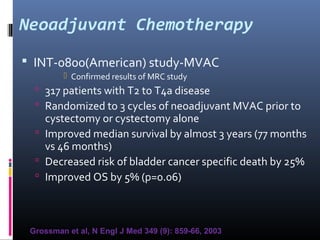
Neoadjuvant Chemotherapy
 INT-0800(American) study-MVAC
 Confirmed results of MRC study
 317 patients with T2 to T4a disease
 Randomized to 3 cycles of neoadjuvant MVAC prior to
cystectomy or cystectomy alone
 Improved median survival by almost 3 years (77 months
vs 46 months)
 Decreased risk of bladder cancer specific death by 25%
 Improved OS by 5% (p=0.06)
Grossman et al, N Engl J Med 349 (9): 859-66, 2003
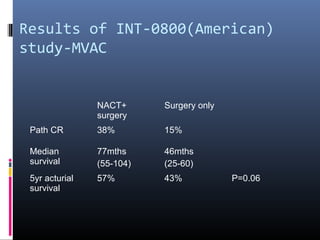
Results of INT-0800(American)
study-MVAC
NACT+
surgery
Surgery only
Path CR 38% 15%
Median
survival
77mths
(55-104)
46mths
(25-60)
5yr acturial
survival
57% 43% P=0.06
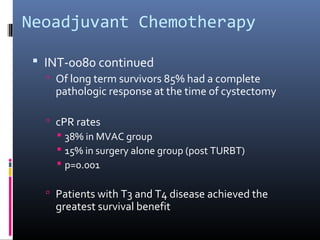
Neoadjuvant Chemotherapy
 INT-0080 continued
 Of long term survivors 85% had a complete
pathologic response at the time of cystectomy
 cPR rates
 38% in MVAC group
 15% in surgery alone group (post TURBT)
 p=0.001
 Patients with T3 and T4 disease achieved the
greatest survival benefit
Gem /Cis as NACT
 Hussein Khaled and his colleagues at the Egyptian Bladder Cancer
Cooperative in Cairo, Egypt-gemcitabine/cisplatin regimen as
neoadjuvant chemotherapy for invasive bladder cancer
 phase 3 trial, 114 patients were randomized to receive either
cystectomy alone (56 patients), or to 3 cycles of
gemcitabine/cisplatin preoperatively (58 patients).
 Patients with a complete response received 3 additional cycles
followed by radiation treatment (68 Gy/7 weeks). Patients who were
subsequently downstaged to T2-T3 went on to surgery and received
an additional 3 cycles of the regimen postoperatively. Patients with
stable disease or disease progression following chemotherapy went
on to surgery immediately
 reported an overall response of 56% (30% complete
response [CR] and 25% partial response [PR]), and
bladder preservation was possible in 22% of those
patients who had a CR.
 They also noted a trend toward increased 1-year survival
in the chemotherapy patients relative to cystectomy-
alone patients (69% vs 54%, P = .9)
GC Vs MVAC as NACT
 GC and MVAC have only been compared in retrospective
studies
 These studies suggest it results in similar rates of pCR and
survival outcomes .
 Despite the lack of prospective data, GC is administered in this
setting based on data from studies performed in patients with
metastatic urothelial carcinoma, which show six cycles of GC
result in a better toxicity profile compared to MVAC without a
major difference in OS.
Yeshchina O, et al. Relative efficacy of perioperative GC Vs MVAC in the management of locally advanced urothelial carcinoma of the bladder. Urology 2012; 79:384.
Neoadjuvant Chemotherapy-Meta-
analysis(3)
 Meta-analyses (1)
 Advanced Cancer Meta-analysis Collaboration
 Included 2688 patients from 10 randomized trials
(did not include INT-0080)
 Showed increased overall survival benefit of 5% at
5 yrs p=0.016 when neoadjuvant platinum based
combination chemotherapy used
 Not significant if only single agent cisplatin trials
were included
Advanced Bladder Cancer Meta-analysis Collaboration.: Neoadjuvant
chemotherapy in invasive bladder cancer: a systematic review and meta-analysis.
Lancet 361 (9373): 1927-34, 2003
Neoadjuvant Chemotherapy
 Canadian Meta-analysis(2)
 Winquist et al
 2605 patients in 11 trials with stage II or stage III
disease
 2-4 cycles of neoadjuvant chemo
 Improved OS by 6.5% p=0.006
 Mortality due to chemotherapy 1.1%
Winquist E, et al, J Urol. 2004 Feb;171(2 Pt 1):561-9
Neoadjuvant Chemotherapy
 Advanced Bladder Cancer Meta-analysis
collaboration(3)
 Included 11 trials with 3005 patients
 Included 98% of all known patients in randomized
trials using cisplatin based combination
chemotherapy
 Improved OS by 5%; p=0.003
 Decreased risk of death by 14%
Advanced Bladder Cancer (ABC) Meta-analysis Collaboration.
Eur Urol. 2005 Aug;48(2):202-5
Cochrane review --2008
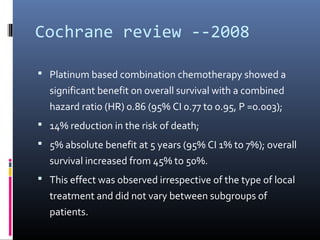
 Platinum based combination chemotherapy showed a
significant benefit on overall survival with a combined
hazard ratio (HR) 0.86 (95% CI 0.77 to 0.95, P =0.003);
 14% reduction in the risk of death;
 5% absolute benefit at 5 years (95% CI 1% to 7%); overall
survival increased from 45% to 50%.
 This effect was observed irrespective of the type of local
treatment and did not vary between subgroups of
patients.
Cochrane review –2008-Contd
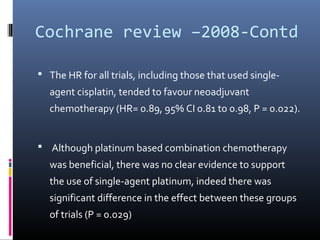
 The HR for all trials, including those that used single-
agent cisplatin, tended to favour neoadjuvant
chemotherapy (HR= 0.89, 95% CI 0.81 to 0.98, P = 0.022).
 Although platinum based combination chemotherapy
was beneficial, there was no clear evidence to support
the use of single-agent platinum, indeed there was
significant difference in the effect between these groups
of trials (P = 0.029)
Conclusions-NACT
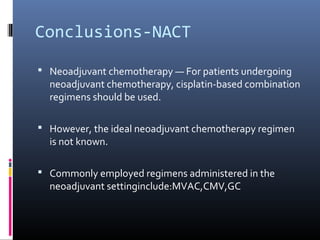
 Neoadjuvant chemotherapy — For patients undergoing
neoadjuvant chemotherapy, cisplatin-based combination
regimens should be used.
 However, the ideal neoadjuvant chemotherapy regimen
is not known.
 Commonly employed regimens administered in the
neoadjuvant settinginclude:MVAC,CMV,GC
Doses
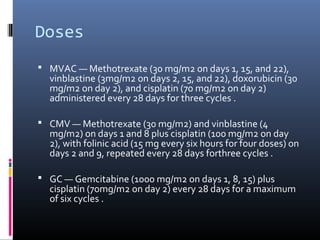
 MVAC — Methotrexate (30 mg/m2 on days 1, 15, and 22),
vinblastine (3mg/m2 on days 2, 15, and 22), doxorubicin (30
mg/m2 on day 2), and cisplatin (70 mg/m2 on day 2)
administered every 28 days for three cycles .
 CMV — Methotrexate (30 mg/m2) and vinblastine (4
mg/m2) on days 1 and 8 plus cisplatin (100 mg/m2 on day
2), with folinic acid (15 mg every six hours for four doses) on
days 2 and 9, repeated every 28 days forthree cycles .
 GC — Gemcitabine (1000 mg/m2 on days 1, 8, 15) plus
cisplatin (70mg/m2 on day 2) every 28 days for a maximum
of six cycles .
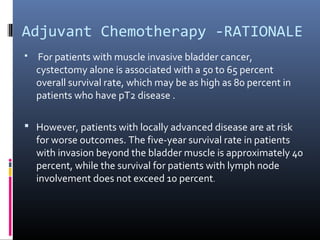
Adjuvant Chemotherapy -RATIONALE
 For patients with muscle invasive bladder cancer,
cystectomy alone is associated with a 50 to 65 percent
overall survival rate, which may be as high as 80 percent in
patients who have pT2 disease .
 However, patients with locally advanced disease are at risk
for worse outcomes. The five-year survival rate in patients
with invasion beyond the bladder muscle is approximately 40
percent, while the survival for patients with lymph node
involvement does not exceed 10 percent.
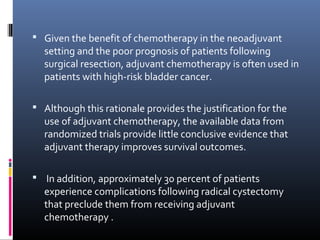
 Given the benefit of chemotherapy in the neoadjuvant
setting and the poor prognosis of patients following
surgical resection, adjuvant chemotherapy is often used in
patients with high-risk bladder cancer.
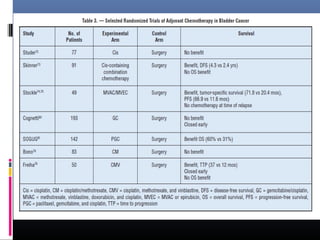
 Although this rationale provides the justification for the
use of adjuvant chemotherapy, the available data from
randomized trials provide little conclusive evidence that
adjuvant therapy improves survival outcomes.
 In addition, approximately 30 percent of patients
experience complications following radical cystectomy
that preclude them from receiving adjuvant
chemotherapy .
Spanish Oncology GU Group
Trial 99/01
 The Spanish Oncology Genitourinary Group trial 99/01 planned
to randomly assign 340 patients with T3-T4 or node positive
disease to treatment using four cycles of paclitaxel, gemcitabine,
and cisplatin (PGC) or observation .
 However, the trial was terminated in 2007 because of poor
accrual after only 142 patients were enrolled.
 The preliminary results of this trial were presented at the 2010
American Society of Clinical Oncology (ASCO) meeting. At a
median follow-up of 51 months, adjuvant PGC resulted in a
significant increase in overall survival (OS) at five years compared
to no chemotherapy (60 versus 30 percent, hazard ratio [HR]
0.44).
Paz-Ares LG, Randomized phase III trial comparing adjuvant PGC to observation in patients with
resected invasive bladder cancer: J Clin Oncol 2010; 28:18s
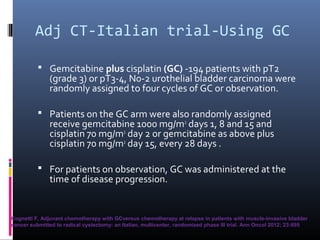
Adj CT-Italian trial-Using GC
 Gemcitabine plus cisplatin (GC) -194 patients with pT2
(grade 3) or pT3-4, N0-2 urothelial bladder carcinoma were
randomly assigned to four cycles of GC or observation.
 Patients on the GC arm were also randomly assigned
receive gemcitabine 1000 mg/m2
days 1, 8 and 15 and
cisplatin 70 mg/m2
day 2 or gemcitabine as above plus
cisplatin 70 mg/m2
day 15, every 28 days .
 For patients on observation, GC was administered at the
time of disease progression.
Cognetti F, Adjuvant chemotherapy with GCversus chemotherapy at relapse in patients with muscle-invasive bladder
cancer submitted to radical cystectomy: an Italian, multicenter, randomized phase III trial. Ann Oncol 2012; 23:695
 The trial was prematurely closed due to poor accrual.
 At a median follow-up of 35 months, there was no
difference in either overall survival (HR 1.29, 95% CI 0.84-
2.00) or disease-free survival (HR 1.08, 95% CI 0.73-1.59)
compared to observation
 However, the study was underpowered to show the
impact of treatment on either endpoint.
Adj CT - EORTC Trial
 EORTC Trial — A very different phase III study
which aimed to randomly assign 660 patients to
observation or treatment with adjuvant
chemotherapy (either methotrexate, vincristine,
doxorubicin, cyclophosphamide [M-VAC] or High
Dose M-VAC [HD-MVAC] or GC at the discretion
of the treating physician).
 After enrollment of 248 patients, the trial was
closed due to slow accrual (though this surpasses
the accrual of patients in other contemporary
trials).
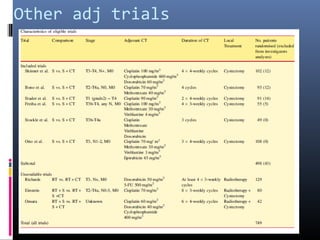
Other adj trials
Summary of these trials
 Multiple trials
 Small patient numbers ranging from 49-102
 Two trials suggest survival benefit
 Skinner et al. J Urol 1991
 91 patients
 Included T3-4 or node positive patients
 Randomized to 4 cycles of cis/doxo/cyclo or observation
 Median survival
 4.3 yrs chemo p=0.006
 2.4 yrs observation
 Criticized - ? selection bias:
 91 of 498 patients screened were eligible
Skinner DG et al, J Urol. 1991 Mar;145(3):459-64
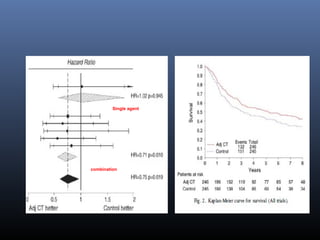
Adjuvant chemotherapy-Meta-analysis
 Meta analysis-
 Cochrane Collaboration 2006
 491 pts. from 6 trials
 Power limited
 Small numbers
 Impact of trials stopped early
 Patients not receiving allocated rx
 Patients not receiving salvage chemotherapy
 Showed a relative decrease in death of 25% in favour of
adjuvant chemotherapy (p=0.02)
 Absolute survival benefit: 9%
Cochrane Database Syst Rev. 2006 Apr 19;(2):CD006018
Single agent
combination
Conclusion--Compare and Contrast
Neoadjuvant
 Deals with micromets
sooner
 Best evidence of
benefit
 Concern re: delay in
surgery
 ? Increased surgical
complications
 Is benefit worth it?
Adjuvant
 Treats only the highest
risk pts.
 No delay in local Rx
 Evidence of benefit is
weaker
 Delays in healing may
preclude giving
therapy
 Is benefit worth it?
METASTATIC BLADDER CANCER
 Typically, bladder cancer recurs in the pelvic
lymph nodes and distant sites
 Despite the fact that bladder cancer is
chemosensitive, the prognosis of patients
with metastatic disease remains poor, with a
median survival of 14 months and a 5-year
survival rate of 15%
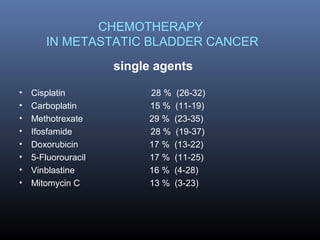
CHEMOTHERAPY
IN METASTATIC BLADDER CANCER
• Cisplatin 28 % (26-32)
• Carboplatin 15 % (11-19)
• Methotrexate 29 % (23-35)
• Ifosfamide 28 % (19-37)
• Doxorubicin 17 % (13-22)
• 5-Fluorouracil 17 % (11-25)
• Vinblastine 16 % (4-28)
• Mitomycin C 13 % (3-23)
single agents
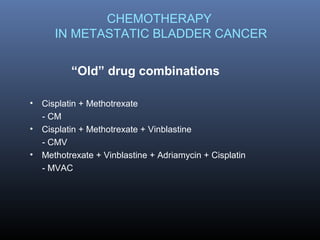
CHEMOTHERAPY
IN METASTATIC BLADDER CANCER
• Cisplatin + Methotrexate
- CM
• Cisplatin + Methotrexate + Vinblastine
- CMV
• Methotrexate + Vinblastine + Adriamycin + Cisplatin
- MVAC
“Old” drug combinations
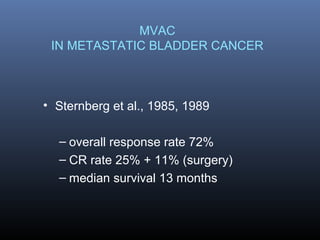
MVAC
IN METASTATIC BLADDER CANCER
• Sternberg et al., 1985, 1989
– overall response rate 72%
– CR rate 25% + 11% (surgery)
– median survival 13 months
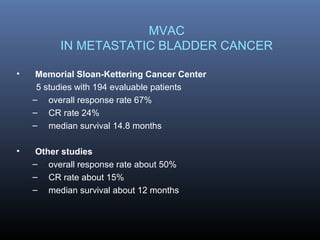
MVAC
IN METASTATIC BLADDER CANCER
• Memorial Sloan-Kettering Cancer Center
5 studies with 194 evaluable patients
– overall response rate 67%
– CR rate 24%
– median survival 14.8 months
• Other studies
– overall response rate about 50%
– CR rate about 15%
– median survival about 12 months
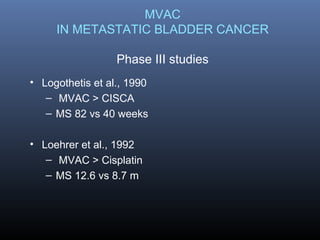
MVAC
IN METASTATIC BLADDER CANCER
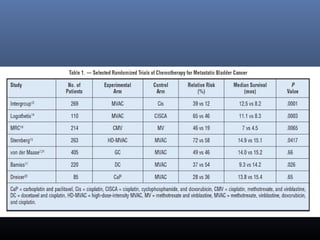
Phase III studies
• Logothetis et al., 1990
– MVAC > CISCA
– MS 82 vs 40 weeks
• Loehrer et al., 1992
– MVAC > Cisplatin
– MS 12.6 vs 8.7 m
MVAC - ERA
IN METASTATIC BLADDER CANCER
• MVAC is associated with substantial toxicities and
a toxic death rate of 3-4%
• Thus, a need for alternative regimens with
superior efficacy and/or decreased toxicity was
identified
CHEMOTHERAPY
IN METASTATIC BLADDER CANCER
• Taxanes
• Gemcitabine
Most promising new drugs
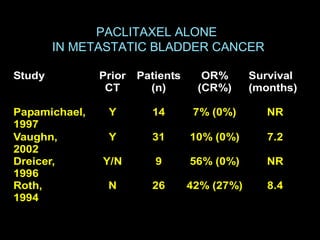
PACLITAXEL ALONE
IN METASTATIC BLADDER CANCER
Study Prior
CT
Patients
(n)
OR%
(CR%)
Survival
(months)
Papamichael,
1997
Y 14 7% (0%) NR
Vaughn,
2002
Y 31 10% (0%) 7.2
Dreicer,
1996
Y/N 9 56% (0%) NR
Roth,
1994
N 26 42% (27%) 8.4
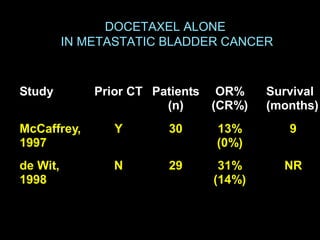
DOCETAXEL ALONE
IN METASTATIC BLADDER CANCER
Study Prior CT Patients
(n)
OR%
(CR%)
Survival
(months)
McCaffrey,
1997
Y 30 13%
(0%)
9
de Wit,
1998
N 29 31%
(14%)
NR
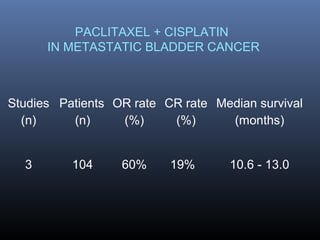
Studies
(n)
Patients
(n)
OR rate
(%)
CR rate
(%)
Median survival
(months)
3 104 60% 19% 10.6 - 13.0
PACLITAXEL + CISPLATIN
IN METASTATIC BLADDER CANCER
Studies
(n)
Patients
(n)
OR rate
(%)
CR rate
(%)
Median survival
(months)
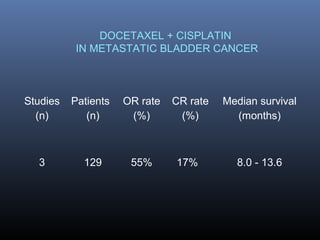
3 129 55% 17% 8.0 - 13.6
DOCETAXEL + CISPLATIN
IN METASTATIC BLADDER CANCER
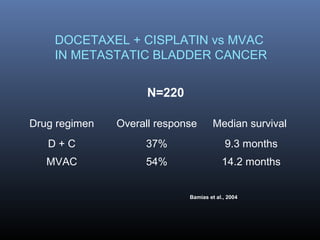
DOCETAXEL + CISPLATIN vs MVAC
IN METASTATIC BLADDER CANCER
Drug regimen Overall response Median survival
D + C 37% 9.3 months
MVAC 54% 14.2 months
N=220
Bamias et al., 2004
Studies
(n)
Patients
(n)
OR rate
(%)
CR rate
(%)
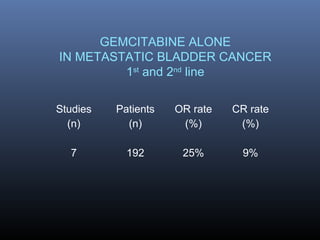
7 192 25% 9%
GEMCITABINE ALONE
IN METASTATIC BLADDER CANCER
1st
and 2nd
line
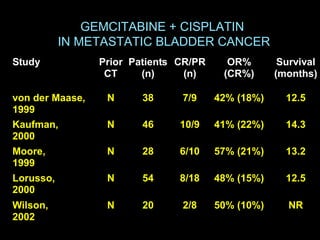
GEMCITABINE + CISPLATIN
IN METASTATIC BLADDER CANCER
Study Prior
CT
Patients
(n)
CR/PR
(n)
OR%
(CR%)
Survival
(months)
von der Maase,
1999
N 38 7/9 42% (18%) 12.5
Kaufman,
2000
N 46 10/9 41% (22%) 14.3
Moore,
1999
N 28 6/10 57% (21%) 13.2
Lorusso,
2000
N 54 8/18 48% (15%) 12.5
Wilson,
2002
N 20 2/8 50% (10%) NR
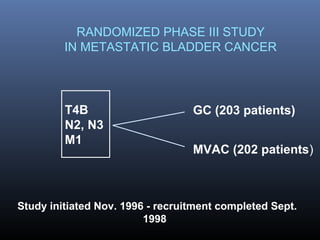
RANDOMIZED PHASE III STUDY
IN METASTATIC BLADDER CANCER
T4B
N2, N3
M1
GC (203 patients)
MVAC (202 patients)
Study initiated Nov. 1996 - recruitment completed Sept.
1998
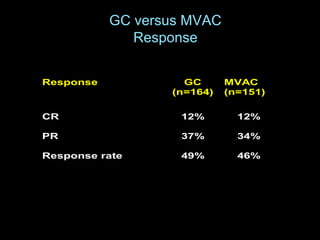
Response GC
(n=164)
MVAC
(n=151)
CR 12% 12%
PR 37% 34%
Response rate 49% 46%
GC versus MVAC
Response
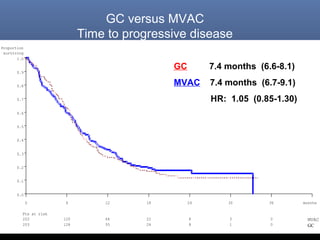
GC versus MVAC
Time to progressive disease
GC: 7.4m (6.6-8.1m)
MVAC: 7.4m (6.7-9.1m)
HR: 1.05 (0.85-1.30)
LR: p=0.659 W: p=0.995
Proportion
surviving
0.0
0.1
0.2
0.3
0.4
0.5
0.6
0.7
0.8
0.9
1.0
0
Pts at risk
202
203
6
120
128
12
64
55
18
22
24
24
8
8
30
3
1
36
0
0
months
MVAC
GC
GC 7.4 months (6.6-8.1)
MVAC 7.4 months (6.7-9.1)
HR: 1.05 (0.85-1.30)
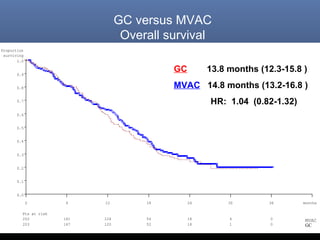
GC versus MVAC
Overall survival
GC: 13.8 m (12.3-15.8 m)
MVAC: 14.8 m (13.2-16.8 m)
HR: 1.04 (0.82-1.32)
LR: p=0.746 W: p=0.908
Proportion
surviving
0.0
0.1
0.2
0.3
0.4
0.5
0.6
0.7
0.8
0.9
1.0
0
Pts at risk
202
203
6
161
167
12
124
120
18
54
52
24
18
18
30
4
1
36
0
0
months
MVAC
GC
GC 13.8 months (12.3-15.8 )
MVAC 14.8 months (13.2-16.8 )
HR: 1.04 (0.82-1.32)
GC versus MVAC
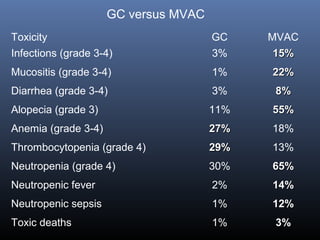
Toxicity GC MVAC
Infections (grade 3-4) 3% 15%15%
Mucositis (grade 3-4) 1% 22%22%
Diarrhea (grade 3-4) 3% 8%8%
Alopecia (grade 3) 11% 55%55%
Anemia (grade 3-4) 27%27% 18%
Thrombocytopenia (grade 4) 29%29% 13%
Neutropenia (grade 4) 30% 65%65%
Neutropenic fever 2% 14%14%
Neutropenic sepsis 1% 12%12%
Toxic deaths 1% 3%3%
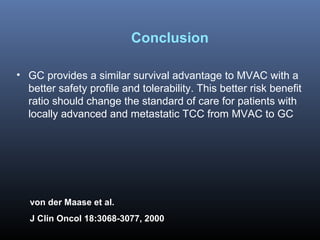
• GC provides a similar survival advantage to MVAC with a
better safety profile and tolerability. This better risk benefit
ratio should change the standard of care for patients with
locally advanced and metastatic TCC from MVAC to GC
Conclusion
von der Maase et al.
J Clin Oncol 18:3068-3077, 2000
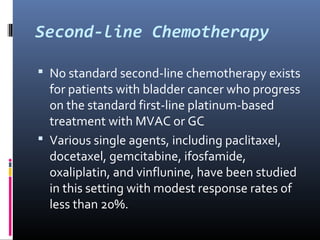
Second-line Chemotherapy
 No standard second-line chemotherapy exists
for patients with bladder cancer who progress
on the standard first-line platinum-based
treatment with MVAC or GC
 Various single agents, including paclitaxel,
docetaxel, gemcitabine, ifosfamide,
oxaliplatin, and vinflunine, have been studied
in this setting with modest response rates of
less than 20%.
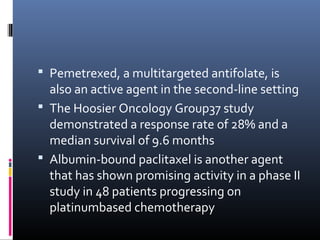
 Pemetrexed, a multitargeted antifolate, is
also an active agent in the second-line setting
 The Hoosier Oncology Group37 study
demonstrated a response rate of 28% and a
median survival of 9.6 months
 Albumin-bound paclitaxel is another agent
that has shown promising activity in a phase II
study in 48 patients progressing on
platinumbased chemotherapy
 Eribulin has demonstrated response rates of
40% as a single agent in bladder cancer
 it is not renally excreted and is being studied
in patients with renal dysfunction
Novel Agents in Bladder Cancer
 Trastuzumab
 Tyrosine kinase inhibitor (TKI) Gefitinib ,
Erlotinib
 VEGF TKI Sunitinib, Pazopanib
 Dovitinib is an oral inhibitor of VEGFR and
FGFR and is being evaluated in combination
with GC or carboplatin in bladder cancer
Conclusions
 Bladder cancer is a chemosensitive disease,
and systemic chemotherapy plays a role in its
management
 Cisplatin-based combination chemotherapy
prolongs survival in the metastatic setting,
and methotrexate,vinblastine, doxorubicin,
and cisplatin or combination
gemcitabine/cisplatin is the current standard
of care
 carboplatin should not be substituted for
cisplatin in fit patients, it may be considered
in those who are ineligible for cisplatin
 No approved second-line chemotherapy for
metastatic bladder cancer exists, and
response rates with available agents are
variable
 The role of neoadjuvant cisplatin-based
combination chemotherapy has been
extensively evaluated and is associated with a
modest but significant survival benefit
 The achievement of pathological complete
response (pT0) with neoadjuvant
chemotherapy has strong prognostic
significance and may represent an alternate
clinical end point for clinical trials
 Although robust data are lacking for the use
of chemotherapy in the adjuvant setting after
cystectomy, it may be considered in patients
who are at high risk for relapse
 Unlike other solid tumors, targeted therapy is
not well established in bladder cancer, and a
critical need exists to develop novel agents
that complement or are an alternative to
conventional chemotherapies
THANK YOU…
 Rahul gandhi Se Interview Me Pucha Gaya:
 Agar 2 Minute K Liye Aapko P.M Bana Diya Jaye
To Aap Kya Karenge…..??
 Rahul: Hum Maggi Noodles Banayenge..
 Interviewer: Why….??
 Rahul: 2 Minute Me To Sirf Maggi hi Ban Sakti Hai..
 Interviewer: Agar 5 Saal K Liye Bana Diya Jaye….??
 Rahul: Hum 5 Saal K Liye P.M Nahi Banege..
 Interviewer: Why….??
 Rahul: Itni Maggi Kaun Khayega…!!!!!

Chemotherapy in ca urinary bladder dr prasanta dash

  • 1.
    DR. PRASANTA KUMARDASH Moderator Dr. S K GUPTA
  • 2.
     1.5-2% ofall malignant neoplasms in males in India  Second commonest urologic malignancy after prostate cancer in india.  More common in urban than rural areas
  • 3.
  • 8.
  • 9.
    Rationale for NeoadjuvantTherapy  Give systemic therapy when the pelvic blood supply is intact  in vivo chemo-sensitivity trial  Deal with micrometastatic disease immediately  Patient is fitter and more able to tolerate chemotherapy
  • 11.
    Neoadjuvant chemotherapy-CMV  EORTC/MRCtrial (European) –Using CMV  976 patients randomized to CMV vs no chemotherapy  Definitive management of primary either cystectomy or RT  No subgroup analysis done to compare cystectomy and RT groups  With a median follow-up of eight years, neoadjuvant CMV was associated with a reduction in the risk of death compared to local treatment alone (HR 0.84, 95% CI0.72-0.99) . This corresponds to an absolute improvement in OS at 10 years of six percent (30 to 36 percent). Lancet 354 (9178): 533-40, 1999
  • 12.
    Neoadjuvant Chemotherapy  INT-0800(American)study-MVAC  Confirmed results of MRC study  317 patients with T2 to T4a disease  Randomized to 3 cycles of neoadjuvant MVAC prior to cystectomy or cystectomy alone  Improved median survival by almost 3 years (77 months vs 46 months)  Decreased risk of bladder cancer specific death by 25%  Improved OS by 5% (p=0.06) Grossman et al, N Engl J Med 349 (9): 859-66, 2003
  • 13.
    Results of INT-0800(American) study-MVAC NACT+ surgery Surgeryonly Path CR 38% 15% Median survival 77mths (55-104) 46mths (25-60) 5yr acturial survival 57% 43% P=0.06
  • 14.
    Neoadjuvant Chemotherapy  INT-0080continued  Of long term survivors 85% had a complete pathologic response at the time of cystectomy  cPR rates  38% in MVAC group  15% in surgery alone group (post TURBT)  p=0.001  Patients with T3 and T4 disease achieved the greatest survival benefit
  • 15.
    Gem /Cis asNACT  Hussein Khaled and his colleagues at the Egyptian Bladder Cancer Cooperative in Cairo, Egypt-gemcitabine/cisplatin regimen as neoadjuvant chemotherapy for invasive bladder cancer  phase 3 trial, 114 patients were randomized to receive either cystectomy alone (56 patients), or to 3 cycles of gemcitabine/cisplatin preoperatively (58 patients).  Patients with a complete response received 3 additional cycles followed by radiation treatment (68 Gy/7 weeks). Patients who were subsequently downstaged to T2-T3 went on to surgery and received an additional 3 cycles of the regimen postoperatively. Patients with stable disease or disease progression following chemotherapy went on to surgery immediately
  • 16.
     reported anoverall response of 56% (30% complete response [CR] and 25% partial response [PR]), and bladder preservation was possible in 22% of those patients who had a CR.  They also noted a trend toward increased 1-year survival in the chemotherapy patients relative to cystectomy- alone patients (69% vs 54%, P = .9)
  • 17.
    GC Vs MVACas NACT  GC and MVAC have only been compared in retrospective studies  These studies suggest it results in similar rates of pCR and survival outcomes .  Despite the lack of prospective data, GC is administered in this setting based on data from studies performed in patients with metastatic urothelial carcinoma, which show six cycles of GC result in a better toxicity profile compared to MVAC without a major difference in OS. Yeshchina O, et al. Relative efficacy of perioperative GC Vs MVAC in the management of locally advanced urothelial carcinoma of the bladder. Urology 2012; 79:384.
  • 18.
    Neoadjuvant Chemotherapy-Meta- analysis(3)  Meta-analyses(1)  Advanced Cancer Meta-analysis Collaboration  Included 2688 patients from 10 randomized trials (did not include INT-0080)  Showed increased overall survival benefit of 5% at 5 yrs p=0.016 when neoadjuvant platinum based combination chemotherapy used  Not significant if only single agent cisplatin trials were included Advanced Bladder Cancer Meta-analysis Collaboration.: Neoadjuvant chemotherapy in invasive bladder cancer: a systematic review and meta-analysis. Lancet 361 (9373): 1927-34, 2003
  • 19.
    Neoadjuvant Chemotherapy  CanadianMeta-analysis(2)  Winquist et al  2605 patients in 11 trials with stage II or stage III disease  2-4 cycles of neoadjuvant chemo  Improved OS by 6.5% p=0.006  Mortality due to chemotherapy 1.1% Winquist E, et al, J Urol. 2004 Feb;171(2 Pt 1):561-9
  • 20.
    Neoadjuvant Chemotherapy  AdvancedBladder Cancer Meta-analysis collaboration(3)  Included 11 trials with 3005 patients  Included 98% of all known patients in randomized trials using cisplatin based combination chemotherapy  Improved OS by 5%; p=0.003  Decreased risk of death by 14% Advanced Bladder Cancer (ABC) Meta-analysis Collaboration. Eur Urol. 2005 Aug;48(2):202-5
  • 21.
    Cochrane review --2008 Platinum based combination chemotherapy showed a significant benefit on overall survival with a combined hazard ratio (HR) 0.86 (95% CI 0.77 to 0.95, P =0.003);  14% reduction in the risk of death;  5% absolute benefit at 5 years (95% CI 1% to 7%); overall survival increased from 45% to 50%.  This effect was observed irrespective of the type of local treatment and did not vary between subgroups of patients.
  • 22.
    Cochrane review –2008-Contd The HR for all trials, including those that used single- agent cisplatin, tended to favour neoadjuvant chemotherapy (HR= 0.89, 95% CI 0.81 to 0.98, P = 0.022).  Although platinum based combination chemotherapy was beneficial, there was no clear evidence to support the use of single-agent platinum, indeed there was significant difference in the effect between these groups of trials (P = 0.029)
  • 23.
    Conclusions-NACT  Neoadjuvant chemotherapy— For patients undergoing neoadjuvant chemotherapy, cisplatin-based combination regimens should be used.  However, the ideal neoadjuvant chemotherapy regimen is not known.  Commonly employed regimens administered in the neoadjuvant settinginclude:MVAC,CMV,GC
  • 24.
    Doses  MVAC —Methotrexate (30 mg/m2 on days 1, 15, and 22), vinblastine (3mg/m2 on days 2, 15, and 22), doxorubicin (30 mg/m2 on day 2), and cisplatin (70 mg/m2 on day 2) administered every 28 days for three cycles .  CMV — Methotrexate (30 mg/m2) and vinblastine (4 mg/m2) on days 1 and 8 plus cisplatin (100 mg/m2 on day 2), with folinic acid (15 mg every six hours for four doses) on days 2 and 9, repeated every 28 days forthree cycles .  GC — Gemcitabine (1000 mg/m2 on days 1, 8, 15) plus cisplatin (70mg/m2 on day 2) every 28 days for a maximum of six cycles .
  • 25.
    Adjuvant Chemotherapy -RATIONALE For patients with muscle invasive bladder cancer, cystectomy alone is associated with a 50 to 65 percent overall survival rate, which may be as high as 80 percent in patients who have pT2 disease .  However, patients with locally advanced disease are at risk for worse outcomes. The five-year survival rate in patients with invasion beyond the bladder muscle is approximately 40 percent, while the survival for patients with lymph node involvement does not exceed 10 percent.
  • 26.
     Given thebenefit of chemotherapy in the neoadjuvant setting and the poor prognosis of patients following surgical resection, adjuvant chemotherapy is often used in patients with high-risk bladder cancer.  Although this rationale provides the justification for the use of adjuvant chemotherapy, the available data from randomized trials provide little conclusive evidence that adjuvant therapy improves survival outcomes.  In addition, approximately 30 percent of patients experience complications following radical cystectomy that preclude them from receiving adjuvant chemotherapy .
  • 28.
    Spanish Oncology GUGroup Trial 99/01  The Spanish Oncology Genitourinary Group trial 99/01 planned to randomly assign 340 patients with T3-T4 or node positive disease to treatment using four cycles of paclitaxel, gemcitabine, and cisplatin (PGC) or observation .  However, the trial was terminated in 2007 because of poor accrual after only 142 patients were enrolled.  The preliminary results of this trial were presented at the 2010 American Society of Clinical Oncology (ASCO) meeting. At a median follow-up of 51 months, adjuvant PGC resulted in a significant increase in overall survival (OS) at five years compared to no chemotherapy (60 versus 30 percent, hazard ratio [HR] 0.44). Paz-Ares LG, Randomized phase III trial comparing adjuvant PGC to observation in patients with resected invasive bladder cancer: J Clin Oncol 2010; 28:18s
  • 29.
    Adj CT-Italian trial-UsingGC  Gemcitabine plus cisplatin (GC) -194 patients with pT2 (grade 3) or pT3-4, N0-2 urothelial bladder carcinoma were randomly assigned to four cycles of GC or observation.  Patients on the GC arm were also randomly assigned receive gemcitabine 1000 mg/m2 days 1, 8 and 15 and cisplatin 70 mg/m2 day 2 or gemcitabine as above plus cisplatin 70 mg/m2 day 15, every 28 days .  For patients on observation, GC was administered at the time of disease progression. Cognetti F, Adjuvant chemotherapy with GCversus chemotherapy at relapse in patients with muscle-invasive bladder cancer submitted to radical cystectomy: an Italian, multicenter, randomized phase III trial. Ann Oncol 2012; 23:695
  • 30.
     The trialwas prematurely closed due to poor accrual.  At a median follow-up of 35 months, there was no difference in either overall survival (HR 1.29, 95% CI 0.84- 2.00) or disease-free survival (HR 1.08, 95% CI 0.73-1.59) compared to observation  However, the study was underpowered to show the impact of treatment on either endpoint.
  • 31.
    Adj CT -EORTC Trial  EORTC Trial — A very different phase III study which aimed to randomly assign 660 patients to observation or treatment with adjuvant chemotherapy (either methotrexate, vincristine, doxorubicin, cyclophosphamide [M-VAC] or High Dose M-VAC [HD-MVAC] or GC at the discretion of the treating physician).  After enrollment of 248 patients, the trial was closed due to slow accrual (though this surpasses the accrual of patients in other contemporary trials).
  • 32.
  • 33.
    Summary of thesetrials  Multiple trials  Small patient numbers ranging from 49-102  Two trials suggest survival benefit  Skinner et al. J Urol 1991  91 patients  Included T3-4 or node positive patients  Randomized to 4 cycles of cis/doxo/cyclo or observation  Median survival  4.3 yrs chemo p=0.006  2.4 yrs observation  Criticized - ? selection bias:  91 of 498 patients screened were eligible Skinner DG et al, J Urol. 1991 Mar;145(3):459-64
  • 34.
    Adjuvant chemotherapy-Meta-analysis  Metaanalysis-  Cochrane Collaboration 2006  491 pts. from 6 trials  Power limited  Small numbers  Impact of trials stopped early  Patients not receiving allocated rx  Patients not receiving salvage chemotherapy  Showed a relative decrease in death of 25% in favour of adjuvant chemotherapy (p=0.02)  Absolute survival benefit: 9% Cochrane Database Syst Rev. 2006 Apr 19;(2):CD006018
  • 35.
  • 36.
    Conclusion--Compare and Contrast Neoadjuvant Deals with micromets sooner  Best evidence of benefit  Concern re: delay in surgery  ? Increased surgical complications  Is benefit worth it? Adjuvant  Treats only the highest risk pts.  No delay in local Rx  Evidence of benefit is weaker  Delays in healing may preclude giving therapy  Is benefit worth it?
  • 37.
  • 38.
     Typically, bladdercancer recurs in the pelvic lymph nodes and distant sites  Despite the fact that bladder cancer is chemosensitive, the prognosis of patients with metastatic disease remains poor, with a median survival of 14 months and a 5-year survival rate of 15%
  • 39.
    CHEMOTHERAPY IN METASTATIC BLADDERCANCER • Cisplatin 28 % (26-32) • Carboplatin 15 % (11-19) • Methotrexate 29 % (23-35) • Ifosfamide 28 % (19-37) • Doxorubicin 17 % (13-22) • 5-Fluorouracil 17 % (11-25) • Vinblastine 16 % (4-28) • Mitomycin C 13 % (3-23) single agents
  • 40.
    CHEMOTHERAPY IN METASTATIC BLADDERCANCER • Cisplatin + Methotrexate - CM • Cisplatin + Methotrexate + Vinblastine - CMV • Methotrexate + Vinblastine + Adriamycin + Cisplatin - MVAC “Old” drug combinations
  • 42.
    MVAC IN METASTATIC BLADDERCANCER • Sternberg et al., 1985, 1989 – overall response rate 72% – CR rate 25% + 11% (surgery) – median survival 13 months
  • 43.
    MVAC IN METASTATIC BLADDERCANCER • Memorial Sloan-Kettering Cancer Center 5 studies with 194 evaluable patients – overall response rate 67% – CR rate 24% – median survival 14.8 months • Other studies – overall response rate about 50% – CR rate about 15% – median survival about 12 months
  • 44.
    MVAC IN METASTATIC BLADDERCANCER Phase III studies • Logothetis et al., 1990 – MVAC > CISCA – MS 82 vs 40 weeks • Loehrer et al., 1992 – MVAC > Cisplatin – MS 12.6 vs 8.7 m
  • 45.
    MVAC - ERA INMETASTATIC BLADDER CANCER • MVAC is associated with substantial toxicities and a toxic death rate of 3-4% • Thus, a need for alternative regimens with superior efficacy and/or decreased toxicity was identified
  • 46.
    CHEMOTHERAPY IN METASTATIC BLADDERCANCER • Taxanes • Gemcitabine Most promising new drugs
  • 47.
    PACLITAXEL ALONE IN METASTATICBLADDER CANCER Study Prior CT Patients (n) OR% (CR%) Survival (months) Papamichael, 1997 Y 14 7% (0%) NR Vaughn, 2002 Y 31 10% (0%) 7.2 Dreicer, 1996 Y/N 9 56% (0%) NR Roth, 1994 N 26 42% (27%) 8.4
  • 48.
    DOCETAXEL ALONE IN METASTATICBLADDER CANCER Study Prior CT Patients (n) OR% (CR%) Survival (months) McCaffrey, 1997 Y 30 13% (0%) 9 de Wit, 1998 N 29 31% (14%) NR
  • 49.
    Studies (n) Patients (n) OR rate (%) CR rate (%) Mediansurvival (months) 3 104 60% 19% 10.6 - 13.0 PACLITAXEL + CISPLATIN IN METASTATIC BLADDER CANCER
  • 50.
    Studies (n) Patients (n) OR rate (%) CR rate (%) Mediansurvival (months) 3 129 55% 17% 8.0 - 13.6 DOCETAXEL + CISPLATIN IN METASTATIC BLADDER CANCER
  • 51.
    DOCETAXEL + CISPLATINvs MVAC IN METASTATIC BLADDER CANCER Drug regimen Overall response Median survival D + C 37% 9.3 months MVAC 54% 14.2 months N=220 Bamias et al., 2004
  • 52.
    Studies (n) Patients (n) OR rate (%) CR rate (%) 7192 25% 9% GEMCITABINE ALONE IN METASTATIC BLADDER CANCER 1st and 2nd line
  • 53.
    GEMCITABINE + CISPLATIN INMETASTATIC BLADDER CANCER Study Prior CT Patients (n) CR/PR (n) OR% (CR%) Survival (months) von der Maase, 1999 N 38 7/9 42% (18%) 12.5 Kaufman, 2000 N 46 10/9 41% (22%) 14.3 Moore, 1999 N 28 6/10 57% (21%) 13.2 Lorusso, 2000 N 54 8/18 48% (15%) 12.5 Wilson, 2002 N 20 2/8 50% (10%) NR
  • 54.
    RANDOMIZED PHASE IIISTUDY IN METASTATIC BLADDER CANCER T4B N2, N3 M1 GC (203 patients) MVAC (202 patients) Study initiated Nov. 1996 - recruitment completed Sept. 1998
  • 55.
    Response GC (n=164) MVAC (n=151) CR 12%12% PR 37% 34% Response rate 49% 46% GC versus MVAC Response
  • 56.
    GC versus MVAC Timeto progressive disease GC: 7.4m (6.6-8.1m) MVAC: 7.4m (6.7-9.1m) HR: 1.05 (0.85-1.30) LR: p=0.659 W: p=0.995 Proportion surviving 0.0 0.1 0.2 0.3 0.4 0.5 0.6 0.7 0.8 0.9 1.0 0 Pts at risk 202 203 6 120 128 12 64 55 18 22 24 24 8 8 30 3 1 36 0 0 months MVAC GC GC 7.4 months (6.6-8.1) MVAC 7.4 months (6.7-9.1) HR: 1.05 (0.85-1.30)
  • 57.
    GC versus MVAC Overallsurvival GC: 13.8 m (12.3-15.8 m) MVAC: 14.8 m (13.2-16.8 m) HR: 1.04 (0.82-1.32) LR: p=0.746 W: p=0.908 Proportion surviving 0.0 0.1 0.2 0.3 0.4 0.5 0.6 0.7 0.8 0.9 1.0 0 Pts at risk 202 203 6 161 167 12 124 120 18 54 52 24 18 18 30 4 1 36 0 0 months MVAC GC GC 13.8 months (12.3-15.8 ) MVAC 14.8 months (13.2-16.8 ) HR: 1.04 (0.82-1.32)
  • 58.
    GC versus MVAC ToxicityGC MVAC Infections (grade 3-4) 3% 15%15% Mucositis (grade 3-4) 1% 22%22% Diarrhea (grade 3-4) 3% 8%8% Alopecia (grade 3) 11% 55%55% Anemia (grade 3-4) 27%27% 18% Thrombocytopenia (grade 4) 29%29% 13% Neutropenia (grade 4) 30% 65%65% Neutropenic fever 2% 14%14% Neutropenic sepsis 1% 12%12% Toxic deaths 1% 3%3%
  • 59.
    • GC providesa similar survival advantage to MVAC with a better safety profile and tolerability. This better risk benefit ratio should change the standard of care for patients with locally advanced and metastatic TCC from MVAC to GC Conclusion von der Maase et al. J Clin Oncol 18:3068-3077, 2000
  • 60.
    Second-line Chemotherapy  Nostandard second-line chemotherapy exists for patients with bladder cancer who progress on the standard first-line platinum-based treatment with MVAC or GC  Various single agents, including paclitaxel, docetaxel, gemcitabine, ifosfamide, oxaliplatin, and vinflunine, have been studied in this setting with modest response rates of less than 20%.
  • 61.
     Pemetrexed, amultitargeted antifolate, is also an active agent in the second-line setting  The Hoosier Oncology Group37 study demonstrated a response rate of 28% and a median survival of 9.6 months  Albumin-bound paclitaxel is another agent that has shown promising activity in a phase II study in 48 patients progressing on platinumbased chemotherapy
  • 62.
     Eribulin hasdemonstrated response rates of 40% as a single agent in bladder cancer  it is not renally excreted and is being studied in patients with renal dysfunction
  • 63.
    Novel Agents inBladder Cancer  Trastuzumab  Tyrosine kinase inhibitor (TKI) Gefitinib , Erlotinib  VEGF TKI Sunitinib, Pazopanib  Dovitinib is an oral inhibitor of VEGFR and FGFR and is being evaluated in combination with GC or carboplatin in bladder cancer
  • 64.
    Conclusions  Bladder canceris a chemosensitive disease, and systemic chemotherapy plays a role in its management  Cisplatin-based combination chemotherapy prolongs survival in the metastatic setting, and methotrexate,vinblastine, doxorubicin, and cisplatin or combination gemcitabine/cisplatin is the current standard of care
  • 65.
     carboplatin shouldnot be substituted for cisplatin in fit patients, it may be considered in those who are ineligible for cisplatin  No approved second-line chemotherapy for metastatic bladder cancer exists, and response rates with available agents are variable
  • 66.
     The roleof neoadjuvant cisplatin-based combination chemotherapy has been extensively evaluated and is associated with a modest but significant survival benefit  The achievement of pathological complete response (pT0) with neoadjuvant chemotherapy has strong prognostic significance and may represent an alternate clinical end point for clinical trials
  • 67.
     Although robustdata are lacking for the use of chemotherapy in the adjuvant setting after cystectomy, it may be considered in patients who are at high risk for relapse  Unlike other solid tumors, targeted therapy is not well established in bladder cancer, and a critical need exists to develop novel agents that complement or are an alternative to conventional chemotherapies
  • 68.
  • 69.
     Rahul gandhiSe Interview Me Pucha Gaya:  Agar 2 Minute K Liye Aapko P.M Bana Diya Jaye To Aap Kya Karenge…..??  Rahul: Hum Maggi Noodles Banayenge..  Interviewer: Why….??  Rahul: 2 Minute Me To Sirf Maggi hi Ban Sakti Hai..  Interviewer: Agar 5 Saal K Liye Bana Diya Jaye….??  Rahul: Hum 5 Saal K Liye P.M Nahi Banege..  Interviewer: Why….??  Rahul: Itni Maggi Kaun Khayega…!!!!!