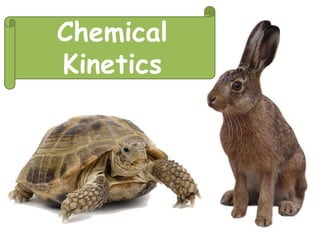

Chemical
Kinetics
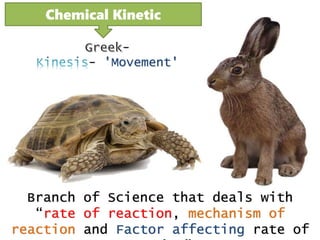
Chemical Kinetic
-
- 'Movement'
Branch of Science that deals with
“rate of reaction, mechanism of
reaction and Factor affecting rate of
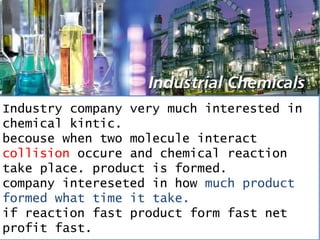
Industry company very much interested in
chemical kintic.
becouse when two molecule interact
collision occure and chemical reaction
take place. product is formed.
company intereseted in how much product
formed what time it take.
if reaction fast product form fast net
profit fast.
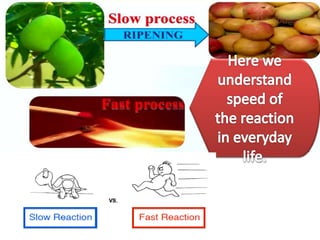
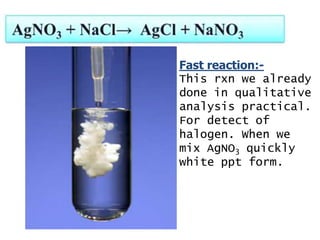
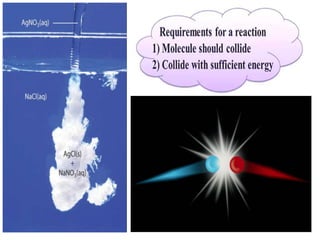
Fast reaction:-
This rxn we already
done in qualitative
analysis practical.
For detect of
halogen. When we
mix AgNO3 quickly
white ppt form.
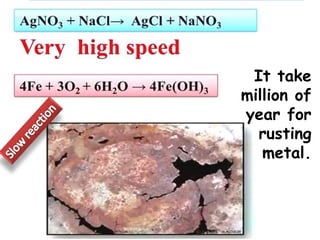
It take
million of
year for
rusting
metal.
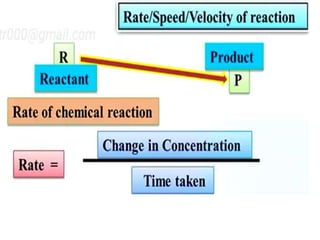
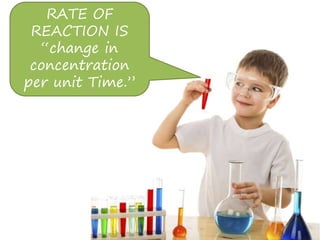
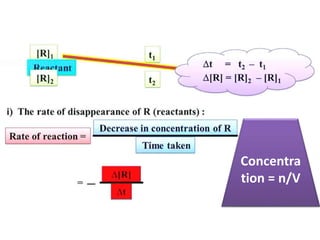
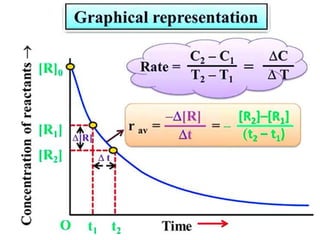
RATE OF
REACTION IS
“change in
concentration
per unit Time.”
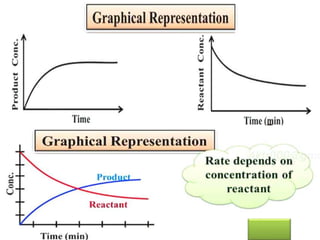
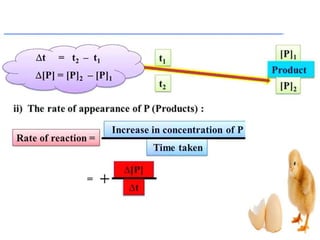
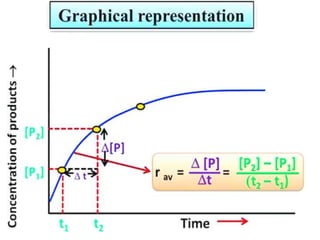
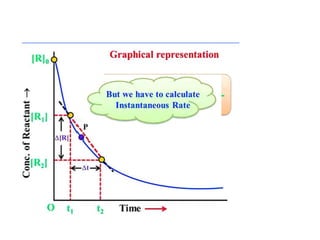
Graphically
Representation of Rate of
reaction
Concentra
tion = n/V
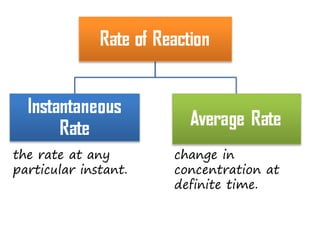
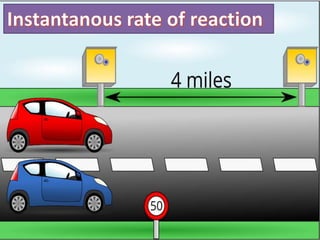
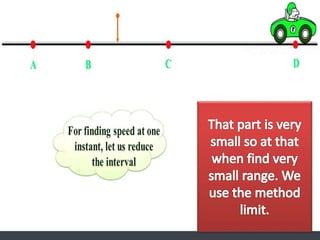
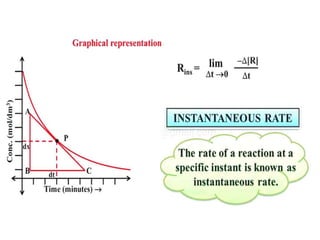
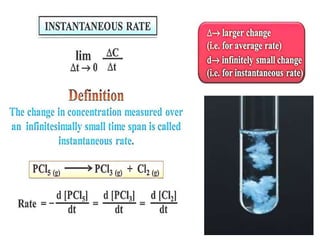
the rate at any
particular instant.
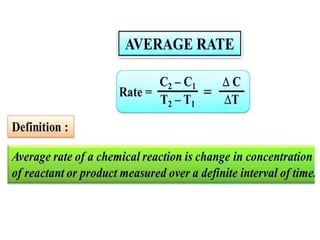
change in
concentration at
definite time.
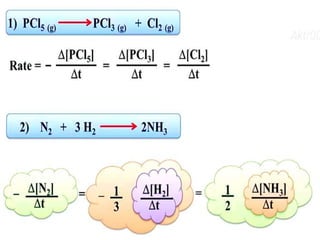
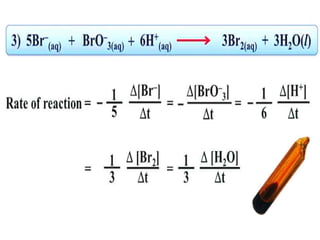
Average rate
of reaction &
Graph
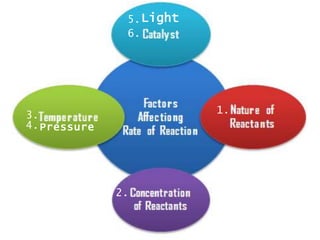
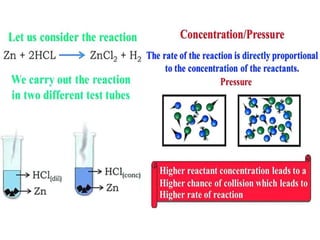
Pressure
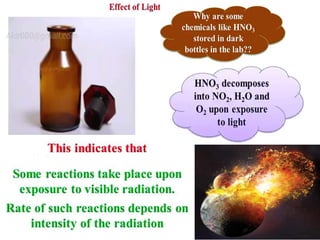
Light
1.
2.
3.
4.
5.
6.
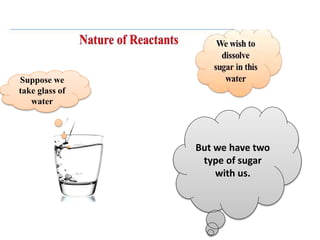
Suppose we
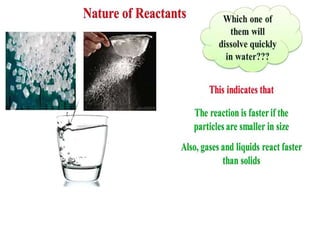
take glass of
water
But we have two
type of sugar
with us.
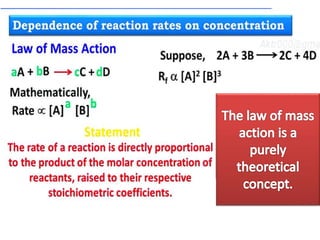
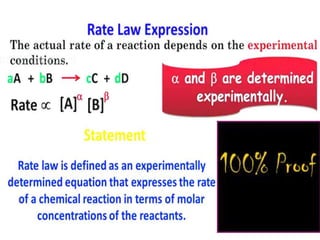
Law of mass
action
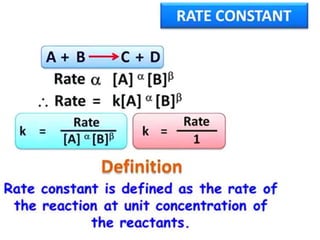
Rate Law
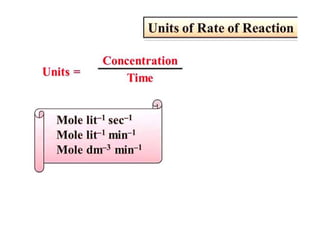
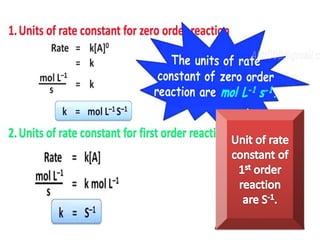
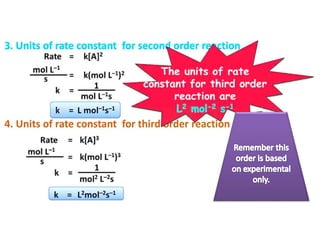
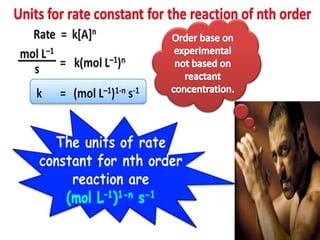
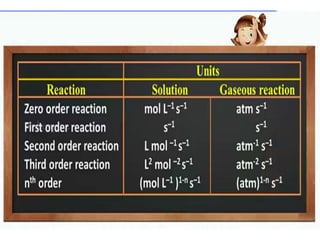
Unit Rate of reaction
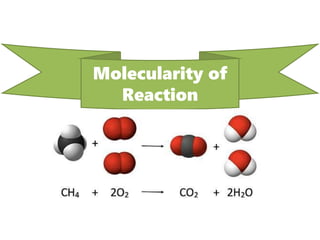
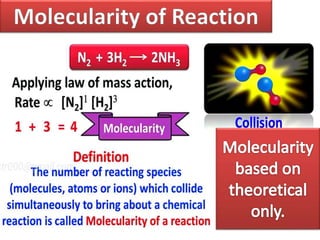
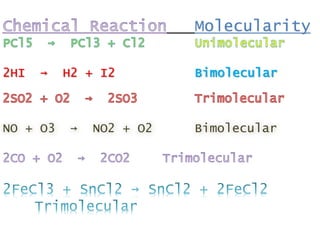
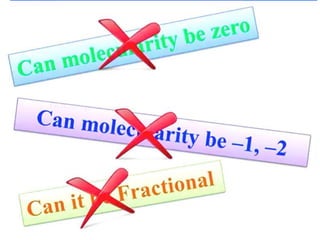
Molecularity of
Reaction
Molecularity
2HI → H2 + I2 Bimolecular
NO + O3 → NO2 + O2 Bimolecular
Difference between Order
and Molecularity
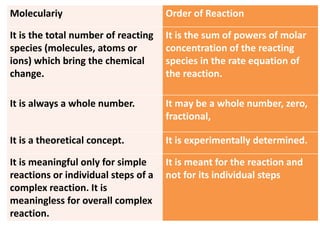
Moleculariy Order of Reaction
It is the total number of reacting
species (molecules, atoms or
ions) which bring the chemical
change.
It is the sum of powers of molar
concentration of the reacting
species in the rate equation of
the reaction.
It is always a whole number. It may be a whole number, zero,
fractional,
It is a theoretical concept. It is experimentally determined.
It is meaningful only for simple
reactions or individual steps of a
complex reaction. It is
meaningless for overall complex
reaction.
It is meant for the reaction and
not for its individual steps
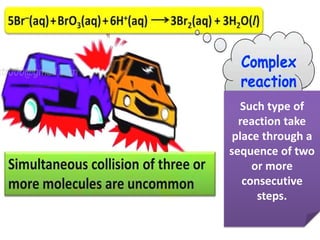
Such type of
reaction take
place through a
sequence of two
or more
consecutive
steps.
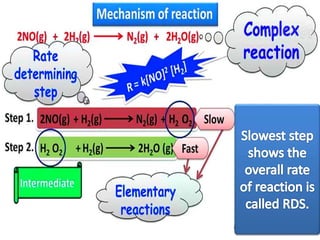
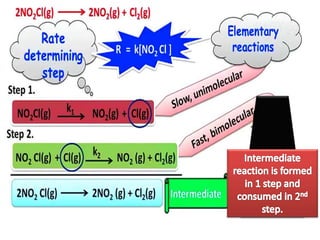
Complex and elimantory
reaction
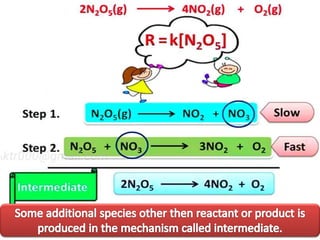
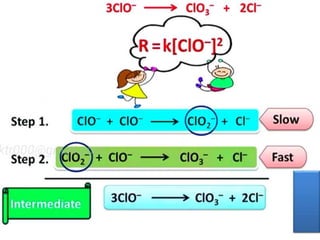
Mechanism and rate
detemining step, Intermediate
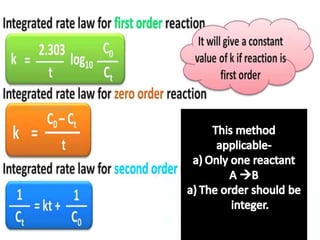
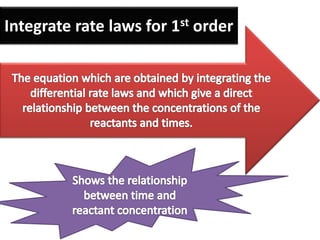
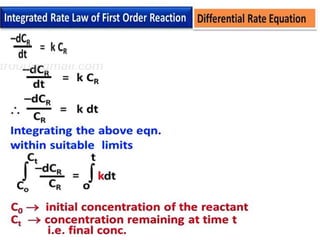
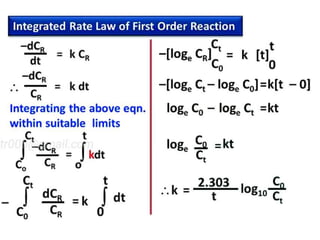
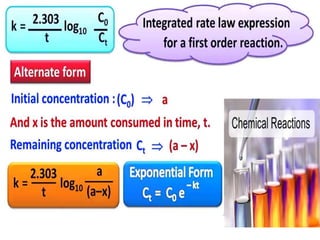
Integrate rate laws for 1st order
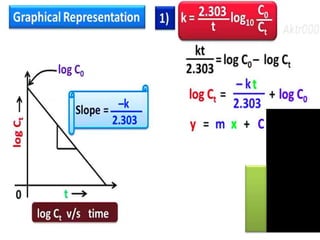
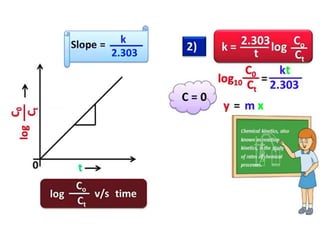
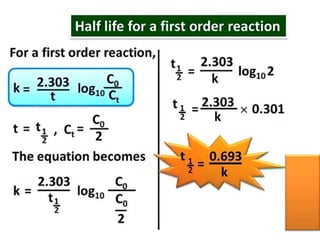
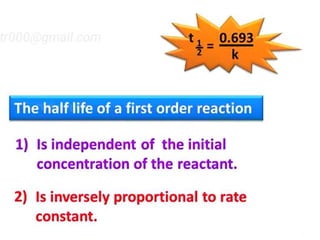
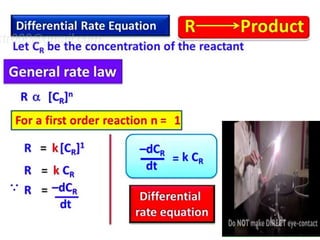
First order reaction
Graphical Representation
integrated
A  Product
R = -d[A]/dt = k[A]t + 0
Y = m x + c
First order reaction
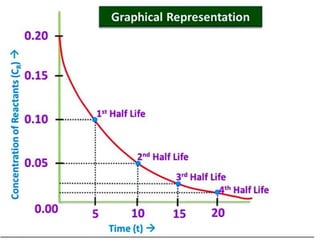
Graphical Representation
First order reaction
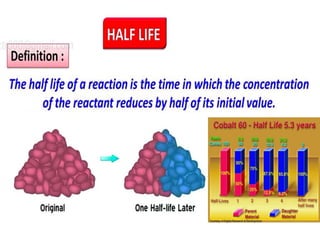
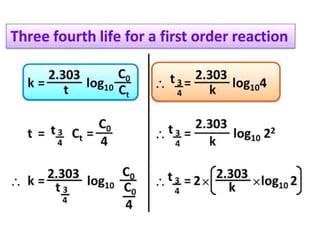
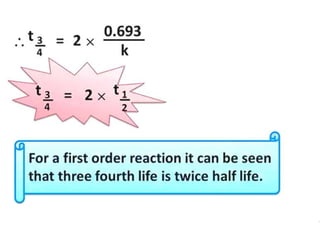
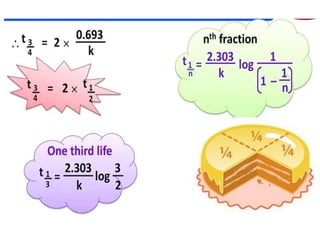
Three fourth life
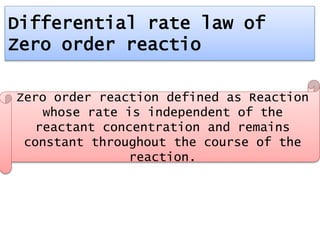
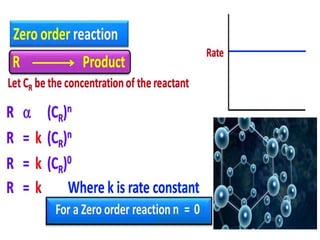
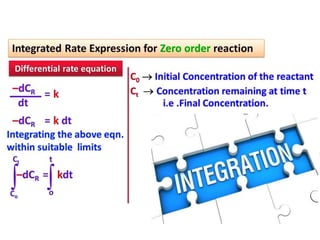
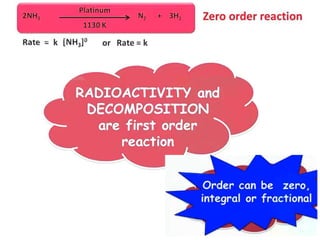
Zero order reaction defined as Reaction
whose rate is independent of the
reactant concentration and remains
constant throughout the course of the
reaction.
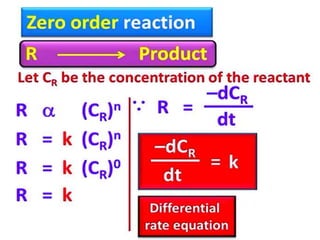
Differential rate law of
Zero order reactio
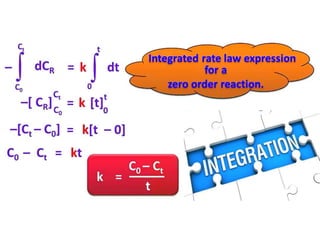
Zero order reaction
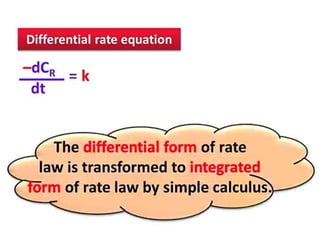
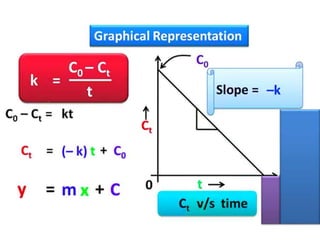
Integrated Rate law
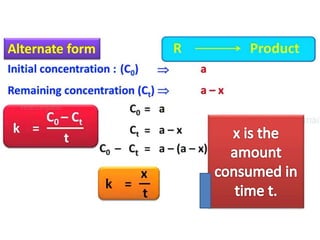
Alternative fomr of integrated
Zero order reaction
Graphical Representation
[A]t
Zero order reaction
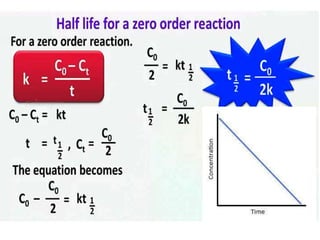
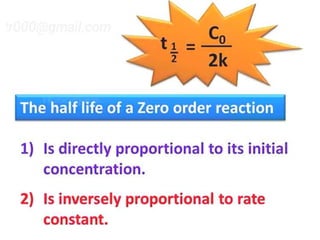
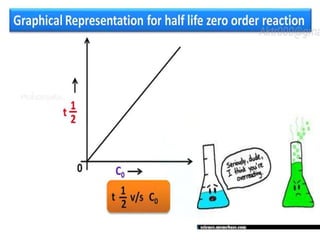
Half life
Graphical Representation
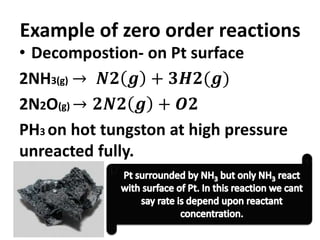
Example of zero order reactions
• Decompostion- on Pt surface
2NH3(g) → 𝑵𝟐 𝒈 + 𝟑𝑯𝟐(𝒈)
2N2O(g) → 𝟐𝑵𝟐 𝒈 + 𝑶𝟐
PH3 on hot tungston at high pressure
unreacted fully.
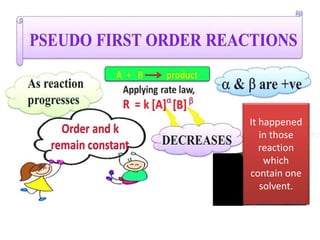
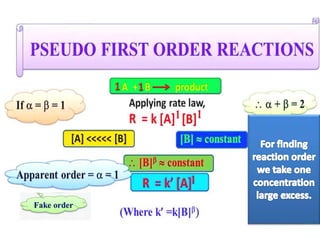
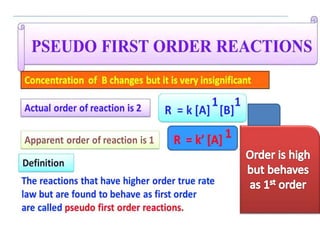
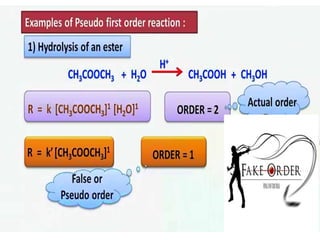
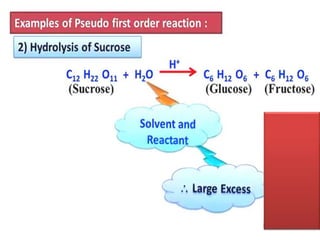
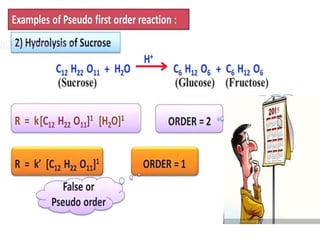
Such reaction that have higher
order true rate law but are found
to behave as first order are
called….
Pseudo first order reaction
Order is an
experimentally
determined
value.
Every reaction can
have only one
particular order.
It happened
in those
reaction
which
contain one
solvent.
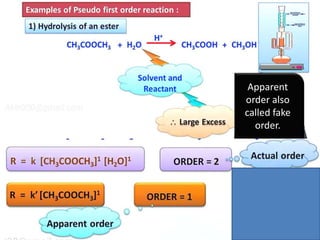
Apparent
order also
called fake
order.
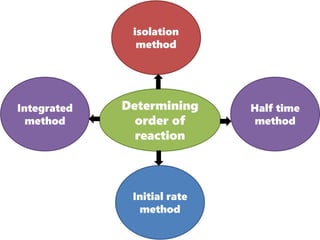
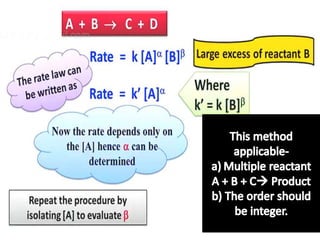
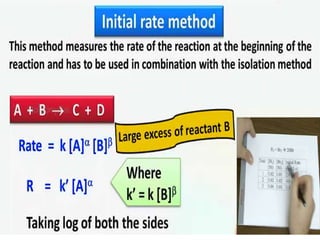
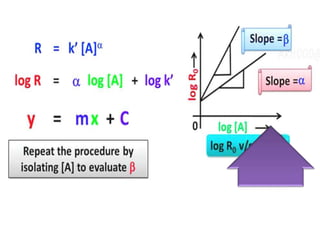
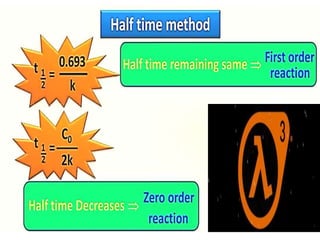
Determining
order of
reaction
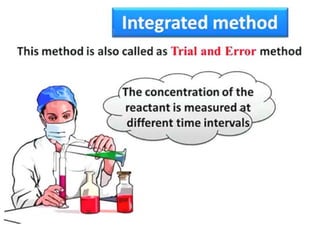
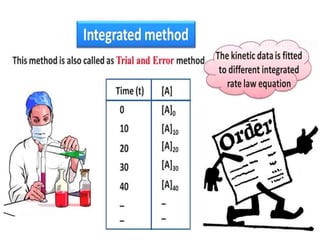
Integrated
method
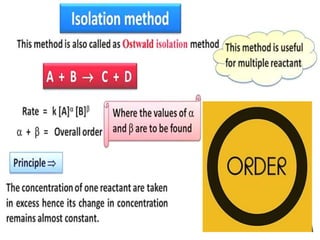
isolation
method
Initial rate
method
Half time
method
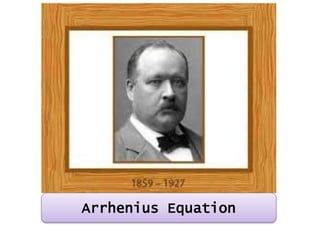
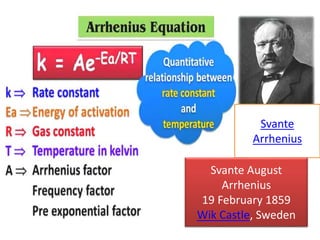
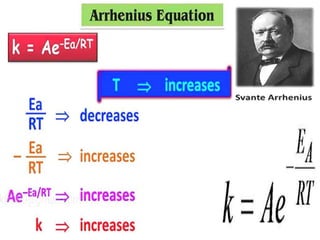
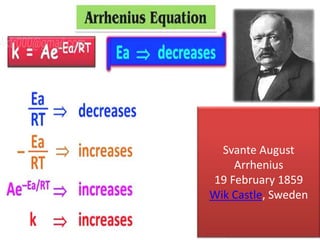
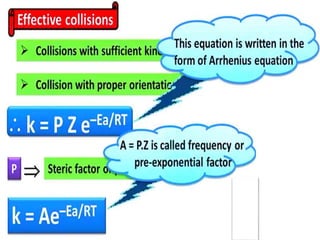
Arrhenius Equation
Svante
Arrhenius
Svante August
Arrhenius
19 February 1859
Wik Castle, Sweden
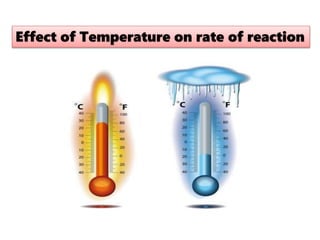
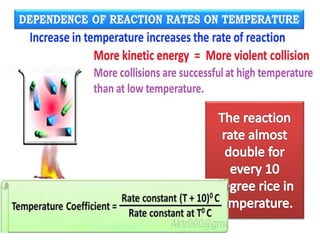
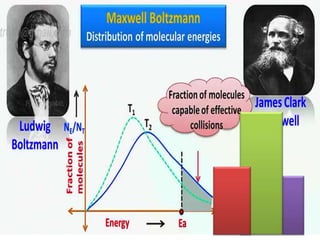
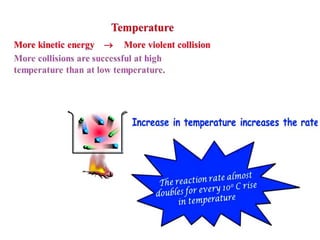
Effect of Temperature on rate of reaction
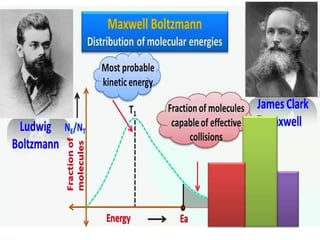
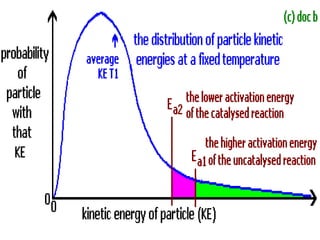
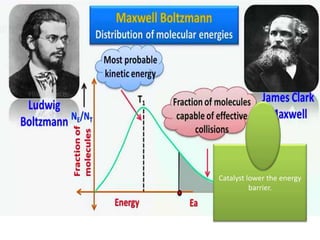
Maxwell and Boltzmen Destribution
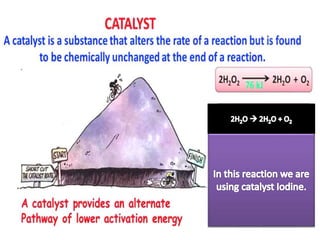
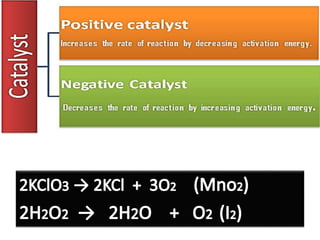
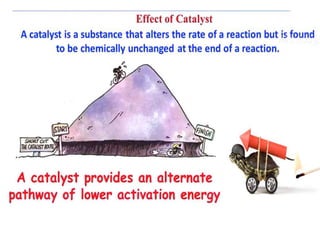
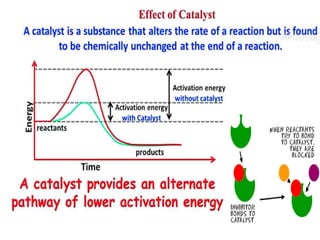
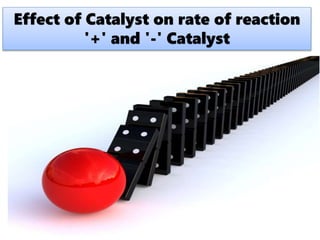
Effect of Catalyst on rate of reaction
'+' and '-' Catalyst
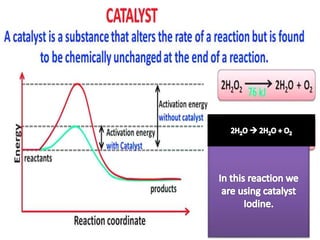
Catalyst lower the energy
barrier.
Svante August
Arrhenius
19 February 1859
Wik Castle, Sweden
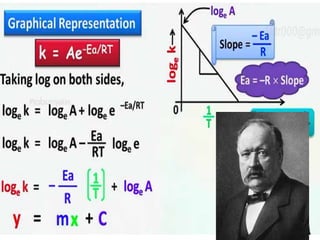
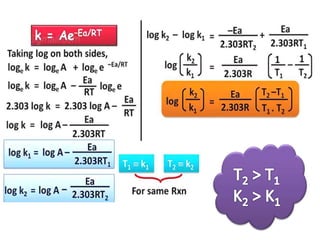
Relationship between rate
constat at Different
Temperature
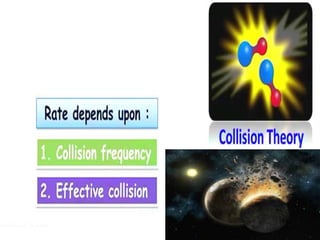
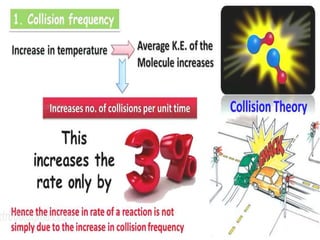
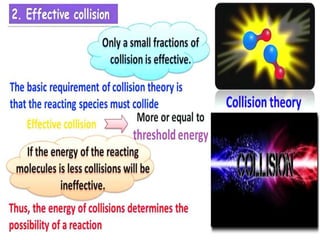
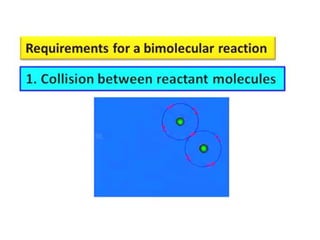
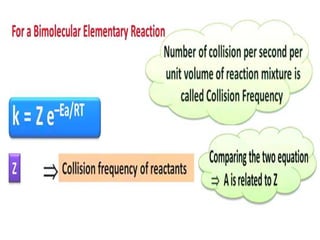
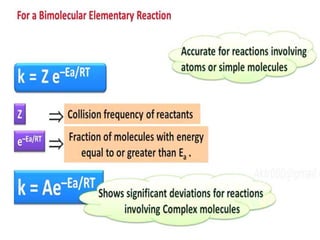
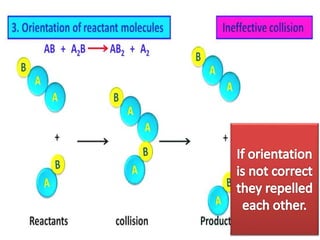
Collision Theory
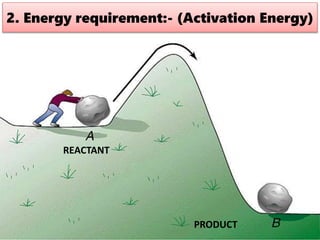
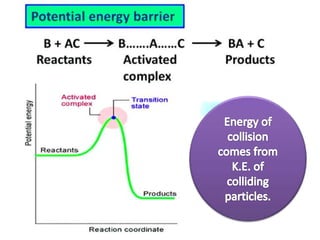
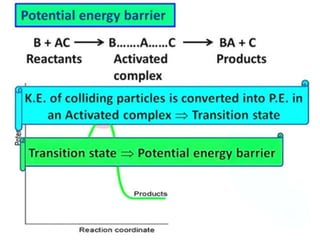
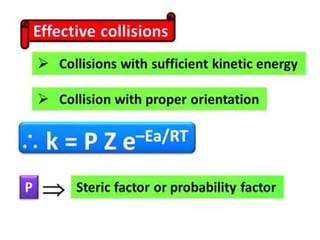
2. Energy requirement:- (Activation Energy)
REACTANT
PRODUCT
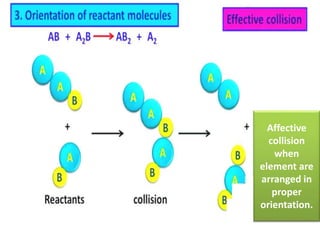
Affective
collision
when
element are
arranged in
proper
orientation.
Chemica kinetic 2017

Chemica kinetic 2017