   Checking accounts
   Checkbook
   Other debits
   Protecting Your Data
   Endorsements
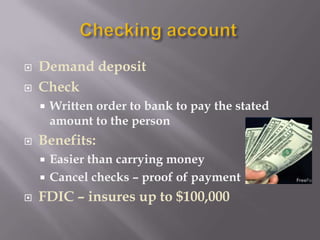
   Demand deposit
   Check
       Written order to bank to pay the stated
        amount to the person
   Benefits:
     Easier than carrying money
     Cancel checks – proof of payment

   FDIC – insures up to $100,000
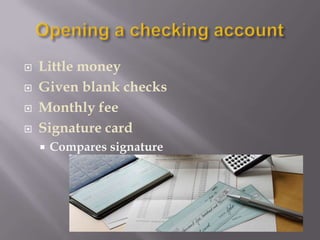
   Little money
   Given blank checks
   Monthly fee
   Signature card
       Compares signature
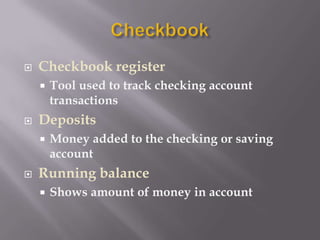
   Checkbook register
       Tool used to track checking account
        transactions
   Deposits
       Money added to the checking or saving
        account
   Running balance
       Shows amount of money in account
   Automatic withdrawals
       Money deducted from account and
        transferred to another party
   ATM
   Fees
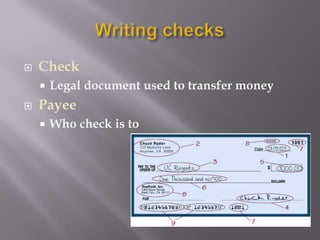
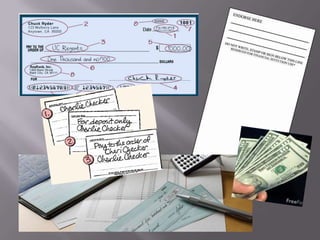
   Check
       Legal document used to transfer money
   Payee
       Who check is to
   Current date
       Post-dated checks – future date
   Never leave anything blank
   Fill in extra spaces with lines or zeroes
   Sign name exactly as signature card
   Memo line is optional
   VOID – if mistake
   Check fraud
       Someone alters check to get data or money
   Forgery
       Signs another’s name
   Keep checks in safe place
   Protect pin number
   Never give out bank account number
   Use credit card over Internet
       Instead of debit card
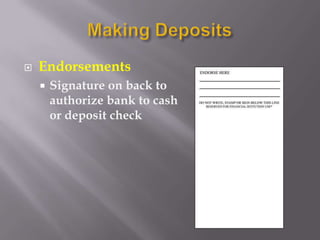
   Endorsements
       Signature on back to
        authorize bank to cash
        or deposit check
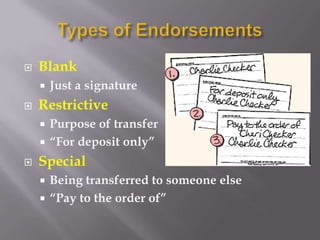
   Blank
       Just a signature
   Restrictive
     Purpose of transfer
     “For deposit only”

   Special
     Being transferred to someone else
     “Pay to the order of”
   Automatic Deposits
       Money electronically placed in account
   Safety Deposit Box
     Important documents
     Safe from fire or theft

   Bounced check
     NSF – Non sufficient funds
     Over draft protection sometimes

   Stop Payment
       Banks told not to honor check
   Cashier’s Checks
       Check issued against bank funds
   Money Order
       Type of check used to make a payment


                                               End
Checking accounts

Checking accounts

  • 2.
    Checking accounts  Checkbook  Other debits  Protecting Your Data  Endorsements
  • 3.
    Demand deposit  Check  Written order to bank to pay the stated amount to the person  Benefits:  Easier than carrying money  Cancel checks – proof of payment  FDIC – insures up to $100,000
  • 4.
    Little money  Given blank checks  Monthly fee  Signature card  Compares signature
  • 5.
    Checkbook register  Tool used to track checking account transactions  Deposits  Money added to the checking or saving account  Running balance  Shows amount of money in account
  • 6.
    Automatic withdrawals  Money deducted from account and transferred to another party  ATM  Fees
  • 7.
    Check  Legal document used to transfer money  Payee  Who check is to
  • 8.
    Current date  Post-dated checks – future date  Never leave anything blank  Fill in extra spaces with lines or zeroes  Sign name exactly as signature card  Memo line is optional  VOID – if mistake
  • 9.
    Check fraud  Someone alters check to get data or money  Forgery  Signs another’s name
  • 10.
    Keep checks in safe place  Protect pin number  Never give out bank account number  Use credit card over Internet  Instead of debit card
  • 11.
    Endorsements  Signature on back to authorize bank to cash or deposit check
  • 12.
    Blank  Just a signature  Restrictive  Purpose of transfer  “For deposit only”  Special  Being transferred to someone else  “Pay to the order of”
  • 13.
    Automatic Deposits  Money electronically placed in account
  • 14.
    Safety Deposit Box  Important documents  Safe from fire or theft  Bounced check  NSF – Non sufficient funds  Over draft protection sometimes  Stop Payment  Banks told not to honor check
  • 15.
    Cashier’s Checks  Check issued against bank funds  Money Order  Type of check used to make a payment End