Unit 3: Transformation and
  Expansion 1800-1848
Section 1: The Reshaping of Everyday
      Life in the Early Republic
Essential Questions
• How did innovations in industry, technology
  and transportation affect Americans’ lives?
• What explains the difference in Northern and
  Southern social and economic development
  and how did it affect political unity?
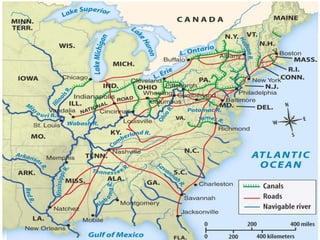
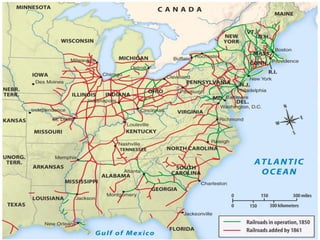
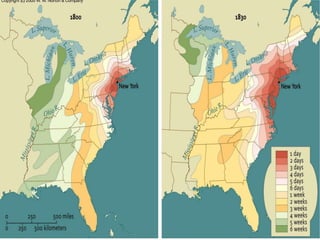
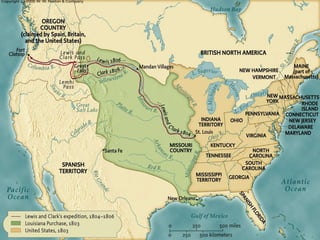
Unifying of a Nation
• Advances in communications and
  transportation enabled Americans to expand
  westward.
• These advances also united the country and
  allowed information and products to be
  transported greater distance in shorter
  periods of time.
Section 2
SLAVERY AND THE CONSTRUCTION
OF RACE IN AMERICA
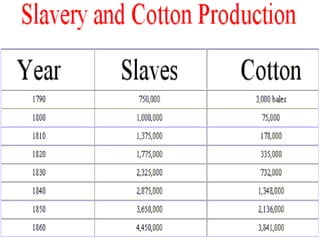
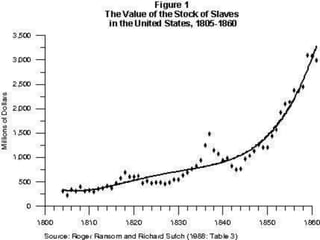
Essential Questions
• Why did the idea of race and the practice of
  racism develop along with African slavery in
  America?
• Could the South have thrived without slavery?
Section 3
MANIFEST DESTINY AND ITS
CONSEQUENCES
Essential Questions
• What were the costs and benefits of westward
  expansion? Why did so many Americans move
  west?
• How should we understand the West and the
  frontier? Was it a place of
  democracy, equality, and adventure, or rather
  a place of oppression and conquest?
• Did the “pioneer spirit” stop once the nation
  spanned the continent?
Reasons for Westward Expansion
A. Economic factors
   1) Exhaustion of good soil by cotton farmers led to search for new
   land
   2) Effects of the Panic of 1837. Many settlers pushed west as they
   faced economic losses.

B. Psychological factors--manifest destiny. Sentiment that the U.S.
   should rule from coast to coast (and maybe pole to pole) became a
   key part of national thinking.

C. Attractive regions for new settlement--east Texas, California, Oregon

D. Advertising the West
   1) Santa Fe traders brought back tales of the West
   2) Mountain men--fur trappers and traders
Our Manifest
Destiny [is] to
overspread the
continent
allotted by
Providence for
the free
development of
our yearly
multiplying
millions

John L.
O’Sullivan
1845
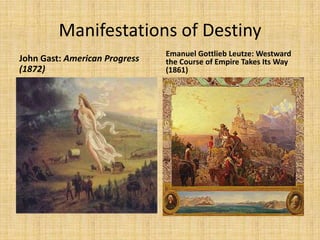
Manifestations of Destiny
                               Emanuel Gottlieb Leutze: Westward
John Gast: American Progress   the Course of Empire Takes Its Way
(1872)                         (1861)
Section 4
NATIVE AMERICANS’ STRUGGLE TO
SURVIVE
Essential Questions
• Why did some Native Americans fight against
  white society while others tried to assimilate?
  Which was the right choice?
• Can the federal government ever make
  amends for its treatment of Native
  Americans?
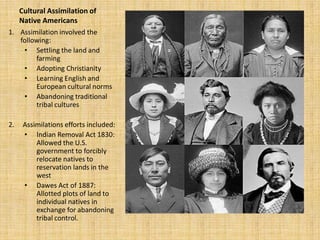
Cultural Assimilation of
     Native Americans
1. Assimilation involved the
   following:
    • Settling the land and
        farming
    • Adopting Christianity
    • Learning English and
        European cultural norms
    • Abandoning traditional
        tribal cultures

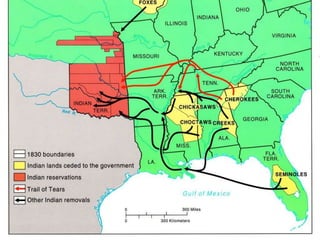
2.    Assimilations efforts included:
      • Indian Removal Act 1830:
          Allowed the U.S.
          government to forcibly
          relocate natives to
          reservation lands in the
          west
      • Dawes Act of 1887:
          Allotted plots of land to
          individual natives in
          exchange for abandoning
          tribal control.
Unit 3 transformation and expansion

Unit 3 transformation and expansion

  • 1.
    Unit 3: Transformationand Expansion 1800-1848 Section 1: The Reshaping of Everyday Life in the Early Republic
  • 2.
    Essential Questions • Howdid innovations in industry, technology and transportation affect Americans’ lives? • What explains the difference in Northern and Southern social and economic development and how did it affect political unity?
  • 7.
    Unifying of aNation • Advances in communications and transportation enabled Americans to expand westward. • These advances also united the country and allowed information and products to be transported greater distance in shorter periods of time.
  • 8.
    Section 2 SLAVERY ANDTHE CONSTRUCTION OF RACE IN AMERICA
  • 9.
    Essential Questions • Whydid the idea of race and the practice of racism develop along with African slavery in America? • Could the South have thrived without slavery?
  • 12.
    Section 3 MANIFEST DESTINYAND ITS CONSEQUENCES
  • 13.
    Essential Questions • Whatwere the costs and benefits of westward expansion? Why did so many Americans move west? • How should we understand the West and the frontier? Was it a place of democracy, equality, and adventure, or rather a place of oppression and conquest? • Did the “pioneer spirit” stop once the nation spanned the continent?
  • 14.
    Reasons for WestwardExpansion A. Economic factors 1) Exhaustion of good soil by cotton farmers led to search for new land 2) Effects of the Panic of 1837. Many settlers pushed west as they faced economic losses. B. Psychological factors--manifest destiny. Sentiment that the U.S. should rule from coast to coast (and maybe pole to pole) became a key part of national thinking. C. Attractive regions for new settlement--east Texas, California, Oregon D. Advertising the West 1) Santa Fe traders brought back tales of the West 2) Mountain men--fur trappers and traders
  • 15.
    Our Manifest Destiny [is]to overspread the continent allotted by Providence for the free development of our yearly multiplying millions John L. O’Sullivan 1845
  • 16.
    Manifestations of Destiny Emanuel Gottlieb Leutze: Westward John Gast: American Progress the Course of Empire Takes Its Way (1872) (1861)
  • 17.
  • 18.
    Essential Questions • Whydid some Native Americans fight against white society while others tried to assimilate? Which was the right choice? • Can the federal government ever make amends for its treatment of Native Americans?
  • 19.
    Cultural Assimilation of Native Americans 1. Assimilation involved the following: • Settling the land and farming • Adopting Christianity • Learning English and European cultural norms • Abandoning traditional tribal cultures 2. Assimilations efforts included: • Indian Removal Act 1830: Allowed the U.S. government to forcibly relocate natives to reservation lands in the west • Dawes Act of 1887: Allotted plots of land to individual natives in exchange for abandoning tribal control.