The Method of Historical
       Inquiry

  Why Do We Study
      History?
Recall               History is
                                 what we
                                 choose to
                                 remember
                                 about the
                                 past.
                                 Our
                                 common
                                 experience
                                 binds us
                                 together.
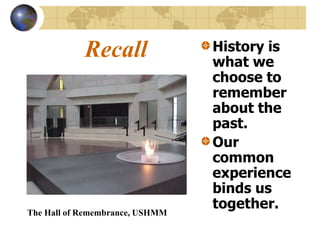
The Hall of Remembrance, USHMM
Interpretation
History involves explaining people
and events.
Historians read between the lines.
History can illustrate ideas.
Speculation means guessing about
the past.
Interpretation and
    Illustration
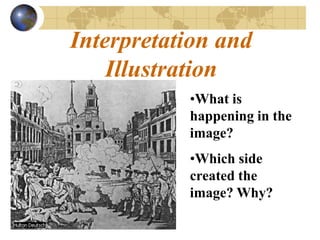
           •What is
           happening in the
           image?
           •Which side
           created the
           image? Why?
Application
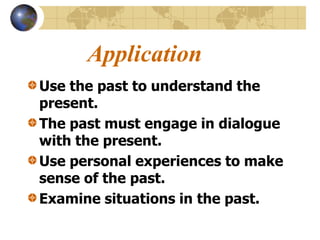
Use the past to understand the
present.
The past must engage in dialogue
with the present.
Use personal experiences to make
sense of the past.
Examine situations in the past.
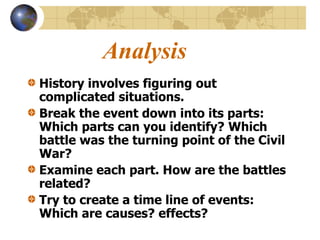
Analysis
History involves figuring out
complicated situations.
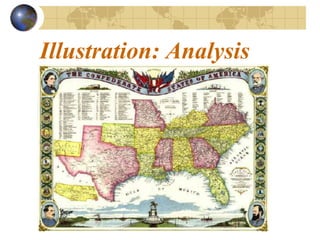
Break the event down into its parts:
Which parts can you identify? Which
battle was the turning point of the Civil
War?
Examine each part. How are the battles
related?
Try to create a time line of events:
Which are causes? effects?
Illustration: Analysis
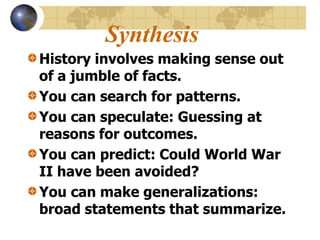
Synthesis
History involves making sense out
of a jumble of facts.
You can search for patterns.
You can speculate: Guessing at
reasons for outcomes.
You can predict: Could World War
II have been avoided?
You can make generalizations:
broad statements that summarize.
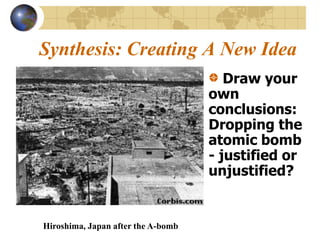
Synthesis: Creating A New Idea
                                       Draw your
                                    own
                                    conclusions:
                                    Dropping the
                                    atomic bomb
                                    - justified or
                                    unjustified?


Hiroshima, Japan after the A-bomb
Evaluation
History involves making judgments
about people in events.
Example: You can examine all sides of
the Civil Rights issue.
You can debate the pros and cons of
integrating the schools.
You can describe the strengths and
weaknesses of the President's policy.
Evaluation
You can examine the advantages and
disadvantages of the strategy of non-
violence.
You can judge whether a person, policy,
or event measured up to a high
standard.
Example: To what extent did Dr. Martin
L. King, Jr. measure up to the standard
of the Declaration of Independence, the
Constitution, and the Golden Rule?
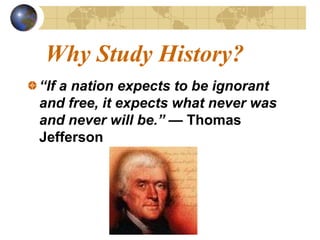
Why Study History?
“If a nation expects to be ignorant
and free, it expects what never was
and never will be.” — Thomas
Jefferson

Whyhistory

  • 1.
    The Method ofHistorical Inquiry Why Do We Study History?
  • 2.
    Recall History is what we choose to remember about the past. Our common experience binds us together. The Hall of Remembrance, USHMM
  • 3.
    Interpretation History involves explainingpeople and events. Historians read between the lines. History can illustrate ideas. Speculation means guessing about the past.
  • 4.
    Interpretation and Illustration •What is happening in the image? •Which side created the image? Why?
  • 5.
    Application Use the pastto understand the present. The past must engage in dialogue with the present. Use personal experiences to make sense of the past. Examine situations in the past.
  • 6.
    Analysis History involves figuringout complicated situations. Break the event down into its parts: Which parts can you identify? Which battle was the turning point of the Civil War? Examine each part. How are the battles related? Try to create a time line of events: Which are causes? effects?
  • 7.
  • 8.
    Synthesis History involves makingsense out of a jumble of facts. You can search for patterns. You can speculate: Guessing at reasons for outcomes. You can predict: Could World War II have been avoided? You can make generalizations: broad statements that summarize.
  • 9.
    Synthesis: Creating ANew Idea Draw your own conclusions: Dropping the atomic bomb - justified or unjustified? Hiroshima, Japan after the A-bomb
  • 10.
    Evaluation History involves makingjudgments about people in events. Example: You can examine all sides of the Civil Rights issue. You can debate the pros and cons of integrating the schools. You can describe the strengths and weaknesses of the President's policy.
  • 11.
    Evaluation You can examinethe advantages and disadvantages of the strategy of non- violence. You can judge whether a person, policy, or event measured up to a high standard. Example: To what extent did Dr. Martin L. King, Jr. measure up to the standard of the Declaration of Independence, the Constitution, and the Golden Rule?
  • 12.
    Why Study History? “Ifa nation expects to be ignorant and free, it expects what never was and never will be.” — Thomas Jefferson