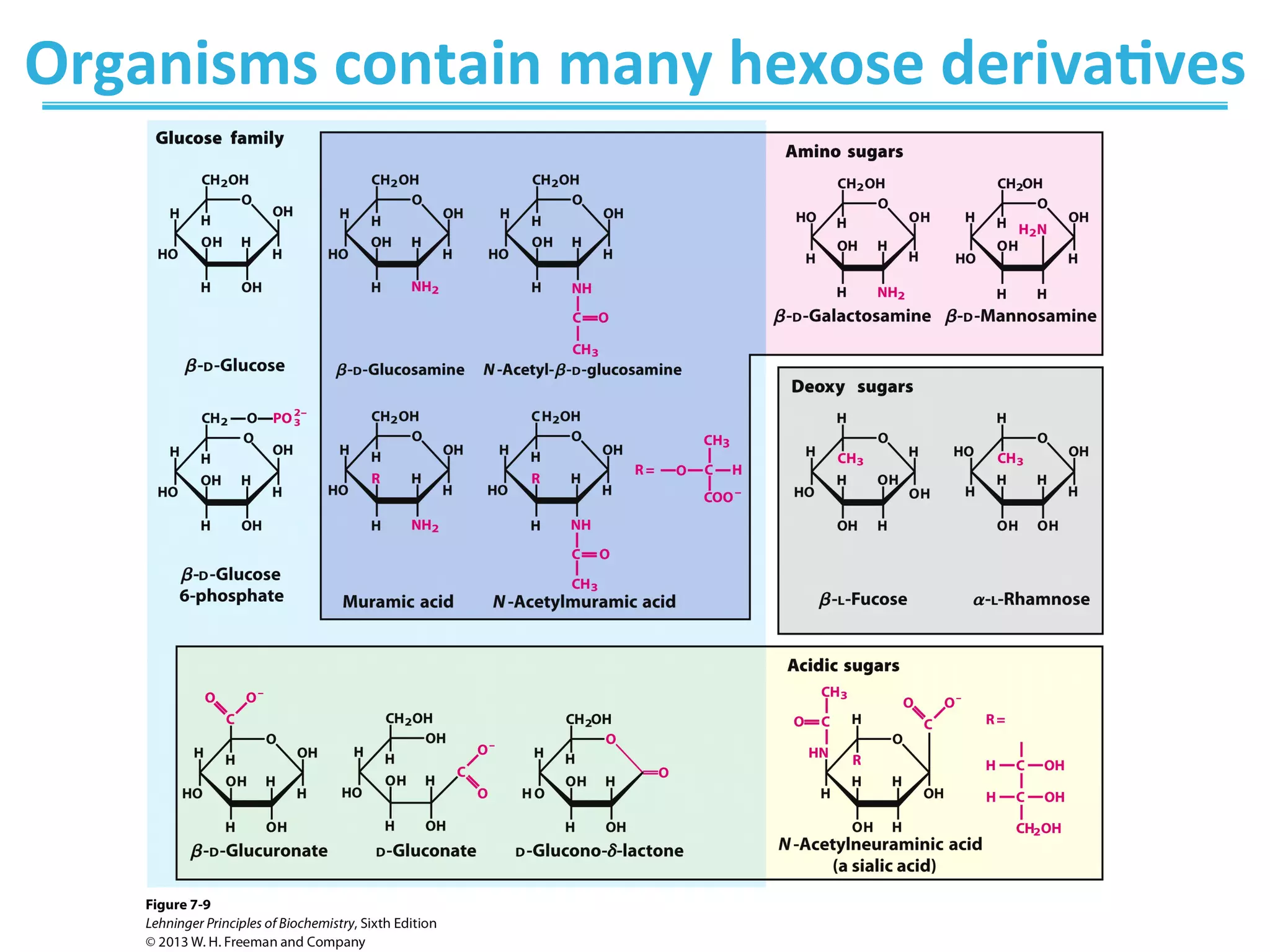
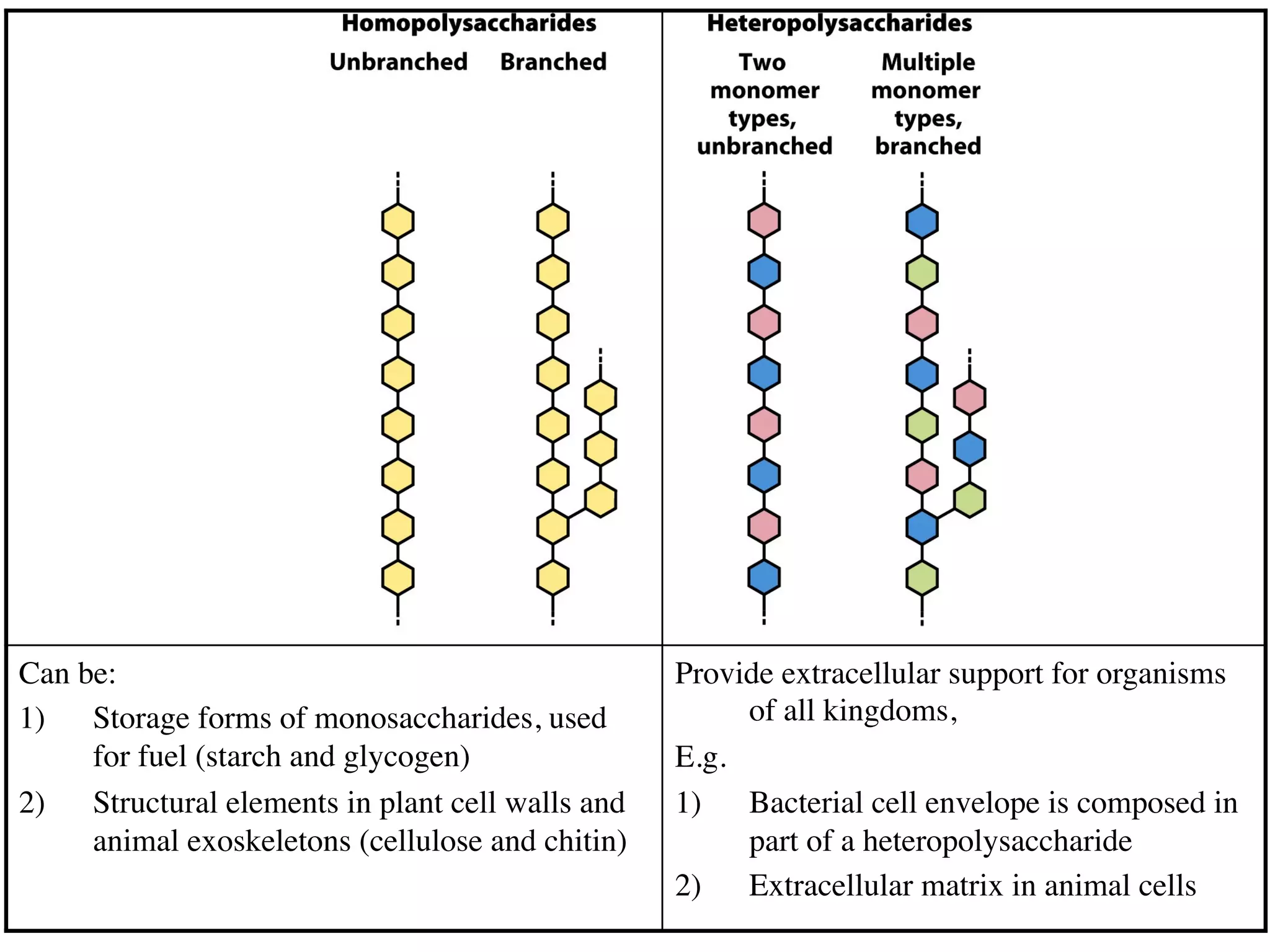
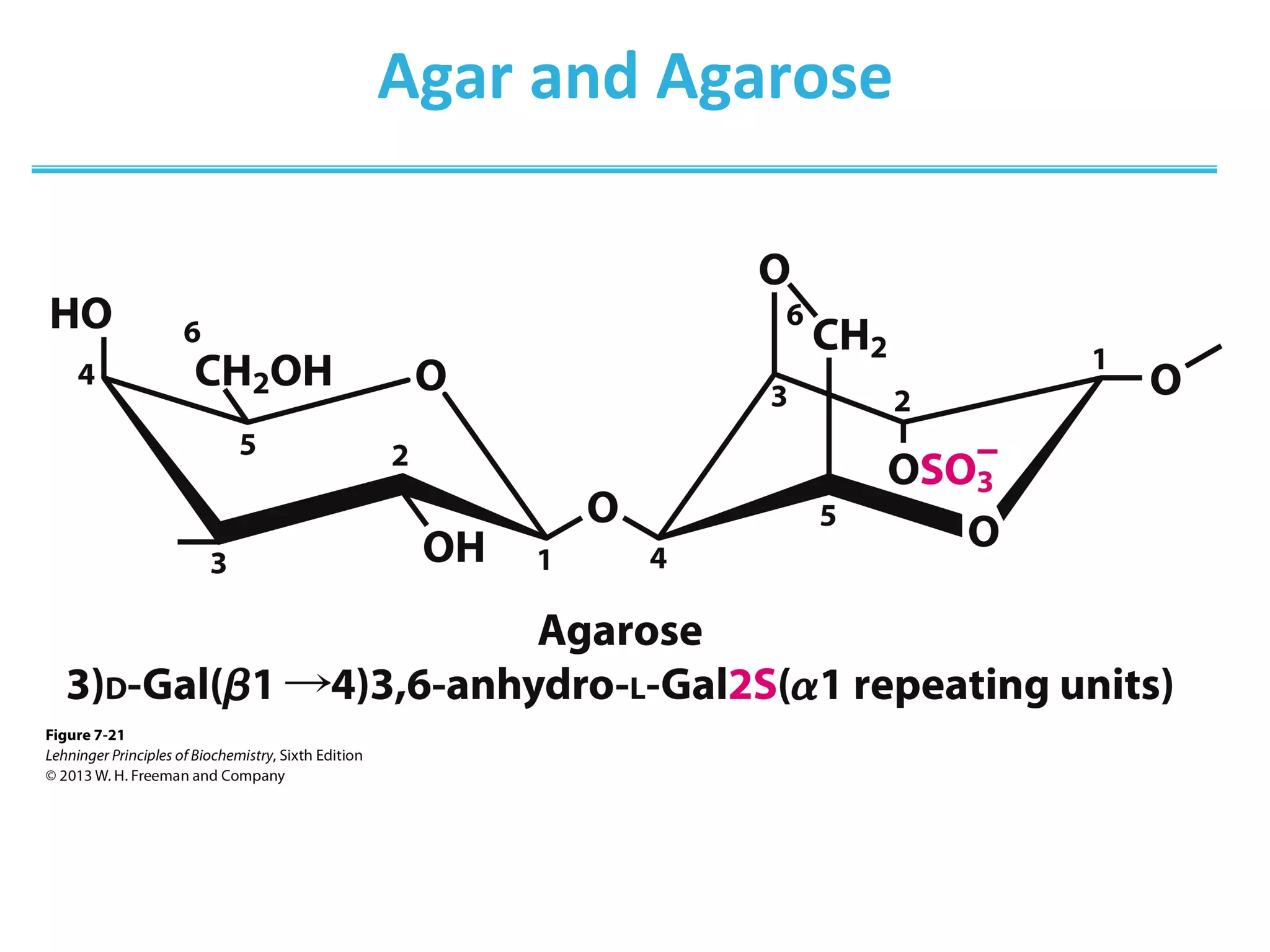
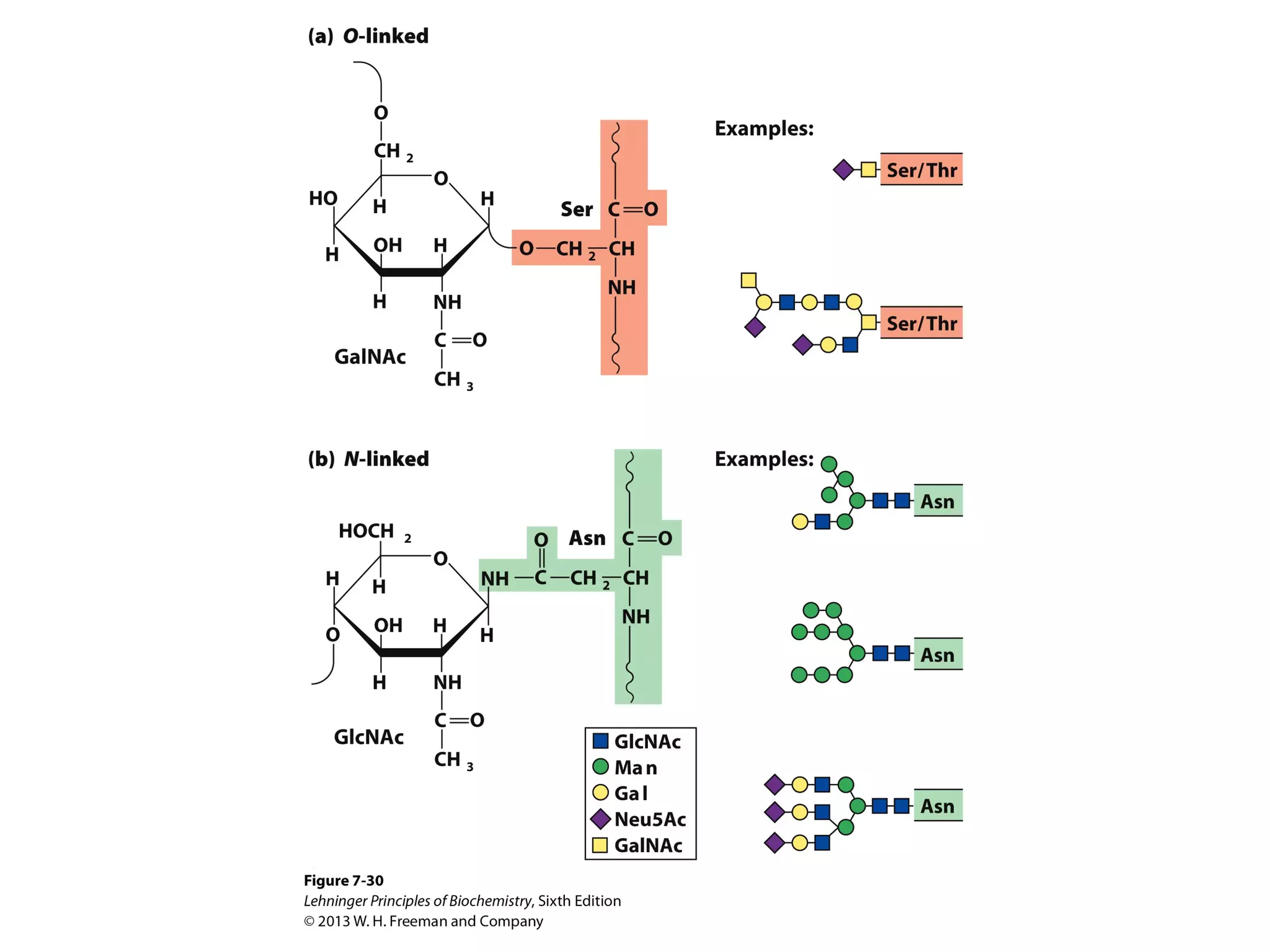
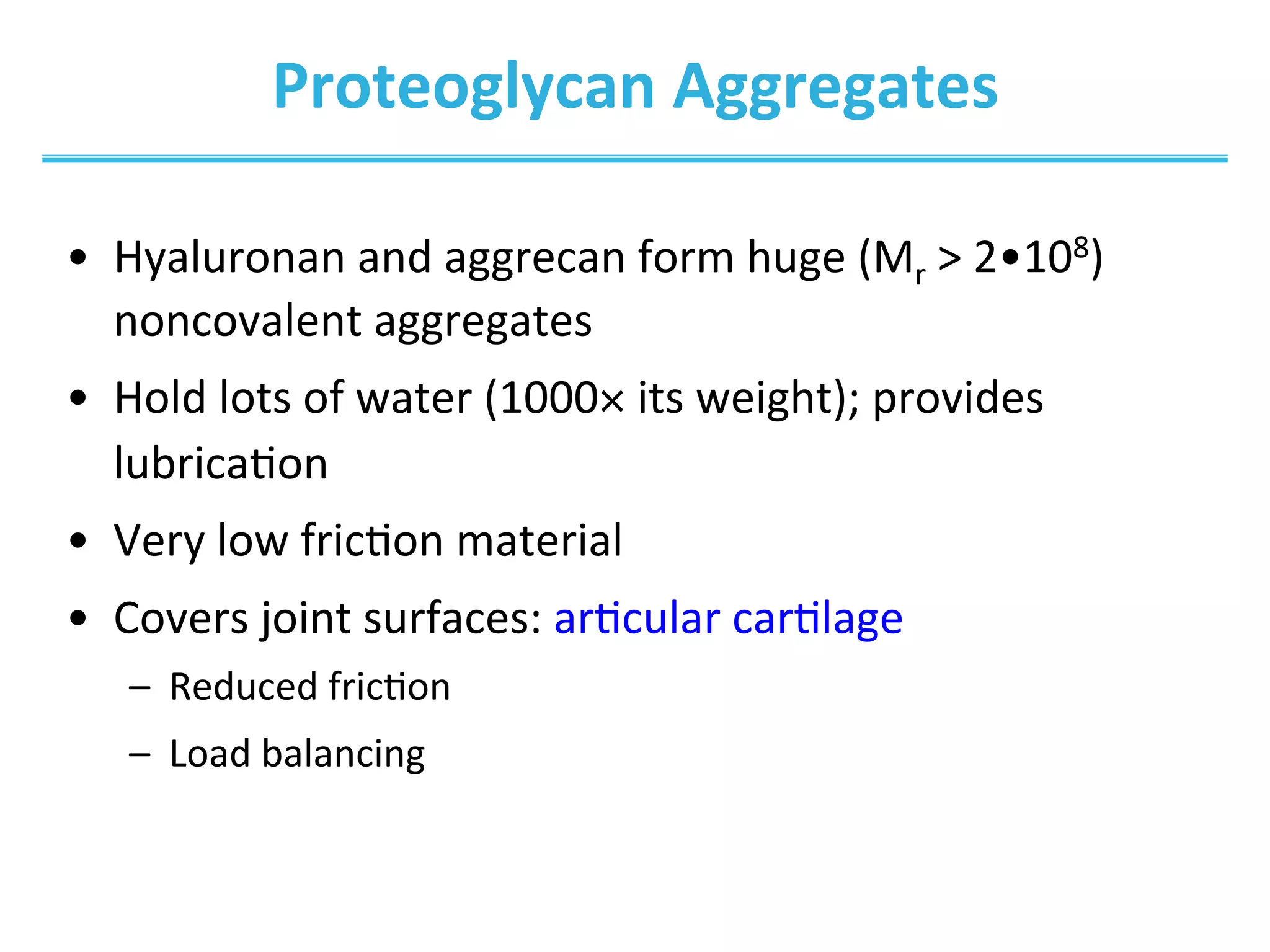
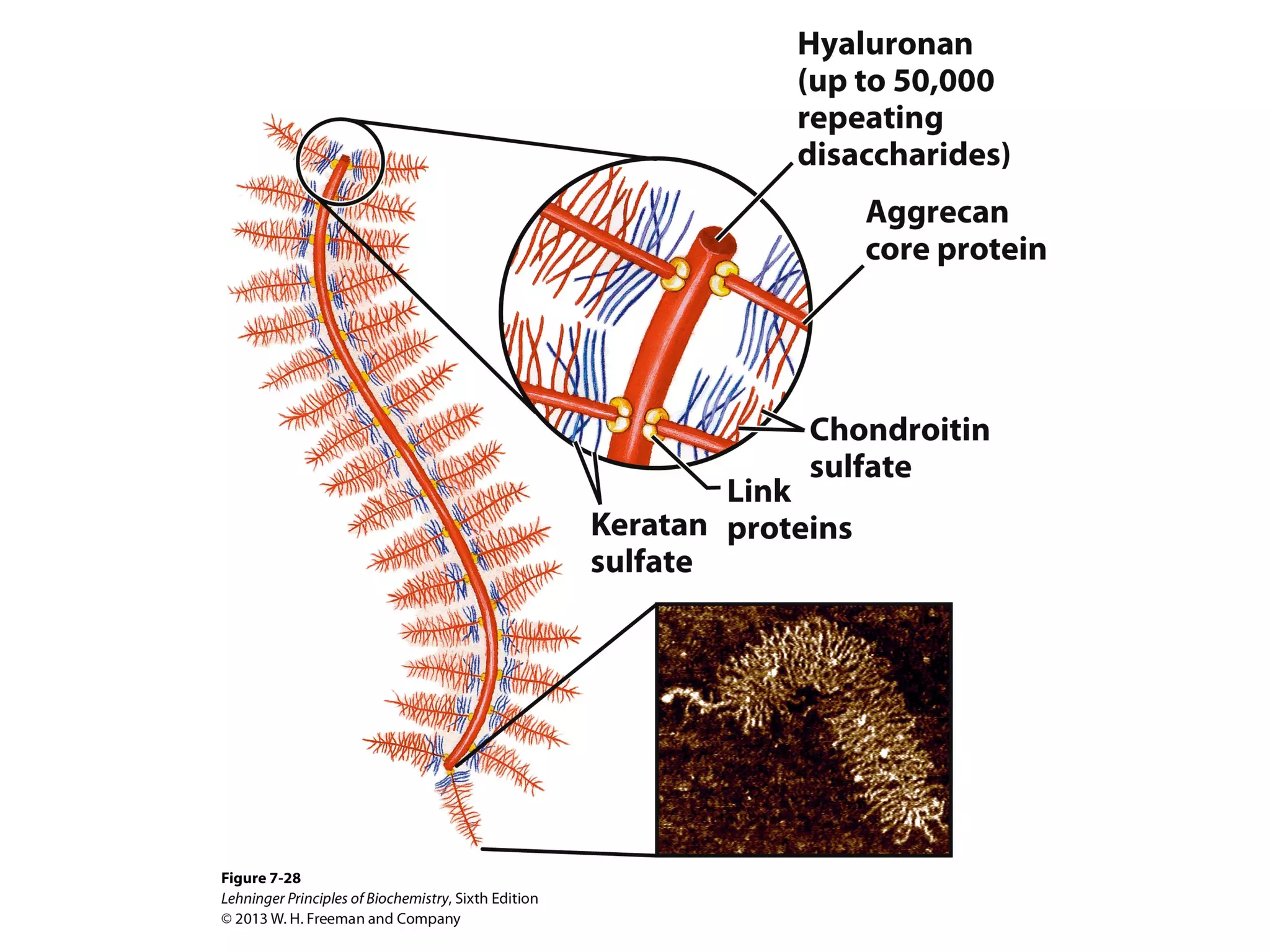
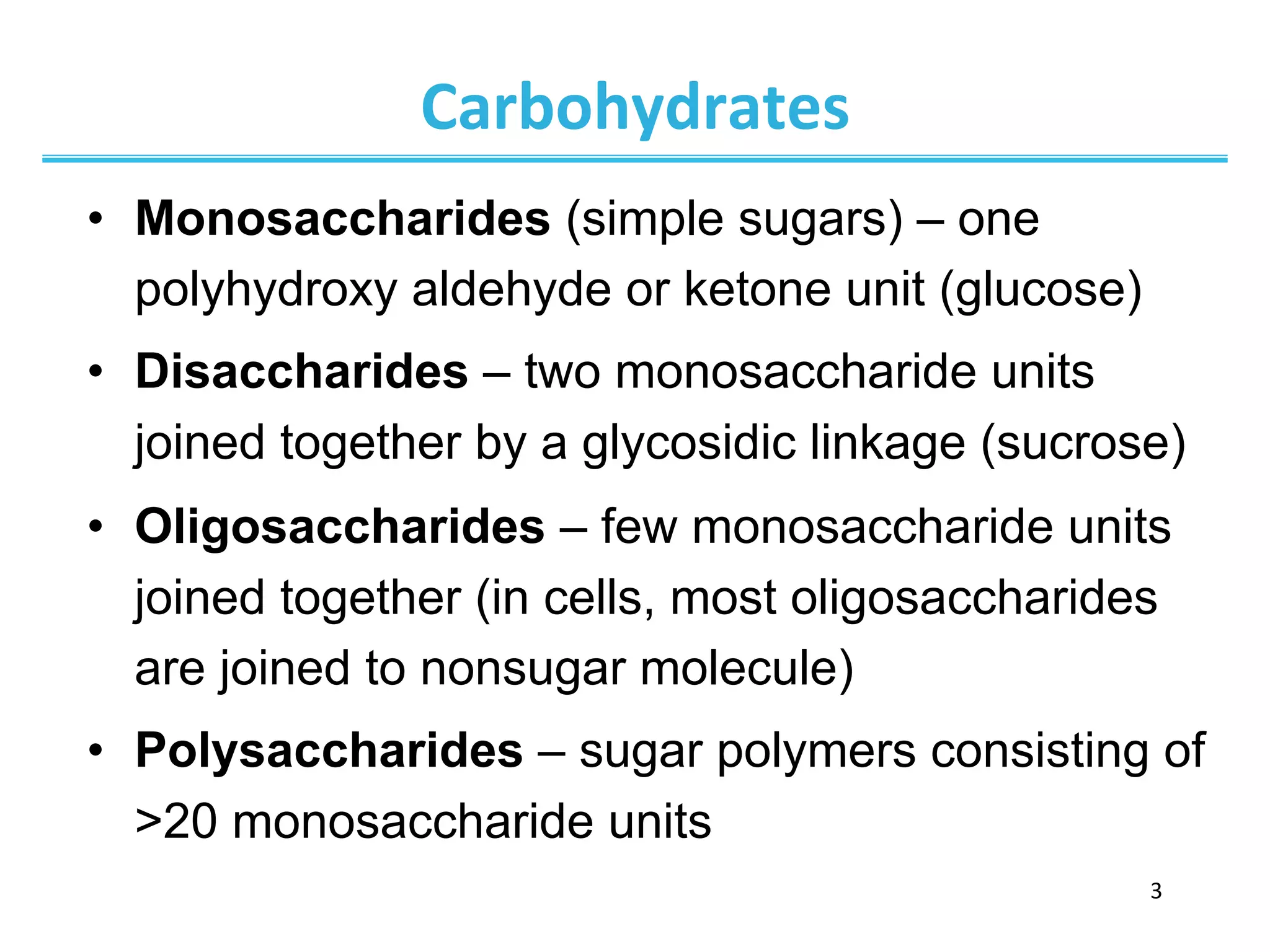
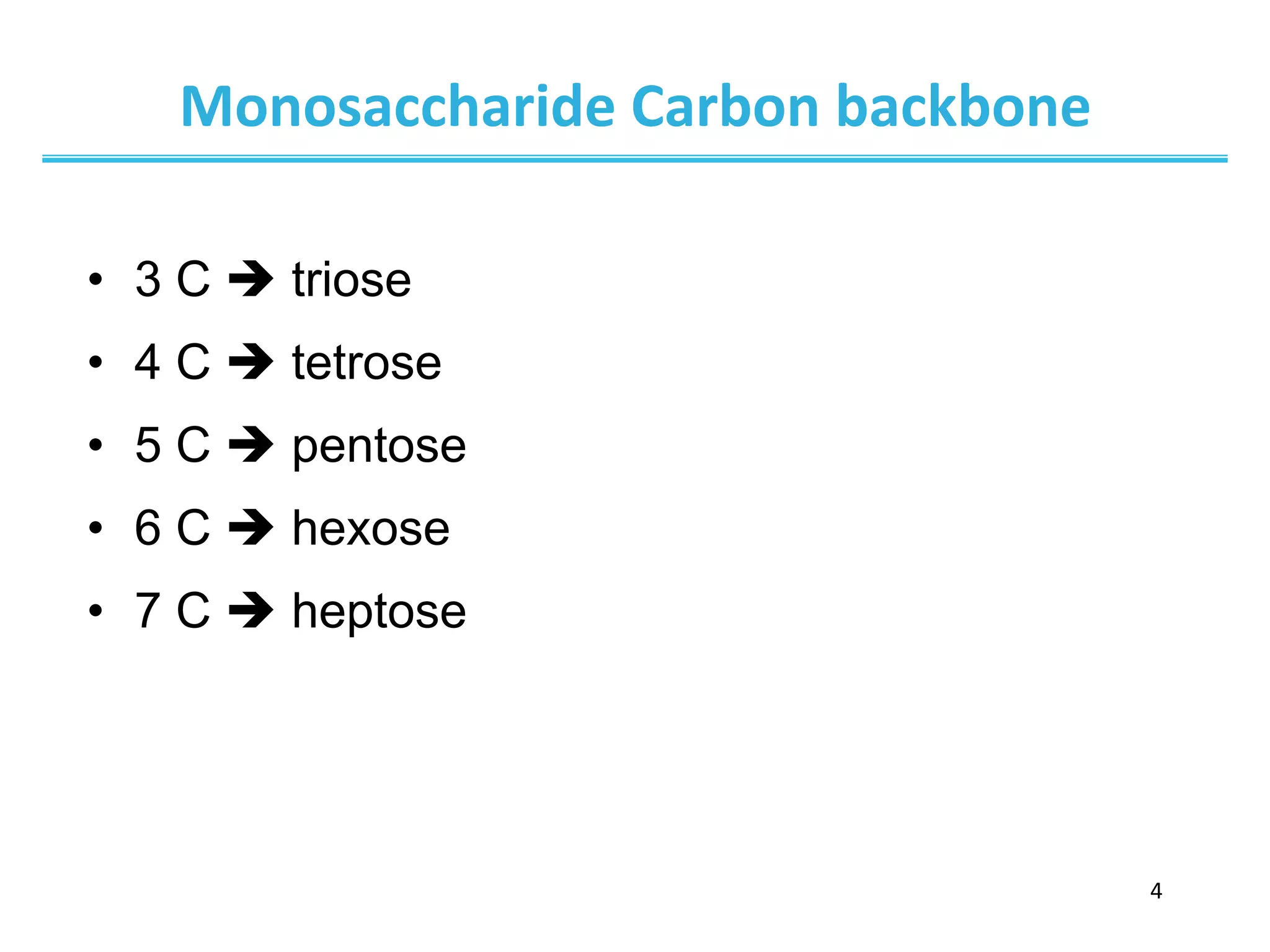
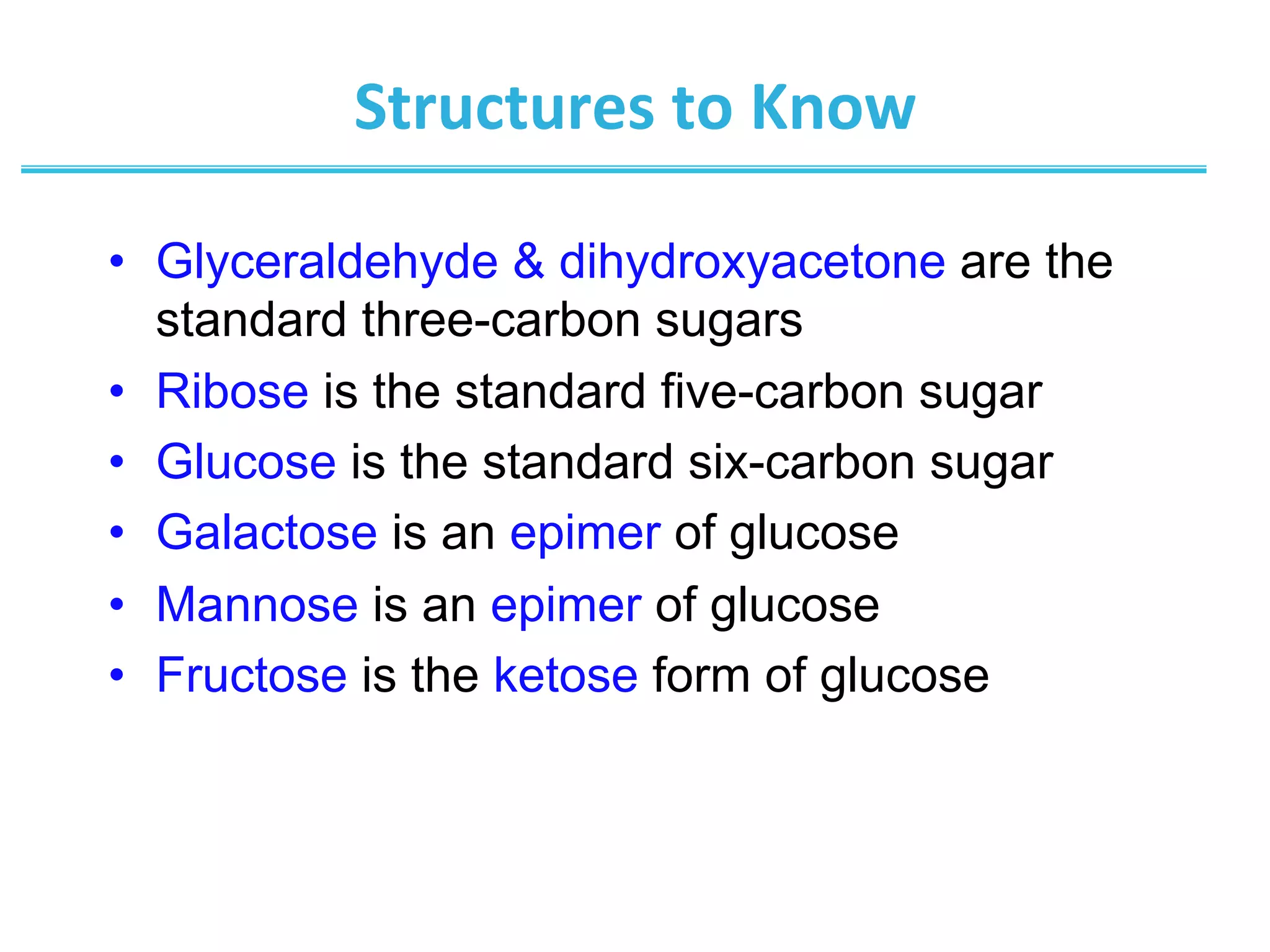
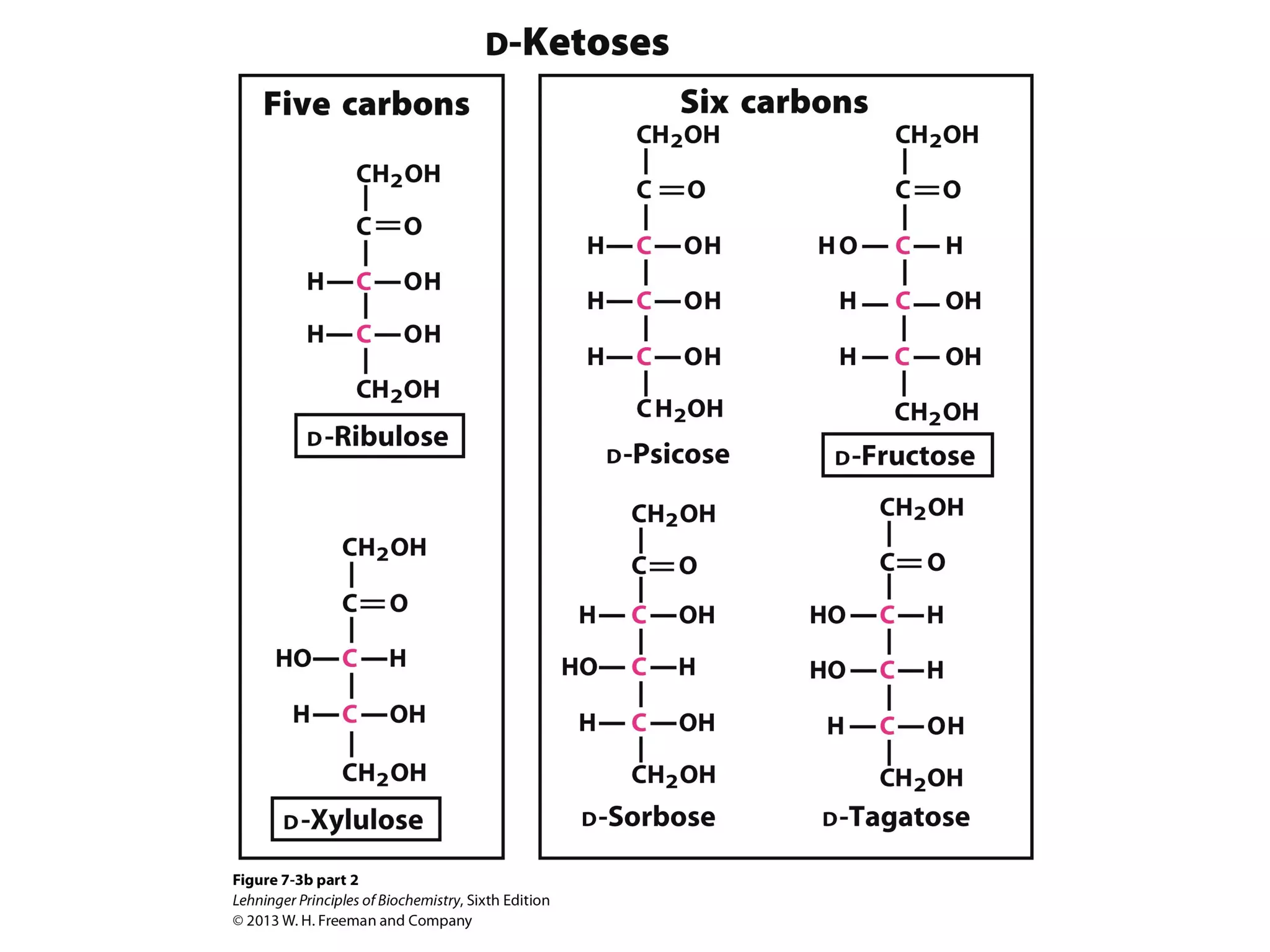
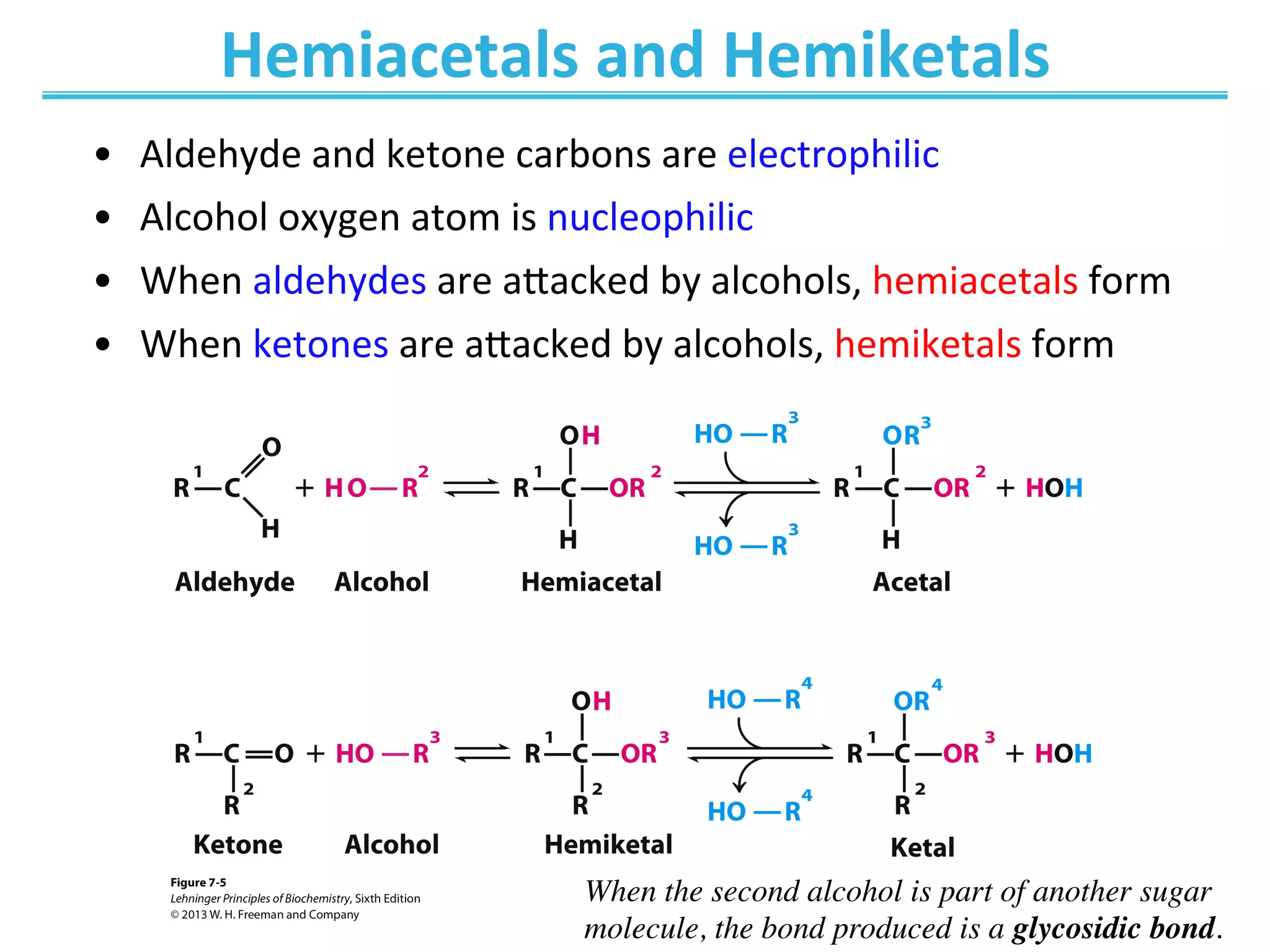
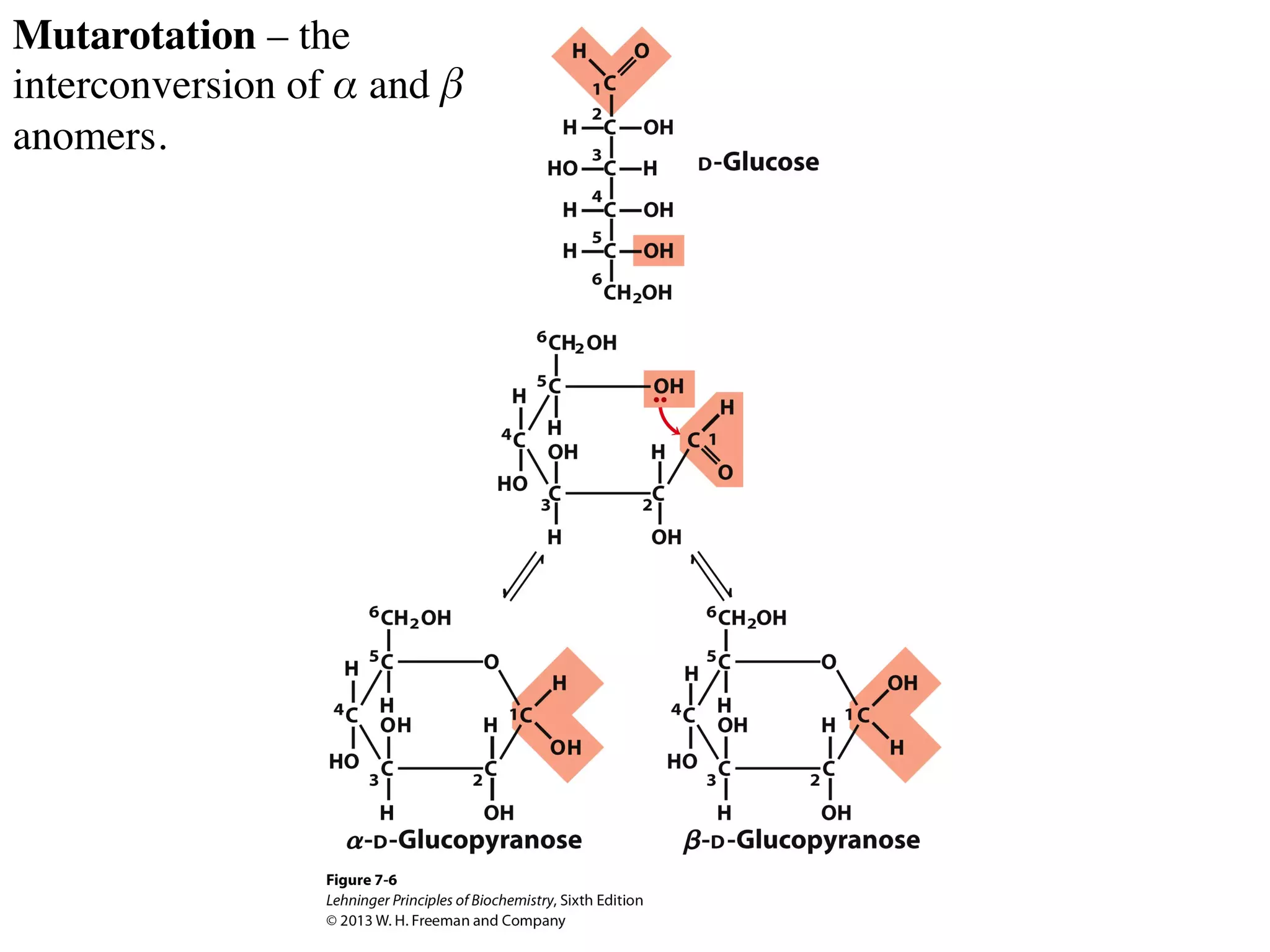
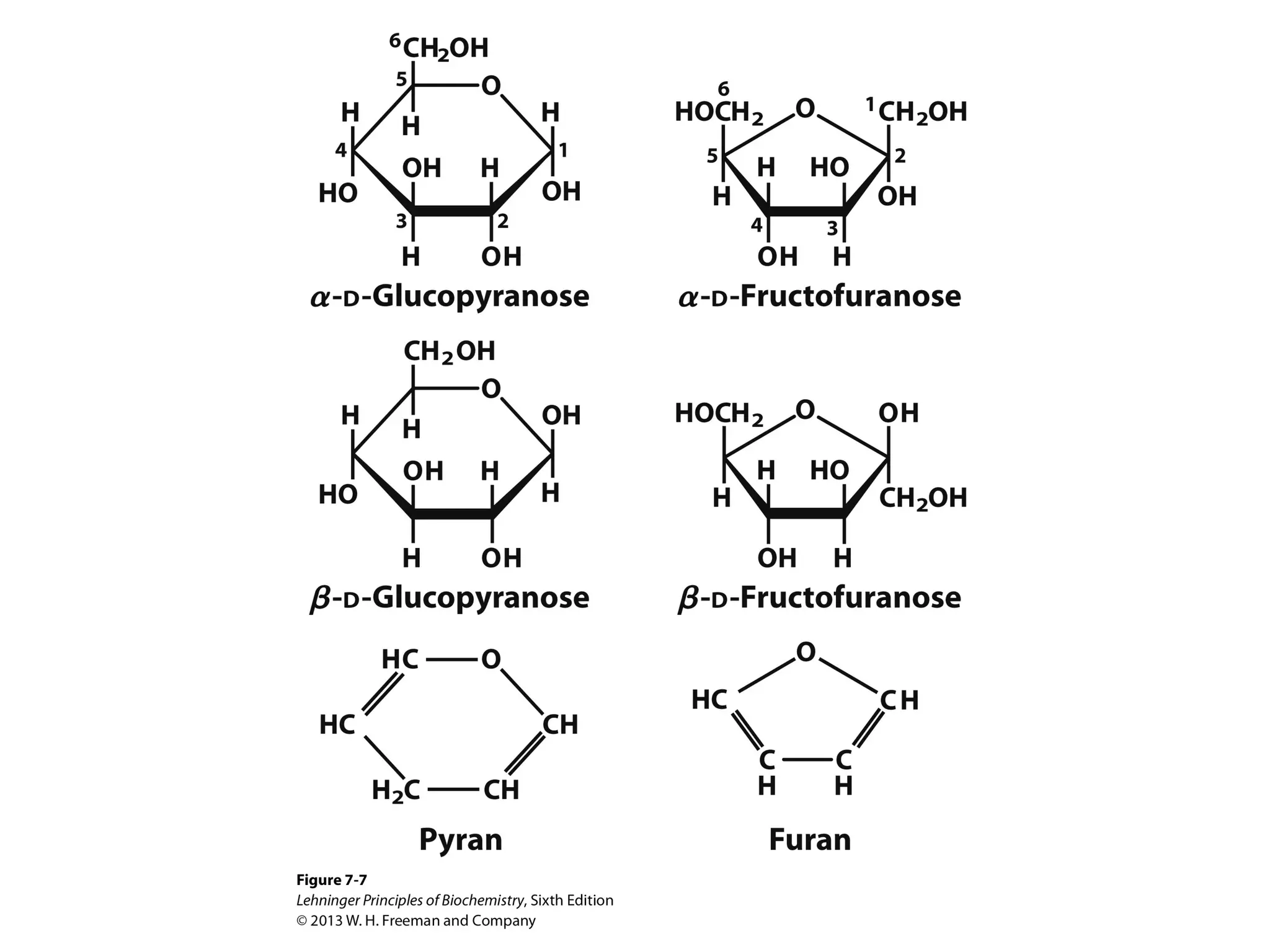
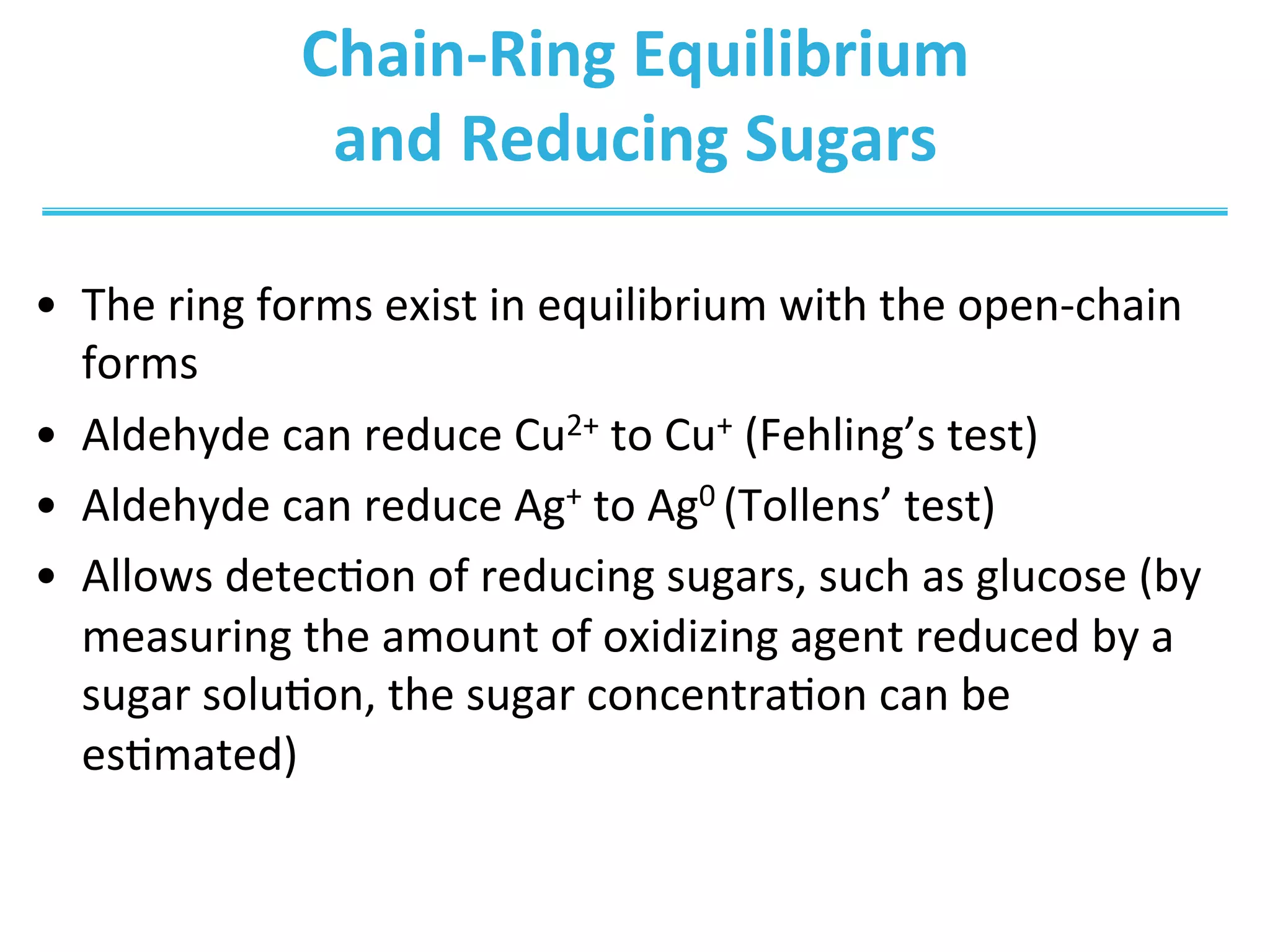
Carbohydrates range widely in size and structure, and serve important functions in living organisms. They are produced from carbon dioxide and water through photosynthesis in plants. Monosaccharides are the simplest carbohydrates and include sugars like glucose, galactose, and fructose. In solution, monosaccharides typically form ring structures called pyranoses or furanoses with intramolecular bonds. The cyclic forms exist in equilibrium with linear forms, and reducing sugars can be detected through chemical tests involving oxidation-reduction reactions. Modern methods for quantifying sugars like glucose use enzyme-based colorimetric or electrochemical assays.













![Blood
glucose
measurements
in
the
diagnosis
and
treatment
of
diabetes
• Untreated
diabetes
has
several
long-‐term
consequences:
kidney
failure,
cardiovascular
disease,
blindness,
impaired
wound
healing,
etc.
• Average
[glc]blood
over
days
can
be
measured
because
of
a
nonenzymaIc
reacIon
between
glc
and
primary
amino
groups
in
Hb
• The
amount
of
glycated
Hb
(GHB)
reflects
the
average
[glc]blood
over
the
circulaIng
lifeIme
of
RBC
(~120
days)
• Normal
levels
~5%
of
Hb
is
GHB
• DiabeIc
people
may
have
it
as
high
as
13%
• Advanced
glycaIon
endproducts
(AGEs)
contribute
to
the
long
term
problems
associated
with
diabetes](https://image.slidesharecdn.com/chapter7-carbs-160131122441-160515104233/75/Chapter7-carbs-29-2048.jpg)