Presented By 
Raminder Kalra
 The building blocks of nursing 
informatics specialty are nursing, 
information and computer 
sciences. 
 These three combined provide the 
knowledge base of nursing 
informatics.
 Expanded roles and technology 
are being incorporated into 
the domain of nursing informatics. 
 Nursing leaders in all areas 
including research, education and 
administration have a big role to 
play in ensuring that nursing 
informatics is embraced by all 
nurses.
 Nursing leaders in all areas including 
research, education and 
administration have a big role to 
play in ensuring that nursing 
informatics is embraced by all 
nurses.
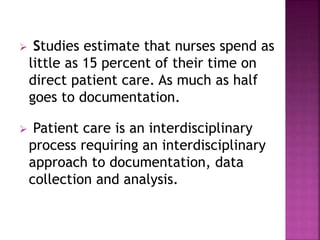
 Studies estimate that nurses spend as 
little as 15 percent of their time on 
direct patient care. As much as half 
goes to documentation. 
 Patient care is an interdisciplinary 
process requiring an interdisciplinary 
approach to documentation, data 
collection and analysis.
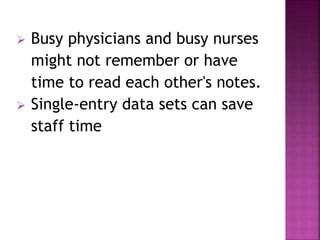
 Busy physicians and busy nurses 
might not remember or have 
time to read each other's notes. 
 Single-entry data sets can save 
staff time
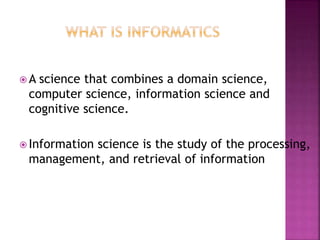
 A science that combines a domain science, 
computer science, information science and 
cognitive science. 
 Information science is the study of the processing, 
management, and retrieval of information
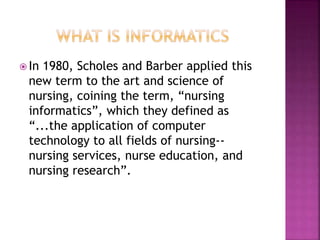
 In 1980, Scholes and Barber applied this 
new term to the art and science of 
nursing, coining the term, “nursing 
informatics”, which they defined as 
“...the application of computer 
technology to all fields of nursing-- 
nursing services, nurse education, and 
nursing research”.
 Integration of healthcare sciences, computer 
science, information science, and cognitive 
science to assist in the management of 
healthcare information. 
Health informatics have subdomains such as 
medical informatics, dental informatics, 
pharmacy informatics, nursing informatics, etc.
It has important influence on the 
role of the nurse administrator. 
Nurses and nurse managers handle 
large amount of data during any 
given day.
It helps in 
Strategic and systems planning 
Implementation of clinical nursing 
systems 
Monitoring and evaluation of clinical 
and budgetary outcomes. 
Cost control
Patient classification 
Financial management 
Linking patient classification data 
Calculating staffing requirements
Educating nurses 
Reducing the burden of paper 
work as well as improve the 
communication.
Providing decision support tools. 
Keeping the records (Availability of 
information when and where 
needed). 
Eliminating multiple entries of the 
same data
Making nursing care visible 
Increasing the productivity of nurses 
Providing evidence-based practice 
data to a budget methodology
Checking Bedside Data Entry 
(medication record etc.) 
Client Monitoring- Local and Distant 
Tele-nursing 
Practice Management 
Duty scheduling
Wireless technology will have a growing role. 
Wireless LANs and PDAs allow documentation 
during encounters. 
 Electronic bulletin boards, calendar filings 
and email enable rapid communication of 
nursing administrators with staff, nursing 
managers and support departments.
With the right nursing informatics 
background and training, nurse 
administrators can play a major role in 
accreditation and compliance--such as 
assisting in implementing standards
 To improve the health of populations, 
communities, families and individuals by 
optimizing information, management and 
communication. It includes the use of IT in 
 the direct provision of care 
 establishing effective administration systems 
 managing and delivering educational 
experiences 
 supporting lifelong learning and in supporting 
nursing research
Prevent nurses from making 
medication errors. 
Help nurses easily interpret orders 
from physician in the management 
of a patient. 
Better collaboration and sharing of 
patient information with other 
health care providers
Better assessments and monitoring 
of patients diseases and ailments. 
Helps nurses utilize research to 
provide evidence based care. 
 Helps nurses work faster, smarter 
and more competent in whatever 
they do.
 Must play the role of advocates for 
nursing informatics. 
Advocacy is about influencing people, 
policies, practices, structures and 
systems in order to bring about 
change
Need to communicate clearly and 
concisely and to structure their 
message to fit both the situation and 
the intended audience (for eg. 
nursing students or practicing 
nurses). 
Should be comfortable in 
communicating in verbal, written, 
and electronic formats.
 Must be able to influence others to action. 
Influence is the ability to alter or sway an 
individual's or group's thoughts, beliefs, or 
actions; 
 Influence is built on competence, credibility, 
and trustworthiness hence all nurse leaders 
in education, administration and even in 
practice should be computer literate and 
have basic competencies of nursing 
informatics for them to influence others.
 Must establish positive, collaborative 
relationships with others to garner the 
support necessary to address the issue of 
nursing informatics. 
 Successful collaboration requires careful 
communication with the groups involved in 
the process, seeking input when appropriate, 
and providing ongoing reports related to 
progress on achieving the goal.
 Ensure a continuing education programme 
 Training of nurses on the use of computers, 
their application programmes 
 Sourcing information for research and 
application to patient care purposes. 
 Nurses need consistent training to feel 
comfortable with the use of Information 
technology in their everyday practice.
 Informatics competencies need to 
be developed in all three levels of 
expertise through basic and 
continuing nursing education 
programs.
 Promote Research in Nursing 
Informatics 
 Research in nursing is necessary for 
the development of nursing practice 
since nursing informatics is a new 
specialty.
Computerized record keeping. 
 Computerized assisted instruction. 
Interactive video technology (Tele-nursing). 
Distance learning - web based 
courses and degree programmes. 
Teaching and presentations.
 Nurses spend a significant proportion of their 
time on information related activities as part 
of clinical decision making in order to lead, 
co-ordinate and support the delivery of safe, 
effective, person centered care. 
 In order to provide high quality care for 
patients, nurses need up-to-date, accurate, 
relevant information about the person and 
access to the latest evidence or best practice 
at the point of care delivery.
 The ultimate goal of nursing informatics is to 
use technology to bring critical information 
to the point of care to increase efficiency 
and make healthcare safer and more 
effective. 
 Much work is still needed to educate nurses 
in informatics competencies so that 
technology can be embraced as a tool in 
everyday practice.
Nursing informatics for nurse administrators

Nursing informatics for nurse administrators

  • 1.
  • 2.
     The buildingblocks of nursing informatics specialty are nursing, information and computer sciences.  These three combined provide the knowledge base of nursing informatics.
  • 3.
     Expanded rolesand technology are being incorporated into the domain of nursing informatics.  Nursing leaders in all areas including research, education and administration have a big role to play in ensuring that nursing informatics is embraced by all nurses.
  • 4.
     Nursing leadersin all areas including research, education and administration have a big role to play in ensuring that nursing informatics is embraced by all nurses.
  • 5.
     Studies estimatethat nurses spend as little as 15 percent of their time on direct patient care. As much as half goes to documentation.  Patient care is an interdisciplinary process requiring an interdisciplinary approach to documentation, data collection and analysis.
  • 6.
     Busy physiciansand busy nurses might not remember or have time to read each other's notes.  Single-entry data sets can save staff time
  • 7.
     A sciencethat combines a domain science, computer science, information science and cognitive science.  Information science is the study of the processing, management, and retrieval of information
  • 8.
     In 1980,Scholes and Barber applied this new term to the art and science of nursing, coining the term, “nursing informatics”, which they defined as “...the application of computer technology to all fields of nursing-- nursing services, nurse education, and nursing research”.
  • 9.
     Integration ofhealthcare sciences, computer science, information science, and cognitive science to assist in the management of healthcare information. Health informatics have subdomains such as medical informatics, dental informatics, pharmacy informatics, nursing informatics, etc.
  • 10.
    It has importantinfluence on the role of the nurse administrator. Nurses and nurse managers handle large amount of data during any given day.
  • 11.
    It helps in Strategic and systems planning Implementation of clinical nursing systems Monitoring and evaluation of clinical and budgetary outcomes. Cost control
  • 12.
    Patient classification Financialmanagement Linking patient classification data Calculating staffing requirements
  • 13.
    Educating nurses Reducingthe burden of paper work as well as improve the communication.
  • 14.
    Providing decision supporttools. Keeping the records (Availability of information when and where needed). Eliminating multiple entries of the same data
  • 15.
    Making nursing carevisible Increasing the productivity of nurses Providing evidence-based practice data to a budget methodology
  • 16.
    Checking Bedside DataEntry (medication record etc.) Client Monitoring- Local and Distant Tele-nursing Practice Management Duty scheduling
  • 17.
    Wireless technology willhave a growing role. Wireless LANs and PDAs allow documentation during encounters.  Electronic bulletin boards, calendar filings and email enable rapid communication of nursing administrators with staff, nursing managers and support departments.
  • 18.
    With the rightnursing informatics background and training, nurse administrators can play a major role in accreditation and compliance--such as assisting in implementing standards
  • 19.
     To improvethe health of populations, communities, families and individuals by optimizing information, management and communication. It includes the use of IT in  the direct provision of care  establishing effective administration systems  managing and delivering educational experiences  supporting lifelong learning and in supporting nursing research
  • 20.
    Prevent nurses frommaking medication errors. Help nurses easily interpret orders from physician in the management of a patient. Better collaboration and sharing of patient information with other health care providers
  • 21.
    Better assessments andmonitoring of patients diseases and ailments. Helps nurses utilize research to provide evidence based care.  Helps nurses work faster, smarter and more competent in whatever they do.
  • 22.
     Must playthe role of advocates for nursing informatics. Advocacy is about influencing people, policies, practices, structures and systems in order to bring about change
  • 23.
    Need to communicateclearly and concisely and to structure their message to fit both the situation and the intended audience (for eg. nursing students or practicing nurses). Should be comfortable in communicating in verbal, written, and electronic formats.
  • 24.
     Must beable to influence others to action. Influence is the ability to alter or sway an individual's or group's thoughts, beliefs, or actions;  Influence is built on competence, credibility, and trustworthiness hence all nurse leaders in education, administration and even in practice should be computer literate and have basic competencies of nursing informatics for them to influence others.
  • 25.
     Must establishpositive, collaborative relationships with others to garner the support necessary to address the issue of nursing informatics.  Successful collaboration requires careful communication with the groups involved in the process, seeking input when appropriate, and providing ongoing reports related to progress on achieving the goal.
  • 26.
     Ensure acontinuing education programme  Training of nurses on the use of computers, their application programmes  Sourcing information for research and application to patient care purposes.  Nurses need consistent training to feel comfortable with the use of Information technology in their everyday practice.
  • 27.
     Informatics competenciesneed to be developed in all three levels of expertise through basic and continuing nursing education programs.
  • 28.
     Promote Researchin Nursing Informatics  Research in nursing is necessary for the development of nursing practice since nursing informatics is a new specialty.
  • 29.
    Computerized record keeping.  Computerized assisted instruction. Interactive video technology (Tele-nursing). Distance learning - web based courses and degree programmes. Teaching and presentations.
  • 30.
     Nurses spenda significant proportion of their time on information related activities as part of clinical decision making in order to lead, co-ordinate and support the delivery of safe, effective, person centered care.  In order to provide high quality care for patients, nurses need up-to-date, accurate, relevant information about the person and access to the latest evidence or best practice at the point of care delivery.
  • 31.
     The ultimategoal of nursing informatics is to use technology to bring critical information to the point of care to increase efficiency and make healthcare safer and more effective.  Much work is still needed to educate nurses in informatics competencies so that technology can be embraced as a tool in everyday practice.