Ahmad Ghany and Karim Keshavjee
ITCH 2017 Feb 18, 2017
Victoria, BC
LINK TO OPEN-ACCESS PAPER:
Ghany A, Keshavjee K. The Cost of Quality in Diabetes. Stud
Health TechnolInform. 2017;234:131-135. PubMed PMID: 28186029.
 Introduction
 The problem with EMR | EHR data
 Approaches to clean data
 The case study of diabetes
 Budget Impact Analysis
 Results of analysis
 Recommendations
 Q & A
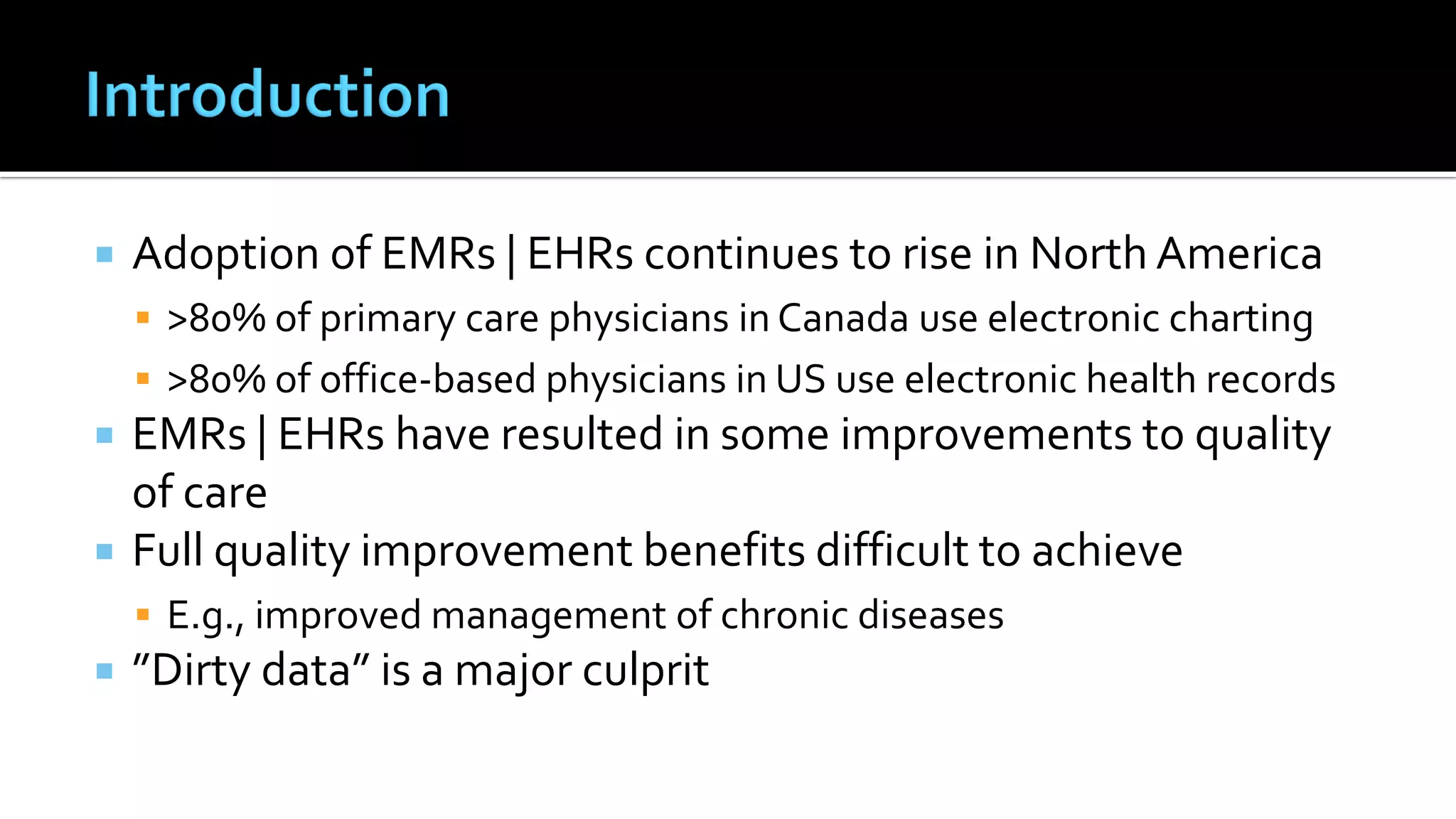
 Adoption of EMRs | EHRs continues to rise in North America
 >80% of primary care physicians in Canada use electronic charting
 >80% of office-based physicians in US use electronic health records
 EMRs | EHRs have resulted in some improvements to quality
of care
 Full quality improvement benefits difficult to achieve
 E.g., improved management of chronic diseases
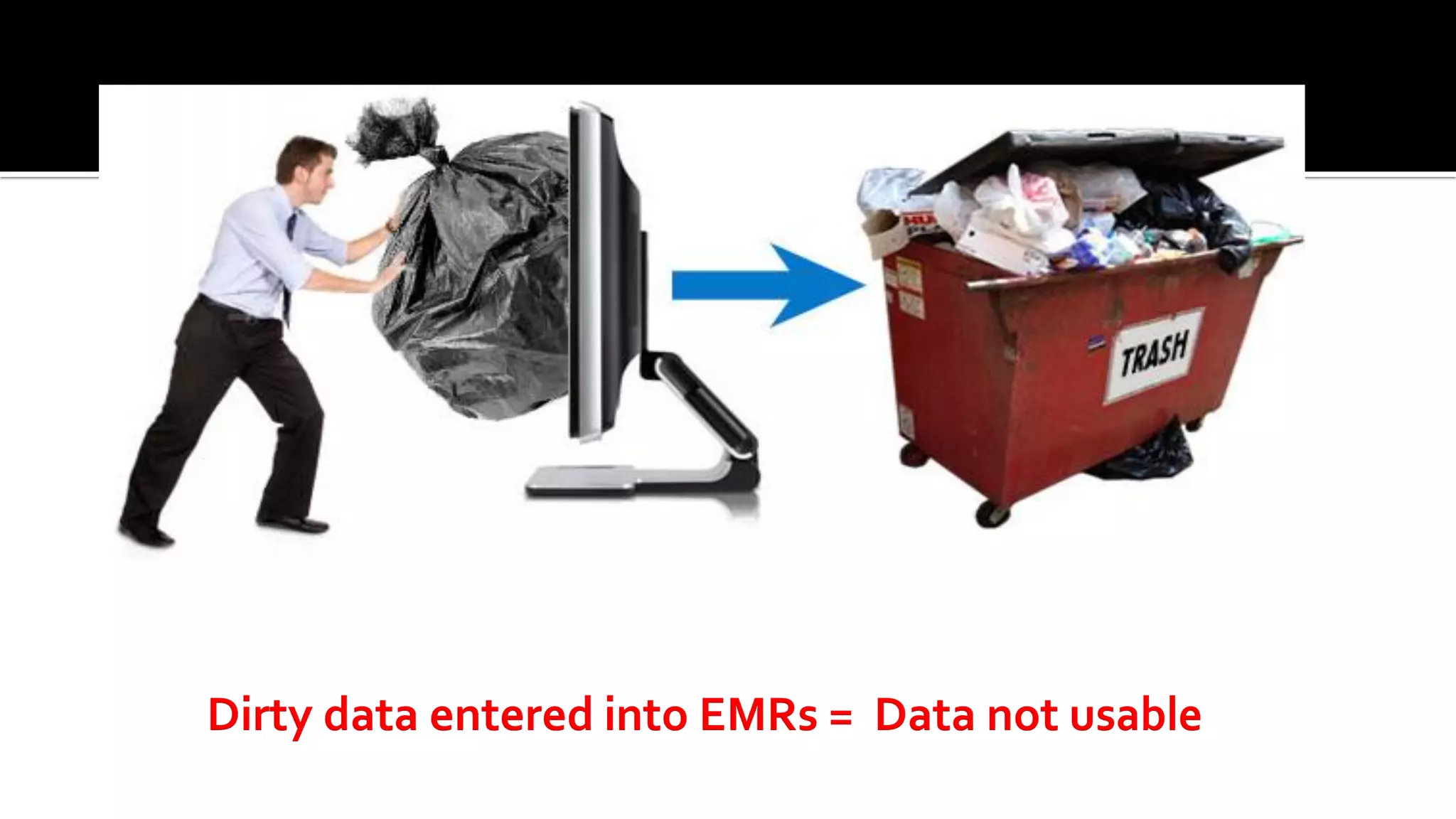
 ”Dirty data” is a major culprit
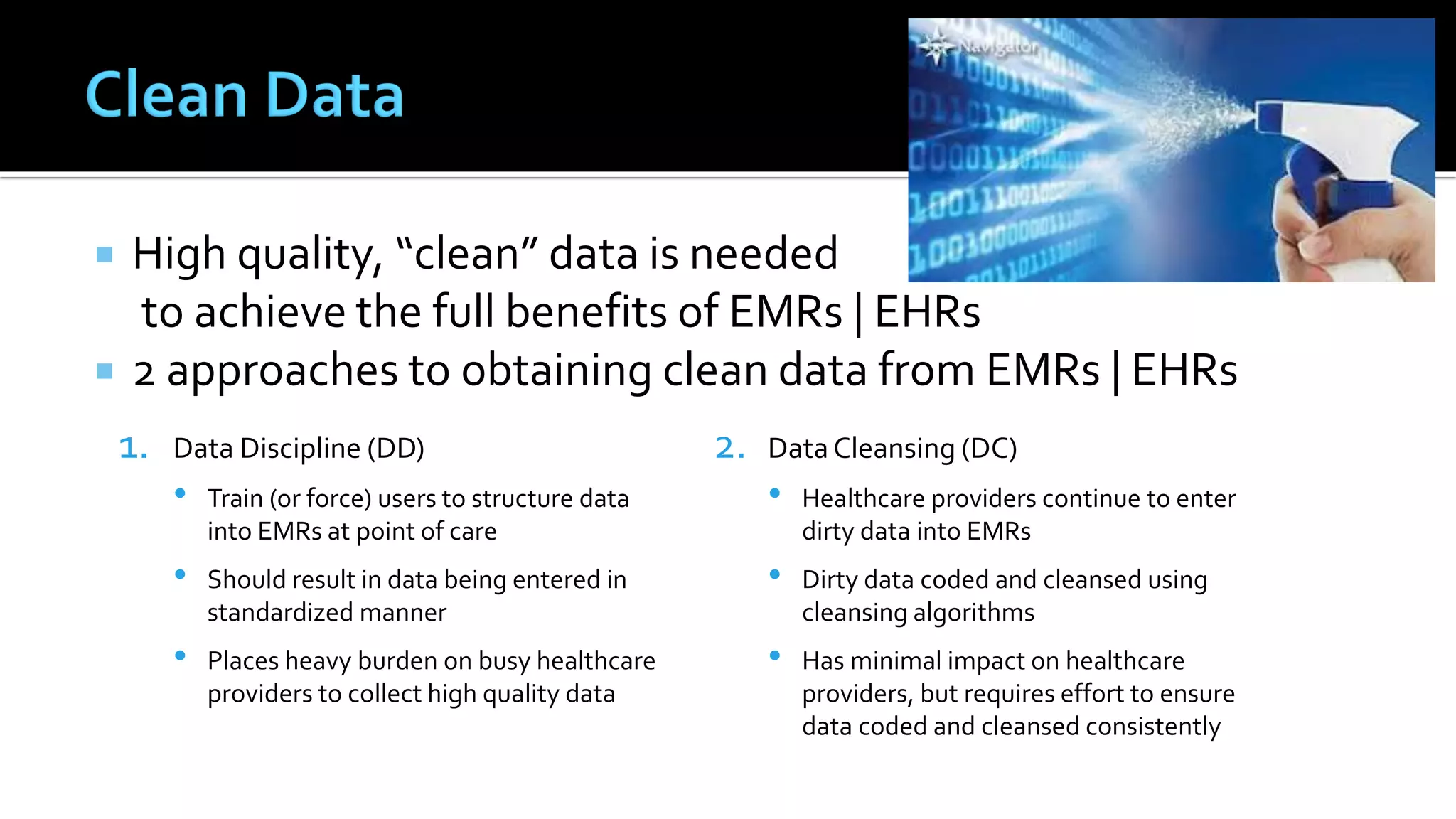
 High quality, “clean” data is needed
to achieve the full benefits of EMRs | EHRs
 2 approaches to obtaining clean data from EMRs | EHRs
1. Data Discipline (DD)
• Train (or force) users to structure data
into EMRs at point of care
• Should result in data being entered in
standardized manner
• Places heavy burden on busy healthcare
providers to collect high quality data
2. Data Cleansing (DC)
• Healthcare providers continue to enter
dirty data into EMRs
• Dirty data coded and cleansed using
cleansing algorithms
• Has minimal impact on healthcare
providers, but requires effort to ensure
data coded and cleansed consistently
 Both Data Discipline and Data Cleansing
result in clean, high quality data
 Clean data allows healthcare providers to:
 Manage chronic diseases more effectively
 More efficiently identify and track chronic disease patients
 Identify patients whose care is sub-optimal
 Identify high risk patients earlier
 Access accurate information at the point-of-care = better quality of care
 All of these factors could decrease the costs associated with
chronic diseases
 One prevalent chronic disease in Canada is diabetes
 Affected 2.7 million people in 2010; forecasted to affect 4.2 million
people in Canada by 2020
 Considerable costs associated with diabetes
 Estimated to have cost healthcare system $12 billion in 2010
 Projected to cost $16 billion by 2020
 Clean data is needed to more effectively manage diabetes
 What are the costs of implementing each of the approaches
to clean data?
 Budget Impact Analysis (BIA) is an economic assessment method
 Quantifies the costs of DD or DC to clean up data for the single chronic disease
of diabetes in an EMR | EHR
 Overview of BIA for Canada
 Population = 24,000 Family Physicians in Canada
 Time horizon = 2 years (approx. time to disseminate DD)
 Technology mix = management of diabetes using current methods of data entry
into EMRs (includes dirty data)
 New interventions being tested are DD and DC
 Target audience = policy makers, healthcare administrators, providers and any
other stakeholders impacted by cost of data quality
 Easily adapted for the US Market
 BIA compared the costs of DD and DC in 4 key area necessary
to implement and sustain each approach:
 Cost of materials development
 Cost of dissemination
 Cost of data quality verification
 Cost of maintenance
 These key areas drive costs related to
human resources, technology and software
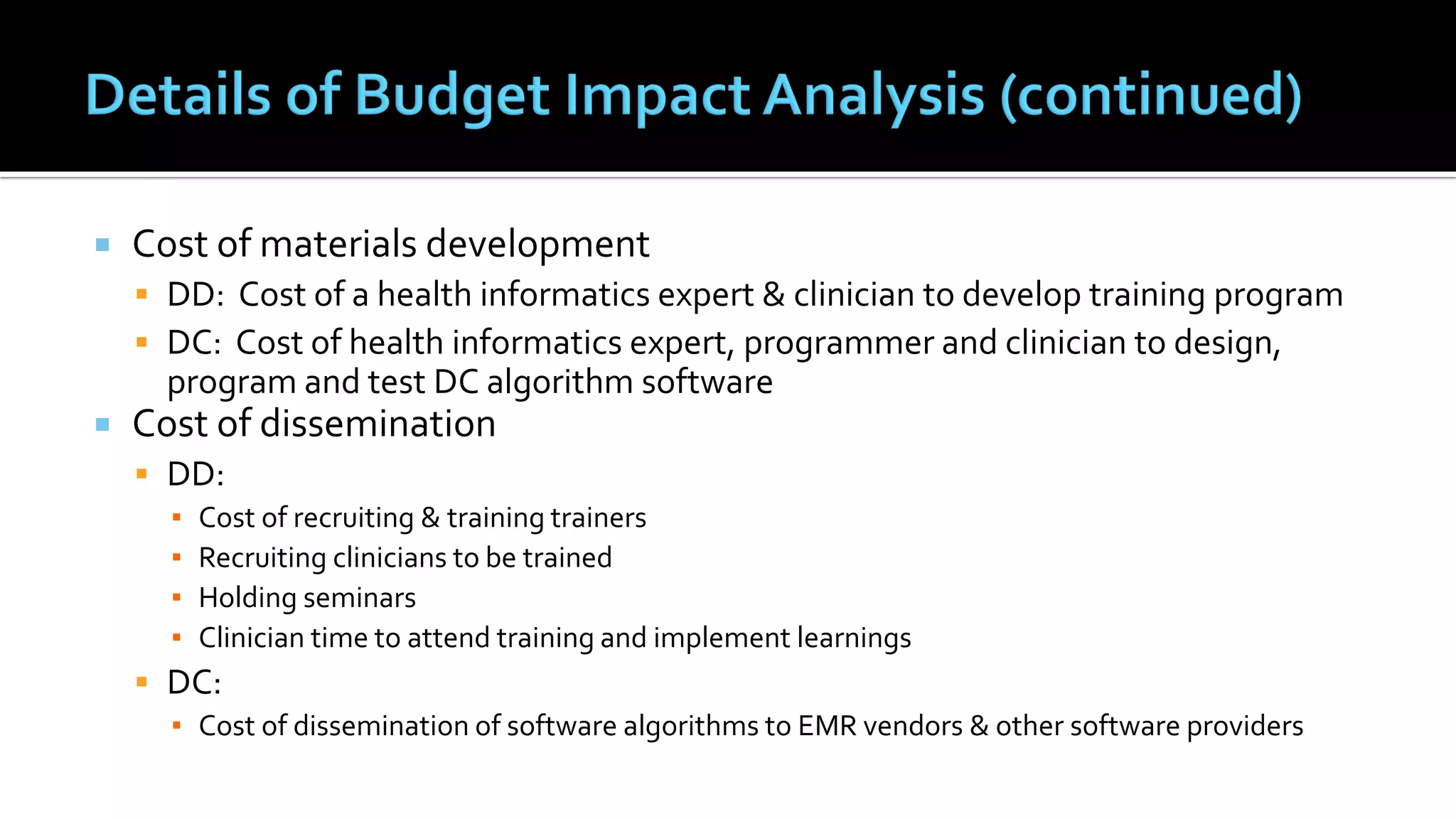
 Cost of materials development
 DD: Cost of a health informatics expert & clinician to develop training program
 DC: Cost of health informatics expert, programmer and clinician to design,
program and test DC algorithm software
 Cost of dissemination
 DD:
▪ Cost of recruiting & training trainers
▪ Recruiting clinicians to be trained
▪ Holding seminars
▪ Clinician time to attend training and implement learnings
 DC:
▪ Cost of dissemination of software algorithms to EMR vendors & other software providers
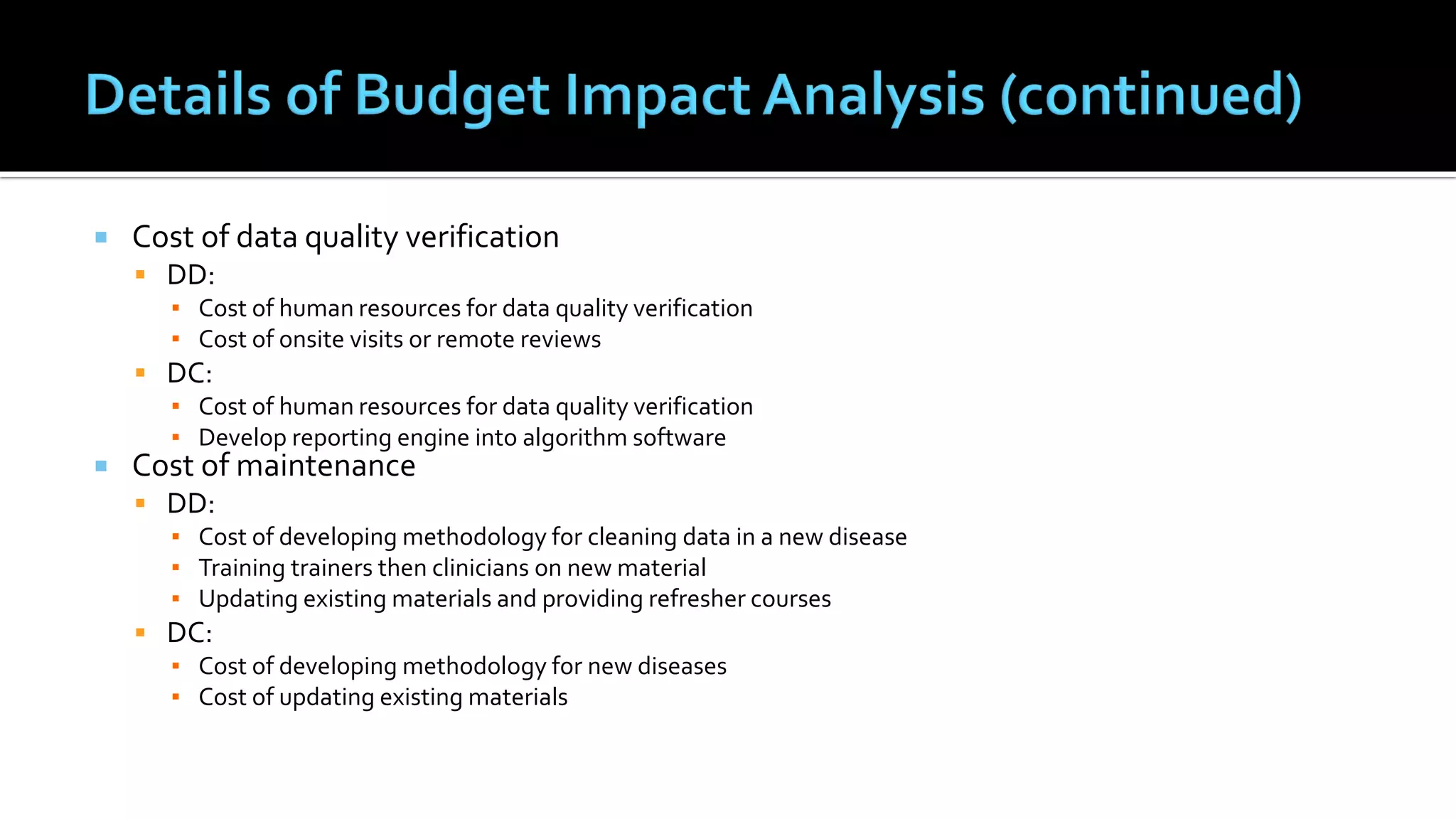
 Cost of data quality verification
 DD:
▪ Cost of human resources for data quality verification
▪ Cost of onsite visits or remote reviews
 DC:
▪ Cost of human resources for data quality verification
▪ Develop reporting engine into algorithm software
 Cost of maintenance
 DD:
▪ Cost of developing methodology for cleaning data in a new disease
▪ Training trainers then clinicians on new material
▪ Updating existing materials and providing refresher courses
 DC:
▪ Cost of developing methodology for new diseases
▪ Cost of updating existing materials
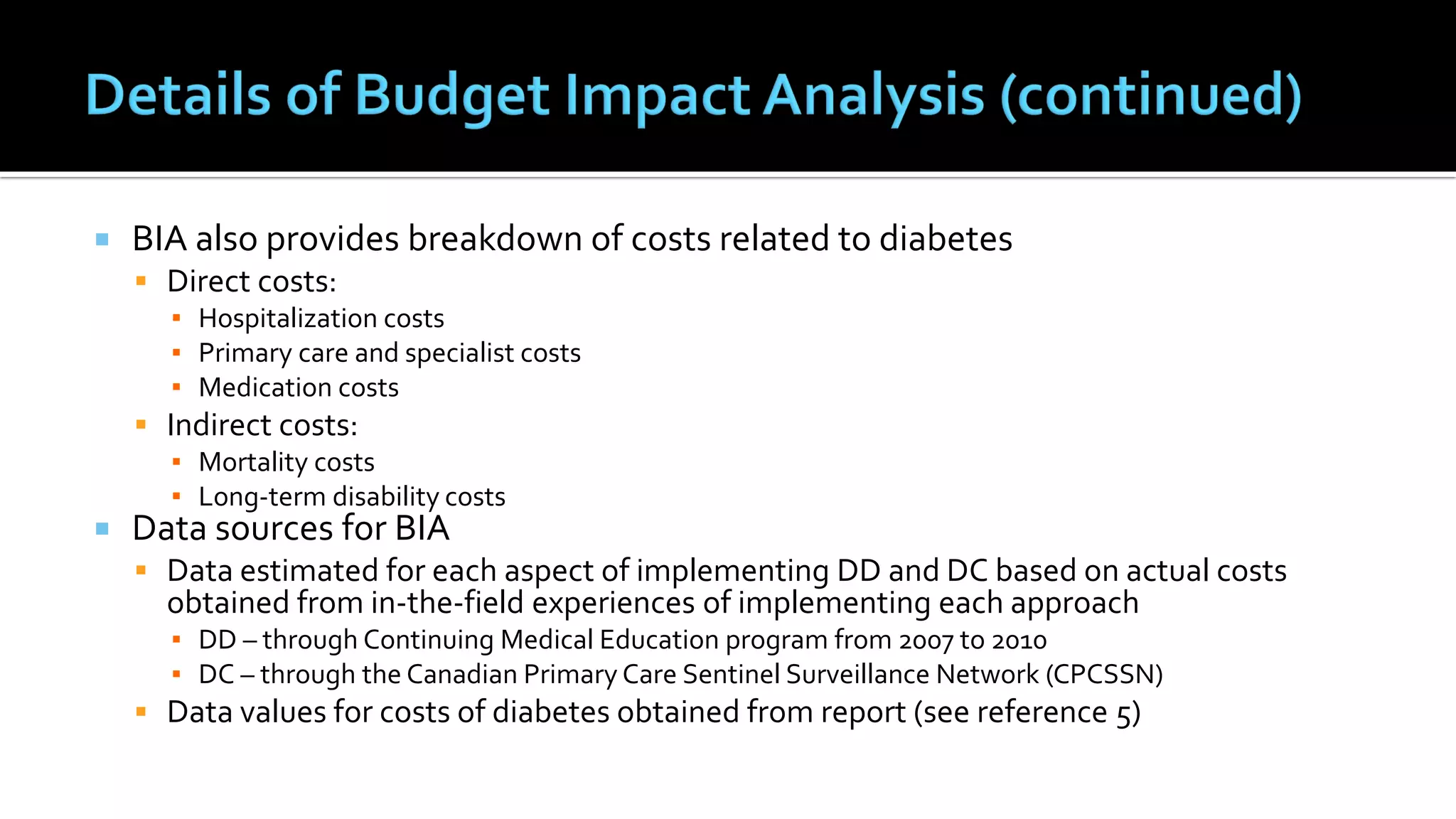
 BIA also provides breakdown of costs related to diabetes
 Direct costs:
▪ Hospitalization costs
▪ Primary care and specialist costs
▪ Medication costs
 Indirect costs:
▪ Mortality costs
▪ Long-term disability costs
 Data sources for BIA
 Data estimated for each aspect of implementing DD and DC based on actual costs
obtained from in-the-field experiences of implementing each approach
▪ DD – through Continuing Medical Education program from 2007 to 2010
▪ DC – through the Canadian Primary Care Sentinel Surveillance Network (CPCSSN)
 Data values for costs of diabetes obtained from report (see reference 5)
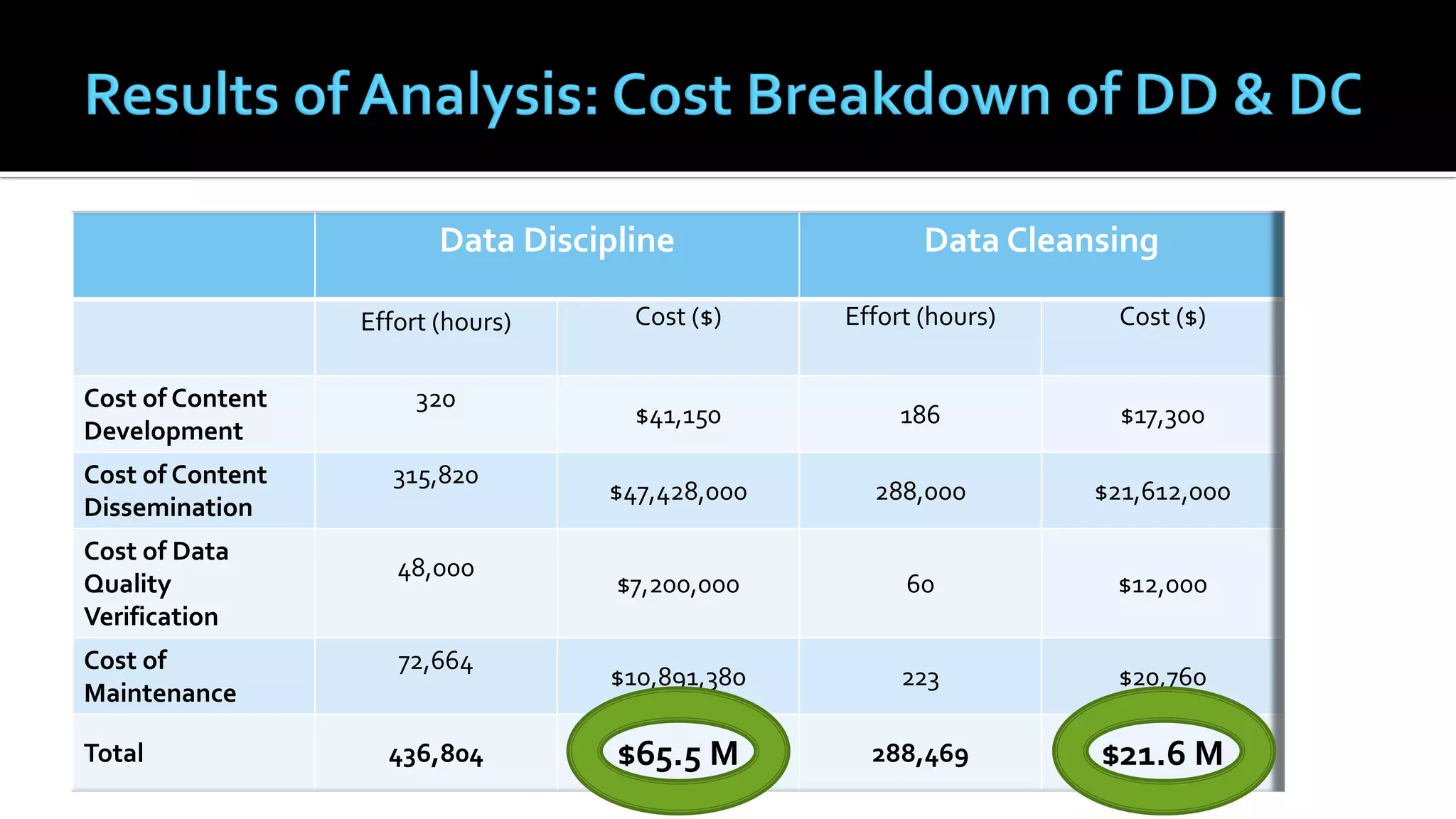
Data Discipline Data Cleansing
Effort (hours) Cost ($) Effort (hours) Cost ($)
Cost of Content
Development
320
$41,150 186 $17,300
Cost of Content
Dissemination
315,820
$47,428,000 288,000 $21,612,000
Cost of Data
Quality
Verification
48,000
$7,200,000 60 $12,000
Cost of
Maintenance
72,664
$10,891,380 223 $20,760
Total 436,804 $65.5 M 288,469 $21.6 M
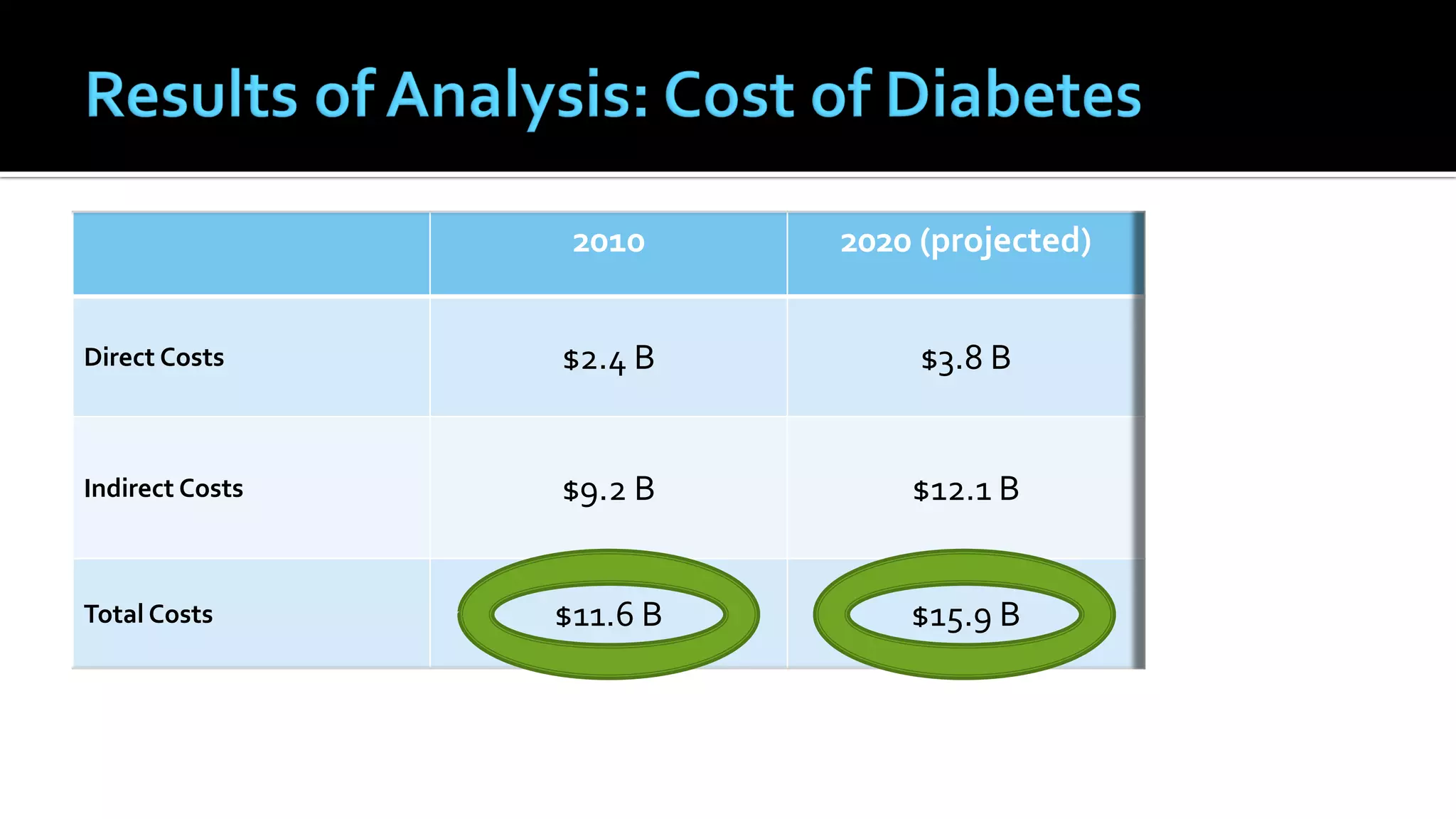
2010 2020 (projected)
Direct Costs $2.4 B $3.8 B
Indirect Costs $9.2 B $12.1 B
Total Costs $11.6 B $15.9 B
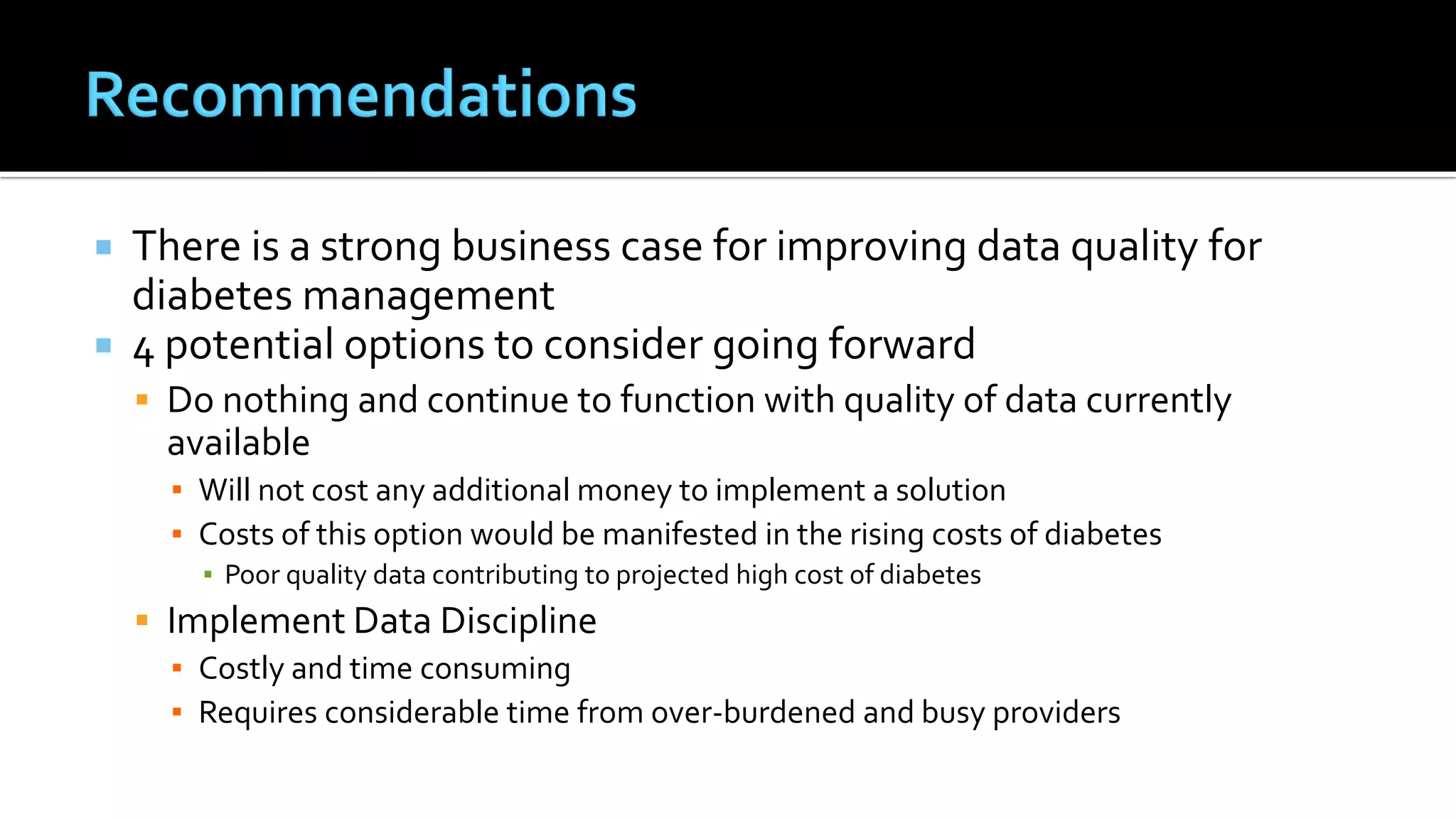
 There is a strong business case for improving data quality for
diabetes management
 4 potential options to consider going forward
 Do nothing and continue to function with quality of data currently
available
▪ Will not cost any additional money to implement a solution
▪ Costs of this option would be manifested in the rising costs of diabetes
▪ Poor quality data contributing to projected high cost of diabetes
 Implement Data Discipline
▪ Costly and time consuming
▪ Requires considerable time from over-burdened and busy providers
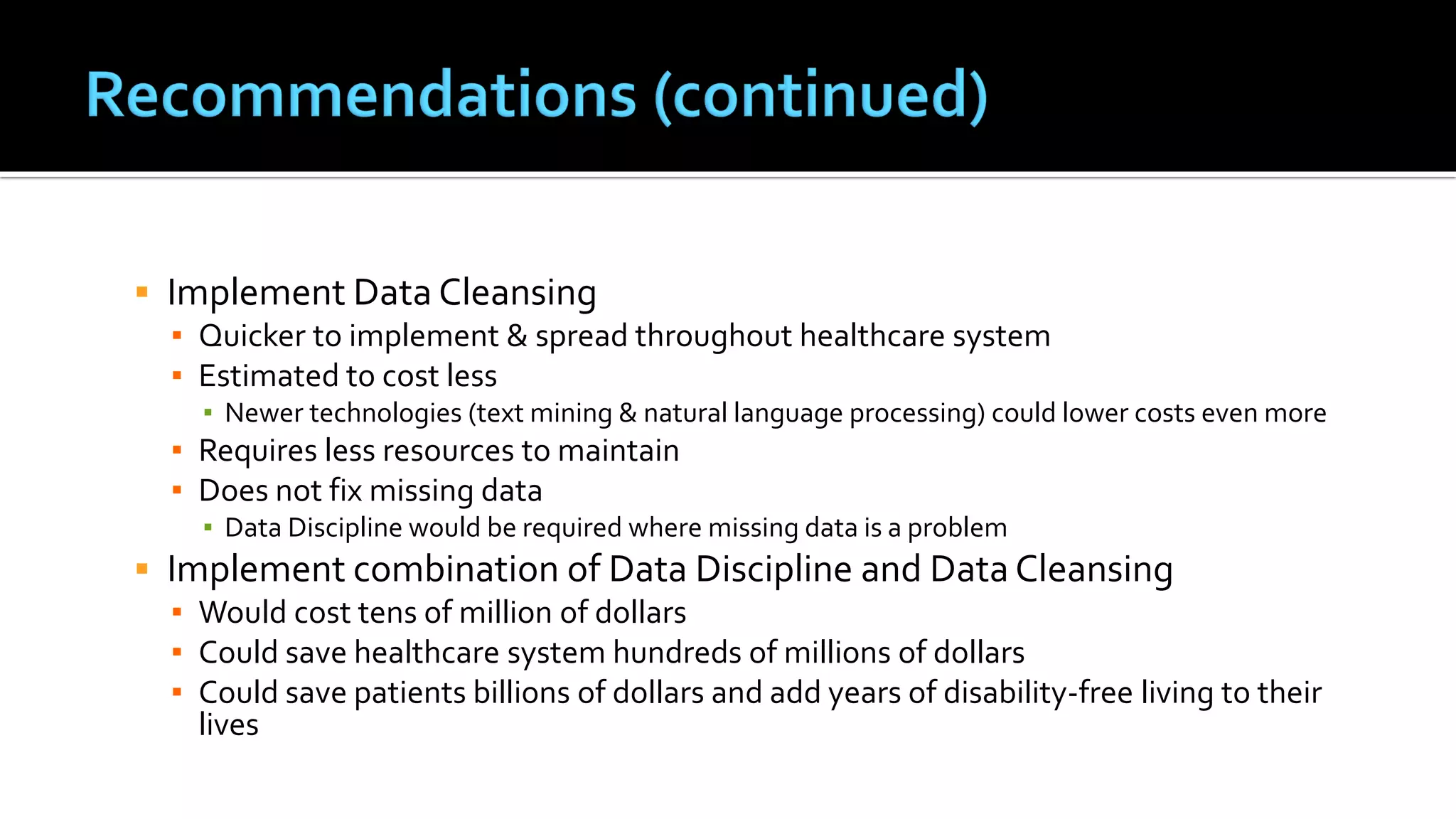
 Implement Data Cleansing
▪ Quicker to implement & spread throughout healthcare system
▪ Estimated to cost less
▪ Newer technologies (text mining & natural language processing) could lower costs even more
▪ Requires less resources to maintain
▪ Does not fix missing data
▪ Data Discipline would be required where missing data is a problem
 Implement combination of Data Discipline and Data Cleansing
▪ Would cost tens of million of dollars
▪ Could save healthcare system hundreds of millions of dollars
▪ Could save patients billions of dollars and add years of disability-free living to their
lives
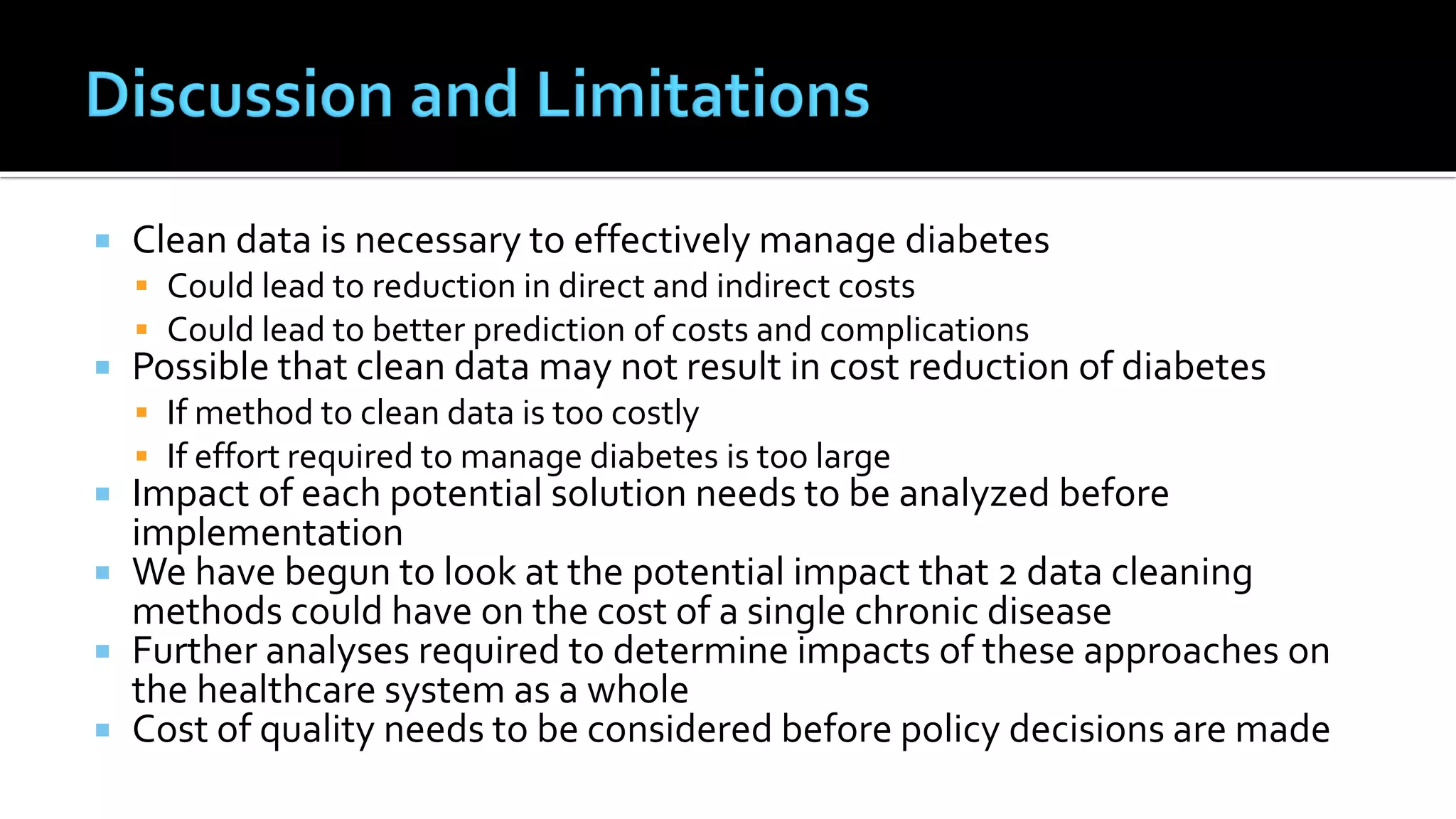
 Clean data is necessary to effectively manage diabetes
 Could lead to reduction in direct and indirect costs
 Could lead to better prediction of costs and complications
 Possible that clean data may not result in cost reduction of diabetes
 If method to clean data is too costly
 If effort required to manage diabetes is too large
 Impact of each potential solution needs to be analyzed before
implementation
 We have begun to look at the potential impact that 2 data cleaning
methods could have on the cost of a single chronic disease
 Further analyses required to determine impacts of these approaches on
the healthcare system as a whole
 Cost of quality needs to be considered before policy decisions are made
The cost of data quality in EMRs

The cost of data quality in EMRs

  • 1.
    Ahmad Ghany andKarim Keshavjee ITCH 2017 Feb 18, 2017 Victoria, BC LINK TO OPEN-ACCESS PAPER: Ghany A, Keshavjee K. The Cost of Quality in Diabetes. Stud Health TechnolInform. 2017;234:131-135. PubMed PMID: 28186029.
  • 2.
     Introduction  Theproblem with EMR | EHR data  Approaches to clean data  The case study of diabetes  Budget Impact Analysis  Results of analysis  Recommendations  Q & A
  • 3.
     Adoption ofEMRs | EHRs continues to rise in North America  >80% of primary care physicians in Canada use electronic charting  >80% of office-based physicians in US use electronic health records  EMRs | EHRs have resulted in some improvements to quality of care  Full quality improvement benefits difficult to achieve  E.g., improved management of chronic diseases  ”Dirty data” is a major culprit
  • 5.
     High quality,“clean” data is needed to achieve the full benefits of EMRs | EHRs  2 approaches to obtaining clean data from EMRs | EHRs 1. Data Discipline (DD) • Train (or force) users to structure data into EMRs at point of care • Should result in data being entered in standardized manner • Places heavy burden on busy healthcare providers to collect high quality data 2. Data Cleansing (DC) • Healthcare providers continue to enter dirty data into EMRs • Dirty data coded and cleansed using cleansing algorithms • Has minimal impact on healthcare providers, but requires effort to ensure data coded and cleansed consistently
  • 6.
     Both DataDiscipline and Data Cleansing result in clean, high quality data  Clean data allows healthcare providers to:  Manage chronic diseases more effectively  More efficiently identify and track chronic disease patients  Identify patients whose care is sub-optimal  Identify high risk patients earlier  Access accurate information at the point-of-care = better quality of care  All of these factors could decrease the costs associated with chronic diseases
  • 7.
     One prevalentchronic disease in Canada is diabetes  Affected 2.7 million people in 2010; forecasted to affect 4.2 million people in Canada by 2020  Considerable costs associated with diabetes  Estimated to have cost healthcare system $12 billion in 2010  Projected to cost $16 billion by 2020  Clean data is needed to more effectively manage diabetes  What are the costs of implementing each of the approaches to clean data?
  • 8.
     Budget ImpactAnalysis (BIA) is an economic assessment method  Quantifies the costs of DD or DC to clean up data for the single chronic disease of diabetes in an EMR | EHR  Overview of BIA for Canada  Population = 24,000 Family Physicians in Canada  Time horizon = 2 years (approx. time to disseminate DD)  Technology mix = management of diabetes using current methods of data entry into EMRs (includes dirty data)  New interventions being tested are DD and DC  Target audience = policy makers, healthcare administrators, providers and any other stakeholders impacted by cost of data quality  Easily adapted for the US Market
  • 9.
     BIA comparedthe costs of DD and DC in 4 key area necessary to implement and sustain each approach:  Cost of materials development  Cost of dissemination  Cost of data quality verification  Cost of maintenance  These key areas drive costs related to human resources, technology and software
  • 10.
     Cost ofmaterials development  DD: Cost of a health informatics expert & clinician to develop training program  DC: Cost of health informatics expert, programmer and clinician to design, program and test DC algorithm software  Cost of dissemination  DD: ▪ Cost of recruiting & training trainers ▪ Recruiting clinicians to be trained ▪ Holding seminars ▪ Clinician time to attend training and implement learnings  DC: ▪ Cost of dissemination of software algorithms to EMR vendors & other software providers
  • 11.
     Cost ofdata quality verification  DD: ▪ Cost of human resources for data quality verification ▪ Cost of onsite visits or remote reviews  DC: ▪ Cost of human resources for data quality verification ▪ Develop reporting engine into algorithm software  Cost of maintenance  DD: ▪ Cost of developing methodology for cleaning data in a new disease ▪ Training trainers then clinicians on new material ▪ Updating existing materials and providing refresher courses  DC: ▪ Cost of developing methodology for new diseases ▪ Cost of updating existing materials
  • 12.
     BIA alsoprovides breakdown of costs related to diabetes  Direct costs: ▪ Hospitalization costs ▪ Primary care and specialist costs ▪ Medication costs  Indirect costs: ▪ Mortality costs ▪ Long-term disability costs  Data sources for BIA  Data estimated for each aspect of implementing DD and DC based on actual costs obtained from in-the-field experiences of implementing each approach ▪ DD – through Continuing Medical Education program from 2007 to 2010 ▪ DC – through the Canadian Primary Care Sentinel Surveillance Network (CPCSSN)  Data values for costs of diabetes obtained from report (see reference 5)
  • 13.
    Data Discipline DataCleansing Effort (hours) Cost ($) Effort (hours) Cost ($) Cost of Content Development 320 $41,150 186 $17,300 Cost of Content Dissemination 315,820 $47,428,000 288,000 $21,612,000 Cost of Data Quality Verification 48,000 $7,200,000 60 $12,000 Cost of Maintenance 72,664 $10,891,380 223 $20,760 Total 436,804 $65.5 M 288,469 $21.6 M
  • 14.
    2010 2020 (projected) DirectCosts $2.4 B $3.8 B Indirect Costs $9.2 B $12.1 B Total Costs $11.6 B $15.9 B
  • 15.
     There isa strong business case for improving data quality for diabetes management  4 potential options to consider going forward  Do nothing and continue to function with quality of data currently available ▪ Will not cost any additional money to implement a solution ▪ Costs of this option would be manifested in the rising costs of diabetes ▪ Poor quality data contributing to projected high cost of diabetes  Implement Data Discipline ▪ Costly and time consuming ▪ Requires considerable time from over-burdened and busy providers
  • 16.
     Implement DataCleansing ▪ Quicker to implement & spread throughout healthcare system ▪ Estimated to cost less ▪ Newer technologies (text mining & natural language processing) could lower costs even more ▪ Requires less resources to maintain ▪ Does not fix missing data ▪ Data Discipline would be required where missing data is a problem  Implement combination of Data Discipline and Data Cleansing ▪ Would cost tens of million of dollars ▪ Could save healthcare system hundreds of millions of dollars ▪ Could save patients billions of dollars and add years of disability-free living to their lives
  • 17.
     Clean datais necessary to effectively manage diabetes  Could lead to reduction in direct and indirect costs  Could lead to better prediction of costs and complications  Possible that clean data may not result in cost reduction of diabetes  If method to clean data is too costly  If effort required to manage diabetes is too large  Impact of each potential solution needs to be analyzed before implementation  We have begun to look at the potential impact that 2 data cleaning methods could have on the cost of a single chronic disease  Further analyses required to determine impacts of these approaches on the healthcare system as a whole  Cost of quality needs to be considered before policy decisions are made