Web 2.0 and Social
    Media for Business
Chapter 2: Blogging for Business: Part A


           Roger McHaney, Kansas State University
What is a Blog?
    A Web site that contains an online personal journal with reflections,
2   comments, media, and hyperlinks provided by the writer

    ‘Broadcasts’ content using RSS technology

    Among first applications associated with transition from static Web
    pages to social media

    Early forms evolved from Usenet, bulletin board systems, and
    moderated newsgroups

    In mid-1990’s, more online journals known as Weblogs appeared

    Weblog shortened to ‘blog’ by Jorn Barger and added to Webster’s
    Dictionary in 1999

                                 Blogs about Blogging
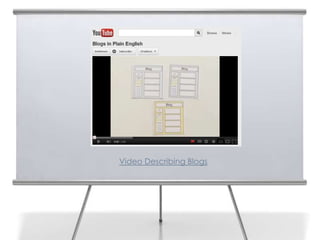
Video Describing Blogs
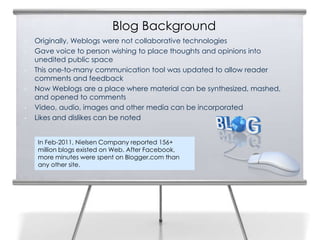
Blog Background
•   Originally, Weblogs were not collaborative technologies
•   Gave voice to person wishing to place thoughts and opinions into
    unedited public space
•   This one-to-many communication tool was updated to allow reader
    comments and feedback
•   Now Weblogs are a place where material can be synthesized, mashed,
    and opened to comments
•   Video, audio, images and other media can be incorporated
•   Likes and dislikes can be noted


    In Feb-2011, Nielsen Company reported 156+
    million blogs existed on Web. After Facebook,
    more minutes were spent on Blogger.com than
    any other site.
Should Businesses Blog?


Perfect for connecting with customers, promoting products and developing
recognized business presence
Gives opportunity to get news and message into the world without external
edits
Can come from many sources including CEO, marketing executive, product
development department, product support specialist, and others
Small businesses can use blogs to further their organizational missions.
Blog’s Personality
Effective blog use requires understanding key
attributes: voice, frequency, style, features and
passion
Blog’s Voice
How entries are presented and worded
   Departure from factual journalist voice
   Create everyday conversation to make messages personal
   Most blogs are not collections of articles
   Readers expect opinions
   Blogs use humor, sarcasm, self-deprecation, irony, over-the-top
   seriousness, or other approaches to capture readers’ attention
Blog’s Frequency
How often to publish new entries
    Timely material provides sense of immediacy
    When significant event occurs, update blog right away
    Helpful if writer has predetermined time between postings
    Monitor blog traffic statistics to determine best entry frequency
Blog’s Style


Determines readers’ perceptions of business
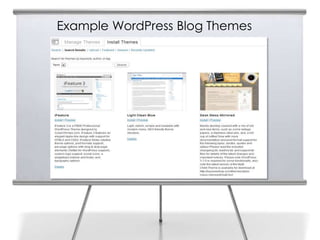
   Most hosting sites offer preformatted configurations (themes)
   Avoid looking amateurish
Example WordPress Blog Themes
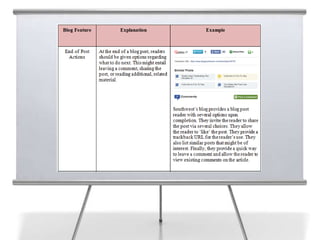
Blog’s Features
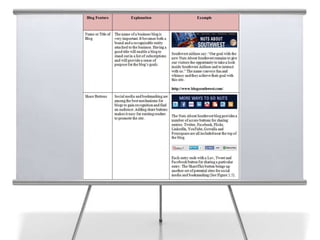
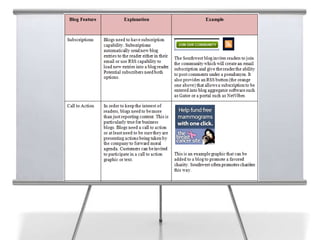
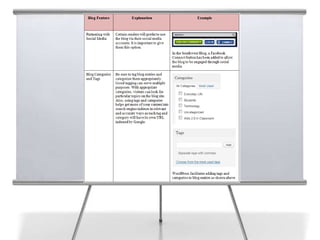
Ensure social and traditional Web searches can find
content and share via syndication

   Various mechanisms enable
   search engine optimization
   (SEO), social media
   optimization (SMO), and
   monetization

   Monetization can be direct
   (ex. advertising revenue) or
   indirect (ex. capture of
   potential customer leads)
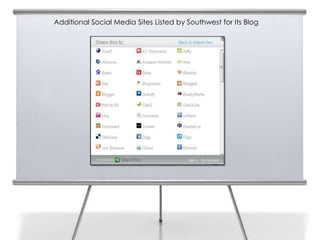
Additional Social Media Sites Listed by Southwest for Its Blog
Blog’s Passion
Works best as direct-to-the-point entries that don’t get too wordy or long

Infuse passion into a blog:

      Read Fresh and Thought-Provoking Material:
      Go beyond current news and what everyone else reads
      Absorb new and fresh ideas
      Observe the world,
      Talk to people working in related areas
      Read old and unusual books
      Spend time reflecting and thinking


Discover subject matter unrelated to your blog that will add value because of author’s style or approach to topics.
Seek unexpected inspiration and new ways of viewing topics from alternative sources.
Blog’s Passion (con’t)
Infuse passion into a blog:

Blogs Don’t Need to be Balanced
     Blogs convey an opinion
     People read more than just your company’s
     blog
     Choose a direction and make a strong case
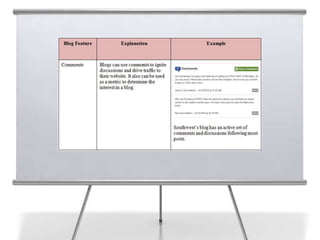
     Reader comments can provide alternative
     points of view and build a case for opposing
     sets of arguments.
     Create a discussion online.
     To influence readers, provide best
     arguments
Blog Environment
Primary decision for businesses: whether to host their
blog(s) internally or to use hosting services. Second
option is often associated with cloud computing
solutions.
Internal Hosting
Organization needs computing hardware and
software in-house
For small businesses, this might represent a challenge
Provides a business with flexibility and freedom
Ensures organization possesses data and information
associated with Web site
More easily integrated with business Web site
Allows organization to develop internal expertise with
the blog administration
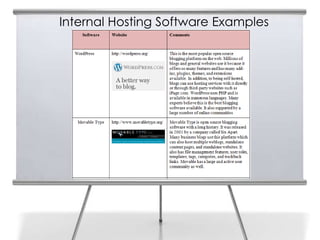
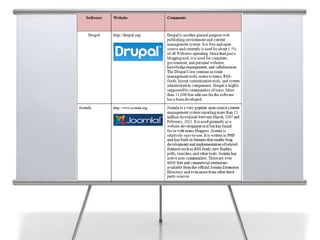
Internal Hosting Software Examples
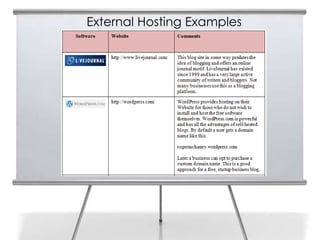
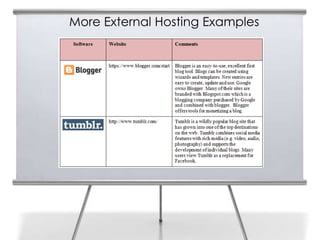
External Hosting
Uses third-party Web sites
Good for startup businesses attempting to control initial costs
Good for small businesses with limited IT infrastructure
Individual bloggers often take this approach
Software upgrades done by vendor or with minimal effort
Support lines and customer service usually available
Blog may be automatically submitted to search engines
Business data resides on another organization’s hosting platform
Hosted blogs can be placed on free Web sites or on sites that
cost a fee
External Hosting Examples
More External Hosting Examples
Other Hosting Options
30

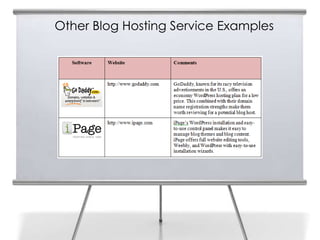
     A third option used by many small businesses and
     startup companies:
     Find a general hosting company that offers instant
     blogging installations for a low cost
Other Blog Hosting Service Examples
Web 2.0 and Social
Media for Business
       End of
   Chapter 2 Part A
Slide Media from:
Slides Prepared by Professor Roger McHaney
Kansas State University                      PresenterMedia.com
Twitter: @mchaney                            support@presentermedia.com
Blog: http://mchaney.com
Email : mchaney@ksu.edu
                                             4416 S. Technology Dr
                                             Sioux Falls, SD 57106

Chapter2a McHaney

  • 1.
    Web 2.0 andSocial Media for Business Chapter 2: Blogging for Business: Part A Roger McHaney, Kansas State University
  • 2.
    What is aBlog? A Web site that contains an online personal journal with reflections, 2 comments, media, and hyperlinks provided by the writer ‘Broadcasts’ content using RSS technology Among first applications associated with transition from static Web pages to social media Early forms evolved from Usenet, bulletin board systems, and moderated newsgroups In mid-1990’s, more online journals known as Weblogs appeared Weblog shortened to ‘blog’ by Jorn Barger and added to Webster’s Dictionary in 1999 Blogs about Blogging
  • 3.
  • 4.
    Blog Background • Originally, Weblogs were not collaborative technologies • Gave voice to person wishing to place thoughts and opinions into unedited public space • This one-to-many communication tool was updated to allow reader comments and feedback • Now Weblogs are a place where material can be synthesized, mashed, and opened to comments • Video, audio, images and other media can be incorporated • Likes and dislikes can be noted In Feb-2011, Nielsen Company reported 156+ million blogs existed on Web. After Facebook, more minutes were spent on Blogger.com than any other site.
  • 5.
    Should Businesses Blog? Perfectfor connecting with customers, promoting products and developing recognized business presence Gives opportunity to get news and message into the world without external edits Can come from many sources including CEO, marketing executive, product development department, product support specialist, and others
  • 8.
    Small businesses canuse blogs to further their organizational missions.
  • 9.
    Blog’s Personality Effective bloguse requires understanding key attributes: voice, frequency, style, features and passion
  • 10.
    Blog’s Voice How entriesare presented and worded Departure from factual journalist voice Create everyday conversation to make messages personal Most blogs are not collections of articles Readers expect opinions Blogs use humor, sarcasm, self-deprecation, irony, over-the-top seriousness, or other approaches to capture readers’ attention
  • 11.
    Blog’s Frequency How oftento publish new entries Timely material provides sense of immediacy When significant event occurs, update blog right away Helpful if writer has predetermined time between postings Monitor blog traffic statistics to determine best entry frequency
  • 12.
    Blog’s Style Determines readers’perceptions of business Most hosting sites offer preformatted configurations (themes) Avoid looking amateurish
  • 13.
  • 14.
    Blog’s Features Ensure socialand traditional Web searches can find content and share via syndication Various mechanisms enable search engine optimization (SEO), social media optimization (SMO), and monetization Monetization can be direct (ex. advertising revenue) or indirect (ex. capture of potential customer leads)
  • 20.
    Additional Social MediaSites Listed by Southwest for Its Blog
  • 21.
    Blog’s Passion Works bestas direct-to-the-point entries that don’t get too wordy or long Infuse passion into a blog: Read Fresh and Thought-Provoking Material: Go beyond current news and what everyone else reads Absorb new and fresh ideas Observe the world, Talk to people working in related areas Read old and unusual books Spend time reflecting and thinking Discover subject matter unrelated to your blog that will add value because of author’s style or approach to topics. Seek unexpected inspiration and new ways of viewing topics from alternative sources.
  • 22.
    Blog’s Passion (con’t) Infusepassion into a blog: Blogs Don’t Need to be Balanced Blogs convey an opinion People read more than just your company’s blog Choose a direction and make a strong case Reader comments can provide alternative points of view and build a case for opposing sets of arguments. Create a discussion online. To influence readers, provide best arguments
  • 23.
    Blog Environment Primary decisionfor businesses: whether to host their blog(s) internally or to use hosting services. Second option is often associated with cloud computing solutions.
  • 24.
    Internal Hosting Organization needscomputing hardware and software in-house For small businesses, this might represent a challenge Provides a business with flexibility and freedom Ensures organization possesses data and information associated with Web site More easily integrated with business Web site Allows organization to develop internal expertise with the blog administration
  • 25.
  • 27.
    External Hosting Uses third-partyWeb sites Good for startup businesses attempting to control initial costs Good for small businesses with limited IT infrastructure Individual bloggers often take this approach Software upgrades done by vendor or with minimal effort Support lines and customer service usually available Blog may be automatically submitted to search engines Business data resides on another organization’s hosting platform Hosted blogs can be placed on free Web sites or on sites that cost a fee
  • 28.
  • 29.
  • 30.
    Other Hosting Options 30 A third option used by many small businesses and startup companies: Find a general hosting company that offers instant blogging installations for a low cost
  • 31.
    Other Blog HostingService Examples
  • 32.
    Web 2.0 andSocial Media for Business End of Chapter 2 Part A
  • 33.
    Slide Media from: SlidesPrepared by Professor Roger McHaney Kansas State University PresenterMedia.com Twitter: @mchaney support@presentermedia.com Blog: http://mchaney.com Email : mchaney@ksu.edu 4416 S. Technology Dr Sioux Falls, SD 57106