MICROBIOLOGY
for the Health Sciences
‫اعداد : أ. فريد ابو العمرين‬

Chapter 10
Microbial Ecology and Microbial Biotechnology
1
Chapter 10 Outline

• Introduction
• Symbiotic Relationships Involving Microorganisms
• Indigenous Microflora of Humans
• Beneficial and Harmful Roles of Indigenous
Microflora

• Microbial Communities (Biofilms)
• Agricultural Microbiology
2

• Microbial Biotechnology
Introduction
• Ecology is the systematic study of the interrelationships
that exist between organisms and their environment.

• Microbial ecology is the study of the numerous
interrelationships between microbes and the world
around them.

• Most relationships between humans and microbes are
beneficial, rather than harmful.

• Microorganisms are present both on and in our bodies;
collectively, they are referred to as our indigenous
microflora (older term = normal flora).
3
Symbiotic Relationships Involving
Microorganisms

• Symbiosis
–

Defined as two dissimilar organisms living together in a
close association.

–

The organisms in the relationship are referred to as
symbionts.

–

Many microorganisms participate in symbiotic
relationships.

• Neutralism
–

Refers to a symbiotic relationship in which neither
symbiont is affected by the relationship.

4
Symbiotic Relationships Involving
Microorganisms, cont.

• Commensalism
–

A symbiotic relationship that is beneficial to one symbiont
and of no consequence to the other.

–

Many organisms in the indigenous microflora of humans
are considered to be commensals.

• Mutualism
–

A symbiotic relationship that is beneficial to both
symbionts; examples humans and intestinal bacterium,
Escherichia coli, which obtains nutrients from food materials
ingested and produces vitamins (such as vitamin K): blood-

5

clotting factor.
Symbiotic Relationships Involving
Microorganisms, cont.

• Parasitism
–

A symbiotic relationship that is beneficial to one symbiont
(the parasite) and detrimental to the other symbiont (the
host).

• A host is a living organism that harbors another living
organism.

• The parasite may or may not cause disease in the host.

• A change in conditions can cause one type of
symbiotic relationship to shift to another type.
6
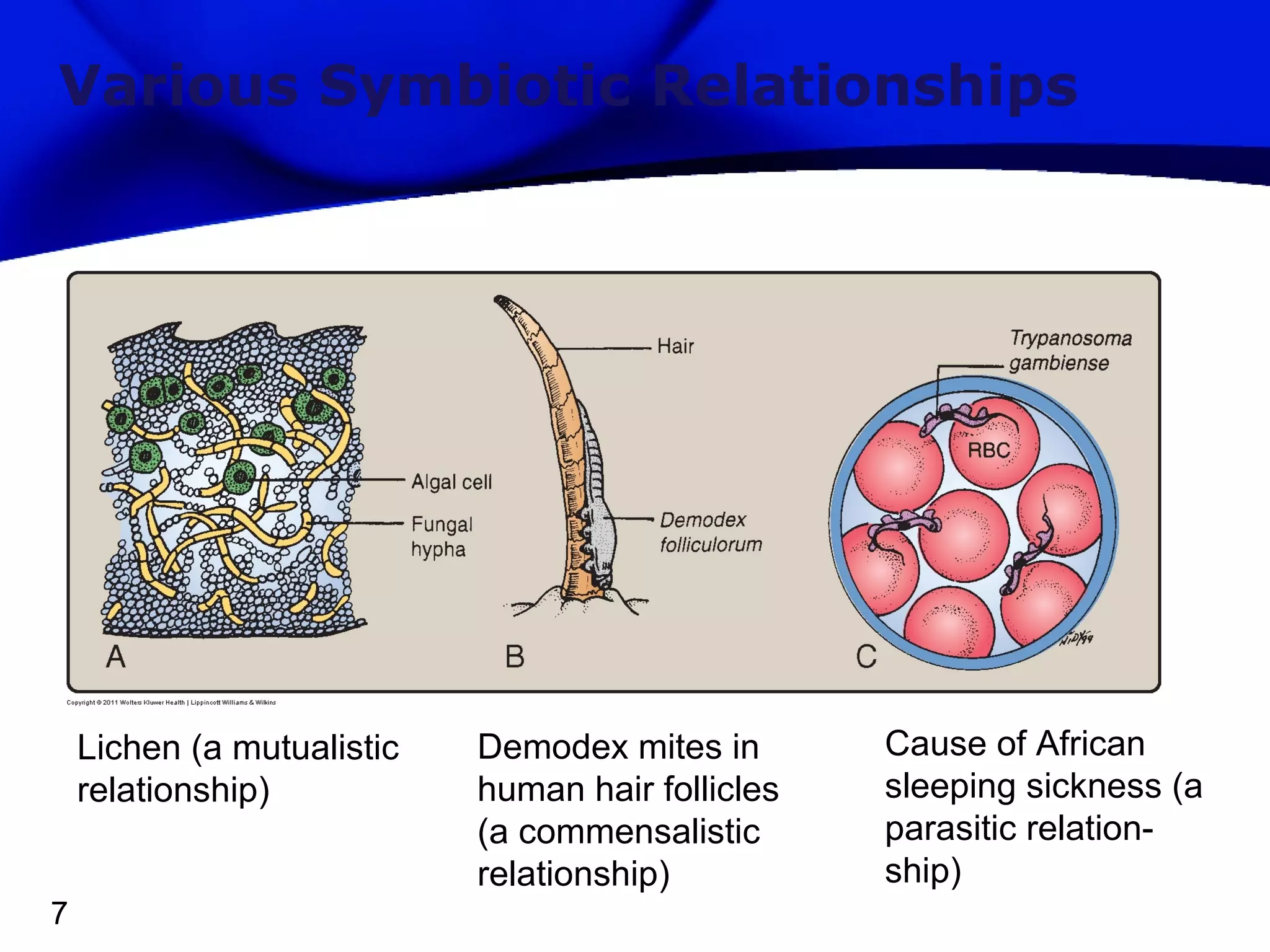
Various Symbiotic Relationships

Lichen (a mutualistic
relationship)
7

Demodex mites in
human hair follicles
(a commensalistic
relationship)

Cause of African
sleeping sickness (a
parasitic relationship)
Indigenous Microflora of Humans
“normal flora”
• Includes all the microbes (bacteria, fungi, protozoa and viruses)
that reside on and within a person; sometimes referred to as
our “normal flora”

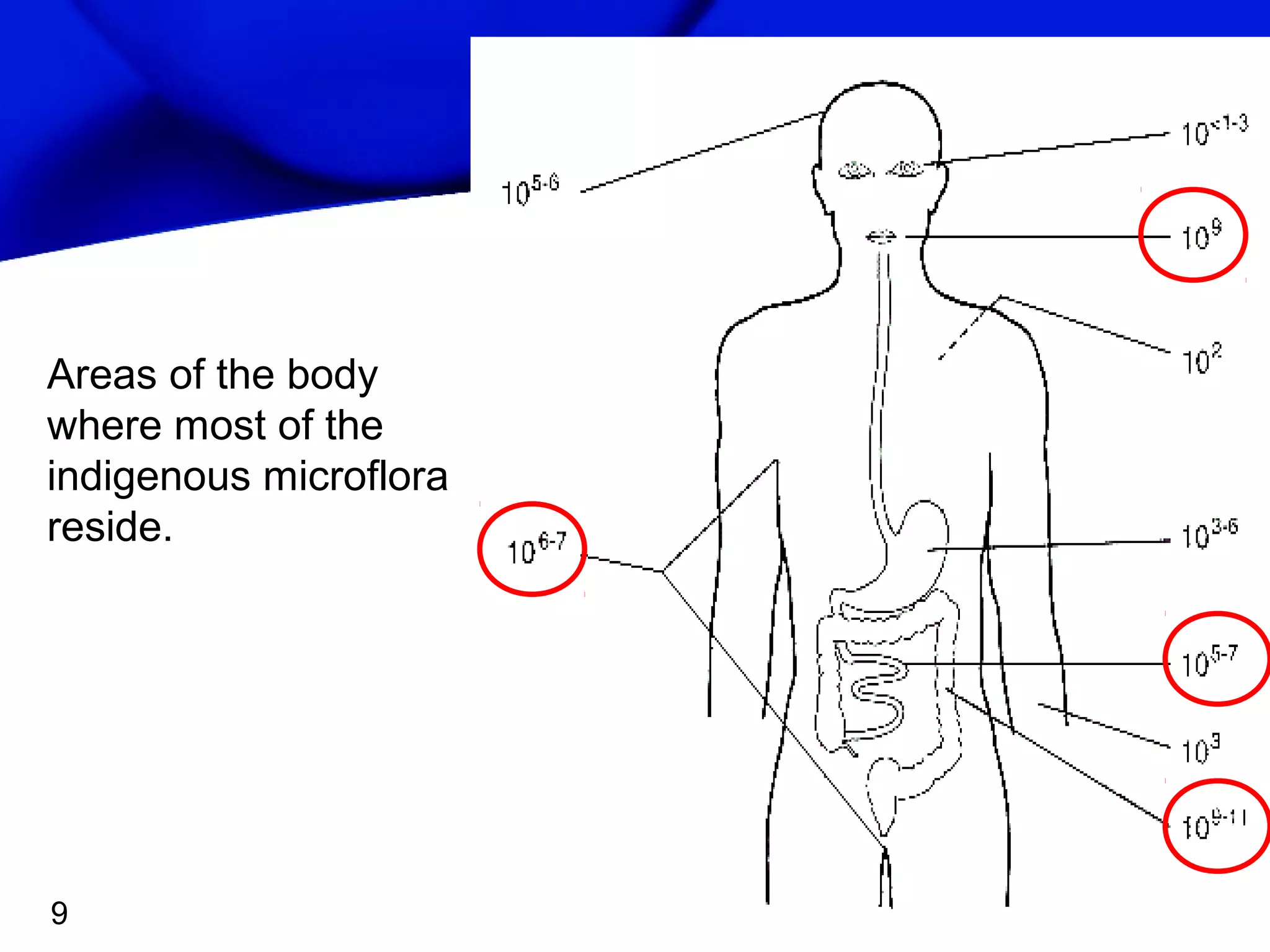
• Our indigenous microflora is composed of between 500 and
1,000 different species!

• Blood, lymph, spinal fluid, and most internal tissues and organs
are normally free of microorganisms (i.e., they are sterile).

• Transient microflora take up temporary residence on and within
humans.

• Destruction of resident microflora disturbs the balance between
8 host and microorganisms.
Areas of the body
where most of the
indigenous microflora
reside.

9
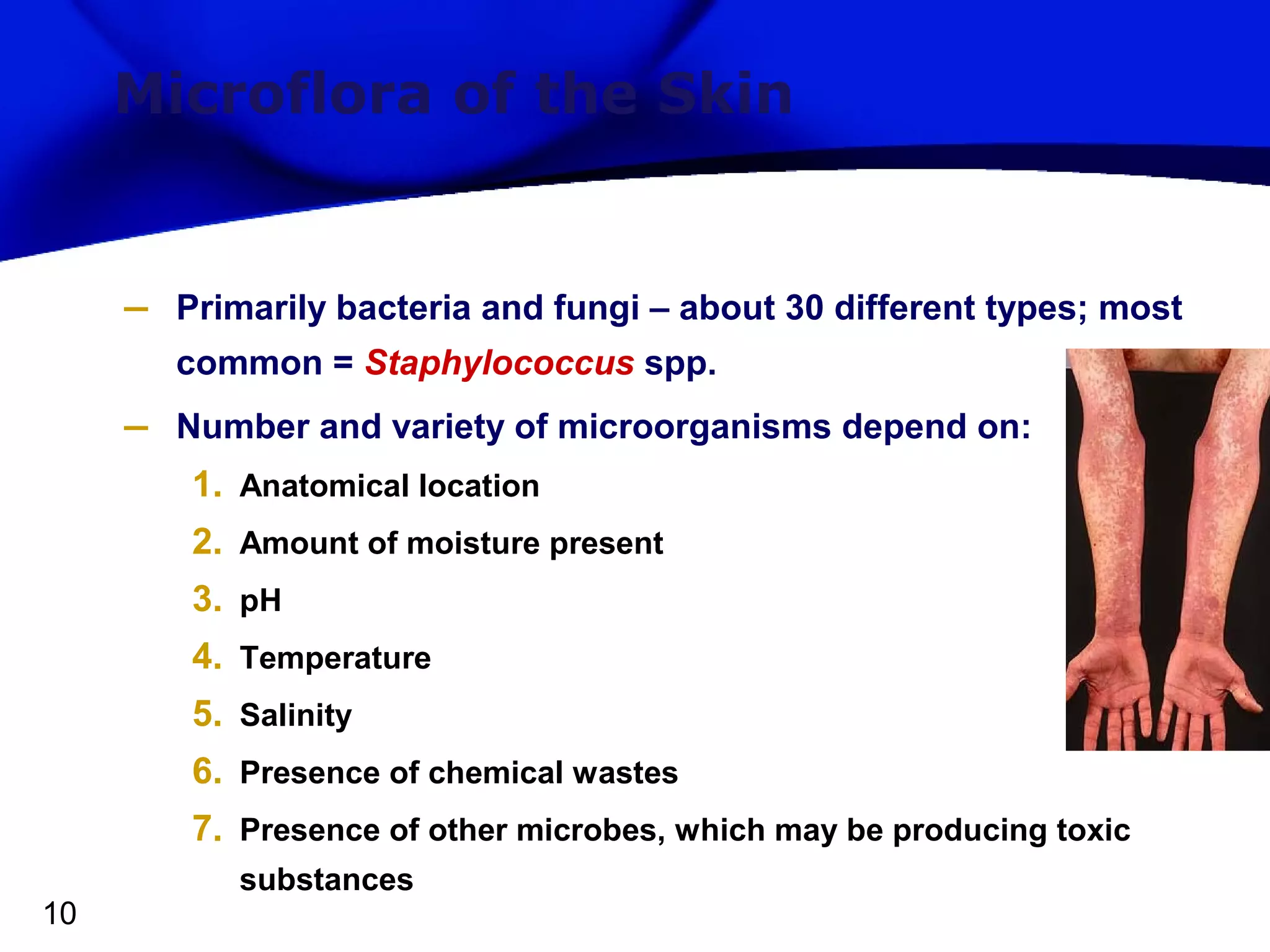
Microflora of the Skin

–

Primarily bacteria and fungi – about 30 different types; most
common = Staphylococcus spp.

–

Number and variety of microorganisms depend on:

1. Anatomical location
2. Amount of moisture present
3. pH
4. Temperature
5. Salinity
6. Presence of chemical wastes
7. Presence of other microbes, which may be producing toxic
10

substances
Microflora of the Skin



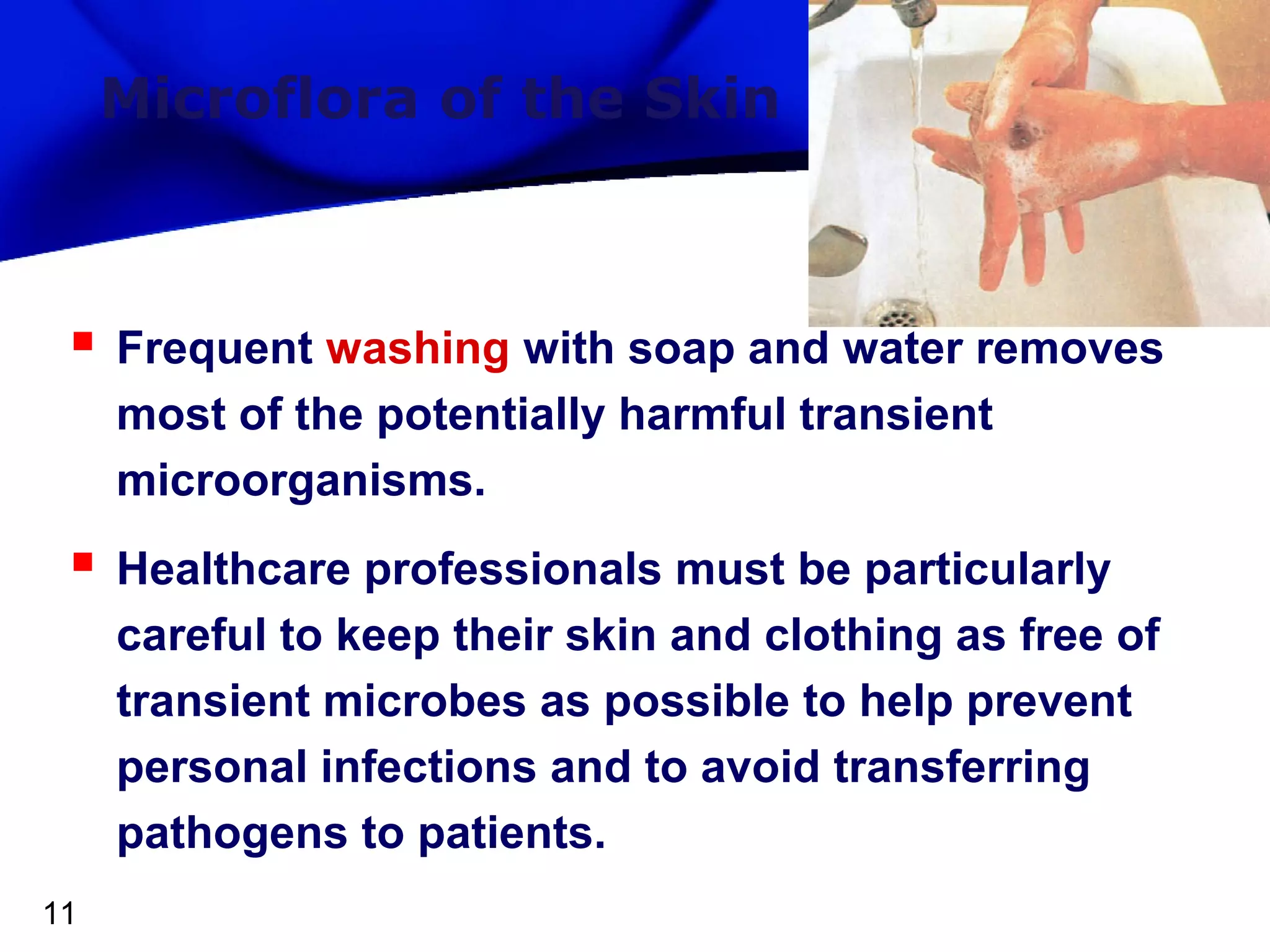
Frequent washing with soap and water removes
most of the potentially harmful transient
microorganisms.



Healthcare professionals must be particularly
careful to keep their skin and clothing as free of
transient microbes as possible to help prevent
personal infections and to avoid transferring
pathogens to patients.

11
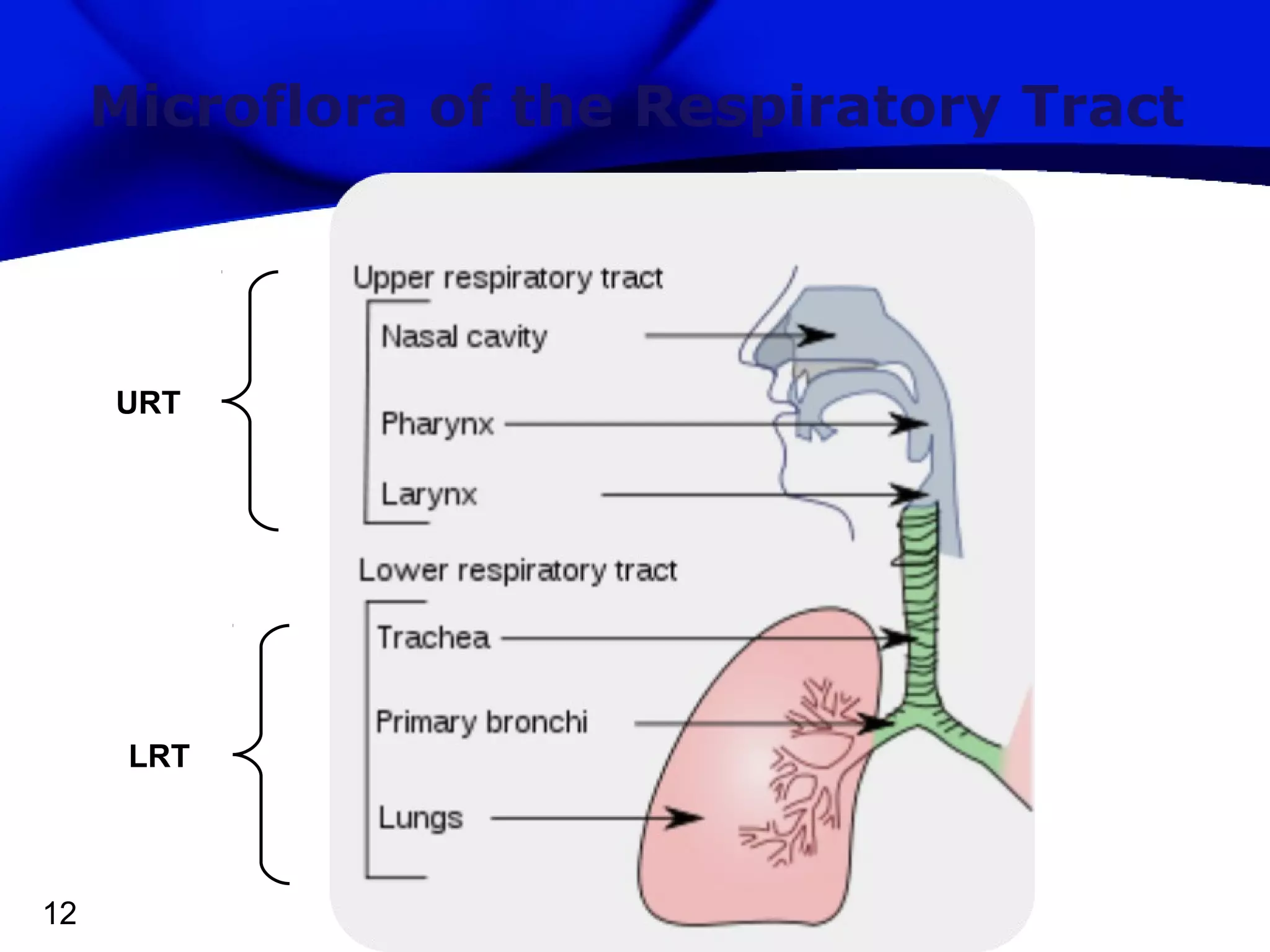
Microflora of the Respiratory Tract

URT

LRT

12
Microflora of the Respiratory Tract
–

Divided into upper respiratory tract (nasal passages and
throat) and lower respiratory tract (larynx, trachea, bronchi
and lungs)

–

Upper respiratory tract (nasal passages and throat) has an
abundance of microorganisms; many are harmless, some
are opportunistic pathogens

–

Carriers harbor virulent pathogens in their nasal passages
or throats, but do not have the diseases usually caused by
these pathogens

• Examples: people harboring the bacteria that cause diphtheria,
pneumonia, meningitis, and whooping cough
13

–

Lower respiratory tract is usually free of microbes
Microflora of the Ears and Eyes
–

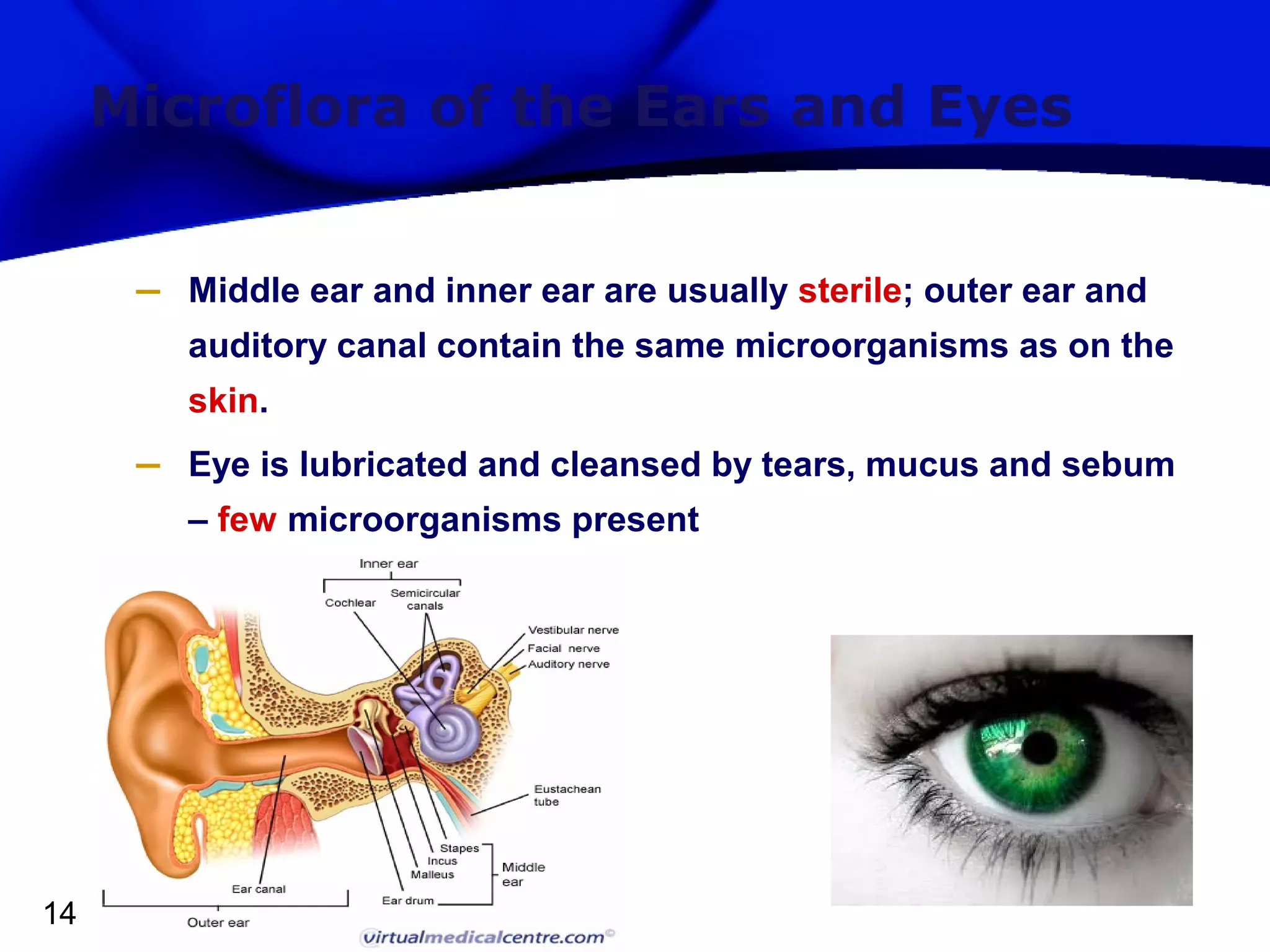
Middle ear and inner ear are usually sterile; outer ear and
auditory canal contain the same microorganisms as on the
skin.

–

Eye is lubricated and cleansed by tears, mucus and sebum
– few microorganisms present

14
Microflora of the Oral Cavity (Mouth)
–

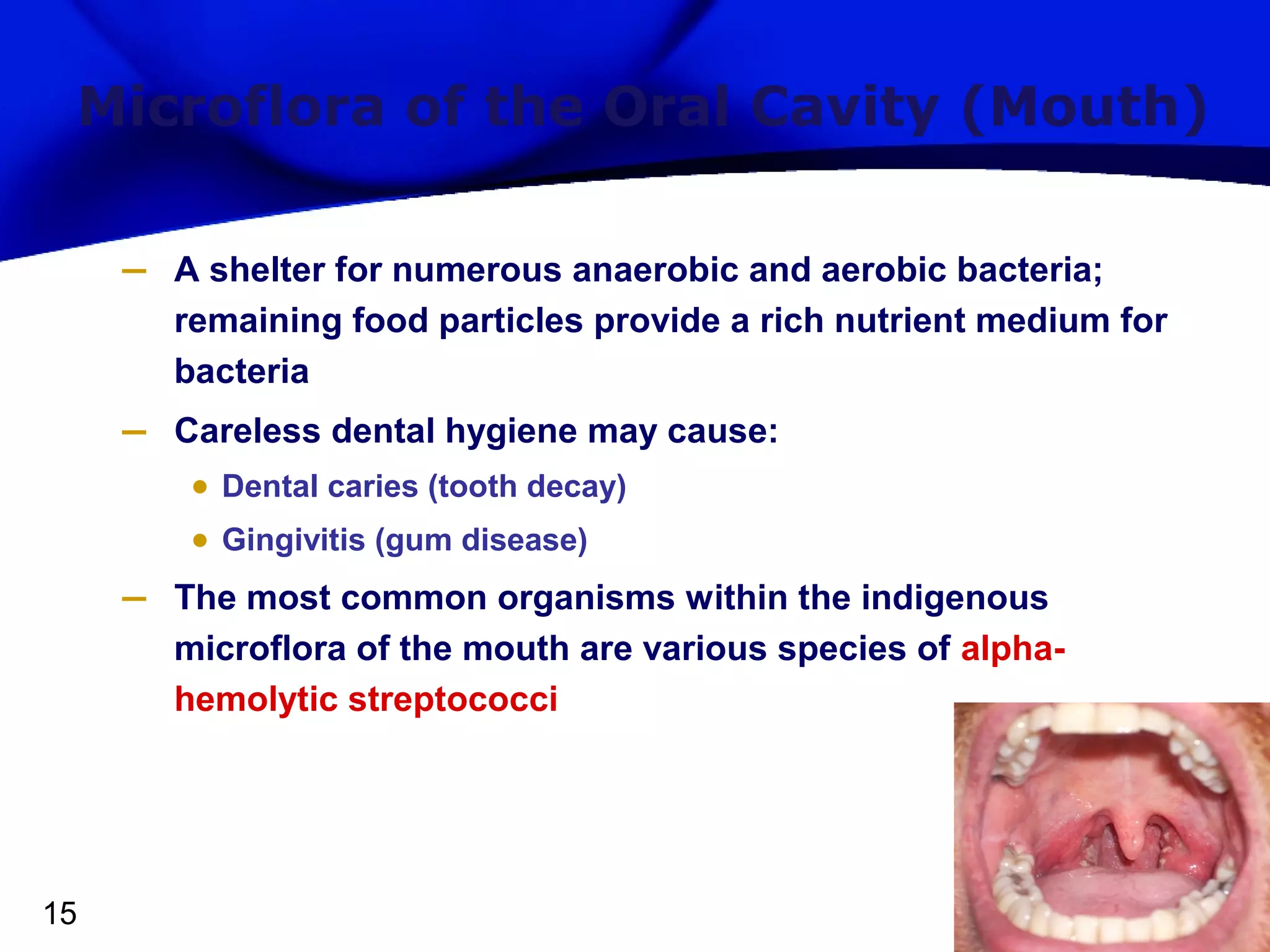
A shelter for numerous anaerobic and aerobic bacteria;
remaining food particles provide a rich nutrient medium for
bacteria

–

Careless dental hygiene may cause:

• Dental caries (tooth decay)
• Gingivitis (gum disease)

–

15

The most common organisms within the indigenous
microflora of the mouth are various species of alphahemolytic streptococci
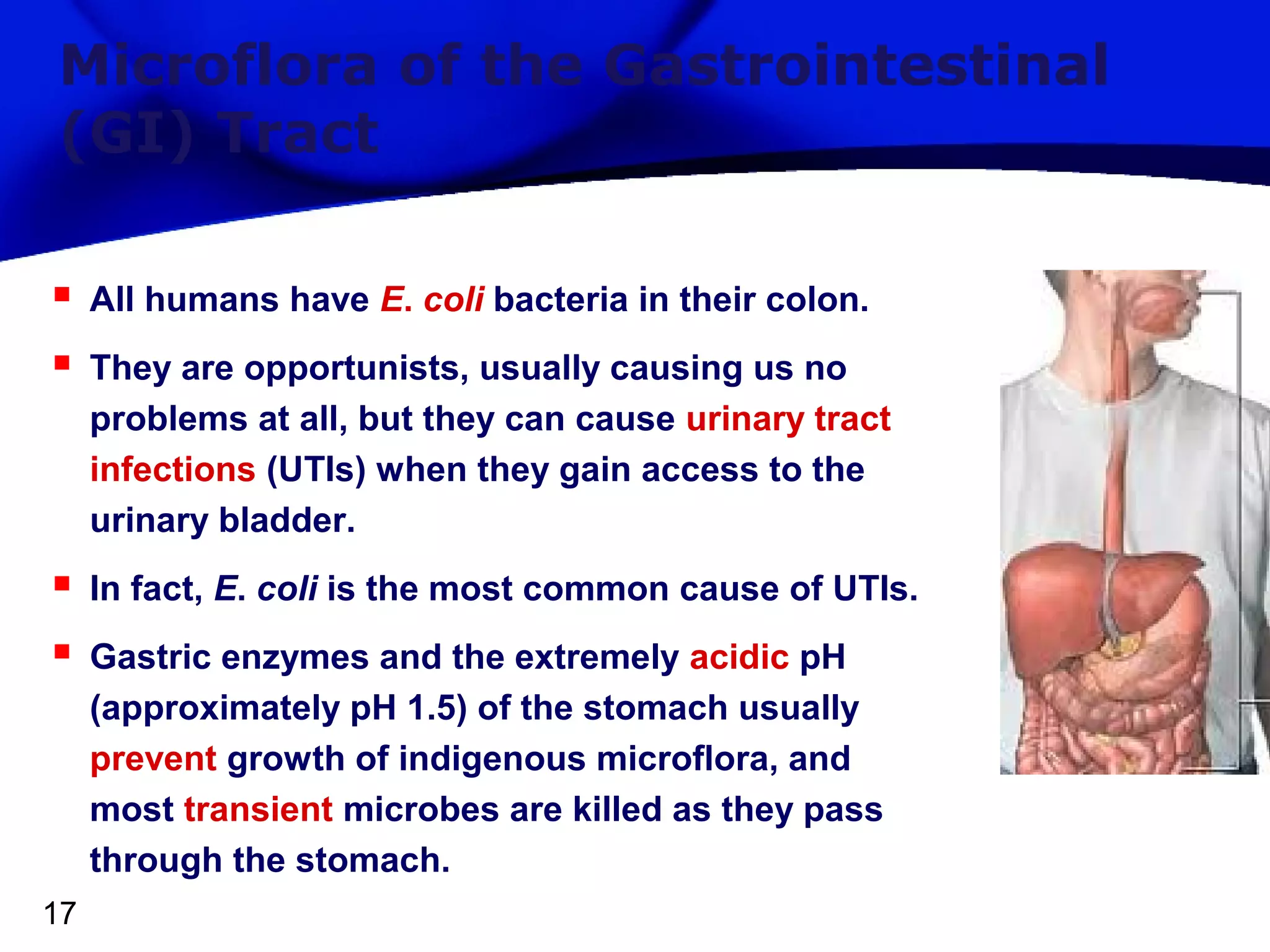
Microflora of the Gastrointestinal
(GI) Tract


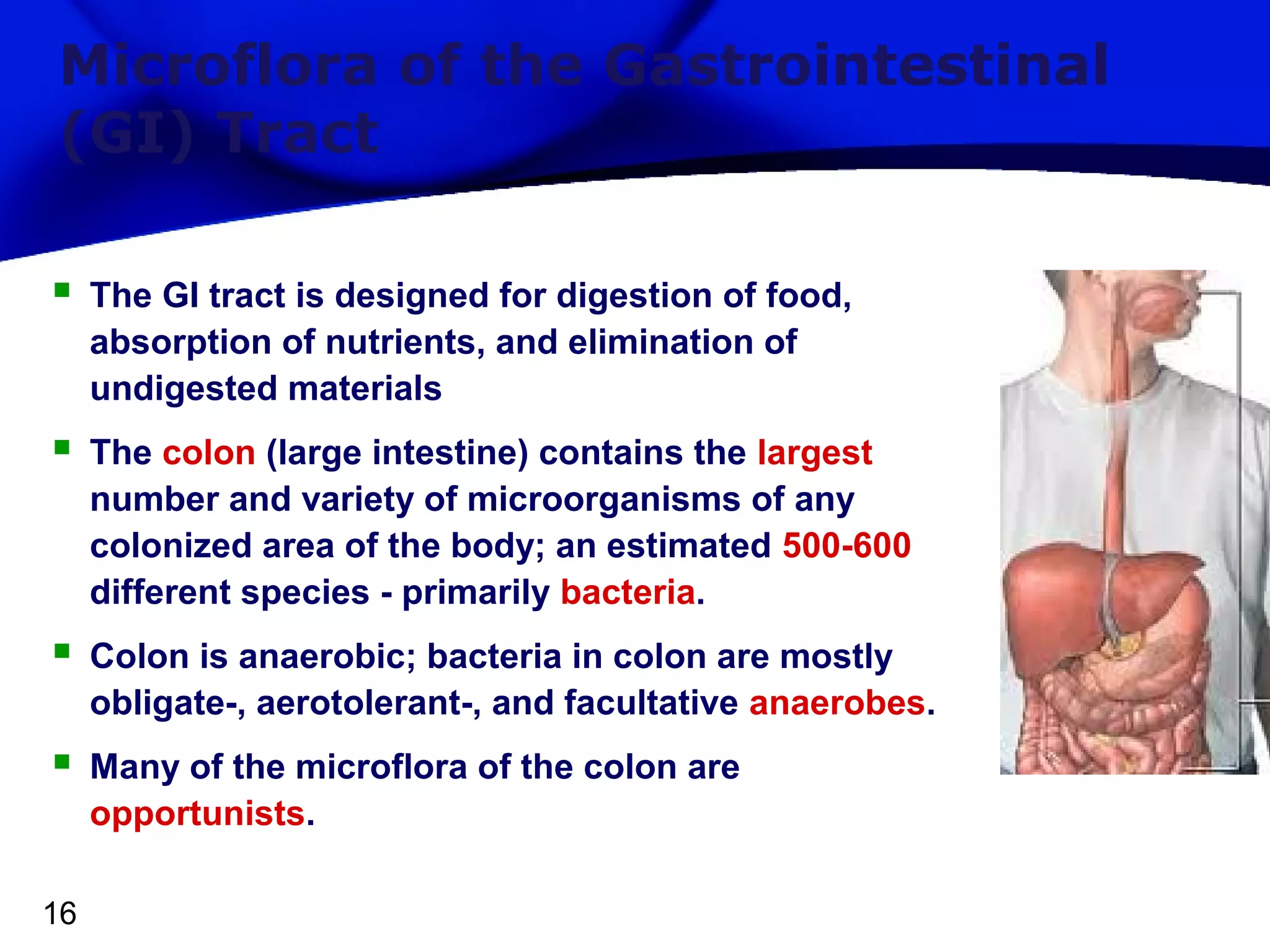
The GI tract is designed for digestion of food,
absorption of nutrients, and elimination of
undigested materials



The colon (large intestine) contains the largest
number and variety of microorganisms of any
colonized area of the body; an estimated 500-600
different species - primarily bacteria.



Colon is anaerobic; bacteria in colon are mostly
obligate-, aerotolerant-, and facultative anaerobes.



Many of the microflora of the colon are
opportunists.

16
Microflora of the Gastrointestinal
(GI) Tract



All humans have E. coli bacteria in their colon.




In fact, E. coli is the most common cause of UTIs.

17

They are opportunists, usually causing us no
problems at all, but they can cause urinary tract
infections (UTIs) when they gain access to the
urinary bladder.

Gastric enzymes and the extremely acidic pH
(approximately pH 1.5) of the stomach usually
prevent growth of indigenous microflora, and
most transient microbes are killed as they pass
through the stomach.
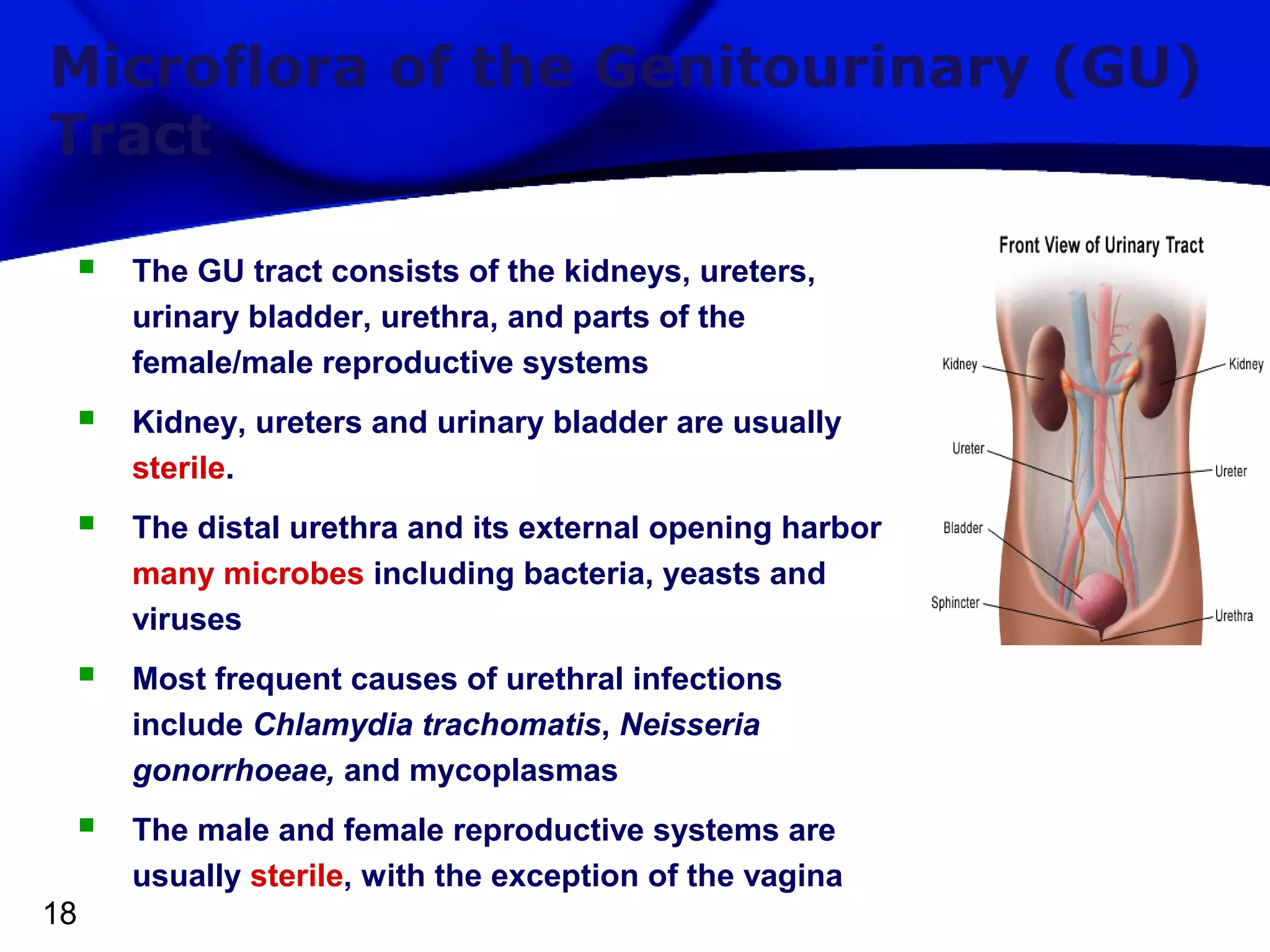
Microflora of the Genitourinary (GU)
Tract


The GU tract consists of the kidneys, ureters,
urinary bladder, urethra, and parts of the
female/male reproductive systems



Kidney, ureters and urinary bladder are usually
sterile.



The distal urethra and its external opening harbor
many microbes including bacteria, yeasts and
viruses



Most frequent causes of urethral infections
include Chlamydia trachomatis, Neisseria
gonorrhoeae, and mycoplasmas



The male and female reproductive systems are
usually sterile, with the exception of the vagina

18
Beneficial and Harmful Roles of
Indigenous Microflora

• Humans derive many benefits from their indigenous
microflora; examples - vitamins K and B12.

• Microbial Antagonism
–
–

Means “microbes versus microbes”

–

Other examples of microbial antagonism involve:

Many members of our indigenous microflora are beneficial in
that they prevent other microbes from becoming established

• Production of antibiotics and bacteriocins (antibacterial proteins);
an example is colicin, produced by E. coli

19
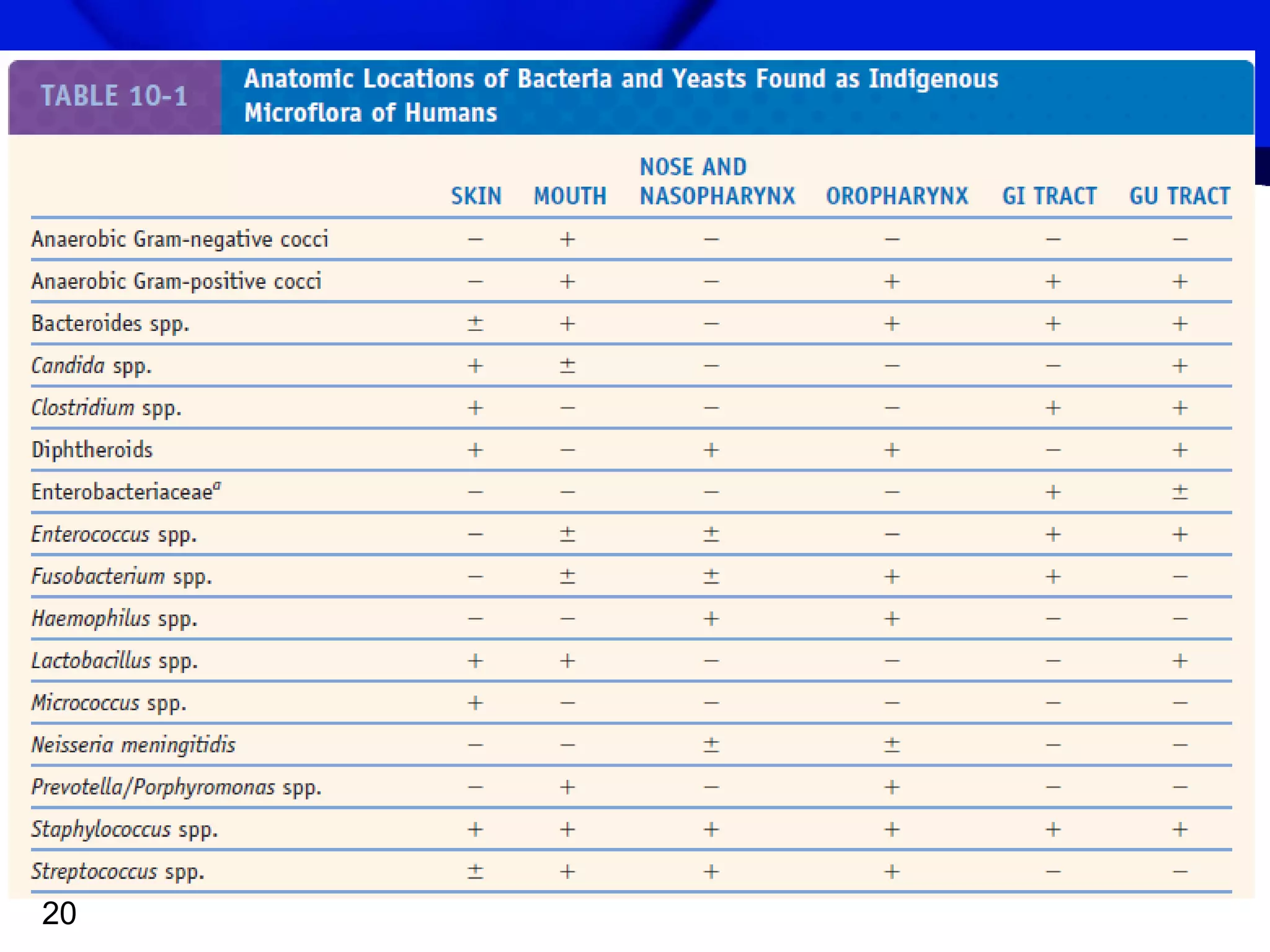
20
Opportunistic Pathogens and
Biotherapeutic Agents

• Opportunistic pathogens are those microorganisms that
“hang around,” waiting for the opportunity to cause infection
• Examples: E. coli, other members of the family
Enterobacteriaceae, S. aureus, and Enterococcus spp.

–
–

21

The delicate balance of the indigenous microflora can be
upset by antibiotics, other types of chemotherapy, and
changes in pH
Bacteria and yeasts used to stabilize the microbial balance are
called biotherapeutic agents or probiotics
Microbial Communities
• Microorganisms are often organized into biofilms –
complex communities of assorted organisms.

• Biofilms are everywhere; example – dental plaque.
• Biofilms consist of a variety of different species of

bacteria plus a gooey polysaccharide that the bacteria
secrete; the bacteria grow in tiny clusters called
microcolonies, separated by water channels

• Biofilms have medical significance; they form on urinary

catheters and medical equipment and can cause diseases
like endocarditis

22
Microbial Communities, cont.
• Microbes commonly associated with biofilms on medical
devices include the yeast, Candida albicans, and bacteria like
Staphylococcus aureus, Enterococcus spp., Klebsiella
pneumoniae, and Pseudomonas aeruginosa.

• Biofilms are very resistant to antibiotics and disinfectants
– Antibiotics that are effective against pure cultures of
organisms have been found to be ineffective against
those same organisms within an actual biofilm

 Bacteria within biofilms are protected from antibiotics
and certain types of host defense mechanisms.
23
Synergistic Infections

• When 2 or more organisms “team up” to produce a
disease that neither could cause by itself.

• The diseases are called synergistic infections,
polymicrobial infections, or mixed infections

–

Examples:

• Certain oral bacteria can work together to cause a serious oral
disease called acute necrotizing ulcerative gingivitis (ANUG;
also known as Vincent disease and “trench mouth”).

• Similarly, the disease known as Bacterial Vaginosis is the
result of the combined efforts of several different species of
bacteria.
24
Chapter 11
Chapter10 microfarid

Chapter10 microfarid

  • 1.
    MICROBIOLOGY for the HealthSciences ‫اعداد : أ. فريد ابو العمرين‬ Chapter 10 Microbial Ecology and Microbial Biotechnology 1
  • 2.
    Chapter 10 Outline •Introduction • Symbiotic Relationships Involving Microorganisms • Indigenous Microflora of Humans • Beneficial and Harmful Roles of Indigenous Microflora • Microbial Communities (Biofilms) • Agricultural Microbiology 2 • Microbial Biotechnology
  • 3.
    Introduction • Ecology isthe systematic study of the interrelationships that exist between organisms and their environment. • Microbial ecology is the study of the numerous interrelationships between microbes and the world around them. • Most relationships between humans and microbes are beneficial, rather than harmful. • Microorganisms are present both on and in our bodies; collectively, they are referred to as our indigenous microflora (older term = normal flora). 3
  • 4.
    Symbiotic Relationships Involving Microorganisms •Symbiosis – Defined as two dissimilar organisms living together in a close association. – The organisms in the relationship are referred to as symbionts. – Many microorganisms participate in symbiotic relationships. • Neutralism – Refers to a symbiotic relationship in which neither symbiont is affected by the relationship. 4
  • 5.
    Symbiotic Relationships Involving Microorganisms,cont. • Commensalism – A symbiotic relationship that is beneficial to one symbiont and of no consequence to the other. – Many organisms in the indigenous microflora of humans are considered to be commensals. • Mutualism – A symbiotic relationship that is beneficial to both symbionts; examples humans and intestinal bacterium, Escherichia coli, which obtains nutrients from food materials ingested and produces vitamins (such as vitamin K): blood- 5 clotting factor.
  • 6.
    Symbiotic Relationships Involving Microorganisms,cont. • Parasitism – A symbiotic relationship that is beneficial to one symbiont (the parasite) and detrimental to the other symbiont (the host). • A host is a living organism that harbors another living organism. • The parasite may or may not cause disease in the host. • A change in conditions can cause one type of symbiotic relationship to shift to another type. 6
  • 7.
    Various Symbiotic Relationships Lichen(a mutualistic relationship) 7 Demodex mites in human hair follicles (a commensalistic relationship) Cause of African sleeping sickness (a parasitic relationship)
  • 8.
    Indigenous Microflora ofHumans “normal flora” • Includes all the microbes (bacteria, fungi, protozoa and viruses) that reside on and within a person; sometimes referred to as our “normal flora” • Our indigenous microflora is composed of between 500 and 1,000 different species! • Blood, lymph, spinal fluid, and most internal tissues and organs are normally free of microorganisms (i.e., they are sterile). • Transient microflora take up temporary residence on and within humans. • Destruction of resident microflora disturbs the balance between 8 host and microorganisms.
  • 9.
    Areas of thebody where most of the indigenous microflora reside. 9
  • 10.
    Microflora of theSkin – Primarily bacteria and fungi – about 30 different types; most common = Staphylococcus spp. – Number and variety of microorganisms depend on: 1. Anatomical location 2. Amount of moisture present 3. pH 4. Temperature 5. Salinity 6. Presence of chemical wastes 7. Presence of other microbes, which may be producing toxic 10 substances
  • 11.
    Microflora of theSkin  Frequent washing with soap and water removes most of the potentially harmful transient microorganisms.  Healthcare professionals must be particularly careful to keep their skin and clothing as free of transient microbes as possible to help prevent personal infections and to avoid transferring pathogens to patients. 11
  • 12.
    Microflora of theRespiratory Tract URT LRT 12
  • 13.
    Microflora of theRespiratory Tract – Divided into upper respiratory tract (nasal passages and throat) and lower respiratory tract (larynx, trachea, bronchi and lungs) – Upper respiratory tract (nasal passages and throat) has an abundance of microorganisms; many are harmless, some are opportunistic pathogens – Carriers harbor virulent pathogens in their nasal passages or throats, but do not have the diseases usually caused by these pathogens • Examples: people harboring the bacteria that cause diphtheria, pneumonia, meningitis, and whooping cough 13 – Lower respiratory tract is usually free of microbes
  • 14.
    Microflora of theEars and Eyes – Middle ear and inner ear are usually sterile; outer ear and auditory canal contain the same microorganisms as on the skin. – Eye is lubricated and cleansed by tears, mucus and sebum – few microorganisms present 14
  • 15.
    Microflora of theOral Cavity (Mouth) – A shelter for numerous anaerobic and aerobic bacteria; remaining food particles provide a rich nutrient medium for bacteria – Careless dental hygiene may cause: • Dental caries (tooth decay) • Gingivitis (gum disease) – 15 The most common organisms within the indigenous microflora of the mouth are various species of alphahemolytic streptococci
  • 16.
    Microflora of theGastrointestinal (GI) Tract  The GI tract is designed for digestion of food, absorption of nutrients, and elimination of undigested materials  The colon (large intestine) contains the largest number and variety of microorganisms of any colonized area of the body; an estimated 500-600 different species - primarily bacteria.  Colon is anaerobic; bacteria in colon are mostly obligate-, aerotolerant-, and facultative anaerobes.  Many of the microflora of the colon are opportunists. 16
  • 17.
    Microflora of theGastrointestinal (GI) Tract   All humans have E. coli bacteria in their colon.   In fact, E. coli is the most common cause of UTIs. 17 They are opportunists, usually causing us no problems at all, but they can cause urinary tract infections (UTIs) when they gain access to the urinary bladder. Gastric enzymes and the extremely acidic pH (approximately pH 1.5) of the stomach usually prevent growth of indigenous microflora, and most transient microbes are killed as they pass through the stomach.
  • 18.
    Microflora of theGenitourinary (GU) Tract  The GU tract consists of the kidneys, ureters, urinary bladder, urethra, and parts of the female/male reproductive systems  Kidney, ureters and urinary bladder are usually sterile.  The distal urethra and its external opening harbor many microbes including bacteria, yeasts and viruses  Most frequent causes of urethral infections include Chlamydia trachomatis, Neisseria gonorrhoeae, and mycoplasmas  The male and female reproductive systems are usually sterile, with the exception of the vagina 18
  • 19.
    Beneficial and HarmfulRoles of Indigenous Microflora • Humans derive many benefits from their indigenous microflora; examples - vitamins K and B12. • Microbial Antagonism – – Means “microbes versus microbes” – Other examples of microbial antagonism involve: Many members of our indigenous microflora are beneficial in that they prevent other microbes from becoming established • Production of antibiotics and bacteriocins (antibacterial proteins); an example is colicin, produced by E. coli 19
  • 20.
  • 21.
    Opportunistic Pathogens and BiotherapeuticAgents • Opportunistic pathogens are those microorganisms that “hang around,” waiting for the opportunity to cause infection • Examples: E. coli, other members of the family Enterobacteriaceae, S. aureus, and Enterococcus spp. – – 21 The delicate balance of the indigenous microflora can be upset by antibiotics, other types of chemotherapy, and changes in pH Bacteria and yeasts used to stabilize the microbial balance are called biotherapeutic agents or probiotics
  • 22.
    Microbial Communities • Microorganismsare often organized into biofilms – complex communities of assorted organisms. • Biofilms are everywhere; example – dental plaque. • Biofilms consist of a variety of different species of bacteria plus a gooey polysaccharide that the bacteria secrete; the bacteria grow in tiny clusters called microcolonies, separated by water channels • Biofilms have medical significance; they form on urinary catheters and medical equipment and can cause diseases like endocarditis 22
  • 23.
    Microbial Communities, cont. •Microbes commonly associated with biofilms on medical devices include the yeast, Candida albicans, and bacteria like Staphylococcus aureus, Enterococcus spp., Klebsiella pneumoniae, and Pseudomonas aeruginosa. • Biofilms are very resistant to antibiotics and disinfectants – Antibiotics that are effective against pure cultures of organisms have been found to be ineffective against those same organisms within an actual biofilm  Bacteria within biofilms are protected from antibiotics and certain types of host defense mechanisms. 23
  • 24.
    Synergistic Infections • When2 or more organisms “team up” to produce a disease that neither could cause by itself. • The diseases are called synergistic infections, polymicrobial infections, or mixed infections – Examples: • Certain oral bacteria can work together to cause a serious oral disease called acute necrotizing ulcerative gingivitis (ANUG; also known as Vincent disease and “trench mouth”). • Similarly, the disease known as Bacterial Vaginosis is the result of the combined efforts of several different species of bacteria. 24
  • 25.