Antigen-Antibody reaction
Prepared by
Nidhi A Jodhwani
 Ag-Ab reaction is bimolecular association similar to
enzyme-substrate interaction.
 Association between Ag-Ab involves non-covalent
bonds between epitopes and variable region of
Antibodies.
 This interaction is very specific that it leads to
development of various immunological assays.
INTRODUCTION
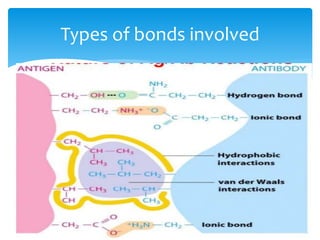
Types of bonds involved
 Reaction is very specific.(some time cross reactivity
observed due to same antigenic property)
 When antigenic part of large molecule react with Ab
,whole molecule is agglutinated.
 There is no denaturation of Antigen or Antibody during
reaction.
 Ag-Ab complex is firm but reversible.The strength of
bond depends upon affinity (attraction) between Ag &
Ab.
 Both Ag & Ab are pequired for precipitation reaction.
General features
Types of Antigen-Antibody
reaction
1)Precipitation
2)Flocculation
3)Agglutination
4)Compliment fixation
5)ELISA
6)RIA
7)Immunoflourecence
8)Immuno precipitation
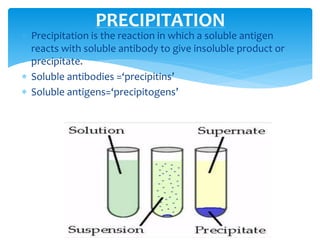
 Precipitation is the reaction in which a soluble antigen
reacts with soluble antibody to give insoluble product or
precipitate.
 Soluble antibodies =‘precipitins’
 Soluble antigens=‘precipitogens’
PRECIPITATION
MECHANISM OF PRECIPITATION
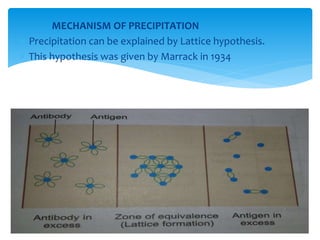
 Precipitation can be explained by Lattice hypothesis.
 This hypothesis was given by Marrack in 1934
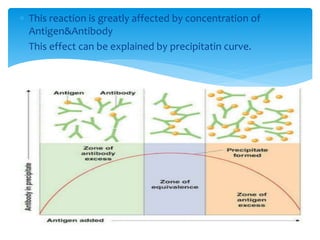
 This reaction is greatly affected by concentration of
Antigen&Antibody
 This effect can be explained by precipitatin curve.
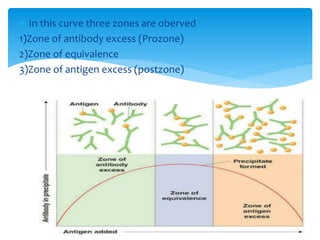
 In this curve three zones are oberved
1)Zone of antibody excess (Prozone)
2)Zone of equivalence
3)Zone of antigen excess (postzone)
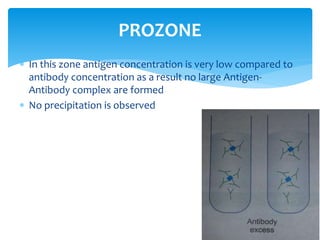
 In this zone antigen concentration is very low compared to
antibody concentration as a result no large Antigen-
Antibody complex are formed
 No precipitation is observed
PROZONE
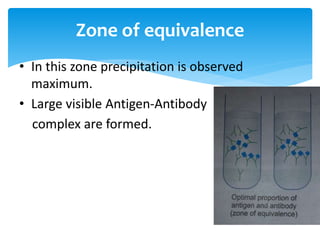
• In this zone precipitation is observed
maximum.
• Large visible Antigen-Antibody
complex are formed.
Zone of equivalence
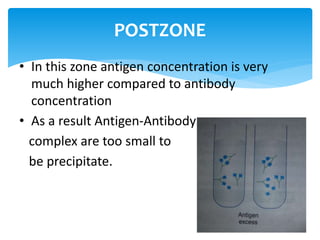
• In this zone antigen concentration is very
much higher compared to antibody
concentration
• As a result Antigen-Antibody
complex are too small to
be precipitate.
POSTZONE
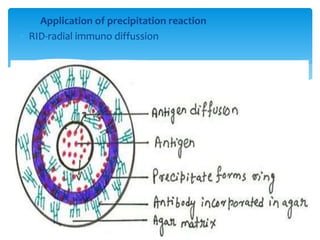
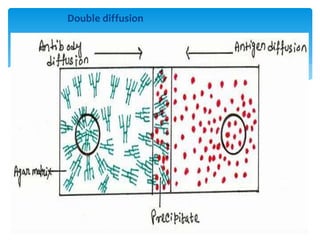
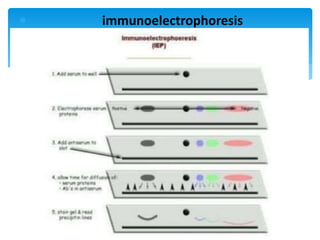
Application of precipitation reaction
 RID-radial immuno diffussion
Double diffusion
 immunoelectrophoresis
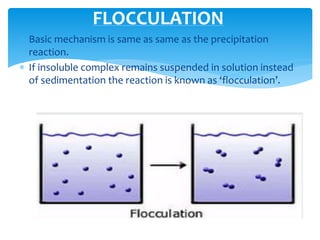
 Basic mechanism is same as same as the precipitation
reaction.
 If insoluble complex remains suspended in solution instead
of sedimentation the reaction is known as ‘flocculation’.
FLOCCULATION
 Interaction between antibody and a particulate
antigen results in visible clumping ,is known as
agglutination.
 The main difference between agglutination and
precipitation is about the size of antigen.
 In agglutination reaction,antigens are insoluble
AGGLUTINATION
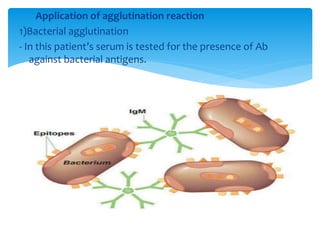
Application of agglutination reaction
1)Bacterial agglutination
- In this patient’s serum is tested for the presence of Ab
against bacterial antigens.
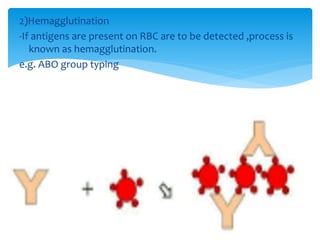
2)Hemagglutination
-If antigens are present on RBC are to be detected ,process is
known as hemagglutination.
e.g. ABO group typing
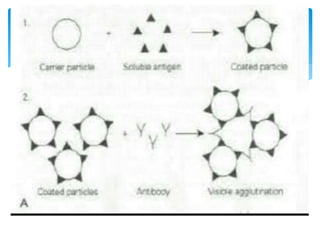
3)Passive agglutination
-In this, soluble antigens are coated on carrier
particles and after addition of antibodies,
agglutination of carrier particles takes place.
Carrier particles
Artificial Biological
-Latex -RBC
-Charcoal
-polymethylmethylacrylate
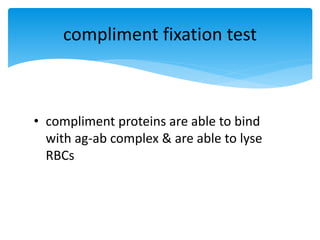
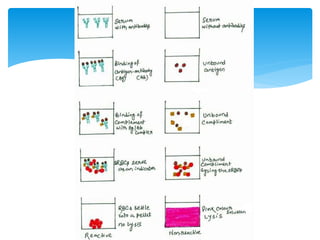
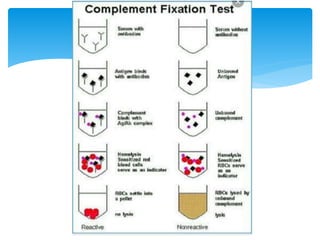
• compliment proteins are able to bind
with ag-ab complex & are able to lyse
RBCs
compliment fixation test
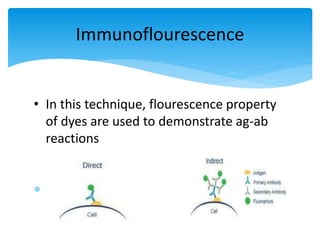
• In this technique, flourescence property
of dyes are used to demonstrate ag-ab
reactions
 Direct. Indirect
Immunoflourescence
• Commonly used dyes are :
Flourescein isothiocynate-blue green
Lissamine rhodomine-orange red
• Enzyme Linked Immuno Sorbent Assay
• There are dour types of ELISA
1)Direct ELISA
2)Indirect ELISA
3)Sandwich ELISA
4)Competetive ELISA
ELISA
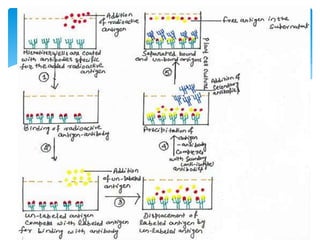
• Radio immuno assay
• In thistechniquee, radioactive isotopes
are used to demonstrate ag-ab reactions.
RIA
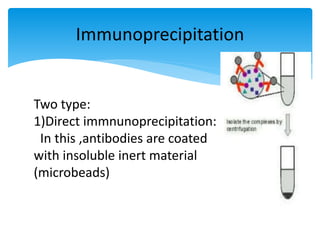
Two type:
1)Direct immnunoprecipitation:
In this ,antibodies are coated
with insoluble inert material
(microbeads)
Immunoprecipitation
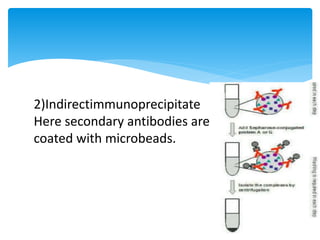
2)Indirectimmunoprecipitate
Here secondary antibodies are
coated with microbeads.

Antigen antibody interactions

  • 1.
  • 2.
     Ag-Ab reactionis bimolecular association similar to enzyme-substrate interaction.  Association between Ag-Ab involves non-covalent bonds between epitopes and variable region of Antibodies.  This interaction is very specific that it leads to development of various immunological assays. INTRODUCTION
  • 3.
  • 4.
     Reaction isvery specific.(some time cross reactivity observed due to same antigenic property)  When antigenic part of large molecule react with Ab ,whole molecule is agglutinated.  There is no denaturation of Antigen or Antibody during reaction.  Ag-Ab complex is firm but reversible.The strength of bond depends upon affinity (attraction) between Ag & Ab.  Both Ag & Ab are pequired for precipitation reaction. General features
  • 5.
    Types of Antigen-Antibody reaction 1)Precipitation 2)Flocculation 3)Agglutination 4)Complimentfixation 5)ELISA 6)RIA 7)Immunoflourecence 8)Immuno precipitation
  • 6.
     Precipitation isthe reaction in which a soluble antigen reacts with soluble antibody to give insoluble product or precipitate.  Soluble antibodies =‘precipitins’  Soluble antigens=‘precipitogens’ PRECIPITATION
  • 7.
    MECHANISM OF PRECIPITATION Precipitation can be explained by Lattice hypothesis.  This hypothesis was given by Marrack in 1934
  • 8.
     This reactionis greatly affected by concentration of Antigen&Antibody  This effect can be explained by precipitatin curve.
  • 9.
     In thiscurve three zones are oberved 1)Zone of antibody excess (Prozone) 2)Zone of equivalence 3)Zone of antigen excess (postzone)
  • 10.
     In thiszone antigen concentration is very low compared to antibody concentration as a result no large Antigen- Antibody complex are formed  No precipitation is observed PROZONE
  • 11.
    • In thiszone precipitation is observed maximum. • Large visible Antigen-Antibody complex are formed. Zone of equivalence
  • 12.
    • In thiszone antigen concentration is very much higher compared to antibody concentration • As a result Antigen-Antibody complex are too small to be precipitate. POSTZONE
  • 13.
    Application of precipitationreaction  RID-radial immuno diffussion
  • 14.
  • 15.
  • 16.
     Basic mechanismis same as same as the precipitation reaction.  If insoluble complex remains suspended in solution instead of sedimentation the reaction is known as ‘flocculation’. FLOCCULATION
  • 17.
     Interaction betweenantibody and a particulate antigen results in visible clumping ,is known as agglutination.  The main difference between agglutination and precipitation is about the size of antigen.  In agglutination reaction,antigens are insoluble AGGLUTINATION
  • 18.
    Application of agglutinationreaction 1)Bacterial agglutination - In this patient’s serum is tested for the presence of Ab against bacterial antigens.
  • 19.
    2)Hemagglutination -If antigens arepresent on RBC are to be detected ,process is known as hemagglutination. e.g. ABO group typing
  • 20.
    3)Passive agglutination -In this,soluble antigens are coated on carrier particles and after addition of antibodies, agglutination of carrier particles takes place. Carrier particles Artificial Biological -Latex -RBC -Charcoal -polymethylmethylacrylate
  • 22.
    • compliment proteinsare able to bind with ag-ab complex & are able to lyse RBCs compliment fixation test
  • 25.
    • In thistechnique, flourescence property of dyes are used to demonstrate ag-ab reactions  Direct. Indirect Immunoflourescence
  • 26.
    • Commonly useddyes are : Flourescein isothiocynate-blue green Lissamine rhodomine-orange red
  • 27.
    • Enzyme LinkedImmuno Sorbent Assay • There are dour types of ELISA 1)Direct ELISA 2)Indirect ELISA 3)Sandwich ELISA 4)Competetive ELISA ELISA
  • 28.
    • Radio immunoassay • In thistechniquee, radioactive isotopes are used to demonstrate ag-ab reactions. RIA
  • 30.
    Two type: 1)Direct immnunoprecipitation: Inthis ,antibodies are coated with insoluble inert material (microbeads) Immunoprecipitation
  • 31.