Labeling
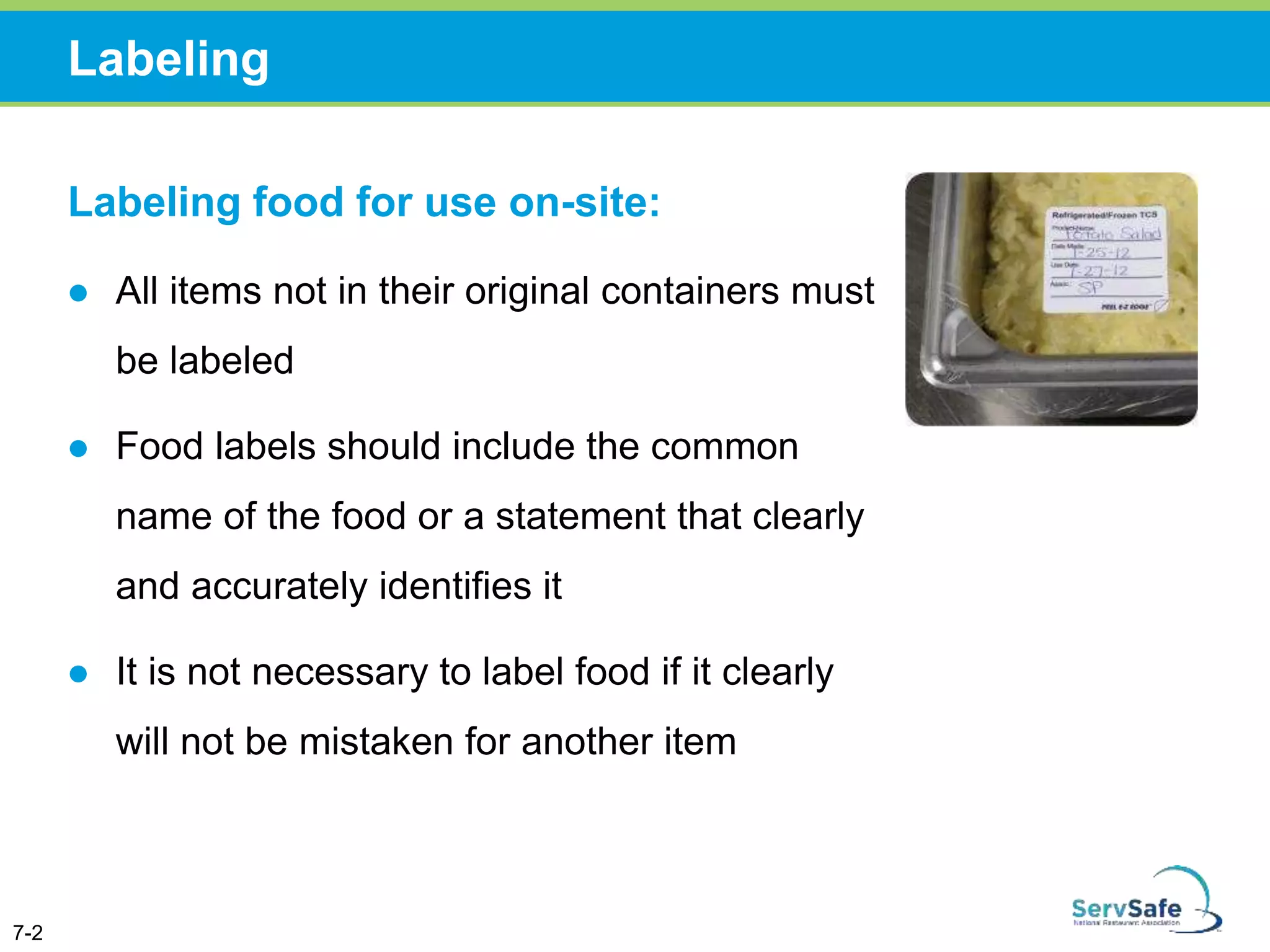
Labeling food for use on-site:
 All items not in their original containers must
be labeled
 Food labels should include the common
name of the food or a statement that clearly
and accurately identifies it
 It is not necessary to label food if it clearly
will not be mistaken for another item
7-2
Labeling
7-3
Labeling food packaged on-site for retail sale:
 Common name of the food or a statement clearly identifying it
 Quantity of the food
 If the item contains two or more ingredients, list the ingredients
and sub-ingredients in descending order by weight
 List of artificial colors and flavors in the food
including chemical preservatives
 Name and place of business of the manufacturer,
packer, or distributor
 Source of each major food allergen contained in the food
Date Marking
Date marking:
 Ready-to-eat TCS food must be marked if
held for longer than 24 hours
o Date mark must indicate when the food must
be sold, eaten, or thrown out
7-4
Date Marking
Date marking:
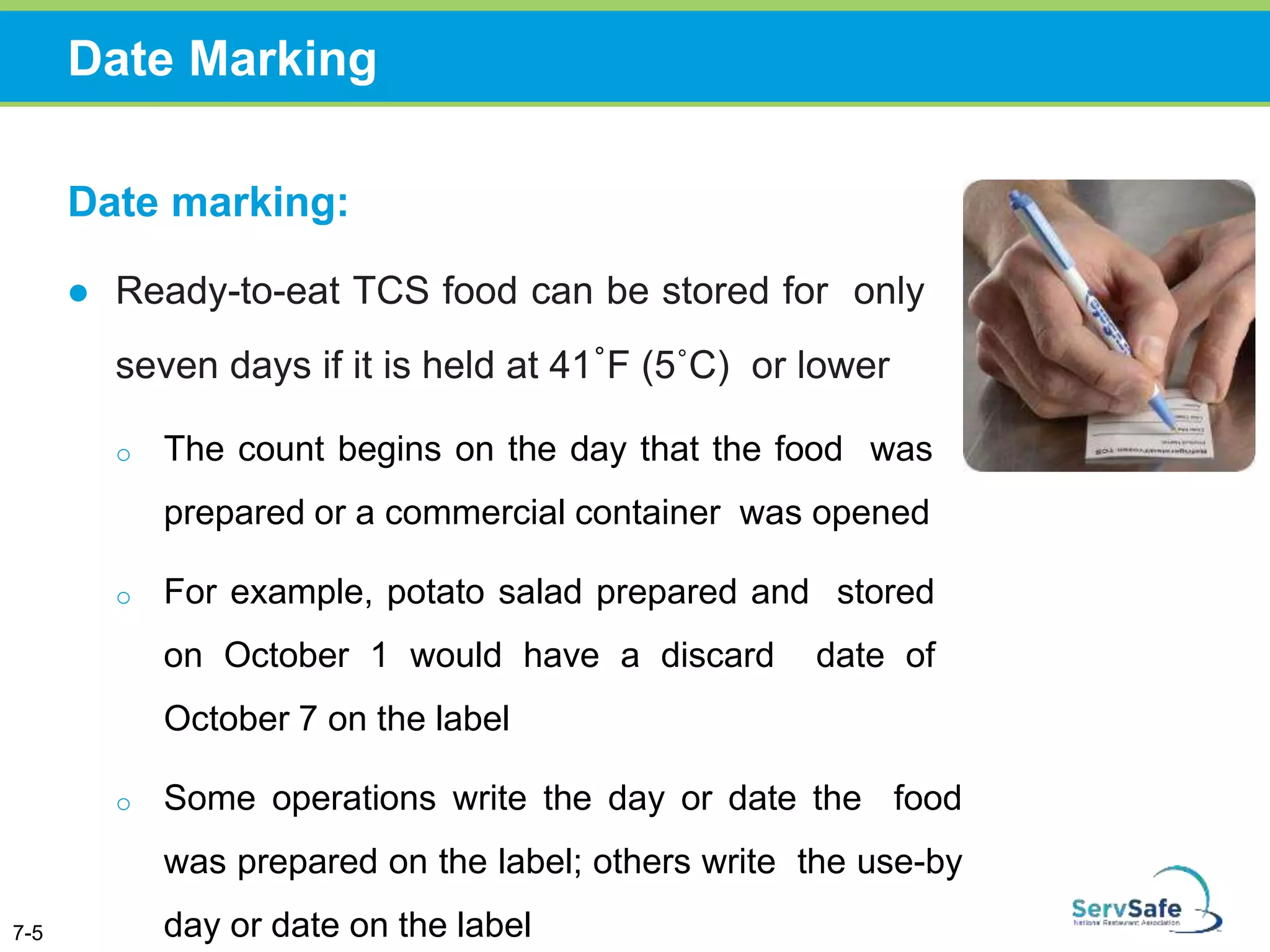
 Ready-to-eat TCS food can be stored for only
seven days if it is held at 41˚F (5˚C) or lower
o The count begins on the day that the food was
prepared or a commercial container was opened
o For example, potato salad prepared and stored
on October 1 would have a discard date of
October 7 on the label
o Some operations write the day or date the food
was prepared on the label; others write the use-by
day or date on the label
7-5
Date Marking
7-6
Commercially processed food:
If
 A commercially processed food has a use-by date that is less
than seven days from the date the container was opened
Then
 The container should be marked with this use-by date
as long as the date is based on food safety
Date Marking
Combining food:
 When combining food in a dish with different
use-by dates, the discard date of the dish
should be based on the earliest prepared food
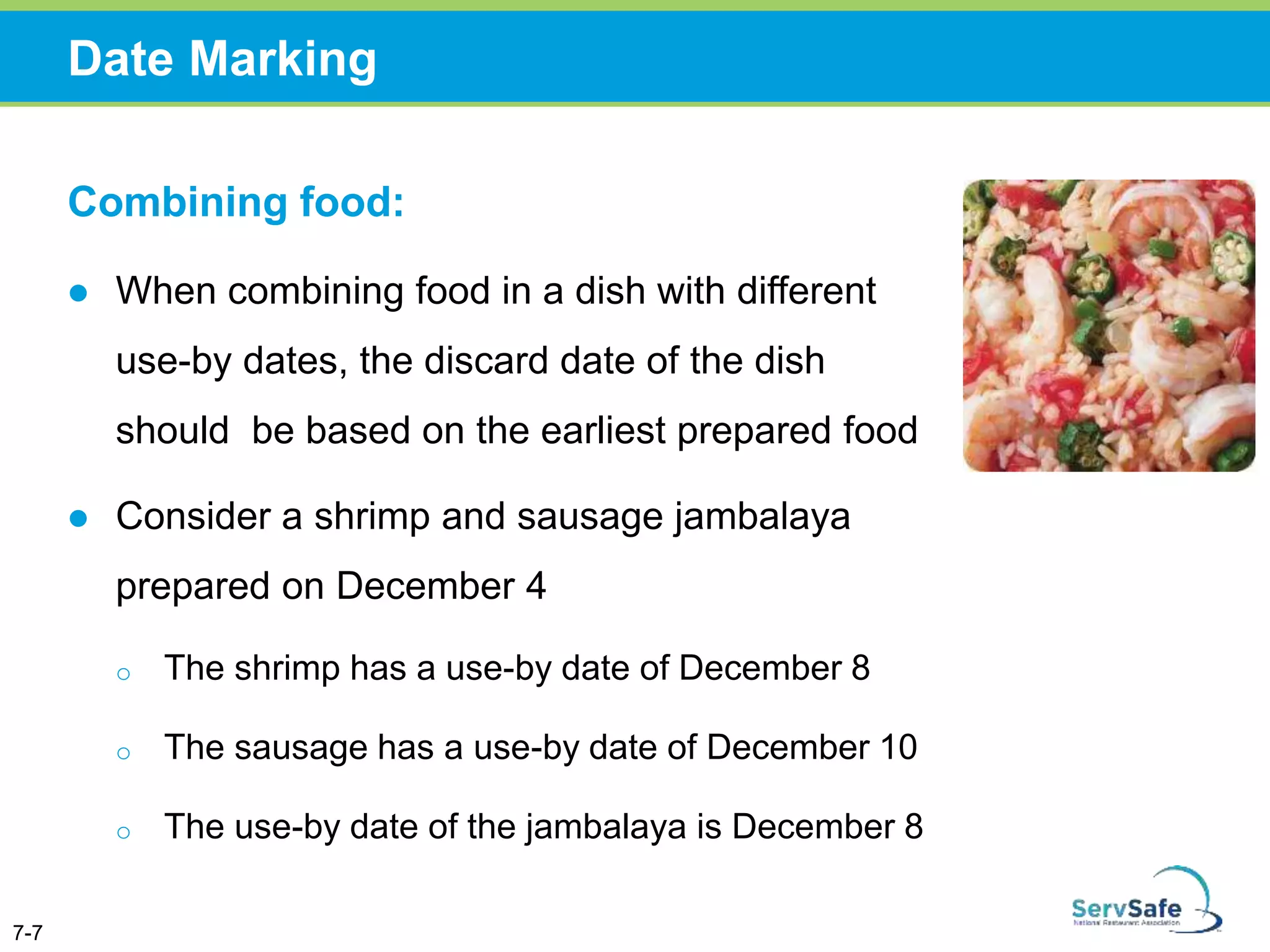
 Consider a shrimp and sausage jambalaya
prepared on December 4
o The shrimp has a use-by date of December 8
o The sausage has a use-by date of December 10
o The use-by date of the jambalaya is December 8
7-7
Rotation
Rotate food to use the oldest inventory first:
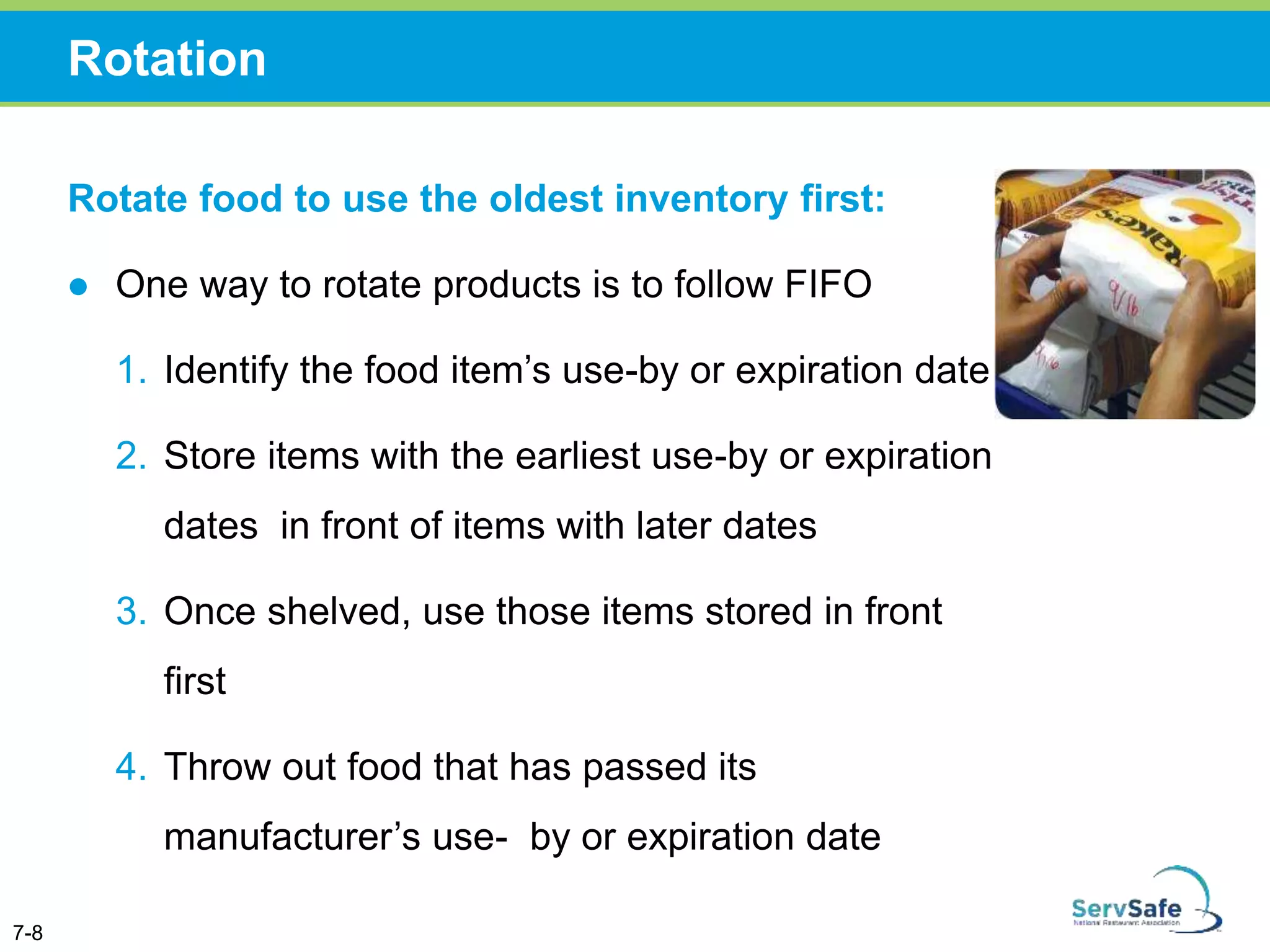
 One way to rotate products is to follow FIFO
1. Identify the food item’s use-by or expiration date
2. Store items with the earliest use-by or expiration
dates in front of items with later dates
3. Once shelved, use those items stored in front
first
4. Throw out food that has passed its
manufacturer’s use- by or expiration date
7-8
Temperatures
Temperature guidelines:
 Store TCS food at an internal temperature
of 41˚F (5˚C) or lower, or 135˚F (57˚C)
or higher
 Store frozen food at temperatures that keep it frozen
 Make sure storage units have at least one air
temperature measuring device; it must be accurate
to +/- 3˚F or +/- 1.5˚C
o Place the device in the warmest part of refrigerated
units, and the coldest part of hot- holding units
7-9
Temperatures
Temperatures guidelines:
 Do not overload coolers or freezers
o Prevents airflow
o Makes units work harder to stay cold
 Use open shelving
o Do not line shelves as this restricts airflow
7-10
Storage Location
7-11
Food should be stored in a clean, dry location away from dust
and other contaminants:
 To prevent contamination, NEVER store food in these areas
o Locker rooms or dressing rooms
o Restrooms or garbage rooms
o Mechanical rooms
o Under unshielded sewer lines or leaking water lines
o Under stairwells
Preventing Cross-Contamination
Supplies:
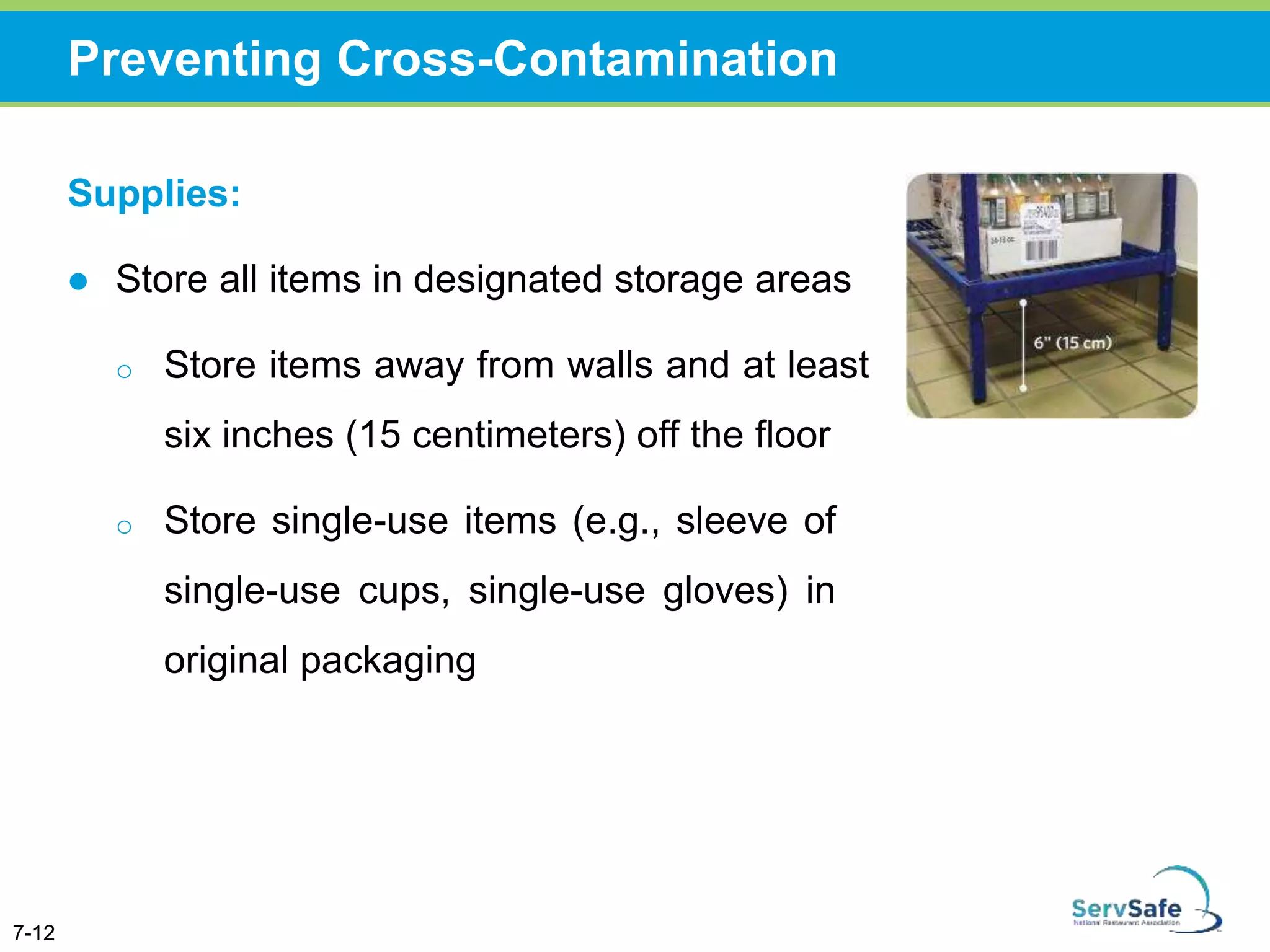
 Store all items in designated storage areas
o Store items away from walls and at least
six inches (15 centimeters) off the floor
o Store single-use items (e.g., sleeve of
single-use cups, single-use gloves) in
original packaging
7-12
Preventing Cross-Contamination
Containers:
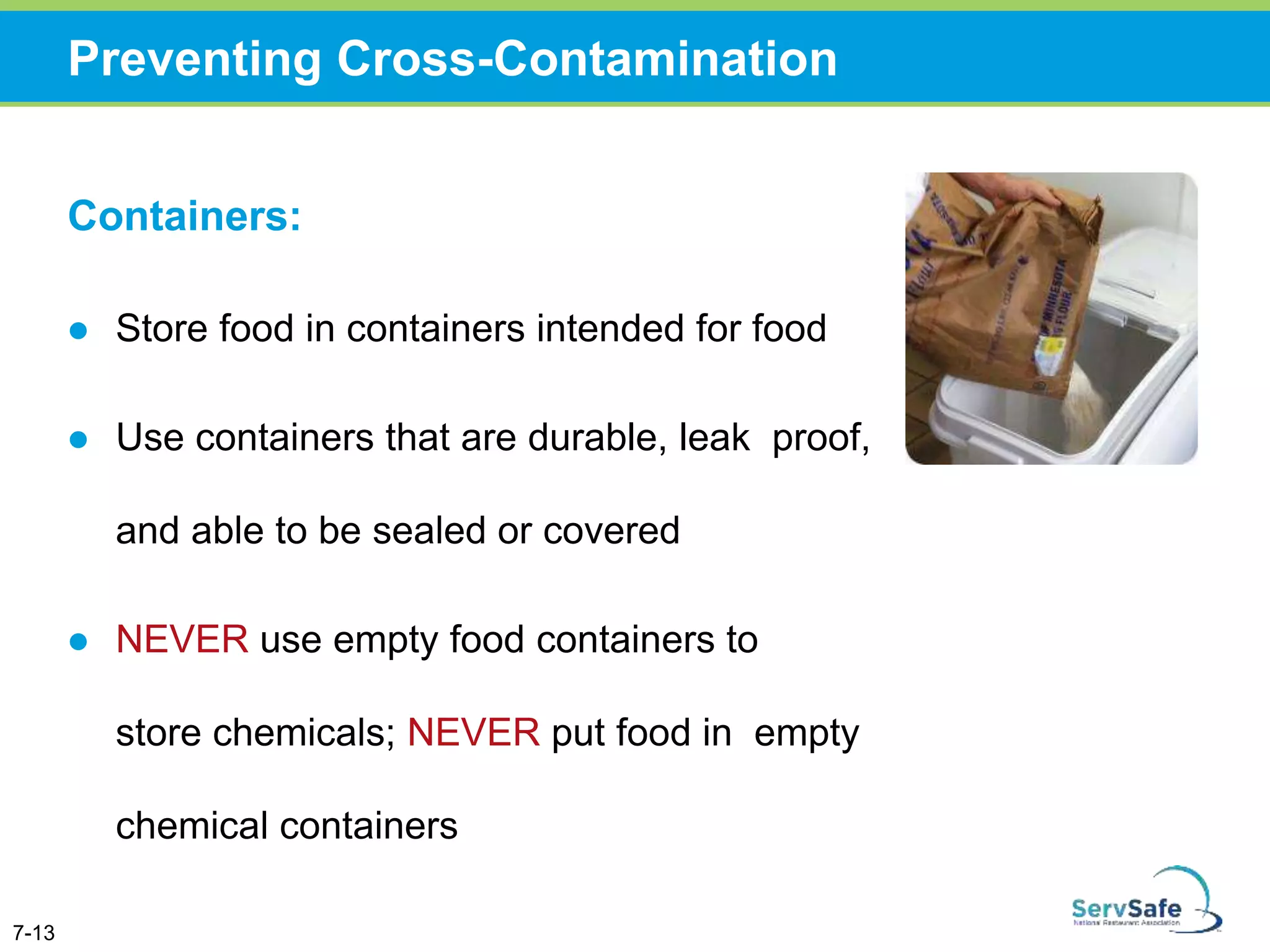
 Store food in containers intended for food
 Use containers that are durable, leak proof,
and able to be sealed or covered
 NEVER use empty food containers to
store chemicals; NEVER put food in empty
chemical containers
7-13
Preventing Cross-Contamination
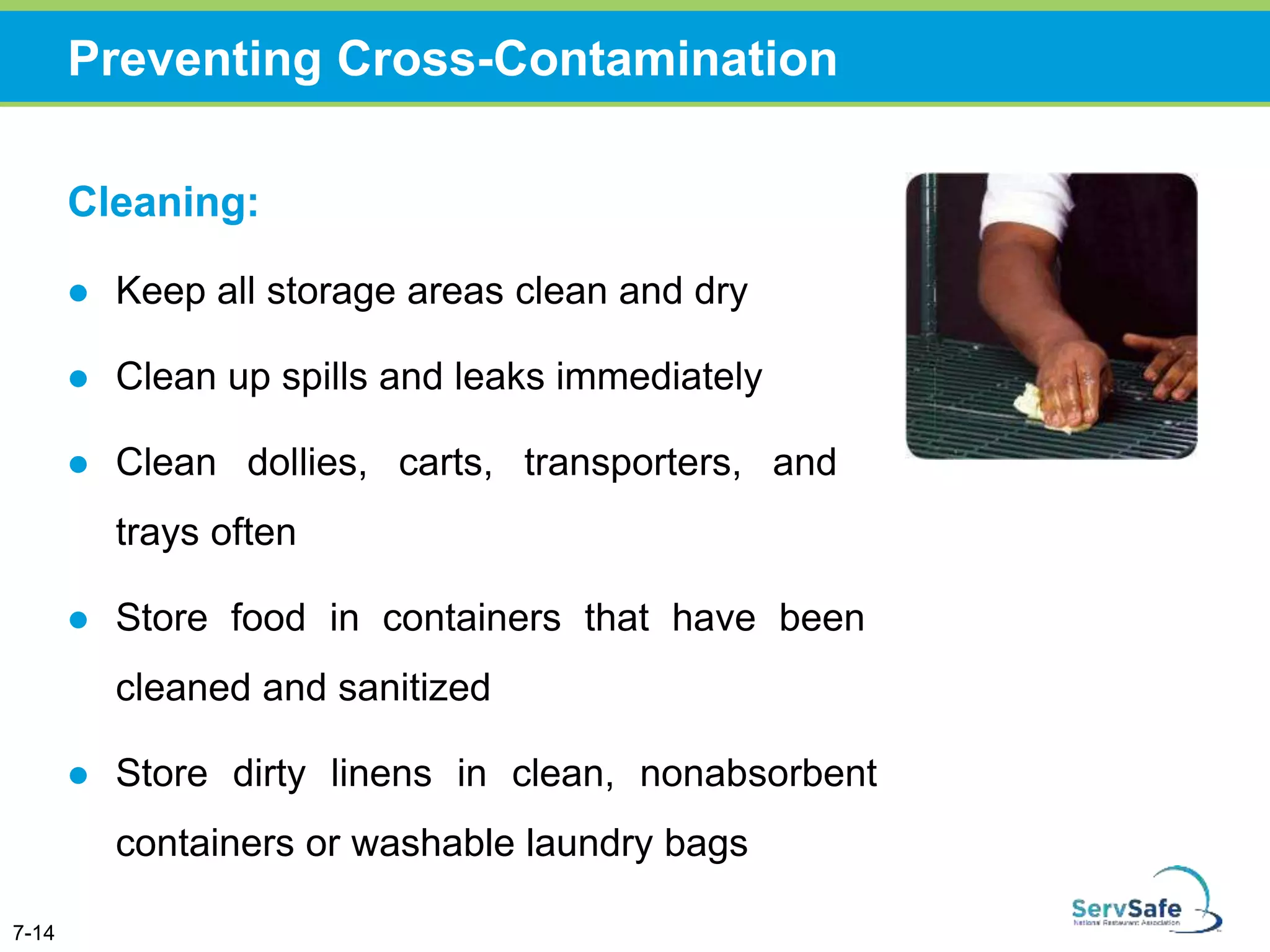
Cleaning:
 Keep all storage areas clean and dry
 Clean up spills and leaks immediately
 Clean dollies, carts, transporters, and
trays often
 Store food in containers that have been
cleaned and sanitized
 Store dirty linens in clean, nonabsorbent
containers or washable laundry bags
7-14
Preventing Cross-Contamination
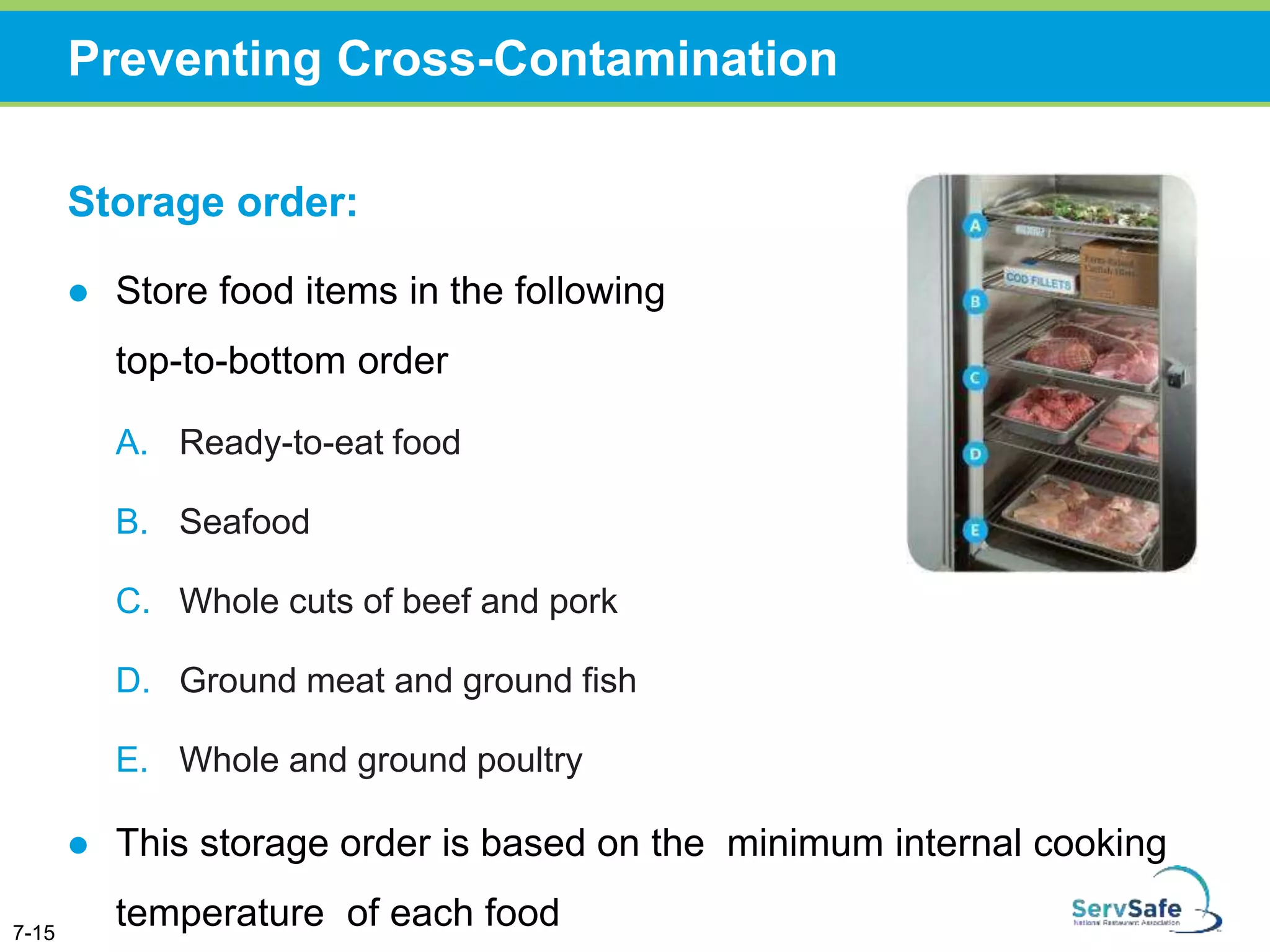
Storage order:
 Store food items in the following
top-to-bottom order
A. Ready-to-eat food
B. Seafood
C. Whole cuts of beef and pork
D. Ground meat and ground fish
E. Whole and ground poultry
 This storage order is based on the minimum internal cooking
temperature of each food
7-15

chapter 7 the flowof food storage.pptx

  • 2.
    Labeling Labeling food foruse on-site:  All items not in their original containers must be labeled  Food labels should include the common name of the food or a statement that clearly and accurately identifies it  It is not necessary to label food if it clearly will not be mistaken for another item 7-2
  • 3.
    Labeling 7-3 Labeling food packagedon-site for retail sale:  Common name of the food or a statement clearly identifying it  Quantity of the food  If the item contains two or more ingredients, list the ingredients and sub-ingredients in descending order by weight  List of artificial colors and flavors in the food including chemical preservatives  Name and place of business of the manufacturer, packer, or distributor  Source of each major food allergen contained in the food
  • 4.
    Date Marking Date marking: Ready-to-eat TCS food must be marked if held for longer than 24 hours o Date mark must indicate when the food must be sold, eaten, or thrown out 7-4
  • 5.
    Date Marking Date marking: Ready-to-eat TCS food can be stored for only seven days if it is held at 41˚F (5˚C) or lower o The count begins on the day that the food was prepared or a commercial container was opened o For example, potato salad prepared and stored on October 1 would have a discard date of October 7 on the label o Some operations write the day or date the food was prepared on the label; others write the use-by day or date on the label 7-5
  • 6.
    Date Marking 7-6 Commercially processedfood: If  A commercially processed food has a use-by date that is less than seven days from the date the container was opened Then  The container should be marked with this use-by date as long as the date is based on food safety
  • 7.
    Date Marking Combining food: When combining food in a dish with different use-by dates, the discard date of the dish should be based on the earliest prepared food  Consider a shrimp and sausage jambalaya prepared on December 4 o The shrimp has a use-by date of December 8 o The sausage has a use-by date of December 10 o The use-by date of the jambalaya is December 8 7-7
  • 8.
    Rotation Rotate food touse the oldest inventory first:  One way to rotate products is to follow FIFO 1. Identify the food item’s use-by or expiration date 2. Store items with the earliest use-by or expiration dates in front of items with later dates 3. Once shelved, use those items stored in front first 4. Throw out food that has passed its manufacturer’s use- by or expiration date 7-8
  • 9.
    Temperatures Temperature guidelines:  StoreTCS food at an internal temperature of 41˚F (5˚C) or lower, or 135˚F (57˚C) or higher  Store frozen food at temperatures that keep it frozen  Make sure storage units have at least one air temperature measuring device; it must be accurate to +/- 3˚F or +/- 1.5˚C o Place the device in the warmest part of refrigerated units, and the coldest part of hot- holding units 7-9
  • 10.
    Temperatures Temperatures guidelines:  Donot overload coolers or freezers o Prevents airflow o Makes units work harder to stay cold  Use open shelving o Do not line shelves as this restricts airflow 7-10
  • 11.
    Storage Location 7-11 Food shouldbe stored in a clean, dry location away from dust and other contaminants:  To prevent contamination, NEVER store food in these areas o Locker rooms or dressing rooms o Restrooms or garbage rooms o Mechanical rooms o Under unshielded sewer lines or leaking water lines o Under stairwells
  • 12.
    Preventing Cross-Contamination Supplies:  Storeall items in designated storage areas o Store items away from walls and at least six inches (15 centimeters) off the floor o Store single-use items (e.g., sleeve of single-use cups, single-use gloves) in original packaging 7-12
  • 13.
    Preventing Cross-Contamination Containers:  Storefood in containers intended for food  Use containers that are durable, leak proof, and able to be sealed or covered  NEVER use empty food containers to store chemicals; NEVER put food in empty chemical containers 7-13
  • 14.
    Preventing Cross-Contamination Cleaning:  Keepall storage areas clean and dry  Clean up spills and leaks immediately  Clean dollies, carts, transporters, and trays often  Store food in containers that have been cleaned and sanitized  Store dirty linens in clean, nonabsorbent containers or washable laundry bags 7-14
  • 15.
    Preventing Cross-Contamination Storage order: Store food items in the following top-to-bottom order A. Ready-to-eat food B. Seafood C. Whole cuts of beef and pork D. Ground meat and ground fish E. Whole and ground poultry  This storage order is based on the minimum internal cooking temperature of each food 7-15