Ch.7-9 Options
• Option 1
• Research and create a Powerpoint style
presentation or video documentary on your
families history
– Both parent’s family history
– Where they came from
– When/Why/how they came to the US
– Where they settled in the US and how your family
ended up here
• Option 2
• You and a small group will be responsible for
teaching some aspect of Ch. 9 on the
Progressive Era
• Need to know by Wednesday if you can find
info on your family history
Ch. 7.1 Key Questions
Why did immigrants come to the US?
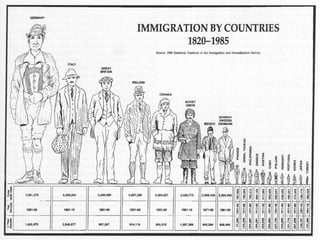
Where did immigrants come from?
What problems/issues did immigrants face on the
trip over and once they got here(Ellis/Angel
Island)?
Why did some people want to put restriction on
immigration? What were those restrictions?
October 6
Immigration Today
•What is immigration?
•What is illegal immigration?
•Why do people want to come to the US either
legally or illegally?-Look at next slide
•Why do US citizens get upset about illegal
immigration?
•Why is it easy for politicians to ignore the
problem of illegal immigration?
•What is birthright citizenship?
•What are “anchor babies”?-Not a positive term
but the one that is used a lot
Why did/do immigrants come to the
US?
• Push-Pull Factors
• Famine
• Land shortages
• Religious or political persecution
• War
• In debt or in trouble
• More opportunities-$$-The American Dream
– Farming(Homestead Act), mining, working on the
railroad, cattle ranching, factory work
• Reunite with family
Legal Immigration Statistics
• 2013 - 990,553 people are granted lawful
permanent residence in the United States
• “Green cards"
• The top countries of origin are:
• -- Mexico (14%)
• -- China (7.2%)
• -- India (6.9%)
• -- Philippines (5.5%)
• -- Dominican Republic (4.2%)
• 2013 - A total of 779,929 people become
naturalized U.S. citizens
• The top countries of birth are:
• -- Mexico (12.7%)
• -- India (6.4%)
• -- Philippines (5.6%)
• -- Dominican Republic (5.1%)
• -- China (3.9%)
• Residents becoming naturalized citizens in
2013 had spent a median of seven years in
“green card” status.
• US Naturalization Practice Test
Illegal Immigration Statistics
• 2012 - The Department of Homeland Security
estimates that there are 11.4 million
unauthorized immigrants living in the United
States
• The top countries of origin are:
• -- Mexico (59%)
• -- El Salvador (6%)
• -- Guatemala (5%)
• -- Honduras (3%)
• -- Philippines (3%)
• 2012 - The top U.S. states where unauthorized
immigrants settle are:
• -- California (25%)
• -- Texas (16%)
• -- Florida (6%)
• -- New York (5%)
• -- Illinois (5%)
• Unauthorized immigrants to the United States
tend to be young (61% between ages 25-44)
and male (53%)
• 2013 - 662,483 unauthorized immigrants are
apprehended
• More than 64% are from Mexico
• 2013 - 438,421 unauthorized immigrants are
removed from the United States
• -- Repatriated to Mexico (72%)
• -- Repatriated to Guatemala (11%)
• -- Repatriated to Honduras (8%)
• -- Repatriated to El Salvador (5%)
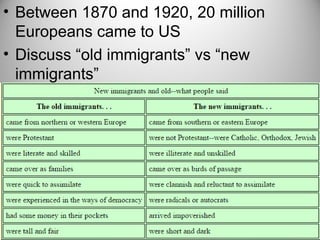
• Between 1870 and 1920, 20 million
Europeans came to US
• Discuss “old immigrants” vs “new
immigrants”
• Define nativism
Steps to America
• Step One-Leaving Home
• Step Two-On Board the Ship
• Step Three-Inspection
• Step Four-Beyond Ellis or Angel
Island
• Source
Step One-Leaving Home
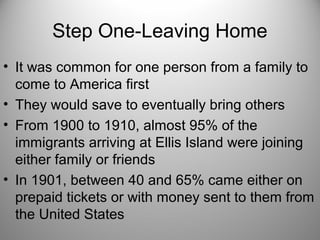
• It was common for one person from a family to
come to America first
• They would save to eventually bring others
• From 1900 to 1910, almost 95% of the
immigrants arriving at Ellis Island were joining
either family or friends
• In 1901, between 40 and 65% came either on
prepaid tickets or with money sent to them from
the United States
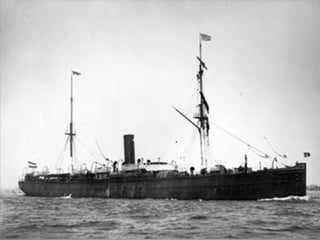
Step Two-On Board the Ship
• A ticket to America cost $30
• Three types of accommodations-first class,
second class and steerage
• Only steerage passengers were processed at
Ellis Island
• First and second class passengers were
quickly “inspected” on board the ship
• Larger ships could hold from 1,500 to 2,000
immigrants, netting a profit of $45,000 to
$60,000 for a single, one-way trip
Steerage
• For many immigrants, the experience
of steerage was a nightmare
• At one time, the average passenger
mortality rate was 10 percent per
voyage
• Conditions were extremely
overcrowded, dark, unsanitary and
foul-smelling
• In spite of the miserable conditions,
the immigrants had faith in the future
• Crossing the Atlantic could take
anywhere from a week to more than a
month, depending on the ship and
weather
• They would play cards, sing, dance
and talk
• In1911, the United States Immigration
Commission said:
• “The open deck space reserved for steerage
passengers is usually very limited, and situated
in the worst part of the ship, subject to the most
violent motion, to the dirt from the stacks and
the odors from the hold and galleys... the only
provisions for eating are frequently shelves or
benches along the sides or in the passages of
sleeping compartments. Dining rooms are rare
and, if found, are often shared with berths
installed along the walls. Toilets and
washrooms are completely inadequate;
saltwater only is available.
• “The ventilation is almost always inadequate,
and the air soon becomes foul. The unattended
vomit of the seasick, the odors of not too clean
bodies, the reek of food and the awful stench of
the nearby toilet rooms make the atmosphere
of the steerage such that it is a marvel that
human flesh can endure it... Most immigrants
lie in their berths for most of the voyage, in a
stupor caused by the foul air. The food often
repels them... It is almost impossible to keep
personally clean. All of these conditions are
naturally aggravated by the crowding.”
Step Three-Inspection
• Passengers were inspected for contagious
diseases such as cholera, plague, smallpox,
typhoid fever, yellow fever, scarlet fever,
measles and diphtheria
• If immigrants had any of the diseases they
would be deported
• Sick children age 12 or older were sent back to
Europe alone
• In total, about 20 percent of those arriving
at Ellis Island were detained for medical
treatment or a legal hearing
• 80% were free to go after only a few hours
• Only 2% of the immigrants seeking refuge
in America would fail to be admitted
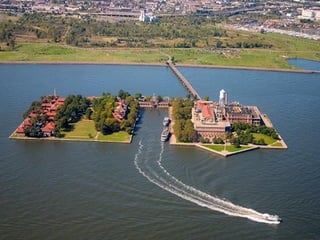
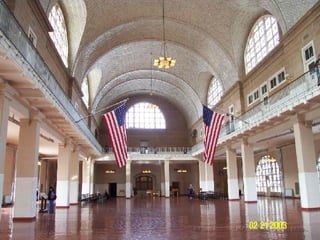
Ellis Island
• What happened at Ellis Island?
• What do you think the ocean voyage was like?
• Intro Video
• Video 1 --Arrival
• Video 2 --Hurdles to Citizenship on Ellis Island
• Video 3 --Detained at Ellis Island
• Video 4 --Medical Inspections
• What state is it located in?
Angel Island--Video
Step Four-Beyond Ellis Island
• As they left Ellis Island, the next stop was the
Money Exchange
• Cashiers exchanged paper money, from
countries all over Europe, for American dollars
• Then it was off to New York City or the railroad
ticket office to go anywhere in the country that
they wanted
Why were immigrants disliked in
the US in the late 1800’s/early
1900’s?
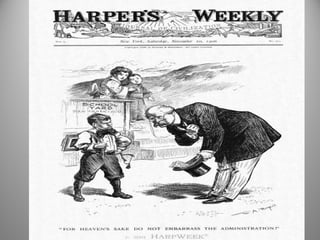
Chinese Exclusion Act-1882
–Banned all Chinese immigration to
the US from 1882-1902
–Why ban Chinese immigrants?
Gentleman’s Agreement-1907
• Informal agreement between the United States
and Japan
• The US would not restrict Japanese
immigration and Japan would not allow further
immigration to the U.S
• The goal was to reduce tensions between the
US and Japan
• What was the tension?
Ch. 7.1 Key Questions
Why did immigrants come to the US?
Where did immigrants come from?
What problems/issues did immigrants face on the
trip over and once they got here(Ellis/Angel
Island)?
Why did some people want to put restriction on
immigration? What were those restrictions?
Chapter 7.2 Key Questions
Why did cities grow so quickly in the late
1800's and early 1900's?
What problems did cities face due to the
rapid increase in population?
What did people/organizations do to try to
help the bad situation in the cities?
Why Did Cities Grow So Fast?
• Immigrants
• Farmers moved to the city
• African-Americans moved to the
cities
• Cities offered more jobs and
opportunities
• Cities offered more entertainment
Problems in the City
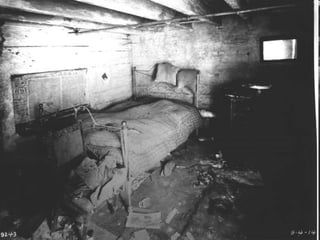
• Cramped, old, dirty housing-tenements
• Lack of good transportation
• Lack of safe drinking water
• Disease was common
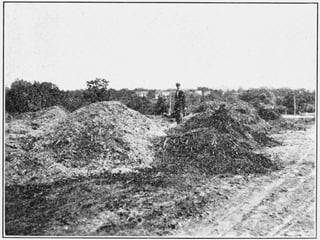
• Streets were filthy
• Crime
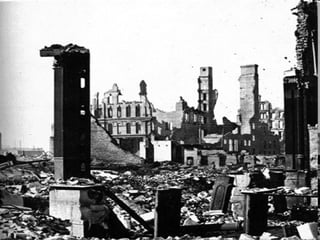
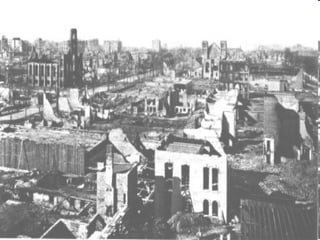
• Fires
• Poverty due to low pay at work
Jacob Riis
“How the Other Half Lives”
• Define tenements
• Video
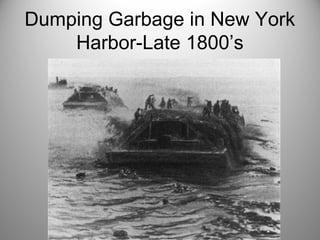
Dumping Garbage in New York
Harbor-Late 1800’s
Problem:Cramped, Old, Dirty Housing-Tenements
Solutions:
-Cities put restrictions on building wood-frame
structures in the center of the city-Why?
-Cities encouraged the construction of
lower-income dwellings on the city’s outskirts-
Why?
-The Tenement House Act of 1867 defined a
tenement for the first time and set construction
regulations
-Among these were the requirement of one
toilet per 20 people-Why?
• Tenement House Law-1901
–Outlawed the construction of new tenements
on 25-foot lots and mandated improved
sanitary conditions, fire escapes and access
to light
–Current tenements were updated and more
than 200,000 new apartments were built over
the next 15 years
• Most tenements were destroyed in the 1920’s
and especially the 1930’s with FDR’s New Deal
• The first fully government-built public housing
project opened in New York City in 1936
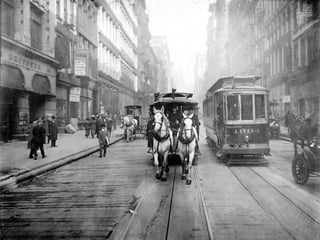
Problem: Lack of good
transportation
• Solutions
–Electric Streetcars-late 1800’s, early
1900’s
–Automobiles
• There were 300 cars in the United States in 1895, 78,000
in 1905, 459,00 in 1910 and 1.7 million in 1914.
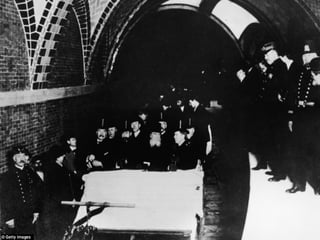
–Subways-New York City-1904
–Airplanes-1903-Wright Brothers
1900 Bradley Gasoline
Runabout
1903 Ford Model A
Bus in 1925
US Airplane in WWI-1918
Problem:Lack of safe drinking water
• Solutions:
• In late 1800’s, scientists had proven that
diseases were spread through unsafe drinking
water
• In early 1900’s, chlorine was added to the
water to help eliminate disease
• Federal regulation of drinking water quality
began in 1914 which continued to strengthen
over the decades
Problems: Disease was common
and Streets were filthy
• Solutions:
• Already mentioned horses being replaced,
eliminating the manure problem
• Already mentioned adding chlorine to water
• Introduction of indoor plumbing
• George A. Waring Jr.-New York City-1895
– Organized modern recycling, street sweeping and
garbage collection
– Video
George Waring
Dumping Garbage in New York
Harbor-Late 1800’s
Early 1900’s Garbage Collection
Problem: Crime
• Solutions:
• Organized Police Force
– Police became full time employees of the city-not
volunteers
– In 1838-Boston established the first American
police force
– New York City-1845
– Chicago-1851
– By the 1880s all major U.S. cities had municipal
police forces in place
• 1911 - Fingerprints are first accepted by U.S.
courts as a reliable means of identification
NYPD-1895-TR
Problem: Fires
• Solutions:
• Already mentioned better building codes
• Full time, paid firefighters
• In 1853, Cincinnati became the first full-time,
paid fire fighters in the US
Problem: Poverty due to low pay at
work
• Solution:
• Labor Unions
– Minimum wage laws
– Shorter hours
– Child labor laws
Chapter 7.2 Key Questions
Why did cities grow so quickly in the late
1800's and early 1900's?
What problems did cities face due to the
rapid increase in population?
What did people/organizations do to try to
help the bad situation in the cities?
Ch. 7.3 Key Questions
• What was the political machine and what did
they do for a city?
• Explain Boss Tweed and the Tweed Ring.
• What caused all the corruption in government?
• What laws came about to reform government?
• Ulysses S. Grant, Rutherford B. Hayes, James
Garfield, Chester Arthur, Grover Cleveland, Benjamin
Harrison, Grover Cleveland, William McKinley, Teddy
Roosevelt, William Taft, and Woodrow Wilson were all
presidents during the late 1800's/early 1900’s. Were
they a reform president or a status quo president?
The Gilded Age
• 1870’s-1900
• Gilded—To be covered with gold
Political Machine
• A political organization, usually controlled by a
single “boss”, that controlled votes and had
administrative control of a city, county, or state
• These organizations provided social services
and jobs to people(recent immigrants) in
exchange for votes
• Very corrupt
• Came about due to the rapid increase of
population in cities and poor government in the
1800’s
• Died out in the early 1900’s
• There was a lot of
corruption in gov’t
–Kickback system
–Granting favors to
big business
–Spoils
system/patronage
–Political boss
hired/fired police
Boss William Marcy Tweed
• Was the Boss of the
Democratic political
machine in New York
City
• The building Tweed
worked in was
Tammany Hall
Boss William Marcy Tweed
Reforming Government
• The Spoils System/Patronage caused a lot
of the problems
Reforming Government
• Pendleton Civil Service Act-1883
–Required most government jobs to
be given through a merit system
based on test scores
–1883: 14,000/117,000 gov’t jobs
required tests
–1900: 100,000/200,000 gov’t jobs
required tests
Good Presidents Also Brought
Change
• President Grant-President Wilson
• 1869-1921
• Reform president or status quo
president?
Reform Presidents
• Rutherford B. Hayes-1877-1881
• James Garfield-1881
• Chester Arthur-1881-1885
• Grover Cleveland-1885-1889, 1893-1897
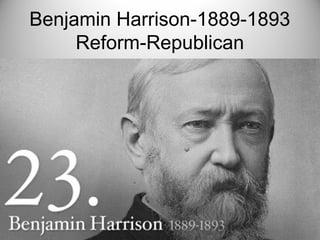
• Benjamin Harrison-1889-1893
• Teddy Roosevelt-1901-1909
• Woodrow Wilson-1913-1921
Status Quo Presidents
• Ulysses S. Grant-1869-1877
• William McKinley-1897-1901
• William Howard Taft-1909-1913
Ulysses S. Grant-1869-1877
Status Quo-Republican
Rutherford B. Hayes-1877-81
Reform-Republican
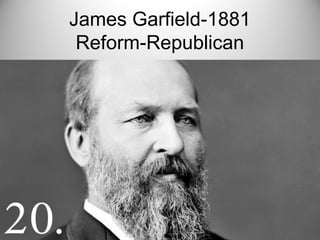
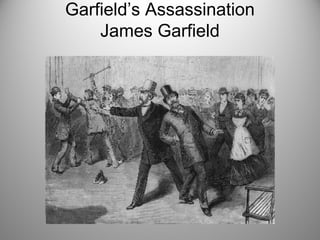
James Garfield-1881
Reform-Republican
Garfield’s Assassination
James Garfield
Chester Arthur-1881-1885
Reform-Republican
Grover Cleveland-1885-1889, 1893-97
Reform-Democrat
Benjamin Harrison-1889-1893
Reform-Republican
William McKinley-1897-1901
Status Quo-Republican
Teddy Roosevelt-1901-1909
Reform-Republican
William Howard Taft-1909-1913
Status Quo-Republican
Woodrow Wilson-1913-1921
Reform-Democrat
Ch. 7.3 Key Questions
• What was the political machine and what did
they do for a city?
• Explain Boss Tweed and the Tweed Ring.
• What caused all the corruption in government?
• What laws came about to reform government?
• Ulysses S. Grant, Rutherford B. Hayes, James
Garfield, Chester Arthur, Grover Cleveland, Benjamin
Harrison, Grover Cleveland, William McKinley, Teddy
Roosevelt, William Taft, and Woodrow Wilson were all
presidents during the late 1800's/early 1900’s. Were
they a reform president or a status quo president?
Ch. 8 Key Questions
• Ch. 8.1:
-What advances in science and technology help solve urban problems?
Ch. 8.2:
-How did education change in the late 1800's and early 1900's?
• Ch. 8.3:
-What laws and restrictions were put on African-Americans and other
minorities after Reconstruction ended?
-Explain the significance of Plessy v. Ferguson.
Ch. 8.4:
-Explain what people did for entertainment in the late 1800's and early
1900's.
Advances and Technologies
• Skyscrapers
–Flatiron Building-
1902
• Electric streetcars
• Subways-1904
• Cash register-1879
• Automatic
dishwasher-1889
• Vacuum cleaner-
Advances and Technology
• Airplane-1903
• Kodak Camera-1888
• Automobile-late 1800’s
• Light Bulb-1879
• Telephone-1876
• Typewriter-1867
• Radio-1895
• Toilet paper-1857
Expanding Public Education
• Class Reading
• Before the mid 1800’s, education was for the wealthy
• Most states had public schools by 1865
• But many school-aged children still received no formal
education-worked in factories instead
• Between 1865-1895, states passed laws requiring 12-
16 weeks annually of school
• Classes focused on the “3 R’s”-reading, “riting”, &
“rithmetic”
• Memorization and recitation was very common
• Why did “the lecture” become a common
strategy for teachers?
• How is our school system set up like a
factory during the Industrial Revolution?
– The bells
– Assembly line
• Students are tested and if they pass, move to the
next part of the assembly line
– Schools were/are “one size fits all” and
prepared students to work in factories upon
finishing school
African American & Immigrant EDU
• African Americans were mostly excluded from
public schools or had to attend segregated
schools
• In 1910, 3% of African Americans between the
ages 15-19 attended H.S.
• Immigrants were encouraged to go to school
• Most European immigrant families sent their
children to the free public schools
• Children learned English and became
“Americanized”
Religion in School
• Public schools had mandatory
readings from the Protestant
Bible
• Many Catholic families were
concerned
• Catholic communities set up
parochial schools to give their
children a Catholic Education
– Parochial School: a school
supported by a church
parish
Higher Education
• What is Higher Education?
• From 1880-1920, college enrollments
quadrupled
• High School diploma and entrance exams
were used in admittance purposes
• Morrill Act-1862
– Iowa State-1858
• Drake-1881
• Iowa-1847
• UNI-1876
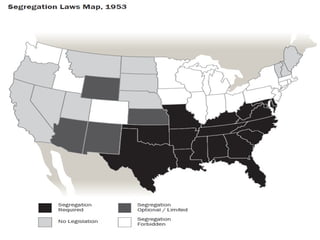
Segregation
• Literacy test
• Poll tax
• Grandfather Clause(1-1-1867)
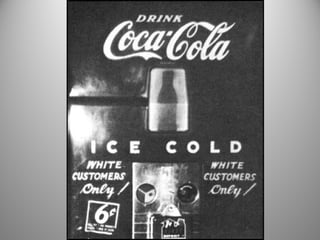
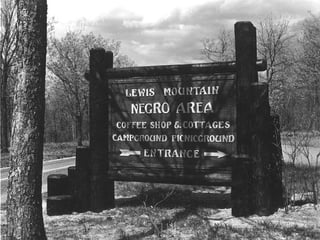
• Jim Crow laws
• Plessy v Ferguson-1896
– “Separate but Equal”
–Separate and unequal in reality
• Lynching and violence
Tuskegee Airmen-WWII
Coney Island(1903)-
Amusement Parks
Vaudeville Shows
Minstrel Shows
Parks-Central Park in NYC-
1857
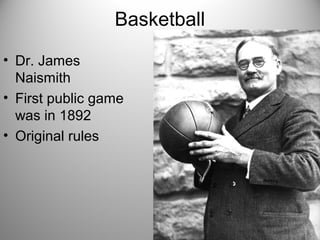
Basketball
• Dr. James
Naismith
• First public game
was in 1892
• Original rules
Baseball
• Invented by Abner
Doubleday in 1839
• Major League
baseball became
big in the late
1800’s
• Honus Wagner
Football
• Late 1800’s college football became
popular
• NFL would not start until the 1920’s
Other Popular Sports
• Tennis
• Golf
• Boxing
• Biking-1885
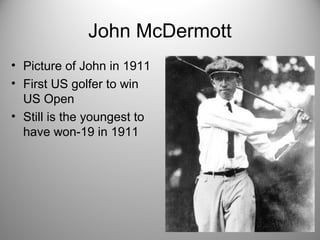
John McDermott
• Picture of John in 1911
• First US golfer to win
US Open
• Still is the youngest to
have won-19 in 1911
Paddy Ryan
• Bare-knuckle
Champion of America
1880-82
•
“Gentleman Jim” Corbett
1892-1897-Heavyweight Champ
Jack Johnson
Heavyweight Champion-1908-1915
Music and Dancing
• Ragtime
• Cakewalk
• Tap Dancing-Bill “bojangles” Robinson
Movies-The Great Train
Robbery-1903
World Fair’s
• Focused on showcasing the latest and greatest
in inventions and technology
• 1853-New York, 1876-Philadelphia, 1893-
Chicago(Ferris Wheel), 1901-Buffalo, 1904-St.
Louis, 1915- San Francisco
Ch. 8 Key Questions
• Ch. 8.1:
-What advances in science and technology help solve urban problems?
Ch. 8.2:
-How did education change in the late 1800's and early 1900's?
• Ch. 8.3:
-What laws and restrictions were put on African-Americans and other
minorities after Reconstruction ended?
-Explain the significance of Plessy v. Ferguson.
Ch. 8.4:
-Explain what people did for entertainment in the late 1800's and early
1900's.

Ch. 7/8 Powerpoint

  • 1.
    Ch.7-9 Options • Option1 • Research and create a Powerpoint style presentation or video documentary on your families history – Both parent’s family history – Where they came from – When/Why/how they came to the US – Where they settled in the US and how your family ended up here
  • 2.
    • Option 2 •You and a small group will be responsible for teaching some aspect of Ch. 9 on the Progressive Era • Need to know by Wednesday if you can find info on your family history
  • 3.
    Ch. 7.1 KeyQuestions Why did immigrants come to the US? Where did immigrants come from? What problems/issues did immigrants face on the trip over and once they got here(Ellis/Angel Island)? Why did some people want to put restriction on immigration? What were those restrictions?
  • 4.
  • 5.
    Immigration Today •What isimmigration? •What is illegal immigration? •Why do people want to come to the US either legally or illegally?-Look at next slide •Why do US citizens get upset about illegal immigration? •Why is it easy for politicians to ignore the problem of illegal immigration? •What is birthright citizenship? •What are “anchor babies”?-Not a positive term but the one that is used a lot
  • 6.
    Why did/do immigrantscome to the US? • Push-Pull Factors • Famine • Land shortages • Religious or political persecution • War • In debt or in trouble • More opportunities-$$-The American Dream – Farming(Homestead Act), mining, working on the railroad, cattle ranching, factory work • Reunite with family
  • 7.
    Legal Immigration Statistics •2013 - 990,553 people are granted lawful permanent residence in the United States • “Green cards" • The top countries of origin are: • -- Mexico (14%) • -- China (7.2%) • -- India (6.9%) • -- Philippines (5.5%) • -- Dominican Republic (4.2%)
  • 8.
    • 2013 -A total of 779,929 people become naturalized U.S. citizens • The top countries of birth are: • -- Mexico (12.7%) • -- India (6.4%) • -- Philippines (5.6%) • -- Dominican Republic (5.1%) • -- China (3.9%) • Residents becoming naturalized citizens in 2013 had spent a median of seven years in “green card” status. • US Naturalization Practice Test
  • 9.
    Illegal Immigration Statistics •2012 - The Department of Homeland Security estimates that there are 11.4 million unauthorized immigrants living in the United States • The top countries of origin are: • -- Mexico (59%) • -- El Salvador (6%) • -- Guatemala (5%) • -- Honduras (3%) • -- Philippines (3%)
  • 10.
    • 2012 -The top U.S. states where unauthorized immigrants settle are: • -- California (25%) • -- Texas (16%) • -- Florida (6%) • -- New York (5%) • -- Illinois (5%) • Unauthorized immigrants to the United States tend to be young (61% between ages 25-44) and male (53%)
  • 11.
    • 2013 -662,483 unauthorized immigrants are apprehended • More than 64% are from Mexico • 2013 - 438,421 unauthorized immigrants are removed from the United States • -- Repatriated to Mexico (72%) • -- Repatriated to Guatemala (11%) • -- Repatriated to Honduras (8%) • -- Repatriated to El Salvador (5%)
  • 12.
    • Between 1870and 1920, 20 million Europeans came to US • Discuss “old immigrants” vs “new immigrants”
  • 14.
  • 18.
    Steps to America •Step One-Leaving Home • Step Two-On Board the Ship • Step Three-Inspection • Step Four-Beyond Ellis or Angel Island • Source
  • 20.
    Step One-Leaving Home •It was common for one person from a family to come to America first • They would save to eventually bring others • From 1900 to 1910, almost 95% of the immigrants arriving at Ellis Island were joining either family or friends • In 1901, between 40 and 65% came either on prepaid tickets or with money sent to them from the United States
  • 24.
    Step Two-On Boardthe Ship • A ticket to America cost $30 • Three types of accommodations-first class, second class and steerage • Only steerage passengers were processed at Ellis Island • First and second class passengers were quickly “inspected” on board the ship • Larger ships could hold from 1,500 to 2,000 immigrants, netting a profit of $45,000 to $60,000 for a single, one-way trip
  • 25.
  • 26.
    • For manyimmigrants, the experience of steerage was a nightmare • At one time, the average passenger mortality rate was 10 percent per voyage • Conditions were extremely overcrowded, dark, unsanitary and foul-smelling
  • 27.
    • In spiteof the miserable conditions, the immigrants had faith in the future • Crossing the Atlantic could take anywhere from a week to more than a month, depending on the ship and weather • They would play cards, sing, dance and talk
  • 29.
    • In1911, theUnited States Immigration Commission said: • “The open deck space reserved for steerage passengers is usually very limited, and situated in the worst part of the ship, subject to the most violent motion, to the dirt from the stacks and the odors from the hold and galleys... the only provisions for eating are frequently shelves or benches along the sides or in the passages of sleeping compartments. Dining rooms are rare and, if found, are often shared with berths installed along the walls. Toilets and washrooms are completely inadequate; saltwater only is available.
  • 30.
    • “The ventilationis almost always inadequate, and the air soon becomes foul. The unattended vomit of the seasick, the odors of not too clean bodies, the reek of food and the awful stench of the nearby toilet rooms make the atmosphere of the steerage such that it is a marvel that human flesh can endure it... Most immigrants lie in their berths for most of the voyage, in a stupor caused by the foul air. The food often repels them... It is almost impossible to keep personally clean. All of these conditions are naturally aggravated by the crowding.”
  • 31.
    Step Three-Inspection • Passengerswere inspected for contagious diseases such as cholera, plague, smallpox, typhoid fever, yellow fever, scarlet fever, measles and diphtheria • If immigrants had any of the diseases they would be deported • Sick children age 12 or older were sent back to Europe alone
  • 32.
    • In total,about 20 percent of those arriving at Ellis Island were detained for medical treatment or a legal hearing • 80% were free to go after only a few hours • Only 2% of the immigrants seeking refuge in America would fail to be admitted
  • 33.
    Ellis Island • Whathappened at Ellis Island? • What do you think the ocean voyage was like? • Intro Video • Video 1 --Arrival • Video 2 --Hurdles to Citizenship on Ellis Island • Video 3 --Detained at Ellis Island • Video 4 --Medical Inspections • What state is it located in?
  • 37.
  • 39.
    Step Four-Beyond EllisIsland • As they left Ellis Island, the next stop was the Money Exchange • Cashiers exchanged paper money, from countries all over Europe, for American dollars • Then it was off to New York City or the railroad ticket office to go anywhere in the country that they wanted
  • 41.
    Why were immigrantsdisliked in the US in the late 1800’s/early 1900’s?
  • 42.
    Chinese Exclusion Act-1882 –Bannedall Chinese immigration to the US from 1882-1902 –Why ban Chinese immigrants?
  • 45.
    Gentleman’s Agreement-1907 • Informalagreement between the United States and Japan • The US would not restrict Japanese immigration and Japan would not allow further immigration to the U.S • The goal was to reduce tensions between the US and Japan • What was the tension?
  • 49.
    Ch. 7.1 KeyQuestions Why did immigrants come to the US? Where did immigrants come from? What problems/issues did immigrants face on the trip over and once they got here(Ellis/Angel Island)? Why did some people want to put restriction on immigration? What were those restrictions?
  • 50.
    Chapter 7.2 KeyQuestions Why did cities grow so quickly in the late 1800's and early 1900's? What problems did cities face due to the rapid increase in population? What did people/organizations do to try to help the bad situation in the cities?
  • 51.
    Why Did CitiesGrow So Fast? • Immigrants • Farmers moved to the city • African-Americans moved to the cities • Cities offered more jobs and opportunities • Cities offered more entertainment
  • 53.
    Problems in theCity • Cramped, old, dirty housing-tenements • Lack of good transportation • Lack of safe drinking water • Disease was common • Streets were filthy • Crime • Fires • Poverty due to low pay at work
  • 54.
    Jacob Riis “How theOther Half Lives” • Define tenements • Video
  • 63.
    Dumping Garbage inNew York Harbor-Late 1800’s
  • 67.
    Problem:Cramped, Old, DirtyHousing-Tenements Solutions: -Cities put restrictions on building wood-frame structures in the center of the city-Why? -Cities encouraged the construction of lower-income dwellings on the city’s outskirts- Why? -The Tenement House Act of 1867 defined a tenement for the first time and set construction regulations -Among these were the requirement of one toilet per 20 people-Why?
  • 68.
    • Tenement HouseLaw-1901 –Outlawed the construction of new tenements on 25-foot lots and mandated improved sanitary conditions, fire escapes and access to light –Current tenements were updated and more than 200,000 new apartments were built over the next 15 years • Most tenements were destroyed in the 1920’s and especially the 1930’s with FDR’s New Deal • The first fully government-built public housing project opened in New York City in 1936
  • 69.
    Problem: Lack ofgood transportation • Solutions –Electric Streetcars-late 1800’s, early 1900’s –Automobiles • There were 300 cars in the United States in 1895, 78,000 in 1905, 459,00 in 1910 and 1.7 million in 1914. –Subways-New York City-1904 –Airplanes-1903-Wright Brothers
  • 72.
  • 73.
  • 75.
  • 77.
  • 78.
    Problem:Lack of safedrinking water • Solutions: • In late 1800’s, scientists had proven that diseases were spread through unsafe drinking water • In early 1900’s, chlorine was added to the water to help eliminate disease • Federal regulation of drinking water quality began in 1914 which continued to strengthen over the decades
  • 79.
    Problems: Disease wascommon and Streets were filthy • Solutions: • Already mentioned horses being replaced, eliminating the manure problem • Already mentioned adding chlorine to water • Introduction of indoor plumbing • George A. Waring Jr.-New York City-1895 – Organized modern recycling, street sweeping and garbage collection – Video
  • 80.
  • 82.
    Dumping Garbage inNew York Harbor-Late 1800’s
  • 83.
  • 84.
    Problem: Crime • Solutions: •Organized Police Force – Police became full time employees of the city-not volunteers – In 1838-Boston established the first American police force – New York City-1845 – Chicago-1851 – By the 1880s all major U.S. cities had municipal police forces in place • 1911 - Fingerprints are first accepted by U.S. courts as a reliable means of identification
  • 85.
  • 86.
    Problem: Fires • Solutions: •Already mentioned better building codes • Full time, paid firefighters • In 1853, Cincinnati became the first full-time, paid fire fighters in the US
  • 87.
    Problem: Poverty dueto low pay at work • Solution: • Labor Unions – Minimum wage laws – Shorter hours – Child labor laws
  • 88.
    Chapter 7.2 KeyQuestions Why did cities grow so quickly in the late 1800's and early 1900's? What problems did cities face due to the rapid increase in population? What did people/organizations do to try to help the bad situation in the cities?
  • 89.
    Ch. 7.3 KeyQuestions • What was the political machine and what did they do for a city? • Explain Boss Tweed and the Tweed Ring. • What caused all the corruption in government? • What laws came about to reform government? • Ulysses S. Grant, Rutherford B. Hayes, James Garfield, Chester Arthur, Grover Cleveland, Benjamin Harrison, Grover Cleveland, William McKinley, Teddy Roosevelt, William Taft, and Woodrow Wilson were all presidents during the late 1800's/early 1900’s. Were they a reform president or a status quo president?
  • 90.
    The Gilded Age •1870’s-1900 • Gilded—To be covered with gold
  • 91.
    Political Machine • Apolitical organization, usually controlled by a single “boss”, that controlled votes and had administrative control of a city, county, or state • These organizations provided social services and jobs to people(recent immigrants) in exchange for votes • Very corrupt • Came about due to the rapid increase of population in cities and poor government in the 1800’s • Died out in the early 1900’s
  • 95.
    • There wasa lot of corruption in gov’t –Kickback system –Granting favors to big business –Spoils system/patronage –Political boss hired/fired police
  • 96.
    Boss William MarcyTweed • Was the Boss of the Democratic political machine in New York City • The building Tweed worked in was Tammany Hall
  • 97.
  • 101.
    Reforming Government • TheSpoils System/Patronage caused a lot of the problems
  • 102.
    Reforming Government • PendletonCivil Service Act-1883 –Required most government jobs to be given through a merit system based on test scores –1883: 14,000/117,000 gov’t jobs required tests –1900: 100,000/200,000 gov’t jobs required tests
  • 104.
    Good Presidents AlsoBrought Change • President Grant-President Wilson • 1869-1921 • Reform president or status quo president?
  • 105.
    Reform Presidents • RutherfordB. Hayes-1877-1881 • James Garfield-1881 • Chester Arthur-1881-1885 • Grover Cleveland-1885-1889, 1893-1897 • Benjamin Harrison-1889-1893 • Teddy Roosevelt-1901-1909 • Woodrow Wilson-1913-1921
  • 106.
    Status Quo Presidents •Ulysses S. Grant-1869-1877 • William McKinley-1897-1901 • William Howard Taft-1909-1913
  • 107.
  • 108.
  • 109.
  • 110.
  • 111.
  • 112.
  • 113.
  • 115.
  • 116.
  • 117.
  • 118.
  • 119.
    Ch. 7.3 KeyQuestions • What was the political machine and what did they do for a city? • Explain Boss Tweed and the Tweed Ring. • What caused all the corruption in government? • What laws came about to reform government? • Ulysses S. Grant, Rutherford B. Hayes, James Garfield, Chester Arthur, Grover Cleveland, Benjamin Harrison, Grover Cleveland, William McKinley, Teddy Roosevelt, William Taft, and Woodrow Wilson were all presidents during the late 1800's/early 1900’s. Were they a reform president or a status quo president?
  • 120.
    Ch. 8 KeyQuestions • Ch. 8.1: -What advances in science and technology help solve urban problems? Ch. 8.2: -How did education change in the late 1800's and early 1900's? • Ch. 8.3: -What laws and restrictions were put on African-Americans and other minorities after Reconstruction ended? -Explain the significance of Plessy v. Ferguson. Ch. 8.4: -Explain what people did for entertainment in the late 1800's and early 1900's.
  • 121.
    Advances and Technologies •Skyscrapers –Flatiron Building- 1902 • Electric streetcars • Subways-1904 • Cash register-1879 • Automatic dishwasher-1889 • Vacuum cleaner-
  • 122.
    Advances and Technology •Airplane-1903 • Kodak Camera-1888 • Automobile-late 1800’s • Light Bulb-1879 • Telephone-1876 • Typewriter-1867 • Radio-1895 • Toilet paper-1857
  • 123.
    Expanding Public Education •Class Reading • Before the mid 1800’s, education was for the wealthy • Most states had public schools by 1865 • But many school-aged children still received no formal education-worked in factories instead • Between 1865-1895, states passed laws requiring 12- 16 weeks annually of school • Classes focused on the “3 R’s”-reading, “riting”, & “rithmetic” • Memorization and recitation was very common
  • 126.
    • Why did“the lecture” become a common strategy for teachers? • How is our school system set up like a factory during the Industrial Revolution? – The bells – Assembly line • Students are tested and if they pass, move to the next part of the assembly line – Schools were/are “one size fits all” and prepared students to work in factories upon finishing school
  • 129.
    African American &Immigrant EDU • African Americans were mostly excluded from public schools or had to attend segregated schools • In 1910, 3% of African Americans between the ages 15-19 attended H.S. • Immigrants were encouraged to go to school • Most European immigrant families sent their children to the free public schools • Children learned English and became “Americanized”
  • 130.
    Religion in School •Public schools had mandatory readings from the Protestant Bible • Many Catholic families were concerned • Catholic communities set up parochial schools to give their children a Catholic Education – Parochial School: a school supported by a church parish
  • 131.
    Higher Education • Whatis Higher Education? • From 1880-1920, college enrollments quadrupled • High School diploma and entrance exams were used in admittance purposes • Morrill Act-1862 – Iowa State-1858 • Drake-1881 • Iowa-1847 • UNI-1876
  • 134.
    Segregation • Literacy test •Poll tax • Grandfather Clause(1-1-1867) • Jim Crow laws • Plessy v Ferguson-1896 – “Separate but Equal” –Separate and unequal in reality • Lynching and violence
  • 150.
  • 152.
  • 153.
  • 155.
  • 156.
  • 158.
    Basketball • Dr. James Naismith •First public game was in 1892 • Original rules
  • 159.
    Baseball • Invented byAbner Doubleday in 1839 • Major League baseball became big in the late 1800’s • Honus Wagner
  • 160.
    Football • Late 1800’scollege football became popular • NFL would not start until the 1920’s
  • 161.
    Other Popular Sports •Tennis • Golf • Boxing • Biking-1885
  • 162.
    John McDermott • Pictureof John in 1911 • First US golfer to win US Open • Still is the youngest to have won-19 in 1911
  • 163.
  • 164.
  • 165.
  • 166.
    Music and Dancing •Ragtime • Cakewalk • Tap Dancing-Bill “bojangles” Robinson
  • 167.
  • 168.
    World Fair’s • Focusedon showcasing the latest and greatest in inventions and technology • 1853-New York, 1876-Philadelphia, 1893- Chicago(Ferris Wheel), 1901-Buffalo, 1904-St. Louis, 1915- San Francisco
  • 169.
    Ch. 8 KeyQuestions • Ch. 8.1: -What advances in science and technology help solve urban problems? Ch. 8.2: -How did education change in the late 1800's and early 1900's? • Ch. 8.3: -What laws and restrictions were put on African-Americans and other minorities after Reconstruction ended? -Explain the significance of Plessy v. Ferguson. Ch. 8.4: -Explain what people did for entertainment in the late 1800's and early 1900's.