Systematic Theology II 
Chapter Fifty-Six 
“The Nature of Sin” 
PPt by Mark E. Hardgrove, PhD, DMin
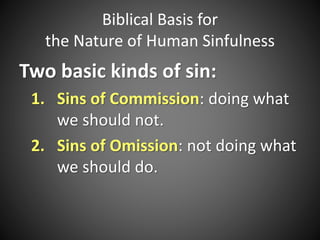
Biblical Basis for 
the Nature of Human Sinfulness 
Two basic kinds of sin: 
1. Sins of Commission: doing what 
we should not. 
2. Sins of Omission: not doing what 
we should do.
Biblical Basis for 
the Nature of Human Sinfulness 
Seven Detestable sins (Prov. 6:16-19): 
• Proverbs 6:16-19 (New International Version) 
• 16 There are six things the LORD hates, 
seven that are detestable to him: 
• 17 haughty eyes, 
a lying tongue, 
hands that shed innocent blood, 
• 18 a heart that devises wicked schemes, 
feet that are quick to rush into evil, 
• 19 a false witness who pours out lies 
and a man who stirs up dissension among brothers.
The Chief Names for Sin 
Sin: The Hebrew world often translated “sin” is 
chata, meaning “to miss,” “to forfeit,” or “to 
lack.” The basic Greeek word for sin is harmartia, 
which means “to miss the mark,” “to err,” “to 
sin.” 
Trespass: The Hebrew root word is maal, which 
means “to cover up,” “to act covertly, that is, 
treacherously, or grievously.” Trespass is 
paraptoma which means “to slip,” “to lapse,” “to 
fall,” “to stumble aside,” “to offend,” or “to sin.”
The Chief Names for Sin 
Iniquity: The Hebrew is avon, which means 
“perversity,” “fault,” “iniquity.” The Greek word is 
adikia, meaning “morally wrong,” “unjust,” 
“unrighteous.” 
Evil: The Hebrew root word is ra, which means 
“bad,” “harmful,” “wrong,” even “calamity.” The 
Greek words for evil are poneros, meaning “evil in 
effect.” 
Wickedness: The Hebrew rasha, which means 
“morally bad” or “ungodly.”
The Nature of Sin in 
Relation to God 
Sin as Unbelief: “Without faith it is impossible 
to please God” (Heb. 11:6). 
Sin as Rebellion: “Rebellion [is as] the sin of 
witchcraft . . .” (1 Sam. 15:23) 
Sin as Transgression: (Rom. 5:17; 1 John 3:4; Ps. 
51:4) 
Sin as Pride: At the root of all sin is pride (1 Tim. 
3:6)
Degrees of Sin 
Contrary to widely held opinion, not all sins are 
considered (by God) to be equal. 
Jesus said there were “weightier matters of the 
law” (Matt. 23:23, KJV), such as for example, 
mercy and justice over tithing. (Matt. 22:38; 
John 19:11). The more severe eternal 
punishment for some is due to the heaviness of 
the sins they have committed (Rev. 20:12; cf. 
also, 1 John 5:16; 1 Cor. 11:29-30; Matt. 12:32)
Theological Basis for the 
Nature of Human Sinfulness 
From a theological standpoint, sin is anything that falls short of God’s 
perfect moral nature. 
1. God is Holy 
2. Sin is being Unholy 
3. God is Just (Righteousness) 
4. Sin is Unrighteousness (Injustice) 
5. God is Perfect 
6. Sin is Moral Imperfection 
7. God is Jealous 
8. Sin is the Absence of Godly Jealousy and the Presence of 
Ungodly Jealousy (Envy) 
9. God is Love 
10. Sin is being Unloving 
11. God is Truth 
12. Sin is being Untruthful

Chapter 56

  • 1.
    Systematic Theology II Chapter Fifty-Six “The Nature of Sin” PPt by Mark E. Hardgrove, PhD, DMin
  • 2.
    Biblical Basis for the Nature of Human Sinfulness Two basic kinds of sin: 1. Sins of Commission: doing what we should not. 2. Sins of Omission: not doing what we should do.
  • 3.
    Biblical Basis for the Nature of Human Sinfulness Seven Detestable sins (Prov. 6:16-19): • Proverbs 6:16-19 (New International Version) • 16 There are six things the LORD hates, seven that are detestable to him: • 17 haughty eyes, a lying tongue, hands that shed innocent blood, • 18 a heart that devises wicked schemes, feet that are quick to rush into evil, • 19 a false witness who pours out lies and a man who stirs up dissension among brothers.
  • 4.
    The Chief Namesfor Sin Sin: The Hebrew world often translated “sin” is chata, meaning “to miss,” “to forfeit,” or “to lack.” The basic Greeek word for sin is harmartia, which means “to miss the mark,” “to err,” “to sin.” Trespass: The Hebrew root word is maal, which means “to cover up,” “to act covertly, that is, treacherously, or grievously.” Trespass is paraptoma which means “to slip,” “to lapse,” “to fall,” “to stumble aside,” “to offend,” or “to sin.”
  • 5.
    The Chief Namesfor Sin Iniquity: The Hebrew is avon, which means “perversity,” “fault,” “iniquity.” The Greek word is adikia, meaning “morally wrong,” “unjust,” “unrighteous.” Evil: The Hebrew root word is ra, which means “bad,” “harmful,” “wrong,” even “calamity.” The Greek words for evil are poneros, meaning “evil in effect.” Wickedness: The Hebrew rasha, which means “morally bad” or “ungodly.”
  • 6.
    The Nature ofSin in Relation to God Sin as Unbelief: “Without faith it is impossible to please God” (Heb. 11:6). Sin as Rebellion: “Rebellion [is as] the sin of witchcraft . . .” (1 Sam. 15:23) Sin as Transgression: (Rom. 5:17; 1 John 3:4; Ps. 51:4) Sin as Pride: At the root of all sin is pride (1 Tim. 3:6)
  • 7.
    Degrees of Sin Contrary to widely held opinion, not all sins are considered (by God) to be equal. Jesus said there were “weightier matters of the law” (Matt. 23:23, KJV), such as for example, mercy and justice over tithing. (Matt. 22:38; John 19:11). The more severe eternal punishment for some is due to the heaviness of the sins they have committed (Rev. 20:12; cf. also, 1 John 5:16; 1 Cor. 11:29-30; Matt. 12:32)
  • 8.
    Theological Basis forthe Nature of Human Sinfulness From a theological standpoint, sin is anything that falls short of God’s perfect moral nature. 1. God is Holy 2. Sin is being Unholy 3. God is Just (Righteousness) 4. Sin is Unrighteousness (Injustice) 5. God is Perfect 6. Sin is Moral Imperfection 7. God is Jealous 8. Sin is the Absence of Godly Jealousy and the Presence of Ungodly Jealousy (Envy) 9. God is Love 10. Sin is being Unloving 11. God is Truth 12. Sin is being Untruthful