Sherlyn Padilla 
Zuzana Letona 
Mariela Pacheco 
Ana Paulina Mazariegos 
Ely Pineda
When we smell a fragrant flower, are we 
experimenting sensation or perception? 
 In everyday language, the terms "sensation" 
and "perception' are often used 
interchangeably. 
However, as you will see, they are very different 
complementary processes.
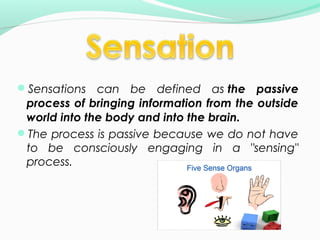
Sensations can be defined as the passive 
process of bringing information from the outside 
world into the body and into the brain. 
The process is passive because we do not have 
to be consciously engaging in a "sensing" 
process.
Sensation doesn't automatically occur; sensory 
processes must first transform stimulation into 
neural messages before any other processing is 
formed. 
This process of transferring energy is 
termed transduction. 
Stimuli detectors are important because one of their 
abilities is to alert us to changes. They also hold authority 
in sensory adaptation; the absolute threshold, the 
terminal threshold, and the difference threshold.
ABSOLUTE THRESHOLD: is the lowest level that a 
person will feel sensation. 
DIFFERENTIAL THRESHOLD: is the minimal 
difference that a person can detect between 
two stimuli. 
TERMINAL THRESHOLD: the intensity of 
the stimulus is so high above the absolute 
threshold that it causes the person pain. 
The intensity of the stimulus is high enough that 
the sensory receptors and neurons maybe 
damaged.
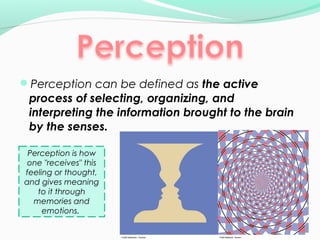
Perception can be defined as the active 
process of selecting, organizing, and 
interpreting the information brought to the brain 
by the senses. 
Perception is how 
one "receives" this 
feeling or thought, 
and gives meaning 
to it through 
memories and 
emotions.
1) Sensation occurs: 
a) sensory organs absorb energy from a 
physical stimulus in the environment. 
b) sensory receptors convert this energy into 
neural impulses and send them to the brain. 
2) Perception follows: 
a) the brain organizes the information and 
translates it into something meaningful.
Sensation: The sense organs register the stimulus 
– with it's physical properties, "decode" it, and 
transform it into a neural signal that is then 
transmitted to the brain. 
Perception: 
In the brain, the neural signal is organized and 
interpreted. Perception involves "making sense" 
of our sensations.
https://www.youtube.com/watch? 
v=0SErqVGcAR0 
https://www.youtube.com/watch? 
v=IDQcFlPqaFs 
http://education-portal. 
com/academy/lesson/intro-to-sensation-and- 
perception.html#lesson
https://www.youtube.com/watch? 
v=0SErqVGcAR0 
https://www.youtube.com/watch? 
v=IDQcFlPqaFs 
http://education-portal. 
com/academy/lesson/intro-to-sensation-and- 
perception.html#lesson

Chapter 5 sensation and perception 1

  • 1.
    Sherlyn Padilla ZuzanaLetona Mariela Pacheco Ana Paulina Mazariegos Ely Pineda
  • 2.
    When we smella fragrant flower, are we experimenting sensation or perception?  In everyday language, the terms "sensation" and "perception' are often used interchangeably. However, as you will see, they are very different complementary processes.
  • 3.
    Sensations can bedefined as the passive process of bringing information from the outside world into the body and into the brain. The process is passive because we do not have to be consciously engaging in a "sensing" process.
  • 4.
    Sensation doesn't automaticallyoccur; sensory processes must first transform stimulation into neural messages before any other processing is formed. This process of transferring energy is termed transduction. Stimuli detectors are important because one of their abilities is to alert us to changes. They also hold authority in sensory adaptation; the absolute threshold, the terminal threshold, and the difference threshold.
  • 5.
    ABSOLUTE THRESHOLD: isthe lowest level that a person will feel sensation. DIFFERENTIAL THRESHOLD: is the minimal difference that a person can detect between two stimuli. TERMINAL THRESHOLD: the intensity of the stimulus is so high above the absolute threshold that it causes the person pain. The intensity of the stimulus is high enough that the sensory receptors and neurons maybe damaged.
  • 6.
    Perception can bedefined as the active process of selecting, organizing, and interpreting the information brought to the brain by the senses. Perception is how one "receives" this feeling or thought, and gives meaning to it through memories and emotions.
  • 7.
    1) Sensation occurs: a) sensory organs absorb energy from a physical stimulus in the environment. b) sensory receptors convert this energy into neural impulses and send them to the brain. 2) Perception follows: a) the brain organizes the information and translates it into something meaningful.
  • 8.
    Sensation: The senseorgans register the stimulus – with it's physical properties, "decode" it, and transform it into a neural signal that is then transmitted to the brain. Perception: In the brain, the neural signal is organized and interpreted. Perception involves "making sense" of our sensations.
  • 9.
    https://www.youtube.com/watch? v=0SErqVGcAR0 https://www.youtube.com/watch? v=IDQcFlPqaFs http://education-portal. com/academy/lesson/intro-to-sensation-and- perception.html#lesson
  • 10.
    https://www.youtube.com/watch? v=0SErqVGcAR0 https://www.youtube.com/watch? v=IDQcFlPqaFs http://education-portal. com/academy/lesson/intro-to-sensation-and- perception.html#lesson