Chapter 5 Homeostasis and Transport
Types of Transport Passive transport does not require energy to complete. Cells move materials across the membrane without energy. This includes: diffusion, osmosis, facilitated diffusion, and diffusion through ion channels.
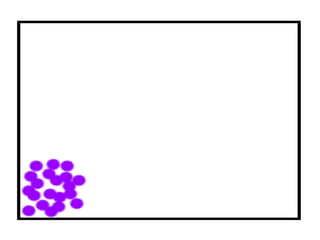
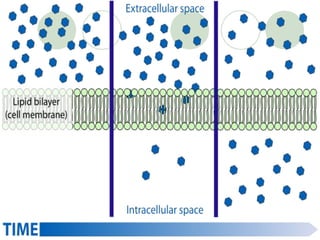
Diffusion Diffusion is the movement of materials across a membrane using a concentration gradient. A concentration gradient is the difference between the number of molecules on each side of the membrane. Diffusion happens because the molecules wish to be in equilibrium or be equal on both sides of the membrane. Even once equilibrium is achieved, molecules still move back and forth across the membrane randomly.
 
 
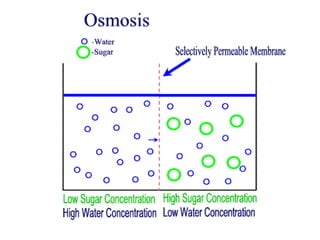
Osmosis Osmosis is the diffusion of water across the cell membrane. Only water is moved in osmosis. The direction of osmosis depends on the concentration of molecules outside and inside of the cell.
 
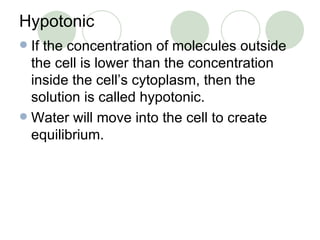
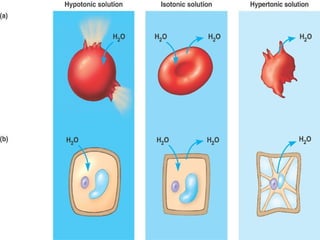
Hypotonic If the concentration of molecules outside the cell is lower than the concentration inside the cell’s cytoplasm, then the solution is called hypotonic. Water will move into the cell to create equilibrium.
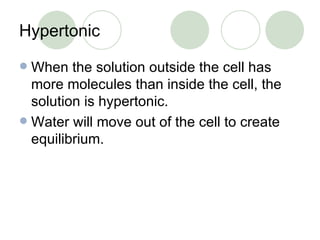
Hypertonic When the solution outside the cell has more molecules than inside the cell, the solution is hypertonic. Water will move out of the cell to create equilibrium.
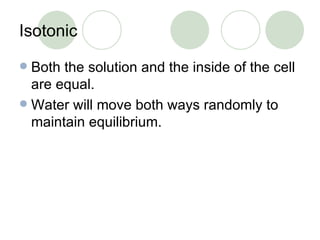
Isotonic Both the solution and the inside of the cell are equal. Water will move both ways randomly to maintain equilibrium.
 
stop Cells at Work: Diffusion and Osmosis
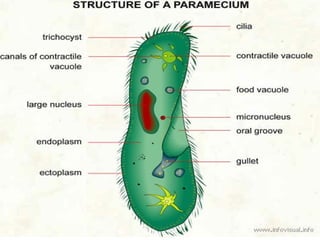
How Cells Deal with Osmosis Some animals are only single celled organisms like the paramecium. The paramecium is a freshwater pond dweller. These paramecia are functioning in a hypotonic environment all the time so water is constantly diffusing into the organism. Paramecia have contractile vacuoles that remove excess water from their bodies. Sometimes when too much water is added, cells burst and this is called cytolysis.
 
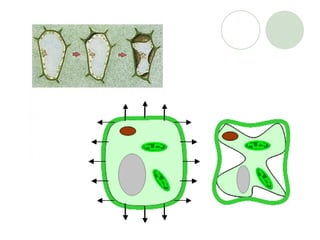
How Plants Deal with Osmosis Since plants have a cell wall, osmosis affects them differently.  When osmosis moves water into plant cells, the cell membrane swells but stops against the strong cell wall. This is called turgor pressure. When plants don’t receive enough water, plasmolysis occurs which makes the plants wilt. The cell membrane shrinks away from the cell wall.
 
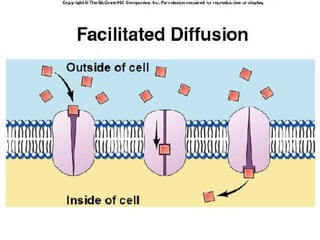
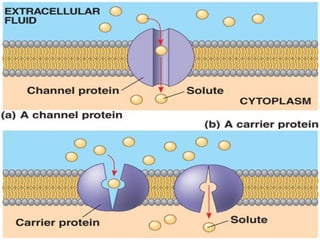
Facilitated Diffusion This process is used for molecules that can’t move quickly through the cell membrane. Carrier proteins help move the molecules. The molecules still move down the concentration gradient so no energy is required. Transport of glucose is facilitated diffusion.
 
Diffusion through Ion Channels Ions such as sodium, potassium and calcium need a channel protein because they cannot pass through the membrane on their own. Each type of channel is specific to an ion. Some channels are always open and some have gates that open and close depending on the need for the ion.
 
Stop worksheet 5-1
Active Transport This type of transport goes up or against the concentration gradient. Since that is working uphill, energy is required. This includes: sodium-potassium pump, endocytosis,  and exocytosis
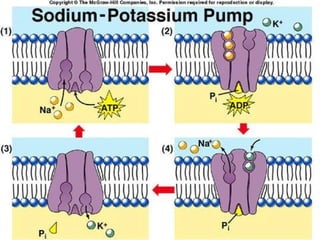
Sodium-Potassium Pump This involves a carrier protein. To function normally, animal cells must have a high concentration of sodium outside their cells and a high concentration of potassium inside their cells. The sodium-potassium pump works to maintain these differences. As sodium comes into the carrier protein and moves outside the cell, potassium comes into the protein and moves inside. They switch places.
 
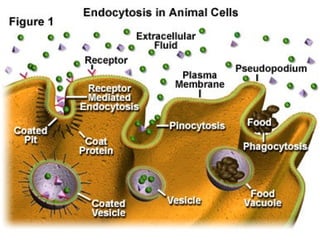
Endocytosis Some substances such as food particles are too large to move through the cell membrane. In endocytosis, the cell encloses external materials in a pouch made from the cell membrane and moves them into the cell. The pouch is called a vesicle. There are two types of endocytosis: pincocytosis involves transport of fluid and phagocytosis involves transport of solids or whole cells. Many animals use phagocytosis to ingest bacteria or viruses that invade the body.
 
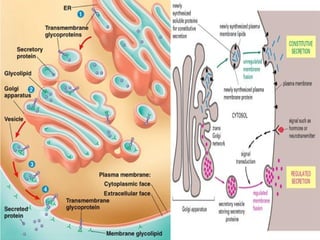
Exocytosis Exocytosis is the reverse. In exocytosis, molecules or cells are transported to the outside of the cell from the inside. Vesicles are used. Cells used exocytosis to release large molecules like proteins into the body from the cell. Usually the ER and the golgi are involved in this process.


Chapter 5

  • 1.
    Chapter 5 Homeostasisand Transport
  • 2.
    Types of TransportPassive transport does not require energy to complete. Cells move materials across the membrane without energy. This includes: diffusion, osmosis, facilitated diffusion, and diffusion through ion channels.
  • 3.
    Diffusion Diffusion isthe movement of materials across a membrane using a concentration gradient. A concentration gradient is the difference between the number of molecules on each side of the membrane. Diffusion happens because the molecules wish to be in equilibrium or be equal on both sides of the membrane. Even once equilibrium is achieved, molecules still move back and forth across the membrane randomly.
  • 4.
  • 5.
  • 6.
    Osmosis Osmosis isthe diffusion of water across the cell membrane. Only water is moved in osmosis. The direction of osmosis depends on the concentration of molecules outside and inside of the cell.
  • 7.
  • 8.
    Hypotonic If theconcentration of molecules outside the cell is lower than the concentration inside the cell’s cytoplasm, then the solution is called hypotonic. Water will move into the cell to create equilibrium.
  • 9.
    Hypertonic When thesolution outside the cell has more molecules than inside the cell, the solution is hypertonic. Water will move out of the cell to create equilibrium.
  • 10.
    Isotonic Both thesolution and the inside of the cell are equal. Water will move both ways randomly to maintain equilibrium.
  • 11.
  • 12.
    stop Cells atWork: Diffusion and Osmosis
  • 13.
    How Cells Dealwith Osmosis Some animals are only single celled organisms like the paramecium. The paramecium is a freshwater pond dweller. These paramecia are functioning in a hypotonic environment all the time so water is constantly diffusing into the organism. Paramecia have contractile vacuoles that remove excess water from their bodies. Sometimes when too much water is added, cells burst and this is called cytolysis.
  • 14.
  • 15.
    How Plants Dealwith Osmosis Since plants have a cell wall, osmosis affects them differently. When osmosis moves water into plant cells, the cell membrane swells but stops against the strong cell wall. This is called turgor pressure. When plants don’t receive enough water, plasmolysis occurs which makes the plants wilt. The cell membrane shrinks away from the cell wall.
  • 16.
  • 17.
    Facilitated Diffusion Thisprocess is used for molecules that can’t move quickly through the cell membrane. Carrier proteins help move the molecules. The molecules still move down the concentration gradient so no energy is required. Transport of glucose is facilitated diffusion.
  • 18.
  • 19.
    Diffusion through IonChannels Ions such as sodium, potassium and calcium need a channel protein because they cannot pass through the membrane on their own. Each type of channel is specific to an ion. Some channels are always open and some have gates that open and close depending on the need for the ion.
  • 20.
  • 21.
  • 22.
    Active Transport Thistype of transport goes up or against the concentration gradient. Since that is working uphill, energy is required. This includes: sodium-potassium pump, endocytosis, and exocytosis
  • 23.
    Sodium-Potassium Pump Thisinvolves a carrier protein. To function normally, animal cells must have a high concentration of sodium outside their cells and a high concentration of potassium inside their cells. The sodium-potassium pump works to maintain these differences. As sodium comes into the carrier protein and moves outside the cell, potassium comes into the protein and moves inside. They switch places.
  • 24.
  • 25.
    Endocytosis Some substancessuch as food particles are too large to move through the cell membrane. In endocytosis, the cell encloses external materials in a pouch made from the cell membrane and moves them into the cell. The pouch is called a vesicle. There are two types of endocytosis: pincocytosis involves transport of fluid and phagocytosis involves transport of solids or whole cells. Many animals use phagocytosis to ingest bacteria or viruses that invade the body.
  • 26.
  • 27.
    Exocytosis Exocytosis isthe reverse. In exocytosis, molecules or cells are transported to the outside of the cell from the inside. Vesicles are used. Cells used exocytosis to release large molecules like proteins into the body from the cell. Usually the ER and the golgi are involved in this process.
  • 28.
  • 29.