Chapter 16 Cardiovascular System- Vessels
Types of Vessels
• There are 5 types of blood vessels.
• Arteries - take blood away from heart-
aorta and pulmonary trunk
• arterioles - medium sized
• capillaries - microscopic vessels in tissues
Types of Vessels
• venules - small veins
• veins - take blood back to heart
• arteries --> arterioles --> capillaries -->
venules --> veins
Blood Reservoirs
• Because veins carry so much blood,
certain veins function as blood reservoirs,
or holders of blood.
• The main areas are veins of the
abdominal organs.
• This blood can be diverted quickly to other
parts of the body when needed such as
skeletal muscles.
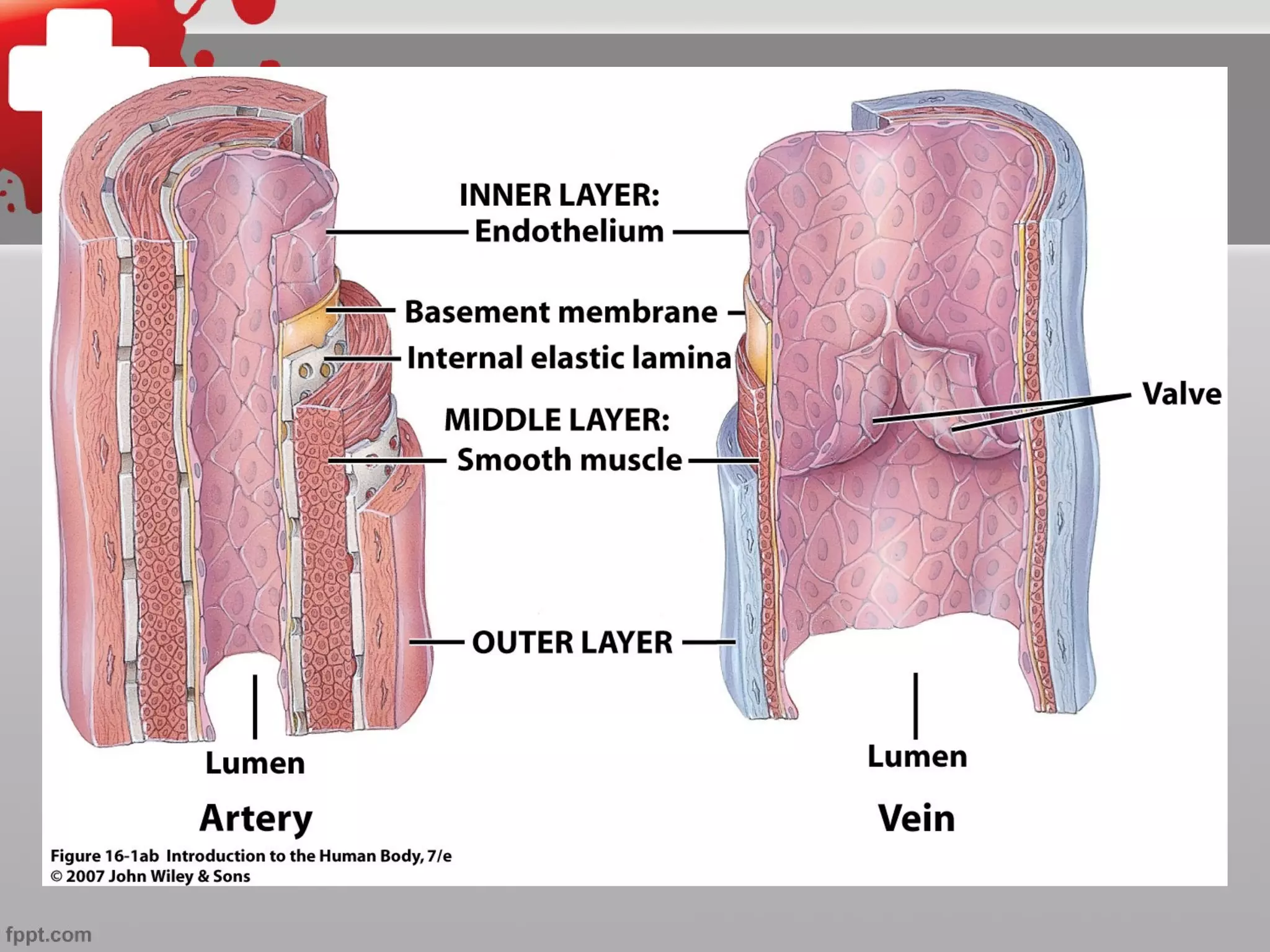
Arteries and Arterioles
• Lumen -hollow space thru which blood
flows
• Inner layer of endothelium- simple
squamous
• Middle layer of smooth muscle and elastic
tissue
• Outer layer of elastic and collagen fibers
Nervous System Control
• Vasoconstriction - sympathetic nervous
stimulation causes contraction of muscle and
decrease in diameter of lumen
• Vasodilation - decrease in stimulation of SNS
causes relaxation of muscle and increase in
diameter of lumen
Veins and Venules
• Veins return blood from the body to the
heart-deoxygenated blood
• Middle and inner layers thinner than
arteries
• contain valves which prevent backflow of
blood
– varicose veins caused by repeated pressure
from backflow which pushes vein walls out
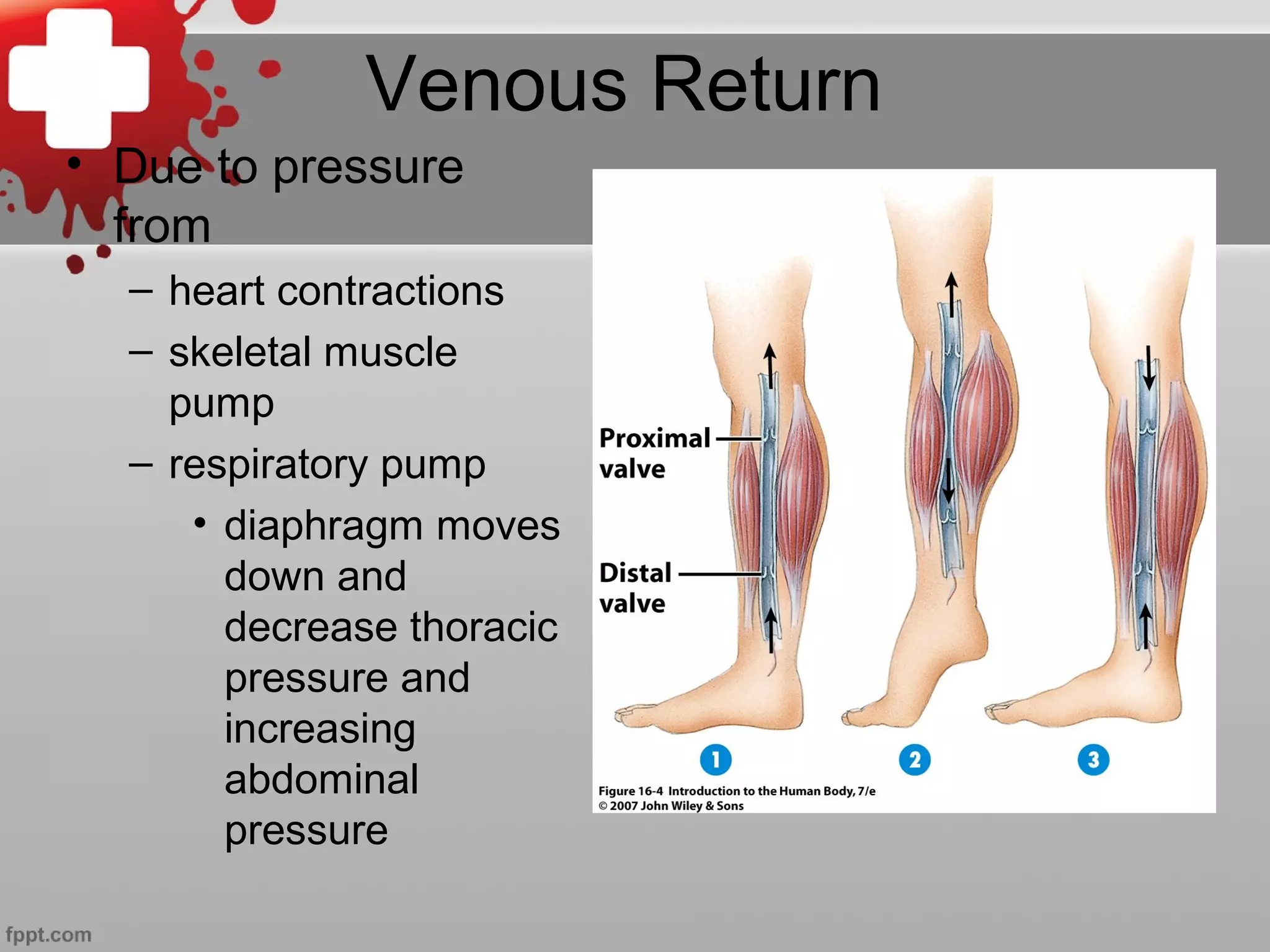
Venous Return
• Due to pressure
from
– heart contractions
– skeletal muscle
pump
– respiratory pump
• diaphragm moves
down and
decrease thoracic
pressure and
increasing
abdominal
pressure
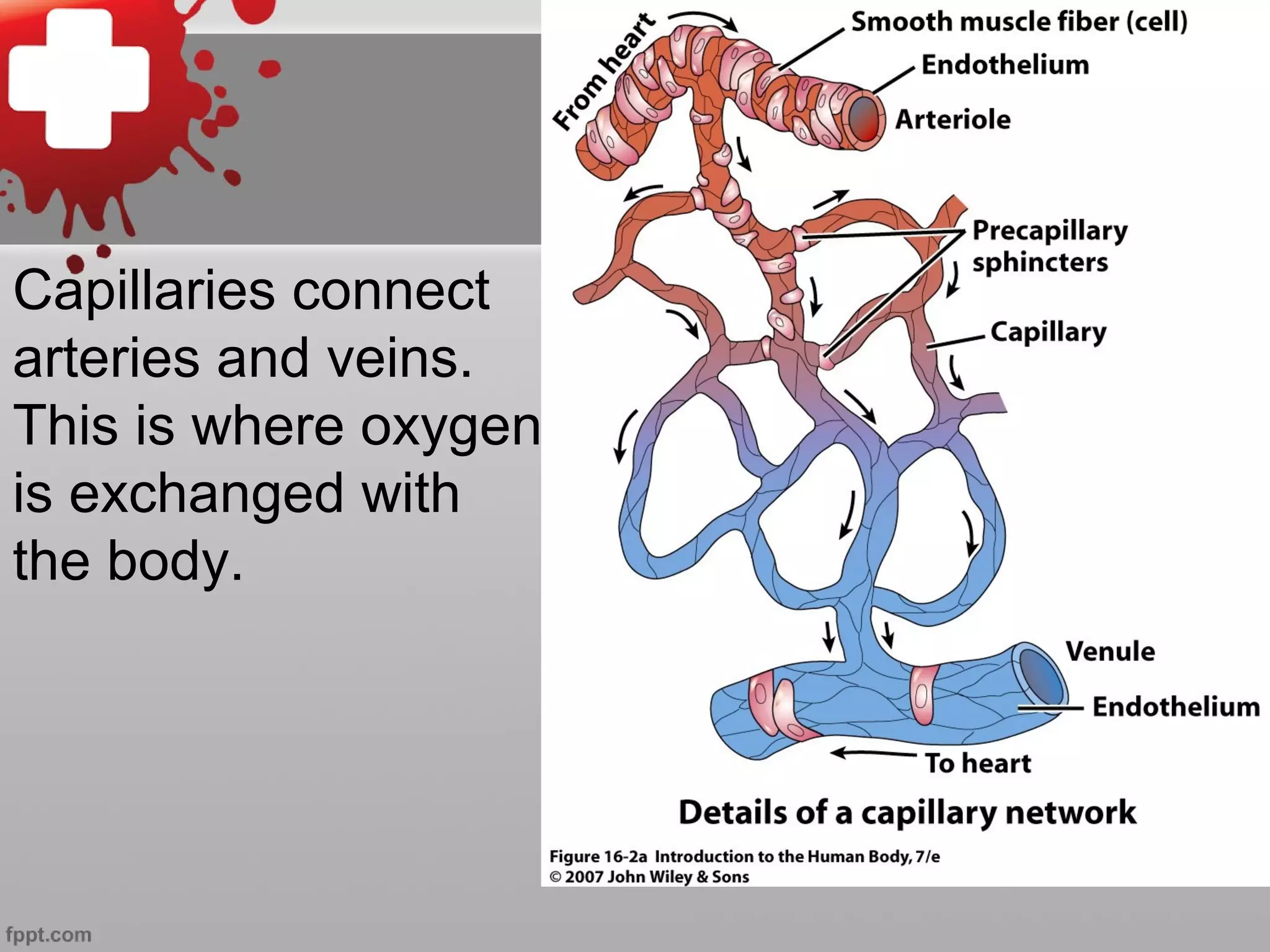
Capillaries connect
arteries and veins.
This is where oxygen
is exchanged with
the body.
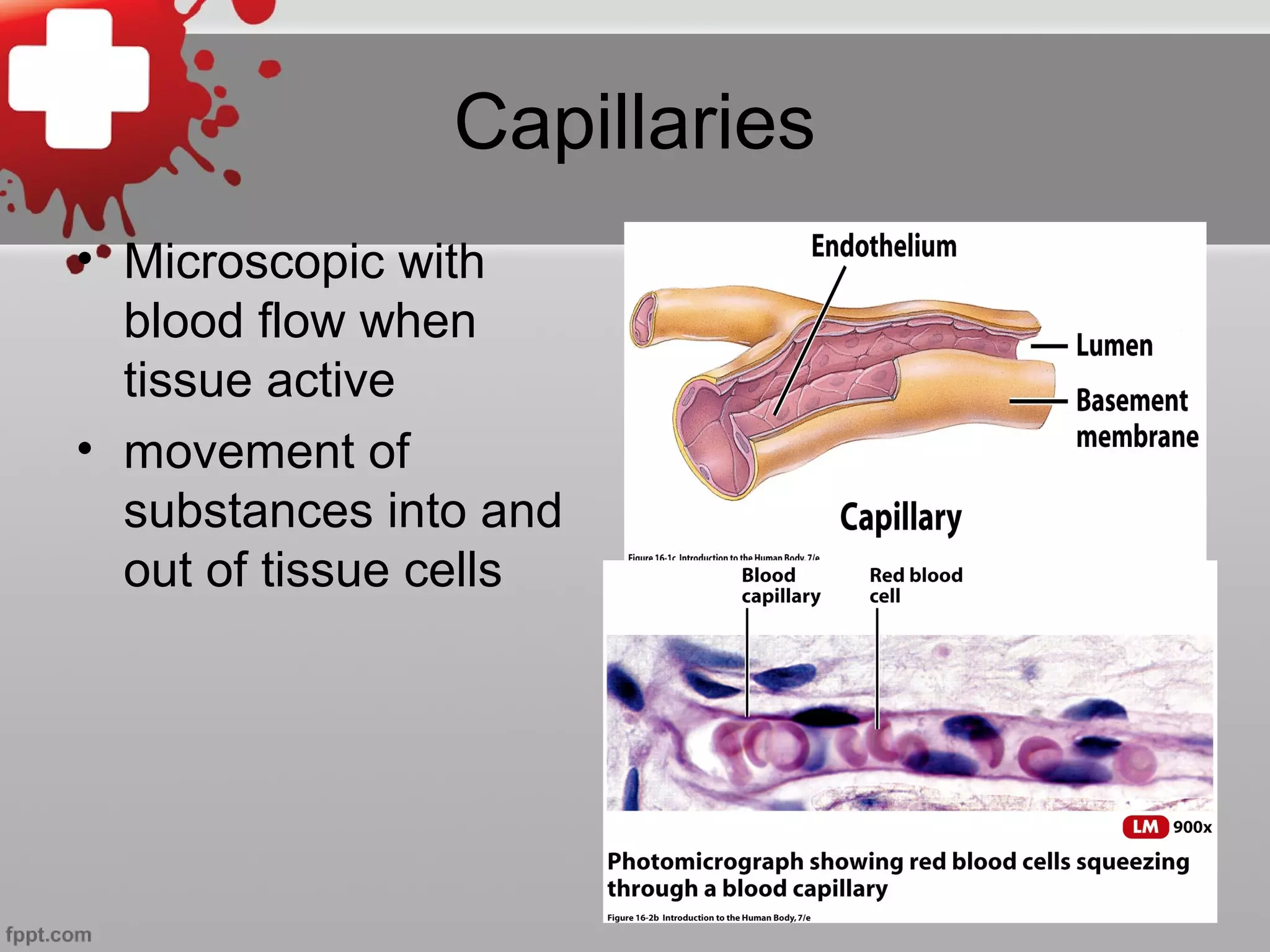
Capillaries
• Microscopic with
blood flow when
tissue active
• movement of
substances into and
out of tissue cells
Capillary exchange
• Simple Diffusion
Bulk Flow
• bulk flow - passive process of movement
of large numbers of particles in same
direction
Bulk Flow
–filtration - water and solutes flow from
capillary into interstitial fluid
–reabsorption - water and solutes flow
from interstitial fluid back into capillary
–autoregulation - tissue control of flow by
vasodilation and vasoconstriction
Blood Pressure
• Pressure exerted on walls of vessels
• vascular resistance is opposition to
blood flow and affects BP
–size of blood vessel lumen (inner
space)
–blood viscosity (thickness)
–total blood vessel length
• regulation
–cardiovascular center
–hormonal
• Systolic – pressure when heart contracts
• Diastolic – pressure when heart relaxes
• Sphygmomanometer – blood pressure
cuff
• Which number should be higher? Why?
Systemic
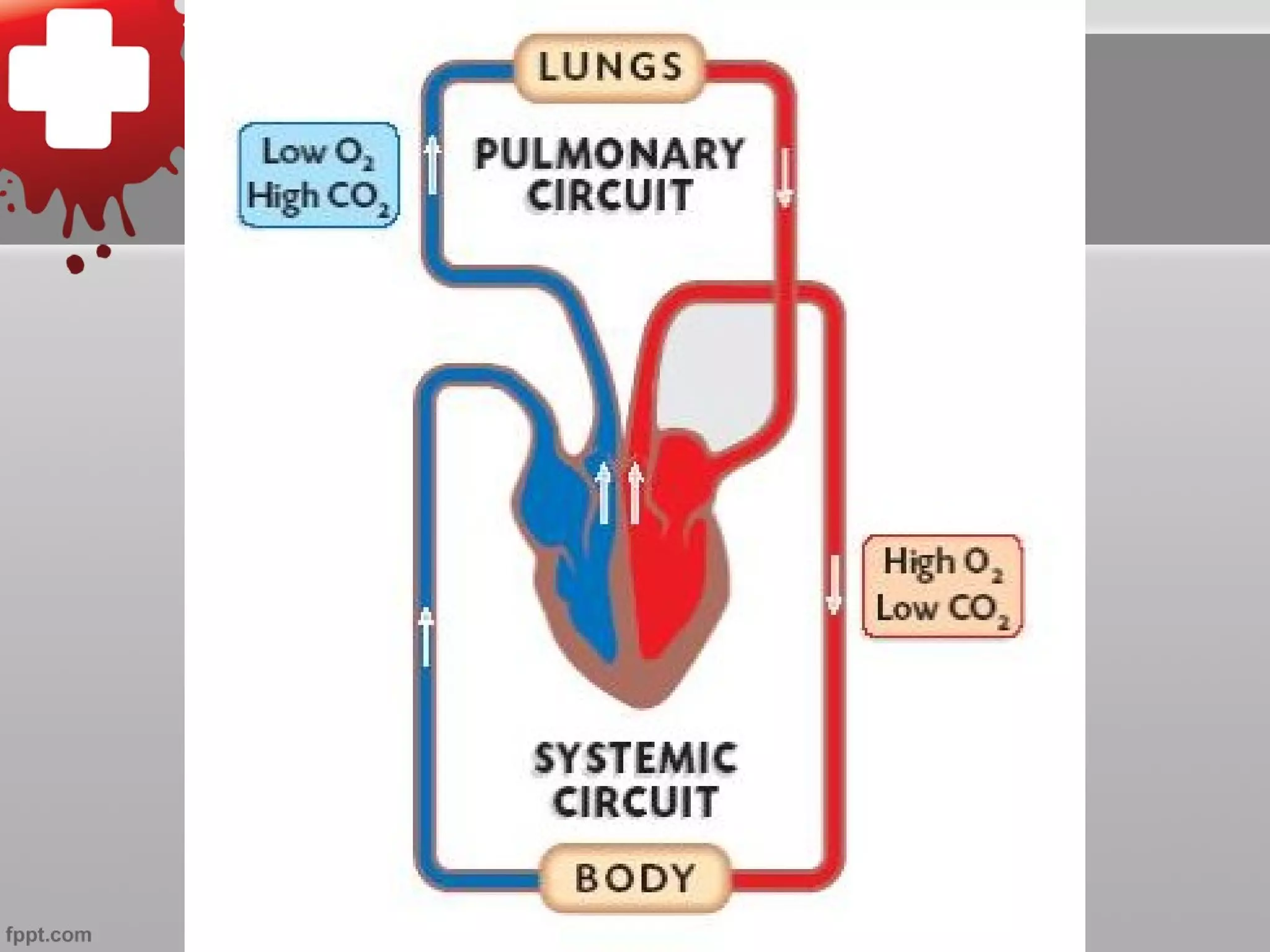
• Systemic circulation- includes the aorta
that carries oxygenated blood from the left
ventricle to the body and the veins and
venules that carry deoxygenated blood
back to the right atrium
Pulmonary
• Pulmonary circulation- the flow of
deoxygenated blood from the right
ventricle to air sacs in the lungs and the
return of oxygenated blood to the left
atrium
Vocabulary
• Artery
• Arteriole
• Capillary
• Capillary exchange
• Venule
• Vein
• Blood pressure
• Systemic circulation
• Pulmonary circulation

Chapter 16 notes vessels

  • 1.
  • 2.
    Types of Vessels •There are 5 types of blood vessels. • Arteries - take blood away from heart- aorta and pulmonary trunk • arterioles - medium sized • capillaries - microscopic vessels in tissues
  • 3.
    Types of Vessels •venules - small veins • veins - take blood back to heart • arteries --> arterioles --> capillaries --> venules --> veins
  • 4.
    Blood Reservoirs • Becauseveins carry so much blood, certain veins function as blood reservoirs, or holders of blood. • The main areas are veins of the abdominal organs. • This blood can be diverted quickly to other parts of the body when needed such as skeletal muscles.
  • 5.
    Arteries and Arterioles •Lumen -hollow space thru which blood flows • Inner layer of endothelium- simple squamous • Middle layer of smooth muscle and elastic tissue • Outer layer of elastic and collagen fibers
  • 6.
    Nervous System Control •Vasoconstriction - sympathetic nervous stimulation causes contraction of muscle and decrease in diameter of lumen • Vasodilation - decrease in stimulation of SNS causes relaxation of muscle and increase in diameter of lumen
  • 8.
    Veins and Venules •Veins return blood from the body to the heart-deoxygenated blood • Middle and inner layers thinner than arteries • contain valves which prevent backflow of blood – varicose veins caused by repeated pressure from backflow which pushes vein walls out
  • 9.
    Venous Return • Dueto pressure from – heart contractions – skeletal muscle pump – respiratory pump • diaphragm moves down and decrease thoracic pressure and increasing abdominal pressure
  • 10.
    Capillaries connect arteries andveins. This is where oxygen is exchanged with the body.
  • 11.
    Capillaries • Microscopic with bloodflow when tissue active • movement of substances into and out of tissue cells
  • 12.
  • 13.
    Bulk Flow • bulkflow - passive process of movement of large numbers of particles in same direction
  • 14.
    Bulk Flow –filtration -water and solutes flow from capillary into interstitial fluid –reabsorption - water and solutes flow from interstitial fluid back into capillary –autoregulation - tissue control of flow by vasodilation and vasoconstriction
  • 15.
    Blood Pressure • Pressureexerted on walls of vessels • vascular resistance is opposition to blood flow and affects BP –size of blood vessel lumen (inner space) –blood viscosity (thickness) –total blood vessel length
  • 16.
    • regulation –cardiovascular center –hormonal •Systolic – pressure when heart contracts • Diastolic – pressure when heart relaxes • Sphygmomanometer – blood pressure cuff • Which number should be higher? Why?
  • 19.
    Systemic • Systemic circulation-includes the aorta that carries oxygenated blood from the left ventricle to the body and the veins and venules that carry deoxygenated blood back to the right atrium
  • 20.
    Pulmonary • Pulmonary circulation-the flow of deoxygenated blood from the right ventricle to air sacs in the lungs and the return of oxygenated blood to the left atrium
  • 23.
    Vocabulary • Artery • Arteriole •Capillary • Capillary exchange • Venule • Vein • Blood pressure • Systemic circulation • Pulmonary circulation